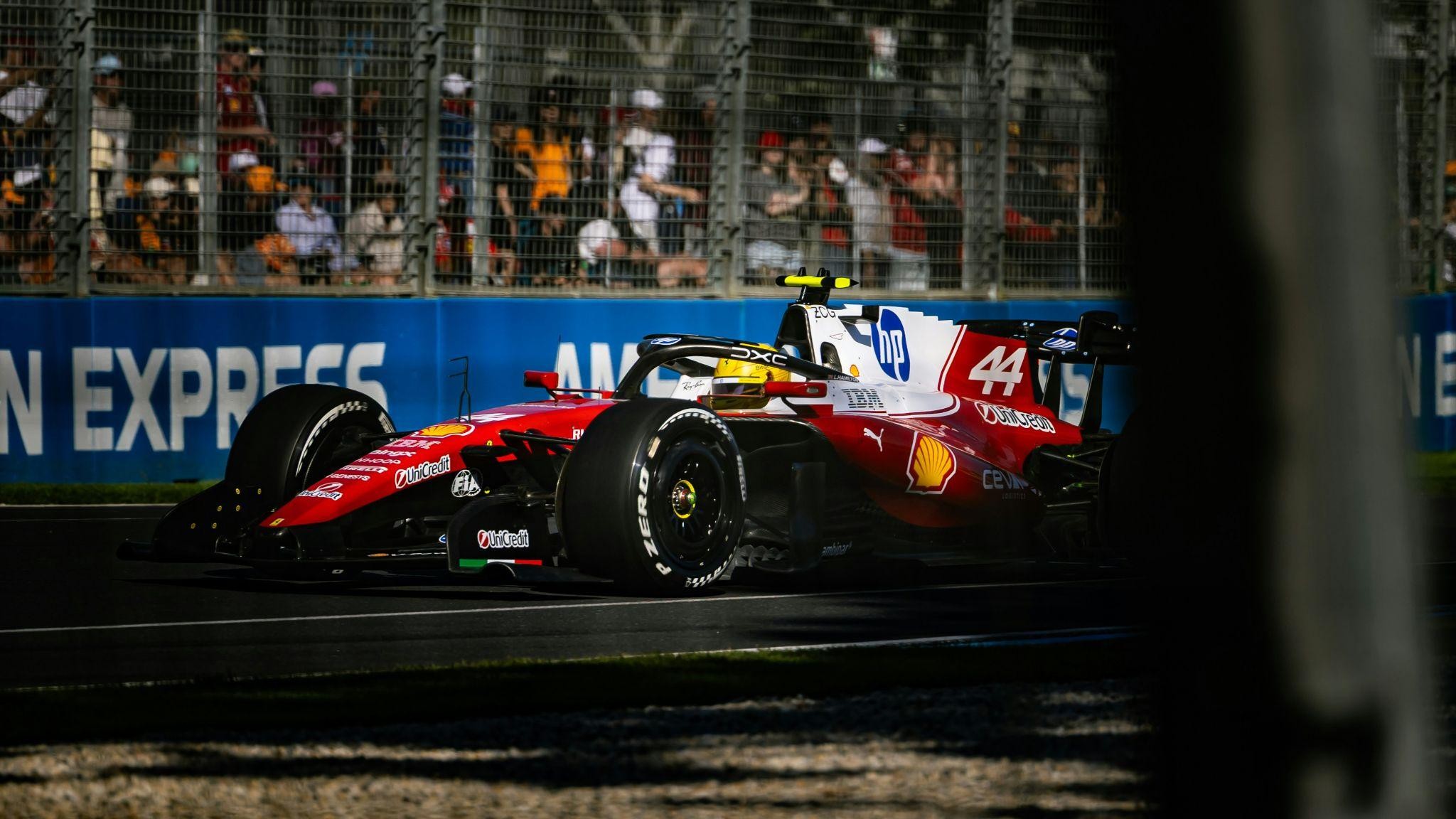
Lewis Hamilton in action in his 2026 Ferrari Formula 1 car.
The 2026 Formula 1 rules have created more than a new car. Nowadays, we have a new way of watching, describing and understanding a Grand Prix from the side of the circuit. With smaller and lighter machines, active aerodynamics, new straight-mode markers, a fresh overtaking logic and a power unit that leans much harder on electrical deployment, the sport has become more explicit in the way it shows its own drama. For trackside journalists, photographers and broadcasters, the story is no longer hidden in airflow theory or buried in post-session data, as more of it happens in plain sight.
A car that tells its story more clearly
The first change is pretty obvious. The 2026 cars are shorter, narrower and lighter than the previous generation, with a reduced wheelbase, a slimmer floor and narrower tyres. The beam wing has gone, the wheel covers have disappeared, the front wheel arches are no longer there and the floor philosophy has moved away from the long ground-effect tunnels that defined the 2022-2025 era. That gives the new cars a less bulky and less opaque identity. The cars are clearly more agile and less like rolling aero fortresses, which makes their behavior easier to describe in real time.
That clarity extends to the way the car moves through a lap. In earlier seasons, much of the narrative lived in invisible concepts such as dirty air sensitivity or underfloor balance, impossible to spot for viewers. The excitement was there, but it wasn’t quite the same for the casuals. In 2026, however, the audience can see more of the race language. The active-aero system changes the front and rear wing configuration between corner mode and straight mode, while new SM boards around the circuit signal where cars will switch into low-drag running. For a reporter standing near the braking zone or the exit of a fast corner, that means the tactical rhythm of the lap is easier to map and easier to explain.
Overtaking is now a more layered narrative
The second big shift is that overtaking has a different grammar… and a whole new dictionary. DRS, which shaped race commentary for fifteen years, is effectively gone. We’ll still see cars using a lower-drag system with the SM, not for overtaking but for efficiency and energy management. The actual extra attack tool now comes through Overtake Mode, which is still tied to proximity and gives the chasing car additional electrical harvesting and deployment. That creates a more layered story than the old “he is in DRS range” script.
From trackside, that changes the pacing of the narrative. The key question is no longer just whether a driver exits the final corner close enough to open the rear wing. Now it can be built even from the free practice sessions. There, the teams use an algorithm that helps them understand where the battery should be deployed around the track. That algorithm is not so different from what is used on an online casino platform to recommend games. The cars do some laps, or the players play a few games; then the power unit’s ECU or the algorithm is able to calculate where to deploy the electricity or which games to recommend.
In Formula 1, we arrived at this new engine formula as the manufacturers were looking towards a more even split between combustion and electric power. With the MGU-H gone, drivers also matter more, as they need to change their driving technique to harvest more energy.
That is why trackside storytelling feels different in 2026. The new rules have made Formula 1 more legible without making it simplistic. The cars still demand technical understanding, but the drama now presents itself through clearer visual cues, sharper tactical phases and more readable transitions between attack, defence and recovery. For anyone trying to tell the story from beside the asphalt, that is the real change: the new generation does not just race differently, it communicates differently.
Video

Comments
Authorize to comment