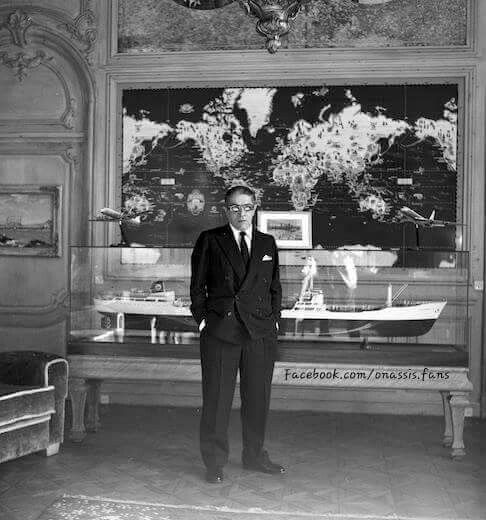
Aristotle Onassis.
With Onassis, we're at the absolute top, at Agnelli's level and perhaps even a little higher. His is an unrivaled story. The Greek shipowner rode the '50s and '60s like a true emperor. Imagine owning a yacht like the 'Christina' in the '60s. In the '60s, kitsch didn't exist and even the most extravagant spending was reined in with elegant, high-quality purchases. The multi-story, all-plastic boats of today didn't exist. You couldn't have a mezzanine.
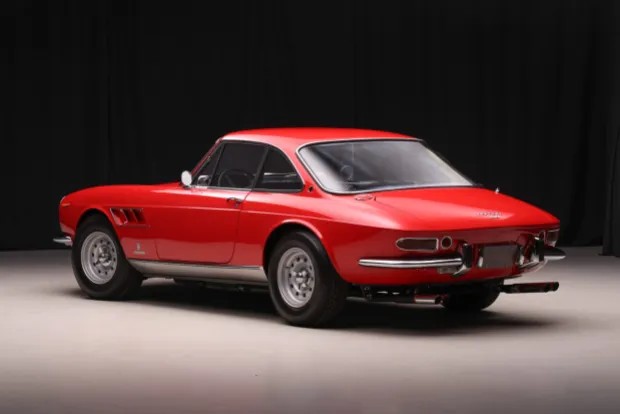
Aristotle Onassis's red Ferrari.
And a magnificent Ferrari could not be missing in his playground.
The Greek was a magnetic adventurer, a rich connoisseur and lover of life, who lived with lights and shadows but always at full speed. There were others in his small world of oligarchs, but he left a mark on his time like no other. No one like him, no one like Aristotle Onassis.
Aristotle Onassis the king of kings. Posted by Elios Patronikolas on September 23 2009. "Ari Onassis was a business partner but above all a very good friend of mine for many years until his death in 1975. It was great to know him and fantastic to be involved in his odyssey and contributes to build his empire."
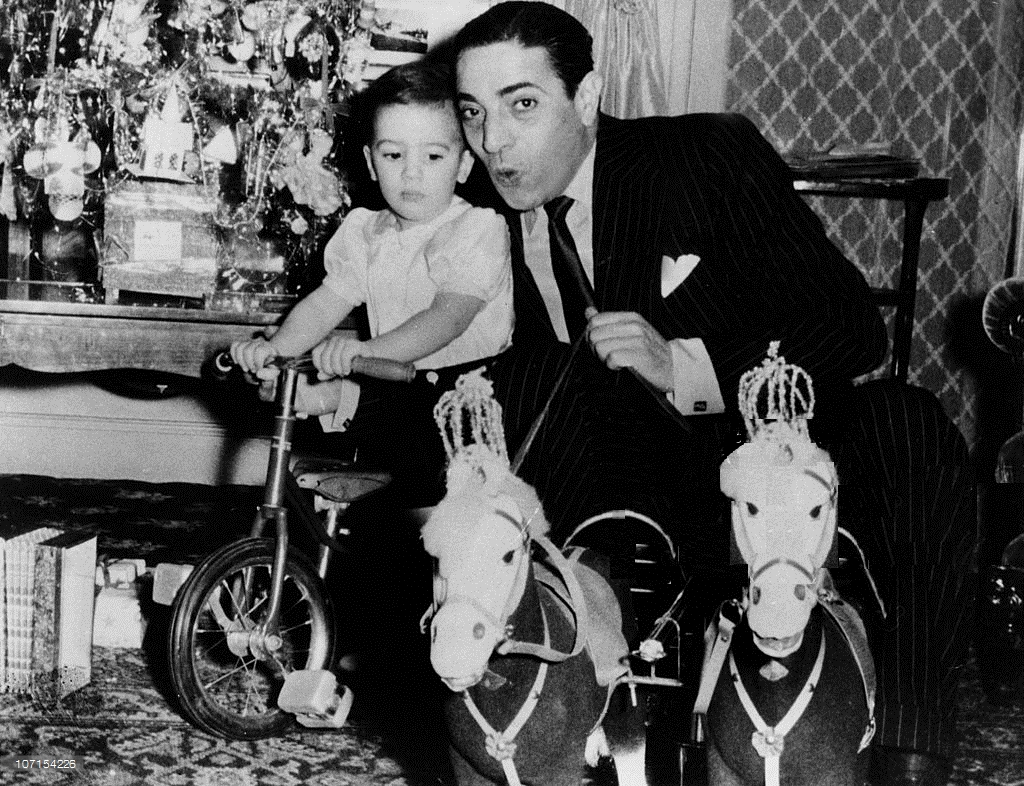
Aristotle Onassis.
"All that really counts these days is money", Aristotle Onassis once said. "It's the people with money who are the royalty now." By that maxim, the ambitious, expansive Greek shipping magnate was a king of kings. Until he died of bronchial pneumonia in 1975 in Paris at age 69, after months of suffering from myasthenia gravis (a debilitating disease that weakens the body muscles), Onassis had flamboyantly ruled an empire of ocean tankers and airlines, banks, real estate holdings and trading companies. His total worth was estimated to be at least 3 billion. Unlike many of his reclusive peers in that small realm of the super-super-rich, Onassis knew how to spend as lavishly as he earned. Known around the world as ‘Ari’ or ‘Daddy-O’ (his Greek friends - including me, however, called him ‘Telis’, the diminutive of Aristotle), he was the prime mover of the jet set. He had residences in half a dozen cities, an Ionian island of his own and an elegant art collection. He boasted the world's most lavish yacht, the Christina, a 325-ft. rebuilt Canadian frigate complete with sumptuous bathrooms lined in Siena marble and fitted with gold-plated faucets. He also — as gossip-column readers well knew — enjoyed the company of beautiful and famous women.
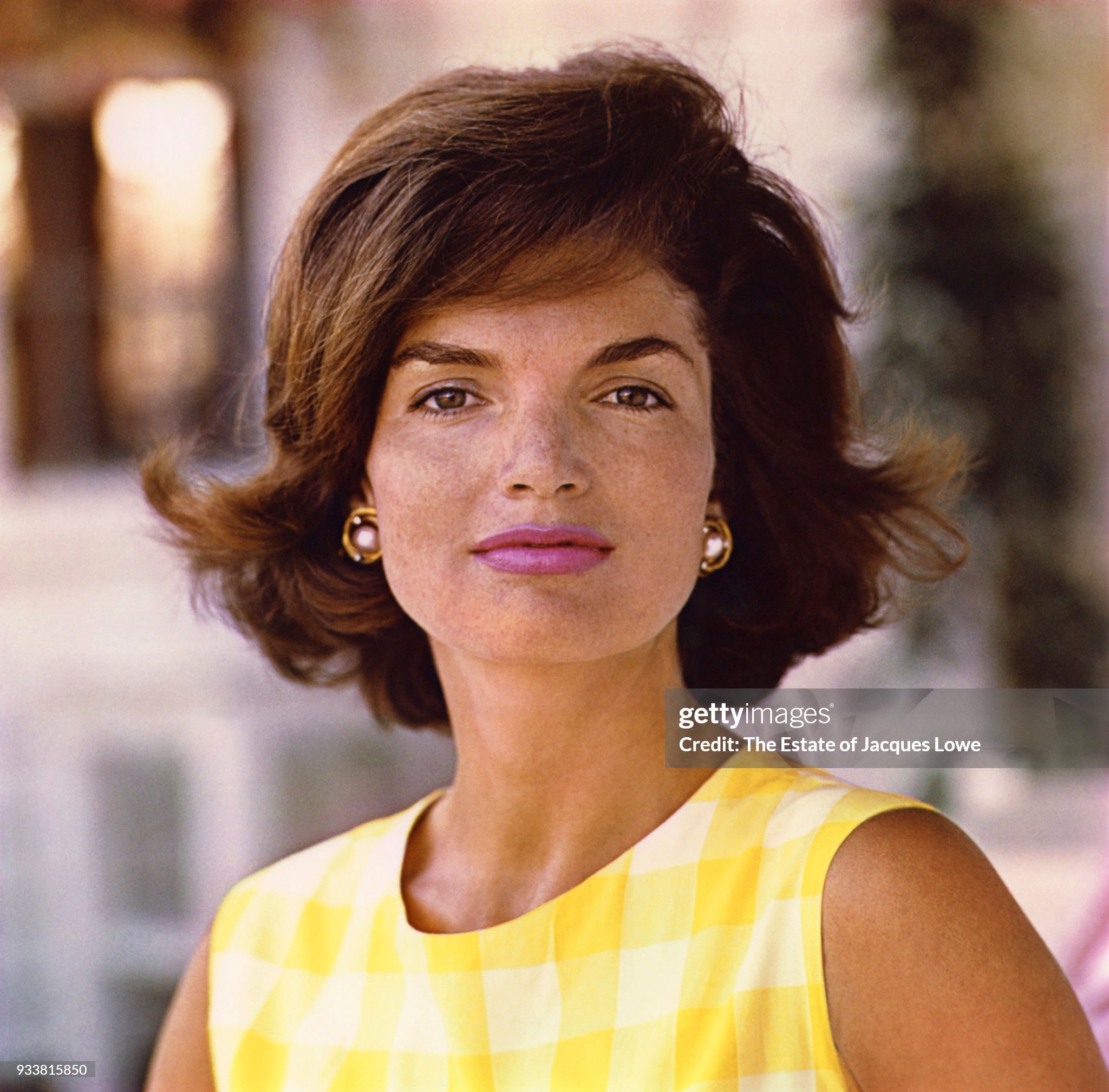
Portrait of (future US First Lady) Jacqueline Kennedy (nee Bouvier, 1929 - 1994) as she poses outdoors at Hyannis Port in Massachusetts, in the summer of 1960. Photo by The estate of Jacques Lowe / Getty Images.
Fittingly, he had the ultimate jet-set consort: he startled the world by marrying Jacqueline Bouvier Kennedy on October 20, 1968. Onassis was not to the villa born. The son of a Greek tobacco merchant, he grew up in the Turkish city of Smyrna. At age 17 he left his family, who by then had fled to Greece and traveled by steerage to Argentina with less than $60 in his pocket. By the time he was 23 he had parlayed his earnings from odd jobs (such as dishwashing and working as a telephone lineman) into a million-dollar business that included cigarette manufacturing, dealing in rugs, hides and furs and operating a decrepit tramp freighter. His formula: 20-hour work days, a penchant for juggling several deals at one time, an ability to unravel the complex maritime laws. Onassis was also willing to take risks. During the Depression he bought merchant ships at rock-bottom prices, even though there was a world glut of cargo capacity. In World War II, those aging vessels earned him huge profits by carrying supplies for the Allies. Later he pioneered the supertanker, building a fleet of at least 50 oil carriers.
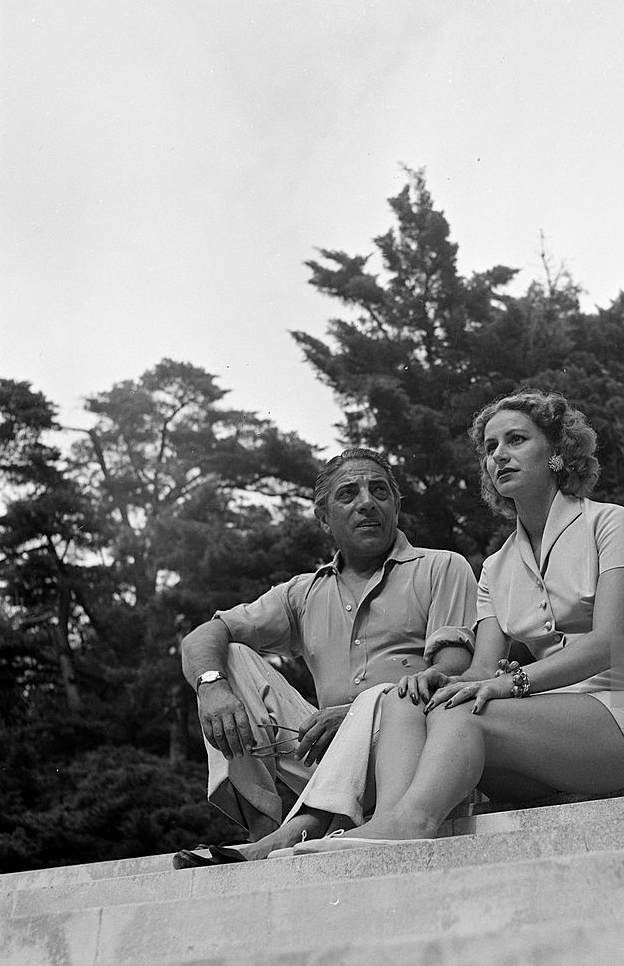
Aristotle Onassis with his wife Tina Livanos.
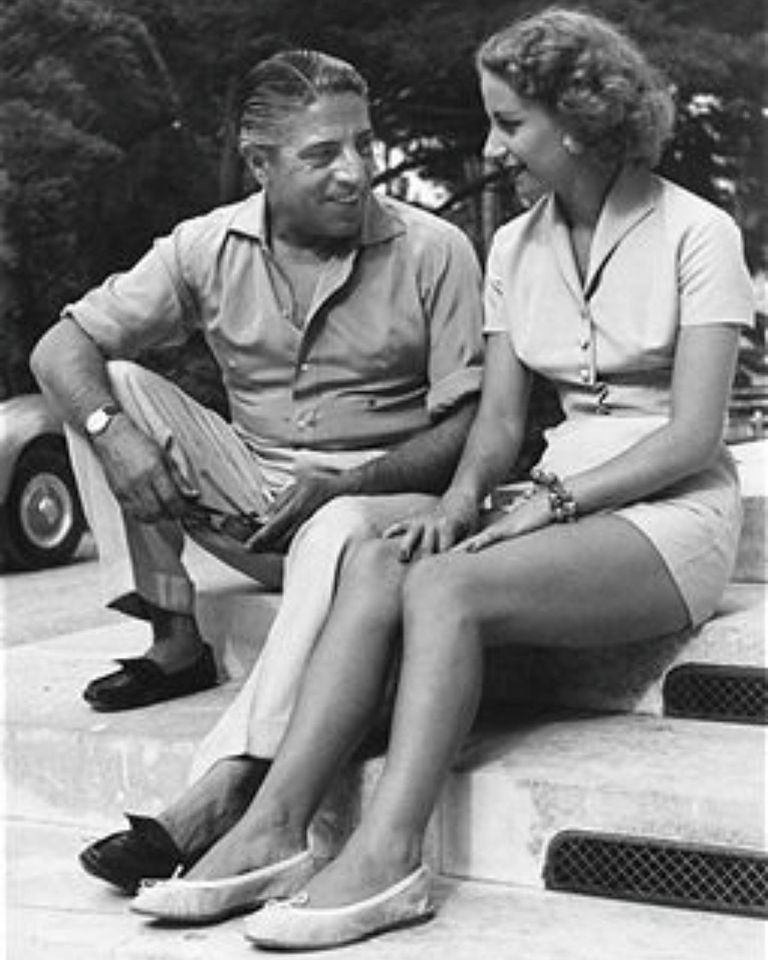
Aristotle Onassis with his wife Tina Livanos.
An exuberant bachelor until he was 40, Onassis in 1946 married 17-year-old Athina (‘Tina’) Livanos, daughter of one of Greece's most powerful shipping tycoons, Stavros Livanos. The marriage also made Onassis the brother-in-law of shipper Stavros Niarchos, his rival for wealth, status and flamboyance. Aristotle Onassis made a strategic choice by marrying Tina but he also really loved her, they had a very happy marriage in the first 10 years that saw the birth of their two children. Ari was a womanizer but, despite what all book and press says without knowing, Tina was special and dear to him. When Ari was mooring his yacht in Monaco as he was establishing the headquarter of his shipping holding company in Monaco, she convinced him that they need a proper home near Monaco.
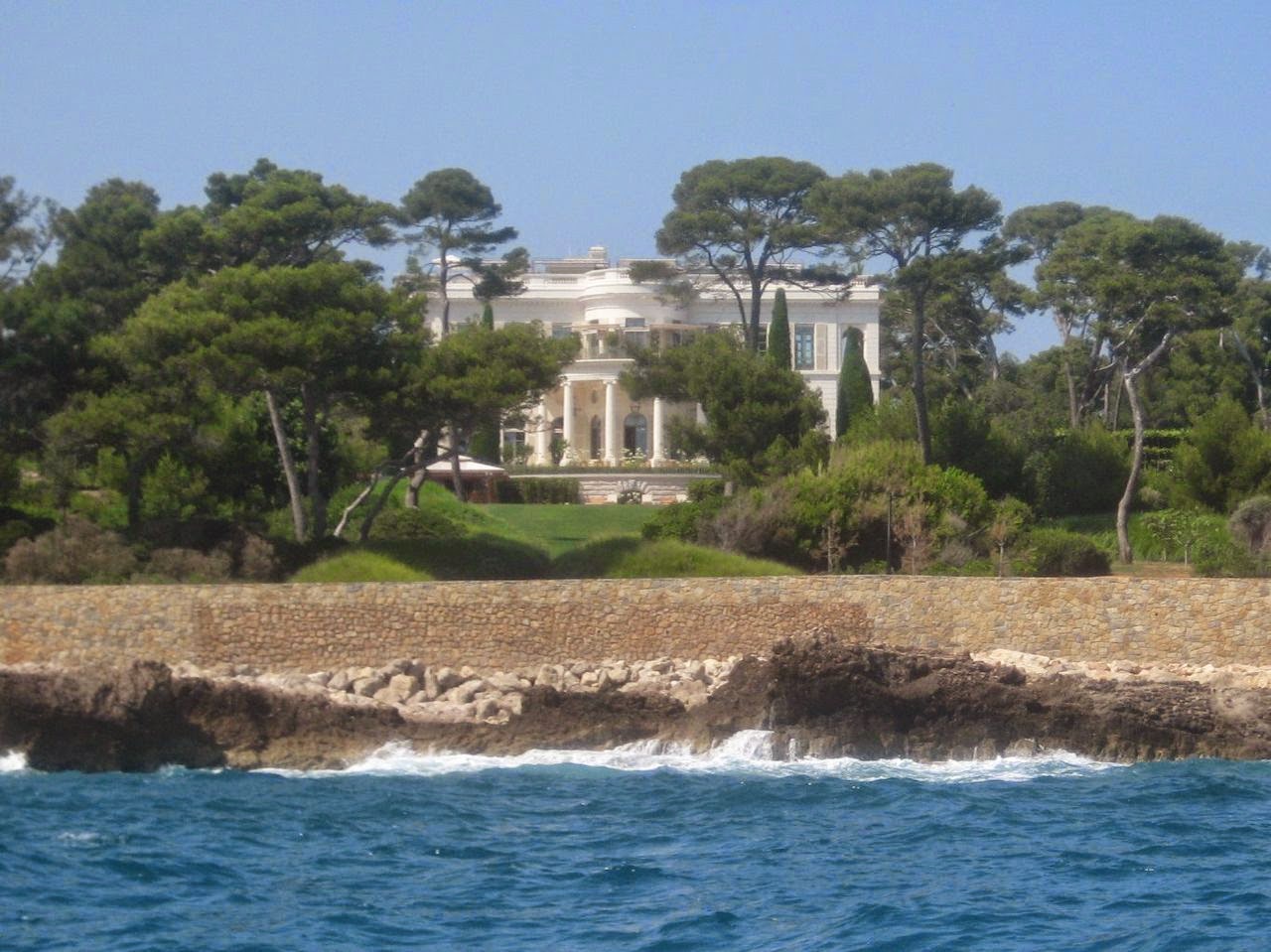
The magnificent mansion of Chateau de la Croe on the French Riviera.
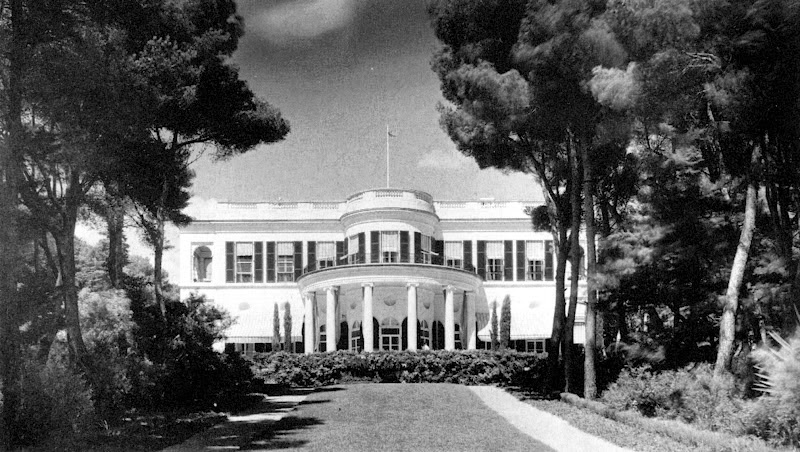
The magnificent mansion of Chateau de la Croe on the French Riviera.
This is where Ari rented and then bought the Chateau de la Croe on the French Riviera, a magnificent mansion where the Onassis family spent their best years (from 1950 to 1957).
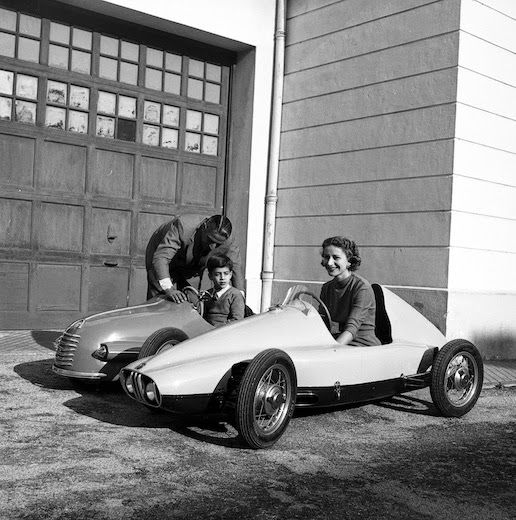
Aristotle Onassis with his family.
I was often invited and stayed with the family, it was great to see how this place made them feel like a real family for once (see the picture, I think you can see and feel their happiness).
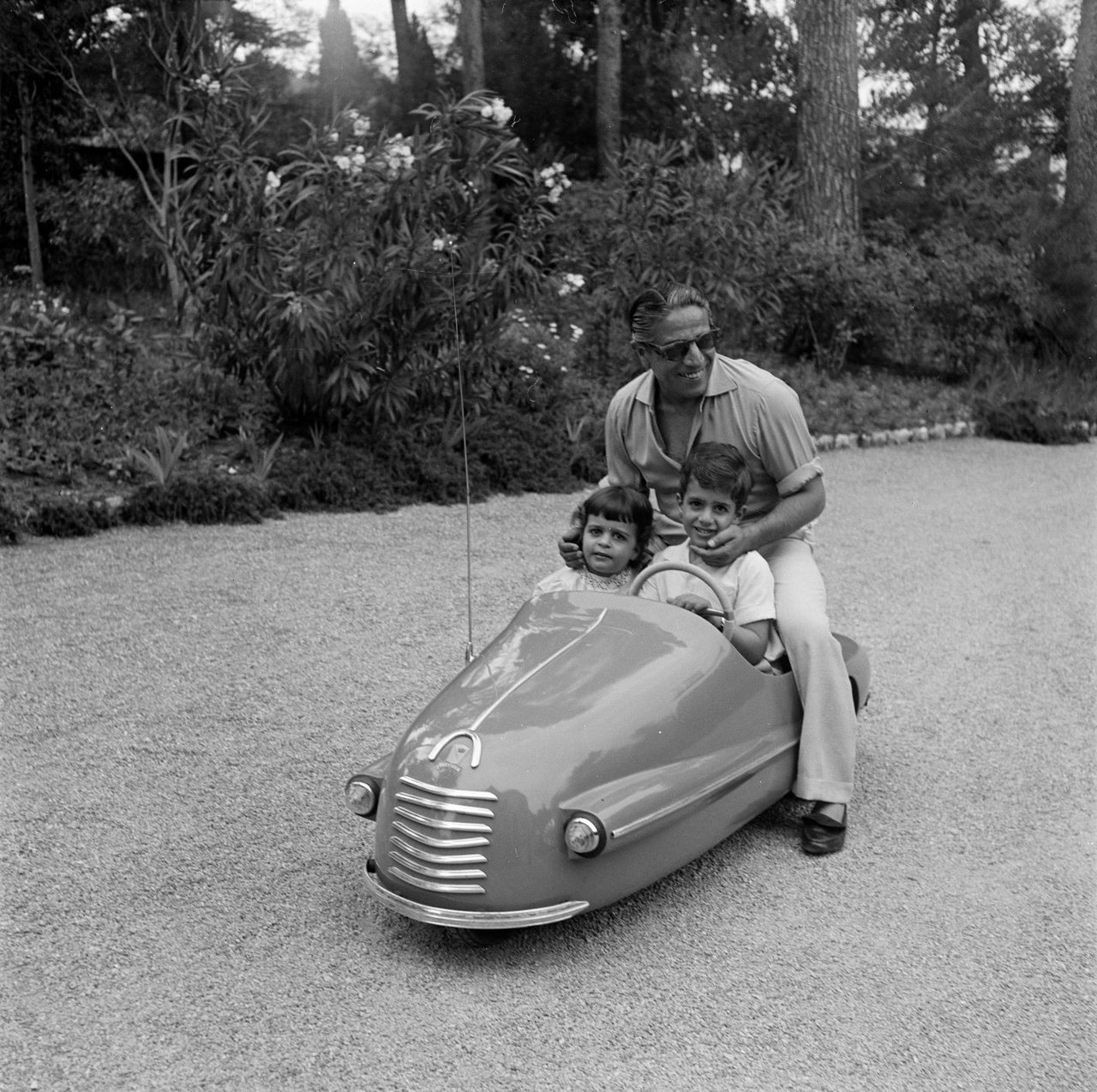
Aristotle Onassis with his children in 1954.
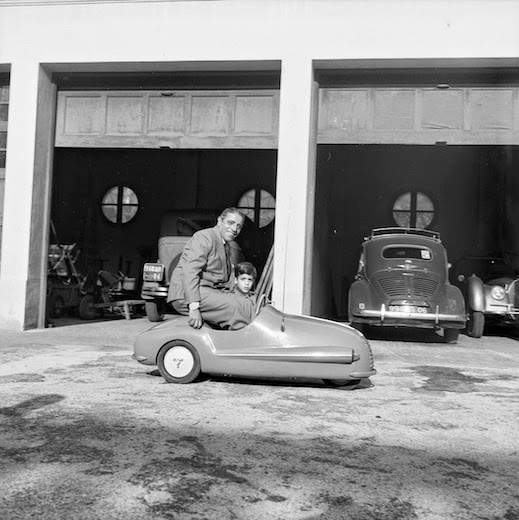
Aristotle Onassis with his children in 1954.
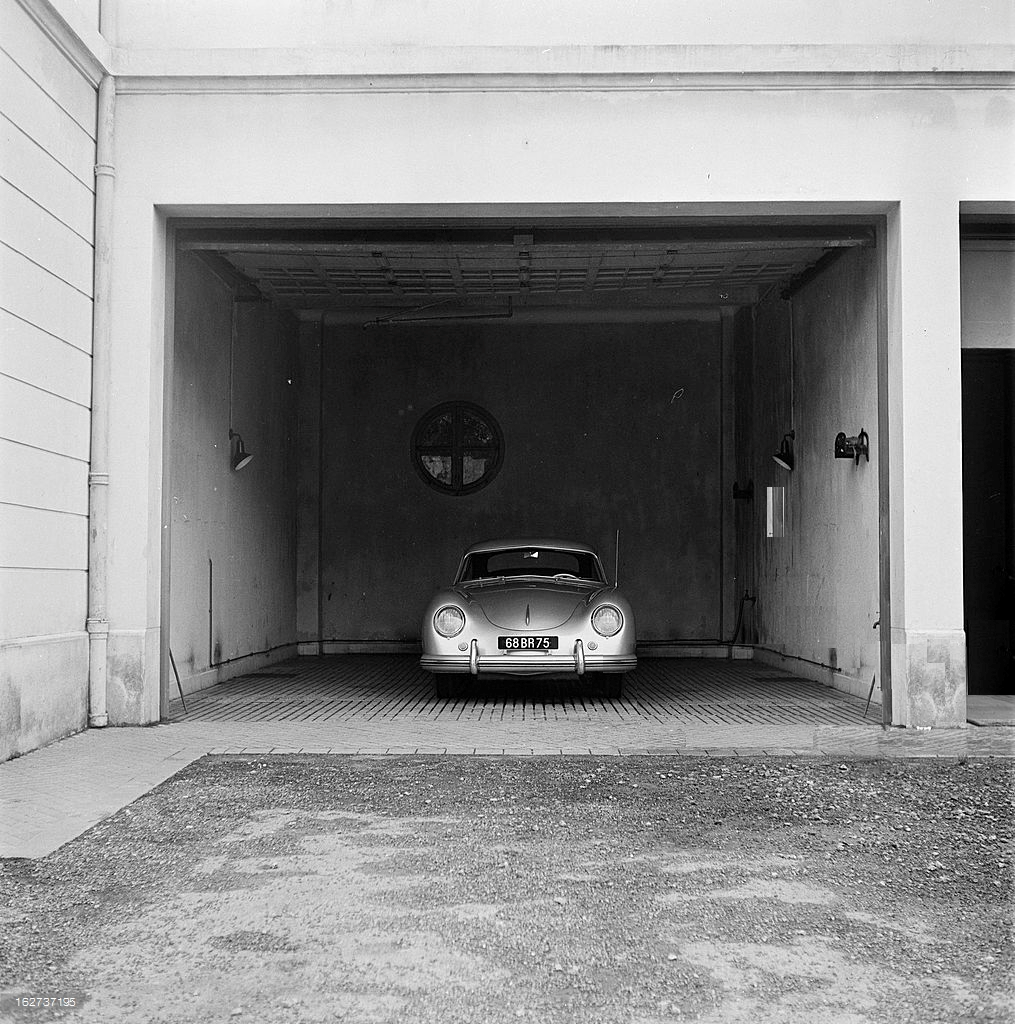
Aristotle Onassis’ Porsche 356.
The house was then acquired by Onassis's brother-in-law and business rival Stavros Niarchos, who bought it for his wife, Eugenia Livanos, Athina's sister. The Chateau de la Croe in southern France has a history. Great. Built in 1927 by the man who designed the Opera of Paris Charles Garnet, as stated in the Real News.
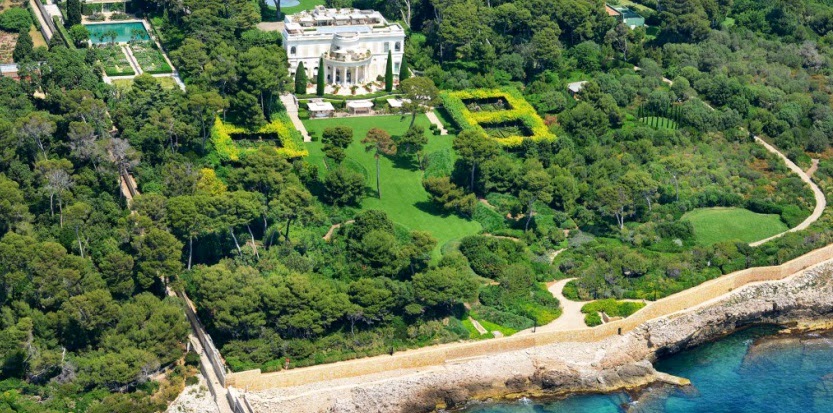
The magnificent mansion of Chateau de la Croe on the French Riviera.
Dominates in a beautiful 80 acres and is located by the sea, in the cosmopolitan resort of Cap d'Antibes. The marriage had dynastic overtones, but in the late 1950s Onassis struck up a long-playing romance with tempestuous Opera Diva Maria Callas.
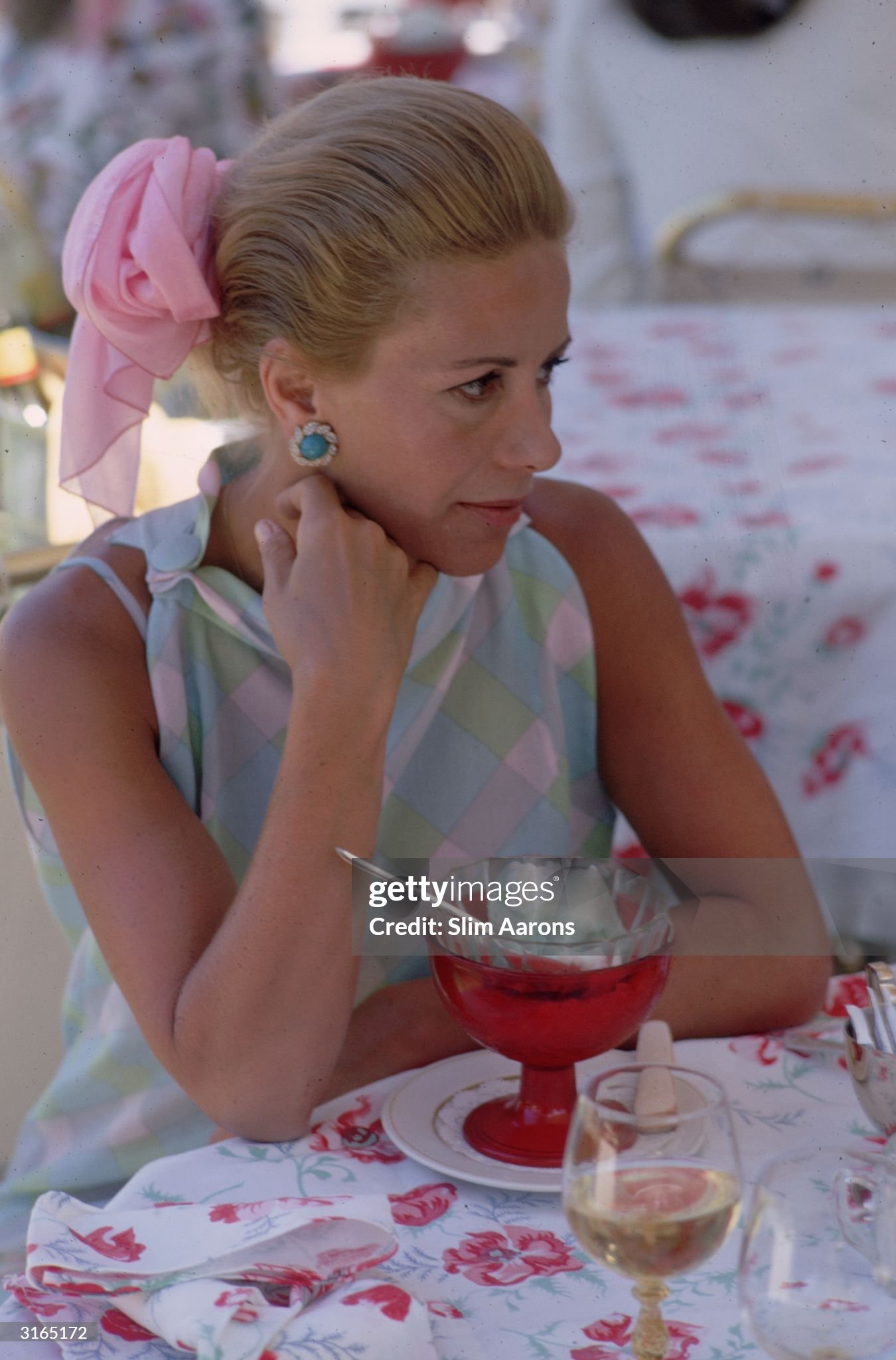
April 1968: first wife of Greek ship owner Aristotle Onassis, Athina Livanos Onassis, at Palm Beach after her divorce. Photo by Slim Aarons / Getty Images.
In 1960, Tina sued for divorce, after having given Onassis a son and heir, Alexander and a daughter, Christina. Onassis' affair with Callas lasted nearly a decade, but by 1968, according to a friend, he was passionately in love with Jackie Kennedy. Their marriage prompted banner— and not always friendly — headlines throughout the world. JACKIE, HOW COULD YOU? asked Stockholm's Expressen. After the honeymoon, the marriage was filled with what one intimate of Ari's called "the nights of long silences." Jackie loved concerts, ballet and theater; Onassis preferred raucous bouzouki music, belly dancers and at times the company of roistering Greek businessmen. Much of the time they lived separate lives; Jackie had visited her husband, who had been in the hospital for five weeks, a few days earlier but was in New York City last week at the time of his death. When they were both in Manhattan, she resided with her children Caroline and John Jr. at her 15-room Fifth Avenue apartment, while Ari stayed in a suite at the Hotel Pierre. Nonetheless, intimates insist, there was much mutual affection and consideration in the marriage. Life changed dramatically for Onassis when his son Alexander, then 24, was killed in a plane crash. "He aged overnight", observed a close associate. "He suddenly became an old man." In business negotiations he was uncharacteristically absentminded, irrational and petulant. When I was in Paris for business, he invited me to come several times to his flat in Paris 88 Foch Avenue just to speak about his lost son and how life was meaningless since he disappeared, he obviously wanted to rejoin his son and was blaming all the Greek gods for this unacceptable event. In his last public appearances, the lingering effects of myasthenia gravis were apparent: his eyelids were taped open because his muscles had become too weak to hold them up. With Onassis' death, the world lost one of its most extraordinary entrepreneurs. However, he left little legacy — no monuments, no great acts of philanthropy, no record of achievement other than a succession of business deals. All that remains is the memory of a vital, tough, self-made millionaire who clearly believed that living well was the best revenge and, more than most mortals, could exact and enact it.
Aristotle Onassis, the megalomaniac of the twentieth century. His Mediterranean fairytale has nothing to do with today's oligarchs. By Cristina Marconi on 17 March 2025.
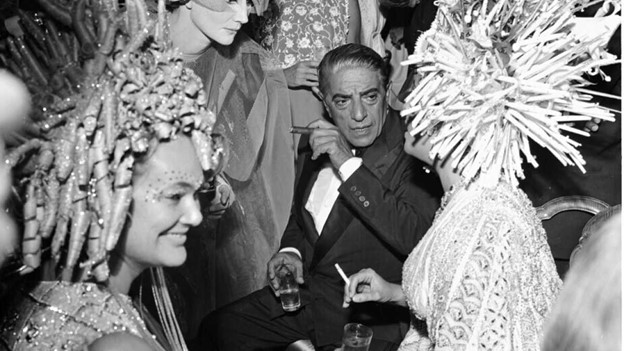
Aristotle Onassis at a Carnival party in 1967. Photo by Olycom.
Wanting to write a history of the megalomania of the twentieth-century, a century in which the separation of careers between political and economic ambition still prevailed, Aristotle Onassis would occupy a central place not only for the remarkable scope of his life's work but also for the vigor with which he sketched a figure that, with many adjustments, still accompanies us. With him, the global self-made man was born, the "poor man with money", to use Donald Trump's words, with his Minoan movable-bottom swimming pool and gold taps on his yacht, a healthy dose of shadows and a fierce — and we emphasize fierce — determination to intertwine with the history of his time through his romantic choices, particularly with Maria Callas first and Jackie Onassis more or less later.
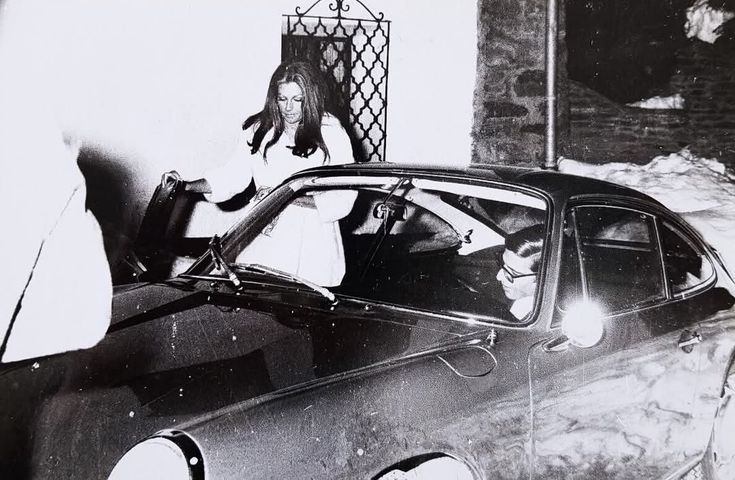
Alexander Onassis in his Porsche with Fiona von Thyssen.
On March 15th, it will be fifty years since ‘Ari’ died a tragic death, a rapid illness following the loss of a beautiful son, Alexander. Anna Folli's beautiful book, ‘Prendersi tutto’ (Neri Pozza), gracefully traces his ambitious life, paying careful attention both to the changing historical context of a man at the turn of the century, who lost both his mother and his hometown in the space of a short time and to the psychological and emotional motives behind each of the evolutions in his wonderful thirst for accumulation.
On a date never fully determined in January 1906, Onassis was born in Smyrna, shortly before the city's death, into a close-knit Greek family that had already demonstrated a strong vocation for success, thanks to his father, a tobacco merchant. When Ataturk took the city in 1922 after days of massacres and devastation that directly affected the Onassises, it was the first test for the adolescent Aristotle to demonstrate his extraordinary resourcefulness: he managed to save almost everyone except his beloved grandmother and preserve part of the family's wealth. An ungrateful and difficult father, the tragic end of his uncles, who were too politically involved and the image of Smyrna destroyed from one day to the next are the three memories — traumas — that he will carry with him forever. His first stop was Buenos Aires, where he arrived with nothing and earned his first million before he was twenty by eavesdropping on businessmen's conversations as a telephone operator. Once he had learned a few lessons, he resumed his father's tobacco business and seized every more or less legitimate opportunity in a city of adventurers and Europeans seeking oblivion. He then entered the world of shipping thanks to his friendship with Costas Gratsos, a Greek like him but the son of shipowners and a graduate of the London School of Economics, a lifelong friend and the technical supporter of his ambitions. A phenomenal ability to persuade led him to make his way in Athens with Venizelos and to travel to European capitals shopping for vessels left empty during the 1929 crisis.
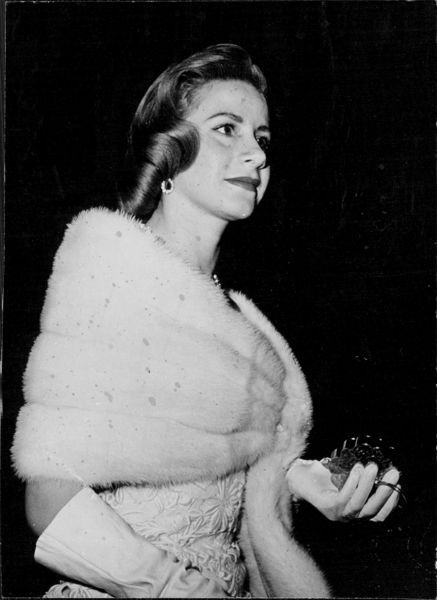
Ingeborg Dedichen.
His first important woman, Ingeborg Dedichen, older than him and the daughter of a Norwegian shipping magnate, arrives. They get together. She teaches him table manners and how to shed at least a little of that Levantine gambler air that he will never fully shed and which, perhaps, will be one of the reasons for the general public's lifelong fascination with him. The devoted Inge also opens the doors to him of the various high society circles of finance and of the shipping industry in Northern Europe. He now travels to major capitals and spends much of his time in London, which he leaves shortly before the German blitz begins. He has boundless admiration for Winston Churchill, to whom he will soon offer wonderful holidays in the Mediterranean.
The rivalry with Stavros Niarchos, his children Alexandros and Christina. His iconic women aren't models, but those who carry an aura.
Stateless at heart, he moves to New York and brings his entire family there, encountering the rigid and conservative community of Greek shipowners of the previous generation. These proud people are unsympathetic to someone who no longer has a hometown and has no intention of appearing different from his true self, unlike his eternal rival and future brilliant brother-in-law, Stavros Niarchos, who instead does everything he can to behave like an aristocrat and speak the language of distinction. The most powerful of them all is Stavros Livanos, an old-fashioned man with roots on the island of Chios, devoted to business, savings and family. He has two beautiful daughters, Eugenia and Athina, but the latter is prettier, blonde, vivacious and liked by both Niarchos and Onassis. After a heated courtship, Onassis wins and manages to marry her, even though she is only 17 and has no idea what awaits her with this rough man in his forties. Shortly afterward, Eugenia marries Niarchos and life goes on like this, from competition to competition, reinforcing the aura of myth that surrounds everything Onassis does. He feeds on the myth, knows it, boasts of coming from the city of Homer, rereads the Iliad at night — he sleeps very little, he has trained himself to forgo sleep to make the most of life — and recites it to his friends.
His human image incredibly benefits: a shark, but not a traitor, radically loyal to himself, a tragic past and a highly respectable antagonist, whom he obsessively looks to even when there are more interesting things to do, like meeting his neighbor on the French Riviera, Pablo Picasso. The two rivals stop at nothing and Aristotle has two children with 'Tina', first Alexandros and then, a few years later, Christina, an unwanted child with dark circles under her eyes and her father's nose.
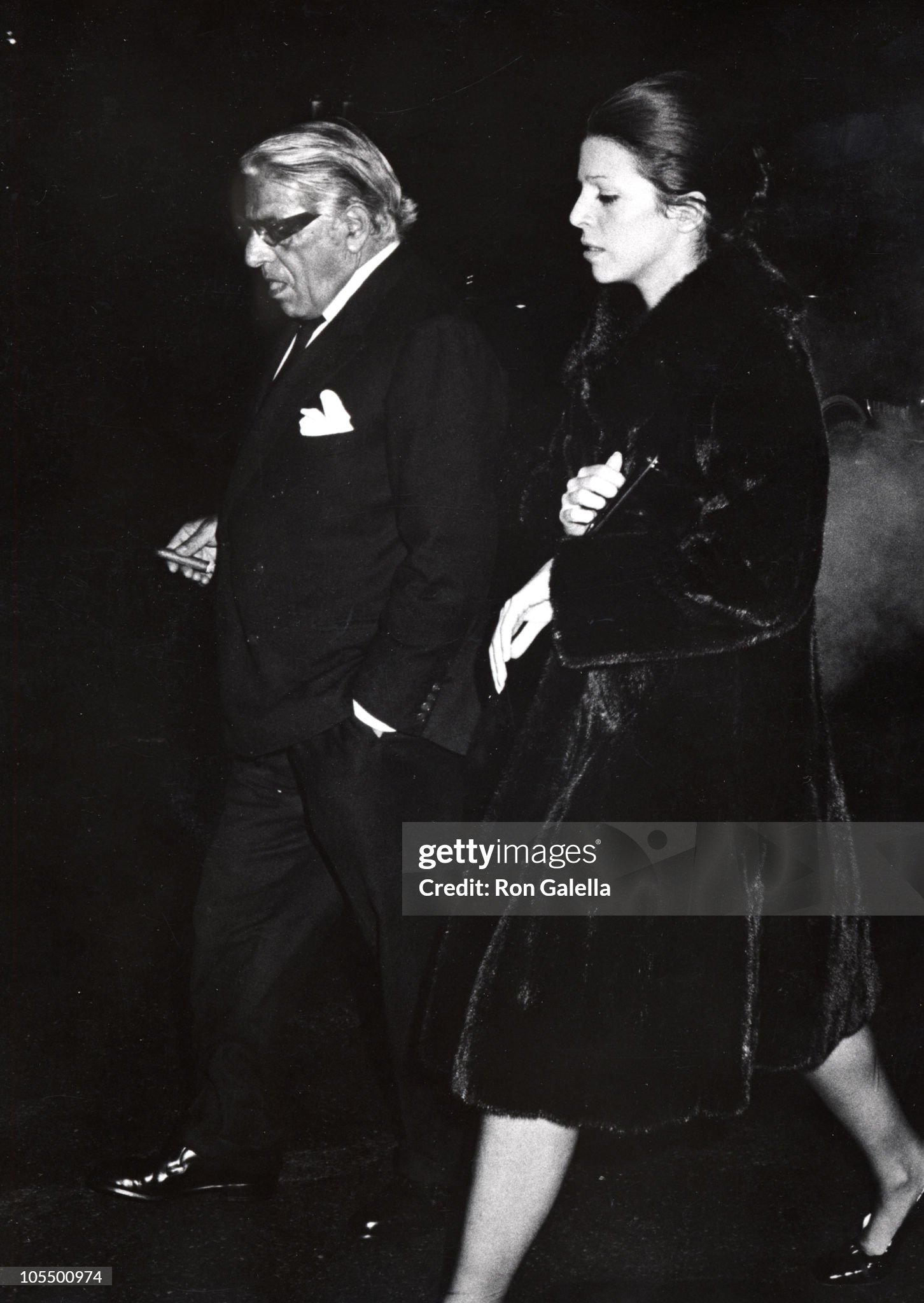
Aristotle Onassis with his daughter Christina at the 21 Club restaurant in New York, United States, on 05 March 1973. Photo by Ron Galella / Ron Galella Collection via Getty Images.
A poor rich girl whose name was used for a yacht more beloved than her, she was a favorite target of the tabloids, which chronicled her romantic dramas and emphasized her very Mediterranean physique, so far removed from that of her beautiful mother. At a certain point, however, she too is forced to give up because Maria Callas, a Greek icon of stellar fame, climbs aboard the ‘Christina’, a castle on the water with bar stools upholstered in whale scrotum skin, urged by journalist Elsa Maxwell, along with her husband Meneghini, who quickly realizes it would be better to stay in the house in Sirmione. The romance with Aristotle is immediate; they love each other, understand each other, argue a lot; she is passionate about ships, listens to him, he is thrilled by her career, tries to relaunch it; they are the two most famous Greeks in the world. She is younger, but it's not yet the time when everyone tries to be a kid; being an adult is fine, it confers something eternal. Maria becomes pregnant, the child — Homer — dies shortly after birth, the relationship is violent, she is increasingly unstable, he increasingly harsh. Meanwhile, Onassis is reaping the ingratitude of Prince Rainier after helping him revive the bankrupt principality of Monaco by taking over the Société des Bains de Mer and making Monte Carlo a magnet for the world's wealthy, a place capable of making you dream.
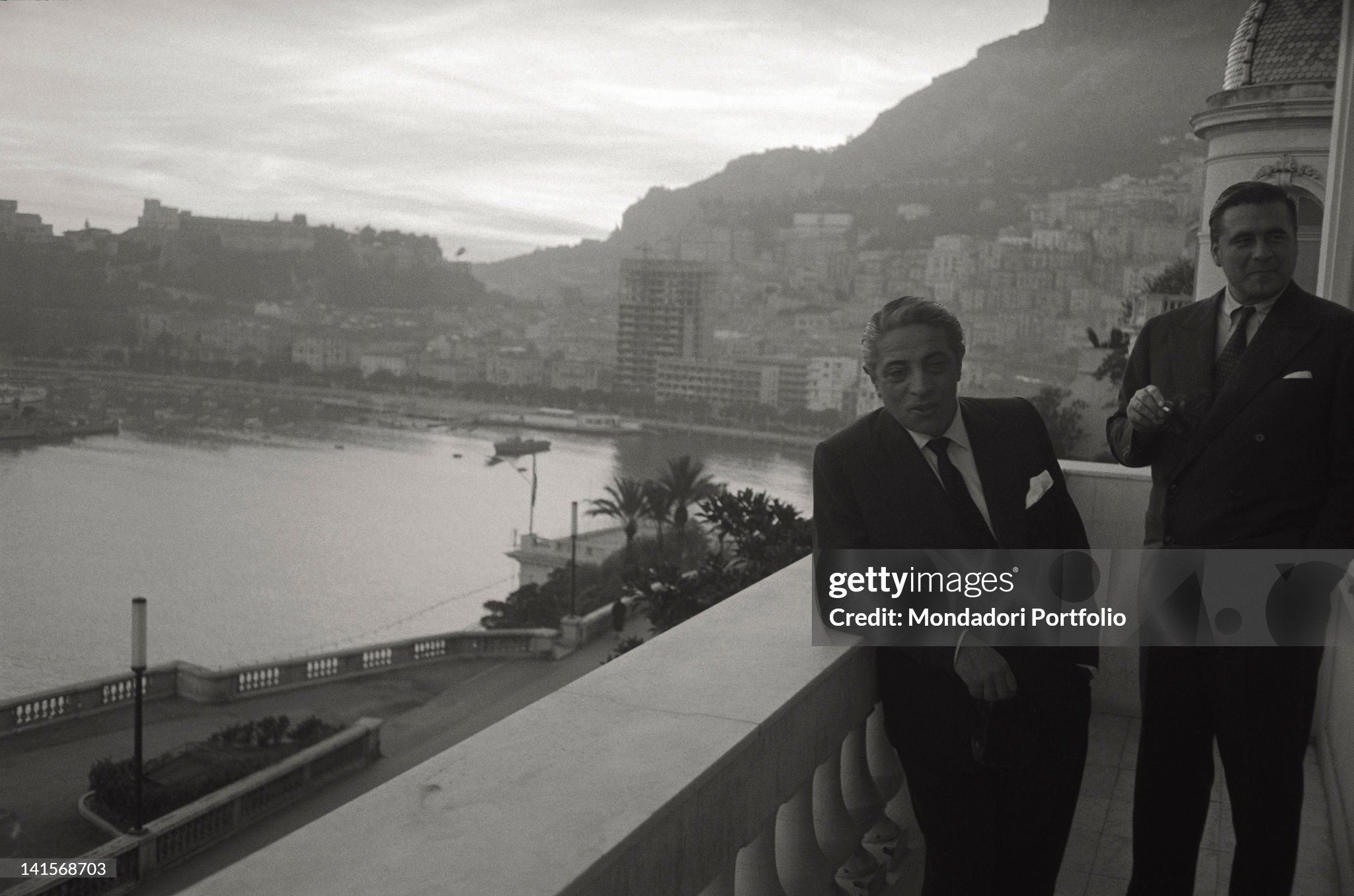
Aristotle Onassis, together with one of his collaborators, photographed on the terrace of a luxurious palace on the bay of Montecarlo, where the shipowner docked his yacht offshore of his coast, in June 1961. Photo by Carlo Bavagnoli / Mondadori via Getty Images.
However, the arrival of Grace Kelly, while on the one hand cloaking everything in unrivaled glamour, on the other spells the end of Aristotle, whom the former actress is too snobbish to tolerate. In her book ‘ Prendersi tutto’ (Taking it all), Anna Folli did a remarkable job of finding a direction in the biography of a character pursuing a concept of glory that we might call holistic: everything that brings prestige, from money to splendor to power to iconic women — not models, but those who carried an aura — had to be his. A grizzled magpie with thick glasses.
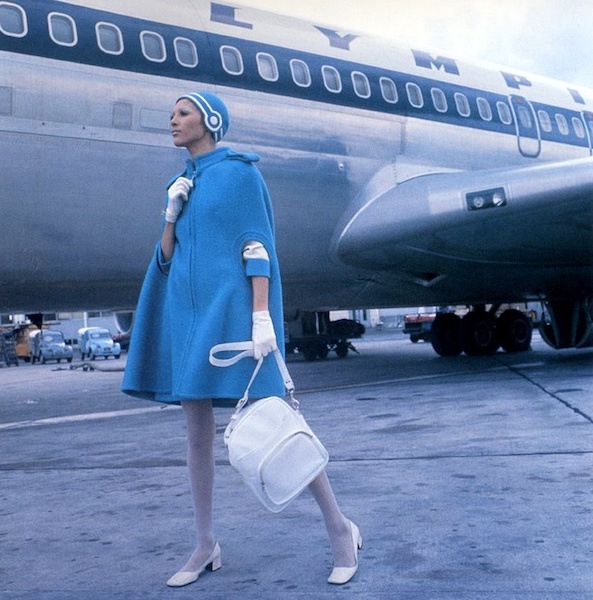
Pierre Cardin's aviation-inspired uniform. Greece’s Olympic Airways flight attendant uniforms in the glory days of the airline were designed by Pierre Cardin. In 1969 tycoon Aristotle Onassis, owner of Olympic Airlines, impressed by the modern, stylish clothes of the designer, chooses Pierre Cardin to dress his stewardesses and he creates, what is believed by many to be, the most classy, tasteful and somewhat futuristic uniform for flight attendants. The French-Italian fashion designer’s revolutionary styles of the 1960s and the 1970s were a crucial part of the youth explosion of the era, worn by the likes of the Beatles and other international celebrities in the swinging sixties. Onassis had bought the financially ailing TAE Greek National Airlines from the Greek state in 1957 and renamed it Olympic Airways. His vision was to make the airline one of the most modern in the world. Under Onassis’ leadership, the airline gained a reputation for lavish style. The cabin crews wore Pierre Cardin-designed uniforms and passengers ate with golden cutlery and listened to a piano player in the first-class cabin. For Greeks, Pierre Cardin’s fashion designs were popularized with the flight attendant suits he designed for Olympic Airways. The 1960s was known as the jet age and Onassis accordingly upgraded the airline fleet to usher in the new age. He went to Cardin to materialize an important part of that vision. It was a golden age for both Cardin and Onassis. The two visionaries in their respective fields joined forces to create air travel journeys full of luxury and futuristic style.
By engaging in politics without ever being tempted to enter the arena, even a less lucrative business like Olympic Airlines made sense, given the prestige that came with being the prince of the Greek skies. He didn't try to change the world, like certain new-fangled oligarchs and certainly the discreet yet equally exceptional epic of Gianluigi Aponte, a shipowner from Sant'Agnello now residing in Switzerland, who had always been married to the woman with whom he built everything from nothing after meeting her on a ferry to Capri where he was captain, is as far removed from the exhibitionist poetics of Onassis as can be. Even though their trajectories and, above all, their destinations have something in common: Aponte's MSC, Mediterranean Shipping Company, has surpassed Maersk, handles 20 percent of global maritime transport and he is worth $37.7 billion according to Forbes. Onassis was looking for something else and, even though his negotiating techniques may recall those of a Balzacian-esque rich man who stammers to wear out his interlocutor and get everything he wants — he prefers late-night negotiations, where he knows he'll prevail because he doesn't sleep — there is nothing stingy about him; on the contrary, the exhibition is part of his project, of his self-fashioning as a modern-day Ulysses with a hint of the Godfather. Returning to his private life, which was never private, at a certain point he met Jackie Kennedy, after having also flirted with her sister Lee, shortly before the assassination in Dallas.
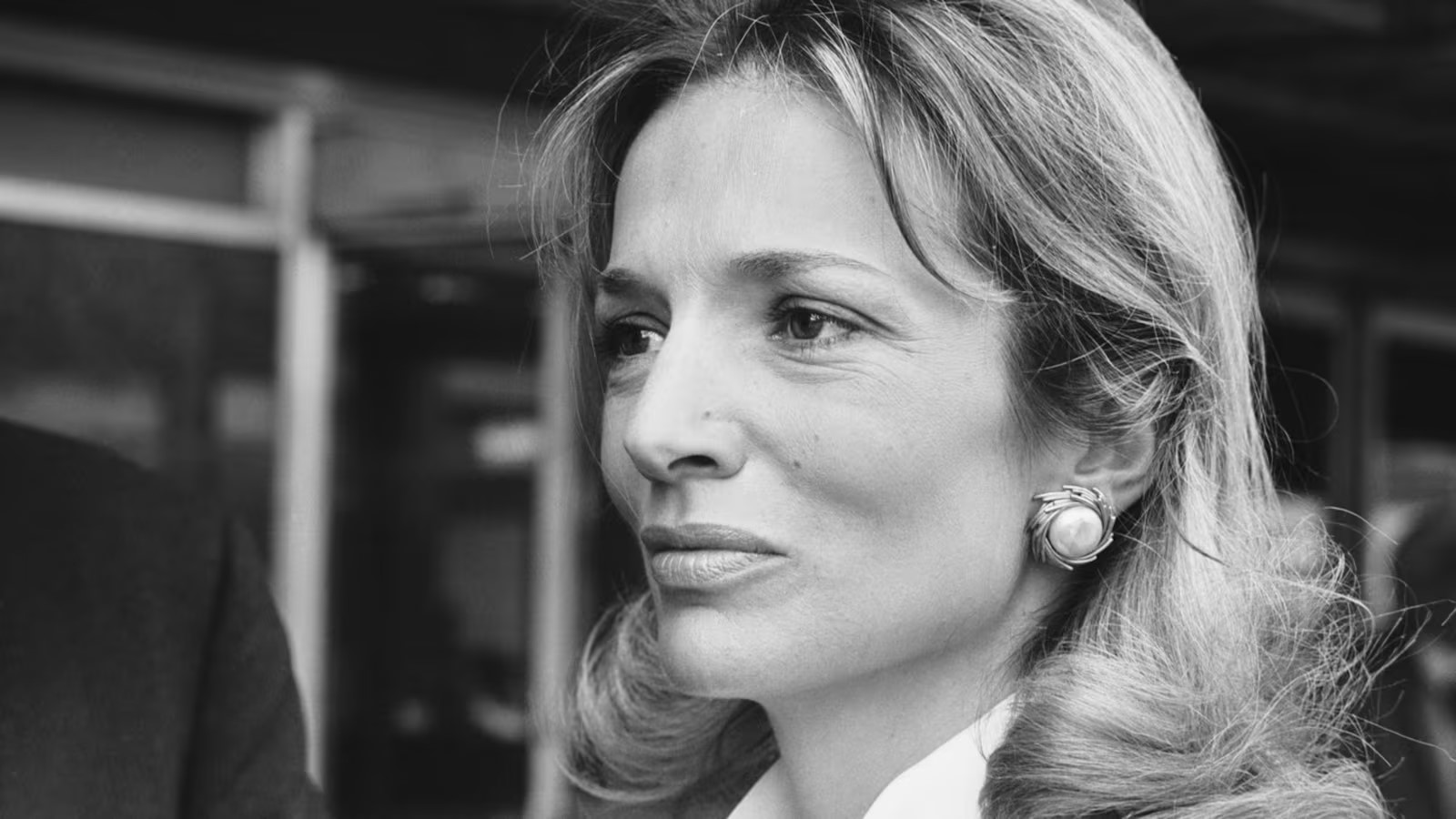
Lee Radziwill, Jackie Kennedy's sister.
He offered her high-class tourism on the Christina and protection from prying eyes while she recovered from the loss of her newborn son and the betrayals of her beloved husband, the president, who was soon assassinated, turning her into an icon wrapped in a blood-stained Chanel. The Kennedys hated Onassis for his scandals and his problems with the law, his deals with the Saudis and, above all, his flaunted vulgarity that smacked of a murky past and success achieved through questionable means, perhaps too similar to that of the first Patrick Kennedy, who arrived from Ireland with nothing. And Ari has the opportunity to marry the most famous woman in the world, Jacqueline, a widow for a few years and unable to overcome the trauma on the one hand, but also unable to find another man capable of financing the incredibly expensive simplicity of her lifestyle. If Alexandros and Christina Onassis hated Maria Callas, the Kennedys will have a visceral aversion towards JFK's widow. Not that the couple will ever appear particularly close; on the contrary.
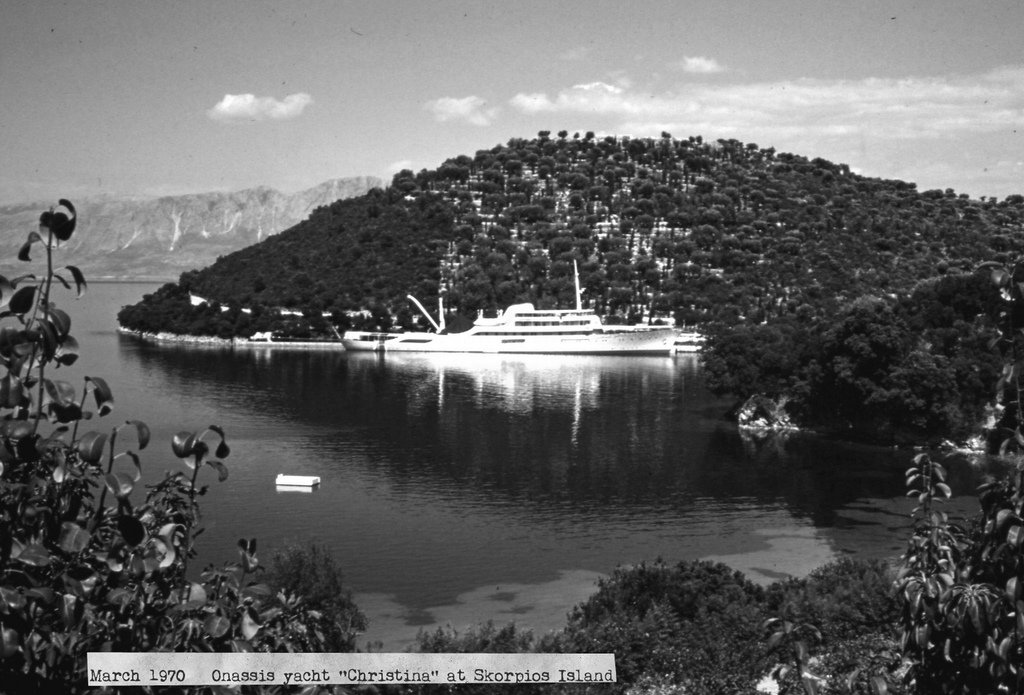
Onassis’ yacht Christina at Skorpios island in March 1970.
After their wedding on the private island of Skorpios, the fiefdom of Aristotle, who had tried in vain to buy Ithaca, Jackie will do what she had done years before for the White House: a beautiful, extremely expensive renovation. Something she would have done for the Vatican if she could, according to friends; but he is far from enthusiastic, she spends far too much: if she likes a pair of shoes, she buys thirty pairs and gossips even say she makes deals with the clerks to bring them back to the store and take the money in cash. However, they rarely see each other; her name is enough, the occasional photo, having a piece of American history at his side, even though her choice isn't popular in the United States, as if it had dishonored the president's memory. He has everything, but his heart is still with Maria Callas, whom he visits in Paris and who more or less accepts the situation, just as the other woman accepts her.
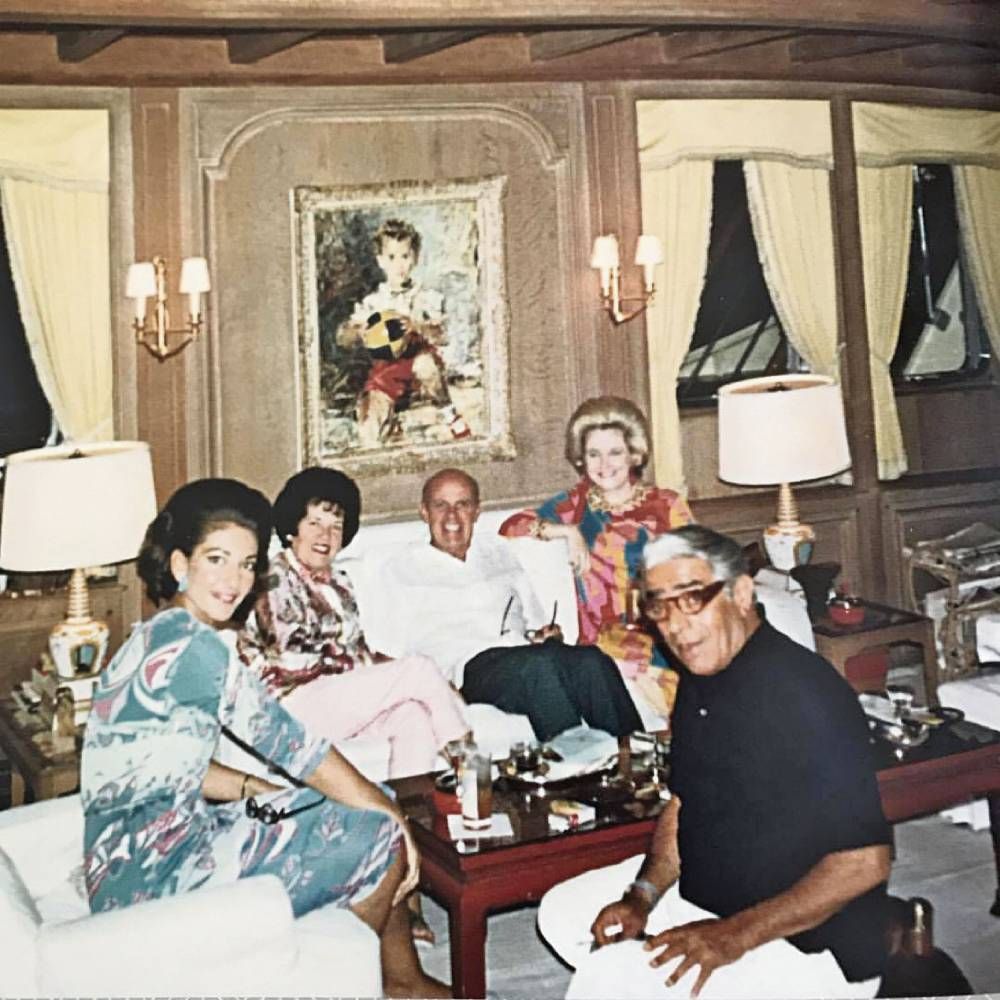
Aristotle Onassis with Maria Callas.
The photos of the two of them together have something magnetic, they exude an eternal charm, like seeing a photo of your grandparents on a holiday.
Then tragedy strikes and his son Alexandros dies in a bizarre plane crash. It's 1973 and Folli recounts in gripping pages how omnipotence crumbles against the reality of life, as in Smyrna, as when willpower is no longer enough. Meanwhile, Onassis makes deals with the most corrupt regimes, is close to the colonels in Greece, stops at nothing and refuses to let his daughter marry a Jew because he fears it will harm him in the Arab world. Tina, who in the meantime has married Niarchos shortly after the suspicious death of her sister Eugenia — barbiturates, but with a few too many marks on her neck — also dies from an overdose of medication and shortly thereafter, Aristotle also passes away, a victim of the myasthenia gravis that had tormented him for years. It's 1975. Jackie inherits very little and puts up a fight. Christina is left alone and fills the void with food. She trusts only those who can pay. She has a daughter with a handsome Frenchman, the heir to a pharmaceutical company (but who demands money to be with her). She dies young and unhappy in 1988 in Buenos Aires, the city where it all began. The unhappy jet set of those years loses its queen. In the meantime, other oligarchs have arrived, entering the halls of power through the front door, no longer just asking for favors; they have extended their image of glory and revolutionized the world with their brilliant ideas. Onassis has never been interested; he was not an innovator and certainly not a visionary; for him, possessing the old world was enough. His is a dusty and eternal Mediterranean fairytale, a chapter in the history of ambition vieux jeu. And in this linearity, this simplicity of style and intention lies the secret of the interest his story can hold. It is the strength of Platonic ideas: they are the pure form.
Glasses of life. The other golden Greek par excellence, Aristotle Onassis, had an unparalleled passion for the high life, but lived with a stylistic refinement that will never be surpassed. By Freddie Anderson on 04 July 2024.
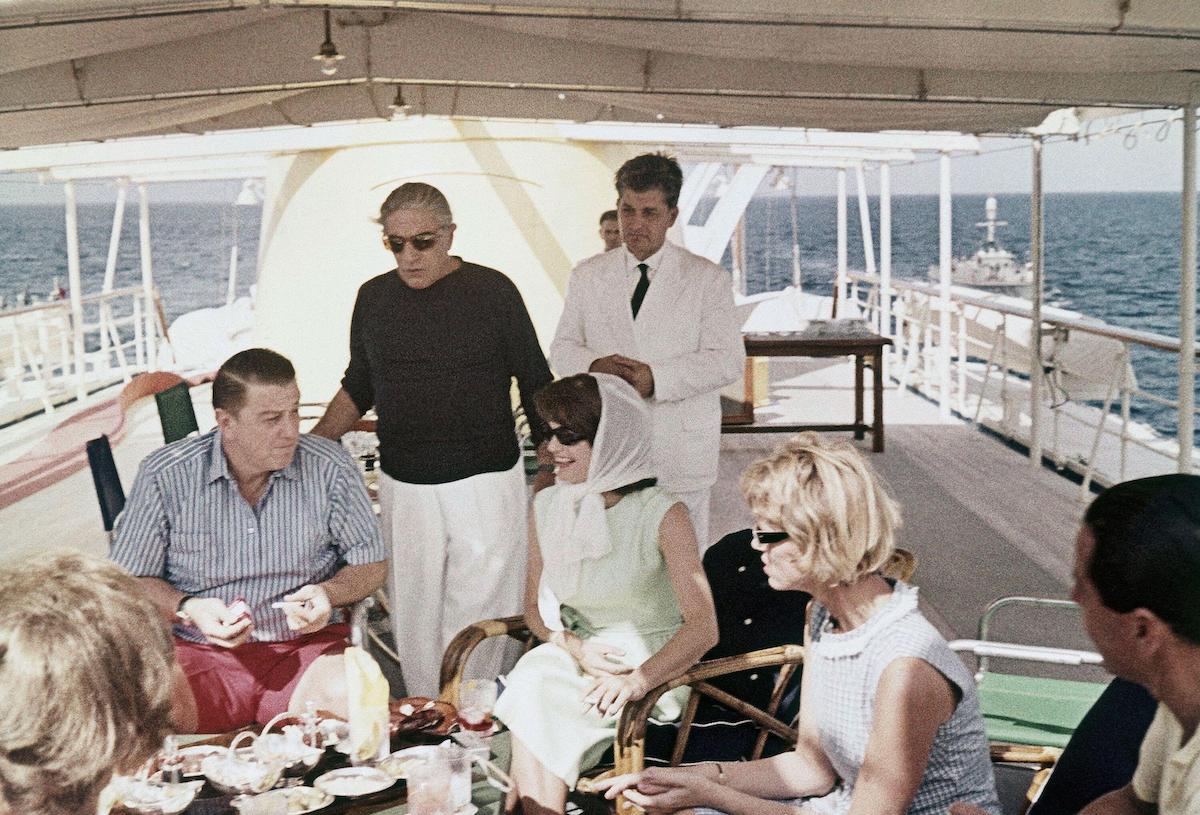
Aristotle Onassis on his yacht with Jackie Kennedy and some guests.
On 01 August 1963, Rudolf Nureyev and Margot Fonteyn were photographed climbing a shrub-lined balustrade at the Hôtel de Paris in Monte-Carlo, conversing with Aristotle Onassis and his glamorous longtime girlfriend, soprano Maria Callas. As the majority shareholders of the Hôtel de Paris through the Société des Bains de Mer (SBM), a real estate company that managed the casino, the Hôtel Hermitage and various other tourist attractions, Nureyev and Fonteyn were thought to have the privilege of socializing with Onassis in a more ceremonial setting.
True, that's true, but the fact that they made the effort to speak with Onassis is an example of the enormity of his stature as a tycoon, both in upper-class business circles and in the highest echelons of international society.
Born in Smyrna, now İzmir, in Turkey, in 1906, his Greek father was a successful tobacco merchant and later became head of the stock exchange in the Greek-dominated Turkish city. However, in 1922, when the Turkish army burned the Armenian and Greek neighborhoods of Smyrna, the family lost everything, including the murder of many relatives. Experiencing these unimaginable atrocities at such an early age evidently instilled in him the resilience, ambition and creativity that he would fully exploit throughout his life.
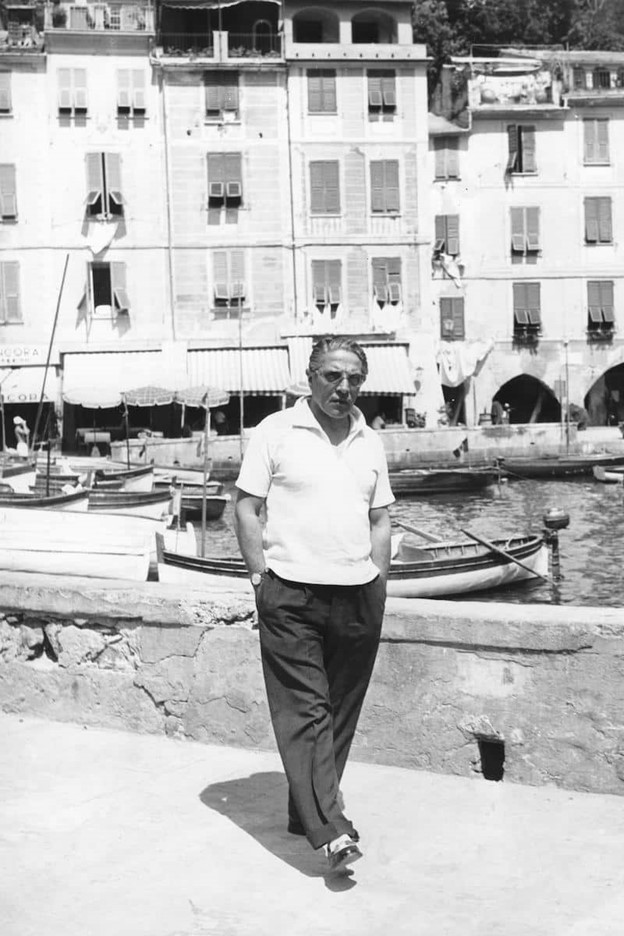
Aristotle Onassis strolling the canals of Italy in 1955. Photo by Keystone Press via Alamy.
Fleeing the brutal war on a small boat, he landed in Buenos Aires, Argentina, where he quickly identified and exploited opportunities. He worked as a telephone operator on the night shift for the British telephone company United River Plate, which allowed him to frequent elegant yacht clubs during the day and meet a variety of wealthy individuals. By listening to international telephone conversations, he acquired enough foreign vocabulary to inspire him to seize his first opportunity. This was the era when Rudolph Valentino, known as the ‘Latin lover’ for his dashing looks and style, had sparked a craze among women for the exotic Middle East. This phenomenon had been ignited following his performance in the hit film The sheik (1921) and its sequel The son of the sheik (1926). It was Valentino’s elegant use of his cigarette that gave Onassis the idea to create his own brand. He skillfully imported tobacco from Türkiye and catered to the female market, earning his first million dollars at just 25 years old.
The next stop was London. It remains the world's most important maritime hub and there Onassis further developed his Argentine shipping company. Maintaining a private suite at the Savoy, he dramatically outperformed cigarettes. After building the world's first supertankers, he was soon dubbed the ‘king of tankers’. However, whenever Onassis built a 30,000-ton vessel, his arch-rival, shipping magnate Stavros Niarchos, responded with a 31,000-ton vessel. A rivalry that was not limited to the sea, as the tabloids enthusiastically and vigorously reported.
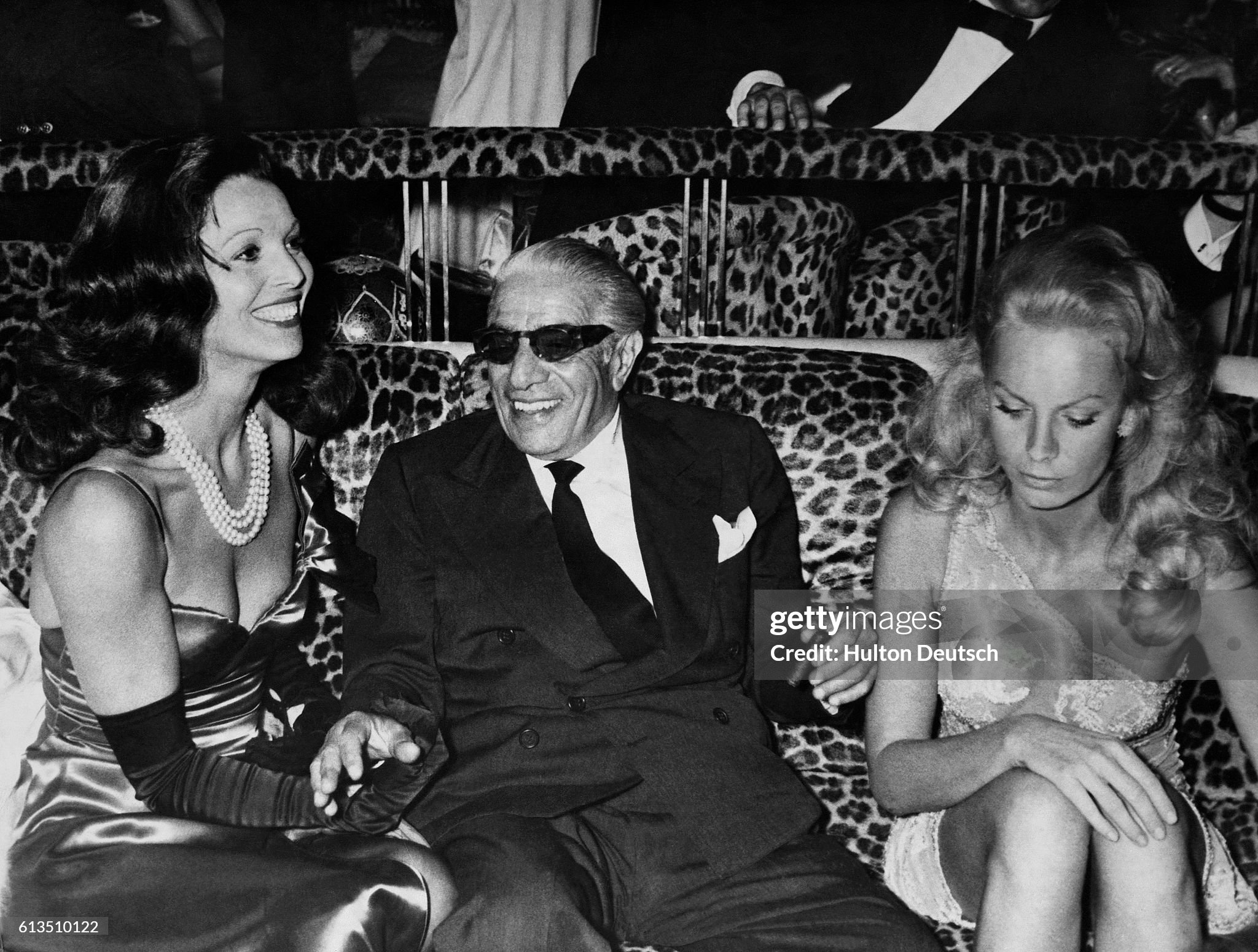
Aristotle Onassis, the Greek-born shipping magnate, at a party in Paris in 1974. Photo by Hulton - Deutsch Collection / Corbis via Getty Images.
Onassis once said: "if women didn't exist, all the money in the world would be meaningless." Fortunately for Onassis, this outcome never materialized. Considered one of the most beautiful women in the world, Tina Livanos married Onassis in 1946. The daughter of Greece's most powerful shipping magnate, Stavros Livanos, she was only 17 when they wed in a lavish New York wedding. Onassis was 40, but at least he was captivated by the significant age gap and it certainly wasn't a flat trajectory.
In 1934, he had met Ingeborg Dedichen, the attractive and wealthy daughter of a Norwegian aristocrat, who was seven years his senior. In the midst of his second divorce, the relationship with Onassis would last over a decade. But as with nearly all of Onassis's romantic relationships, there seemed to be an element of self-interest, usually to exploit his vast naval fleet.
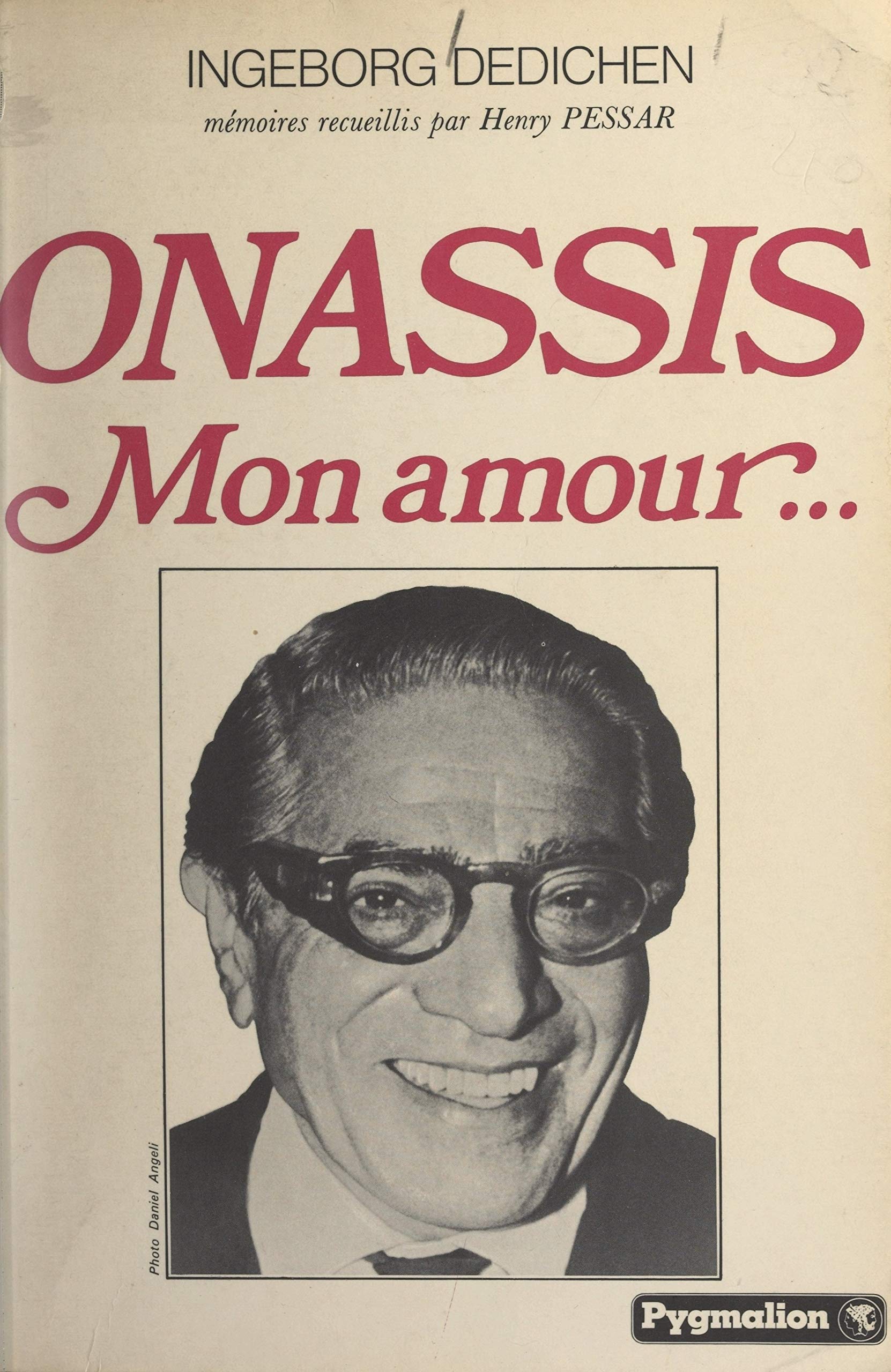
Tremendously wealthy in her own right, with an endless list of powerful financial connections, Dedichen was the archetypal prey for Onassis.
"The secret of business is knowing something no one else knows", Onassis said. As early as 1930, he adopted a pioneering approach to taxation. He used Monaco, Liberia, Liechtenstein and Panama two decades before multinationals discovered these coveted tax havens. Since 1297, Monaco had been governed as a constitutional monarchy by the Grimaldi family. The coastal principality had reaped the benefits of France's illegal gambling laws from 1836 to 1933. However, the financial consequences of World War II were so severe that Belle Époque buildings began to collapse. As a friend of Prince Rainier III, Onassis would be instrumental in ensuring that Monte Carlo returned to being a playground for Hollywood's rich and famous, thus filling the Monegasque treasury coffers beyond pre-war levels. The most important day was when Prince Rainier married Grace Kelly, a historic union that might not have happened had Onassis not advised Rainier to marry a glamorous actress.
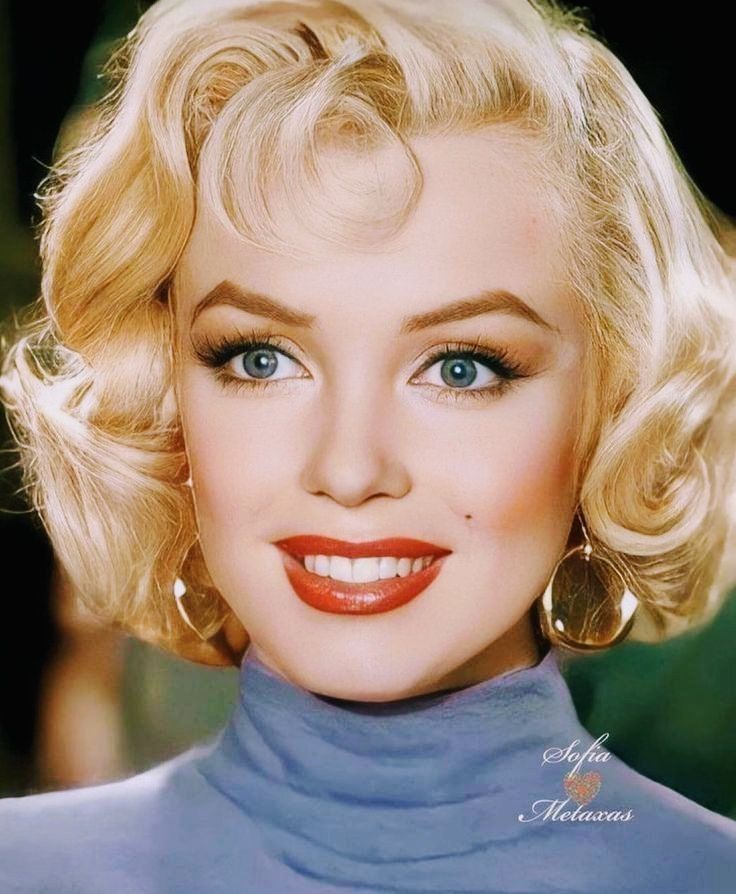
Marilyn Monroe.
And he spoke from a place of authority, as his infamous 325-foot yacht, the Christina, named after his and Tina's daughter, was a favorite summer retreat for Marilyn Monroe, Greta Garbo, Elizabeth Taylor and Gloria Swanson, with Garbo and Swanson known for their frequent flings with Onassis.
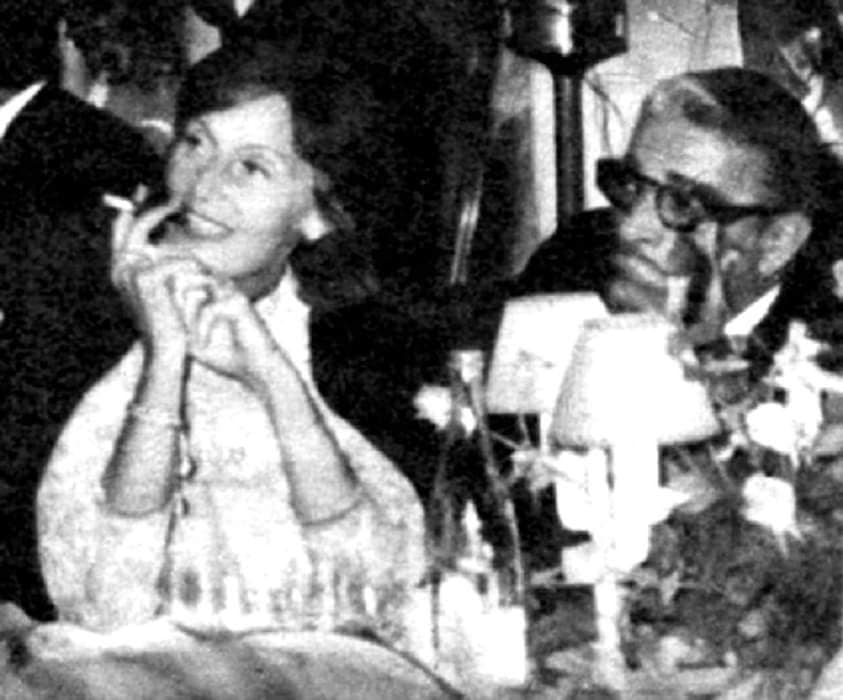
Aristotle Onassis with Greta Garbo.
Onassis's influence was strong, but so was that of his nemesis Niarchos. In 1947, Niarchos took Eugenia Livanos, Tina's sister, as his third wife, although during this marriage Niarchos had an affair with Pamela Churchill, a woman who at the time was also known for her romance with Aly Khan in Paris.
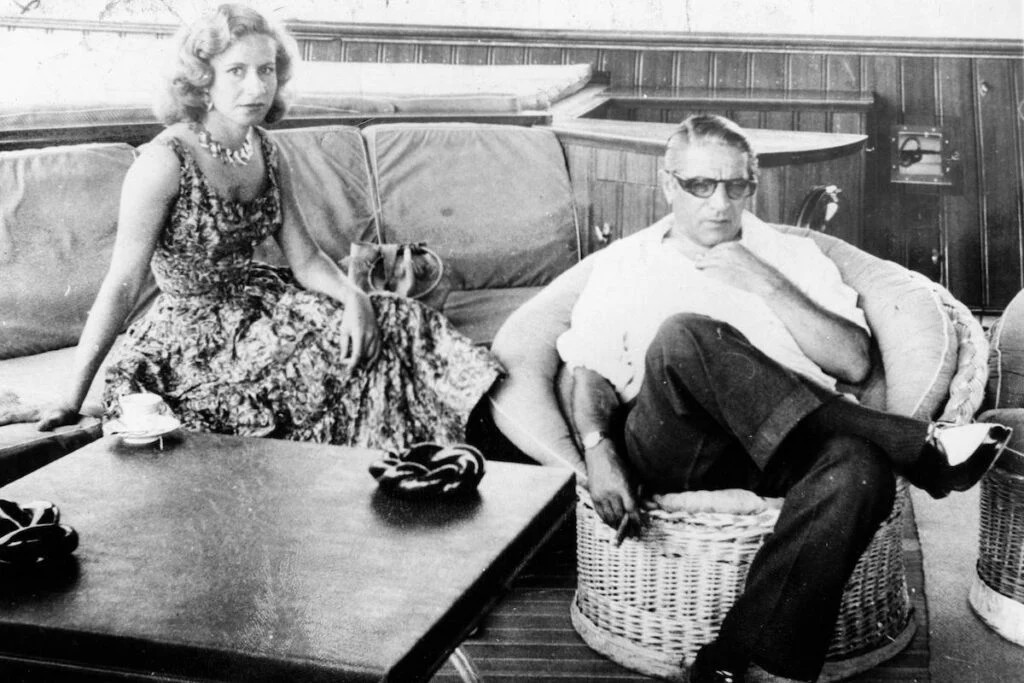
Aristotle Onassis and his wife Athina Livanos on a yacht in July 1952. Photo by Keystone Press via Alamy.
By 1961, Tina had grown tired of Onassis's affair with Maria Callas and the two divorced. In 1970, however, Eugenia was found dead on Niarchos's private island, Spetsopoula.
The following year, Niarchos married Tina. A rather dark episode, but an example of how far Niarchos and Onassis would go to outdo each other.
Onassis had long been known for his insatiable appetite for rich and famous women. Before Jacqueline Kennedy's scheduled visit to Greece, President John F. Kennedy summoned his top Secret Service agent Clint Hill to the Oval Office and ordered him "not to let Mrs. Kennedy cross paths with Aristotle Onassis."
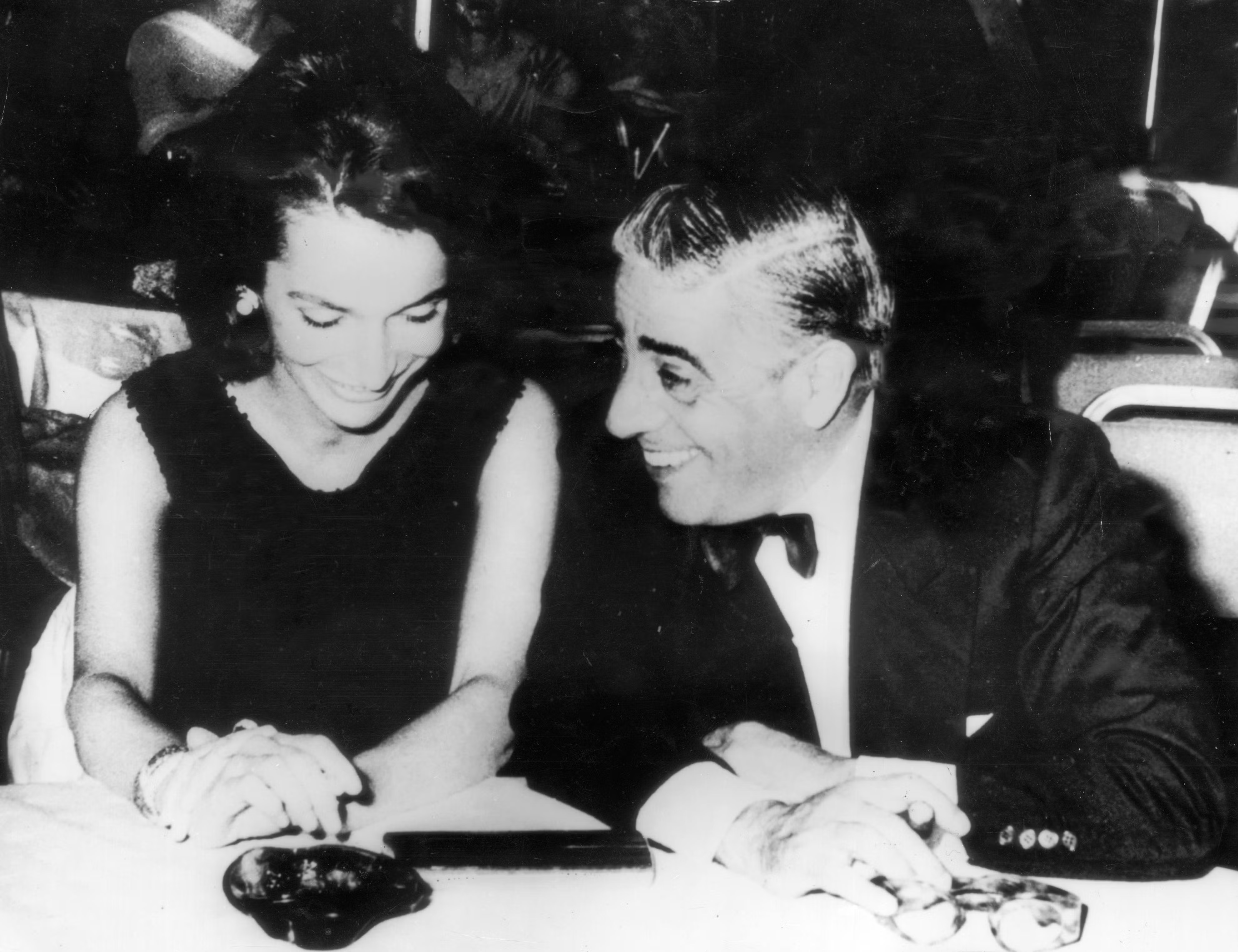
Aristotle Onassis with Lee Bouvier.
Already known for his affair with Mrs. Kennedy's sister, Lee Bouvier, Onassis's marriage to Jacqueline in 1968, five years after JFK's death, only cemented his reputation as one of the most powerful ladies' men of all time.
Anyone fascinated and enchanted by the glitz and glamour of the French Riviera and looking to make a stylish impact with their clothing can't help but look to Onassis. Standing just one and a half meters tall, the same height as the Duke of Windsor and an inch taller than Adnan Khashoggi — a comparable mogul in terms of high living — it was precisely his unconventional style that defined his unparalleled legacy. It's true that some respected sartorial commentators have argued that short people shouldn't wear double-breasted suits. But Onassis proves the detractors of this argument wrong and he earned that label by wearing bespoke Caraceni inventions with his own personal panache. Even when casually strolling along Monaco's harbor near the lighthouse, he always wore his jacket buttoned up. Crisp white trousers, unbuttoned polo shirts, flat loafers and the iconic Onao-framed sunglasses became Onassis’s go-to casual style for the French Riviera.
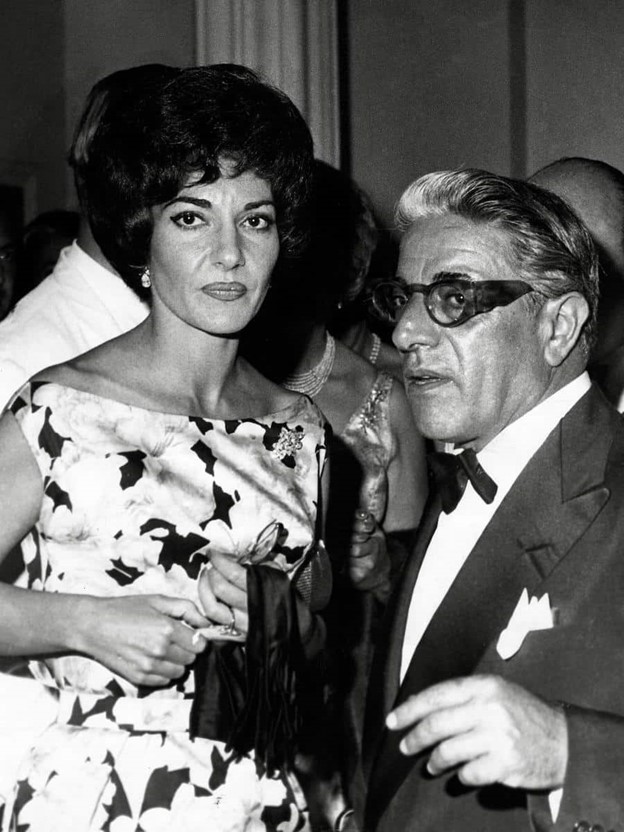
Maria Callas and Aristotle Onassis at the Rose Ball hosted by Princess Grace of Monaco in 1960. Photo by Picture Lux / The Hollywood Archive via Alamy.
Onassis abstained from flashy accessories and operated under the motto "less is more."
It's hard to pinpoint a single tycoon who has had such a profound impact on business, fashion and personal life. Onassis should be an inspiration to every true entrepreneur — not the digital kind, but the true empire builders tasked with creating businesses in the real world.
Aristoteles Socrates Onassis.
Ari the legend
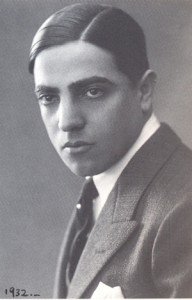
Aristotle Onassis.
Aristotle Socrates Onassis was born in Smyrna, Turkey, in either 1900 or 1906 – throughout his life he maintained two passports, with two very different dates of birth. A Greek of Turkish nationality, his mother died when he was 6. In adolescence, Onassis admired his uncle Alexander, who taught him to always charm his way to the top of every situation and drilled into his impressionable young mind ancient Greek stories of passion, love, revenge, defiance and loyalty, concepts that would play out in Onassis’ later life.
Onassis fled to Greece when war erupted in Smyrna, becoming a homeless Anatolian refugee at 17 – or 23, depending on which year of birth you believe. Onassis wanted to emigrate to the U.S., but immigration quotas had just been introduced and Anatolian refugees were on the ‘not wanted list.’ Soon he ventured to Buenos Aires, Argentina, the right destination for a young man hungry to carve out his place in the world.
During his years in Argentina, Onassis imported Turkish tobacco from Greece. His father had been successful in the tobacco industry in Turkey before the war. Some historians and conspiracy theorists maintain that Onassis actually imported opium, not cigarette tobacco, into Argentina and that he later made his huge megafortune, not from oil and shipping activities, but from drug running and from the manufacture of synthetic diamonds, rubies and emeralds which he marketed as genuine precious stones.
Ari the great
Onassis entered the shipping business in the 1930s, when he purchased his first oil tanker. From then on, his fortune kept multiplying. He was like Midas, legendary king of Phrygia, who requested of the gods that everything he touched be turned to gold. The gods granted Midas his wish, but then his food turned to gold the moment he touched it and man cannot live by gold alone. Onassis identified strongly with other Greek heroes, namely Achilles and Odysseus. From Onassis’ private island of Skorpios in the wine-dark Ionian Sea, one can see Odysseus’ ancient island kingdom of Ithaca. Onassis’ sense of his Greek ancestry was profound. He felt that his life was deeply touched by ancient mythology; he often read Homer’s tales of the Trojan War and fantasized about Helen, “the face that launched a thousand ships.”
From the time he was a young man, Onassis’ relationships with women were stormy. An early romance with a ballet dancer in Buenos Aires ended with violence; afterwards, he drowned himself in drink, a tendency that developed into raging alcoholism in later life.
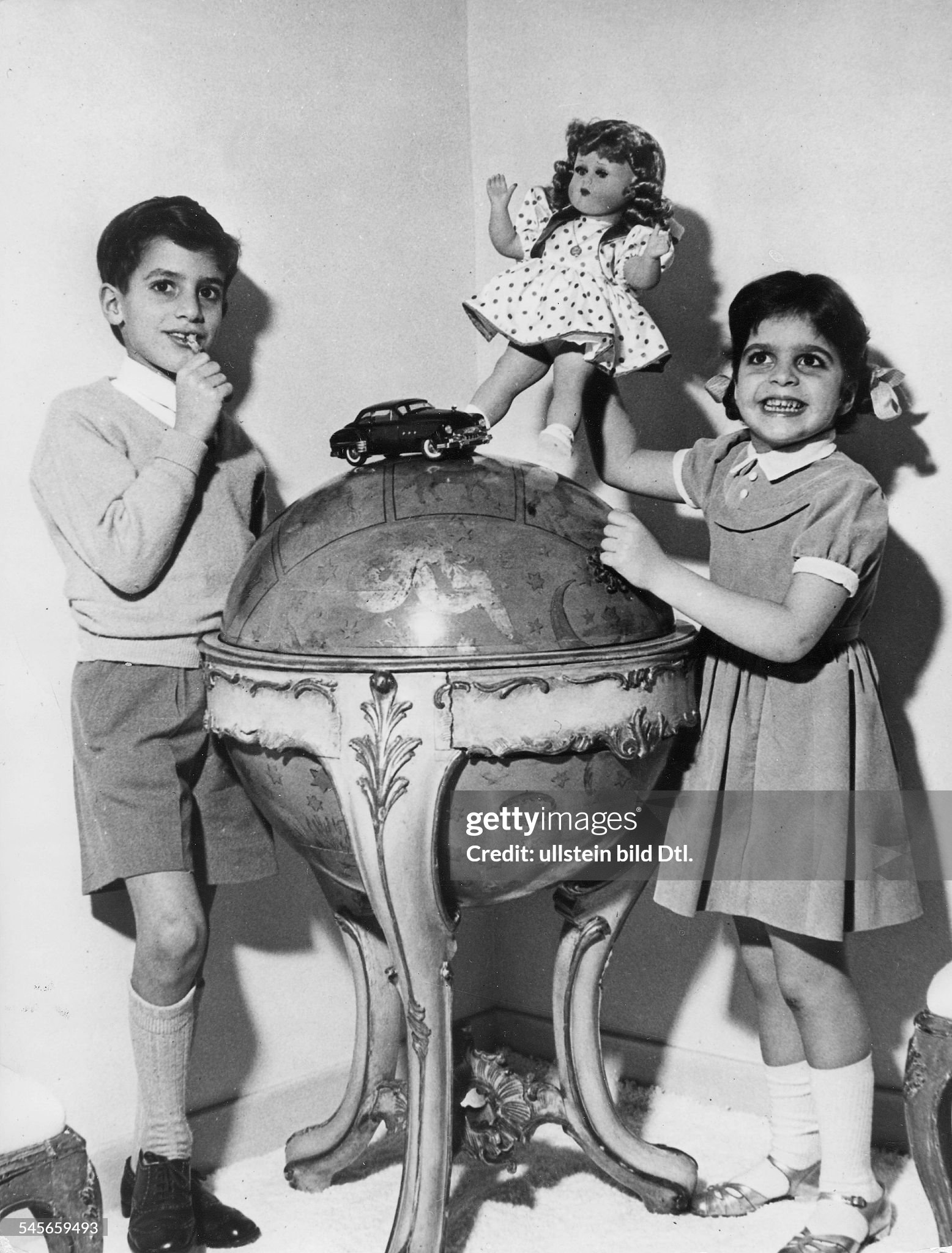
Two young Alexander and Christina Onassis in 1956. Photo by Ullstein Bild via Getty Images.
In the 1930s, he became engaged to the daughter of a wealthy Norwegian shipowner, Ingeborg Dedichen, a romance that included more than one violent episode in which an enraged, drunk Onassis beat his fiancée. Onassis admitted a certain sexual pleasure in violence and was quoted as saying, “he who loves well, beats well.”
In 1938, his ‘Ariston’, then the largest tanker ever built, is launched and Onassis is a celebrated man. He is not only a tycoon but also embraces a then-new lifestyle: that of the playboy.
The first Mrs. Aristotle Onassis, Athena Livanos (Tina), described Onassis as “a brutal drunk.” They were married in 1946, divorced in 1960. Visitors who spent time with Onassis and Tina sometimes heard sounds of physical violence and a woman’s screams, coming from the master’s bedroom.
During his lifetime, Onassis was investigated by the FBI, the CIA, the KYP (Greek CIA), Britain’s M15 and the DST (French security service), among others. In 1953, he hired Dr. Hjalman Schacht to negotiate an oil contract with the King of Saudi Arabia. Schacht had been Adolf Hitler’s financial wizard, his economic dictator and president of the Reichsbank in 1937. Schacht had been acquitted of war crimes at Nuremberg in 1946 – “you can’t hang a banker”, cynics said – but was later found guilty by a German denazification court. Schacht successfully created the Jiddah agreement, between the Saudis and Onassis, which called for Onassis to supply 500,000 tons of tanker shipping toward the establishment of the Saudi Arabian Maritime Company. Onassis’ fleet would fly the national flag of Saudi Arabia and be exempt from Saudi taxes. Within a decade, this agreement allowed Onassis to create a strategic monopoly on the transport of Saudi oil.
The Jiddah Agreement created a crisis in Washington DC, because this new, huge Saudi fleet posed a threat to U.S. interests. Onassis argued his case before the State Department, saying that he had signed the deal with the Saudi Government because “somebody had to”; it was a huge deal waiting for someone to grab it and he did. The U.S. Government wasn’t mollified. The American Jewish lobby was pressuring the U.S. oil companies to stop dealing with the Saudis and the Jiddah agreement contained a clause, written by Schacht, that Jews could have no direct or indirect interest in any of the subcontracting companies. Then, to add fuel to an already flaming fire, Onassis invited Alfred Krupp von Bohlen und Halbach to the launching of one of his latest tankers; it was Krupp’s first official public appearance since serving six years in prison as a Nazi war criminal. Onassis invited him despite his aides’ warnings not to.
It was around this time that the CIA planted a listening device in Onassis’ Paris apartment, which led to his indictment by the U.S. Government for conspiracy to violate the false statement statute of the Ship Sales Act when his companies filed applications to buy surplus vessels. He was also charged with false balance sheets, false financial statements and false claims about citizenship. On 21 December 1955, Onassis paid a $7 million fine (equivalent to $38 million in 1995) to the U.S. Government, for fraud and criminal charges.
Onassis had lots of enemies, some in high places; he also had quite a few good friends who owed him favors, also in very high places. Onassis’ need to control everything often led to tyranny on his part, in both business and private life. Some said an air of sinister melodrama followed him wherever he went. Costa Gratsos observed after Onassis’ death that there had been a violence in Onassis, tending towards sadism at times, that was never far from the surface and that he aimed at those closest to him, especially when he drank. Onassis himself once said, “if you have one golden apple, you have the power; you can get away with murder if you have a single apple that somebody else wants.”
Onassis had a publicity agent to keep his name in the press, believing that constant publicity about his social life gave him credibility with bankers. Throughout his checkered shipping career and in his personal life, Onassis made a definite impression on those he met. During Onassis’ short-lived friendship with Prince Rainier of Monaco, Onassis declared that “there should be no gambling in Monte Carlo. Gambling is immoral”, to which Rainier responded: “really, Mr. Onassis, I do not think you are in a position to tell me what’s moral and what’s immoral.”
In 1959, Giovanni Meneghini, while filing for a legal separation from his wife, Maria Callas, referred to Aristotle Onassis as one of the “persons who are reckoned the most powerful of our time.” His use of the word “powerful” rather than the word “wealthy” is notable. Onassis was, to be sure, an example of self-will run riot.
Onassis was in Hamburg, Germany, on 22 November 1963, publicly launching one of his new tankers, the Olympic Chivalry, when President John F. Kennedy was assassinated. He immediately called Lee Radziwill in London, then flew to Washington with her in one of his private jets. Onassis owned Olympic Airlines from 1955 until January 1975, when he handed it back to the Greek government shortly before his death.
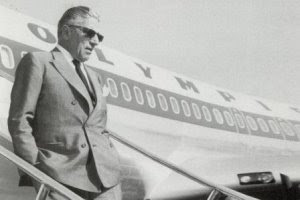
Aristotle Onassis disembarking from an Olympic Airlines plane.
Having his own private airline for 20 years provided Onassis with the means to go anywhere, at any time and also to fly other people, anywhere, at any time. Records of passenger lists and flight schedules did not have to be kept for his private airline as strictly as they would have been kept for a public airline.
Onassis was a guest at the White House during the funeral. President Kennedy had told Onassis that he was not welcome in America until after the 1964 election, but his presence went unnoticed in the days of shock and mourning that gripped America and the world. He played the part of court jester at the funeral, drinking heavily and telling stories with Bobby and Teddy Kennedy. Nevertheless, the Kennedy brothers instinctively disliked him.
On December 03, a week after JFK’s dramatic, televised funeral, Onassis and Maria Callas conspicuously celebrated her 40th birthday at Maxim’s in Paris. But a close Onassis aide, Panaghis Vergottis, said that he knew Onassis’ interest in the newly-widowed Jacqueline Kennedy would not quickly go away.
Aristotle Onassis – why he wanted Jackeline Kennedy
On August 07, 1963, Jackie gave birth prematurely to her son Patrick; he was the last child Jackie was to carry and he lived only two days. Following baby Patrick’s death, Jackie spiraled into a serious depression, from which her younger sister Lee Radziwill tried to help her recover.
Lee invited Jackie for an October cruise on Greek shipping tycoon Aristotle Onassis’ yacht, the Christina, to give Jackie some solace from her loss and a week away from the pressures of being First Lady. Lee and her husband Prince Stanislas Radziwill chaperoned the cruise, along with Commerce Secretary Franklin D. Roosevelt, Jr. and his wife Susan.
During spring and summer 1963, Lee Radziwill had become intimately involved with Onassis; her marriage to Prince Stanislas Radziwill was deteriorating rapidly. The Onassis / Radziwill affair surfaced in the American press during the summer of 1963, causing embarrassment for a Kennedy administration hoping for easy reelection in 1964; they didn’t want any scandals. Onassis had been indicted by the U.S. Government for fraud, was divorced and for years had carried on an open affair with married opera diva Maria Callas. Europeans did not bat an eye at such things, but Americans still did. Bobby Kennedy asked Jackie to talk Lee into cooling the affair, which Jackie refused to do. On the contrary, Jackie was impressed that her sister was friends with one of the world’s wealthiest men.
Onassis’ interest in Lee Radziwill was due, at least in part, to the fact that she was Jackie’s sister and the sister-in-law of the most powerful man in the world. Washington Post columnist Drew Pearson asked: “does the ambitious Greek tycoon hope to become the brother-in-law of the American President?” Onassis was obsessed with celebrities to the point of addiction and sought self-aggrandizement through his associations with the rich, the famous and the powerful. More than once, Maria Callas talked to the press about Onassis’ obsession with famous women and other members of his inner circle have commented on his need to be noticed and envied, saying that the presence of the famous at his table confirmed his status in his own eyes. Those closest to him described him as “ruthless in business and tyrannical in private.”
The October 1963 cruise wasn’t the first time Onassis and Jackie had laid eyes on each other. One night in 1958, while then-Senator John F. Kennedy and Jacqueline were vacationing in the south of France, Onassis had invited them onto his yacht to meet former British Prime Minister Winston Churchill, one of JFK’s idols. Churchill wanted to meet JFK, whom he considered “Presidential timber.” Remember, this was 1958. While Kennedy and Churchill talked, Onassis met Jackie for the first time and noticed everything about her, from her clothing to her short dark hair blowing in the evening breeze. He told Costa Gratsos, one of his most confidential aides, “there’s something damned willful about her, there’s something provocative about that lady. She’s got a carnal soul.” Gratsos tried to talk Onassis out of his obvious intense interest in the young Jacqueline Kennedy, telling him he was too old for her.
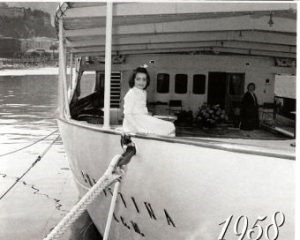
Back to October 1963. The Christina, stocked with gourmet chefs, paté, lobsters, caviar, wine, a masseuse and two hairdressers, set sail the beginning of October. The yacht had nine double guest cabins, each named for a Greek island. Jackie stayed in the cabin named Ithaca. They cruised through the Aegean, docked in Istanbul, Lesbos and Crete and navigated along the Pelopponnesian coast. The media went wild. Photographs appeared of Jackie and Onassis touring the Blue Mosque in Istanbul and walking hand-in-hand in ancient Smyrna, where Onassis showed Jackie the places from his youth. They also visited Ithaca, Odysseus’ island kingdom and Onassis’ private scorpion-shaped island of Skorpios, where they walked up the rocky hillsides, among the cypress trees and olive groves. Onassis guarded his privacy so strictly that he had had his island removed from the official maps of the Ionian Sea, to discourage sightseers and journalists. Walking with Onassis along the water’s edge, Jackie told him she wished her Greek island vacation would never end and that she did not like her life as First Lady. As a 10-year-old girl, she had written a poem, entitled ‘Sea joy’, which ended with the line: “oh – to live by the sea is my only wish.”
On the last night of the cruise, Onassis gave everyone expensive gifts, including a diamond and ruby necklace for Jackie. On October 17, Jackie returned to Washington, DC refreshed and revitalized. The White House staff noticed the changes in Jackie. One worker remarked: “Jackie has stars in her eyes – Greek stars.” Others felt Jackie was more independent and stronger after the cruise, having successfully beguiled a powerful and wealthy man. Partly because of the negative media coverage her cruise on Onassis’ yacht had caused – some thought it was wrong for the wife of the President of the United States to accept hospitality from a convicted felon, among other things – Jackie agreed to accompany her husband on his November trip to Texas.
There are conflicting reports about Jackie and Onassis’ conduct during the two-week cruise; Franklin Roosevelt Jr. swears that nothing romantic happened during the cruise. JFK’s personal secretary Evelyn Lincoln, however, disagreed. Asked if she thought Jackie and Onassis had had an affair before the assassination, Lincoln answered: “I think so, yes. Jackie loved money. Onassis had money.” In either case, Jackie later remembered the cruise as a tension-free oasis between tragedy and tragedy, between the premature birth and death of her son Patrick and the gruesome assassination of her husband.
The cruise marked the end of Lee Radziwill’s affair with Onassis, because he fell in love with Jackie during the cruise. Onassis began courting Jackie very soon after the assassination the following month, by which time Onassis’ daughter Christina was already referring to Jackie as “my father’s unfortunate obsession.”
In October 1963, Americans had little reason to believe that Jack and Jackie’s marriage was shaky. But in more recent years, evidence has come to light indicating that all was not well behind closed doors. In 1975, Judith Campbell Exner testified to the Senate Select Committee on Intelligence that, in the early 1960s, she had had an affair with President Kennedy at the same time she was Chicago mafia leader Sam Giancana’s good friend. In her autobiography, ‘My story’, she claims that she had a sexual relationship with JFK while he was President, that his marriage was unhappy and that Jackie wanted a divorce. Exner’s exact testimony was sealed until 2025. Exner’s story blew the lid off the conspiracy of silence surrounding JFK’s private life; his numerous extramarital affairs are now well-publicized. Ben Bradlee’s sister-in-law Mary Pinchot Meyer also had an affair with Kennedy while he was in the White House. She was murdered during the summer of 1964 in Georgetown; her diary and letters were obtained by CIA counterintelligence chief James Angelton, who claims that he burned them. Perhaps Jackie, fed up with her husband’s incessant philandering, decided during the cruise on the Christina to have a little fun of her own.
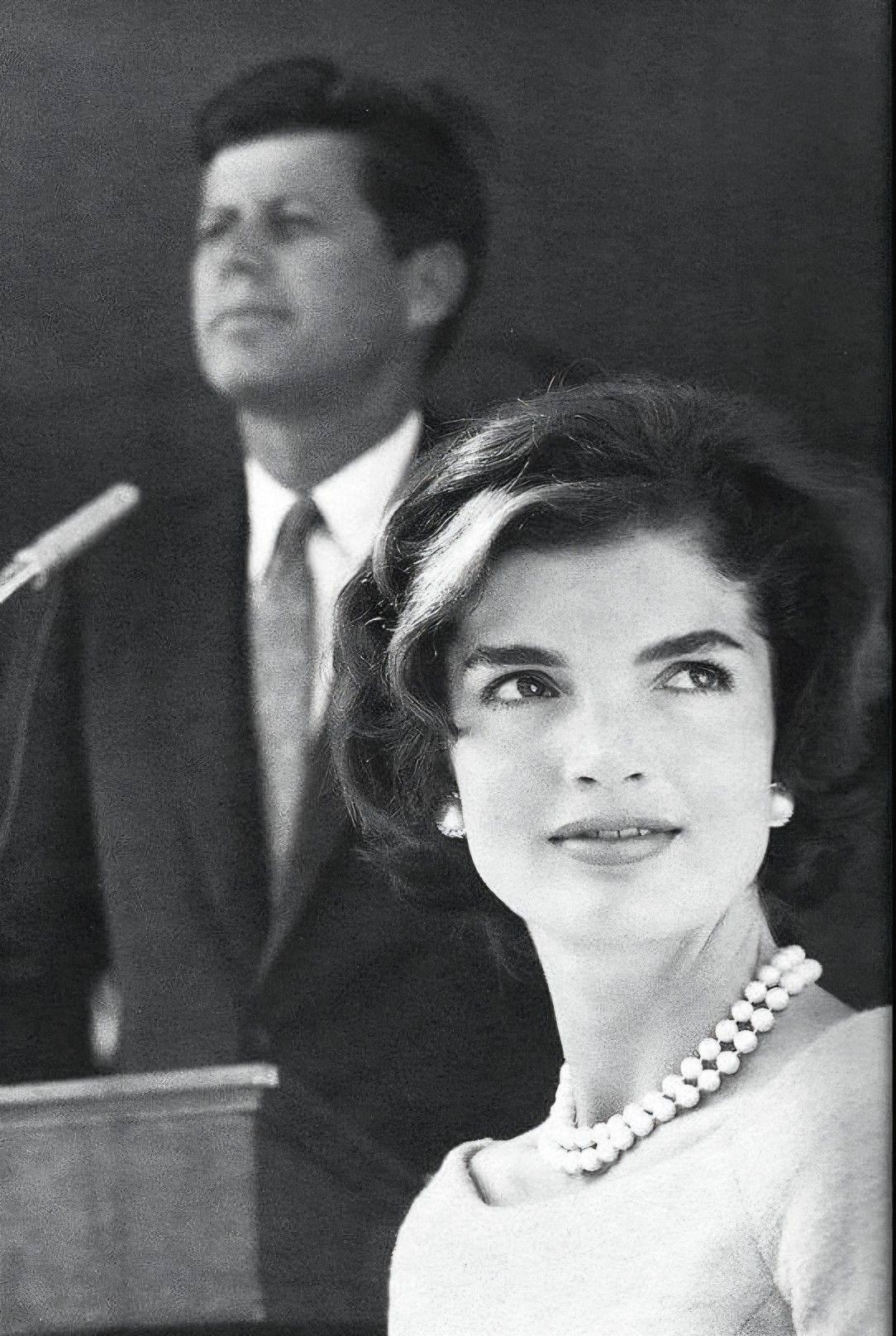
John and Jacqueline Kennedy.
While she was First Lady, Jackie sadly confessed to a family member that she “would go mad” if she could not get away from Washington soon. If you wonder why Jackie stayed in the marriage, there are several reasons. First of all, the Kennedy’s were Roman Catholic, it was the early 1960s and divorce was rare and stigmatizing. Joseph P. Kennedy, Jackie’s father-in-law, more than once offered her money (reportedly $1 million each time), which she accepted, in order to keep the marriage going for political reasons. Appearances meant the world to Jackie. When her father, Jack Bouvier, was too hopelessly drunk to give her away at her wedding, she was crushed, but she was determined not to let her disappointment show and that no outward mishaps or embarrassments happened during the wedding. So strong was Jackie’s need for the world to see what she wanted it to see, that we saw only what she wanted us to see.
By the fall of 1963, Kennedy’s personal popularity as President remained high, but administration blunders such as the Bay of Pigs invasion had diminished the country’s belief in his political effectiveness. Division within the Democratic party was also growing. Jackie’s reputation, however, was higher than ever in 1963. She stood tall and beautiful on a sacred pedestal and no one would publicly criticize her.
As the cruise through the Greek isles came to an end, FBI director J. Edgar Hoover demanded an updated file on Onassis, who he had previously investigated as a spy and a criminal and who was now beguiling and dangerously beguiled by the First Lady. Hoover had always disliked Onassis and the cruise only served to deepen Hoover’s distrust. And Hoover wasn’t the only powerful Washingtonian who held firm that the First Lady of the United States should not have accepted the hospitality of a foreigner who had been indicted in the United States.
Jackie fell apart when Bobby was assassinated. Despite her recent arguments with him over her relationship with Onassis, they were still very close. He was her closest male friend, a confidante and a devoted uncle to her children. She was incoherent upon hearing of Bobby’s death. Onassis flew to Hammersmith Farm, the Newport, Rhode Island estate of Jackie’s mother Janet Auchincloss, to comfort Jackie, who was completely shattered. “If they’re killing Kennedys, my children are targets. I hate America”, she sobbed, on Onassis’ shoulder.
She suddenly felt terror and panic and feared for her children. She needed to escape the Kennedy nightmare of killings. As her escape, she chose a secluded island in the Ionian Sea and a yacht fit for a queen. And king. Camelot was replaced by an enchanted Greek island. Onassis offered Jackie and her children safety and protection. The Kennedy clan continued their campaign against the marriage, but in the end, no one could stop Jackie. On 20 October 1968, she married Onassis in a small, private chapel on Skorpios.
The press was extremely unforgiving of the thirty-nine year old widow’s marriage to the much older billionaire. It was rumored that Jackie would never have married Onassis if Bobby had not been killed. Jackie’s reputation suffered terribly from her marriage to Onassis, especially in Europe where Onassis was strongly disliked. He was often condemned in the European press, for details of his personal and business life that the American press never covered.
The marriage made no sense to most people, some of whom were disgusted by it and didn’t mind saying so in public or in print. How could she, the dutiful widow of a beloved president, believed to be flawless, devoted to her dead husband’s memory and ideals, marry a vulgar and disreputable foreigner with no looks and even less class? Onassis displayed Jackie in public as if she were a jewel and enjoyed shocking his guests – and Jackie, a lifelong animal lover – with bloody tales of harpooning whales.
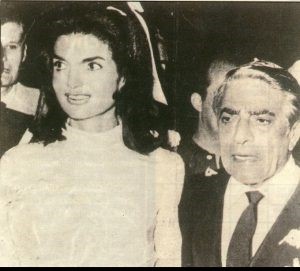
The marriage between Aristotle Onassis and Jacqueline Bouvier Kennedy. Jackie Kennedy was diagnosed with non-Hodgkin's lymphoma in 1993. She died on 19 May 1994 at age 64 and was buried next to her late first husband, John F. Kennedy, in Arlington National Cemetery.
Jackie married Onassis for financial security, safety and privacy. Believing that lone political fanatics had killed her husband and brother-in-law, she sought refuge outside of the U.S., away from American soil she believed nurtured fanaticism and extremism. Suddenly, one gloomy night in February, four years after marrying a man who had offered her protection, she discovered that he had betrayed her in the most awful way, by orchestrating the deaths of the two men she had loved. She was trapped on a fairytale Greek island in the middle of a long winter night and outside more than the wind was howling.
People need closure and completion in their lives. They need – and deserve – answers. When Jackie and Onassis circled the Greek Orthodox altar three times in October 1968, she had no way of knowing what she may have later come to learn, but it was part of her journey to find out. The marriage provided Jackie – eventually – with answers to questions that must have plagued her for years. In 1977, Jackie confided to a cousin at a family funeral, “there are some things you never get over.”
In the musical version of Camelot, King Arthur’s reign comes to a sudden, crashing halt, not because of politics, but because of passion, because of an affair between Guinevere and Lancelot. Passion and sex brought down Camelot, not politics. On that day in 1963 when Jacqueline Kennedy, recently widowed, first spoke with Theodore White about Camelot, did she, however unconsciously, hint at truths she felt, but did not yet know, truths that would take years to surface? Camelot had come and gone again, once again a reign full of intrigue and secrets and once again suffering a tragic end because of passion, not politics.
Jackie’s cousin, author John H. Davis, noticed profound changes in Jackie during her marriage to Onassis and remembers that the loneliness and insecurity which clung to Jackie in the years following the assassination of her husband were transformed during her marriage to Onassis and that she became happier and more outgoing. At least during the early years of that second marriage.
Whatever the feelings of families and friends, the newlywed couple showed every sign of being in love. They would have sex in all sorts of unconventional places, aeroplanes, small boats, the beach, regardless of who might be watching – or photographing.
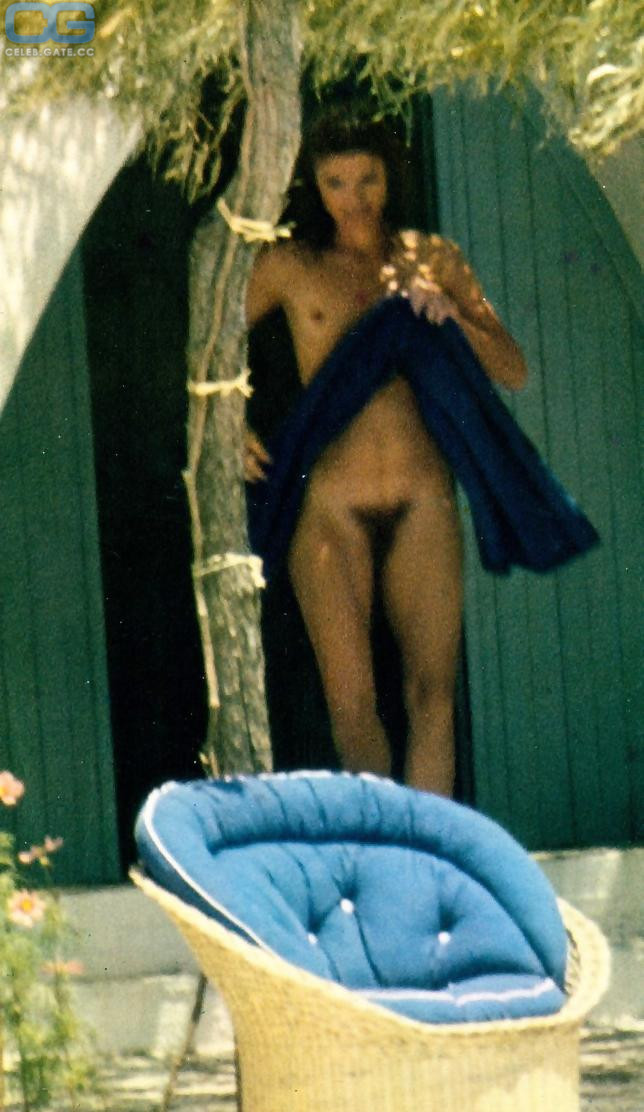
This photo was snapped by the paparazzi in 1971 while Jackie was innocently sunbathing in the nude during a visit to her husband's private island of Skorpios.
The brother of one of Jackie’s Washington friends was shocked by the way Onassis would drag Jackie suddenly into any one of the cabins on Christina and make love to her without bothering to shut the door. This sort of exhibitionism satisfied his ego – he would boast embarrassingly to Jackie’s friends, like Pierre Salinger, of her sexual appetite and his own prowess in bed with her.
Jackie went along with this. On Christina she appears not to have minded sleeping in the bed he had shared with Maria Callas for the past nine years. She did, however, have the huge portrait of Tina moved from its dominant position on the staircase. She realised that, in many ways, Ari still loved his first wife and it upset her to see ‘that beautiful face’.
It was not Tina, however, but Maria who posed the threat. Maria never again came to Skorpios, but her apartment in Paris at 36 Avenue Georges Mandel was conveniently close to the Onassis apartment at 88 Avenue Foch. Onassis and Maria appeared closer and happier together now than they had been before his marriage to Jackie, but Onassis, for once, did what he could to conceal his frequent rendezvous with Maria. He warned her to switch off the lights at the entrance to her apartment when he was due, so that no one could see him arriving and arranged to see her through his aide, never calling her directly.
Jackie was aware of her husband’s continuing affair with Callas and was hurt by it. Once again, she was not number one in her husband’s life. For all the satisfactory, frequent sex, the kissing and touching, the little endearments, there was an element of unreality in their marriage. She was kept away from his business affairs. “It would bore you, honey”, he said, just as Jack had not wanted to discuss the political issues of the day with her. With Maria, it was different. No one who saw them together at this time thought that Onassis went to her only for sex.
In reality Jackie was psychologically terribly wounded by the traumas of the past five years and the deaths of Jack and Bobby. “She was”, said the daughter of a close friend of Onassis, “a deeply shattered person. How could it be any different? She spoke to me of the assassination, of how she felt during it, immediately afterwards, what it was like coming back to the White House in that state. And I remember when I first saw her it struck me that her face was entirely laboured by these tiny crack-marks. Like crackle glaze on porcelain. It was the outward sign of what she had gone through.”
Marriage to Onassis was a curiously rootless life for Jackie, who was often left alone. According to one of her few Greek friends, “she had no real life in Greece. There were no big parties. Our days were very, very quiet. We read, we walked, we went swimming.”
The Onassis compound at Glyfada was not exactly the sort of setting to which Jackie had been accustomed. Damaris, Lady Stewart, wife of the British ambassador in Athens, Sir Michael Stewart, described the Glyfada villas as “appalling, of no taste or interest whatsoever.” Lady Stewart had the impression that Jackie had nothing to do with the running of the houses. “When I went to lunch with her he [Onassis] was having a lunch in the next-door house, because the food was coming backwards and forwards across the lawn… When we got to the pudding stage – it was a sort of bought chocolate cake – we had half, the other half had presumably gone there… My superficial impression”, Lady Stewart went on: “was that she was bored and didn’t feel in any way at home.”
There was open hostility to Jackie in the Onassis circle. Quite apart from his children, Alexander and Christina, who could not abide Jackie, there was Costa Gratsos, one of Onassis’ oldest friends and a devoted partisan of both Maria and Christina. Gratsos had been unequivocal in his denunciation of Ari’s marriage. As Jackie’s spell over Onassis faded, so Costa’s influence grew, as he worked on his friend’s superstitious nature.
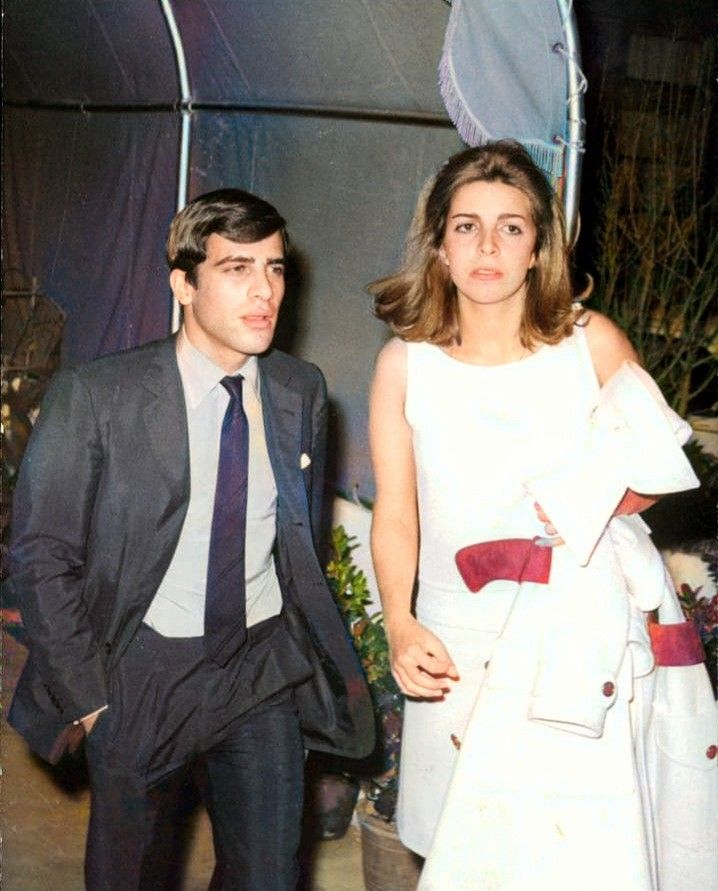
Alexander Onassis with his sister Christina Onassis.
Alexander and Christina were irreconcilable and Jackie made little effort to win them over. “I will never sleep in the same house as that American woman”, Alexander told his father’s secretary, even before the wedding. Onassis’ efforts to improve relations only seemed to make things worse: once when he was about to leave with Jackie for New York, he told her to wait while he went off to find Alexander to come and say goodbye to her. After fifteen minutes, Jackie, increasingly nervous, despatched Kiki Feroudi to fetch him because they were going to miss their flight. Feroudi overheard Alexander flatly refusing to do what his father wanted. Jackie was furious and her usual self-control deserted her. “I have done nothing to deserve such rude treatment.”’
“Worry only about your own children, not mine, my dear”, he told her nastily, as he walked so fast to the plane that there was no way she could keep up with his pace.
Alexander’s reaction to Jackie was relatively calm compared with Christina’s. “Christina resented her terribly because Christina herself had had an impossible childhood”, a family friend said. Because of that, her father meant a great deal to her… She was a completely neurotic girl, hanging on to everything which could give her some sort of security… She would have resented anyone because she was too insecure herself. I mean that girl was not all right. When she was thin, Christina was a very pretty girl, with large dark eyes, delicate wrists and ankles, but when she became particularly depressed, her weight yo-yoed. Jackie, with her slim elegance, was a constant reproach to her, even had she not appeared as a threat to take her father away from her.
Meanwhile, back in the United States, the Kennedy legend was crumbling. Jackie’s marriage to Onassis had been a serious blow, but what happened on the night of 18 July 1969, ten days before Jackie’s fortieth birthday, was far, far worse. Earlier that year, after witnessing Teddy Kennedy’s bizarre drunken performance on an overnight aeroplane flight, a journalist had described him as “an accident waiting to happen.” On 18 July on the tiny island of Chappaquiddick off Martha’s Vineyard, Teddy was returning from a party there and drove his 1967 Oldsmobile off the Dike bridge, drowning his passenger, a Kennedy “boiler-room girl”, Mary Jo Kopechne. The whole incident, bad as it was, was made worse by his inexplicable behaviour. He stumbled back to the cottage where the party was being held but instead of calling the rescue services he enlisted his cousin Joe Gargan to dive with him to the submerged car. When they failed to rescue Miss Kopechne, he swam the narrow creek dividing Chappaquiddick from Martha’s Vineyard, returned to his hotel, made a 2.30 a.m. appearance in the lobby, then retired to his room where he made seventeen telephone calls, none of which was to the police.
Attempts to represent him as having made heroic efforts to rescue the girl by “diving into the strong and murky current” and speculations about ‘some awful curse’ having over the Kennedys (later used as a frequent excuse for reckless family behaviour) had the opposite effect. The circumstances surrounding the accident were never full explained, but evidence showed that poor Mary Jo’s head had been in an air bubble and she might have been rescued if prompt action had been taken. The words ‘panic’, ‘cowardice’ and ‘cover-up’ were bandied about.
On February 1970 four of Jackie’s letters to Ros Gilpatric, written between 1963 and 1968, mysteriously surfaced. One, dated 13 June 1963, thanking Ros for a “slim volume”, was couched in the intimate flirtatious style that Jackie used in letters to her men friends. The last had been written while on her honeymoon with Onassis, again in the most affectionate terms.
Onassis could discount Jackie’s friendship with Gilpatric, which was not exactly unknown to him, but his Greek male pride was offended by his new wife having sat down on their honeymoon to write warm notes to another man. Nor did he like the publicity, which he saw as reflecting badly on him. He told Costa Gratsos: “my God, what a fool I have made of myself.”
In a deliberate show of tit-for-tat, he dropped his discretion where Callas was concerned. He spent four successive evenings with her in May and was seen leaving her apartment at one o’clock in the morning. Jackie flew to Paris to take Maria’s place. The message from Jackie to Maria was clear: I’m his wife, I’m number one. Distraught at being used once again, Callas spent three sleepless nights and accidentally overdosed on sleeping tablets. It was now impossible for Jackie to pretend that her husband was not with his mistress whenever her back was turned or that he was using Callas to keep her in line.
Jackie’s marriage to Onassis was not in trouble – yet – but the strains underlay it. Onassis was still beguiled by Jackie who, when in Greece, was prepared to act like a Greek wife. Onassis was proud of her, of her beauty and her taste, the impeccable way she ran her households, but he was not cut out for the delicate minuets he had to dance with Jackie. He became bored with her feyness and fantasy, her need for reassurance and admiration, contrasting it with Maria’s wholehearted passion. As a friend observed: “Maria would sing, cook, throw spaghetti at him, they used to fight like crazy, they were temperamental.”
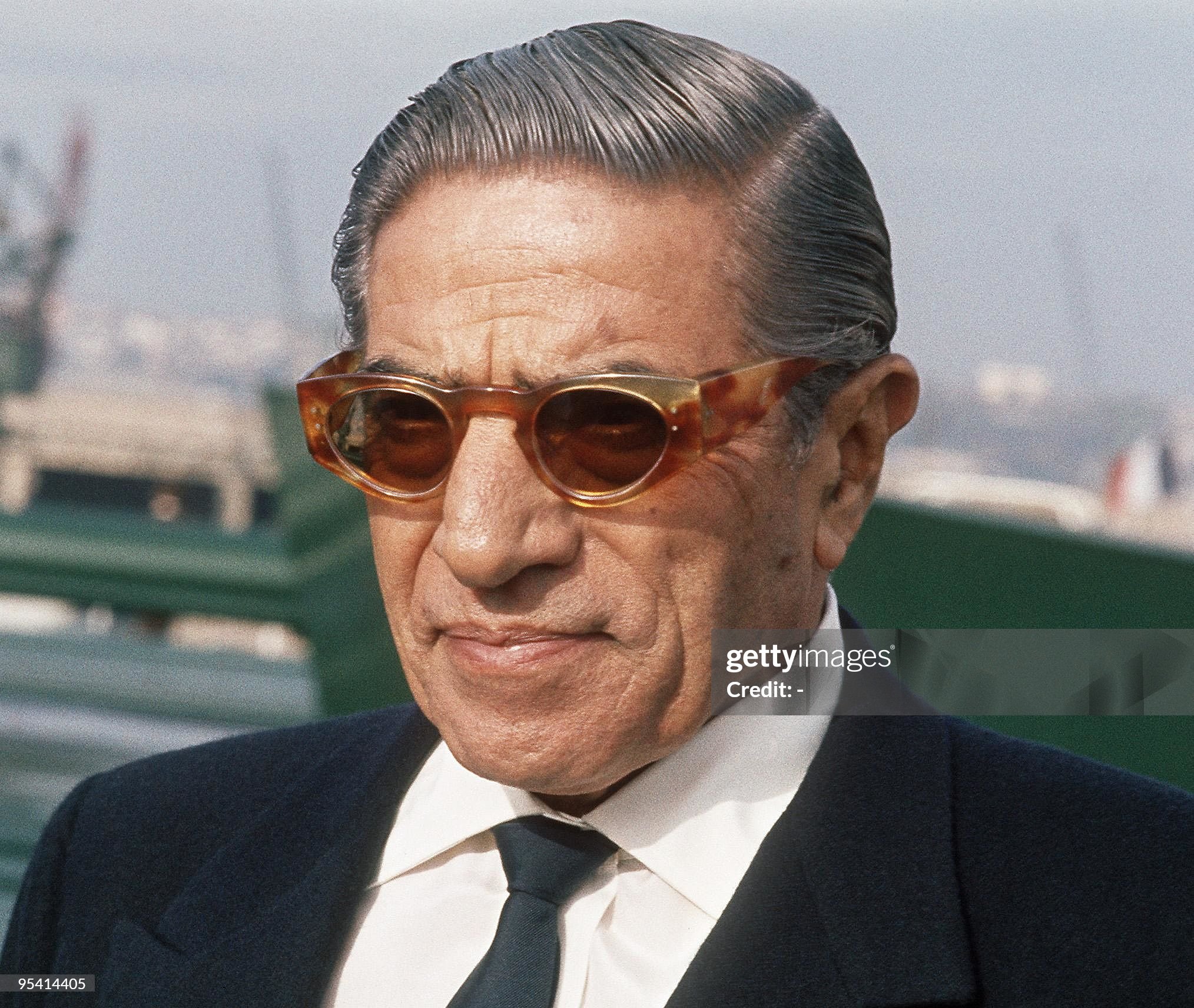
Aristotle Onassis (1906-75) (R), Greek millionaire shipowner, poses for the picture on 30 October 1970 in Saint Nazaire dockyards prior to the launching of his new 220,000 ton-tanker ‘Olympic Anthem’. Photo by AFP via Getty Images.
As things began to go wrong in Onassis’ business and private life, darker shadows fell across the marriage. It seemed that Onassis had lost his phenomenal skills in putting together a deal and single-mindedly pursuing an objective. At the same time he seemed to be losing control of his family. In July 1971 Christina, aged twenty-two, married Joseph Bolker, a forty-eight-year-old California-based real-estate dealer, without telling her father. Christina’s marriage outraged Onassis because he saw it as an act of defiance against his rights over her as a father. (In February 1972, after months of pressure, Christina and Bolker were divorced amicably.) To him it was a symptom of his loss of control in other areas. In October he suffered a blow that hit him personally and left him reeling. His arch rival, Stavros Niarchos, married Onassis’ former wife, Tina. Illogically, although the divorce from Tina had been the direct result of his open adultery with Maria Callas, the failure of his marriage had hurt. To him Tina was always his true wife and the mother of his children. He saw, probably correctly, Tina’s marriage to Niarchos as her last act of revenge for his own marriage to Jackie.
For his part, Onassis was getting bored with Jackie, who increasingly was getting on his nerves. He resented her increasingly frequent and prolonged trips to America to see her children or to attend Kennedy functions, when as a Greek wife she should be sitting a home waiting for him. Onassis began to complain about Jackie to his Greek friends and, naturally, to Maria Callas. She was never with him, she was cold, she spent too much money. Even sexually now he found her dull. “He called Callas and he told her: ‘I’m just a babysitter. I have to sit and wait and wait for this woman. He also said that going to bed with her was like going to bed with a corpse.’”
Just as he had with Callas, Onassis began to humiliate Jackie publicly. Her capacity to “tune out” irritated him as much as it had Jack Kennedy. One rainy evening in Glyfada, Onassis and his friends Miltos Yiannacopoulos and Yiannis Gorgakis had been talking to each other all evening while Jackie sat opposite them, silent, reading a book about Socrates. Finally, she put down the book to ask Yiannis Gorgakis whether he thought that Socrates had really existed or whether he had been an invention of Plato to represent the Athenian philosophers. As Gorgakis began to answer seriously, Onassis jumped up from the sofa and began to scream at Jackie: “what is the matter with you? Don’t you ever stop to think before you open your mouth? Have you never noticed the statue in the centre of Athens? Are you too stupid not to know a statue of Socrates?”
Jackie, in tears, whispering to herself in French to make sure that if she was overheard she would be understood, went upstairs, came down wearing a raincoat and walked out. Onassis refused to bring Jackie in out of the rain himself but ordered Yiannacopoulos to do so. Without saying a word, Jackie came in and sat down silently beside Gorgakis. Onassis sat back muttering about “idiotic conversations” and closed his eyes. His form of apology was an expensive gold bracelet he gave her some days later. Jackie had won the battle without saying a word, with enormous self-control and an actress’s sense of how to steal a scene. Silent withdrawal, as she had learned with Jack, was one of her most potent weapons.
Onassis simply did not know how to deal with her and the great publicity coup he thought he had achieved in marrying her had turned sour. Since everybody believed that she had only married him for his money, the reports of her spending – real and exaggerated – made him look like a sucker. Her devotion was to her children, her real life in America and not in Greece, or even Paris, with him. He planned to reassert himself by divorcing her and by making sure that she would not get away with a large slice of the Onassis fortune. In November 1972 he sprang his first trap for Jackie. He presented her with a legal document which stated that in return for $2 million in bonds which Onassis had given her as a wedding present she thereby waived every claim she might possibly have to inherit anything from his estate. The document also stated, “each party declares that he or she had been represented by independent counsel in the negotiation and execution of this agreement”, which was false. Only Onassis’ lawyers were involved; Jackie had not consulted anybody. In fact, the document had no legal validity and could not affect Jackie’s right to inherit a one-eighth share of Onassis’ property under Greek law. But this was merely the first stage in the saga: her husband was planning to use his influence to have the law changed in order to legitimise the waiver and thus deprive her of her statutory rights. Two months later, Ari contacted the infamous Roy Cohn, an unscrupulous lawyer who had every reason to hate the Kennedys, with a view to collecting evidence for a divorce from Jackie.
The idea of showing Jackie and the world who was boss and depriving her of access to any of his fortune, became an obsession with Onassis. He was in his seventies and ageing. His son, Alexander, with whom he was constantly at loggerheads, taped his telephone conversations with his father. One revealed Onassis, drunk, calling from New York croaking out ‘Singin’ in the rain’ with a medley of oaths, inanities, orders and complaints. “It’s two o’clock in the afternoon over there”, Alexander commented “and he’s completely pissed out of his mind.’ Sexually, he was no longer the man he had been. “He [Onassis] was horrid to all his women in the end”, said Reinaldo Herrera, a friend of both Jackie and Onassis, who had been Tina’s lover before her divorce. “I think it was a sign of impotence, you see. I know he was impotent with Tina. I’m sure she [Jackie] was very unhappy. And I think it all happened because there was a sexual thing there that didn’t work.”
Again, just as she had with Jack, Jackie began to taunt Onassis, saying biting things in her own inimitable way, although rarely in public. She knew of the divorce discussions, although no figures had been put forward. Her experience with the waiver had no doubt unnerved her. Onassis kept her in the dark.
Alexander was delighted about his father’s plans to “divorce the widow.” On 22 January he was at the controls of the elderly Piaggio, which he had told his father was a “deathtrap”, on what was to be a training flight for the pilot, who was to take the plane to Miami to be sold. Seconds after take-off, the plane hit the runway, leaving Alexander with irreversible brain damage. As family and friends gathered at the Athens hospital where Alexander lay in deep coma, his face shattered and the right side of his brain a pulp, Jackie “did something so shocking that I can’t talk to you about it”, according to one of those present. “It showed Jackie’s insensitivity, her hard side. She approached Fiona Thyssen, whom Alexander had hoped to marry, to ask if she knew what Ari was proposing to offer her as a divorce settlement. Taken aback, Baroness Thyssen replied that that was a question she should ask her husband.”
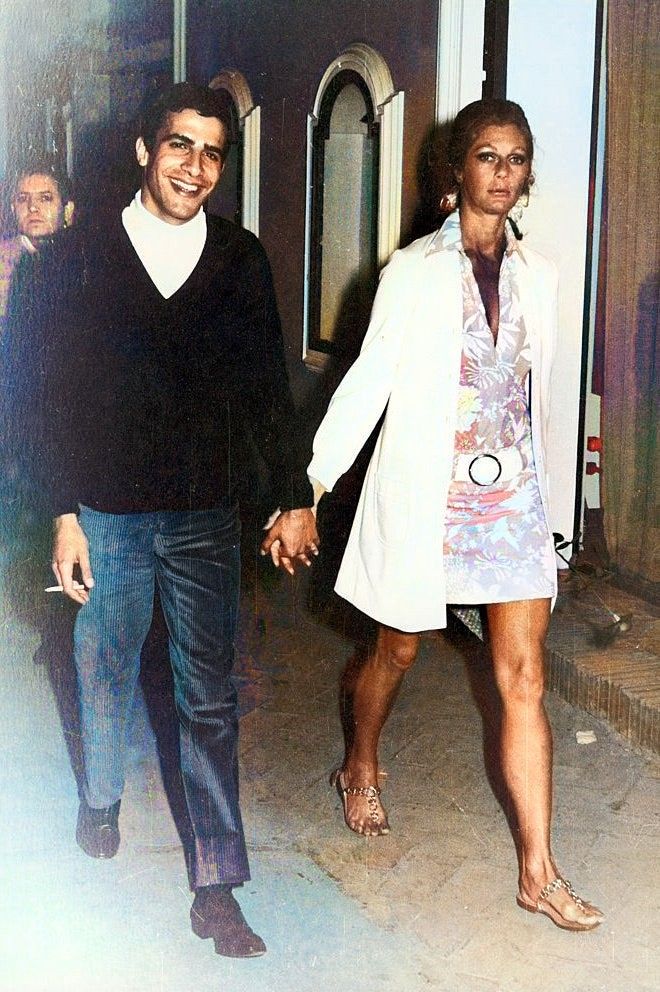
Alexander Onassis with Baroness Fiona von Thyssen. They loved each other despite the age difference. Fiona Frances Elaine Campbell-Walter, formerly Baroness Thyssen-Bornemisza de Kászon et Impérfalva, is a New Zealand-born British model. She had a successful career in the 1950s and was photographed by Henry Clarke and Cecil Beaton.
Jackie knew that Onassis planned to rid himself of her – no doubt, as cheaply as he could – and she was desperate to know what he had in mind. Nothing else can explain her crude approach to Fiona Thyssen at a time of such anguish. Jackie, of course, could only experience the anguish by proxy: Alexander had detested her and had been consistently rude to her. But his death was a tragedy for her also: it destroyed Onassis as a man and all semblance of a relationship between them.
“He was a shattered, shattered man”, the daughter of one of his friends said. “I went to see him at the airport after Alexander’s funeral. I remember all we could do was sort of hug each other.”
Jackie’s position was becoming increasingly untenable. Her husband, deeply superstitious, was beginning to believe the whispers circulating among his entourage, specifically from Christina and her principal ally Costa Gratsos, that Jackie was the bearer of bad luck. Gratsos was bluntly obscene, using a horrible Greek phrase to describe her, of which “black widow” is the politest interpretation.
Nothing that Jackie or anyone else could do comforted Onassis for the loss of Alexander, his grief compounded by guilt at his shortcomings as a father, or for the Greek sense of being punished by the fates, which was undermining his self-belief and his will to live. His behaviour was increasingly morbid; night after night on Skorpios he would take a bottle of ouzo and two glasses up to Alexander’s grave, pour one for himself and one for his son and sit there crying and talking to Alexander. Or he would invite Jackie or Artemis and her husband to lunch beside the mausoleum, sitting at a table set with linen tablecloth, silver and glass, toasting his son.
At heart, Onassis did not hate Jackie. In his drunken states he would take out his frustration and rage on her, not just for what had happened but for what could never happen. He wanted her to be his Greek wife, at his beck and call as Callas had been. He resented her devotion to her children to the exclusion of his own wishes. He resented her Kennedy life, the constant reminders of her first husband, the anniversaries and the memorials; even, perhaps, while drinking pink champagne late at night with close women friends on Christina that she would go over the assassination, again and again, making that arcing gesture to describe the trajectory of a piece of Jack’s skull.
Although he and his clique liked to represent Jackie as ‘the Golddigger’ he had not, considering his wealth, been generous to her financially, apart from lavishing gifts upon her in the early days of their marriage. In marrying Onassis she had forfeited access to the Kennedy trusts and was, therefore, financially dependent on him, apart from the $2 million in bonds he had given her as a wedding present – hardly a fortune in his terms. She had no property of her own – apart from the Fifth Avenue apartment – and he refused to buy her a country house, which she had pressed him for. He retained chequebook power over her by paying her monthly bills for clothing and decoration. For Onassis money, like Samson’s hair, was the source of his power, which no one but he could touch.
Intimations of mortality were all around him, even before Alexander’s death had dealt him the ultimately fatal blow. His heavy drinking was limiting his capacity to function as a businessman, let alone as a husband. He was a sick man. He became more and more determined that Jackie, if she would not bend to his will, should not profit from his death. She should not have even what was hers under Greek law.
To further his aim Onassis drafted a will which gave a lifetime income of $100,000 a year, with $25,000 each to John and Caroline until they reached the age of twenty-one. In addition Jackie was to be given a 25 per cent share in both Christina and Skorpios in partnership with Christina, provided she bore the proportionate share of the not inconsiderable cost of upkeep. Should she choose to dispute the will, she would immediately forfeit her annuity and Onassis’ executors and his heirs were to fight her “through all possible legal means.”
Jackie was not aware of the existence or the terms of the will, which Onassis had not as yet signed, or, more importantly, of the further steps he was undertaking to nullify her rights to 12.5 per cent of his total fortune under Greek law and validate the waiver she had so trustingly signed.
Onassis pocketed his will, unsigned and left to join Jackie for New Year in 1974 in Acapulco, the place where she and Jack had begun their honeymoon, just over twenty years before. If it had been planned by Jackie as a romantic trip, it turned out to be a disaster. On the return journey in their private jet, after a row over Jackie’s plans to build a house in Acapulco, in which she told him a few unwelcome truths, he signed the will.
In June that year he moved to stage two of excluding Jackie from her legal rights. At his behest his friends, the government of Greek ‘colonels’, passed a special law to validate the waiver he had induced Jackie to sign in 1972. The waiver would entitle him to leave her what he wished and what he had now designated under his will.
Inexorably, disaster seemed to follow upon disaster for Onassis. The fourth Arab-Israeli war and the Arab oil-producers’ decision in the autumn of 1973 to increase their oil prices had hit the tanker business. Olympic Airways was similarly going downhill. On the personal side of the Onassis family, things went from bad to worse. In August Christina took an overdose of sleeping pills. Tina flew to London to be with her; Onassis was not told until she had recovered. Less than two months later Tina herself was found dead in her bedroom. No signs of violence were found on her body; after an autopsy demanded by a suspicious Christina, she was found to have died of ‘acute oedema of the lung’. But Tina’s misery in her marriage may have contributed to her death: she had been smoking and drinking too much.
Several weeks after Tina’s death, Onassis’ own health deteriorated sharply and he was admitted to a New York hospital where he was diagnosed as suffering from myasthenia gravis, an incurable disease brought on by stress, alcohol and fatigue.
On the day he discharged himself his face swollen from cortisone treatment, his drooping eyelids held up with plaster behind his dark glasses, he received news that Olympic Airways was nearly broke. He had already heard the news that his plans for an oil refinery in New Hampshire had been turned down. In Greece, his junta friends had been replaced by a democratically elected government. Against his doctor’s advice, Onassis flew to Athens in December determined to negotiate government backing for Olympic. He seemed not to be aware that, as a close associate of the disgraced junta, he was out in the cold. On 15 January 1975, after almost twenty years of Onassis’ ownership, Olympic was sold back to the Greek government. The blow to his sense of his own prestige was immeasurable. It seemed to him that he did nothing but lose.
Jackie’s relationship with her husband was also at an all-time low, so much so that she did not accompany him to Athens this time, but went skiing. At this crisis in his affairs her presence in Greece might have helped him both personally and from a public- relations point of view. She did not seem to care. She did not return to him until she received a message from Christina at Glyfada saying that he had collapsed with severe abdominal pains on 03 February 1975.
On 06 February Christina and Jackie flew with Onassis to Paris. He had been too feeble even to walk to the car to be taken to the airport. Instead he was carried downstairs and placed in the waiting Cadillac. In Paris, flanked by Jackie and Christina, he made a supreme effort to walk into 88 Avenue Foch on his own, past the ranks of photographers, to spend what would be his last night there. The following day, again surrounded by journalists and television cameramen, they took Onassis to the American Hospital. The doctors there decided to remove his gall bladder.
After the operation, on 10 February, he weakened dramatically and for the next five weeks lay there kept alive by a ventilator and fed intravenously, dying slowly. Jackie flew back and forth between New York and Paris to be with him. One woman was not allowed to be at Onassis’ bedside: Maria Callas. Middle-class Greek morality forbade it. Only once did she manage to slip into the hospital unrecognised. On 10 March she could bear the situation no longer and fled to Palm Beach.
That same week Jackie, too, aware that Onassis would not recover, but advised by the doctors that his condition had stabilised and that he was unlikely to die in the near future, decided to leave for New York.
Christina never left her father’s bedside during all the time of his hospitalization. He was all hers at last and she was not prepared to share him with Jackie. According to one source, she instructed the doctors not to tell anyone else that he was dying, so Jackie was still in New York when Aristotle Onassis died on 15 March 1975. Of all his family only Christina was with him at the end. After he died, she made an attempt to slash her wrists but was saved by an alert doctor.
Jackie’s absence from her husband’s bedside when he died made the worst possible public impression, giving ammunition to her enemies in the Onassis camp.
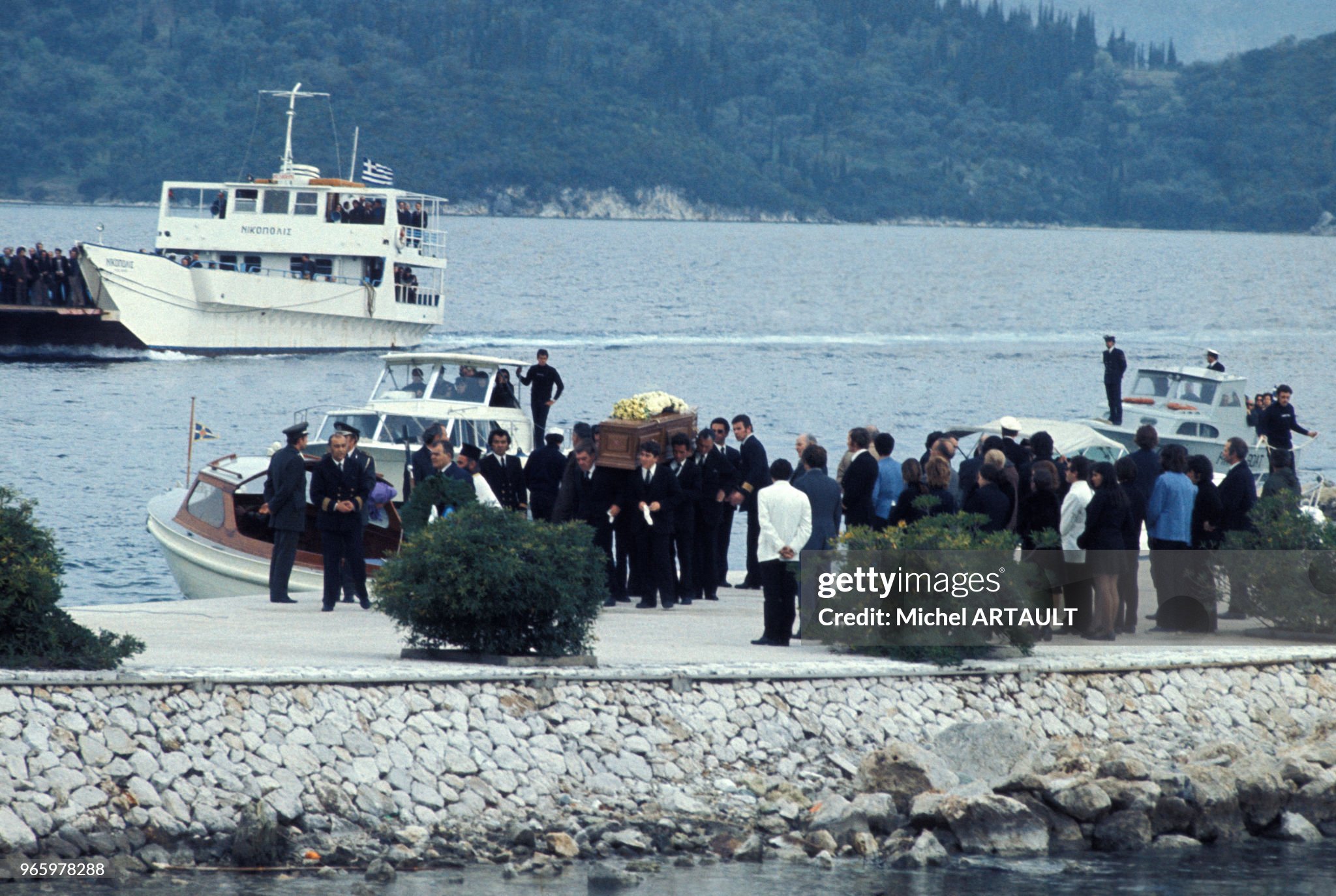
Funeral of Aristotle Onassis on the island of Skorpios on 18 March 1975. Photo by Michel Artault / Gamma - Rapho via Getty Images.
But it was at Onassis’ funeral, just as at Alexander’s deathbed, that Jackie’s hard streak surfaced inappropriately. Escorted by Teddy Kennedy, she got into the lead car with the grief-stricken Christina for the drive to the fishing village of Nidri from where Onassis’ body was to be carried by boat to Skorpios. Suddenly the car stopped, Christina got out and ran back to her aunts’ car immediately behind. The reason for this surprise move, Christina told Marina Dodero after the funeral, was that Teddy had leaned forward and said to her: “and now, what about the money?” Teddy had blurted it out but he would hardly have done so without Jackie’s previous agreement.
It was a grey and windy wintry day on Skorpios when Onassis’ coffin was lowered into the vault beside Alexander’s. Of the five Onassis women, Jackie was the only one who did not weep, as her husband of almost seven years was buried in the church where they had been married. Yet despite his treatment of her during their latter years together, she was never heard subsequently to criticise him and always expressed great fondness for him.
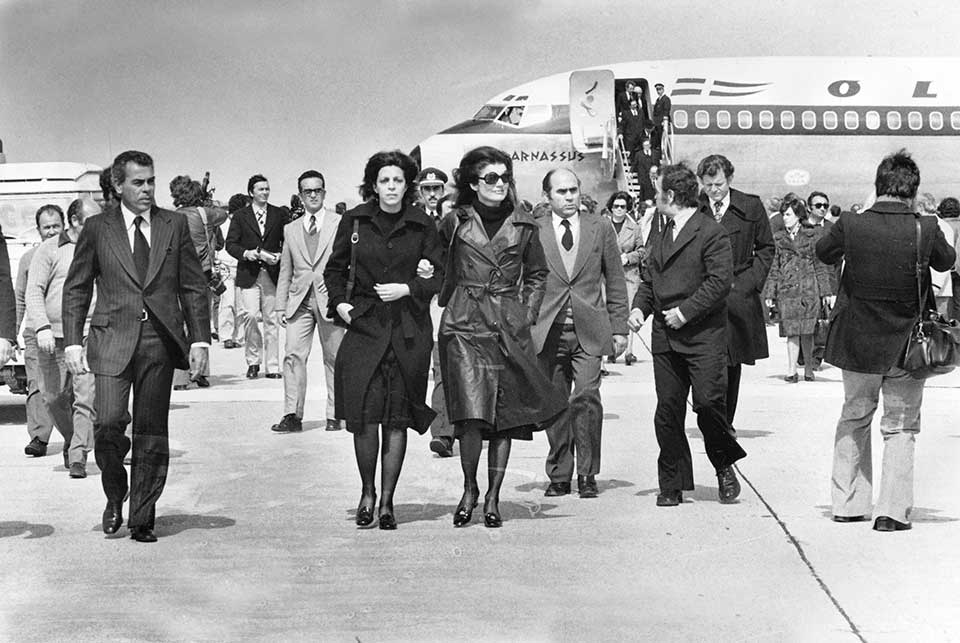
Christina and Jackie in the immediate vicinity of the funeral of Aristotle Onassis.
On the day of the funeral she vowed to Christina that she would always keep the Onassis name. But in effect her Greek life was over.
“God is punishing you for your sins”, Christina whispered into her dying father’s ear. Onassis’ health and will to live suffered an unstoppable decline after Alexander’s death. At her second husband’s funeral, in March 1975, Jackie’s chosen facial expression was a fixed, habitual smile, almost a grimace. At his funeral, Jackie said: “Aristotle Onassis rescued me at a moment when my life was engulfed with shadows. He meant a lot to me. He brought me into a world where one could find both happiness and love. We lived through many beautiful experiences together which cannot be forgotten and for which I will be eternally grateful.”
At his death, Onassis’ estate was reportedly worth close to $1 billion dollars (equivalent to $6 billion in 2007) and by Greek law, Jackie’s legal share would have been approximately $125 million, but Onassis, immediately prior to his death and without Jackie’s knowledge, had persuaded the Greek parliament to change the inheritance laws, in order to keep his wife from inheriting her rightful share. In the two years after Alexander’s death, rumors of a pending divorce had surfaced in the papers, but divorce was not possible; Jackie had too much dirt on Onassis and threatened to use it against him if he even considered divorcing her.
After Onassis’ death, rumors abounded, especially in Europe, that Jackie had some dirt on her deceased husband, that she knew something she wasn’t supposed to know, but no one could say what it was. Jackie threatened to make big trouble if Christina did not announce publicly that Onassis had not planned to divorce her and if Christina did not give her a decent sum from the estate. Christina knew that Jackie “had something on Onassis” with which she could successfully blackmail the Onassis estate and reputation. In a nervous attempt to save her family’s reputation, Christina bought off her stepmother, giving her $26 million from Onassis’ estate, a much greater share than Onassis had left her in his rewritten will (approximately $3 million).
Christina inherited her father’s wiliness and secretiveness and his determination that Jackie should have as little as possible from his estate. She started the bidding with an offer of a mere two or three million dollars to Jackie. Tough negotiations led to a settlement in May, one provision of which declared “the daughter and wife each hereby confirm that to the best of their knowledge and belief that the father died intestate leaving no will or testament of any kind, granting rights or wishes to the wife or to her children.”
The Onassis side alleged that Jackie had signed a waiver “which was valid”, to which Jackie’s side replied that it was fraudulently produced and was invalid in its execution’ under New York law, which required that when such an agreement was entered into “you must have independent counsel and knowledge of the facts – both absent here.” They threatened that they would allege fraud on this and have the waiver declared null and void. Jackie’s lawyers scoured Europe for evidence of Onassis’ assets and found, as he had predicted, no visible leads to his hidden fortune. None the less they pressed on to come to a settlement.
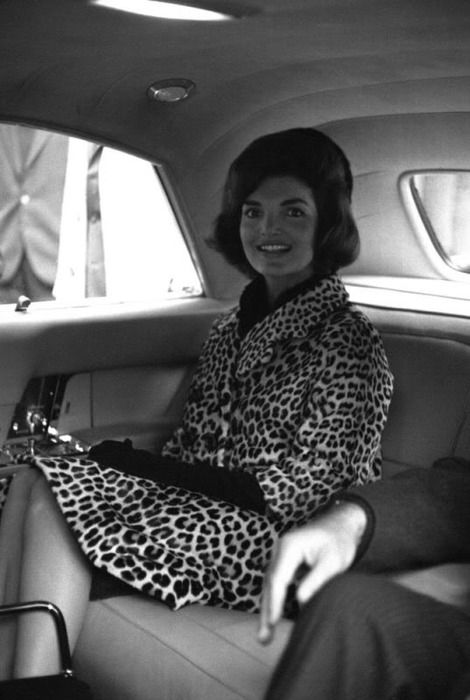
Jackie Onassis.
Eventually, Jackie received over $26 million, $500,000 of which went to her lawyers. The agreement was signed on 07 May 1975. But where Onassis’ affairs were concerned, nothing was that simple. Four weeks later Onassis’ will, to the surprise of Jackie’s side, surfaced and was probated. Some people suspected an intrigue or battle of wills involving Christina and a member of the Onassis circle, which led to publication. Jackie’s lawyers immediately telephoned Christina’s side: “well, fancy that, we all thought there was no will, where did this come from?” The Greek response was to tell them, in so many words, “you’ve got your settlement. Now go away.”
But Jackie’s lawyers did not go away. It took an additional two years to negotiate a further settlement, which was finally reached on 05 October 1977. Jackie was to receive the income provided for her in the will for the rest of her life.
Christina represented Jackie as “greedy’ but she had married Onassis without conditions, refusing to “barter” herself. His ‘wedding gift’ of $2 million bonds to compensate her for what she had lost in Kennedy funds by marrying him was a mere fleabite in terms of a fortune estimated at more than $500 million.
Onassis had appeared as not only a safe refuge from a violent America and an escape to a Mediterranean fantasy but also, more importantly, as the ideal father / lover who would protect her and physically satisfy her. In the end, both had been disillusioned. Onassis, looking for a little-girl wife like Tina, with the passionate but acquiescing characteristics of Maria Callas, had discovered a little-girl attitude that concealed a real independence of spirit. Jackie, while behaving well – even heroically so – in public, in private found herself increasingly alone, her sexuality and her intellectual ability denigrated or ignored. Her Kennedy children were her primary responsibility, but Onassis who had never regarded his own children in that light until it was too late, had not been able to accept her divided loyalty.
Aristotle Onassis and Maria Callas
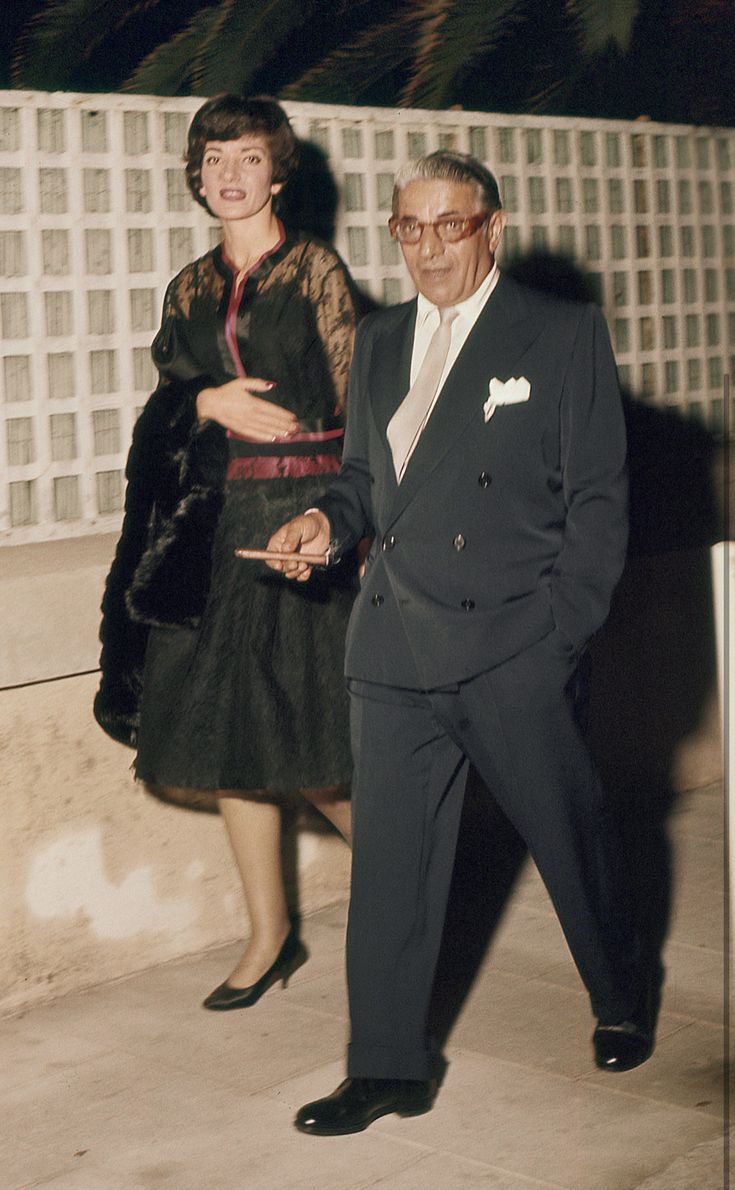
Aristotle Onassis with Maria Callas in Italy in August 1960.
Maria Callas’s life is eloquent testimony to the truth of Erik Erikson’s observation that “when artists go under, it is not as slaughtered lambs, but as the vanquished in the struggle for power.” Callas’s formidable personality and temperament gave her insight into the larger–than-life heroines of many 19th-century operas. With the tools of her musicianship and remarkable technique, she translated this identification into performances that could transform people’s lives. Her style was at one with the Romantic period and altogether alien to our own time. No one knew this better than she. Even at the end of her career, when a director of Covent Garden asked her to narrate ‘L’Histoire du soldat’, she refused: “I’m not very keen on Stravinsky. I don’t really like modern music. … I don’t really even approve of Puccini. Mine is the nineteenth century.”
The 19th century also marks the style of Arianna Stassinopoulos, Callas’s most recent biographer. The author, who never met her subject and attended only one of Callas’s performances (when Miss Stassinopoulos was 10 years old), was the choice of British publisher George Weidenfeld. And an interesting choice it was. Miss Stassinopoulos has produced a biography loaded with detail, high on hyperbole and lacking in objectivity. ‘Maria Callas’ contains the elements of a juicy libretto, complete with malevolent mother, opportunistic husband and sadistic lover, all bent on exploiting a vulnerable female.
The London equivalent of America’s Marabel Morgan, the author of ‘Total woman’, Miss Stassinopoulos is best known abroad for her book ‘The female woman’, in which she attacks the feminist emphasis on career and celebrates the traditional womanly virtues. In this biography, she portrays Callas as a tragic figure for whom Aristotle Onassis was a necessity because he awakened her sexuality and womanhood: “Aristo had brought love, frivolity, passion and tenderness to the life of a dedicated nun. … He had opened the way for a host of feelings never before experienced and impressions never before sensed. … Onassis made her aware of her sensuality and he was her first real lover. Maria discovered sex at thirty-six and she discovered it through Onassis.”
However frivolous this book may be, Callas was in no way frivolous. Even one note alone of hers was unmistakable; that cannot be said of anyone else. Her voice ranged from a low dramatic soprano to the highest coloratura and she could articulate virtuoso runs and trills with impeccable accuracy. Her timbre was unique, something like an English horn and in her recordings her voice conveyed emotion as few others ever did. Callas was an extraordinary artist and one of the most electrifying personalities of our time. What Joan Peyser is the editor of ‘The musical quarterly’ and author of ‘Twentieth century music: the sense behind the sound’ and ‘Boulez: composer, conductor, enigma’, caused her to subjugate herself and her art to years of degradation with Onassis, a man who “belittled her constantly: ‘what are you? Nothing. You just have a whistle in your throat that no longer works’.” This is a reasonable question for any Callas biography to raise, but it is not one that is answered adequately here.
To paint a faithful portrait of her subject, the author needs only have listened carefully to the central figures in the story; instead she follows their every comment with angry refutations. Callas’s husband, Giovanni Battista Meneghini, a millionaire in his 50’s when she married him, told a reporter when she left him for Onassis: “this man has billions, you must understand.” Then Miss Stassinopoulos undermines him: “it was the rich man’s impotent envy of the superrich, the stingy millionaire’s resentment at the extravagant multimillionaire…”. Callas’s mother backs up Mr. Meneghini: “I was Maria’s first victim. Now it’s Meneghini. … Maria would (like to) marry Onassis to further her limitless ambition.” But here again Miss Stassinopoulos argues: “she could not have shown less understanding of her daughter. Ambition was the last thought in Maria’s mind when… she was at the Milan airport, boarding the private plane Onassis had sent for her.”
Both literally and figuratively, Callas had an enormous appetite and it manifested itself in behavior that Miss Stassinopoulos repeatedly refers to in her narrative: “as was her lifelong habit, (Callas) picked what she wanted from everybody else’s plates.” It was not enough for her to thrill millions, to have her fans break down doors or yell themselves hoarse. Callas had to be Number One and she demanded more money than anyone else only because, as she readily admitted, she had to have the most: “I’m not interested in money”, she told the Vienna State Opera, “but it has to be more than anyone else gets.”
Her voraciousness knew no limits; no challenge was too much to attempt. Callas began her career singing Wagner, but she soon moved into coloratura roles and almost singlehanded revived the entire bel canto repertoire. She even went so far as to sing Donizetti’s ‘Anna Bolena’, a role that the born coloratura Beverly Sills claimed took five years off her own operatic life. Callas’s challenges were not merely vocal. In 1952, when she weighed 180 pounds, she set Audrey Hepburn as her model and lost 62 pounds in less than two years. By 1954 she was thin, rich, beautiful, famous. Around this time her voice began to falter and she turned her attention elsewhere. She moved into Elsa Maxwell’s circle, met Aristotle Onassis and made every effort to marry him.
Unlike many sopranos, for whom the voice is an end and not a means, Callas used hers as a tool, a source of revenge, a way of thumbing her nose at the gods for a wretched childhood. Fat, ugly and acned, she lived in awe of her sister, “tall, slender, beautiful Jackie with chestnut hair and brown eyes” who was her mother’s expressed favorite. All Maria ever had was her voice and she could work wonders with it: “only when I was singing did I feel loved.” Later Callas remarked: “if you live, you struggle. It is the same for all of us. What is different are the weapons you have and the weapons that are used against you.” When her mother was on welfare and appealed to her for help, she replied with a letter later published in Time magazine: “if you can’t make enough money to live on, you can jump out of the window or drown yourself.”
All of this can be gleaned from Miss Stassinopoulos’s book, which contains large doses of information, some of it useful, some of it cheap. We learn that Callas’s mother, who wanted a boy to replace the son she had lost to typhoid fever, would not look at Maria when she was born. During her marriage to Mr. Meneghini, Callas was in love with the Italian film director Luchino Visconti, described by Miss Stassinopoulos as “largely homosexual.” Callas became for Elsa Maxwell “the object of an almost adolescent passion. … (Callas) always made sure that she was not left alone with Elsa, even for a few minutes.” When Callas was 43 years old, she became pregnant and, at Onassis’s insistence, aborted the baby. After Onassis married Jacqueline Kennedy, Callas relied on tranquilizers and sleeping pills and attempted suicide.
The material is presented with little nuance and conclusions are seldom drawn even when the facts cry out for some. Consider, for instance, Callas’s weight loss. Miss Stassinopoulos writes that following Callas’s 1954 appearance as Queen Elizabeth of Spain in Verdi’s ‘Don Carlo’, “it was an ironic tribute to her transformation that the rave reviews were reserved for her physical appearance…” and not for her voice. Nowhere does the author suggest that the weight loss may have affected the instrument.
Miss Stassinopoulos claims that, in contrast to Callas’s passion for Onassis, her relationship with Mr. Meneghini was loveless from the start and that she married him because his wealth allowed her to be more “selective” in accepting engagements without suffering financially. “She liked his stability”, the author continues, “she liked the way everyone deferred to him and above all she liked the way he liked her.”
But surely Onassis, too, appealed to her in those ways. The point is that by 1957, with a triumphant career behind her, she required a man l0 times more powerful than the one she had needed 10 years before. As for the matter of selectivity in accepting engagements: with Onassis as her lover, Callas became so selective that during 1963 she did not appear in a single opera. And she was then only 40 years old.
Callas claimed that there is no such thing as coincidence, that “the patterns, large and small, of every aspect of her life” all had some clearly defined meaning. Unlistening, her biographer ignores the fact that the name of the sister Callas hated in her youth was the same as the woman who finally married Onassis. Nor does Miss Stassinopoulos mention that two–and–a-half years after Onassis’s death, Callas died during the very week that Jacqueline Onassis won a $20,000,000 suit against her late husband’s will. Mrs. Onassis’s victory may well have been for Callas the last in a series of grotesque defeats.
To say that Callas’s acquisitive purposes were outside the realm of art is, as Erikson suggests, to misunderstand art. Miss Stassinopoulos’s major error is to separate the human being from the artist: her subtitle is ‘the woman behind the legend’. In portraying the soprano as “Maria… suffocated by La Callas”, Miss Stassinopoulos has produced a lively but superficial biography. The awesome artist who is her subject deserves a more insightful evaluation.
What happened in Christina’s Onassis disappearance
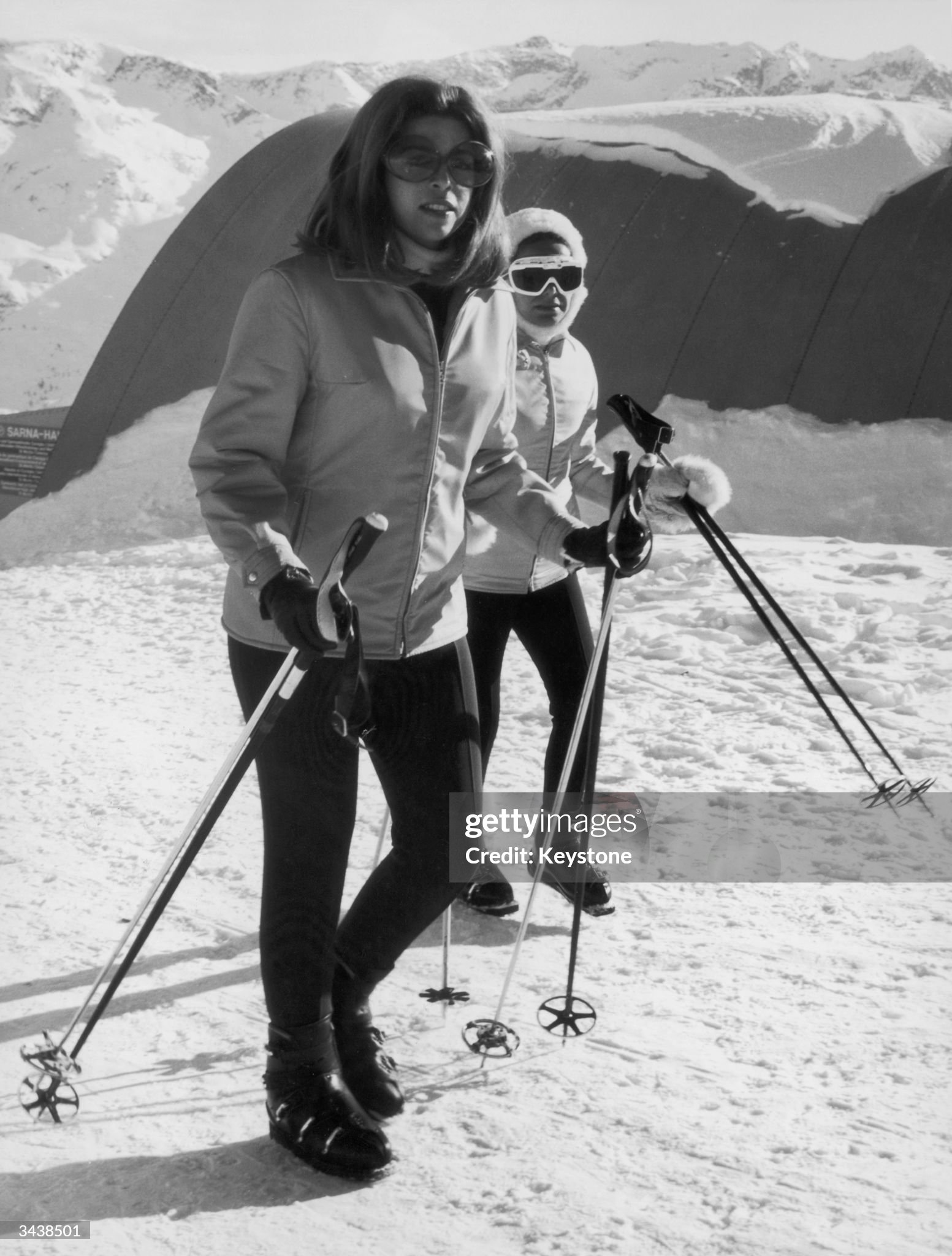
Christina Onassis (1950 - 1988), daughter of Greek shipping tycoon Aristotle Onassis, on a skiing trip in 1970. Photo by Keystone / Getty Images.
The sudden death of Christina Onassis in Argentina in 1988 presaged no changes in the shipping and real-estate empire founded by her father, Aristotle S. Onassis, according to several members of a multinational board that has run the business since he died in 1975.
The private fortune was estimated at $500 million to $1 billion (today’s 5 billion), owned half by Christina Onassis and half by the Alexander Onassis Foundation, whose 14-member board has controlled the entire empire with minimal influence by Ms. Onassis as its president.
Several members said yesterday, after a meeting in Athens and calls to other members in Europe, the United States and Latin America, that the board would continue to manage the affairs of the Onassis family and contemplated no major changes in direction or organization.
The death of the 37-year-old heiress, whose four marriages and stormy personal life often obscured her role as a businesswoman, will apparently make her 3–year-old daughter, Athena, one of the world’s richest people, family business associates in Athens said yesterday. A dramatic story.
Like the tumultuous saga of the Onassis family itself, the story of Christina Onassis’s death on Saturday was a dramatic, controversial and global affair, with implications in Europe and North and South America for governments, businesses and ordinary people touched by the family.
Not least were the implications for the infant, destined some day to control fleets of ships, skyscrapers in the capitals of the world, islands in the Ionian Sea and power beyond the dreams of all but a few people whose enterprise, or good fortune, sets them apart.
In Buenos Aires, authorities yesterday said they were investigating the cause of Ms. Onassis’ death, which a judge called questionable, even though an aunt, Mary Onassis, insisted that she had died of a heart attack and ruled out suicide.
“She was at the best stage of her life”, Mary Onassis said as she entered a Greek Orthodox bishopric, where the body was taken for a vigil after a mass. Other friends said, however, that Ms. Onassis had been undergoing an intensive weight-loss course, part of a constant fight against obesity that sometimes left her in excess of 200 pounds.
Ms. Onassis was found unconscious at a friend’s mansion outside Buenos Aires and was pronounced dead on arrival at a hospital, where officials said she had apparently died of a heart attack. But a local judge ruled the death suspicious and ordered an autopsy after a box of pills was found near her. Forensic experts were to analyze the pills.
In Athens, a half-dozen of the 14 members of the board of the Onassis Foundation gathered yesterday – and conferred by telephone with the other members around the world – to discuss funeral arrangements and the future of the business founded by Aristotle Socrates Onassis, a Greek maverick who immigrated penniless into Argentina in the 1920’s and became one of the world’s richest men.
A family spokesman in Piraeus said that the body of Ms. Onassis would be returned to Greece and buried beside her father and brother on the Ionian island of Skorpios, which is owned by the family.
“Christina’s death was a complete shock to all of us”, said Stelios Papadimitriou, secretary general of the Onassis Group, the family holding company, as well as a member of the foundation’s board and Ms. Onassis’ personal lawyer.
“She had no trace of a heart ailment – indeed, no health problems at all”, Mr. Papadimitriou added. “Yet there is not a shadow of a doubt that she died of a heart attack. The possibility of a suicide is categorically ruled out.”
Mr. Papadimitriou declined to discuss the family fortune or details of the future of the corporate empire of which she was a part. But he noted that the board members abroad were converging on Athens and would meet soon.
Another board member, Ioannis Georgakis, who was named the acting president of the foundation, said: “Christina hardly ever interfered in the functioning of the Onassis Foundation and we were very grateful to her for this. We have decided, in tribute to her, to continue her work and that of her father.”
Apostolos Zambelas, treasurer of the Onassis Group and a board member, said it was difficult to assess the exact value of the family’s assets, but he said he would not deny estimates in the neighborhood of $1 billion.
When Aristotle Onassis died at the age of 68 on March 15, 1975, the Onassis Group was worth somewhat less than that. It controlled hundreds of corporations, 47 ships, Olympic Airways and real estate on several continents. But the shipping industry was in its worst depression since the 1930’s and 80 percent of the Onassis fortune was in ships.
In his will, Mr. Onassis left half his assets to Christina and half to the foundation named for his son, Alexander, who had died in the crash of a private plane two years earlier. The foundation – with 13 of his closest associates as members and Christina as president for life – was set up in Liechtenstein, where paid minuscule taxes as a charitable organization.
To keep this status, it continues to allocate large grants to many individuals and groups. Recipients have included Amnesty International, former President Alessandro Pertini of Italy, former Prime Minister Harold Macmillan of Britain, Lech Walesa of the Polish labor movement Solidarity, former Chancellor Helmut Schmidt of West Germany and Robert S. MacNamara, president of the World Bank.
As president of the board, Ms. Onassis wielded no extraordinary power beyond those of the other members. She had only one vote unless there was a tie, in which case she had two votes. Soon after her father died, it became apparent that he had ordered too many supertankers from Japanese and French shipyards.
Ms. Onassis, in her most forceful involvement, led a board decision to cancel the new ship orders. “While we lost tens of millions of dollars, we could have lost hundreds of millions”, Mr. Zambelas recalled. “As the oil crisis worsened, nobody could say it was a wrong decision.”
Also, shortly after Mr. Onassis died, Olympic Airways was taken over by the Greek Government and the Onassis organization got about $104 million for its assets.
Over the years, the board and Ms. Onassis pared the shipping fleet down to about 35 tankers, freighters and other vessels by selling some and scrapping others. Meanwhile, it has increased real-estate holdings in the United States, Europe and Latin America. These include ownership of Olympic Towers, a residential and office condominium at 645 Fifth Avenue.
In recent years, she had spent three to four hours a day conducting the family business by telephone from wherever her jet-set life took her. After marriages to Joseph Bolker, an American businessman, Alexander Andreadis, a Greek shipping magnate and Sergei Kauzov, a Russian shipping agent – all of which ended in divorce – she married Thierry Roussel in 1984.
Mr. Roussel is a French pharmaceuticals magnate who controls a dozen companies and is a multimillionaire. Their daughter, Athena, was born in January 1985 and the couple filed for divorce eight months later. The divorce proceedings had not been completed.
Ms. Onassis, who made frequent trips to Argentina, had been staying with Marina Dodero, one of her closest friends and a member of a shipping family. Ms. Onassis was born December 11, 1950, in New York, but gave up her American citizenship for tax reasons after her father’s death.
Ari & Jackie Onassis: x-rated movie, nude photos, the Kennedys & paradise lost. By carlanthonyonline.com on October 20, 2013.
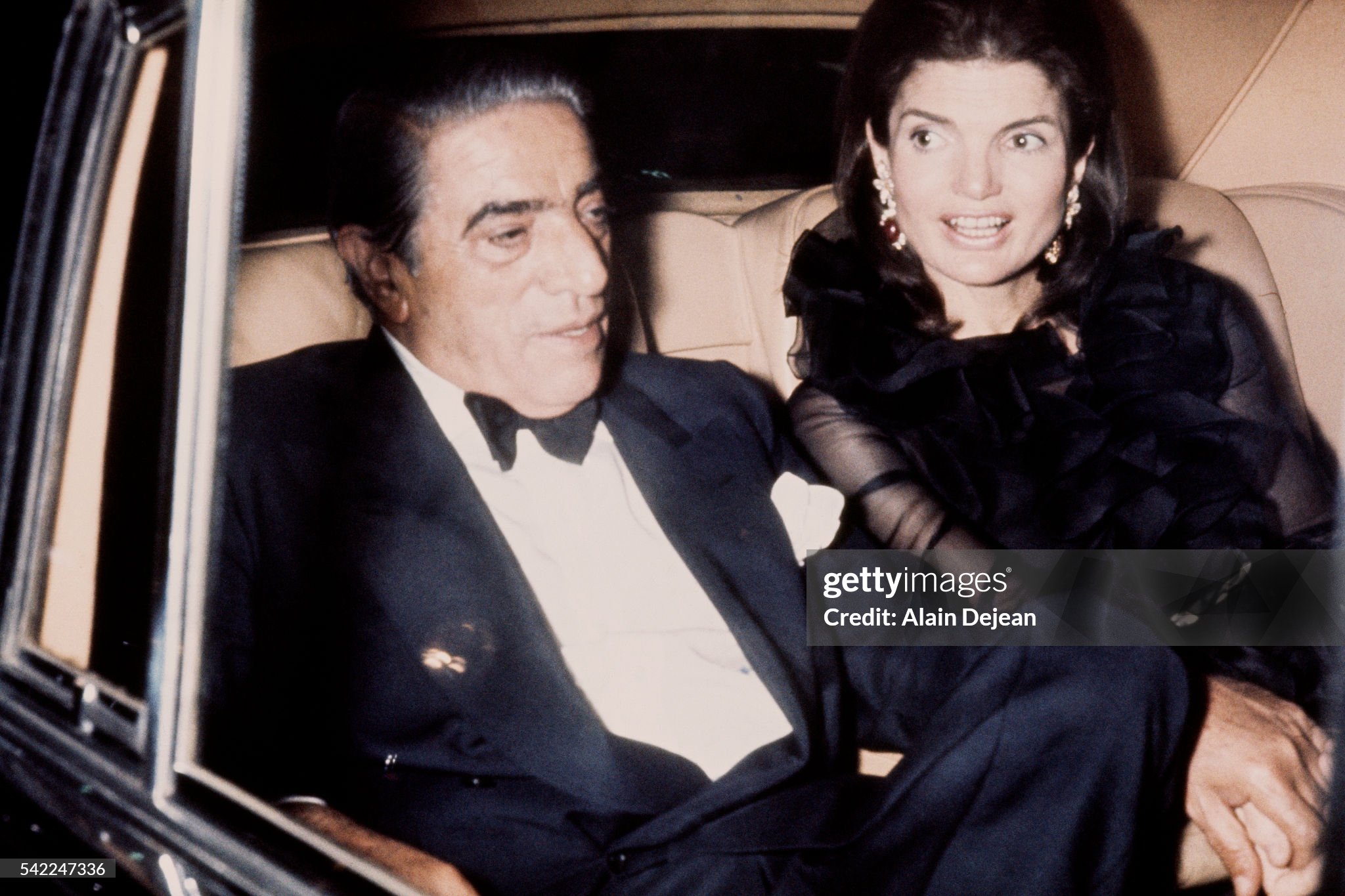
Former American First Lady Jacqueline ‘Jackie’ Bouvier Kennedy with her second husband Greek shipping magnate Aristotle Socrates Onassis in 1970. Photo by Alain Dejean / Sygma via Getty Images.
Forty-five years ago today, Sunday, 20 October 1968, former First Lady Jacqueline Kennedy married Greek shipping tycoon Aristotle Onassis.
Many people still speculate about why she did.
Often overlooked in the pondering is the fact that the wedding took place less than five months after the assassination of Robert F. Kennedy during his campaign for the Democratic presidential nomination. As his sister-in-law Jackie Kennedy had not merely supported his candidacy out of family loyalty but had encouraged him personally as they struggled in the aftermath of President Kennedy’s assassination.
In the early months of 1964, shortly after her husband was been killed, Jackie had convinced, even pushed Bobby to remain in national politics and “finish what Jack wanted to do”, including withdrawal of the U.S. military presence in Vietnam.
The June 05, 1968 assassination of Bobby Kennedy was not only a personal loss for his sister-in-law, but the death of her cautious optimism about the nation’s future. She saw aspects of the culture collapsing into one obsessed with violence and danger.
She began experiencing anxiety attacks about her own safety and that of her children, provoked by the spike in new death threats towards male members of the family and suggested that her seven-year old son, the late President’s namesake, was a logical target. As she had just realized for a second time, even the Secret Service agents provided to escort and watch her young children in their routine lives were no guarantee of protection.
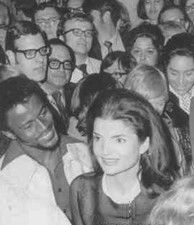
A night at the theater meant loud, staring crowds at intermission. Photo by UPI.
The huddle of screaming, scrambling paparazzi who stalked Jackie Kennedy and her children might appear to be an amusing novelty to onlookers who randomly encountered it on the streets of New York, but the former First Lady felt it had made her a “freak.” There was nothing flattering or honorific about turning a corner in personal thought or laughter with a friend after lunch to be unpredictably besieged with gnashing cameras and blinded by dozens of rapid camera flashes.
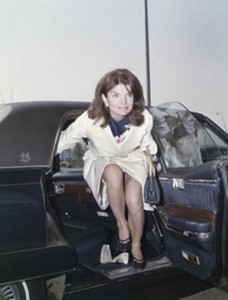
The second she emerged from a car or a building, paparazzi were ready to snap Jackie Kennedy. Original photographer unknown.
Having every part of her physicality scrutinized to search out the most superficial detail about what she was wearing (one publication even strove to determine the inch length of her every-shortening mini-skirts) and then widely reported in the gossip columns made her even more self-conscious. Walking out of church or a storefront knowing that strangers had gathered to wait and stare at her as a sort of living specimen of historic tragedy would make anyone paranoid.
Marrying someone who had an intimidating private security force at his command and heavily-guarded island in another country, Jacqueline Kennedy Onassis explained, was “a release, freedom from the oppressive obsession with me and the children.”
So she hoped.
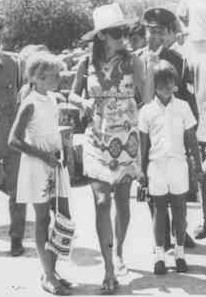
Jackie Onassis with her children on the Greek island of Santorini. Photo by Foreign Foto Service.
For the first year of her second marriage, the new Mrs. Onassis did indeed spend almost as much time in her husband’s Greek or Paris homes or the London one of her sister, as she did in her own home in New York.
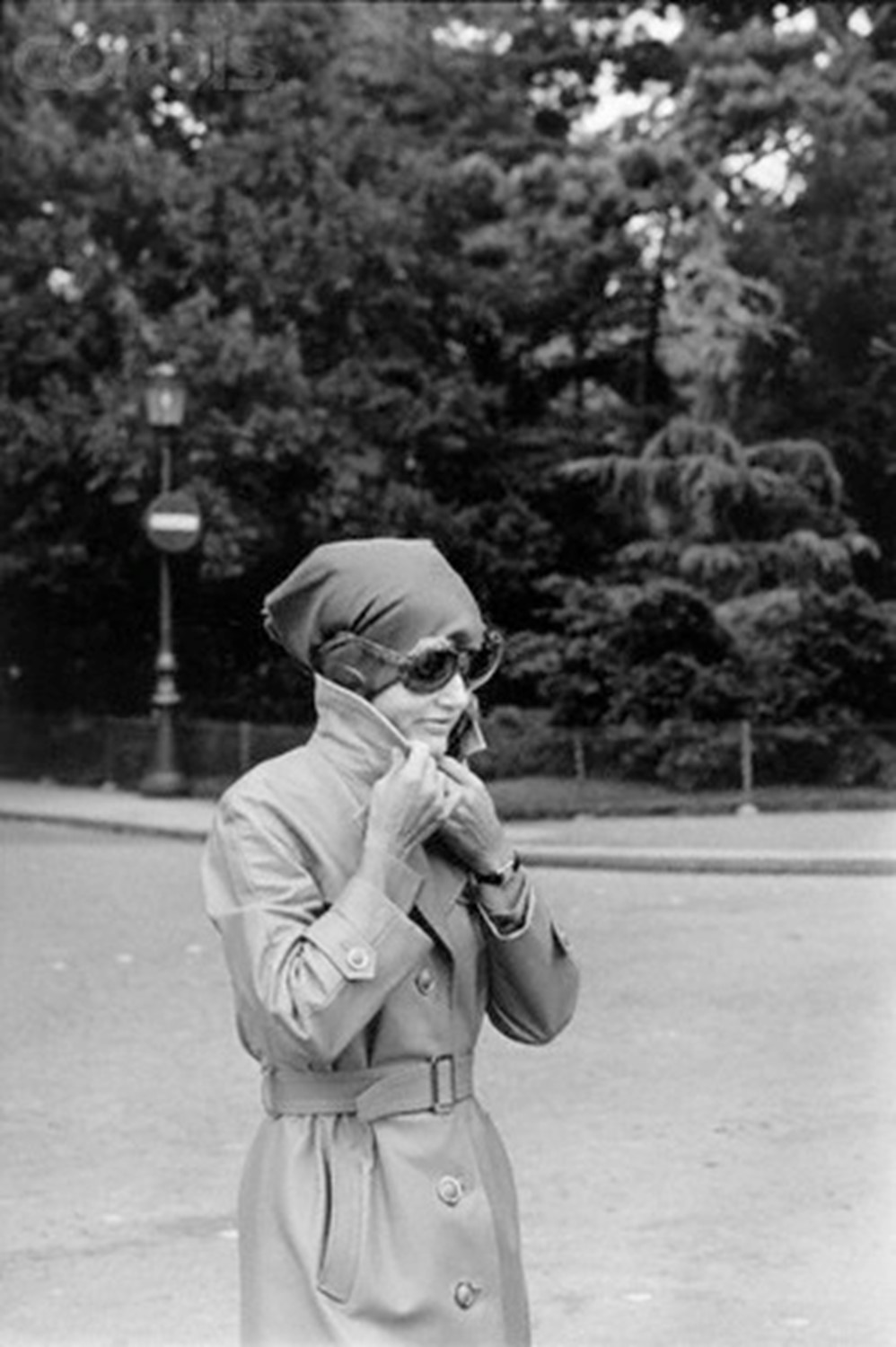
Jackie Onassis confronted by a pap in Paris. Photo by Nogues / Sygma / Corbis.
She did encounter paparazzi in Europe but especially those who were Greek treated her with a degree of polite respect, asking her to pose for a picture to which she usually acquiesced. When she was in New York during the first year of her marriage it was for such brief lengths of time that she would be leaving by the time word spread through the regular paparazzi pack who’d had no time to determine her daily patterns and whereabouts.
The first serious problems came when she returned to New York in the fall of 1969 to see her children established back in school for the term.
That’s when Jackie Onassis had two memorably disturbing confrontations with aggressive paparazzi.
On October 06, 1969, Ari and Jackie Onassis arrived by private car at the Cinema Rendezvous Theatre on West 57th Street. The manager later admitted that he had called several paparazzi, including Mel Finklestein of the New York Daily News, to garner publicity for the theater and let them know the couple was there. Leaving her seat to get snacks at the concession stand and noticing photographers milling in the lobby, Jackie ordered the manager to get them out of there. They left the lobby to simply stand about six feet from the entrance, on the sidewalk.
What made the potential of being photographed in front of a movie poster in the lobby or beneath the theater marquee especially alarming to the former First Lady was the particular film she and Ari had gone to see. It was the highly controversial erotic, Swedish movie ‘I am curious yellow’. Rated X it had been banned from being screened in the U.S. for several years.
Perhaps panicking and certainly furious over the presence of photographers, Jackie Onassis oddly followed them out to flee from the screening. As she exited the theater, sure enough Finkelstein snapped her picture dead-on, although without the film’s name in the background. Jackie nervously reacted by pulling a ‘judo trick’ on him. “She grabbed my right wrist put her other hand on my left elbow, put out her left leg and flipped me over her thigh”, he recalled. “That girl can handle herself.” And indeed another photographer snapped Finkelstein fallen on the sidewalk as a woman in a leather mini-skirt, her head wrapped in a printed scarf marched away from him.
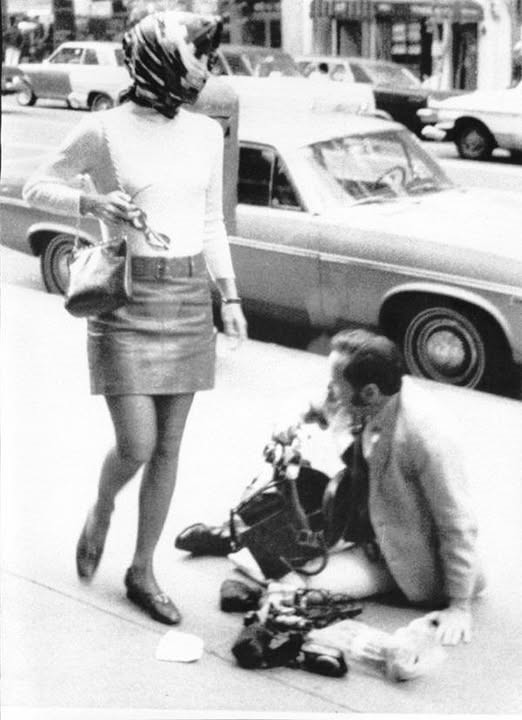
Jackie Kennedy Onassis walks out of Cinema Rendezvous Theatre after seeing ‘I am curious yellow’. Photo by New York Daily News.
Jackie Onassis emerging from ‘I am curious yellow’ adult film passing a paparazzo who claimed she karate-chopped him to the ground. Photo by UPI.
Jackie Onassis denied that she was the woman in the picture.
Then, Finkelstein produced his one picture, which managed to snap her face before she’d covered it with the scarf.
In one felt swoop, the former First Lady was humiliated by news of her attacking a photographer, seeing an X-rated movie and then lying about it.
Not until the unconcerned Onassis security guards, sitting in the limo, saw her dash past them and then run into the theater to tell Ari did he learn why she never returned from the concession stand. Angry at being interrupted, he shrugged off the incident, making no effort to leave the movie before it was over to console or check with her.
Jackie Onassis may have reacted rashly because she was still agitated about an incident which had occurred just the previous week.
Although paparazzo Ron Galella has since depicted his unrelentingly stalking of Jackie as some sort of an oddly affectionate relationship between them, his tactics proved dangerous.
By this point, the moment she saw Galella, Jackie usually swiveled her head away from his camera, obscured her face or just bolted into a full-fledged run (which he photographed – from behind) but her thwarting efforts only made him more unrelentingly invasive, conspiring with naive service personnel for tips on her schedule and once slipping into a Chinese restaurant to snap her eating with chopsticks while he hid in a coat rack.
At the end of September 1969, however, he ambushed her and her son as they were bike riding and in surprised reaction, they swerved into ongoing traffic. Instead of the tight smile she usually met him with, this time Jackie told her son’s Secret Service agents to stop Galella cold. He would claim that she ordered them to “smash his camera.”
Nothing, however, stopped Galella who knew full well that Jackie Onassis was no longer the subject of legal protection by the Secret Service. It got so obsessive that she finally took him to court for violation of privacy in the winter of 1972.
Although she won the case and Galella was ordered to remain a distance away from her at all times, he flagrantly violated the ruling – until she took him to court again.
Aristotle Onassis was displeased about the court case, not just because of the massive legal fees which he considered a waste of money but the fact that it only seemed to draw other, even more aggressive paparazzi wherever she went.
Making the rounds at exclusive nightclubs in his double-breasted suits and sunglasses, often joined in a stroll with a famous friend, Onassis had always invited publicity snapshots of himself. He viewed them as a way to raise the glamor quotient of his business profile. When he wanted to retreat into complete privacy and walk around in his robe – or nothing at all – he had his private island.
Except Jackie was now on it.
Jackie Onassis and her son photographed from a relatively close distance on Skorpios. Original photographer unknown.
Onassis took pride in the fact that Skorpios was impenetrable, being regularly encircled by security agents on motorized launches. No photographers ever gained access or dared to violate the private property warnings posted at the docks.
Suddenly noticing a Greek paparazzi snapping her and son with a telephoto lens on Skorpios provoked the new Mrs. Onassis to grimace more than smile.
He thought Jackie was being ridiculously paranoid when she once reported to him feeling that she was somehow being watched while dining at the open-air ‘taverna’ cottage on the island. He insisted that he never detected any photographers were watching him on the island.
And they weren’t. When he was there alone.
However remote the island might be, it was a finite space and when the one person whose pictures commanded the highest prices at publications was in residence there, paparazzi knew the half-dozen places along the shoreline where she would eventually appear.
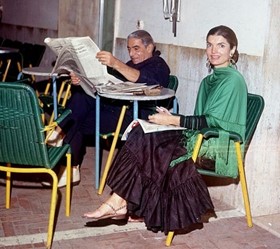
Ari and Jackie Onassis snapped at a cafe.
A further menacing intrusion came in the latter part of 1969.
That year, European paparazzi were ecstatic about the latest version of the ‘Novoflex Super-Telephoto lens’, which had a mount but could focus clearly on figures at a great distance, far enough away, for instance, to avoid trespassing on Skorpios.
Over the holiday season and into 1970, including the summer vacation of the family and their guests, slightly grainy but otherwise distinct images of them boating, strolling the island, swimming and lunching began appearing throughout the world’s newspapers and magazines, carried by wire services in Europe and the U.S.
The privacy violation increasingly irritated Onassis, who nevertheless recognized he had no control over the situation since the paparazzi had not technically been trespassing.
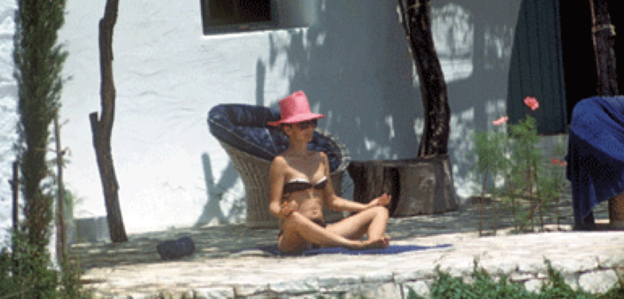
By the late 60s technology advances amped the power of telephotos lenses to take even color shots, as this one of Jackie Onassis practicing yoga on the beach at Skorpios proved. Photo by Life.
And then there was the summer of 1971.
There being none of her friends or family members as guests one particular day, Jackie Kennedy Onassis did what millions of people do when they want to swim. She changed into a bathing suit. And while she was there alone and natural, she also did a bit of sunbathing and yoga exercises.
Except that she was not alone.
Ironically, it was not an intrusive stranger but rather an apparent staff member on Skorpios who photographed a series of images with a telephoto lens which captured the former Mrs. John F. Kennedy in the nude.
At least, he had seemed to be a staff member.
Photographer Settimio Garritano had won the confidence of a local resident of a nearby village who then helped him gain access to the island by disguising himself as a gardener.
Garritano docked a small rowboat beneath some overgrowth which kept him entirely hidden from the nearby beach area the Onassis family used. And his telephoto lens was affixed to his camera and ready just as Jackie appeared alone and readied for her swim.
“It didn’t seem possible”, he recalled in 2009. “She knew she’d been photographed before on Skorpios so why would she display herself? Then suddenly she appeared and wandered around the patio area. I concentrated on just taking the pictures, not composing them. It was a matter of moments, not even minutes.”
Initially, Garritano was unable to find any publication that would print the images of the woman who had a public image which still placed her in wool suits and pillbox hats and who never went to formal events without wearing white gloves.
In fact, the friendly Garritano proved to be one of the few familiar photographers whom Mrs. Onassis often offered a smile towards while sitting in cafes and strolling the streets of Capri.
Ari and Jackie Onassis snapped at the Skorpios lagoon by paparazzi.
It seems she never learned that he had been the one to take the nude pictures.
A year later, however, in 1972 the nude photos of Jacqueline Kennedy Onassis were printed in ‘Oggi’, an Italian magazine.
Three years later, they appeared in the American publication ‘Hustler’.
Jackie was mortified but took the philosophical view that the images were not pornographic and revealed no more than did ancient Greek sculpture.
Mrs. Onassis laying in the sun, topless, as many women did, especially in Europe.
After all, nude pictures were of interest only to the prurient and judged by some false construct of a morality that had once seen beauty in it, not shame.
Frankly, as someone close to her later suggested, here was a person who had experienced the living nightmare of a bloody murder just an inch or two from being killed herself. It was traumatic enough to be seated so close to the victim of any person killed by gunshot wounds, but the added intensity of it being her husband and further, the President of the United States was more than most people could ever handle.
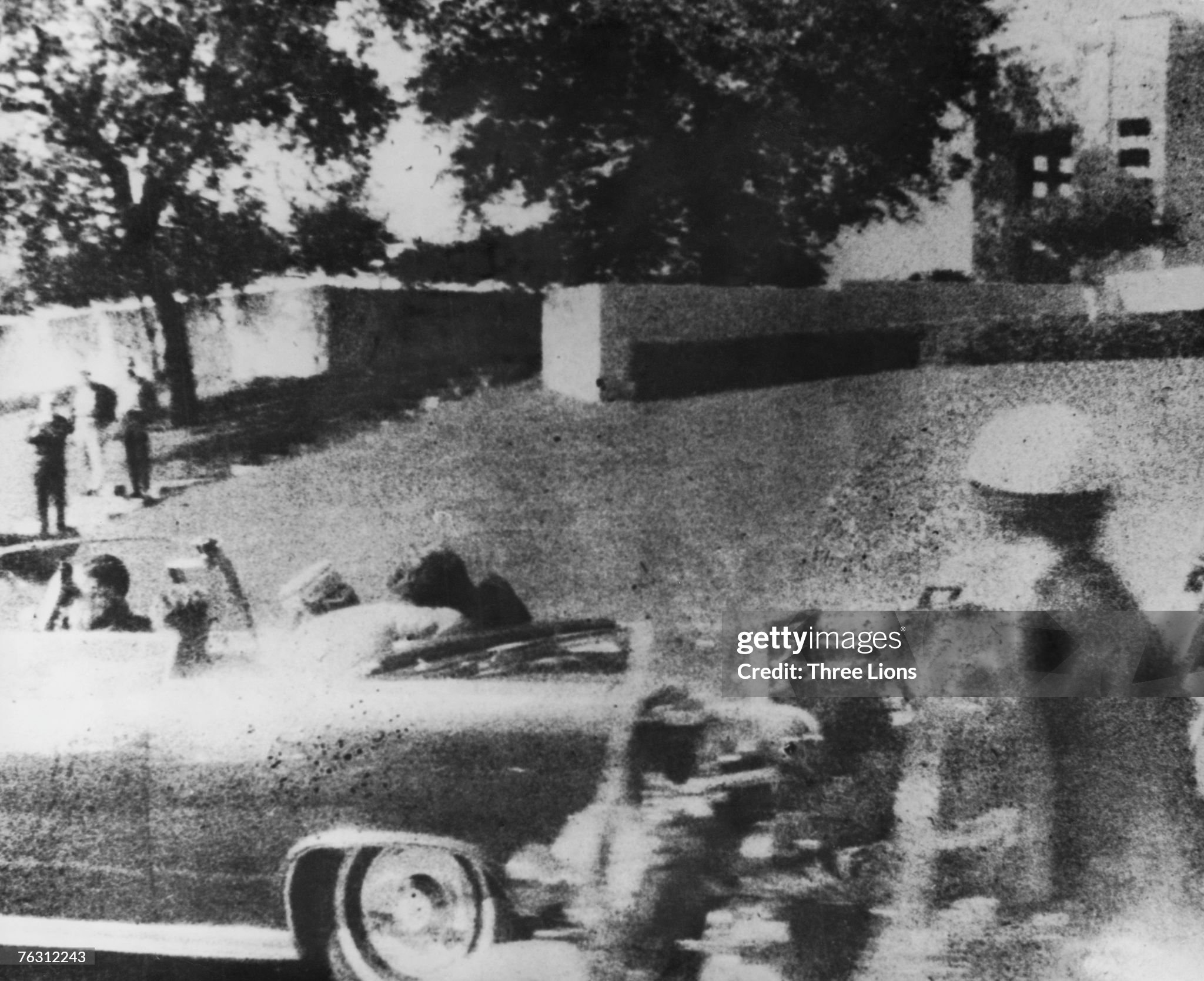
American president John F. Kennedy is struck by an assassin's bullet as he travels through Dallas in a motorcade on 22 November 1963. In the car next to him is his wife Jacqueline (1929 - 1994) and in the front seat is Texas governor John Connally. Photo by Three Lions / Hulton Archive / Getty Images.
Images of her husband’s murder were, to her, “truly obscene.”
Naked pictures were harmless in comparison.
On top of it, the taped film of the event would be seen countless billions of times for all the time to follow. Those images, she told her friend, were the ones that should be considered “truly obscene”, not the ones of her on Skorpios.
In fact, there was no greater proof of her lack of shame about the nude pictures of her being seen around the world than her having one of them blown up to poster size and then signing it as ‘Jackie Montauk’, something of a gag gift, for her friend the artist Andy Warhol.
Among the dozen or so images snapped of her sunbathing without her suit on Skorpios, the former First Lady had this one cropped and blown up as a poster, signing it as a gift for Andy Warhol.
The nickname was in appreciative reference for his letting her share his Montauk, Long Island, beach home in the summer of 1973.
Eventually, the images made their way to the United States first through imported copies of the Italian magazine ‘Oggi’ that first printed them and then, in 1975, in the American pornographic publication ‘Hustler’.
Several images from the series of nude sunbathing pictures snapped of the former First Lady.
When a family member later wondered openly what ‘Jack’ would have thought of the revealing pictures of Jackie, she was reminded that Jack Kennedy had been famously uninhibited about displaying his physique, usually wrapped in a towel – but not always.
John F. Kennedy also felt nudity was nothing to be ashamed about.
Nor did Jackie Onassis seek to shame her son when he too, like his father, often appeared around the family’s beach properties nearly bare and something entirely bare.
Ari Onassis adopted a similar view, shrugging it off by saying: “sometimes I take my clothes off to put on a bathing suit. So does my wife.”
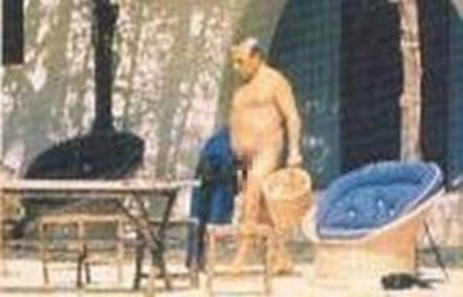
Ari’s turn.
In fact, he did take off his clothes to put on a bathing suit and soon enough there were explicit naked photographs of him hitting the magazines and hitting a nerve with him.
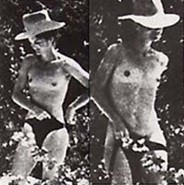
Part of the revealing Garritano photo series on Jacqueline Onassis.
Aristotle Onassis was humiliated, but rather than focus on his nude pictures he suddenly began to bicker to Jackie about her nude pictures, even in front of her friends.
“I don’t like seeing pictures of my wife’s behind in magazines!” he yelled at her repeatedly and loudly over dinner one night in a chic New York restaurant.
Her patience tried but her politeness still intact, Jackie Onassis finally purred at him.
“Oh don’t worry ‘Goldfinger’, they’re saving yours for the Christmas issues.”
Not long after her nude pictures had been published in 1972, Jackie Onassis told her husband that she would not be coming to Skorpios until the middle of June, later than previously scheduled.
Again Ari blew a gasket. It may, however, have been the reason why she would be delayed which angered him.
She was going to attend a June 09 memorial service on the fourth anniversary of Robert Kennedy’s assassination, thus making her first return to Arlington National Cemetery since she had married Onassis.
After joining the Kennedy family at the gravesite of Robert Kennedy, however, Jackie Onassis then made an unscheduled visit to the grave of her first husband, which she had meticulously planned following the President’s assassination.
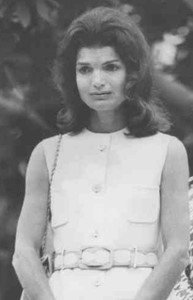
Unlike her composure during the late President’s funeral, Jackie Onassis cried openly at his grave when she again visited there in 1972. Photo by AP.
Ignoring the photographers who snapped away at her, she finally broke down in tears, openly weeping in a way she never had at the time of the President’s funeral and burial nine years earlier.
The photograph appeared around the world with captions which suggested it was proof that she still grieved more for her first husband than she loved her second husband.
That picture’s affect, however, was mitigated by another equally startling one which showed the former First Lady receiving holy communion during the Catholic mass at the cemetery.
As thousands of news reports at the time of her second marriage had pointed out, according to Vatican law, a Catholic who married someone who been divorced was to be denied any further sacraments of the religion, such as communion.
There was a degree of criticism from some Catholic leaders for her defiance of the ruling as well as of the priest who administered it. Generally, however, it had the unwelcome effect of reminding the public all over again about the great differences between Ari and Jackie Onassis.
The renewed criticism of the marriage in the press suggested that, despite the fact that she was the legal wife of Aristotle Onassis, the public never stopped perceiving Jackie Bouvier as the widow of John F. Kennedy.
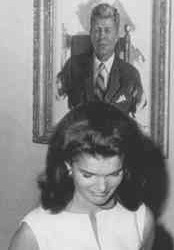
Jackie Onassis at a board meeting of the JFK School for Government. Photo by Boston Globe.
If the press and public didn’t need to remind Onassis of this, Jackie did.
In 1971, she had made her first and only visit back to the White House, accepting the invitation of President Richard Nixon and First Lady Pat Nixon to join them and their daughters with her own two children, for a private dinner and viewing of the portraits of herself and President Kennedy which would be put on public view the following day. While certainly Ari had not voiced an expectation that he also be invited, neither did she seek to invite him.
On their third wedding anniversary, Onassis looked at his breakfast tray to find a jeweled 14K gold watch, along with a note which carried a quote from his favorite Greek philosopher Theophrastus: “our costliest expenditure is time.”
The watch was engraved ‘F.A.L.J.’ (“For Ari, Love Jackie). When he looked closely at the gift, however, he saw that there was another engraving on it as well. The watch had belonged to Jackie’s first husband, a gift from friends in 1963. Onassis told his daughter that, by the choice of this as a wedding anniversary present, Jackie was suggesting that the greatest gift she could give to her second husband was a tangible association with her first husband.
Jackie Kennedy Onassis and her children emerge from a 10th anniversary memorial mass to President Kennedy at St. Bridget’s Catholic Church in New Jersey. Photo by Washington Star Collection.
Each November, almost always during the Thanksgiving holiday weekend, Jackie Onassis also took her two children to a Catholic mass, in remembrance of the President on the day he was assassinated. Each year, newspapers carried pictures of the trio leaving the masses, yet another reminded to Ari of whose wife he had married.
As the initial glory of his sudden global fame which resulted from his 1968 wedding to Jackie wore off, Ari was forced to face the truth that no matter how wealthy he was or how fabled his island or yacht, marriage to the world’s most famous woman was less about Jackie Kennedy being the wife of Onassis and more about Onassis being the husband of Jackie Kennedy.
Ari gave this diamond ring to Jackie when they married.
Whether it was an act of passive aggression or a reflection of his genuine political leanings, the press soon learned a startling fact about the couple around Election Day in 1972.
While Jackie Onassis loyally contributed to the campaign of Democratic presidential candidate George McGovern, Ari Onassis made a sizable contribution to Republican President Richard Nixon’s re-election campaign.
Onassis was also beginning to face some unpleasant business realities, as his overall assets were showing losses for the year 1973 ahead.
Rather than face it by explaining the complexities of a shifting global economy and his own investment decisions, he fixated on a more spiteful excuse for the tumble.
From the very start of their marriage, Ari had been repeatedly and extravagantly plying Jackie with eye-popping jewelry that she’d never asked for. Yet now he began to complain that, by indulging her expensive tastes in art and clothing, she was depleting his fortune.
The high cost of the winning auction bid on an 18th Century French landscape painting was more readily comprehended than the spike in airline fuel caused by an oil embargo.
Whereas Ari had been flamboyantly generous towards any matter of personal importance to Jackie, now he was passing judgement on the value of her concerns. After embarrassing news stories about the deplorable living conditions of Jackie’s paternal aunt and first cousin ‘Big Edie’ and ‘Little Edie’ Beale, for example, Onassis eagerly underwrote the costs of bringing their home up to code.
An apparently sharp argument broke out between them, however, when she asked him to make a donation to a fledgling clinic in Vietnam, established by her close friend, journalist Gloria Emerson, which treated children maimed by the war.
When Onassis flat-out refused to do so, belittling the effort, Jackie went ‘berserk’, especially stunned at how he could so summarily deny aiding such a relatively modest humanitarian effort.
The incident triggered an act of defiance that echoed some of her determined tactics as First Lady when she conceived of creative methods to fund the purchase of especially rare but unaffordable antiques for her historical restoration of the White House.
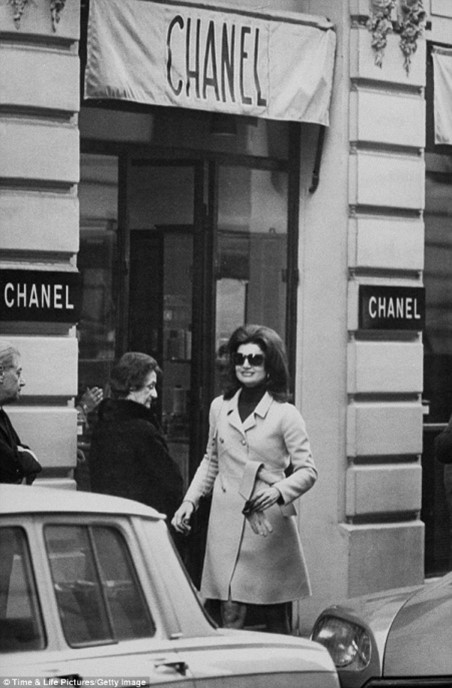
Jackie Onassis exiting Chanel in Paris.
Although her living expenses were appropriated monthly by Onassis, at some point in 1972 or 1973 he limited her discretionary funds. He had not, however, closed the credit accounts he had always maintained for the women of his family at numerous clothier’s in Paris.
Onassis became bewildered by a particular set of charges that came in for a series of couture gowns charged by Jackie in Paris but which she never once wore. Why did she buy these expensive clothes, he complained, when he knew for a fact that she had been wearing tee-shirts, jeans and sportswear for weeks on end and then appeared shortly thereafter at a formal event in a gown she had already worn publicly on several past occasions.
Jackie Onassis exiting Christian Dior shop in Paris.
It is unclear whether or not Onassis ever found out that, in fact, his wife had the new, unworn couture sent to New York and discreetly sold at a high-end outlet for practically its full value, less the cost of customs tax.
To Gloria Emerson, however, Mrs. Onassis made a whopping donation to help her hospital for Vietnamese children – in cash and on the condition that her seemingly Robin Hoodesque transaction not be revealed in Emerson’s forthcoming McCall’s Magazine profile about her, a strategic piece of public relations with which Jackie was fully cooperating.
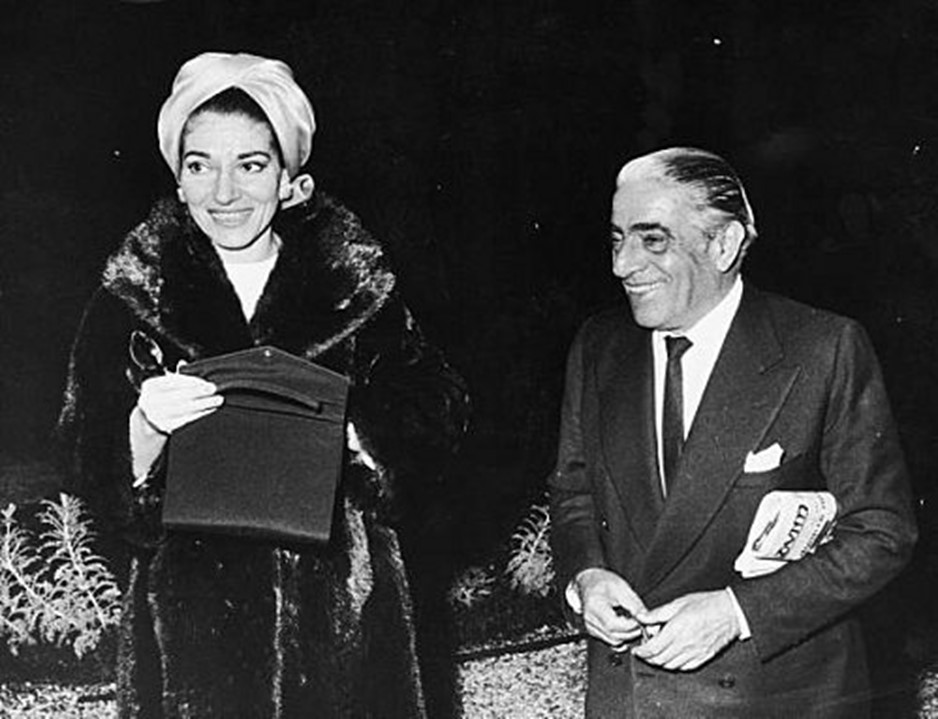
Callas and Onassis out again.
If this sort of subversive shopping was providing Jackie Onassis a creative outlet amid the growing frustrations and tension of her marriage, Ari Onassis found it by renewing not so much a romance but a romantic friendship with his former lover, opera singer Maria Callas.
He was also going out more frequently to nightclubs and staying until the wee hours of the morning as he had done before marrying Jackie. On occasion, she joined him but she found the repetitive outings to be tedious. It was also a gross understatement to say that she didn’t quite enjoy the belly-dancing on tables that he loved, particularly during trips they made to Iran and Egypt together.
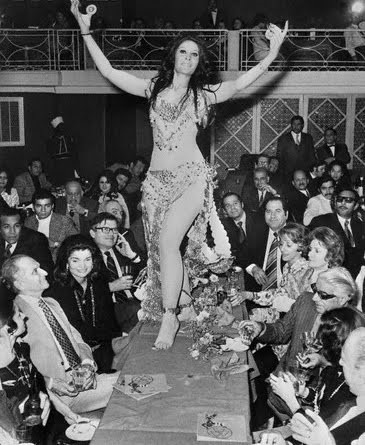
With husband Ari, Jackie Onassis takes in some belly dancing on the table at Cairo, Egypt, in 1973. Jackie didn’t take as well to a belly dancer as she did the Nile. Ari liked it.
By 1973, lunching and shopping seemed to have become a numbing distraction for Jackie Onassis. That year she spent more time in New York, apart from her husband, than she had at any previous time in their marriage.
Gloria Emerson had once successfully encouraged Jackie in 1951 to see through to complete the rigorous submission of an entire mock issue of Vogue magazine for a contest sponsored by the magazine.
Now, Emerson began an unrelenting campaign to convince Jackie she would only find genuine happiness by returning to some form of journalistic work, convinced that her skill with words was going to waste.
In 1973, NBC approached the former First Lady with an exciting offer to narrate a documentary on threatened world landmarks like those in Cambodia and Mexico she had inspected. Jackie was eager to accept. Ari angrily forbade her from doing so. “They’ll say Onassis is broke, sending his wife out to work and earn her own money!” he griped.
Still, Jackie Onassis once again found a way around her husband.
It was not until Gloria Emerson’s magazine profile on her revealed it that even members of Jackie’s family first discovered that, rather than disappearing downtown on certain weekdays to, they assumed, lunch, shop, take in shows or museum exhibits, the former First Lady had been slipping uptown to Spanish Harlem to volunteer as a reading teacher for children living in a shelter.
As 1973 began, the marriage of Ari and Jackie Onassis was strained but not broken.
In the following year, she would even successfully prod her husband off his yacht and out of his offices for a leisurely tour of Egypt, a place both had expressed a desire to explore if they could find the time.
Unfortunately, the 1974 Egyptian trip did little to relax Aristotle Onassis. At that point, it was already too late.
On January 23, 1973 another unexpected tragedy had hit this clan that had been cobbled together by a divorce and an assassination.
This time, however, it wasn’t on Jackie’s side of the family.
Aristotle Onassis’ 1967 Ferrari 330 GTC is up for sale. By Ben Branch on October 20th 2023.
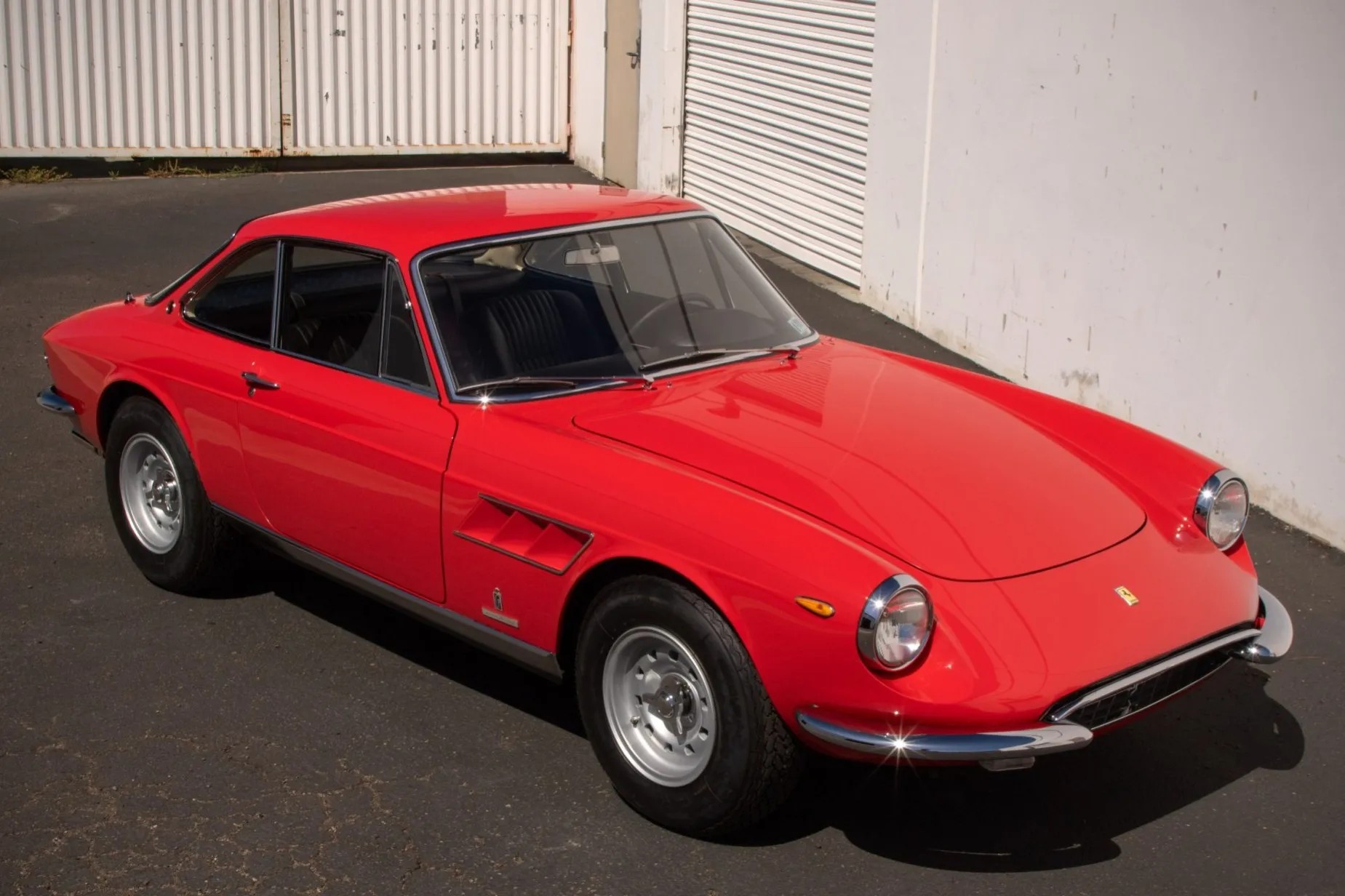
The Aristotle Onassis 1967 Ferrari 330 GTC.
This 1967 Ferrari 330 GTC has the unusual distinction of having been ordered new by Aristotle Onassis, the legendary industrialist who would build the largest private shipping company in the world, then later marry Jacqueline Kennedy in 1968.
The 330 GTC was one of the most refined Ferraris of its age, it was based on the Ferrari 275 GTB chassis with a body that included a front end influenced by the 500 Superfast, a rear that resembled the 275 GTS and the 4.0 liter version of the Colombo V12. The car was later described as “probably the first Ferrari in which you could actually enjoy a radio.”
Fast Facts – The Aristotle Onassis Ferrari 330 GTC
- The 330 series was introduced in the 1960s as a successor to the 250 series. The Ferrari 330 was designed to encompass a range of models and the ‘330’ designation primarily refers to the individual cylinder displacement, which is approximately 330 cc, making the total displacement for the V12 4.0 liters (actually 3,967.44cc).
- The Ferrari 330 GTC (Gran Turismo Coupé) was introduced at the Geneva Motor Show in March of 1966. It was intended to fill a niche between the more sporting 275 GTB and the larger, more luxurious, 330 GT 2+2. It sold well, with 600 made in total between 1966 and 1968. There was also a GTS (Gran Turismo Spider) convertible model of which approximately 100 were made.
- The 330 GTC incorporated elements from both the 275 and the 330. Pininfarina designed the body and many consider it to be one of the most elegant Ferraris of its era.
- The car had the short-wheelbase chassis of the 275 but incorporated the 4.0 liter V12 of the 330 series. This engine produced 300 bhp at 7,000 rpm which, combined with a fully independent front and rear suspension, four wheel disc brakes and a rear-mounted 5-speed transaxle, made the 330 GTC not only a quick car but also a comfortable grand tourer.
- The 1967 Ferrari 330 GTC you see here was ordered new by famed shipping magnate Aristotle Onassis, who interestingly owned this car when he married Jacqueline Kennedy in October of 1968. It’s now been completely restored back to original condition and it’s being offered for sale out of San Diego, California.
A history speedrun: the Ferrari 330 GTC
Introduced in 1966 at the Geneva Motor Show, the Ferrari 330 GTC was designed to fill the gap between the sportier 275 GTB and the more luxurious 330 GT 2+2, offering the best of both worlds.
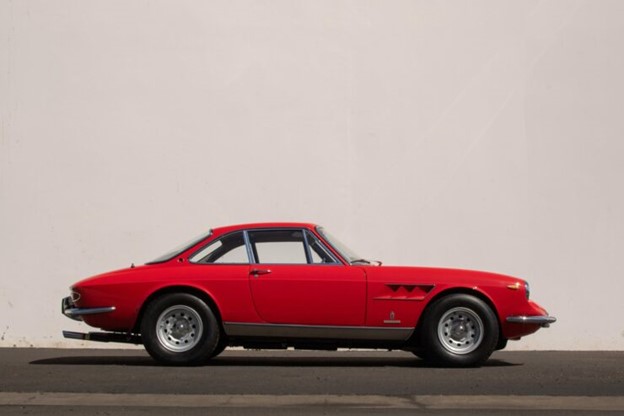
The Ferrari 330 GTC offered a desirable halfway point between the more sporting Ferrari 275 GTB and the larger, more luxurious Ferrari 330 GT 2+2.
With a design courtesy of Pininfarina, the 330 GTC bore a striking resemblance to its sibling, the 500 Superfast, particularly from the A-pillar forwards. The design of the rear of the car was influenced by the 275 GTS.
The 330 GTC was built on the same sporting chassis as the 275 GTB, with independent front and rear suspension, four-wheel disc brakes and a rear-mounted 5-speed transaxle that helped give the car almost perfect weight distribution and balanced handling.
Underneath its sleek bodywork, the 330 GTC was powered by the 4.0 liter Colombo V12, which was also used in the 330 GT 2+2. This single overhead cam per bank, all-alloy V12 produced 300 bhp art 7,000 rpm, allowing the car to achieve a top speed in excess of 150 mph – heady figure for the time.
The interior of the 330 GTC was a reflection of its dual intended purposes. While it was a sports car in every sense of the word, it didn’t compromise on luxuries. The cabin was spacious, upholstered with leather and it featured amenities that were considered luxurious for its time like air conditioning, plush carpeting and a push button stereo.
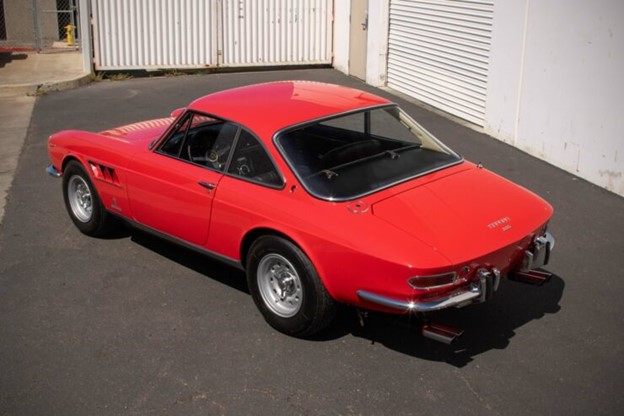
It’s been noted that the front end of the 330 GTC resembles the 500 Superfast and the rear bares a resemblance to the Ferrari 275 GTS. The car was built on the shorter 275 GTB chassis and was powered by the 300 bhp 4.0 liter V12.
This combination made the car an ideal grand tourer, capable of long-distance drives in utmost comfort, yet responsive and lively when the roads opened up. Though produced for only a short two year period from 1966 and 1968, the 330 GTC left a lasting impression.
In total, Ferrari built 600 units with an additional 100 of the convertible 330 GTS. There were also a small number of special one-off coach-built specials like the Zagato-bodied Ferrari 330 GTC, the Felber FF and the Ferrari 330 GTC Speciale.
The Aristotle Onassis Ferrari 330 GTC shown here
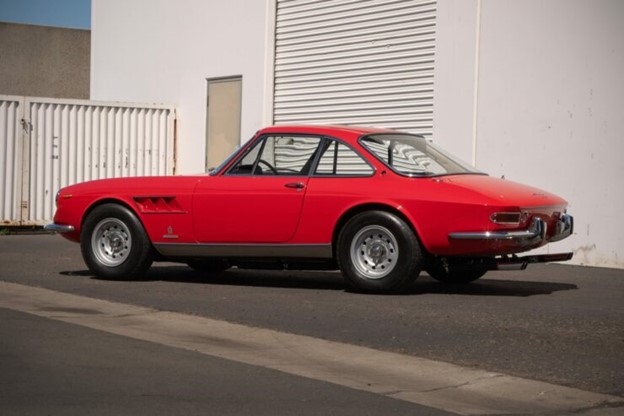
The Aristotle Onassis Ferrari 330 GTC.
This car was completed in November of 1967, before being sent off to Monte Carlo where its first owner was waiting – Aristotle Onassis. Onassis’ history in Monte Carlo is fascinating and worthy of a miniseries all its own, he ended up in a prolonged legal battle with Prince Rainier III and ultimately had to leave the small Principality.
A year after he bought this 330 GTC in October of 1968 he would marry Jacqueline Kennedy, the widow of US President John F. Kennedy. When he placed his order with Ferrari, an order they no doubt expedited, Onassis opted for a couple of optional extras – a front grille-guard bar and stainless-steel rocker panel covers.
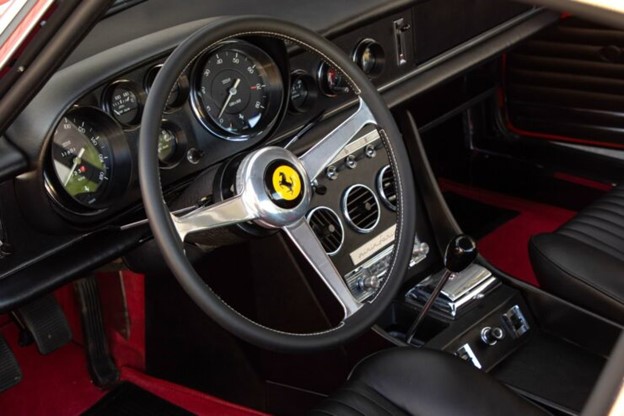
The interior of the car is very well laid out, with black leather upholstery, rich red carpeting, plenty of chrome work, an A/C, push button stereo and, of course, a gated shifter.
He chose what is probably the best color for a Ferrari of this era, Rosso Cina Red over a black leather interior with red carpeting throughout. The car also came with air-conditioning and a push button stereo.
Onassis would have the car serviced by the Ferrari factory’s Assistenza Cliente in Modena, Italy, during his ownership. He sold it in late 1968 and it ended up in the hands of famed US distributor Luigi Chinetti who sold the car in New York.
Over the course of the car’s life in the United States it would end up in storage for 30 years before being rediscovered and bought by the current owner (and now seller) in 2020. They commissioned a restoration by marque specialists Bobileff Motorcar Company in San Diego, which was completed in August of 2023.
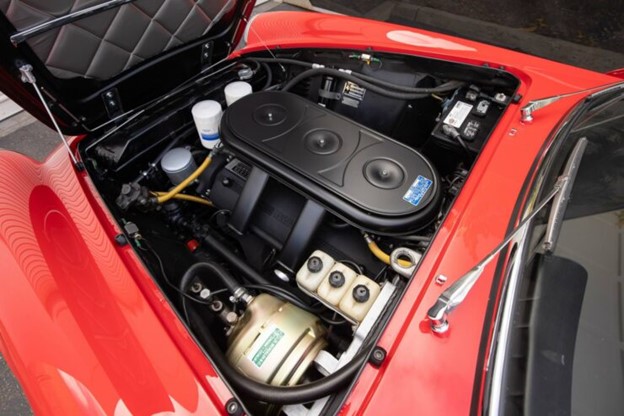
This is the 4.0 liter version of the Colombo V12. It has an aluminum block and heads, a single overhead cam per bank operating two valves per cylinder and it produces 300 bhp at 7,000 rpm – a significant figure for the time.
The car has now been refinished in its original shade of Rosso Cina Red over a newly upholstered black leather interior, the nine has been overhauled as well as the 5-speed transaxle and it now rides on the correct 14 Campagnolo center-lock alloy wheels. The car has also had the original and specially requested stainless-steel rocker panel covers and grille guard refitted.
It’s now being sold on Bring a Trailer out of San Diego, California, with a Marcel Massini report, images cataloguing the restoration, owner’s manuals, a partial tool kit and a Montana title in the name of the seller’s company.
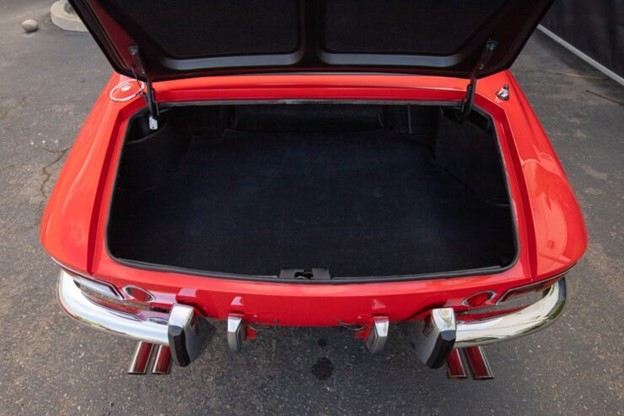
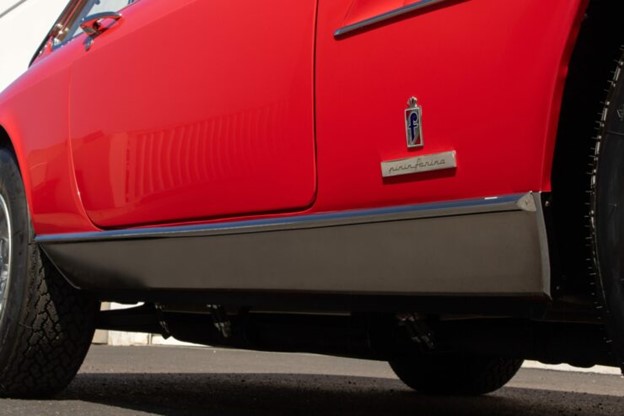
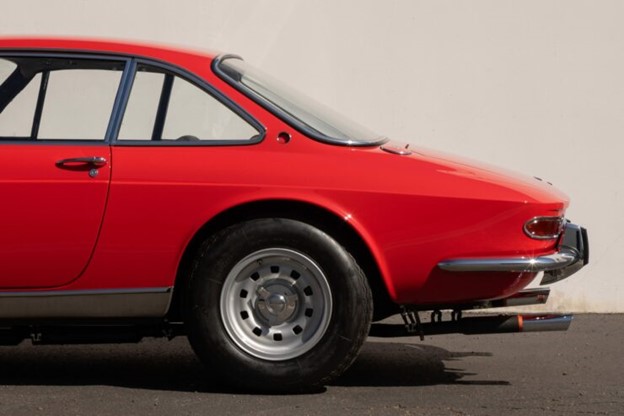
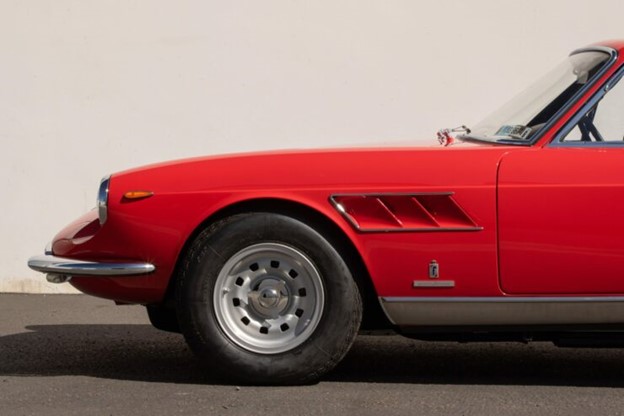
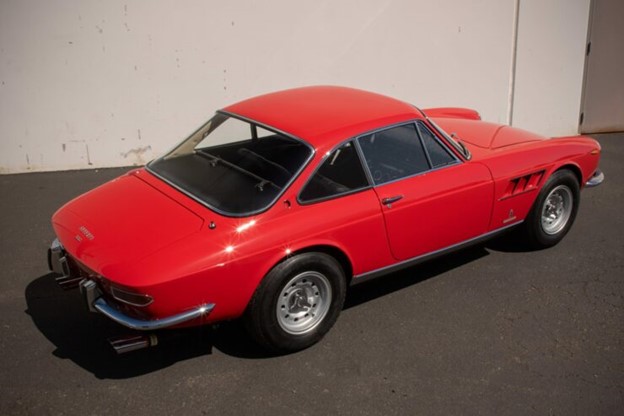
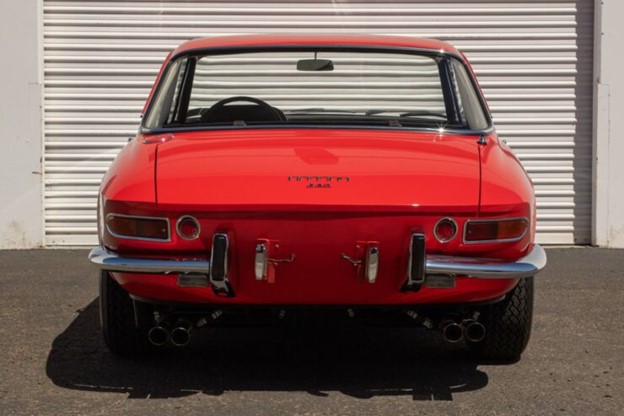
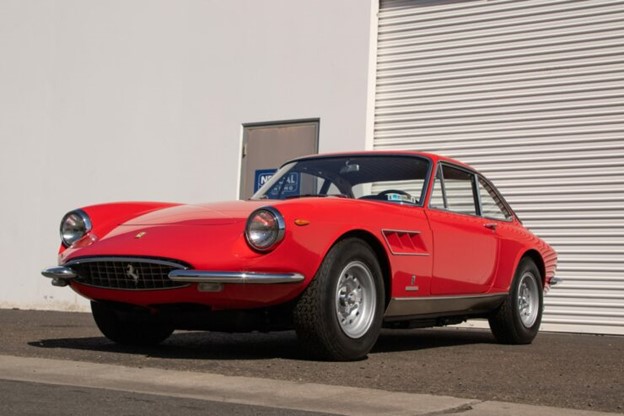
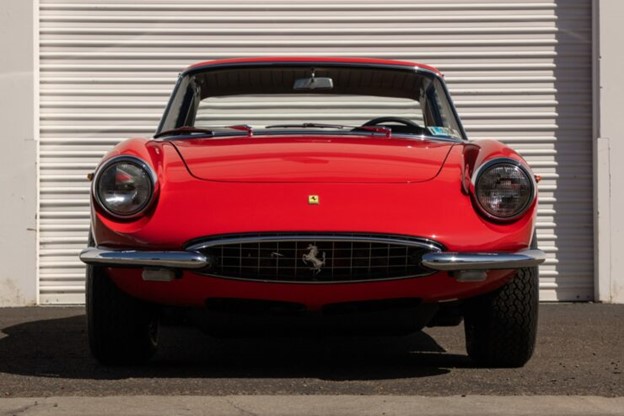
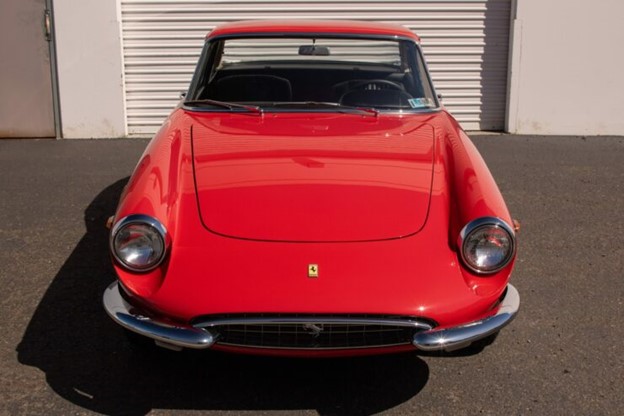
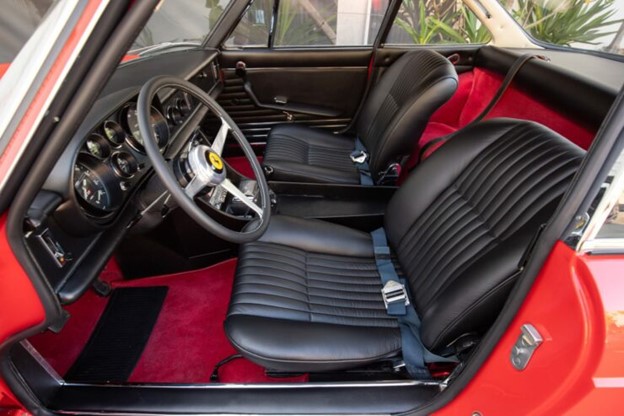
Images courtesy of Bring a Trailer.
Christina O’ encapsulates the legend that was Aristotle Onassis. As a result of an extensive re-fit, this magnificent vessel defines a new category in luxury yachting.
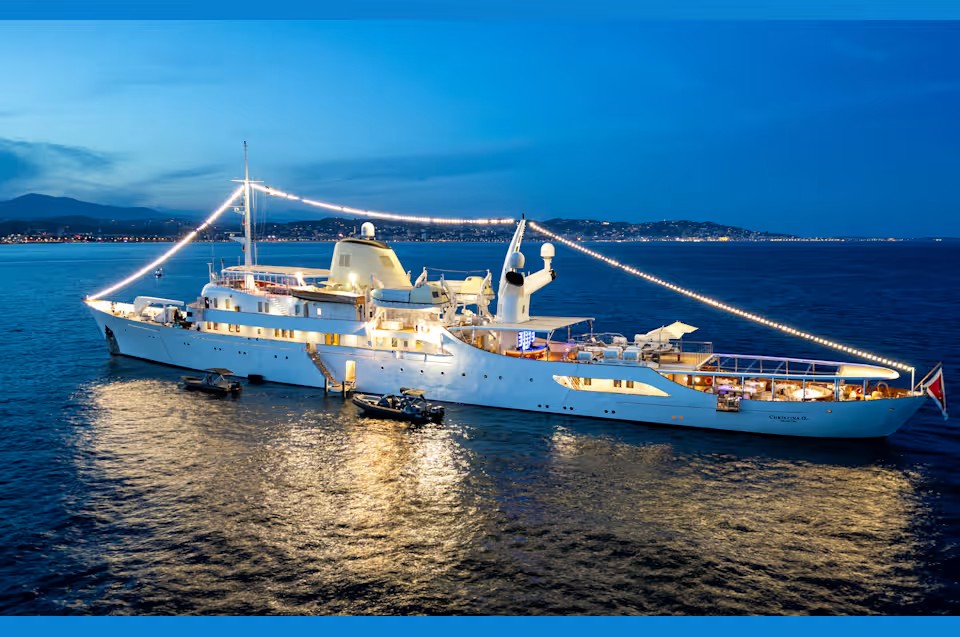
The fabulous 99 meters long yacht Christina O' completely restored.
Christina O’ is one of the only mega yachts capable of accommodating up to 36 guests in 19 staterooms, in full compliance with SOLAS, US Coastguard and Public Health regulations.
Christina O’s canopied decks are the ideal venue for any extra special occasion. When Onassis bought the vessel in 1954, he converted her at an expense of over $4 million, into the largest, most modern and most exalted yacht of her era. Christina O’ became his floating mansion and headquarters for over two decades until his death in 1975. Onassis’ guests onboard were some of the most famous and influential people of the time. At night, Christina O’ served as the stage for Onassis’ celebrated social life, as he played host to Presidents and Prime Ministers, royalty and film stars.
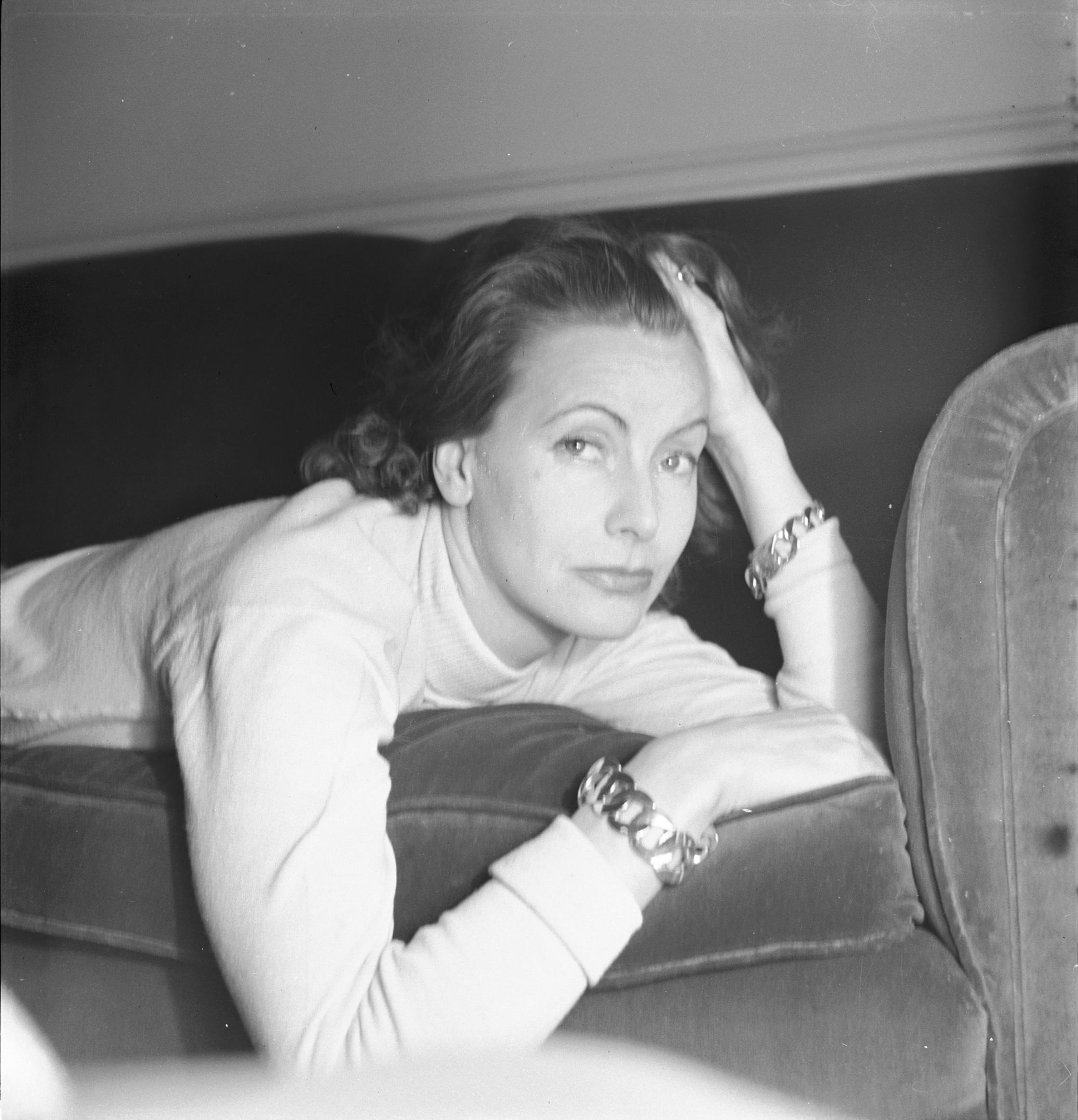
Greta Garbo.
Christina O’s fame owes itself to names such as Maria Callas, Begum Aga Kahn, John Paul Getty, John D Rockefeller, Eva Peron, Richard Burton, Elizabeth Taylor, Marilyn Monroe, Frank Sinatra, Rudolf Nureyev, John Wayne, Greta Garbo and Dame Margot Fonteyn. John F. Kennedy and Sir Winston Churchill first met as guests of Aristotle Onassis onboard Christina O’ and two of the century’s most celebrated wedding receptions were held on Christina O’: Prince Rainier to Princess Grace and Onassis to Jackie Kennedy.
In 1978 Onassis’s daughter Christina donated Christina to the Greek Government and it eventually became disused. In 1998 Christina was purchased by a family friend of Onassis and underwent an extensive refurbishment and re-powering, restoring her to her former glory and with the addition of all the latest technologies and equipments. Christina O’ has fabulous areas for entertaining, including a sumptuous dining room capable of seating up to 40 guests. Christina O’s exterior amenities include the famous swimming pool which converts to a dance floor, a large Jacuzzi and extensive sunbathing decks. Up to 250 guests can be entertained on Christina O’s canopied decks for the ultimate event.
The Christina, Onassis's jewel yacht, is back at sea. By Repubblica.it and Nautica Report on September 28, 2012.
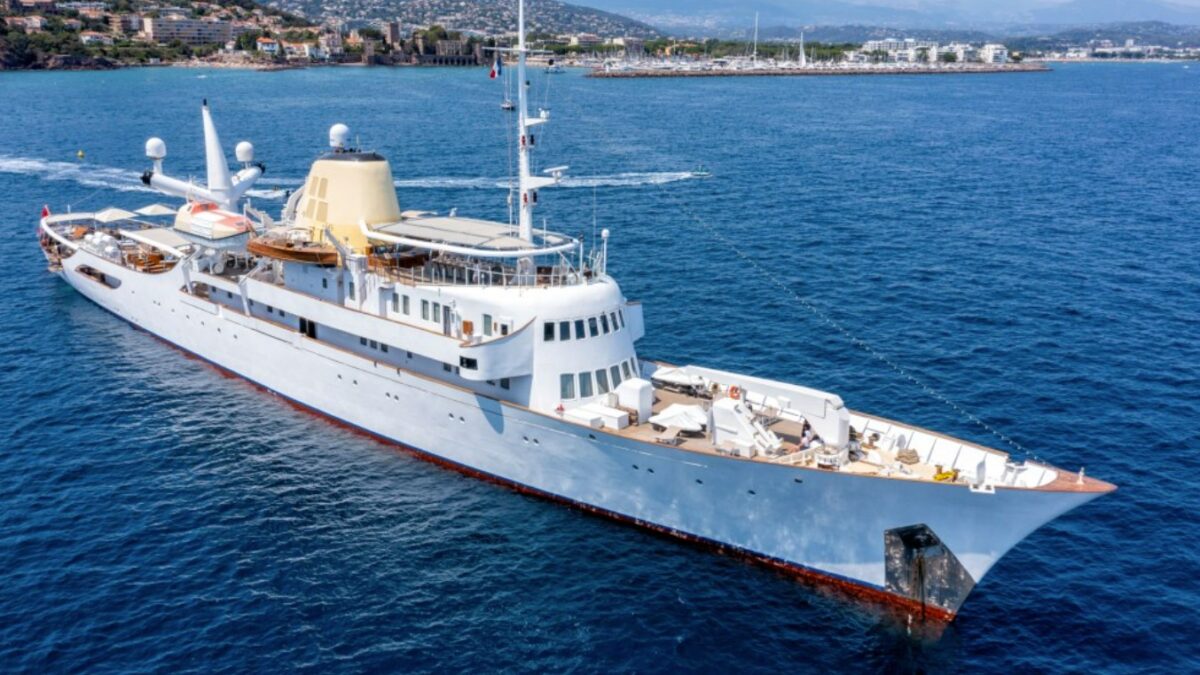
The Christina O’.
The most luxurious yacht in the world and also the most legendary, where Aristotle Onassis flirted first with Callas and then with Jacqueline, where he entertained Winston Churchill and conversed with John Kennedy, where he courted Greta Garbo and hosted Grace Kelly and Prince Rainier of Monaco. The Christina will become a cruise ship.
After being abandoned in a shipyard for over a quarter of a century, it has been completely restored and returned to its former splendor by John Paul Papanicolau, a shipowner who intends to use it for a few short periods of the year and rent it out for the rest of the year to his fellow nabobs, willing to pay impressive sums to tread the five decks of the famous yacht and smell the scent of legend.
On the other hand, Papanicolau and a group of investors spent more than one hundred billion (old lire) to restore the ship to its former glory, as the Sunday Times reported yesterday. In its day, the mega yacht, a symbol of Onassis's power and a paparazzi favorite, had bathrooms with gold faucets and ivory handles, an oversized fireplace studded with precious stones, lapis lazuli sinks and a marble bathroom, the owner's, with a tub inspired by that of the mythical Minos, king of Crete.
The parvenu Onassis spared no expense and was not afraid to overdo it or be considered tacky. He furnished his floating palace (99 metres, twenty double bedrooms, a helipad, a gym, a swimming pool, a theatre and an operating room) with Louis XIV furniture and museum-quality paintings, including a Rubens, an El Greco and a Renoir.
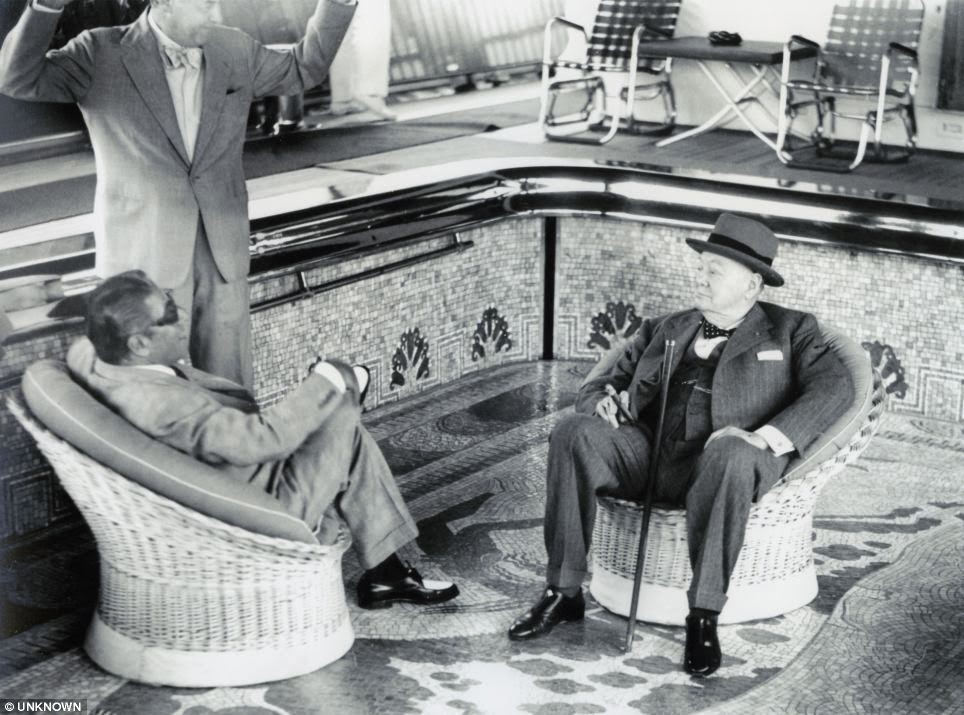
Aristotele Onassis and Winston Churchill.
The owner's four-room apartment was clad in Venetian stucco. The other nine suites, reserved for distinguished guests, were each named after a Greek island. This allowed Greta Garbo to return to Ithaca every summer. The restoration was meticulous and meticulously detailed.
The stools at the bar in front of the panoramic window, where the tycoon loved to offer aperitifs, have now been reupholstered, as they were then, with whale scrotum skin, which allowed Onassis, hospitable but certainly not very genteel, to perpetually play the same joke with each new guest: "Madam, be careful, do you know that you are currently sitting on the biggest dick in the world?"
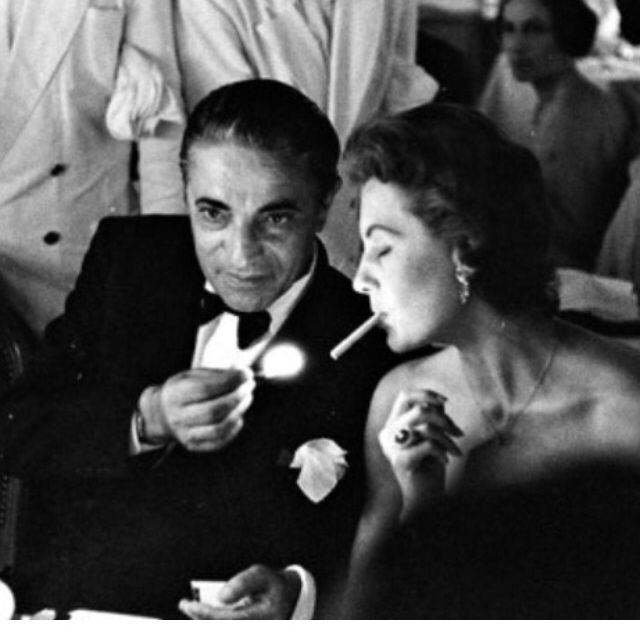
Aristotle Onassis with Ava Gardner.
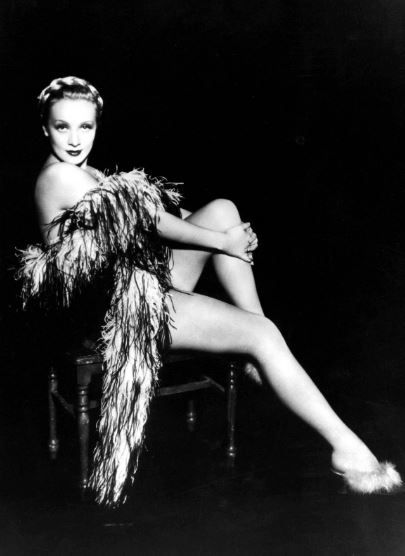
Marlène Dietrich.
He also said this, just to break the ice, to Ava Gardner and Marlène Dietrich.
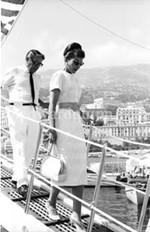
Aristotle Onassis and Maria Callas.
It's certainly the fame of the guests invited on cruises up and down the Mediterranean that created the myth, not the luxurious furnishings, which were good enough for any ‘Nabila’. Frank Sinatra often played the piano in the evenings. Maria Callas practiced her singing, filling the air with vocalizations increasingly unwelcome to Croesus Aristotle. Sitting on the deck, eating al fresco under the awning, were women of legendary beauty like Grace Kelly, Elizabeth Taylor and Marilyn Monroe. Rudolph Nureyev poured himself a few whiskeys. John Wayne took the photographs.
Smoking a cigar on deck while playing ‘bezique’ under the wing of a large Panama hat, was Winston Churchill. Bored, in the midst of the Callas era, was Helmut Berger, summoned to Luchino Visconti's entourage. He found Maria Callas, in her never-legitimate role as landlady, quite whiny with all her obsessions over her little dog. The butler had to lower special equipment into the water: small mattresses with equally small umbrellas to protect her beloved dog's delicate skin.
Maria Callas and Winston Churchill.
It was on the Christina, under Churchill's ironic gaze, that love at first sight struck between Onassis and Callas, both accompanied on that fateful cruise by their respective spouses in the summer of 1959. Three years later, Onassis invited Princess Lee Radziwill, Jacqueline Kennedy's sister and courted her furiously, betraying Maria in front of everyone.
That same summer, two months later, Lee returned accompanied by her sister: the president's wife, the White House explained in an embarrassing statement, was spending a few days convalescing after the death of her newborn son Patrick on the yacht of Mr. Onassis, who was already widely rumored to be a tycoon.
And it was on the Christina that the Greek tycoon arranged a meeting, repeatedly requested by the British statesman, between Churchill and Kennedy. The US president stayed the bare minimum: a couple of hours. Jacqueline, however, would stay much longer, starting in October 1968, when she sensationally ended her widowhood with a quick wedding on her new husband's private island, Skorpios and with an interminable honeymoon amidst the luxury of the Christina.
After the owner's death in 1975, his daughter (the boat was named after her daughter, not her daughter after the boat) donated the demanding yacht to the Greek government, which quickly realized the burden of maintenance costs. It's not yet known exactly how much a week's vacation on the Christina under new management will cost, but it's certain to be at least $900 a week. As always: if you ask about the price, it means you can't afford it.
Onassis yacht - Christina ‘O’ - the legend. Posted by Elios Patronikolas on Saturday 01 April 2017.
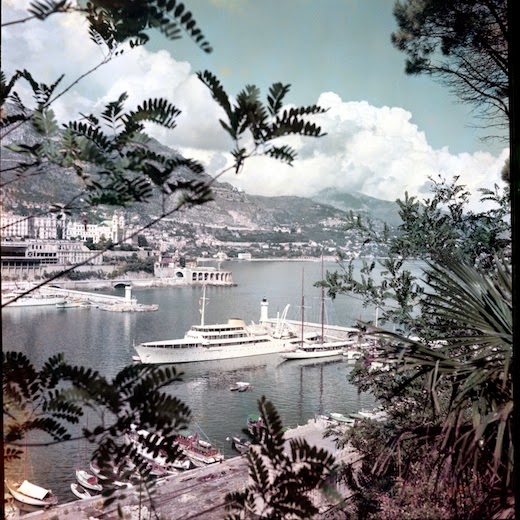
The Christina.
In 1954 Aristotle Socrates Onassis created the greatest yacht of all, ‘Christina’. Named after his beloved daughter, she was a sleek, 325-foot, shimmering-white masterpiece proudly displaying the Onassis signature, the yellow funnel. While the ship had begun life in 1943 as the Canadian naval frigate Stormont, a convoy escort, Onassis purchased her in 1948 for just $34,000 and converted her during the early 1950’s into the most sumptuous private yacht that the world had ever seen, at the cost of more than $4 million.
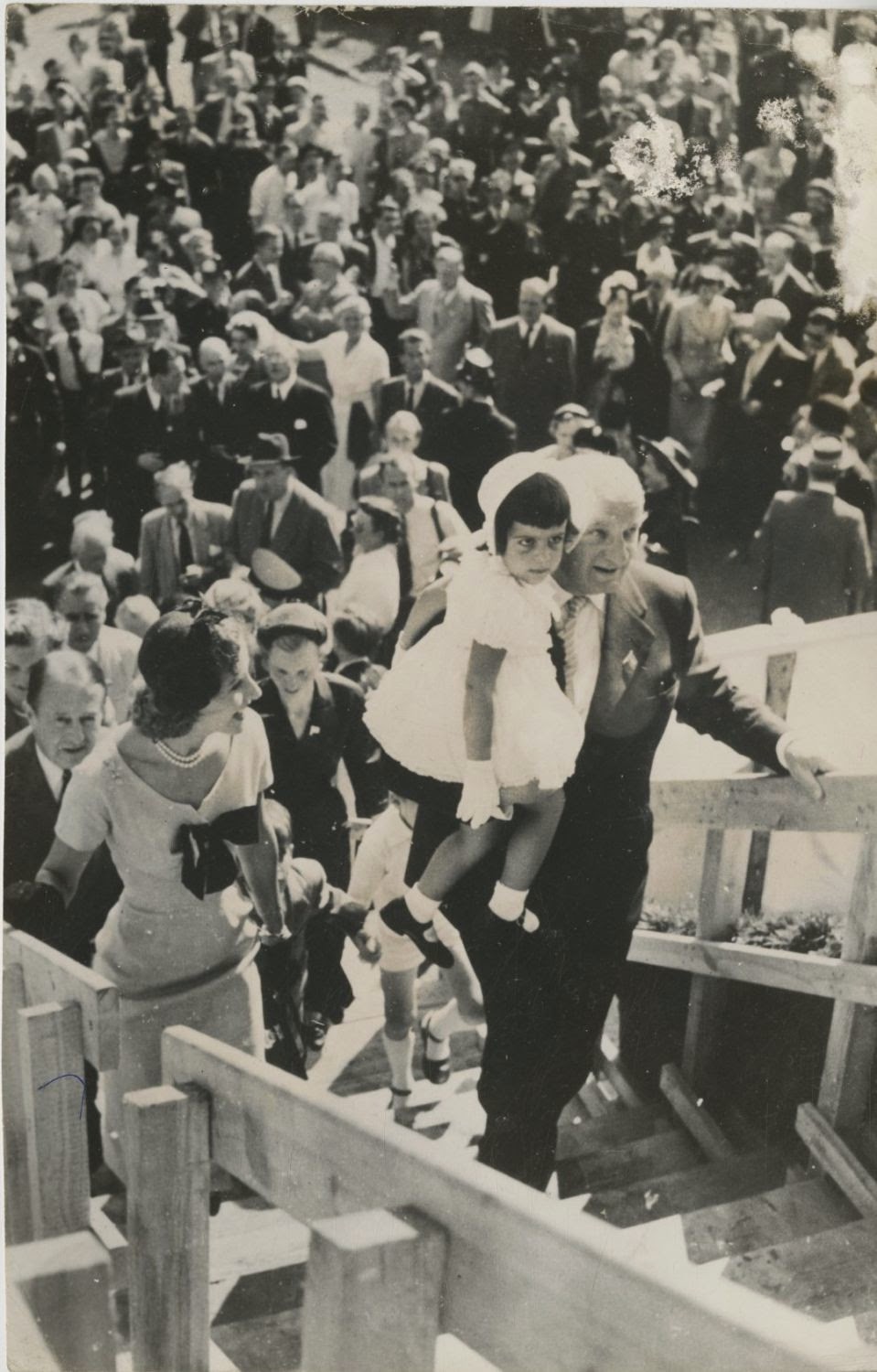
Onassis family at the christening of the Christina O’.
Whether he was in Monaco or at Skorpios, his private Greek island, Onassis’ real home was ‘Christina’. His first wife, shipping heiress Tina Livanos, said: “the yacht is his real passion. He is like a housewife fussing over it, constantly looking to see that everything is impeccable.” The summer of 1953 raised Onassis’s spirits quite high; on the one hand, as in Hamburg he christened his 45,000 ton tanker – the biggest of its time – Tina Onassis; and on the other hand in Howaldtswerke (HDW) in Kiel, the conversion of the Canadian frigate Stormont into a privately-owned luxurious yacht began – the yacht was to be christened ‘Christina’.
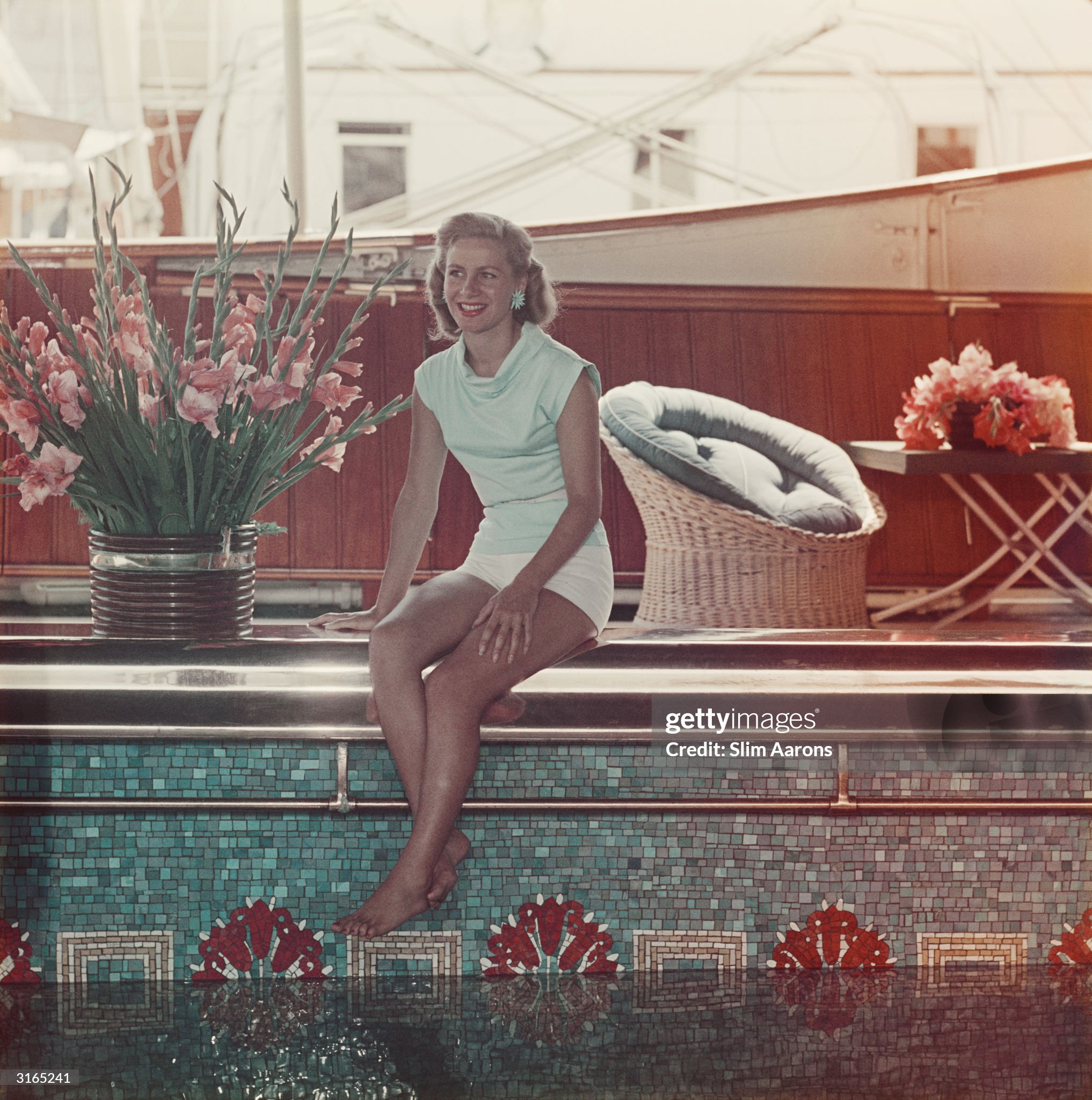
Athina Livanos Onassis (Tina), the first wife of Greek shipowner Aristotle Onassis, relaxing by the swimming pool aboard their yacht, the 'Christina', in Monte Carlo in 1958. Photo by Slim Aarons / Getty Images.
The purchase of the ship gave Aristotle Onassis immense satisfaction. In Pavlos Ioannidis’s words: “it was the most luxurious private yacht of its time: Onassis was very proud of his asset and almost considered it home.” “This is the only place in the world where I don’t feel a stranger”, Onassis once said. Nowhere else was he happier than when on his 325ft (99m) yacht. The conversion of the old Canadian frigate into what King Farouk of Saudi Arabia once described as “the ultimate opulence” had cost Onassis more than 4 million dollars.
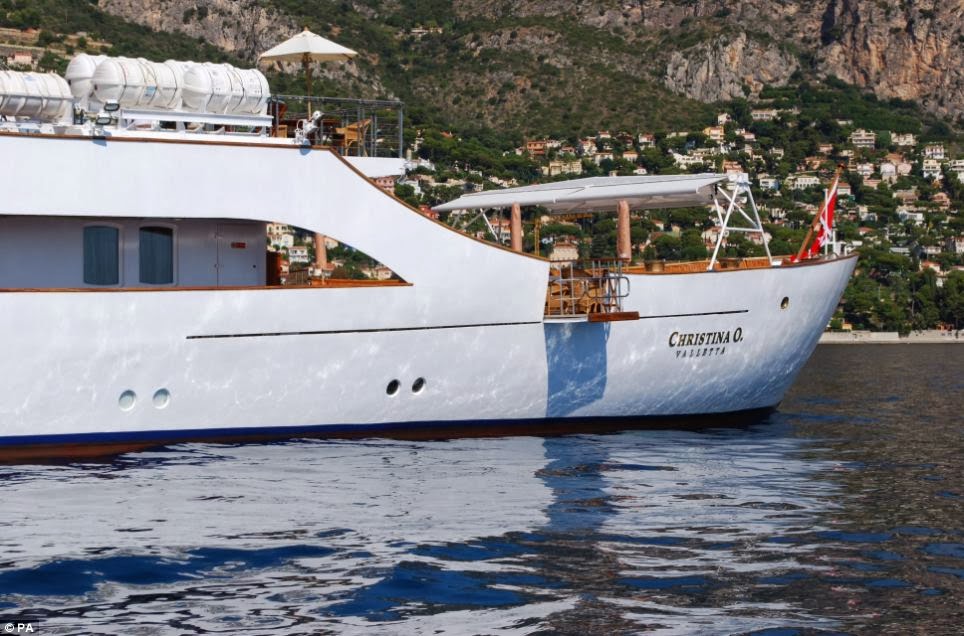
The Christina O.
The yacht’s library was packed with works by Greek classical authors and other leather-bound books. In the dining room, two paintings depicted Tina Onassis in ice-skates in one and Alexander and Christina having a picnic on the grass in the other. The bar stools were covered with white whale skin. The pool bottom rose to deck level, instantly becoming a dance floor, inlaid with mosaics portraying scenes from Greek mythology. The sense of affluence was enhanced by the lapis lazuli mantel of the fireplace, the bar handholds ornately carved with themes from the Iliad and Odyssey and the staircase with the marble handrail.
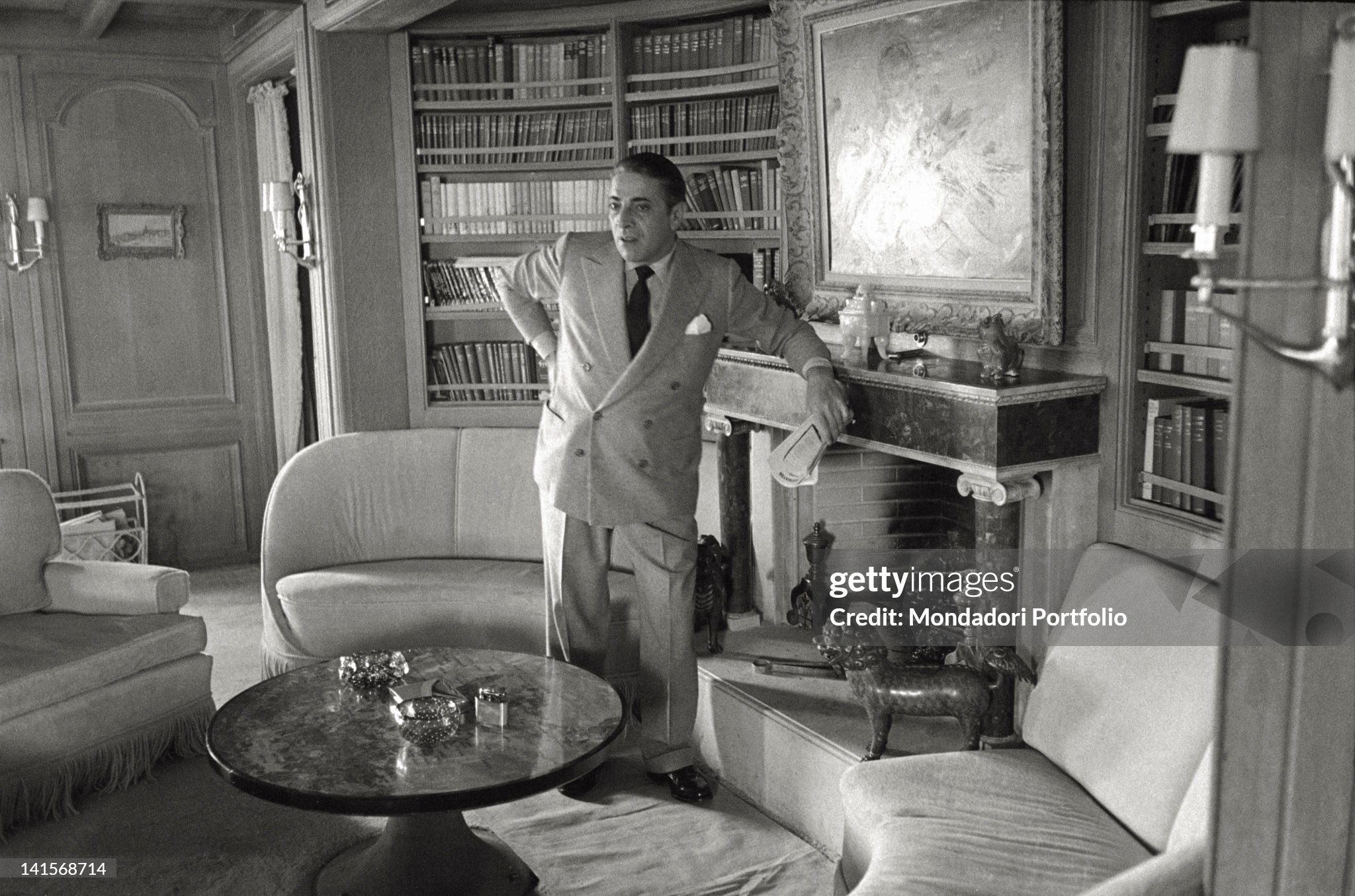
The Greek shipowner Aristotle Onassis on board of his yacht 'Christina' in Monaco in June 1961. He is interviewed in the drawing-room 'Lapis', leaned on a lapis lazuli fireplace, in which is exposed, besides some oriental porcelain objects, a Renoir painting representing a child in the grass. Photo by Carlo Bavagnoli / Mondadori via Getty Images.
For himself, Onassis had reserved a 4 bedroom suite with a bath of blue Sienna marble, a replica of a bathroom from a Minoan palace. On the walls hung Venetian mirrors. There were nine more suites, each named after a Greek island. The ‘Ithaki’ suite always accommodated the finest of guests, among whom were Greta Garbo, Jackie Kennedy, Maria Callas, Winston Churchill, Umberto Agnelli of the FIAT Group, John Paul Getty and many Hollywood stars.
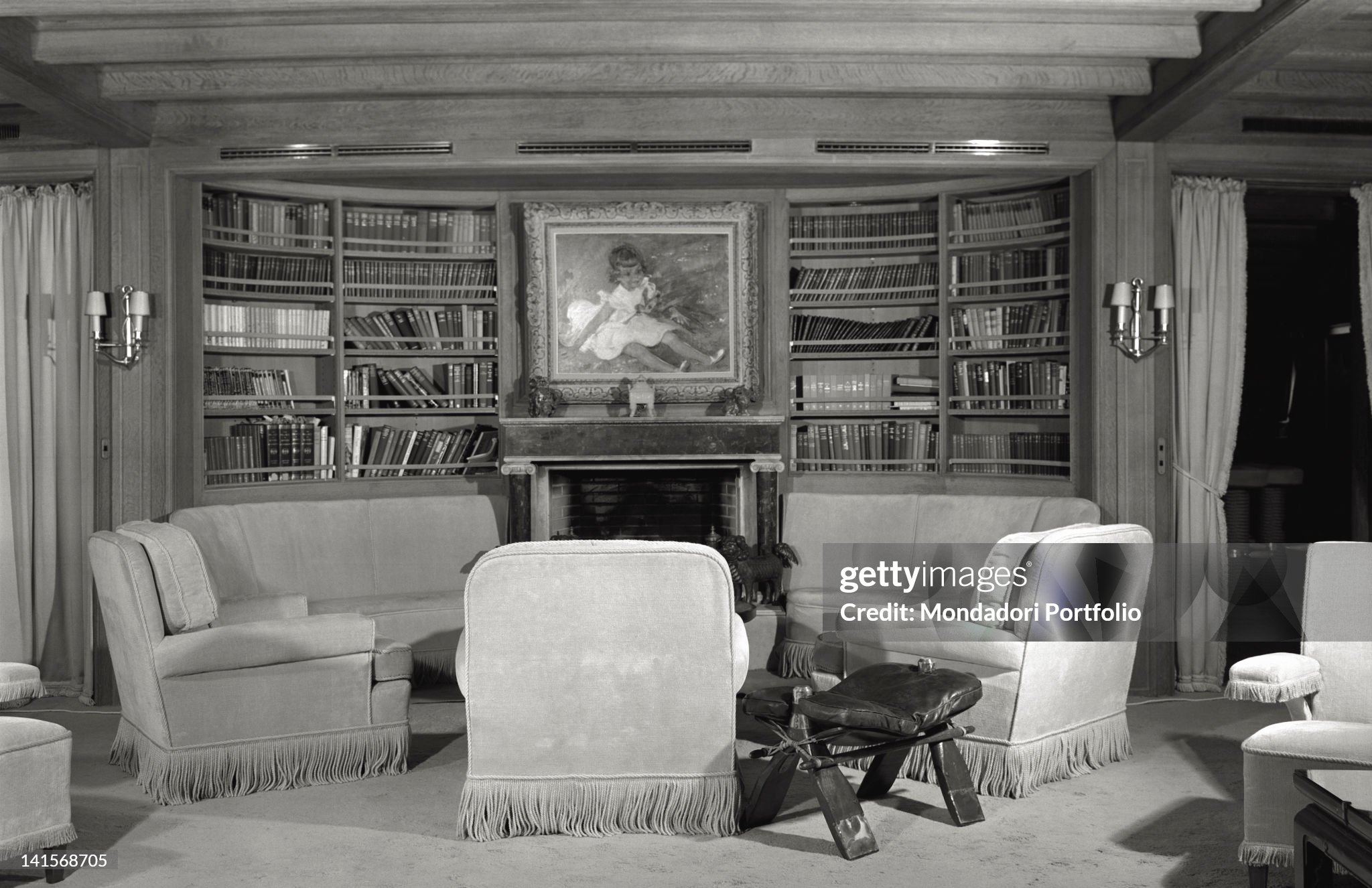
View of the luxurious drawing-room 'Lapis', one of the most beautiful rooms on board of the yacht 'Christina O' of the shipowner Aristotle Onassis in Monaco in June 1961. Photo by Carlo Bavagnoli / Mondadori via Getty Images.
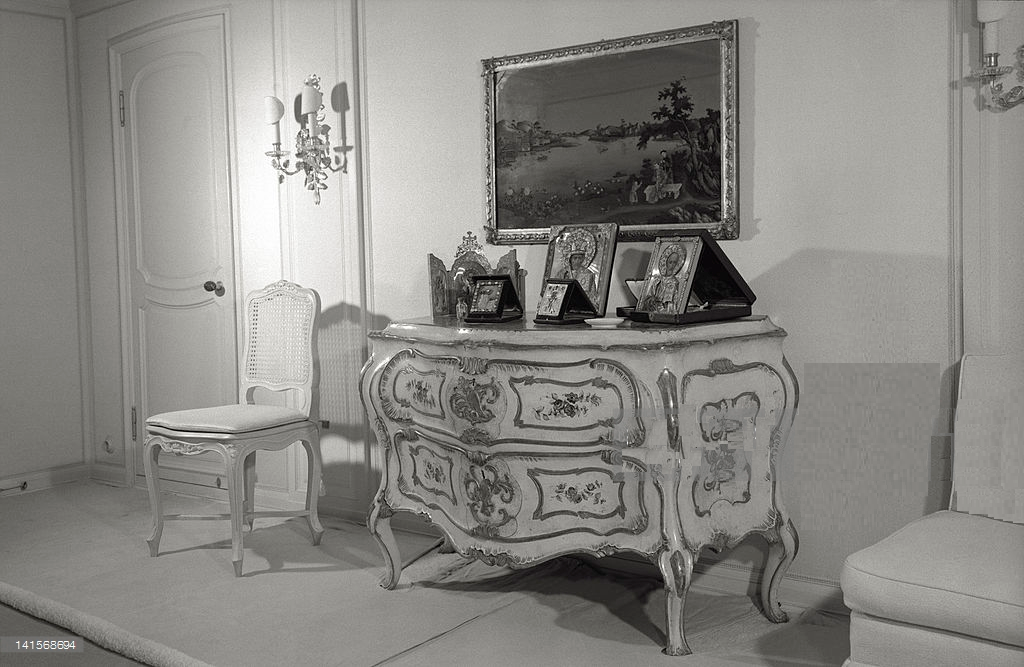
The interior of one of the rooms of the 'Christina'.
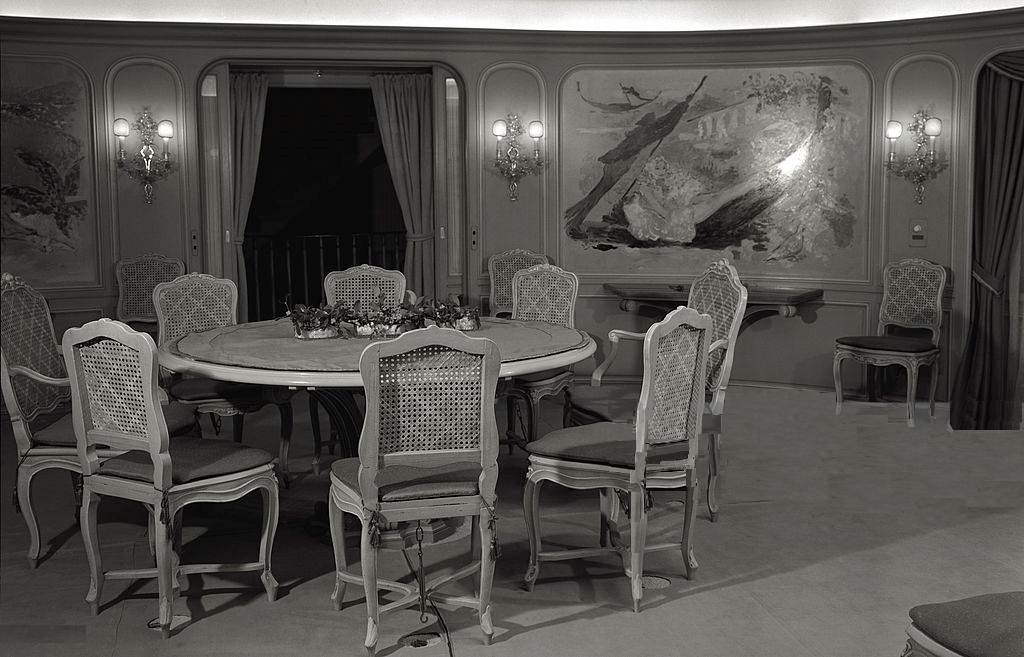
The interior of one of the rooms of the 'Christina'.
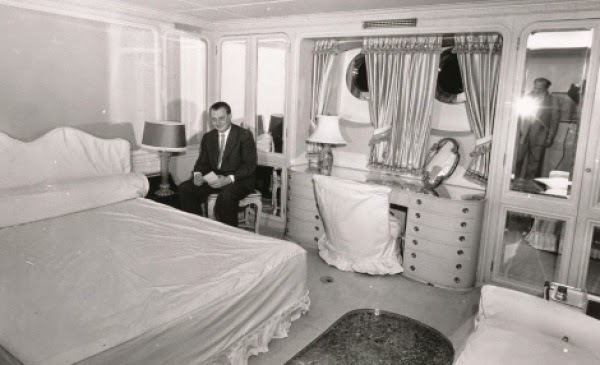
The interior of one of the rooms of the 'Christina'.
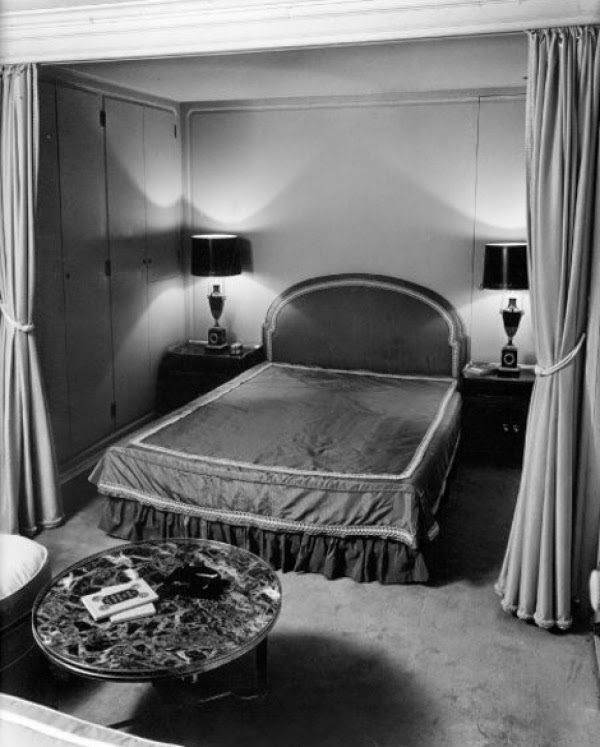
The interior of one of the rooms of the 'Christina'.
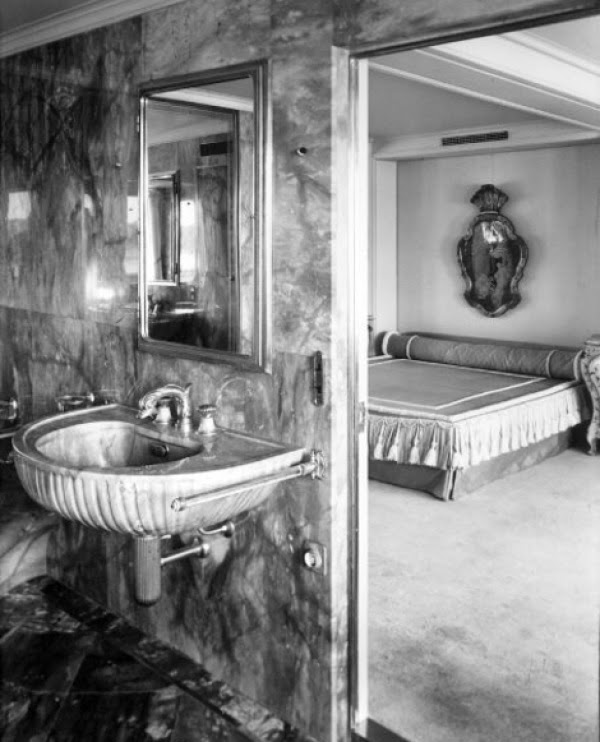
The interior of one of the rooms of the 'Christina'.
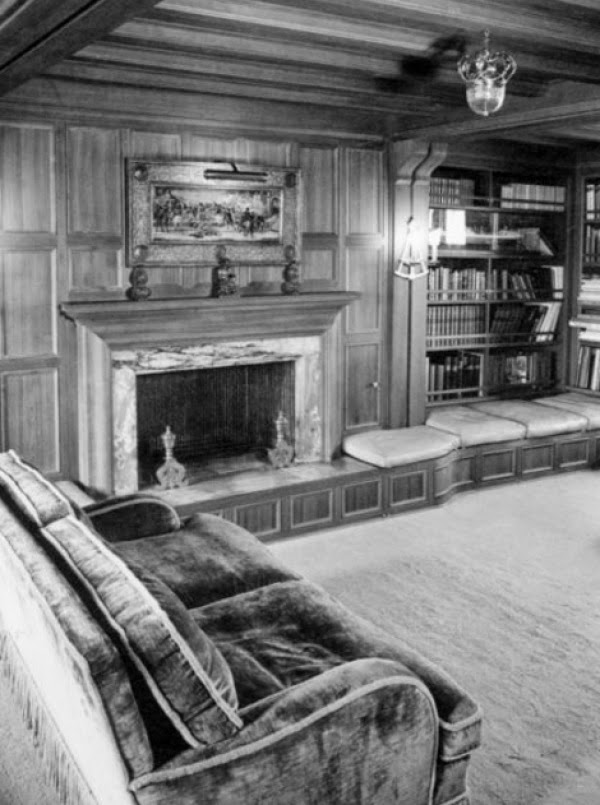
The interior of one of the rooms of the 'Christina'.
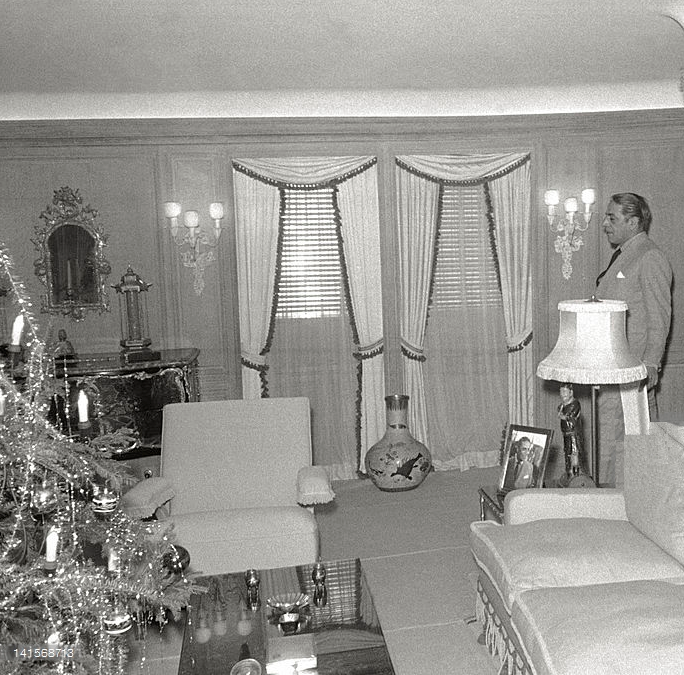
Aristotle Onassis on his yacht 'Christina'.
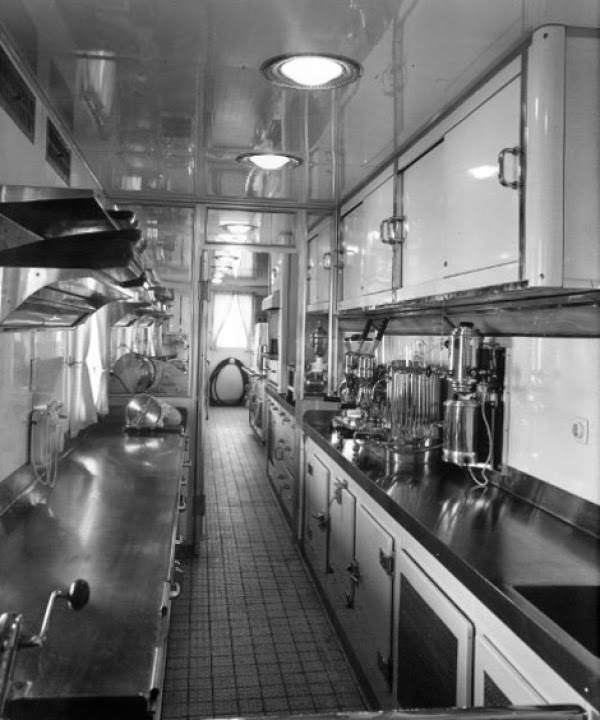
The interior of the kitchen of the 'Christina'.
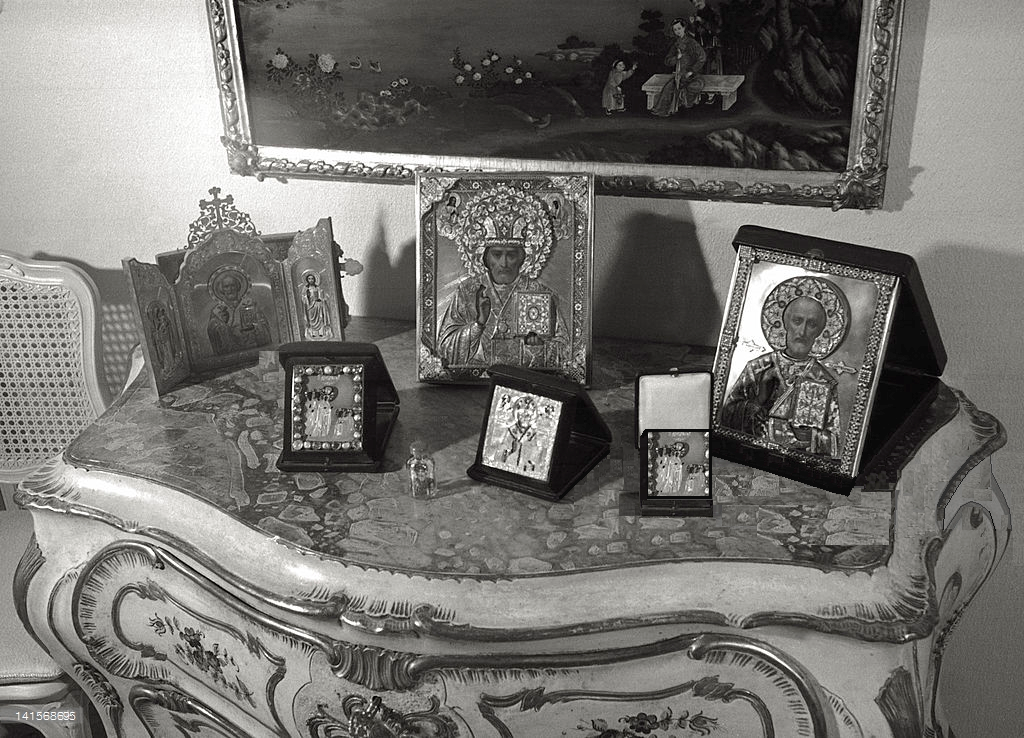
The interior of one of the rooms of the 'Christina'.
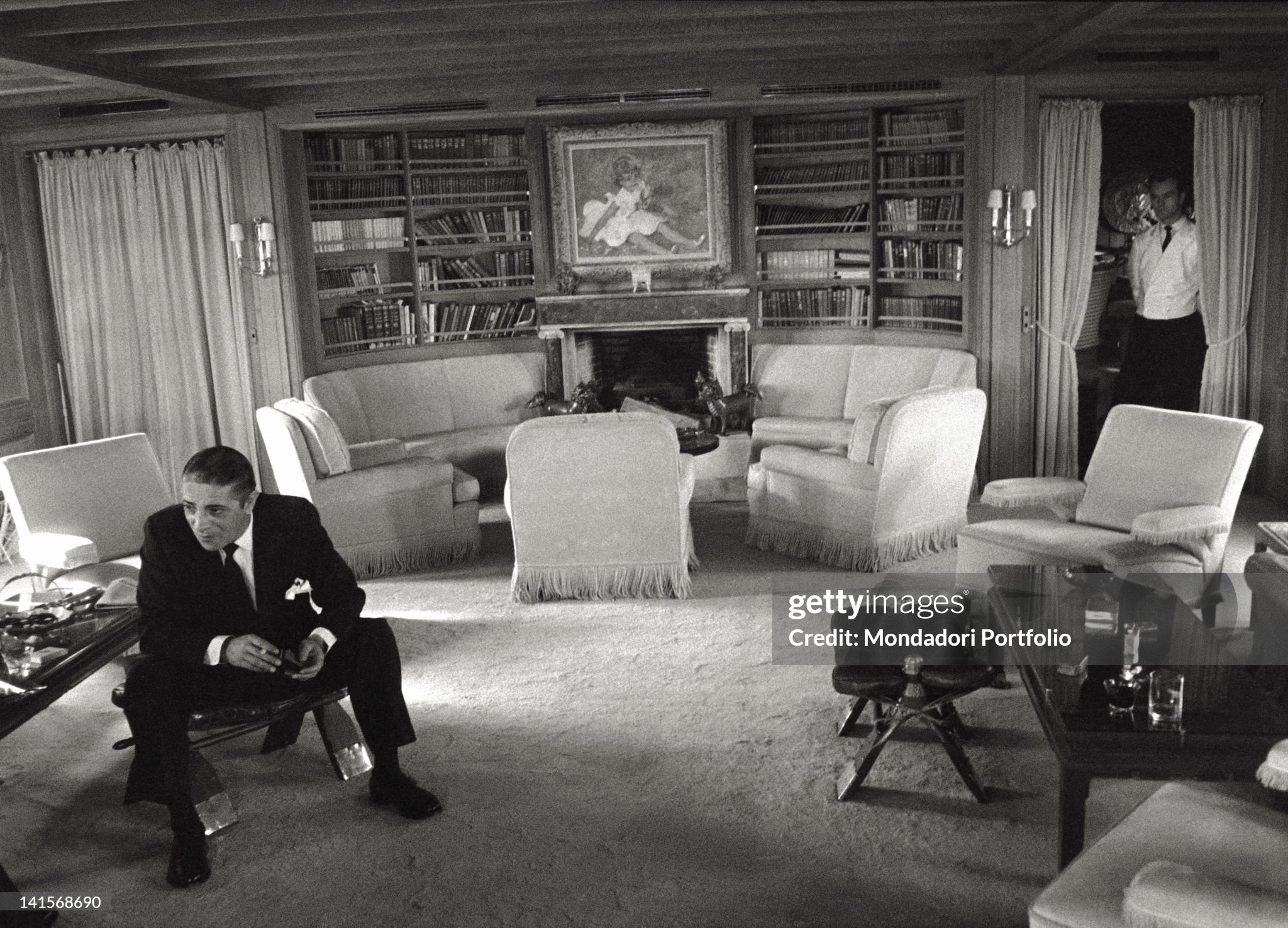
The Greek shipowner Onassis on board of his yacht during an interview in the luxury drawing room 'Lapis' in Monaco in June 1961. Photo by Carlo Bavagnoli / Mondadori via Getty Images.
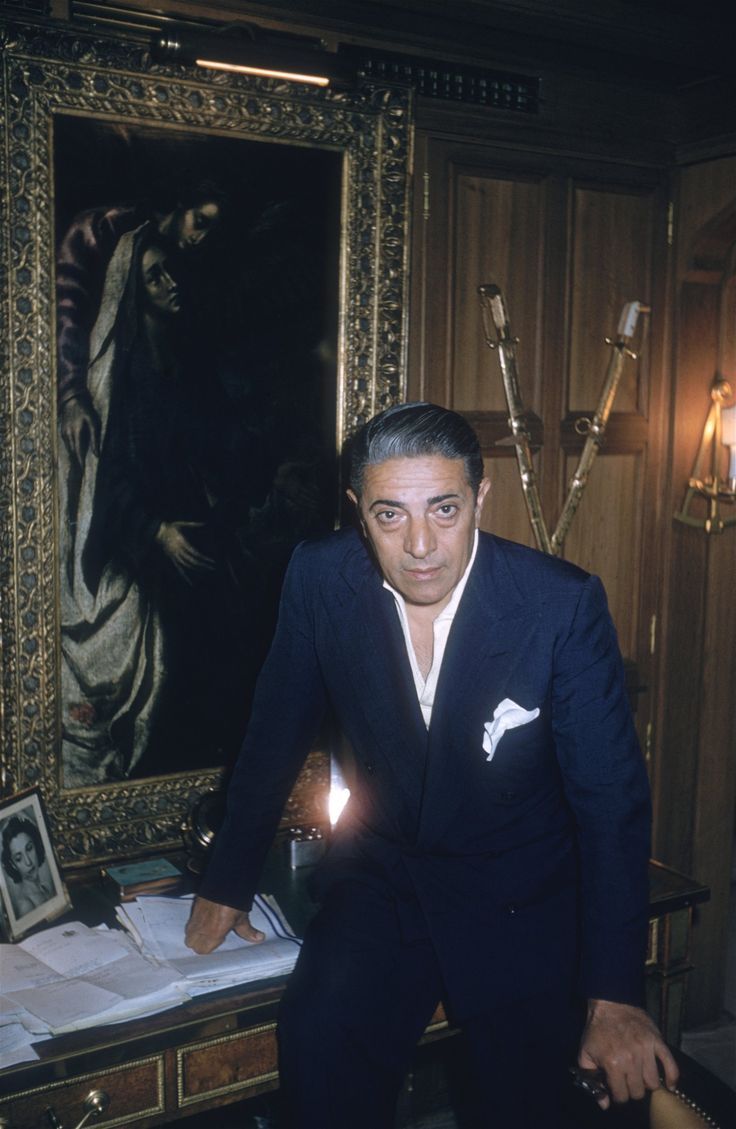
Greek shipping magnate Aristotle Onassis in the office aboard his yacht 'Christina' in August 1956. He is standing next to an El Greco painting and swords of solid gold. Photo by Slim Aarons / Hulton Archive / Getty Images.
It is rumoured that Richard Burton had once said: “I am positive that there is no man or woman that will not be seduced by this yacht.” This yacht was where Onassis’s fabled romances evolved, first with Maria Callas and then with Kennedy’s widow.
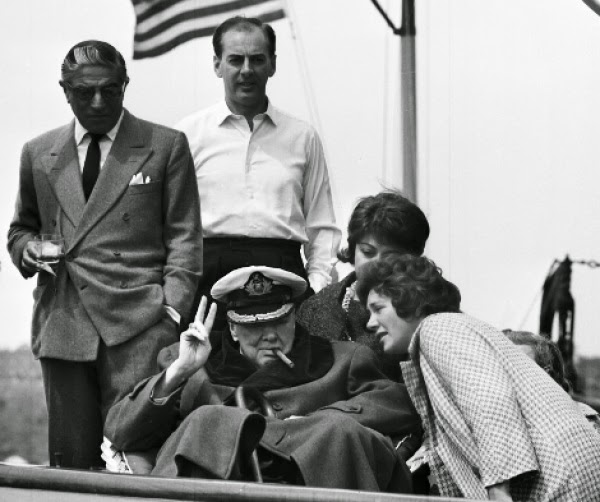
Aristotle Onassis aboard his yacht 'Christina' with some guests.
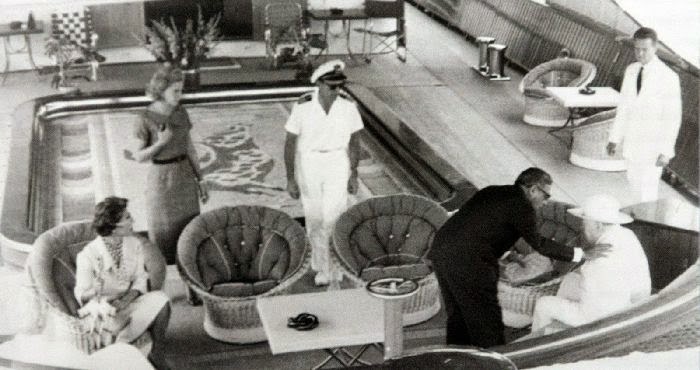
Aristotle Onassis aboard his yacht 'Christina' with Winston Churchill.
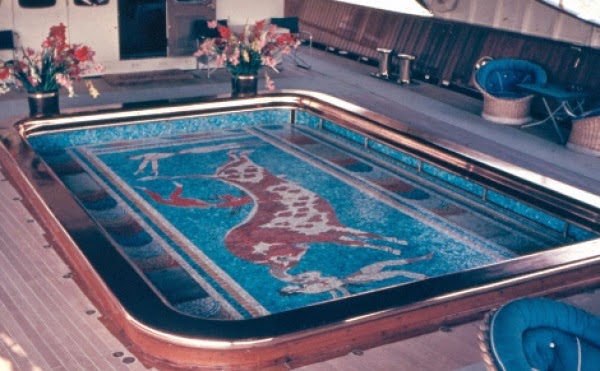
The wonderful swimming pool of the 'Christina'.
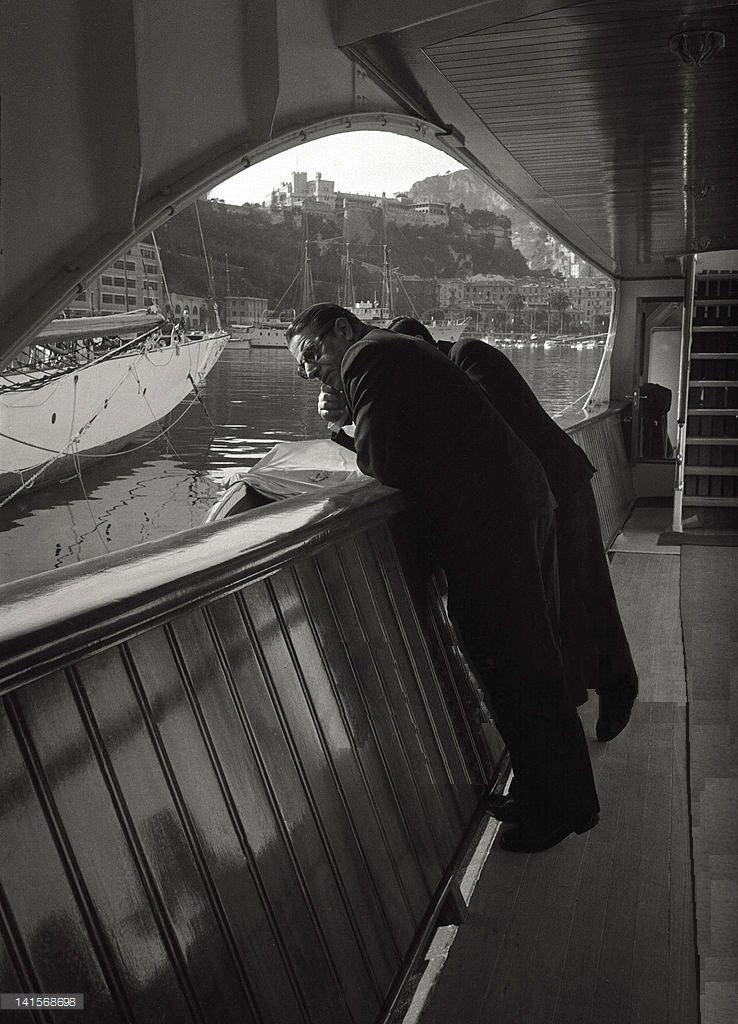
Aristotle Onassis aboard his yacht 'Christina'.
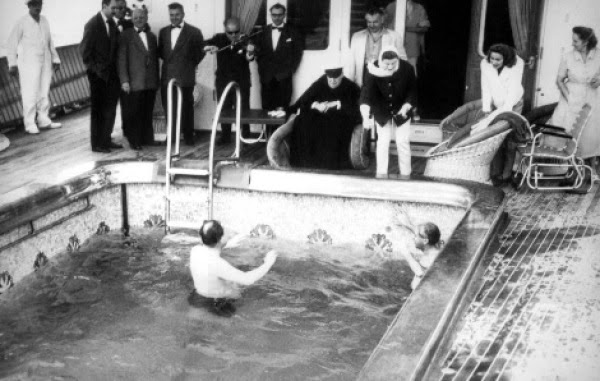
The wonderful swimming pool of the 'Christina'.
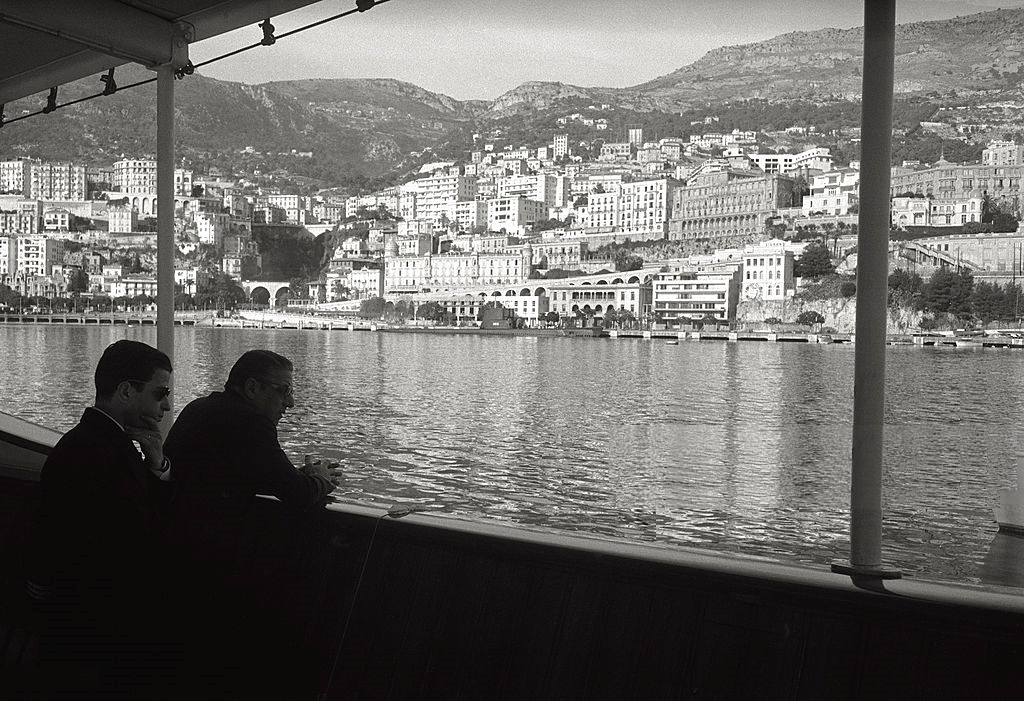
Aristotle Onassis aboard his yacht 'Christina'.
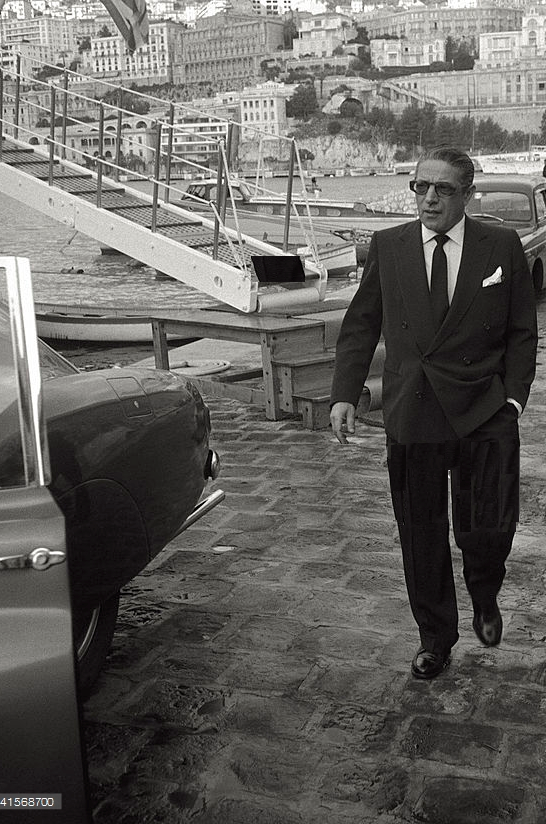
Aristotle Onassis just disembarked from his yacht 'Christina'.
But why is it that Onassis, who so loved the sea, chose a frigate for his personal yacht instead of a sailing boat, which one may consider more fitting to the temperament of a traditional Greek. Pavlos Ioannidis answers this question: “Niarchos owned a sailing boat; Onassis always wanted to break new ground; to seek the modern.”
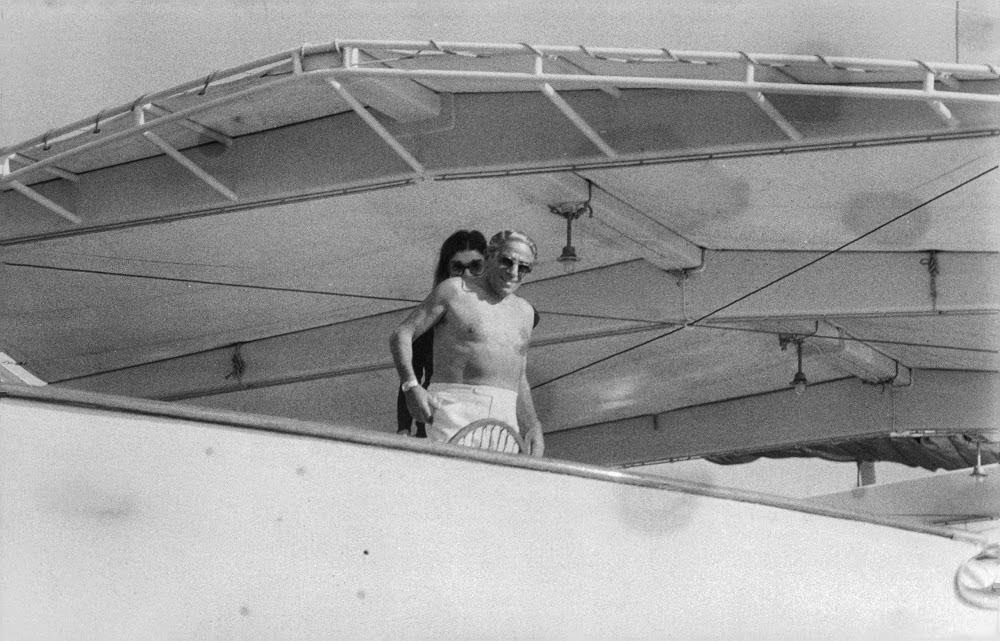
Aristotle Onassis aboard his yacht 'Christina'.
The yacht featured the last word in technology with systems highly innovative for the time: radar, communications, air-conditioning, electronic temperature control for the pool water and much more. The yacht was usually docked either at Skorpios or in Monte Carlo and Onassis used her frequently for cruises to Venice, the Ionian islands, Piraeus, Delos, Mikonos, Lesvos, Athos, Istanbul, Smyrna, Crete, while he even went as far as the Caribbean. His amphibian aircraft, Piaggio, later to prove fatal for his son, always escorted him on his trips and was at the service of his guests. “Aboard ‘Christina’, Onassis combined work with pleasure”, states Pavlos Ioannidis. “It was more of a home. He loved pampering his guests, he adored the sea just as he did every part of his business.” Stelios Papadimitriou asked him once: “what will happen afterwards, Mr. Onassis?” “‘You will keep my business alive’, answered Onassis, ‘I am the business’.”
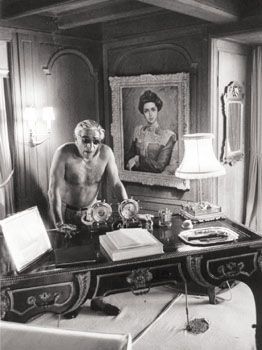
Aristotle Onassis.
An ornament inside the yacht 'Christina'.
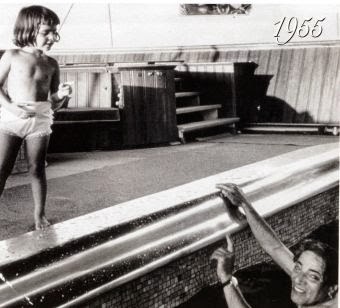
Aristotle Onassis in the swimming pool of his yacht 'Christina' in 1955.
A display cabinet with models of ancient ships inside the yacht 'Christina'.
At the time of Onassis’ death in 1975, the ship was turned over to his daughter and only heir, Christina. She donated the vessel to the Greek government for use as the presidential yacht in 1978. Sadly, the ‘Argo’ (as the Greek government renamed her) was little used and eventually fell into despair. Aristotle Onassis willed his yacht to his beloved daughter; if Christina for some reason did not want her, the yacht would go to his wife Jackie. If in turn, Jackie refused to take her, the yacht would be turned over to the Greek government, on condition that maintenance work was carried out and the yacht then offered for use to each incumbent head of state. Although the Hellenic Navy undertook the maintenance work on the yacht, so that she was always ready to set sail accommodating the Greek President and his noble guests, she was used only once by Christos Sargetakis. Konstantinos Karamanlis refused to use her, thus she remained docked at the Hellenic Navy shipyard, overtaken by technological achievements concerning fuel consumption, speed and modern day requirements for air-conditioning.
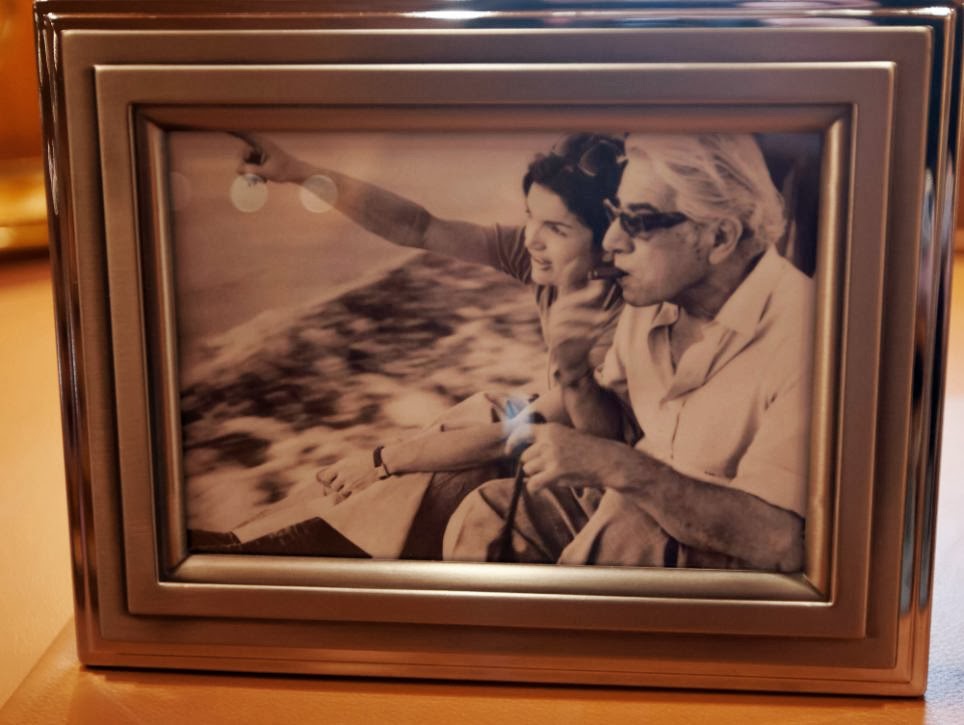
A photograph of Aristotle Onassis and his wife Jackie on the yacht 'Christina'.
Pavlos Ioannidis explains that: “in 1999, the Greek government announced its decision to sell the yacht to the Greek ship-owner, Yiannis-Pavlos Papanicolaou, who transformed her into a modern high-quality charter boat. The yacht underwent complete refurbishment and was fitted with new engines; the old engines were removed and one of them was salvaged thanks to Constantine Philippou’s initiative and the sponsorship from the Onassis Foundation.”
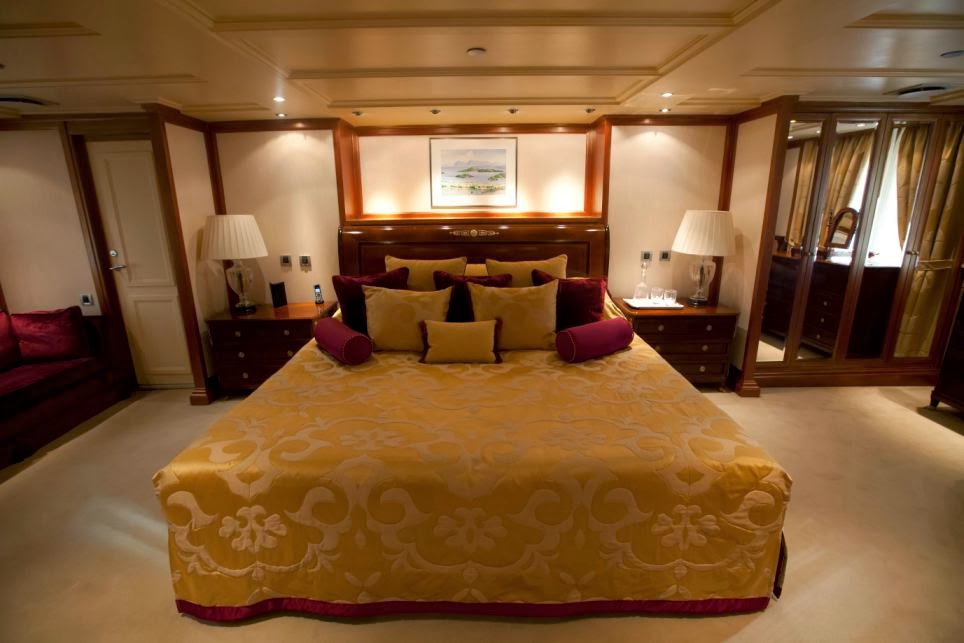
One of the bedrooms on the yacht 'Christina'.
“Following this action, as trustees of Christina’s estate, we agreed to the Greek government’s decision with the inviolable condition that we should remove all furniture and personal objects from Aristotle Onassis’s cabin. Then, the Greek government would have the right to keep as many of the objects aboard the yacht as it deemed necessary, while the rest would be bought by the Onassis Foundation. Amongst these objects was Onassis’ collection of model navy ships from the Napoleonic era, which we donated, apart from two pieces, to the Hellenic Maritime Museum. The rest of the objects were packed and sent to Skorpios island, where they are stored, probably still even today, for Athina Onassis. Some of the items purchased by the Onassis Foundation are displayed in the neoclassical building on Amalias Avenue. Amongst them is the dining table from the yacht, the piano Maria Callas used, some of Onassis’s weapons, small furniture items, decorative objects and paintings.”
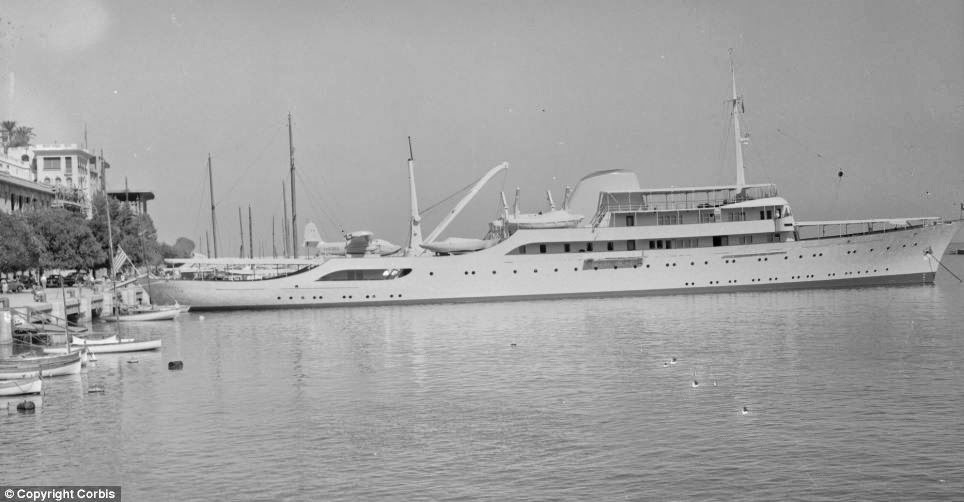
The yacht 'Christina' at anchor. Photo by Corbis.
Her maintenance costs were extremely high: many hundreds of thousands of dollars annually. In 1978, Christina Onassis presented the yacht to the Greek government to be used by the incumbent President of the Republic. Pavlos Ioannidis states that: “as trustees of the estate of Christina Onassis, before delivering the yacht, we made sure that all equipment aboard was recorded in detail.” In keeping with all good Greek tragedies, a new administration tried to sell the yacht in the early 1990’s, for upwards of $16 million. Interested parties emerged, but it seemed no one was willing to pay that sum for what would obviously end up costing much more during the refit stage. The Greek administration gradually lowered the price throughout the decade and it finally appeared that all was well for Christina in 1996 when she was sold to an American, Alexander Blastos, for $2.2 million. But the Greek government revoked his ownership a few months later — although the government wouldn't elaborate, the Associated Press reported that Blastos’ $220,000 deposit check bounced — and the yacht continued to languish (Blastos was later imprisoned for wire fraud relating to his attempts to purchase the yacht).
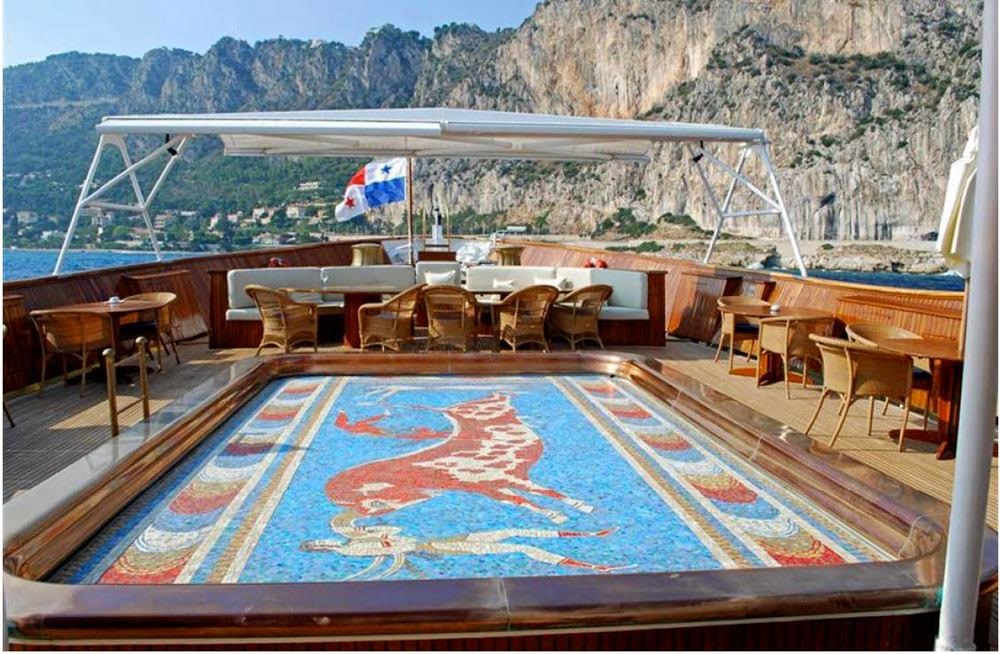
The swimming pool on the yacht 'Christina'.
“The Greek government didn't look after the ship and the ship was stripped of everything that had value then was sold to a scrapyard. It was absolutely astonishing that not even the Onassis Foundation stepped in to save the yacht ignoring the huge importance that she had in history. The Greek government changed the name of the ‘Christina’ and called it ‘Argo’. Here you gather photos before and after the looting of the yacht ‘Christina’ with the connivance of the competent state authorities. When Mr Paul Tsimas invited me on board, I saw a skeleton with absolutely nothing reminiscent of the past, jointly responsible for grabbing the Onassis Foundation and officials of the Navy. In any other country, except Greece, the ‘Christina’ would now be a floating museum. Then the ship was left rusting as you can see in the below pictures. You can see on the pictures evidence of the looting before it was bought back by Mr Papanicolaou.”
A rusting ship:
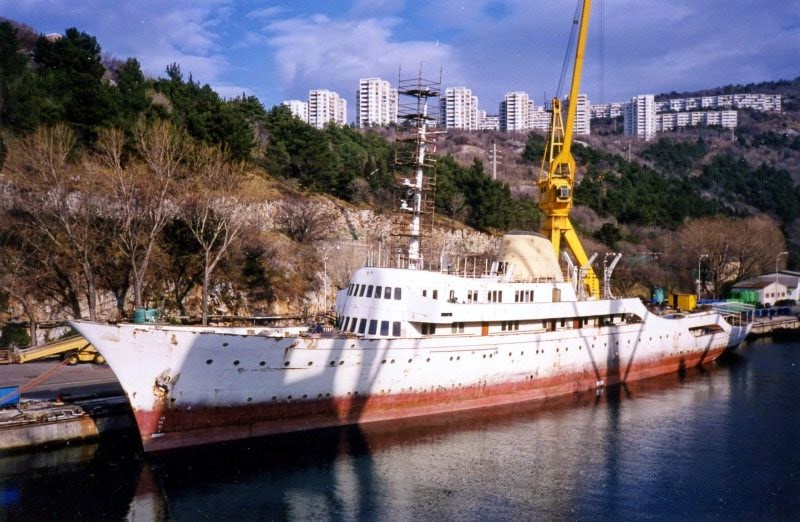
A rusting 'Christina' at anchor.
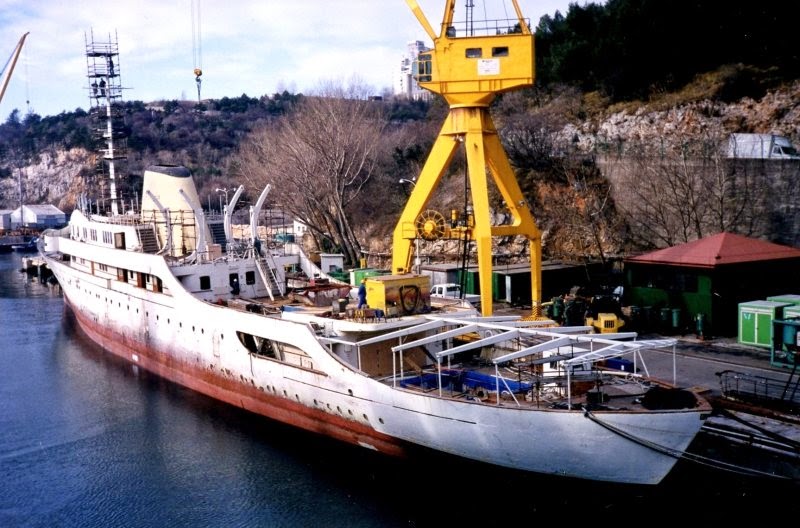
A rusting 'Christina' at anchor.
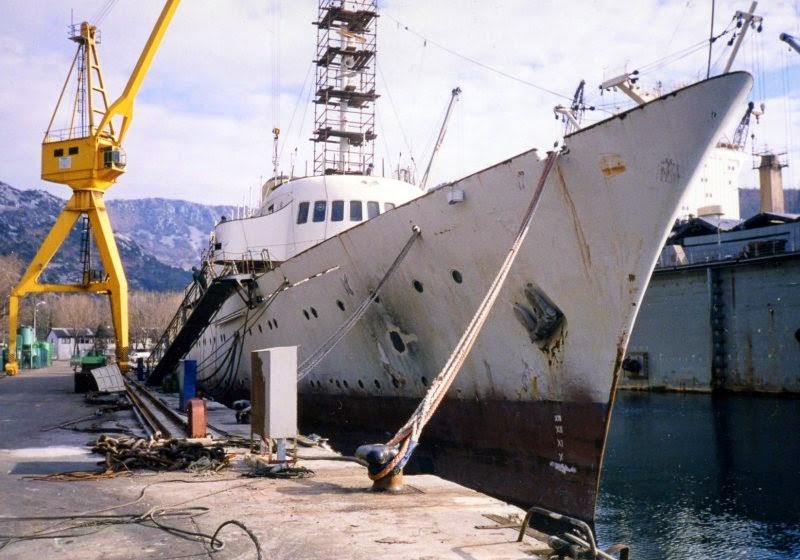
A rusting 'Christina' at anchor.
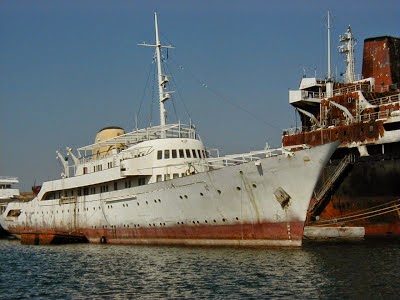
A rusting 'Christina' at anchor.
The great looting:
Furniture for living room, bedroom, library, kitchen facilities, frames, mirrors, antiques, carpets, lamps, wooden and textile lining, curtains, even doorknobs doors and wallpapers Kyoto else could be removed from a sheet, looted and no one ever accused of looting the most famous ship of the 20th century, donated to the Greek state.
Before:
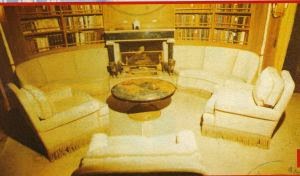
After:
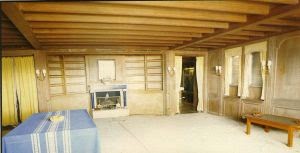
Before:
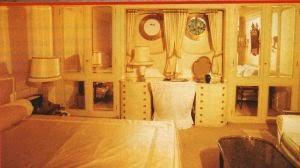
After:
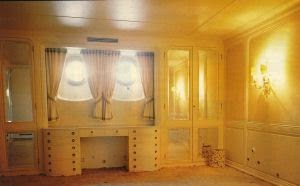
Before:
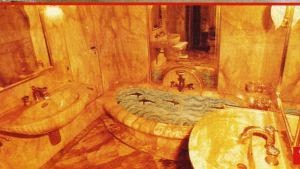
After:
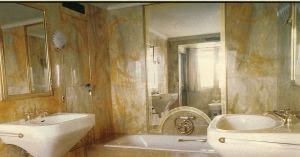
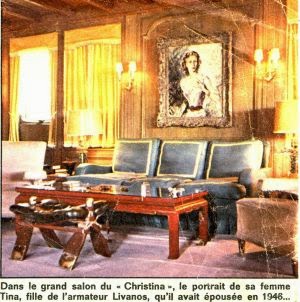
In the living room portrait of his wife Tina and, after their divorce, his son Alexander.
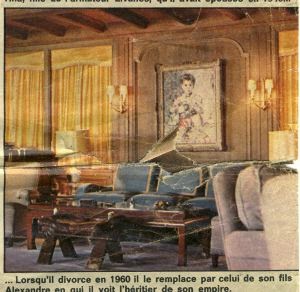
All was not lost, however. In 1998 John Paul Papanicolaou, a Greek national in the shipping business and an old friend of the Onassis family who had cruised aboard the yacht as a child, secured the yacht at a new government-sponsored auction. He made it his goal to rebuild Christina in a way that would have awed Onassis himself, renaming her Christina O’ as a tribute. Proudly embarking on the most extensive refit project ever launched and using his considerable knowledge and shipping background, Papanicolaou assembled a gifted team of experts. Naval architect Costas Carabelas spearheaded the group. Interior architecture and construction were done by Apostolos Molindris and Decon, respectively. The refit work was executed by Viktor Lenac, a Croatian shipyard.
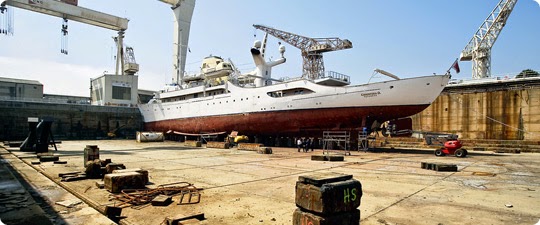
The ‘Christina’ being renovated at a Croatian shipyard.
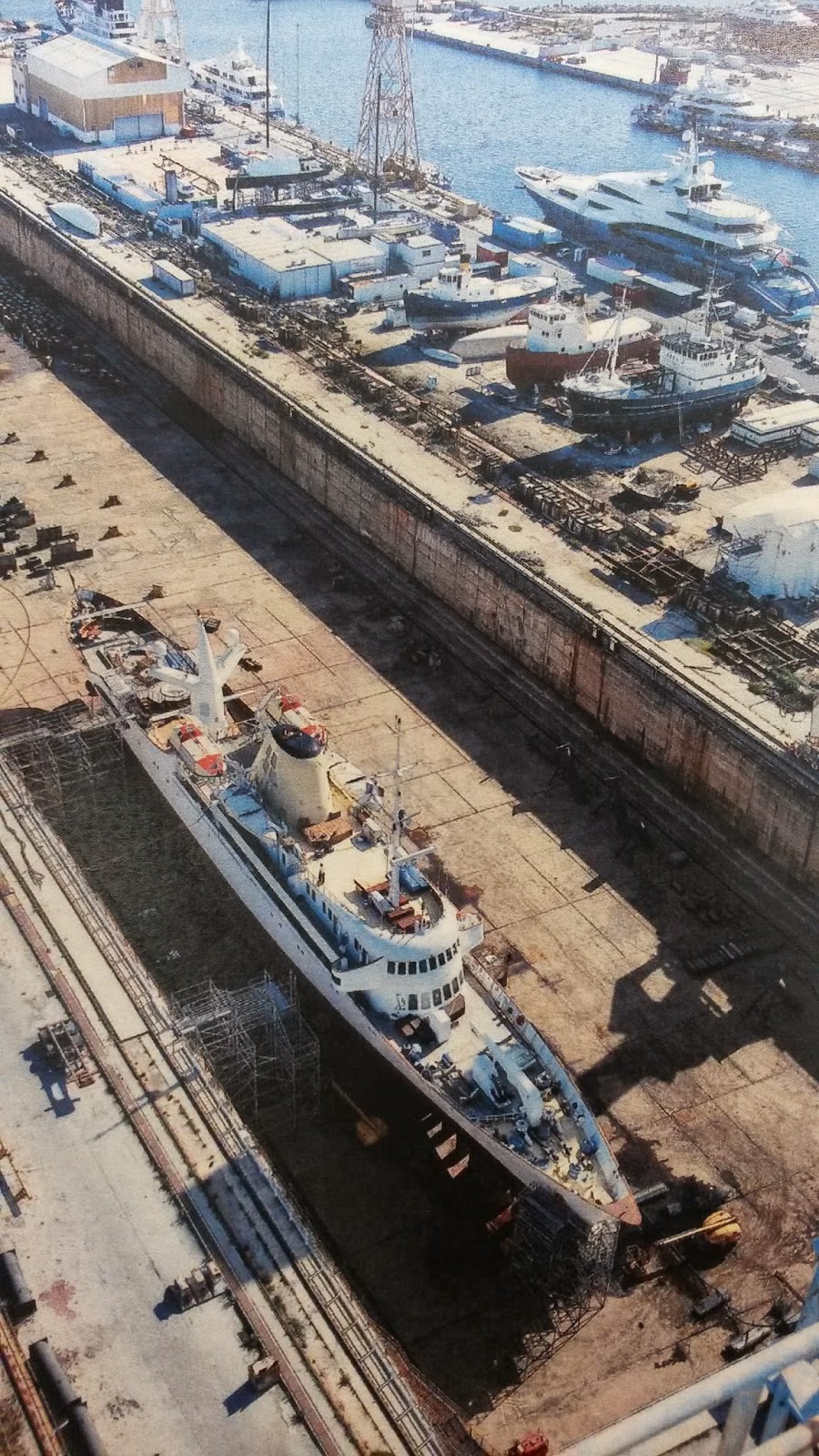
The ‘Christina’ being renovated at a Croatian shipyard.
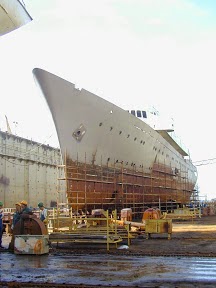
The ‘Christina’ being renovated at a Croatian shipyard.
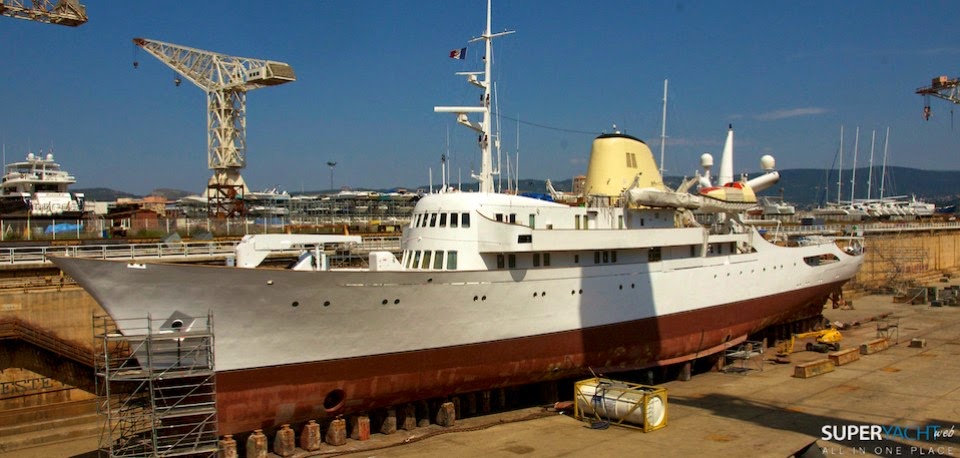
The ‘Christina’ being renovated at a Croatian shipyard.
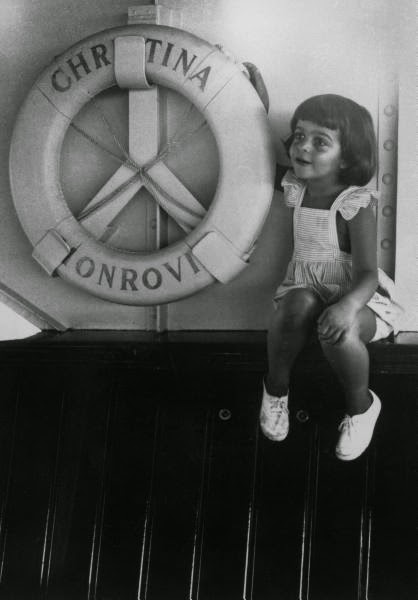
A young Christina Onassis on the Christina O’.
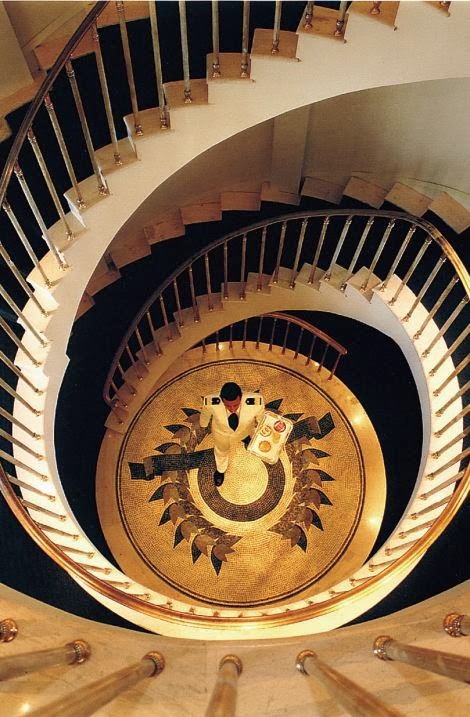
The flights of stairs inside the 'Christina'.
A major priority was enhancing the physical integrity of the yacht and repowering her. Upgrading systems and reconfiguring her interior were also key. The initial survey showed that 65 tons of steel in the hull needed to be replaced. When she was put in dry dock, it actually turned out to be 560 tons. Fifty-six miles of new wiring and 140 tons of pipe work were replaced. This large task, along with the refurbishment and redecoration of gathering spaces, was stunningly accomplished in only 16 months, with more than 1.2 million man-hours and at a cost of more than $50 million. Now she was ready for charter and cruises for an exclusive worldwide clientele. On the technical front, to improve her efficiency, the original 1943 steam engines and boilers were removed. Two new MAN diesel engines and three MAN gensets were installed. She now has a cruising speed of 18 knots and a top speed of 22 — not bad, considering Onassis cruised at 14 knots and could rev her up to 24. This change opened up a cavernous space in the middle of the yacht the size of a three-story New York brownstone. New accommodations were added. The middle deck now houses a banquet-size, split-level, formal dining room that seats up to 40 guests. Its Baccarat wall lamps are original. As with Onassis, only the best is available: the porcelain service is by Bernardaud Limoges, Waterford crystal by Rochas and silverware by Ercuis Saint Hilaire of Paris.
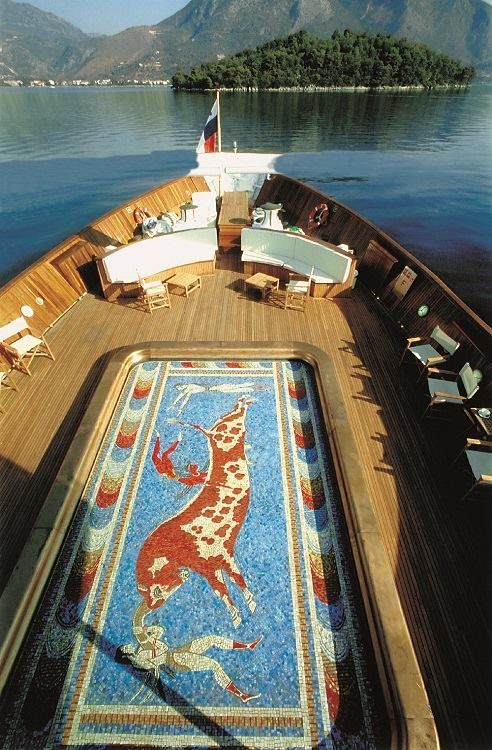
The swimming pool on the yacht 'Christina'.
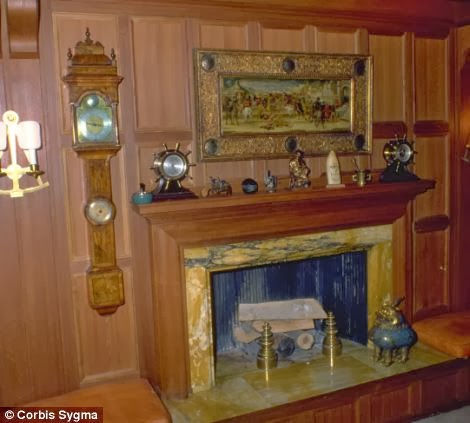
A fireplace in one of the rooms of the 'Christina'. Photo by Corbis Sygma.
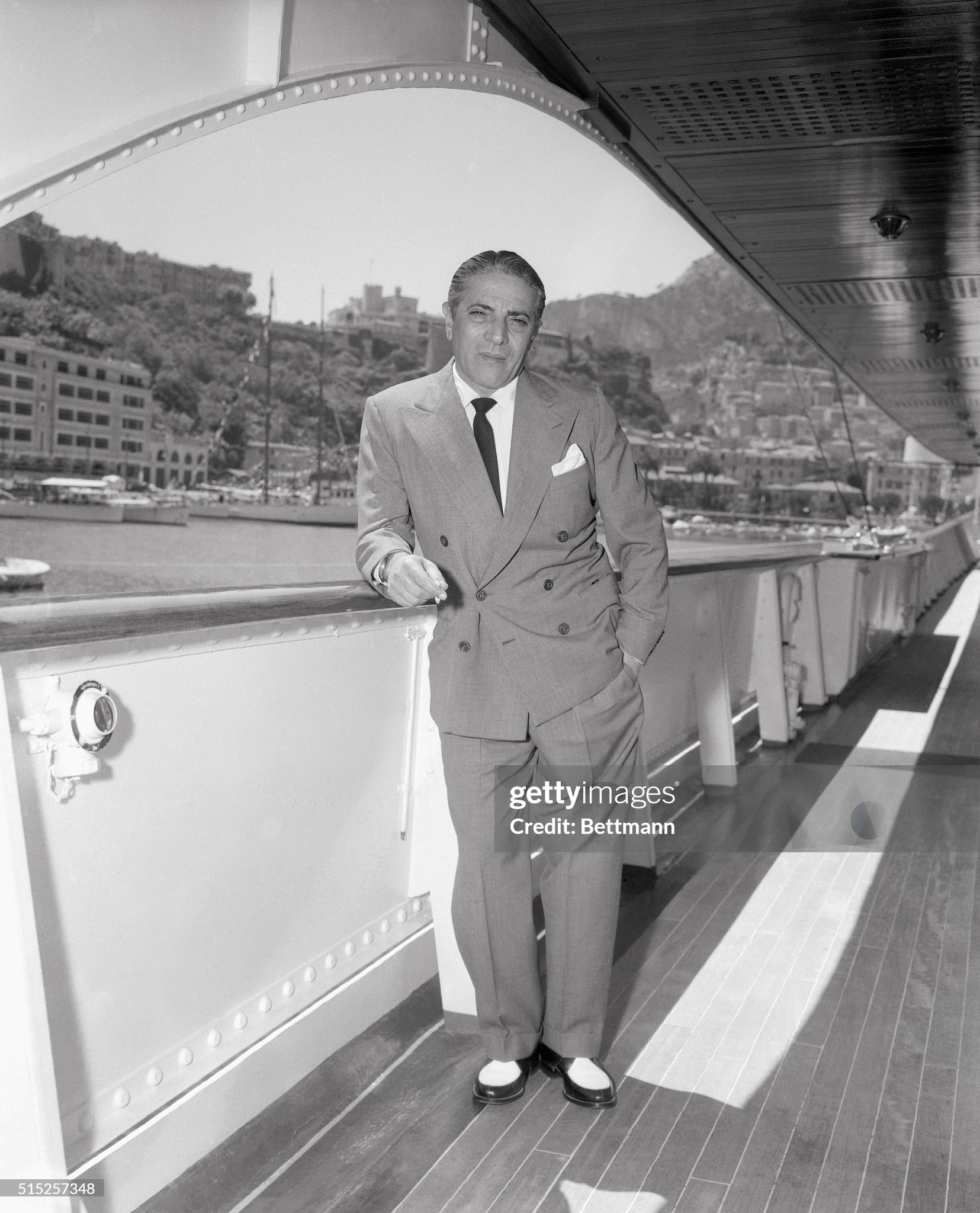
Aristotle Onassis leaning on railing of his yacht ‘Christina’ on May 22, 1955. Photo by Getty Images.
Alongside the dining hall is a raised music room with grand piano and a pair of conversation areas. It contains a collection of Maria Callas memorabilia, including the only Gold Record that was ever awarded to her. On the main deck there is a new gym and for guests in need of a bit more pampering, there is a new massage room and beauty salon. The Italian master Renzo Romagnoli created the new Sports Lounge, featuring Onassis’ original sextant wall lamps and gaming tables with large, comfortable seating. New guest and service elevators were installed for efficient circulation onboard. Much of the splendor Onassis created has been retained. Spanning her massive stern is the open pool deck where opera diva Maria Callas loved to relax during her tumultuous relationship with Onassis. Its centerpiece is the bronze-bordered pool inlaid with mosaic frescos of ancient Crete. To the delight of the guests, at the push of a button, the bottom raises to the deck level, becoming an instant dance floor. The area has been freshened with glistening varnished handrails and treatments over rich teak decks. ‘Ari’s Bar’, undoubtedly the most famous spot on the yacht, has been retained. This is where Onassis presented the young John F. Kennedy to Sir Winston Churchill, who was a frequent guest throughout his retirement. Covered by a glass top over a lighted replica of the sea, it has tiny models that display the development of ships and shipping throughout history. On the wall is the original map that showed the daily position of the Onassis fleet. The circular bar was adorned with footrests and handholds of ornately carved and polished whales’ teeth collected by Onassis’ whalers. The stools were covered with the foreskin of a whale and have been recovered in fine leather.
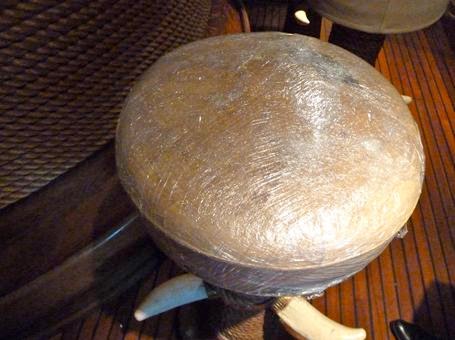
The Christina's stools, now they have been wrapped with textile covers for protection.
The Lapis Lounge remains a central gathering point. Elizabeth Taylor and Richard Burton loved to relax in the sitting room in front of the fireplace, whose mantle was covered in deep-blue lapis lazuli. Its oak and iroko paneling is living with original works of Renoir, Le Corbusier and de Chirico. Forward on the same deck, past the central atrium and spiral staircase, the original guest staterooms, which Marilyn Monroe, Eva Peron, Greta Garbo and John Wayne once occupied, have been reconfigured. With Jesurum Venice, America’s JR Scott and the UK’s house of Mulberry, the renowned Italian house of Imart oversaw the redesign. Each air-conditioned and soundproofed suite now has a large seating area, bureau, walk-in closet, twin or double beds and large portholes. The original bathing salons have been replaced with luxurious en-suite marble bathrooms with showers. Each suite is equipped with a full entertainment system with TV, DVD and CD players. In addition, on the lower aft deck, eight elegant new staterooms have been fitted out, offering the same style and elegance of the original suites.
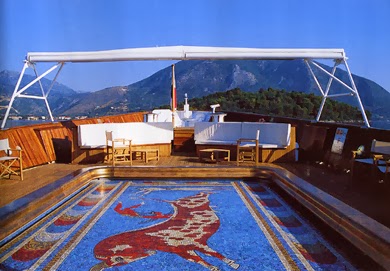
The swimming pool on the yacht 'Christina'.
Up on the main deck, a new central gathering point was created. Forward of the atrium and concierge office, the original semicircular dining room, where Onassis once brokered blockbuster deals with industrial titans such as J. Paul Getty, King Faud and the Saudi Royals, has been converted into an elegant library. Forward, the reception hall that hosted some of the 20th century’s most famed wedding receptions — Princess Grace and Prince Rainer of Monaco in 1954 and Onassis’ 1968 marriage to Jacqueline Kennedy — has been elegantly updated with sofas, armchairs, cocktail tables and accent pieces by Giorgetti. It also converts into a state-of-the-art cinema. Outside and aft, the original boat deck has been converted into a spacious ‘Jacuzzi deck’, complete with alfresco dining facilities, a large circular bar and a raised sun terrace with spa pool and teak chaise lounges. Farther aft, the plane deck, where Onassis kept his seaplane, is now a helipad. On the upper deck, Onassis’ private apartment has been refurbished. The sitting room, with its original onyx fireplace, has library shelves, beamed ceiling and classic armchairs and sofas. It opens to the master bedroom, fitted with a king-size bed, original Baccarat crystal fixtures, brass-framed windows and delicate linens from Venice. There is also a new en suite Penteli marble bathroom. Forward, there are new captain’s quarters behind the bridge.
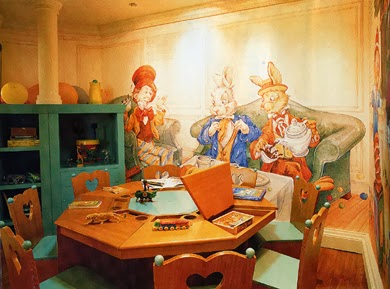
A room of the ‘Christina’.
Topping the yacht, the huge sundeck is now fitted out with teak sun lounges and a wet bar. On the bow are two specially designed RIBs and PWC, plus a service crane. Aft on the bridge deck are two glistening Hacker tenders and two lifeboats. Christina O’ lives up to her legendary past in modern splendor. Somehow, one can’t help but wonder if there is a smile in the heavens from ‘an old Greek sailor’, satisfied that his legend lives...
The yacht can now be chartered.
The yacht is now for sale for US 25,000,000 by yacht broker Edmiston, so if you can afford that piece of history it is the right time.
CHRISTINA O’ - SPECIFICATION:
Built / Refitted: Christina O’ was originally built in 1943 as a Canadian Convoy Escort. Bought and refitted as a yacht by Aristotle Onassis in 1954, Christina O’ was restored and extensively refitted in 1999-2001.
Length: 325'/99.1m
Beam: 36.5'/11.06m
Draft: 14'/4.24m
CHRISTINA O’ - ACCOMMODATION:
The yacht sleeps 36 guests in:
- Onassis suite (bridge deck) with Jacuzzi bathroom and private lounge en suite
- 10 guest cabins forward on the main deck
- 8 guest cabins aft on the cabin (sea) deck
- All but one guest cabin are convertible from twin to double
- All cabins with en suite shower room, TV/DVD/CD/Stereo
CHRISTINA O’ - LAYOUT:
Compass Deck: Galaxy Bar, Sun Lounges
Bridge Deck: Onassis Suite, Bridge, Central Atrium
Promenade Deck: Reception, Show Lounge, Library, Massage and Beauty Salon, Central Atrium, Children's Playroom, Fitness Centre, Sports Lounge, Jacuzzi Deck
Main deck: 10 Guest Cabins, ‘Rendezvous’ Music Lounge, Main Dining Room, Central Atrium, Ari's Bar, Lapis Lounge, Swimming Pool (salt water) which converts to dance floor
Cabin deck: 8 Guest Cabins
Cruising speed: 15 knots
Fuel cons: 750 l/hr cruising
Flag: Panama
Crew: 39
Pictures of the Christina O’ today
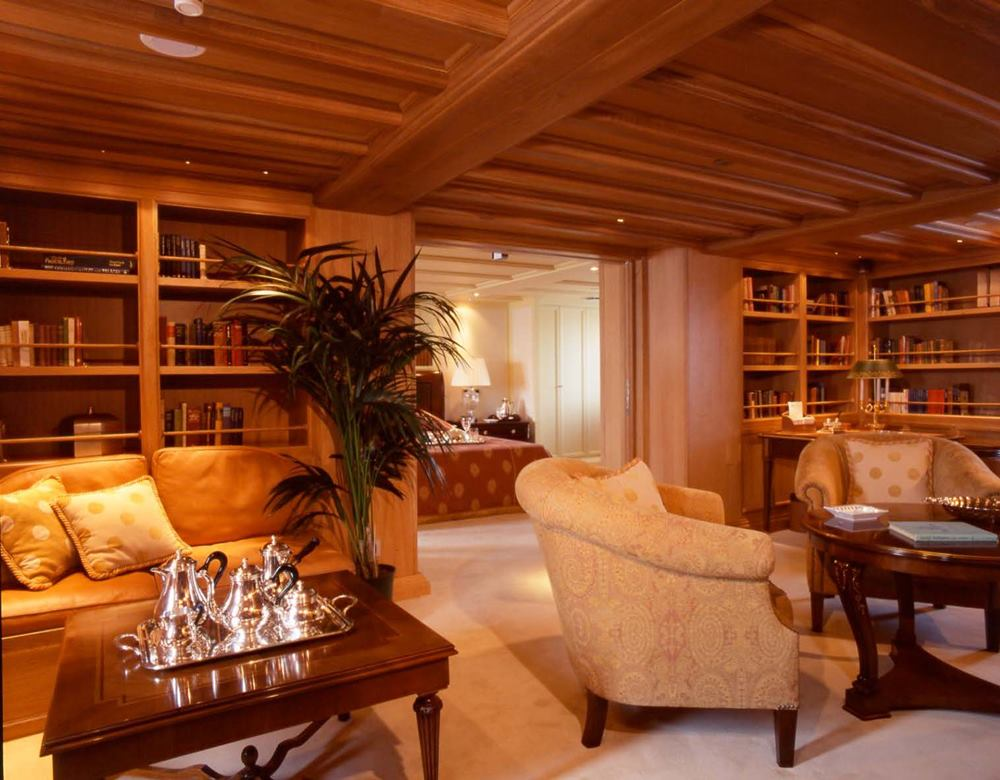
One of the rooms of the Christina O’.
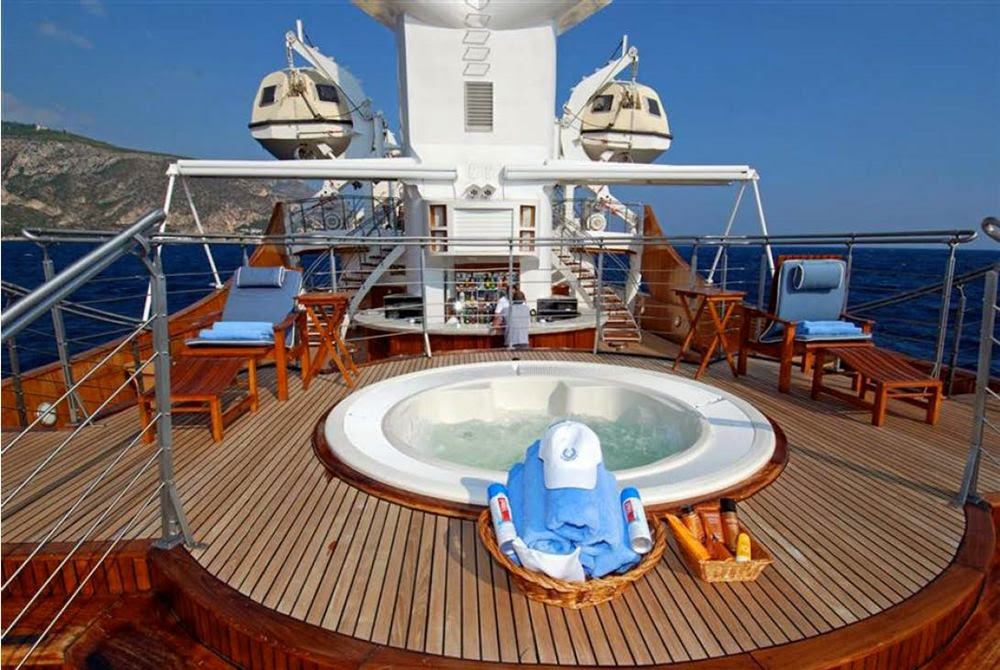
One of Christina O’s decks.
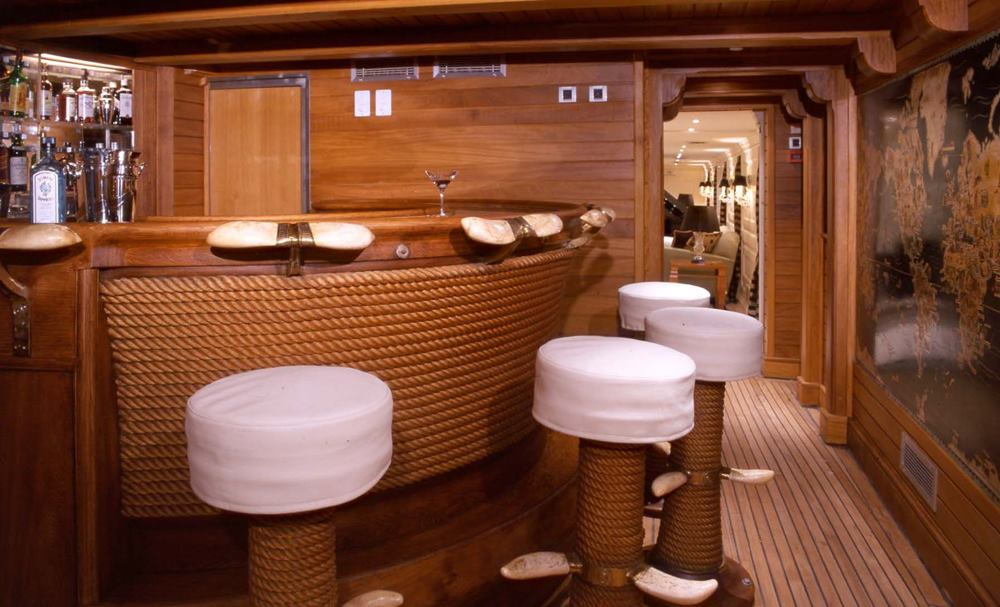
The cover of the stools.
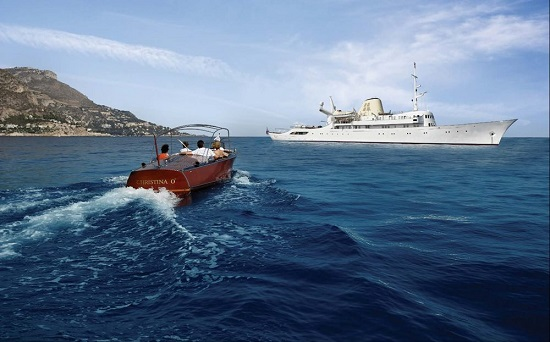
The Christina O’.
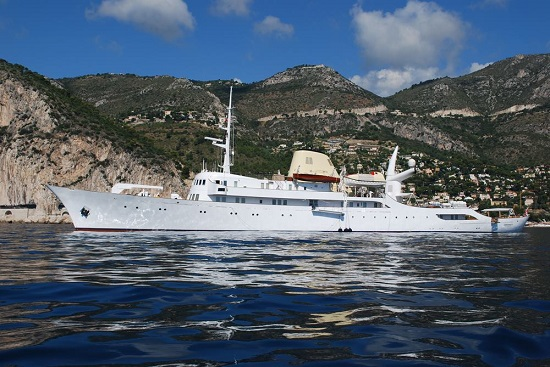
The Christina O’.
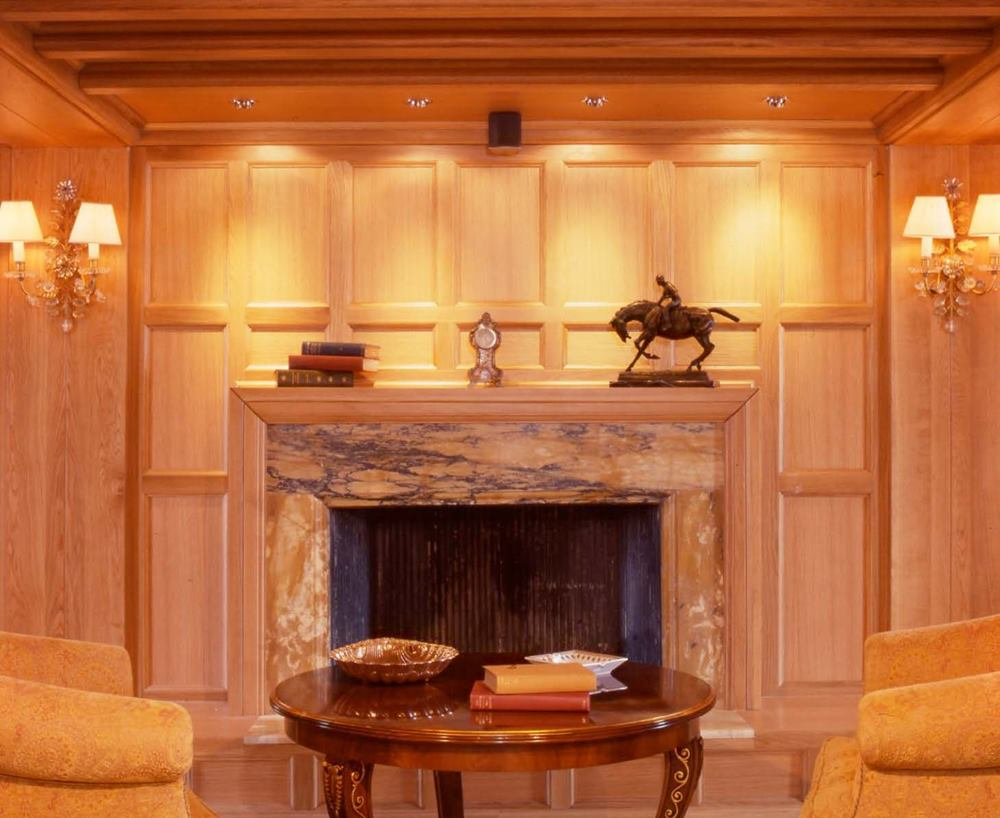
The fireplace in one of the rooms of the Christina O'.
(Below) Old pictures of the Christina’, some taken by myself
The interior of one of the rooms of the 'Christina'.
The interior of one of the rooms of the 'Christina'.
The interior of one of the rooms of the 'Christina'.
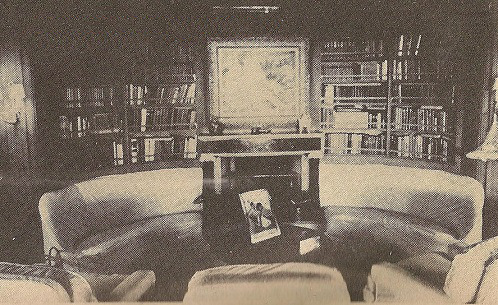
The interior of one of the rooms of the 'Christina'.
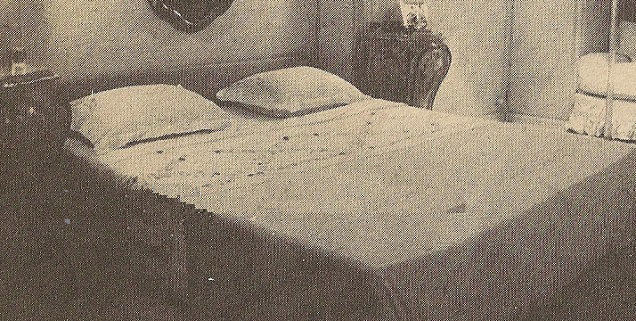
The interior of one of the bedrooms of the 'Christina'.
The interior of one of the rooms of the 'Christina'.
Some rifles stored in a room of the 'Christina'.
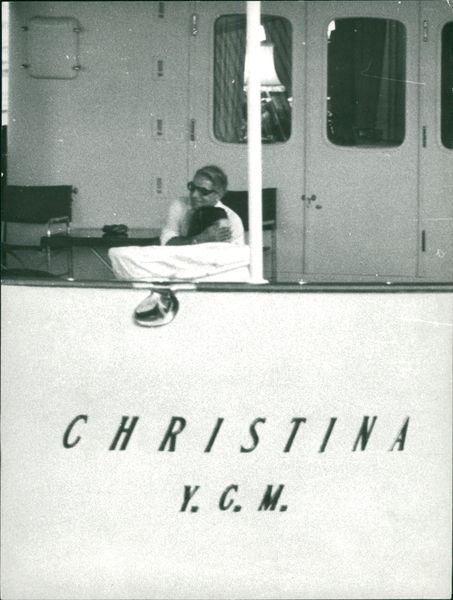
Aristotle Onassis embracing a woman aboard his ‘Christina’.
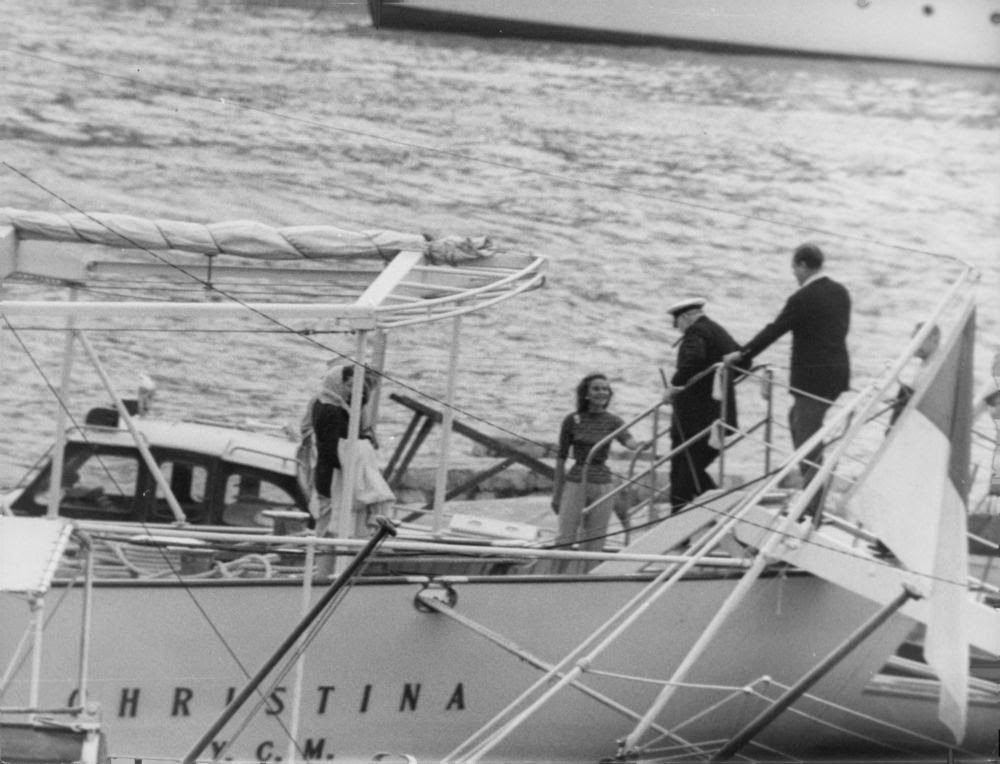
People aboard the ‘Christina’.
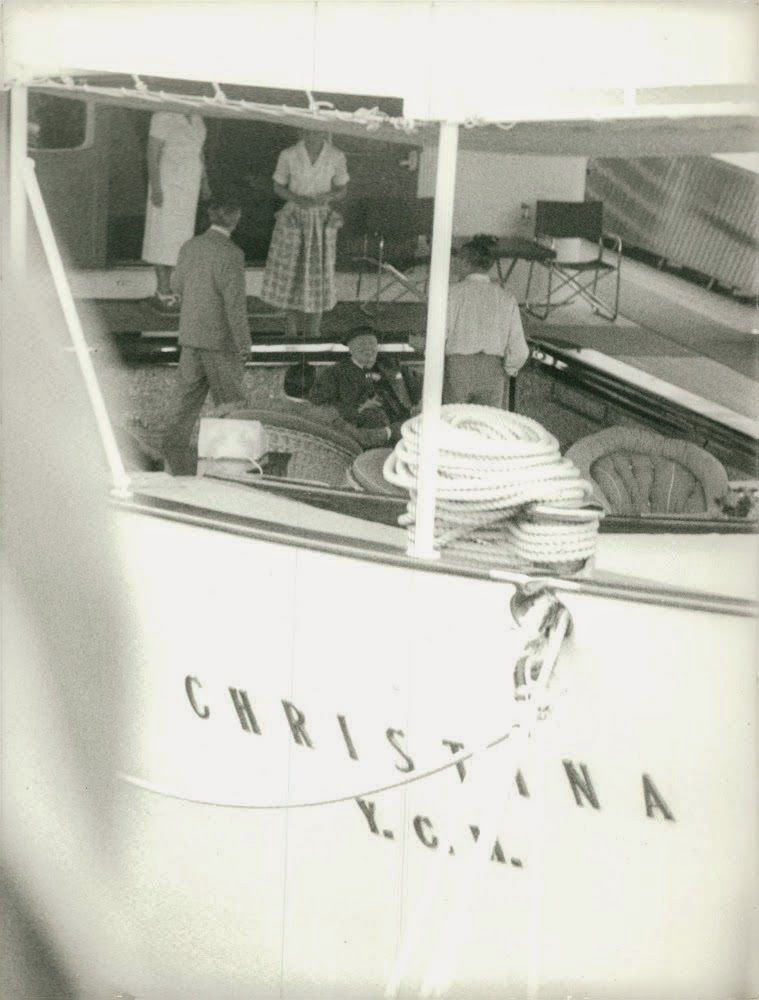
Winston Churchill aboard the ‘Christina’.
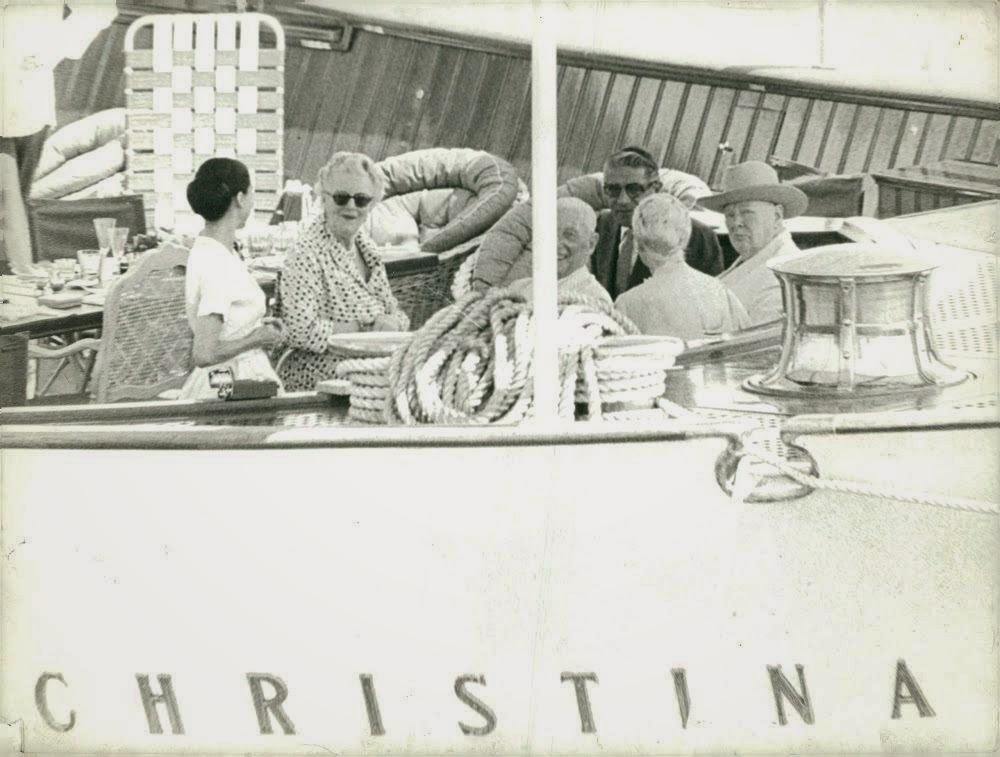
Aristotle Onassis and Winston Churchill aboard the ‘Christina’.
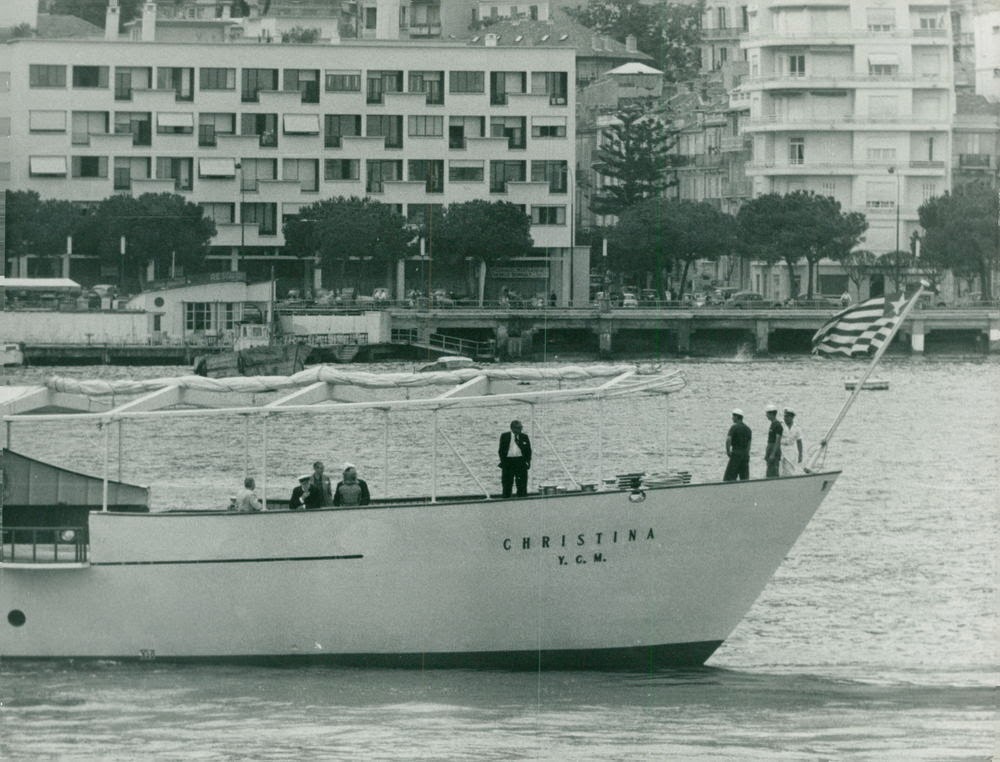
Aristotle Onassis aboard the ‘Christina’.
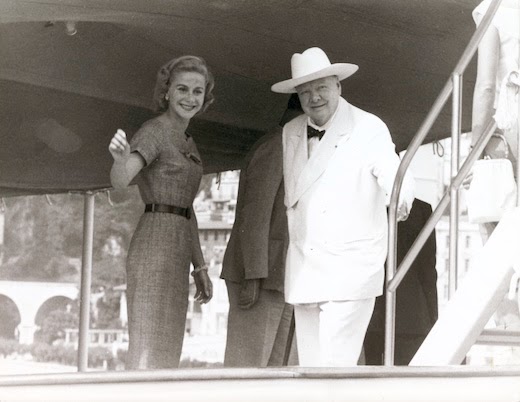
Tina Onassis and Sir Churchill on the ‘Christina’ in Monaco before a cruise.
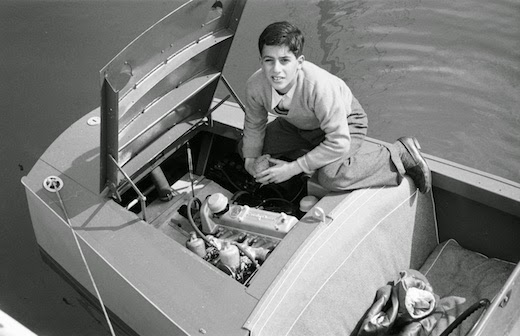
Alexander Onassis looking at the engine of one of the ‘Christina’ yacht small motorboat - he liked everything that have an engine!!!
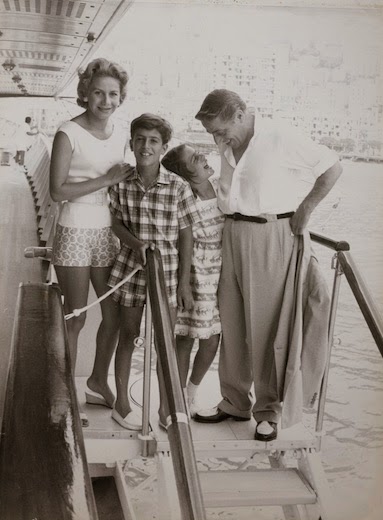
Rare picture of the Onassis family. Tina and Ari really loved their children and really loved spending their time together when it was possible. Christina's personality was similar to her dad and they really shared a special bond, while Alexander was more sensitive and discreet and very close to his mother.
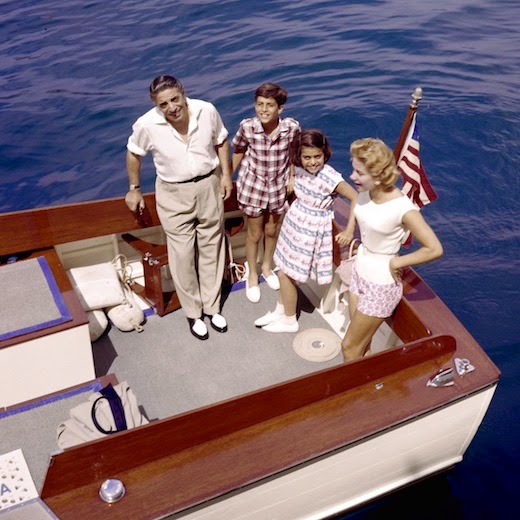
Rare picture of the Onassis family taken before an outing at sea...
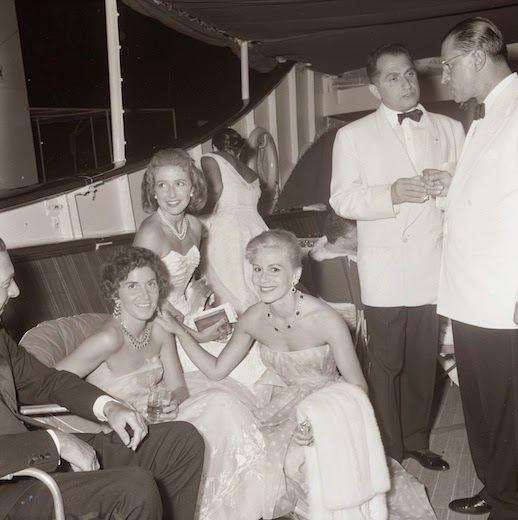
Tina Onassis at a reception on the Christina, she was really happy during their first 10 years of marriage with Ari.
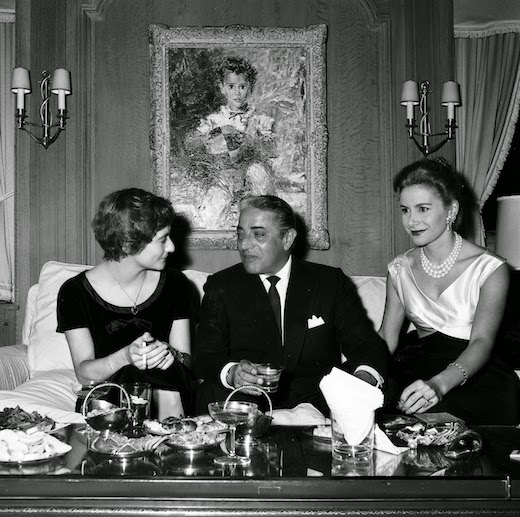
Ari Onassis, Francoise Sagan and Tina Onassis during a reception on the yacht ‘Christina’ - mooring in Monaco.
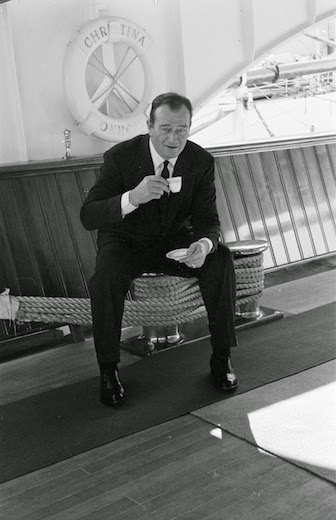
John Wayne was invited by Ari Onassis on his yacht the ‘Christina’, he really enjoyed his time and was good friend with Ari.
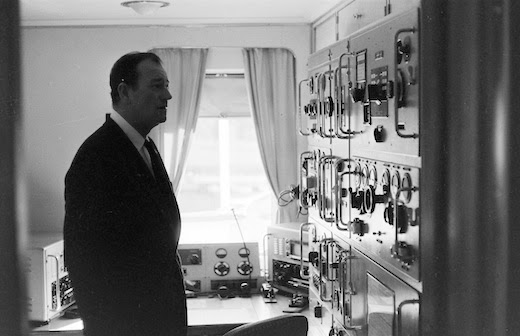
John Wayne on the ‘Christina’.
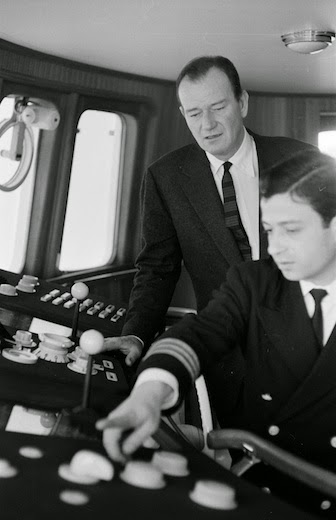
John Wayne on the ‘Christina’.
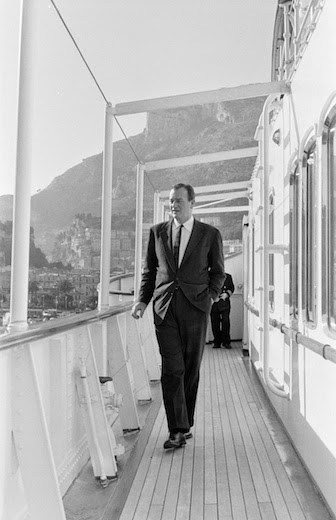
John Wayne on the ‘Christina’.
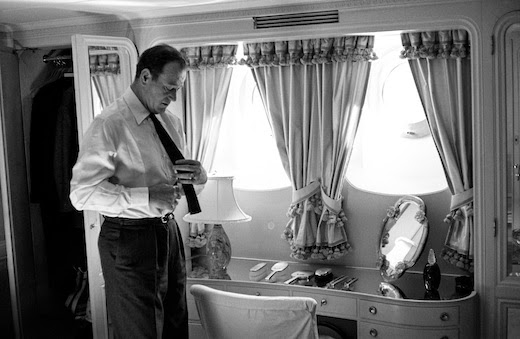
John Wayne on the ‘Christina’.
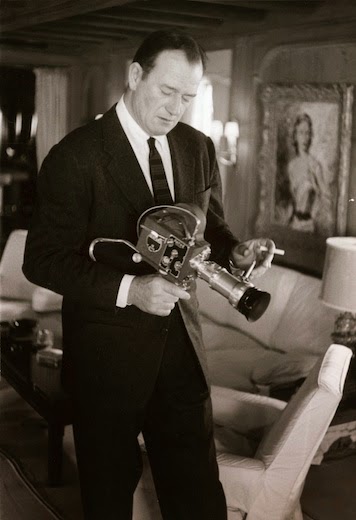
John Wayne on the ‘Christina’.
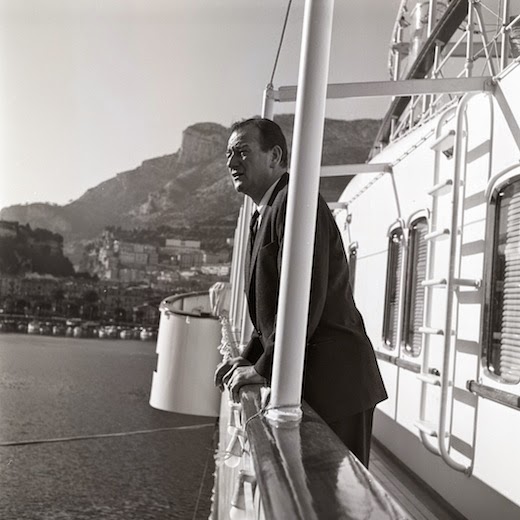
John Wayne on the ‘Christina’.
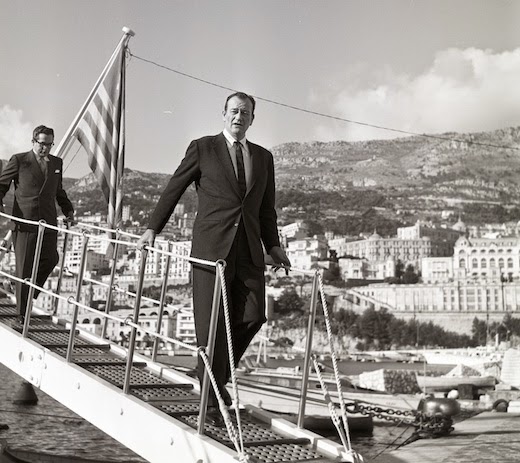
John Wayne disembarking from the ‘Christina’.
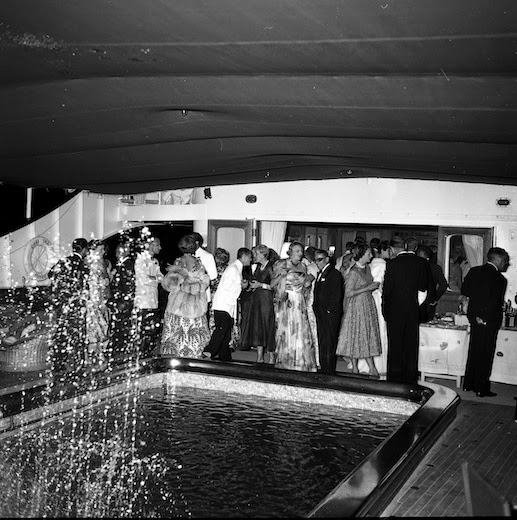
A reception on the ‘Christina’ in Monaco.
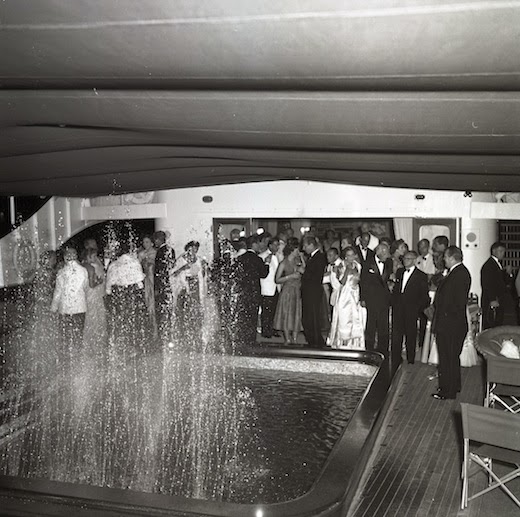
A reception on the ‘Christina’ in Monaco.
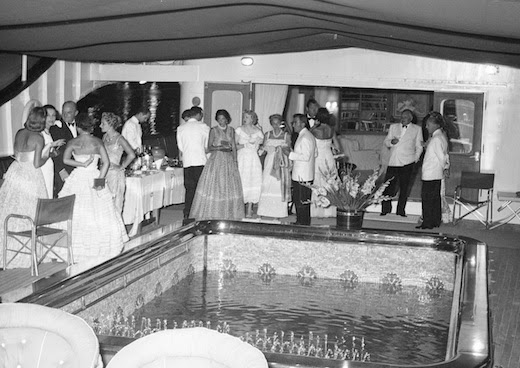
A reception on the ‘Christina’ in Monaco.
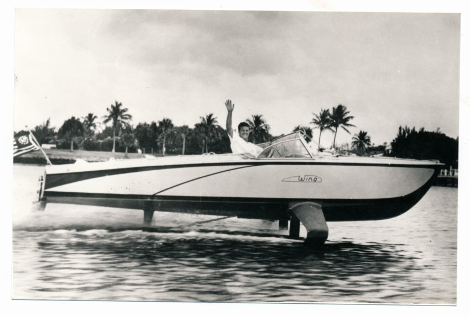
A speedboat / hydrofoil in action.
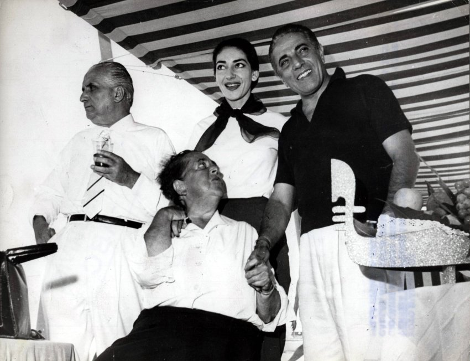
Aristotle Onassis and Maria Callas.
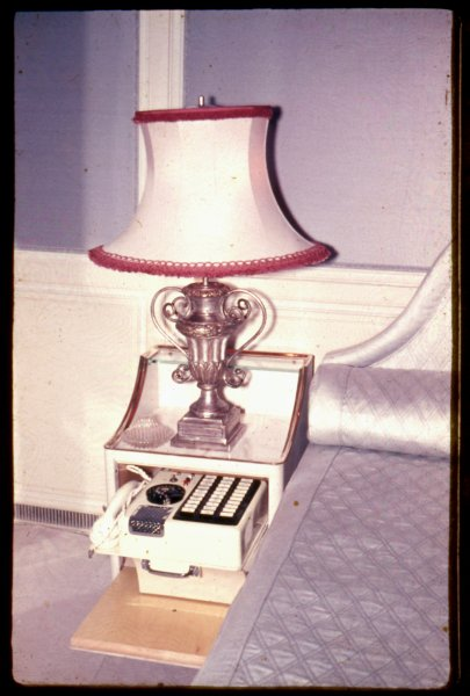
Details of the interior of one of the Christina's rooms.
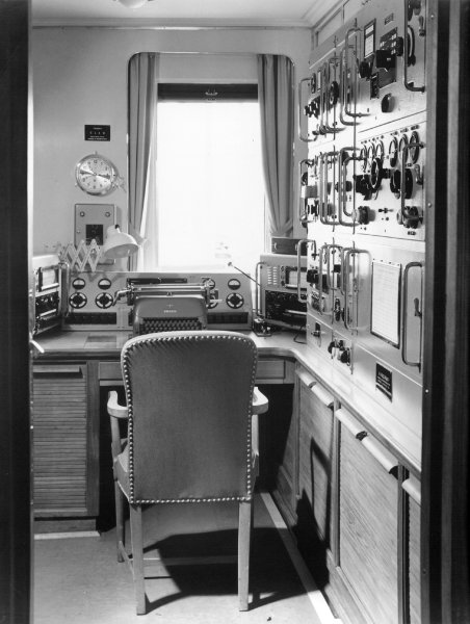
The interior of one of the Christina's rooms.
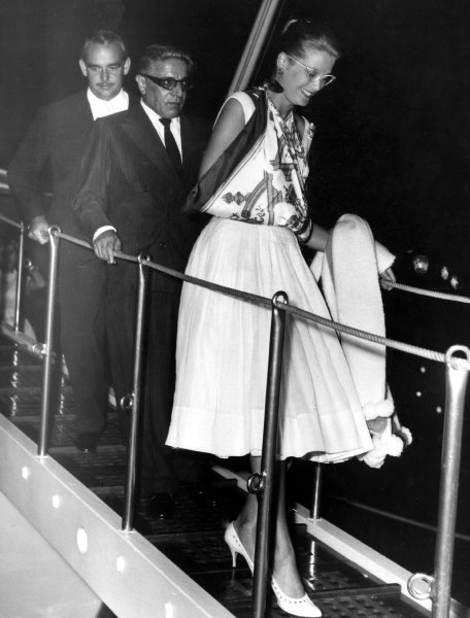
Rainier III of Monaco, Aristotle Onassis and Grace Kelly disembarking from the ‘Christina’.
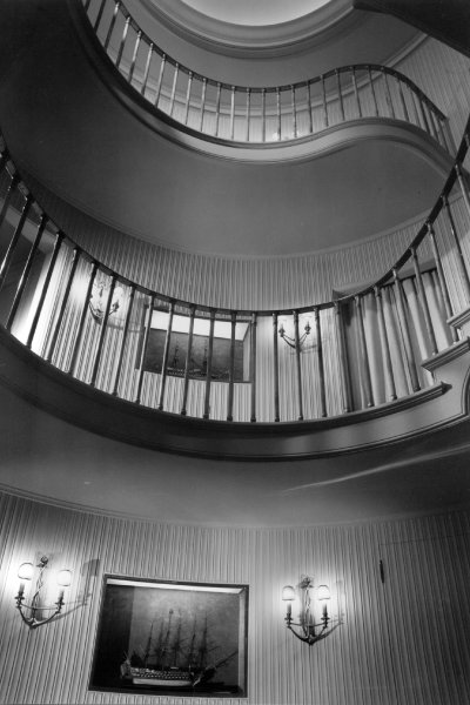
The internal stairwells of the Christina.
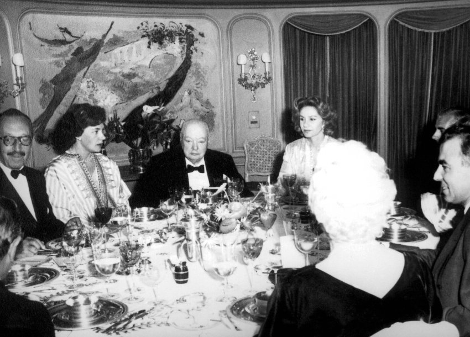
Winston Churchill having dinner aboard the ‘Christina’.
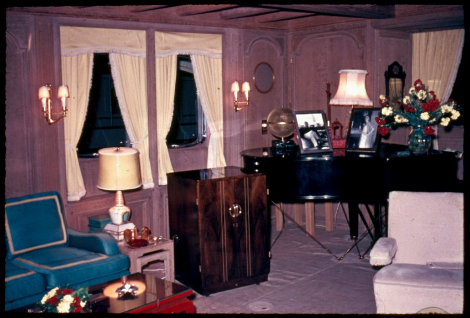
The interior of one of the Christina's rooms.
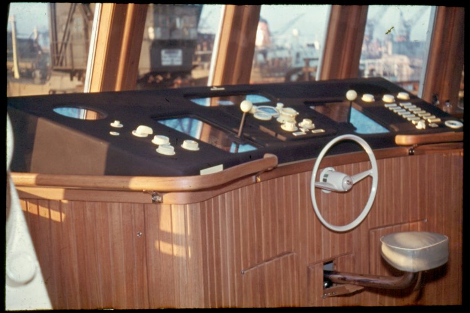
The interior of one of the Christina's rooms.
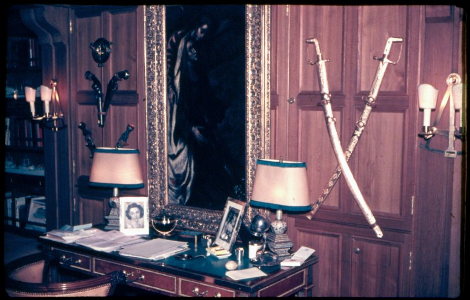
The interior of one of the Christina's rooms.
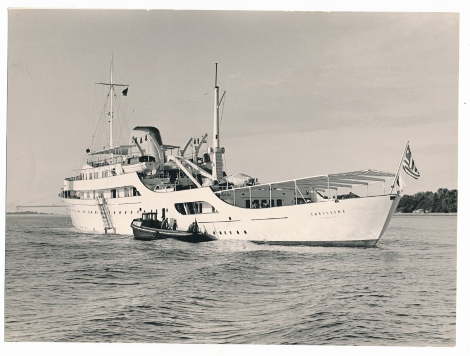
The ‘Christina'.
Vintage photos show what it was like to party alongside celebs, royals and politicians on Jackie and Aristotle Onassis' iconic yacht in its glamorous heyday. By Marissa Perino for Business Insider on 03 April 2019.
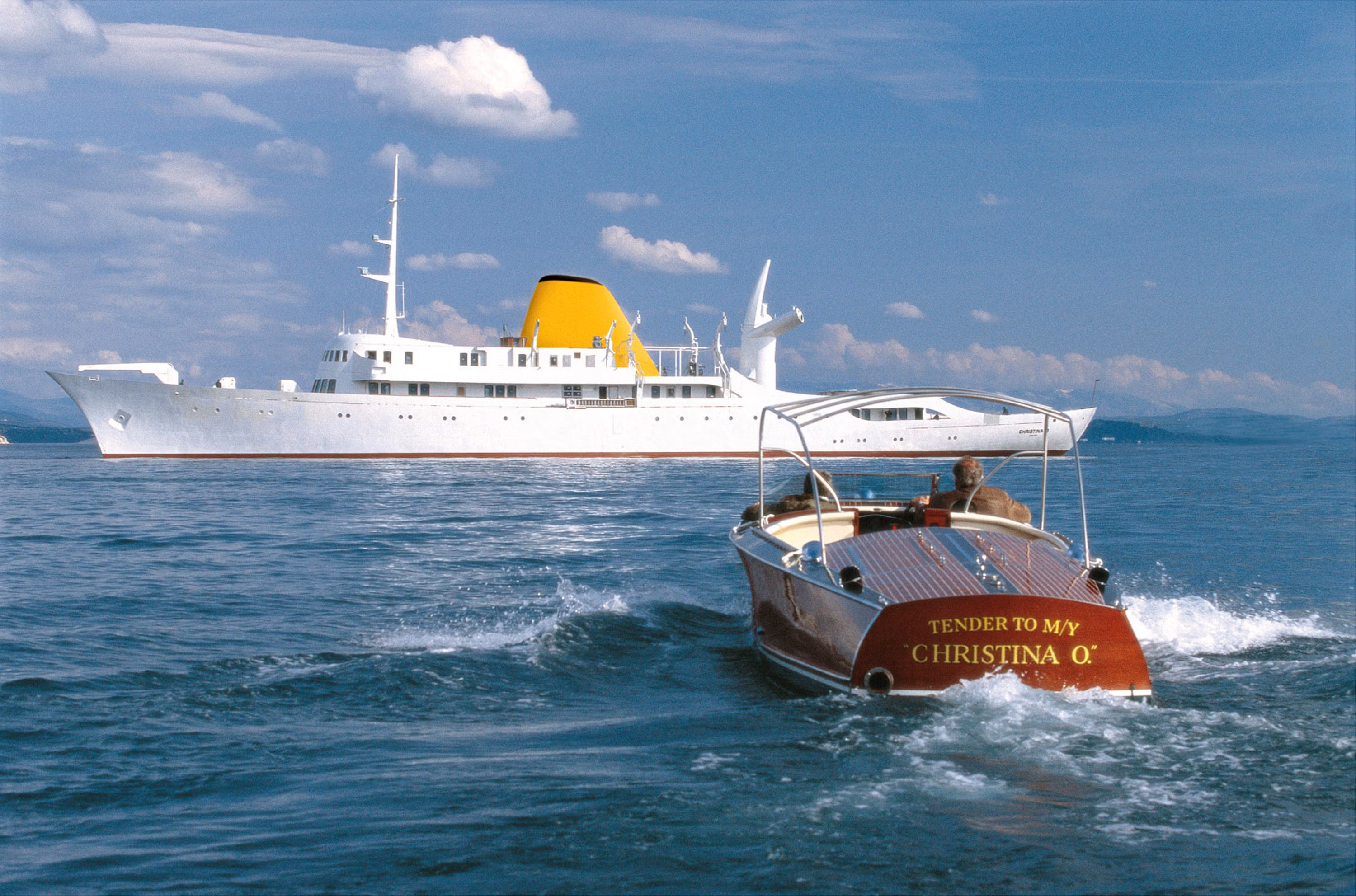
The newly restored Christina O’, former private yacht of Aristotle Onassis and her tender cruise at sea on 24 April 2001. Photo by Getty Images.
· Aristotle and Jackie Onassis owned a superyacht named the Christina and frequently entertained an impressive list of guests aboard the ship.
· The infamous couple's social circle included Hollywood stars such as Elizabeth Taylor and Richard Burton, as well as political and royal dignitaries.
· The luxury yacht can now be rented for $100,000 per day and is outfitted to host extravagant parties.
Jackie O's yacht parties were always invite-only.
Already a national name as former First Lady of the United States — and a legendary fashion icon — Jacqueline Kennedy gained media attention when she started dating wealthy shipping tycoon Aristotle Onassis. She began frequenting his superyacht with her children in the 1960s.
Aristotle Onassis purchased the vessel — originally a convoy escort called the Stormont — at scrap value, turning it into his floating mansion, which he called the Christina. For almost two decades, the yacht served as a meeting place, a reception hall and the ‘world's most exclusive bar’.
Aristotle Onassis and Jackie Kennedy Onassis regularly entertained an elite social group aboard their legendary superyacht following their wedding in 1968. The reception — like so many other events — was held aboard the Christina.
Notable guests over the years included a long list of Hollywood stars, from Elizabeth Taylor to Marilyn Monroe. Frank Sinatra, John Wayne and Richard Burton also visited, alongside royalty such as the Prince and Princess of Monaco.
With 17 cabins, the ship remains one of the few yachts able to accomodate 34 overnight guests. Additionally, the Christina O’ is capable of carrying up to 157 guests while cruising and up to 250 guests while docked.
After purchasing a convoy escort in 1954, shipping magnate Aristotle Onassis spent over $4 million transforming the vessel into a luxury yacht he called the Christina.
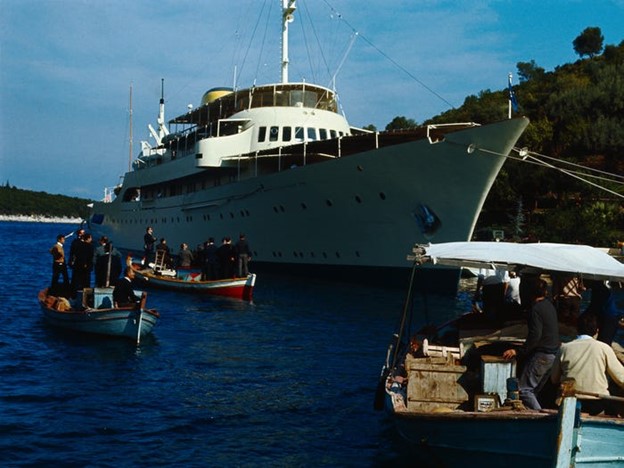
The Christina in 1968. Photo by Bettmann / Getty Images. Source: Valef Yachts.
Once renovations were complete, Onassis used the ship as an office, residence and private entertainment venue.
Named after his only daughter, Aristotle and Jackie Onassis spent much of their leisure time aboard the Christina.
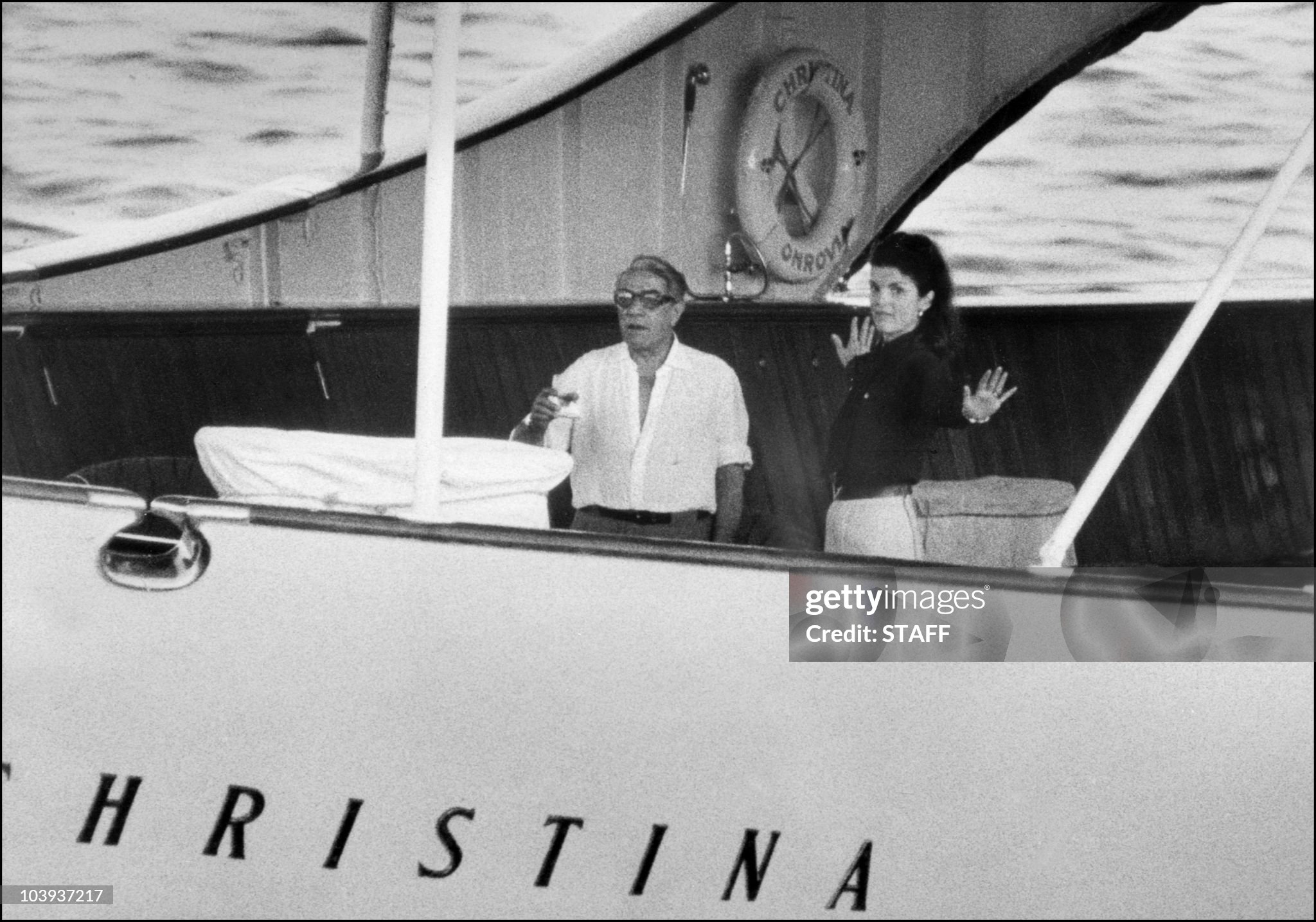
The shipowner Aristotle Onassis and his wife Jacqueline leave Las Palmas in route to La Martinique on board of the yacht Christina on 18 March 1969. Photo by Staff / Afp via Getty Images.
... often using the ship to vacation with their children.
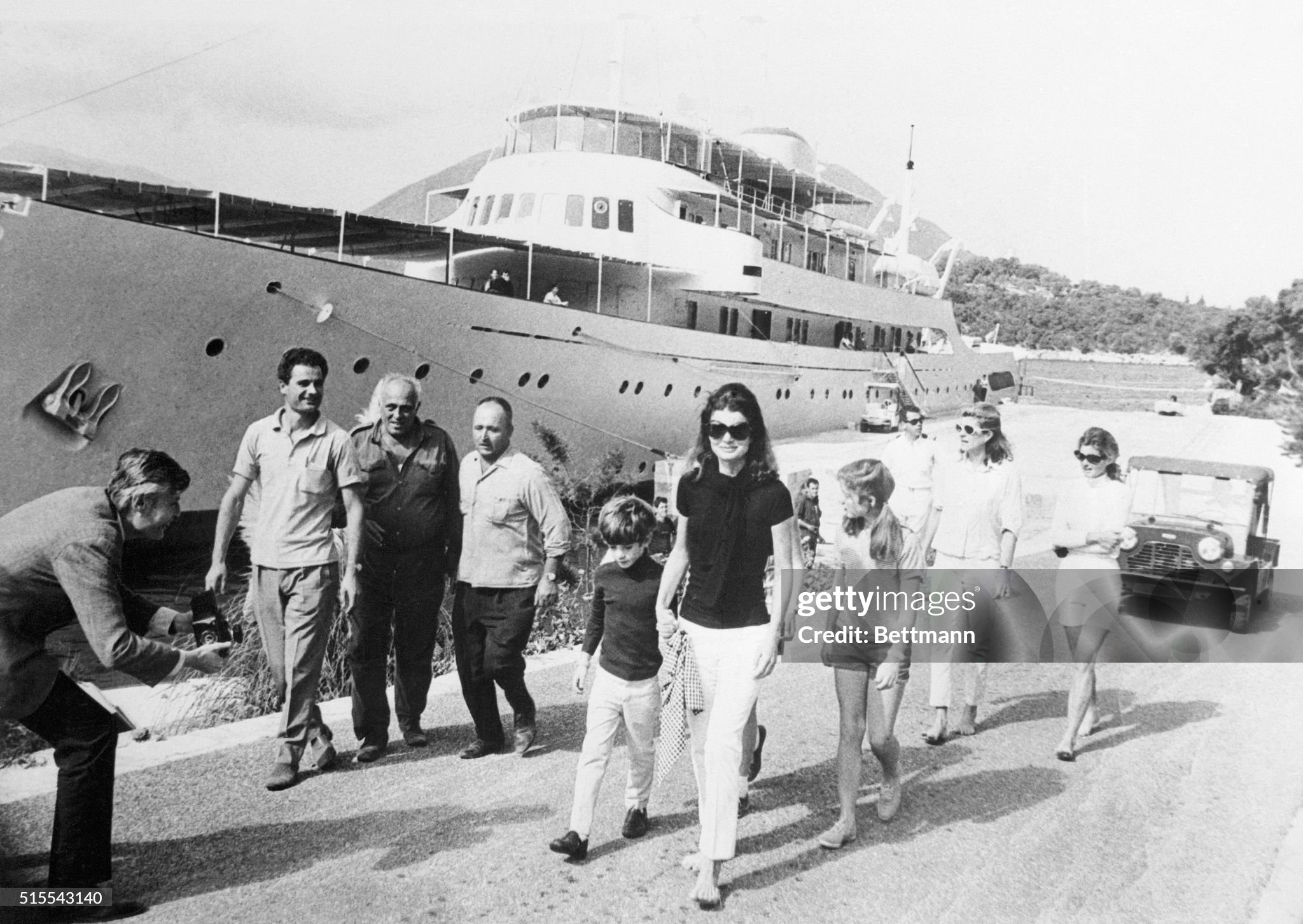
Jackie Kennedy Onassis walking beside the yacht Christina with her two children, Caroline and John F. Kennedy Jr., in Skorpios, Greece, on 19 October 1968. Photo by Bettmann / Getty Images.
Alongside the notable Onassis and Kennedy families, the Christina hosted many well-known guests that were a part of the couple's elite social circle.
Among those guests are many with easily recognizable names, as indicated by a vintage passenger list.
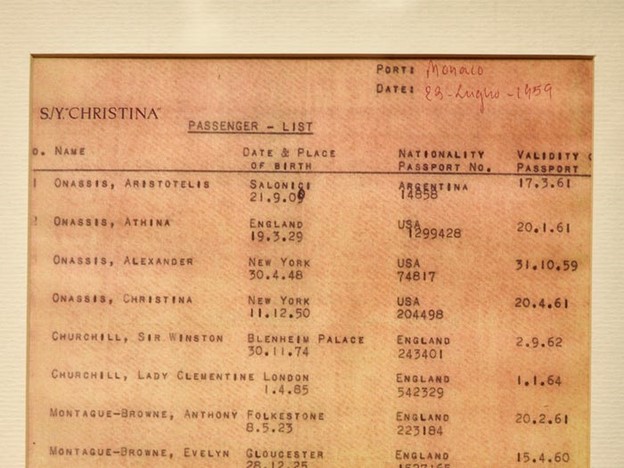
Sir Winston and Lady Clementine Churchill on a list of passengers, including the Onassis family. Photo by Valef Yachts.
Celebrities frequented intimate gatherings...
... including Hollywood stars such as Elizabeth Taylor and Richard Burton...
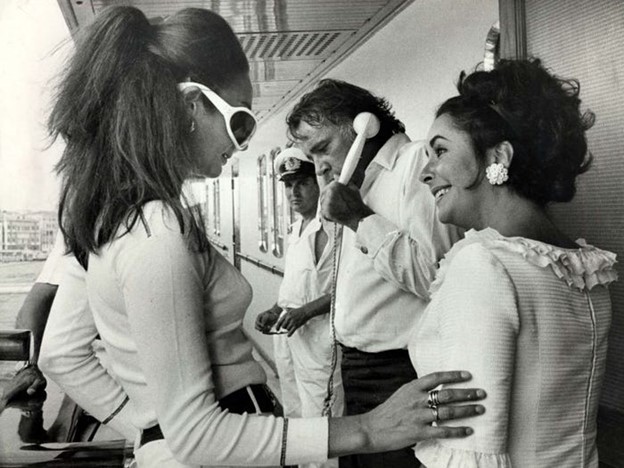
Richard Burton, taking a phone call and Elizabeth Taylor (right). Photo by Valef Yachts. Source: Business Insider, Valef Yachts.
... and actor John Wayne.
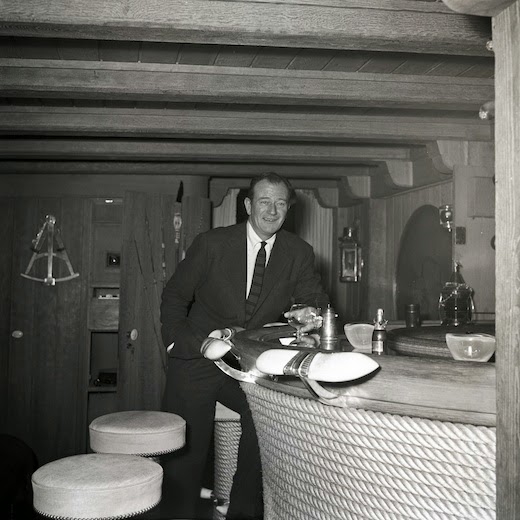
John Wayne ordering a drink at the iconic Ari's Bar — named after its owner — aboard the Christina. Photo by Valef Yachts. Source: Business Insider, Valef Yachts, CNN.
The ship also doubled as the banquet hall for Aristotle and Jackie Onassis' wedding reception.
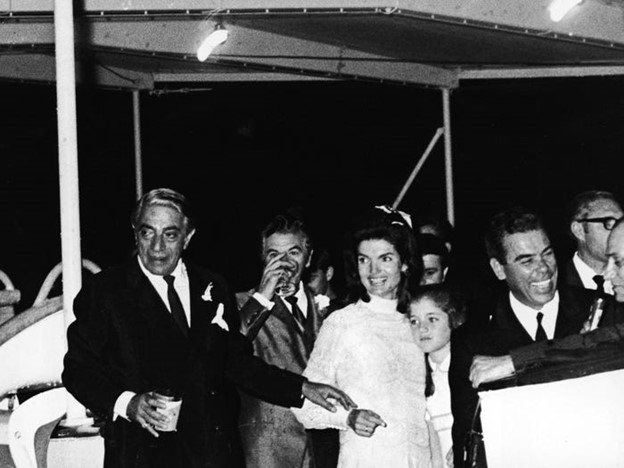
Jaqueline Kennedy Onassis, embracing her daughter Caroline Kennedy and her new husband, Greek shipping magnate Aristotle Onassis, hold a reception aboard the yacht Christina shortly after their wedding ceremony on the Island of Skorpios, Greece, on 21 October 1968. Photo by Express Newspapers / Getty Images.
Following an intimate ceremony on his private island Skorpios, the newlyweds boarded the ship with their family and friends.
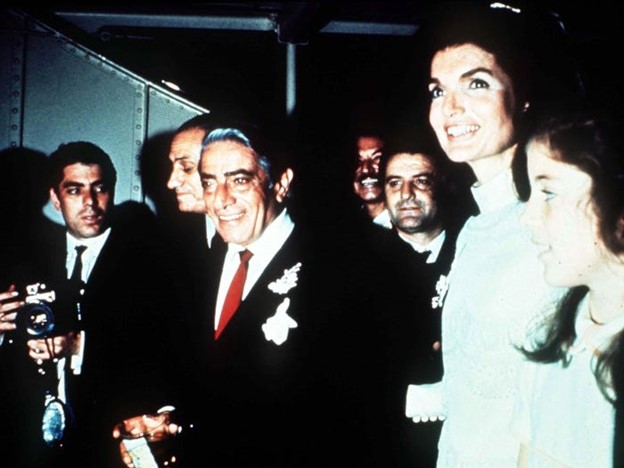
Aristotle Onassis (center), Jackie Kennedy Onassis (center right) and her daughter Caroline Kennedy (far right). Photo by Rolls Press / Popperfoto / Getty Images. Source: Time.
Her reception was just one of the countless high-caliber parties Jackie hosted...
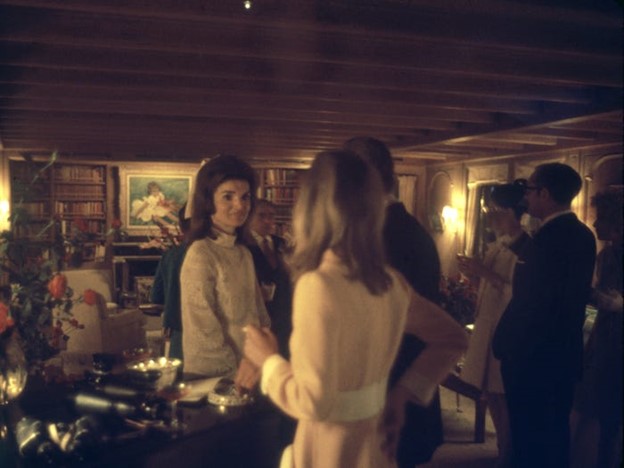
Photo by Bill Ray / Time & Life Pictures / Getty Images. Source: Getty, CNN.
... and it included guests such as her socialite sister Princess Lee Radziwill and brother-in-law, Lithuanian Prince Stanisław Albrecht Radziwiłł.
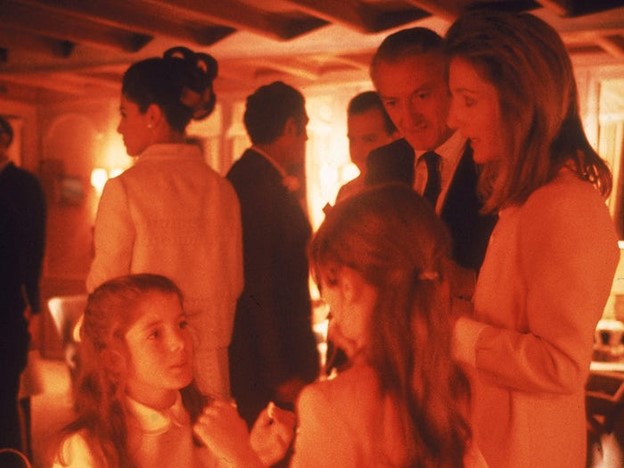
Caroline Kennedy (lower left) with her royal aunt, uncle and cousin Anna Christina. Photo by Bill Ray / The Life Picture Collection / Getty Images. Source: The Guardian.
Other notable dignitaries over the years included Princess Grace of Monaco...
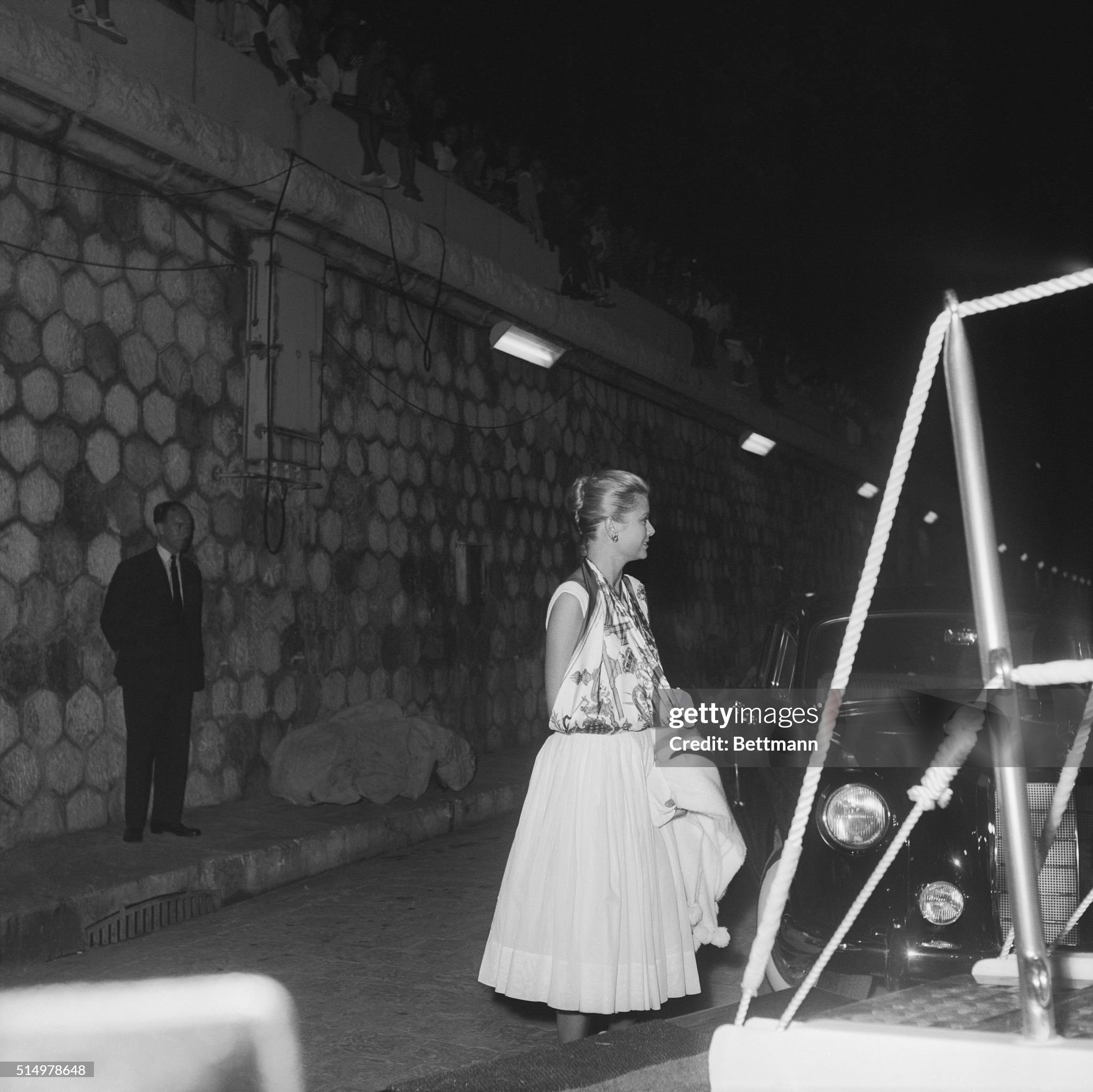
Actress Grace Kelly — who married Prince Rainier III of Monaco — boards the Christina for a 10-day Mediterranean cruise. Photo by Bettmann / Getty Images. Source: Getty.
... alongside President Josip Broz Tito of Yugoslavia and British Prime Minister Winston Churchill.
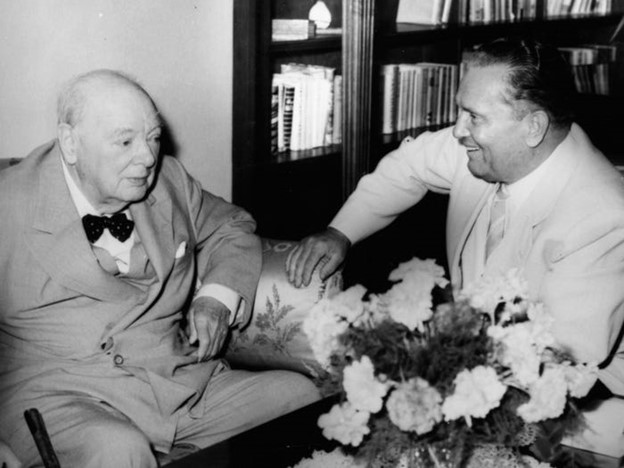
Sir Winston Churchill (left) and President Josip Broz Tito of Yugoslavia (right) aboard the Christina in Croatia in 1960. Photo by Keystone / Hulton Archive / Getty Images. Source: Getty.
Churchill frequented the boat on numerous occasions...
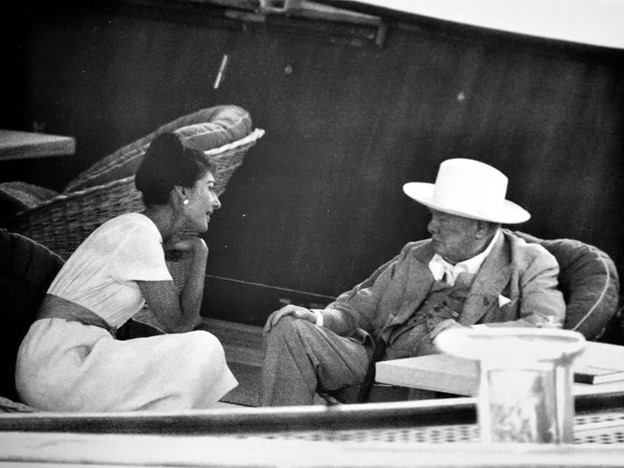
Churchill chatting with opera singer Maria Callas. Photo by Bill Ray / The Life Picture Collection / Getty Images. Source: Valef Yachts.
... alongside famous opera singer Maria Callas and her then-husband Giovanni Battista Meneghini. Today, one of the ship's restored lounges bears her name.
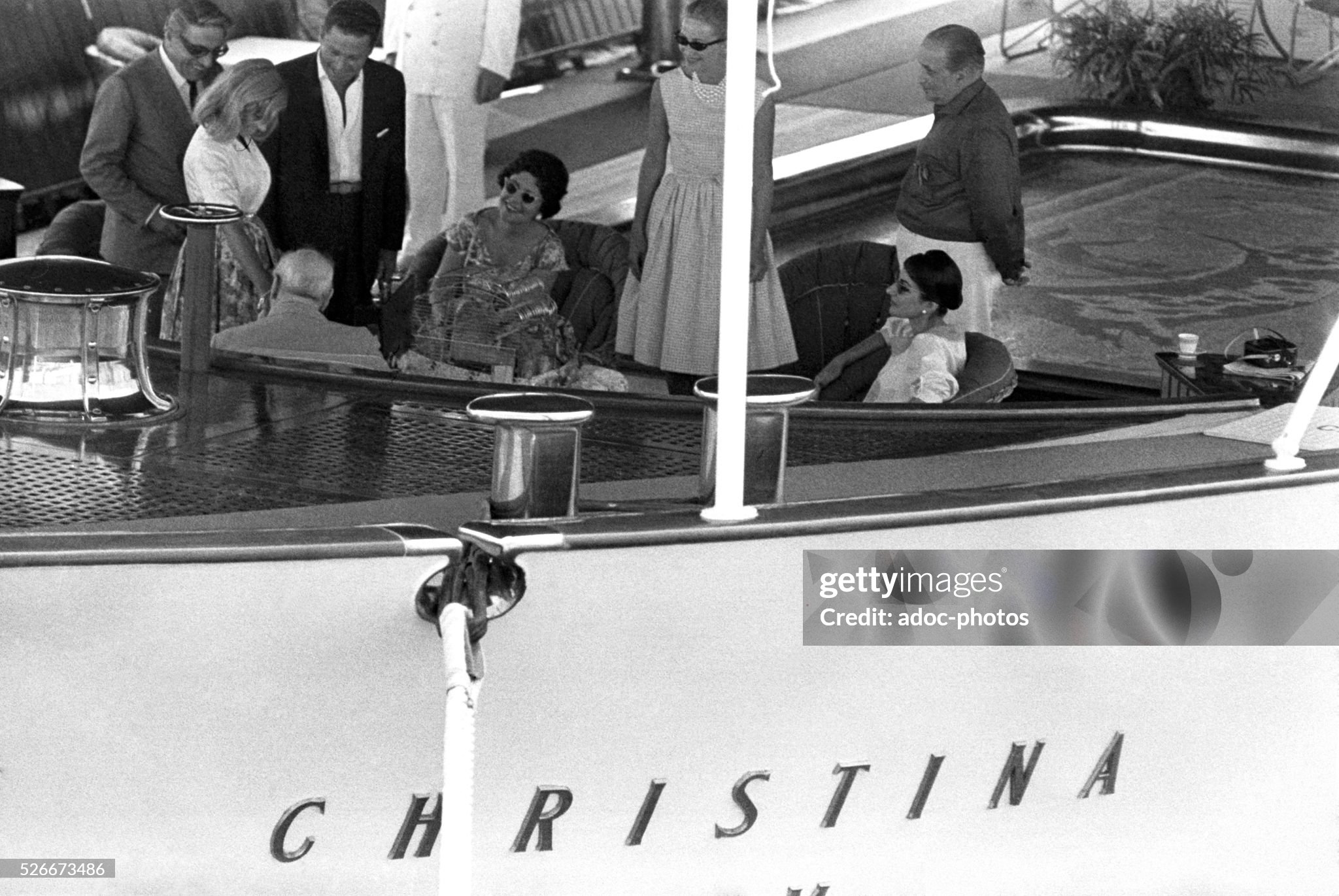
Maria Callas (seated right) with her husband (standing right) aboard the Christina with Winston Churchill, Onassis' first wife Athina and other guests. Aristotle Onassis and Maria Callas' affair ended their first marriages. Photo by Adoc-photos / Corbis via Getty Images. Source: Getty, New York Times.
Sleep aboard the Christina O', Onassis's yacht where Liz Taylor and Maria Callas stayed. The furniture in the bar is made of whalebone and the fireplace in the living room is made of lapis lazuli. By Micol Passariello on 03 September 2021.
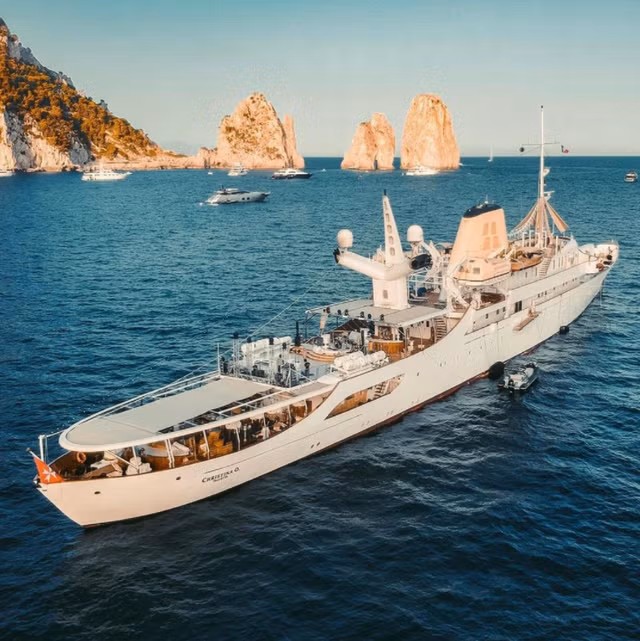
The Christina O’. Photo by Instagram @212yatch.
Presidents, prime ministers, royalty, movie stars. Few yachts can compete with the Christina O'. A legend of the seas, it's now possible to take an exclusive cruise. One hundred meters long and capable of accommodating up to thirty-six guests, the historic and luxurious megayacht once owned by Aristotle Onassis was born for a completely different purpose, far removed from the tycoon's gilded world. Initially a River-class frigate for the Canadian Navy, built in 1943 as HMCS Stormont and serial number K327, it saw service during the Second World War. After the conflict, the vessel was laid up and, in 1954, purchased for $34,000 by Greek shipowner Aristotle Onassis. In his hands, it was transformed (spending approximately $4 million on its refit) into the largest, most elegant and most cutting-edge private yacht of its time, christened after his daughter: Christina.
A cruise aboard the Christina O’ is no ordinary voyage. The sophisticated environment, the luxurious furnishings, the old-world atmosphere: it's a journey through history. A history rich in parties that caused a sensation in the gossip magazines, memorable adventures and illustrious guests. In addition to Maria Callas and Jackie Onassis, Aristotle Onassis's partner and wife, respectively, divas and sheiks, princes and great artists have been spotted aboard the famous megayacht. Marilyn Monroe was a regular on the ship's lavish vacations, as were Liz Taylor and Richard Burton, who loved relaxing in front of the fireplace in the Lapis lounge.
In 1957, one of the most famous meetings in history took place in the Christina's lounges: former British Prime Minister Winston Churchill and future US President John Fitzgerald Kennedy shook hands in Ari's Bar.
In Onassis's time, the yacht had a decor rich in pomp, excess and multimillionaire-like affectations.
This began with the bathrooms: gold taps and ivory handles, lapis lazuli sinks and bathrooms clad in precious marble.
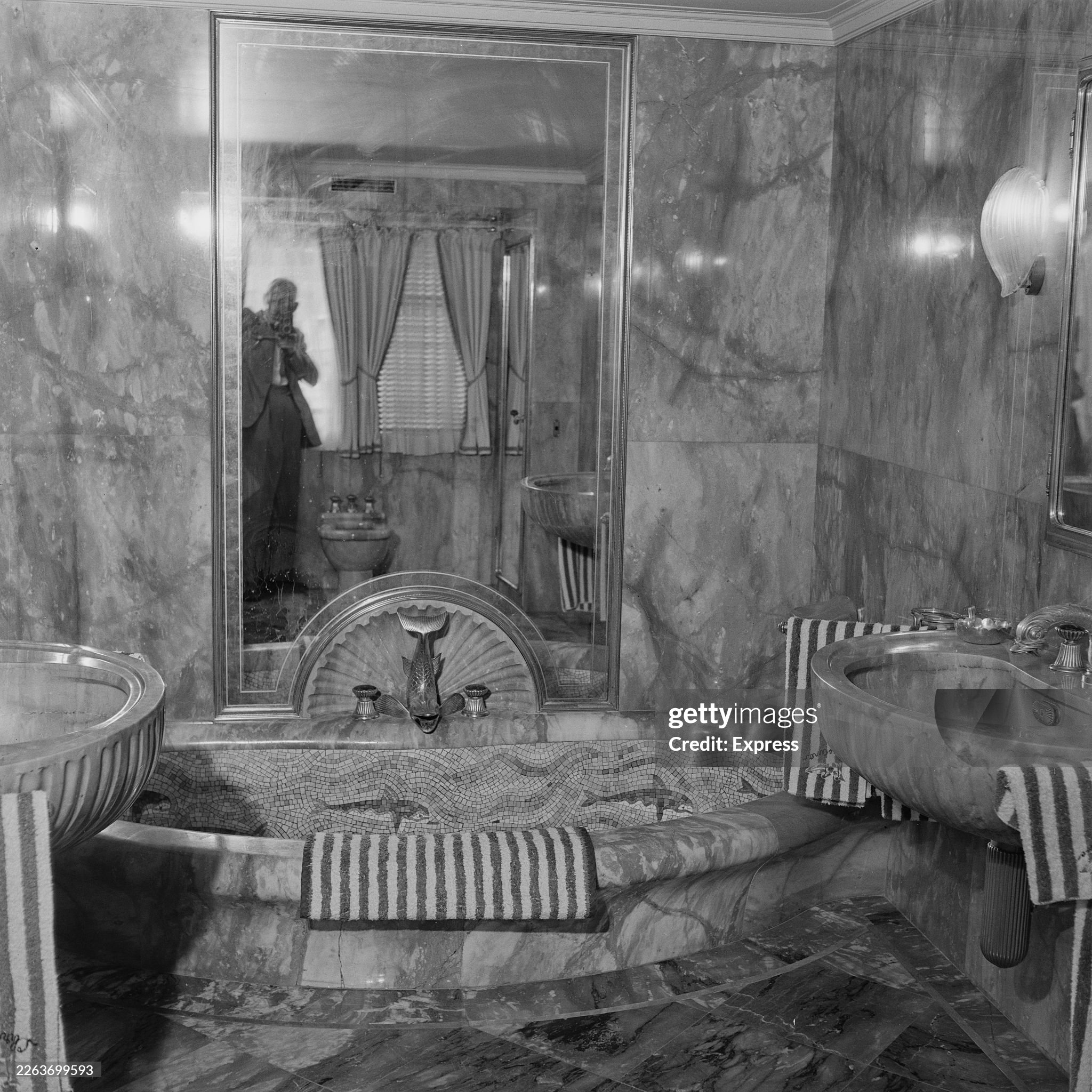
A mosaic-lined marble bathtub with a fish-shaped tap in a marble-lined bathroom on the 'Christina’ private motor yacht moored in Monte Carlo, Monaco, on 23 August 1955. The yacht belonged to Greek businessman Aristotle Onassis. Photo by Stroud / Express / Hulton Archive / Getty Images.
The owner's private bathroom, which even featured a bathtub inspired by that of the mythical Minos, king of Crete, has gone down in history. Furnished with Louis XIV furniture, sculptures and (literally) museum-quality paintings, including works by Rubens, El Greco and Renoir, the yacht was a floating museum. Today, the yacht has lost none of its historic allure. Indeed, the ultra-luxury megayacht fears no rival in terms of history, allure and elegance. After several changes of ownership (and various restylings), the vessel presents itself to guests with all its unique charm and exquisite interior design evoking the splendor of the time.
Ari's Bar still displays its original elegance: the nautical-inspired bar, covered in rope and solid wood, was constructed from the hull of a sunken Spanish galleon.
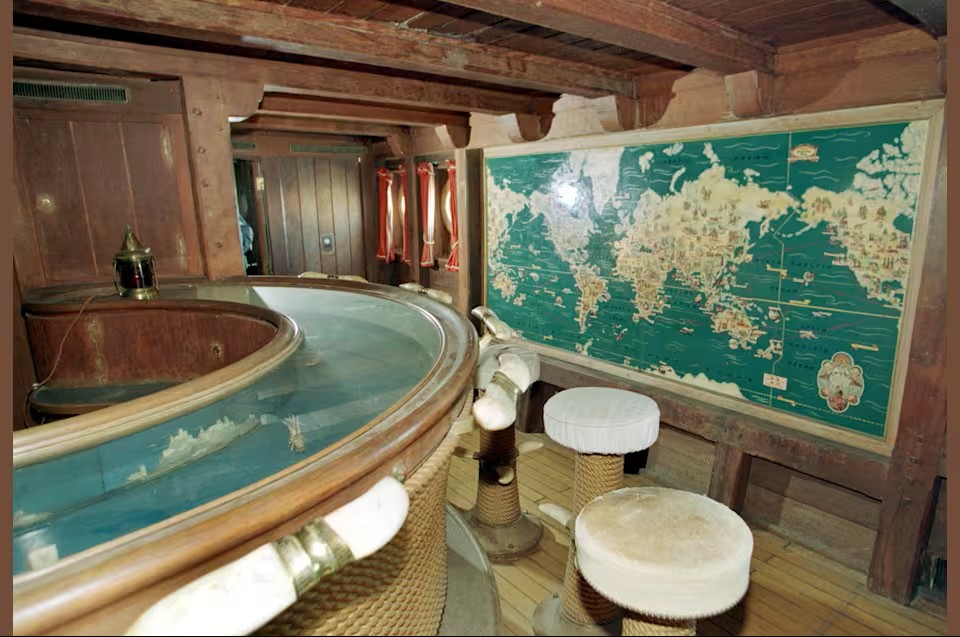
Ari's Bar.
Its furniture is made of whale and orca bones, while the bar stools in front of the panoramic window, where the tycoon loved to offer glasses of champagne to guests, are upholstered in whale scrotum skin.
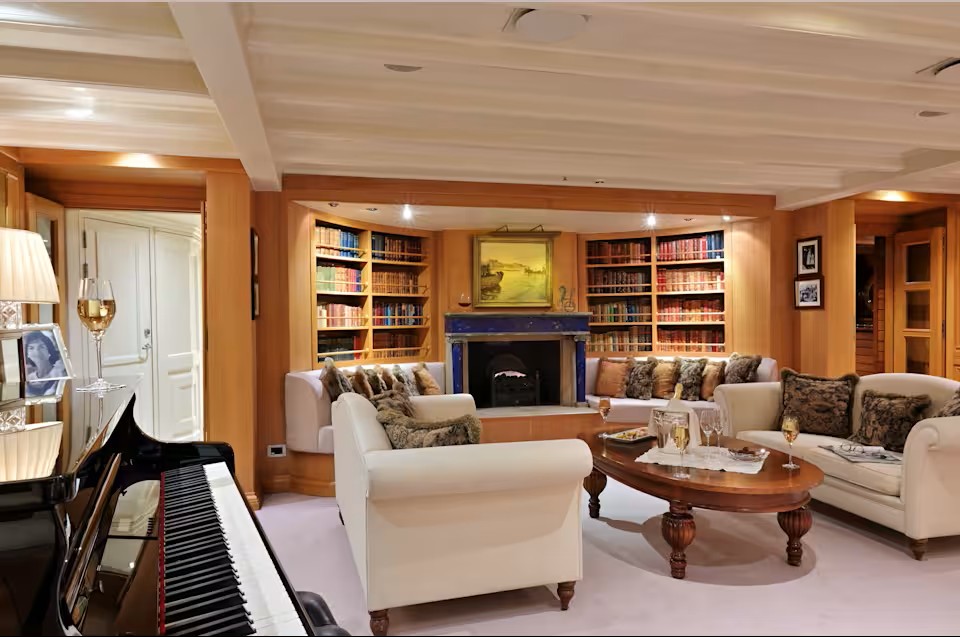
The Lapis Lounge with its lapis lazuli fireplace.
The Lapis Lounge, named for its large lapis lazuli-studded fireplace, houses a small stage with a splendid Steinway piano, on which Maria Callas and Frank Sinatra have played and sung.
Eighteen cabins, all named after Greek islands, are decorated with timeless elegance.
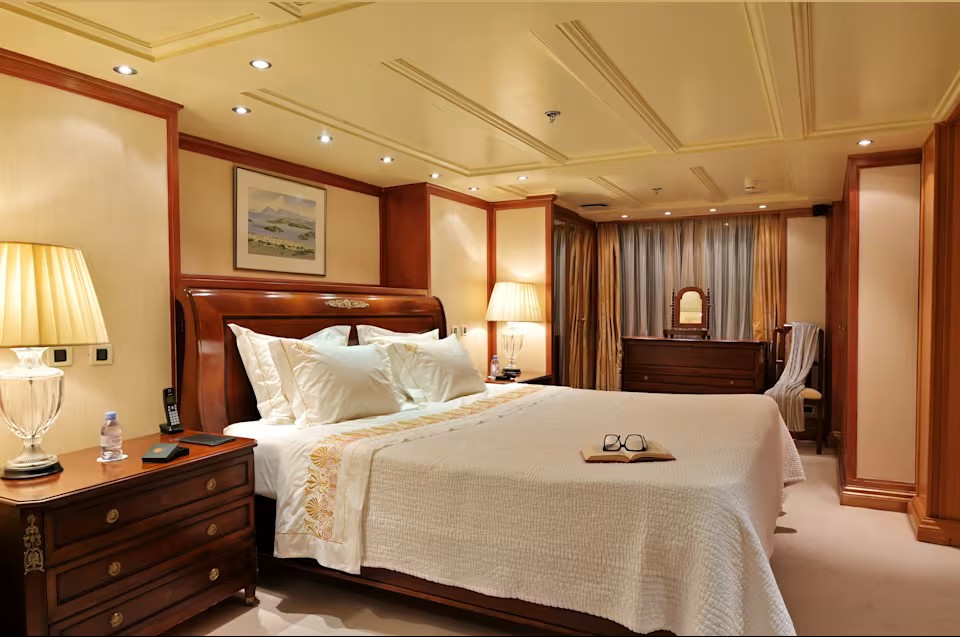
The Aristotle Onassis suite.
The crowning glory is Onassis's master suite, clad in Venetian stucco and spanning a full 75 square meters.
The heart of the ship is the dining room, where magnificent parties were once held. Now the allure remains in the furnishings, with hand-finished tables, Venetian lace tablecloths and a recessed marble floor. But the crowning glory is on deck, home to the spectacular swimming pool with its artistic mosaic floor, so beloved by the Onassises.
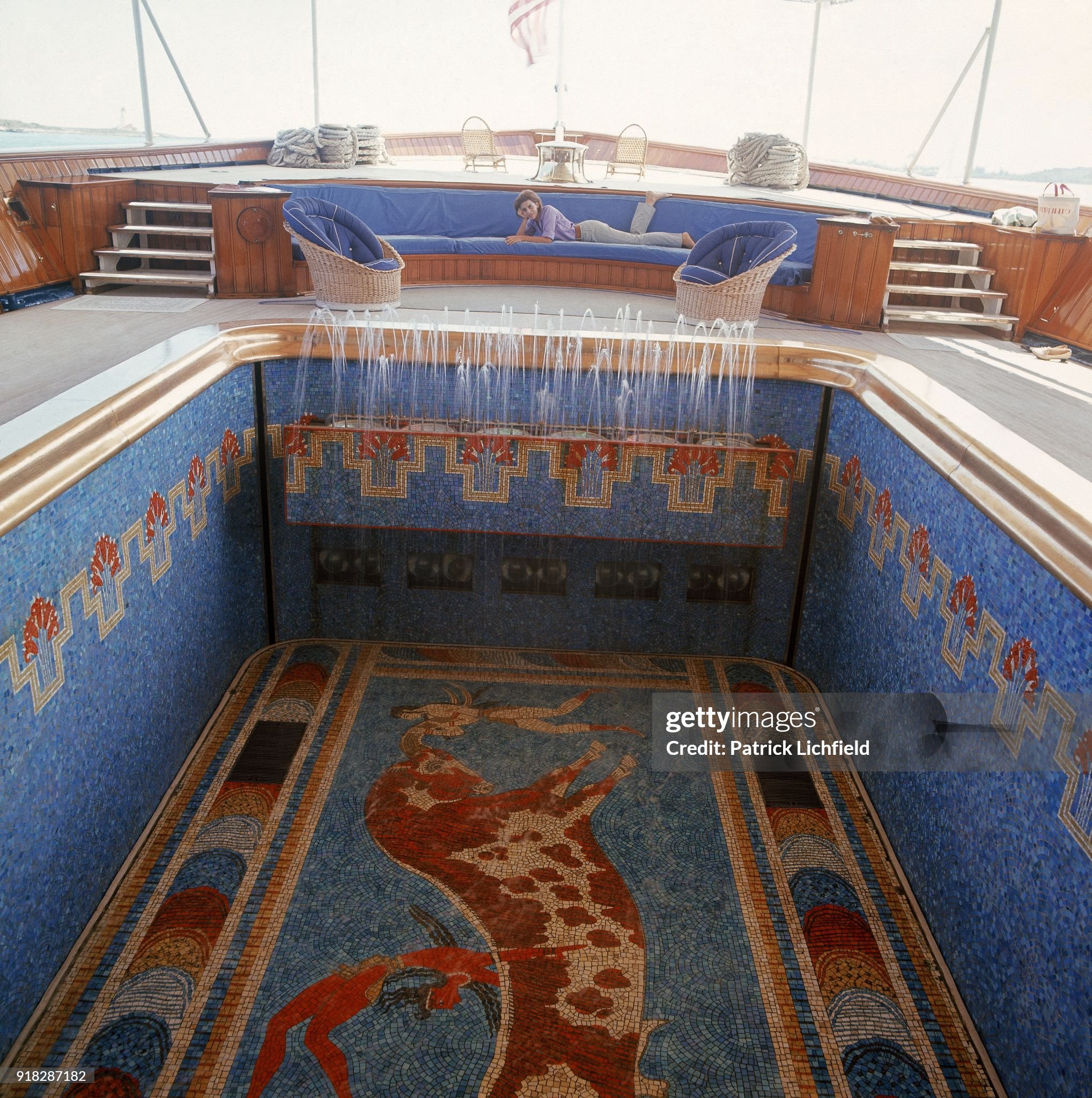
Aboard Aristotle Onassis's yacht, the ‘Christina’, Christina Onassis lays on a large couch in the sitting area above the mosaic swimming pool with waterwall and Greek designs, including a copy of the Toreador Fresco from Knossos. Photo by Patrick Lichfield / Condé Nast via Getty Images.
Then as now, at the push of a button, it transforms into an open-air dance floor, once the setting for the world's most exclusive parties.
The untold story of Christina O’. By Capital yachting on November 22, 2024.
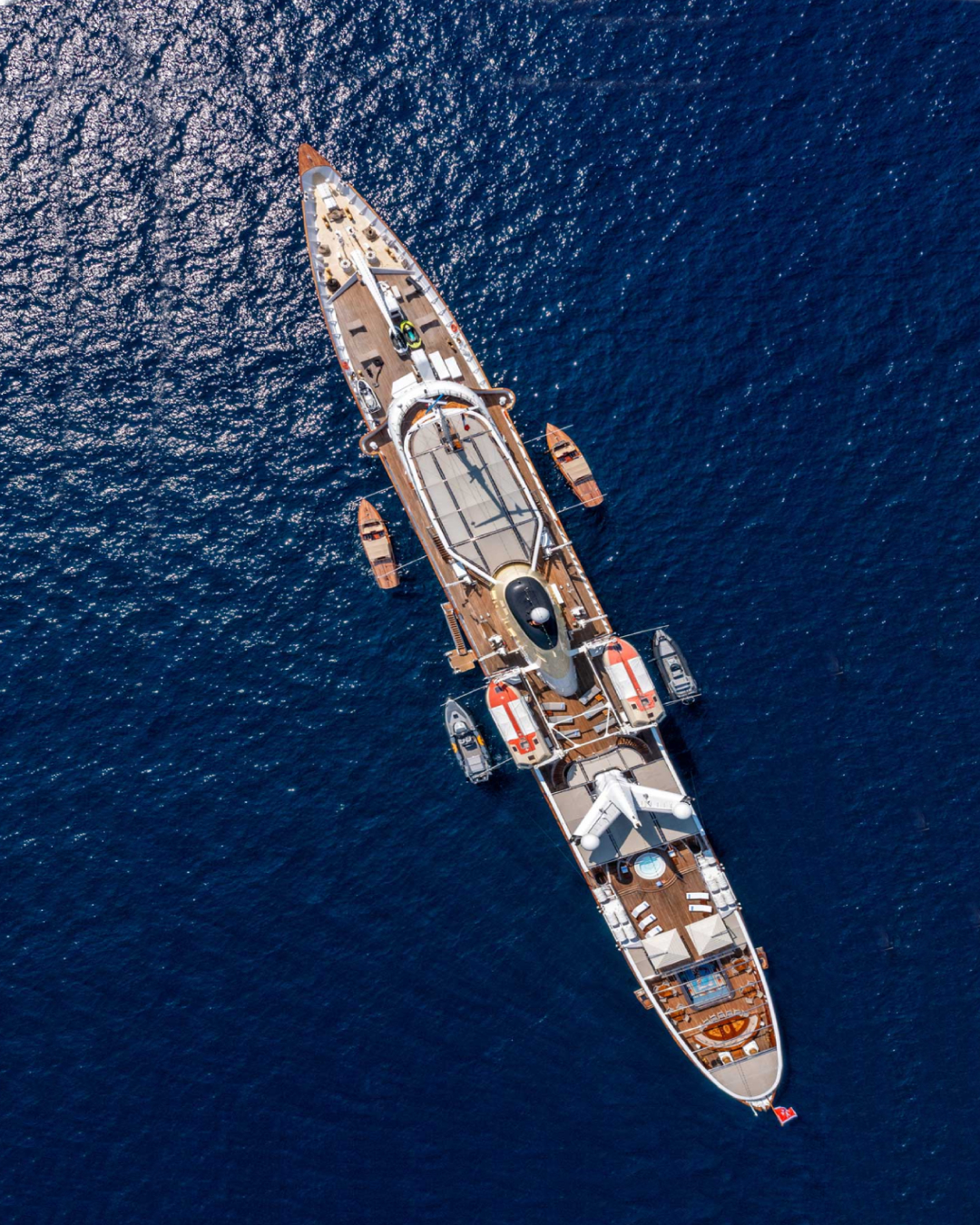
The Christina O’.
‘Big John’ Papanicolaou, the Greek businessman who rescued Aristotle Onassis’s fabled yacht Christina (renamed Christina O’), was a cigar-chomping, bear-like figure of a man with sharp-as-tacks intelligence matched only by his impatience. “I knew working for him on this boat would be a challenge”, recounts Costas Carabelas, the Greek naval architect who took on the design and management of the 18-month rebuild, which began 25 years ago in 1999. “I just didn’t appreciate how much.” Carabelas would suffer a heart attack because of the ordeal, but lives to tell the tale – here, for the first time. Papanicolaou, hereinafter Big John, died in 2010, aged just 60.
Christina was just as unique and rule-breaking as her first owner, who’d acquired the vessel half a century earlier.
Shipping magnate Onassis had started out as a refugee in Buenos Aires and rose to become the richest man on the planet – and owner of the world’s most famous luxury yacht. The 99-metre was designed by the brilliant, controversial German Caesar Pinnau to offer otherworldly levels of opulence.
One anecdote serves to showcase the yacht’s significance. In 1959, Onassis invited aboard Sir Winston Churchill, opera singer Maria Callas (soon to become Onassis’s mistress), John F Kennedy and Kennedy’s wife, Jackie (later to become Onassis’s wife). Upon his death 16 years later, he left the boat to Jackie and his daughter, Christina, providing for $500,000 in annual upkeep of the vessel. The two women fell out and the boat was gifted to the Greek state, then abandoned, submerged, at a Greek naval base off the coast near Piraeus – which is where Big John found her.
Despite her demise, Christina’s legacy had lived on – among other ways, in the tans, sunglasses, espadrilles and similar accoutrements that set the trend for the superyacht lifestyle we now know. Alert to such shifts, Big John predicted a growth in the industry and the desire for bigger and bigger boats. “He’d say, ‘forget about passenger, cargo or container ships; focus on yachts’”, recalls Carabelas. Rescuing Christina was an ambitious project – the ‘Rubik’s cube’ that the rebuild came to represent didn’t just result from Big John’s force of personality and unending interventions in the project.
His vision was to scale up the accommodation from 24 to 34 guests and the number of suites from 10 (including the owner’s) to 17 – all in an era (the 1990s) when boats rarely exceeded five cabins and 50 metres and all in a narrow hull first built for speed. Providing for the extra facilities (seating, galleys, escape routes and other regulatory requirements), while keeping the yacht true to Onassis’s original vision, would, at times, seem Sisyphean.
Informed sources put the cost of the rebuild above $40 million (£31 million) – significantly more than the inflation-adjusted amount ($25 million) Onassis spent in 1953 ($4 million), converting the original Canadian frigate that he’d acquired after the Second World War for around just $30,000. Ingrained in the Greek ship-owning psyche was this ethos of repurposing secondhand vessels and it was an ethos that Big John made good use of, as a hedge against the daunting financial costs: go after famous, even infamous yachts, whose renown or notoriety could take care of the marketing. It was a bold bet, but he was used to placing those.
Big John was an ex-ship owner himself and a significant real estate player with contacts in Montenegrin casino operations. He acquired the 117-metre ‘Galeb’, previously owned by Yugoslavian President Tito, from the Montenegrin government. Another adventure took him and Carabelas to Nice, to buy ‘Basrah Breeze’, Saddam Hussein’s old boat. Yet Christina was the biggest prize. “What you have to understand is that Onassis had showed Greek people what was possible”, says Carabelas. “He proved to us that we could be people of consequence on the world stage. His one famous rule was that there were no rules and, without him and his audacity, the Greek shipping industry might be a third of what it is today.” ‘Christina’, named after the celebrated man’s daughter, projected all this and more. Perhaps Big John hoped that some of Onassis’s Midas touch might rub off on him.
Whereas Carabelas had revered Onassis and his famous yacht from afar, Big John knew both. He in fact came from Greek aristocracy; his parents had worked for the Greek royal family and his father was friendly with Onassis. As a young boy, he had been aboard. He knew Ari’s Bar and the barstools fashioned from whale scrotum. He knew the lounges in which Callas had sung, the library in which Churchill had read and snoozed, the mosaic swimming pool that shapeshifted into a dance floor and the movements of the other heads of state and celebrities who’d been there (Garbo, Monroe, Wayne, Sinatra, Burton, Taylor and on).
He knew Christina’s secrets, shape and feel; the disposition of her many tenders (including a glass-bottomed boat and a hydrofoil, not to forget the seaplane), the Aegean views from the aft deck at sunset and the gleaming, mythic interior details. For Big John, this project was business and personal.
Following Onassis’s death and the boat’s abandonment, scavengers targeted its ornaments, for example the gold used for maps embossing the cabin doors, with each map depicting a Greek island after which the cabin was named. “Thankfully, the looters didn’t appreciate the historic value of some of the other interiors such as Ari’s Bar and overlooked those”, says Carabelas.
The yacht’s sorry condition helped deter other serious suitors, facilitating Big John’s acquisition of her in 1998 as part of an investor consortium. “When John called asking me to work on her, it was both a dream and nightmare scenario”, Carabelas says. Just how problematic the project would become was soon revealed. Cleaning the hull with high-pressure hoses opened up two enormous cavities in the steel. Ultrasonic testing of the plating suggested that 65 per cent of the hull needed replacing, rather than the 20 per cent originally predicted. This meant that instead of dry docking the boat for 60 days as anticipated, she would spend 345 days there. Ultimately, 630 tonnes of new steel and 95 tonnes of aluminium would be needed.
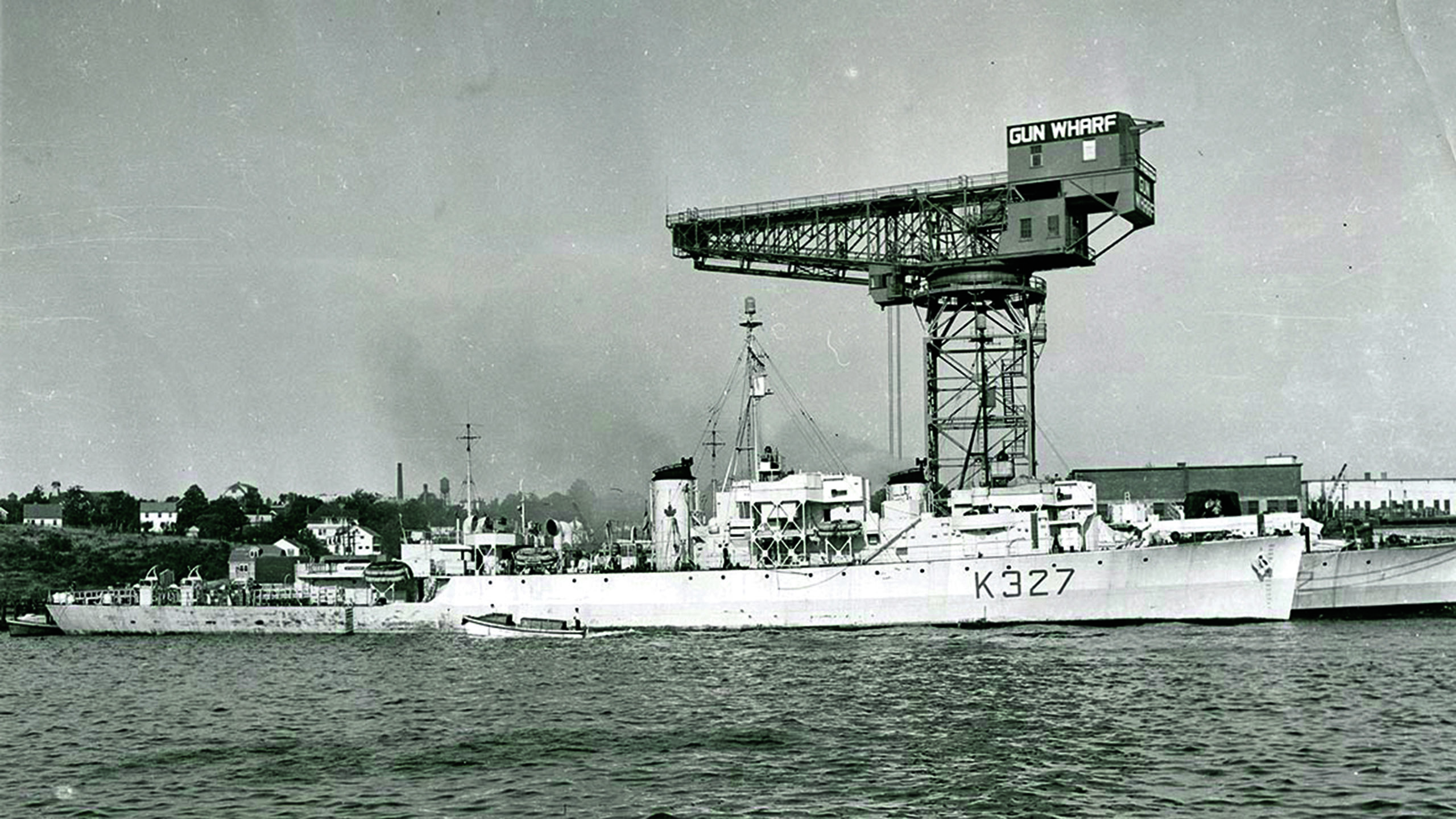
The HMCS Stormont.
HMCS Stormont
Canadian anti-submarine river-class frigate HMCS Stormont launched. The vessel served in the Second World War, including as a convoy escort during the Battle of the Atlantic.
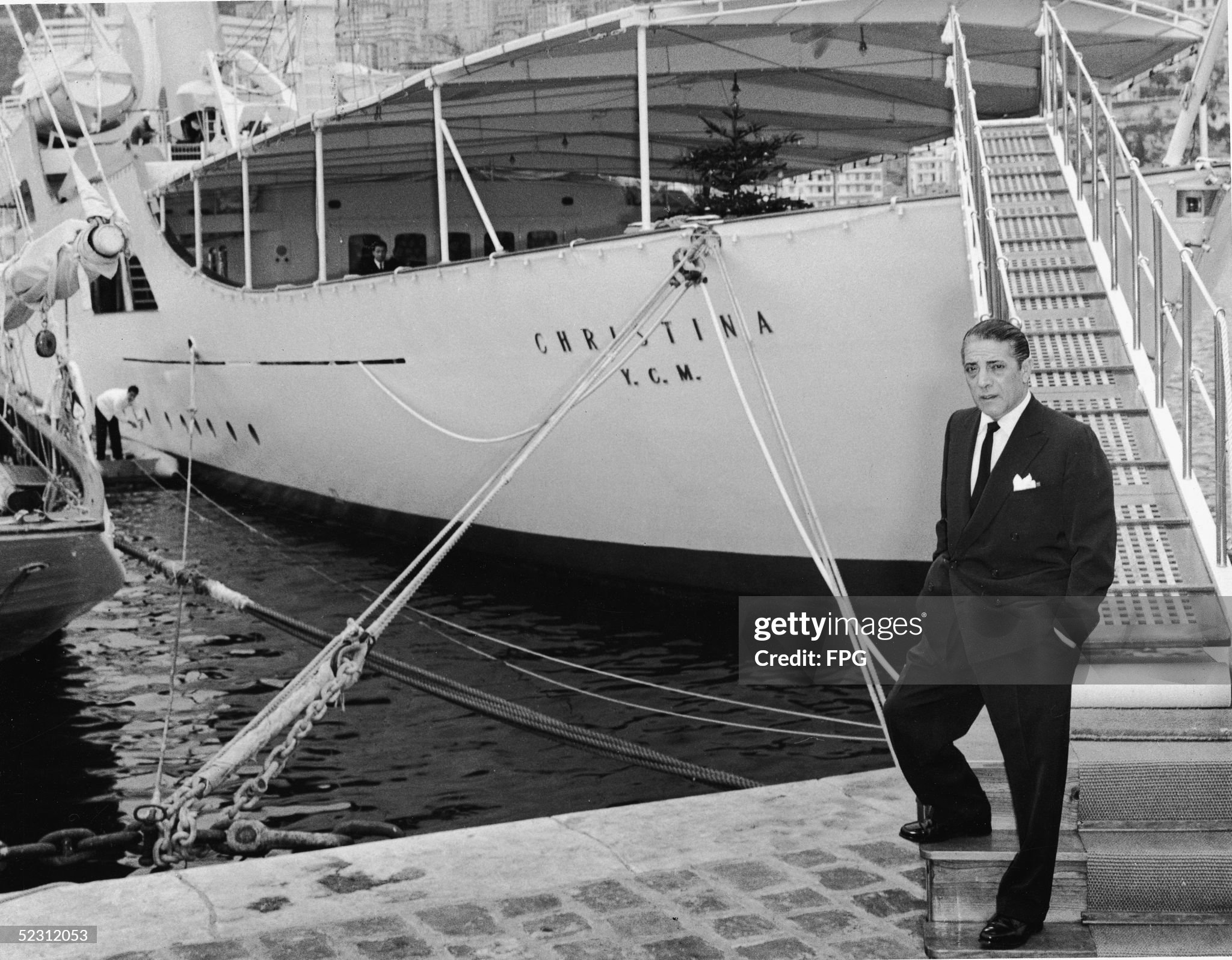
Greek shipping magnate Aristotle Onassis (1906 - 1975) stands on a dock in front of his private yacht, the 'Christina', in mid 1950s. Photo by FPG / Getty Images.
Aristotle Onassis
Aristotle Onassis bought the ship after the end of the Second World War as naval surplus, at a scrap value of $34,000. The boat was remodelled by architect Caesar Pinnau and named Christina.
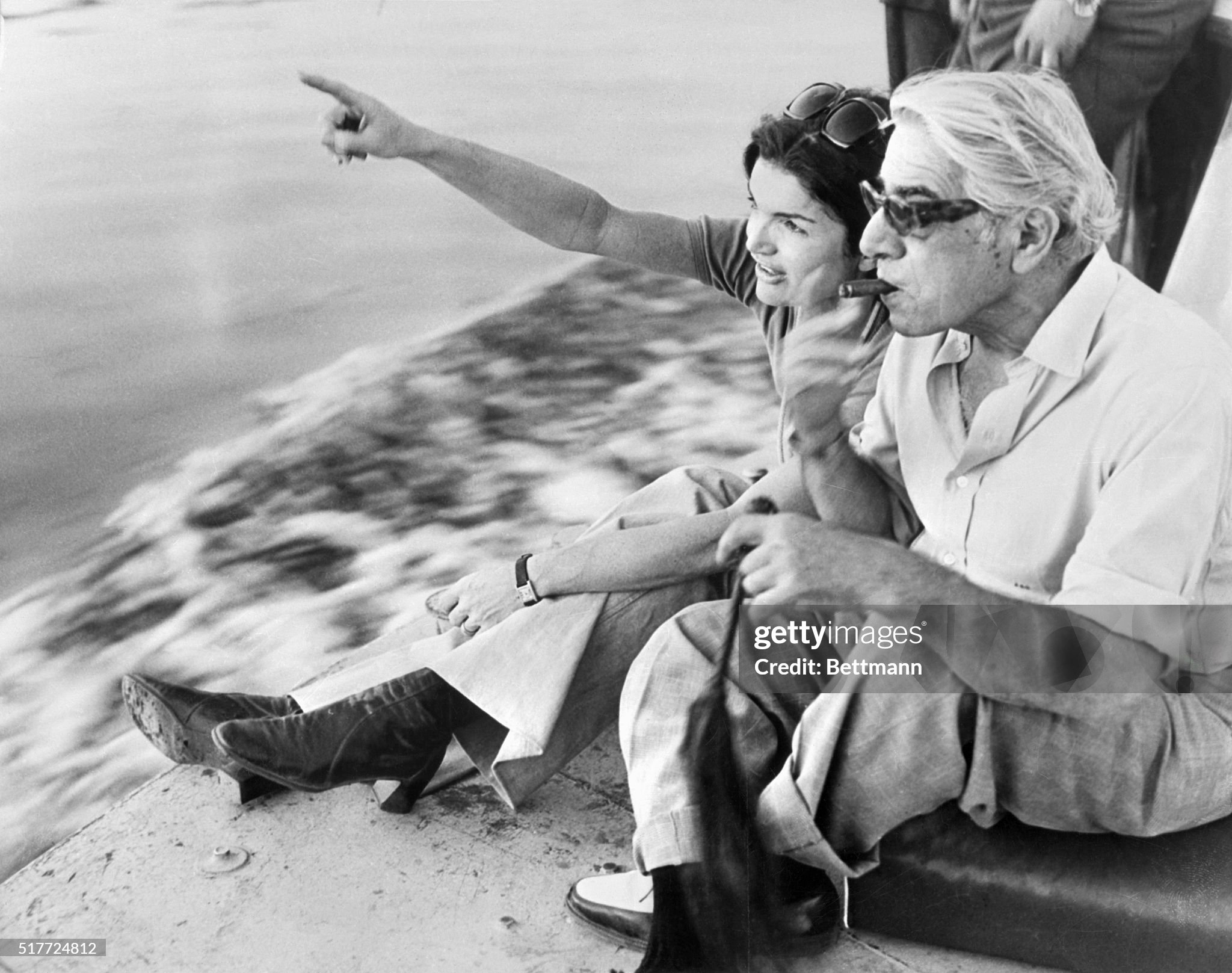
Jacqueline Kennedy Onassis and a cigar-smoking Aristotle Onassis relax along a river during their 10-day tour of Egypt on 28 March 1974.
Christina and Jackie Onassis
Onassis died and left the yacht to his daughter Christina and second wife Jackie Kennedy Onassis. If neither were interested it would be turned over to the Greek government to serve as a presidential yacht.
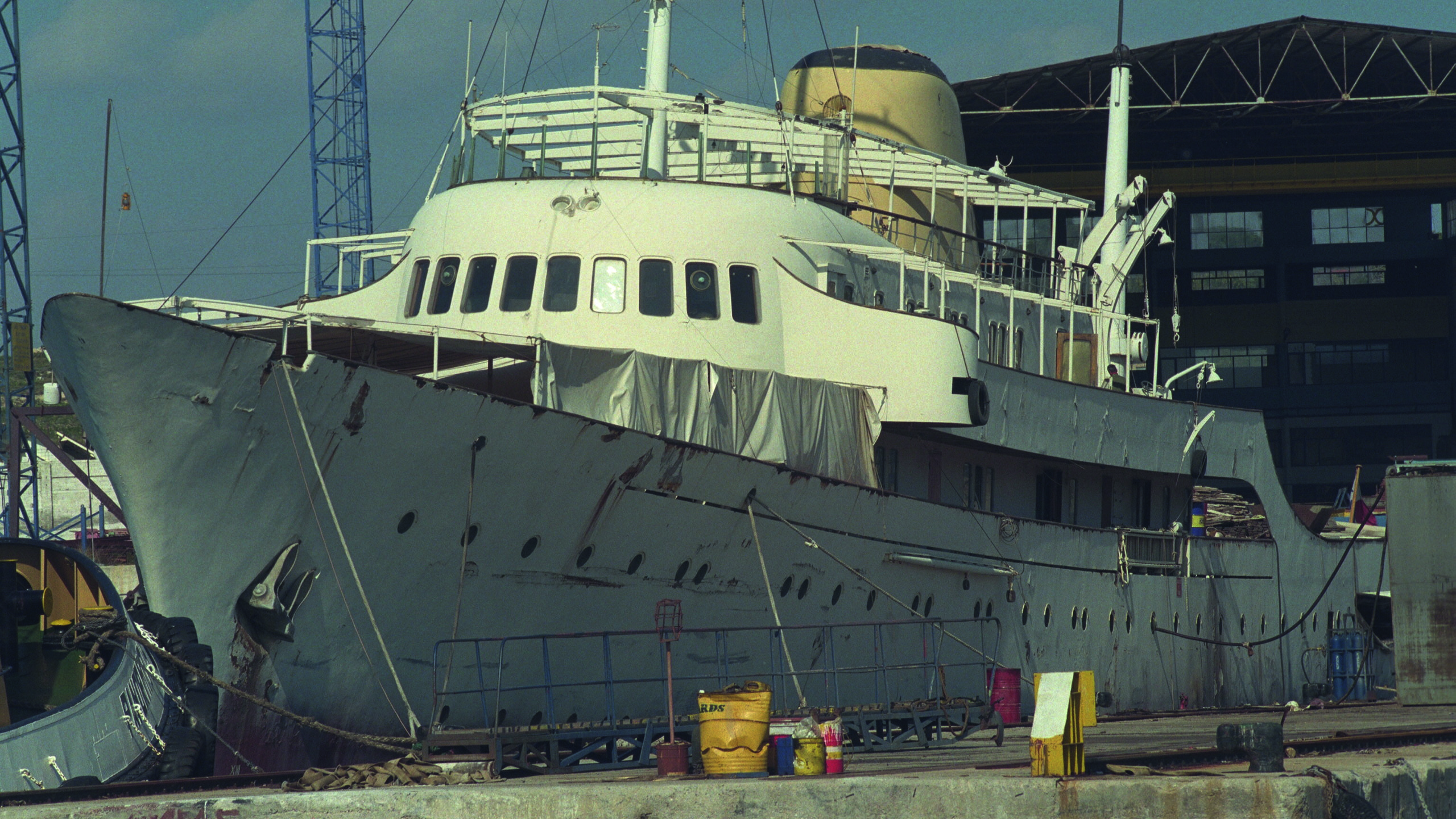
‘Argo’
Both women declined the inheritance. The Greek government changed the vessel’s name to ‘Argo’, but allowed it to decay. It was put up for sale at $16 million in the early 1990s, but it didn’t sell.
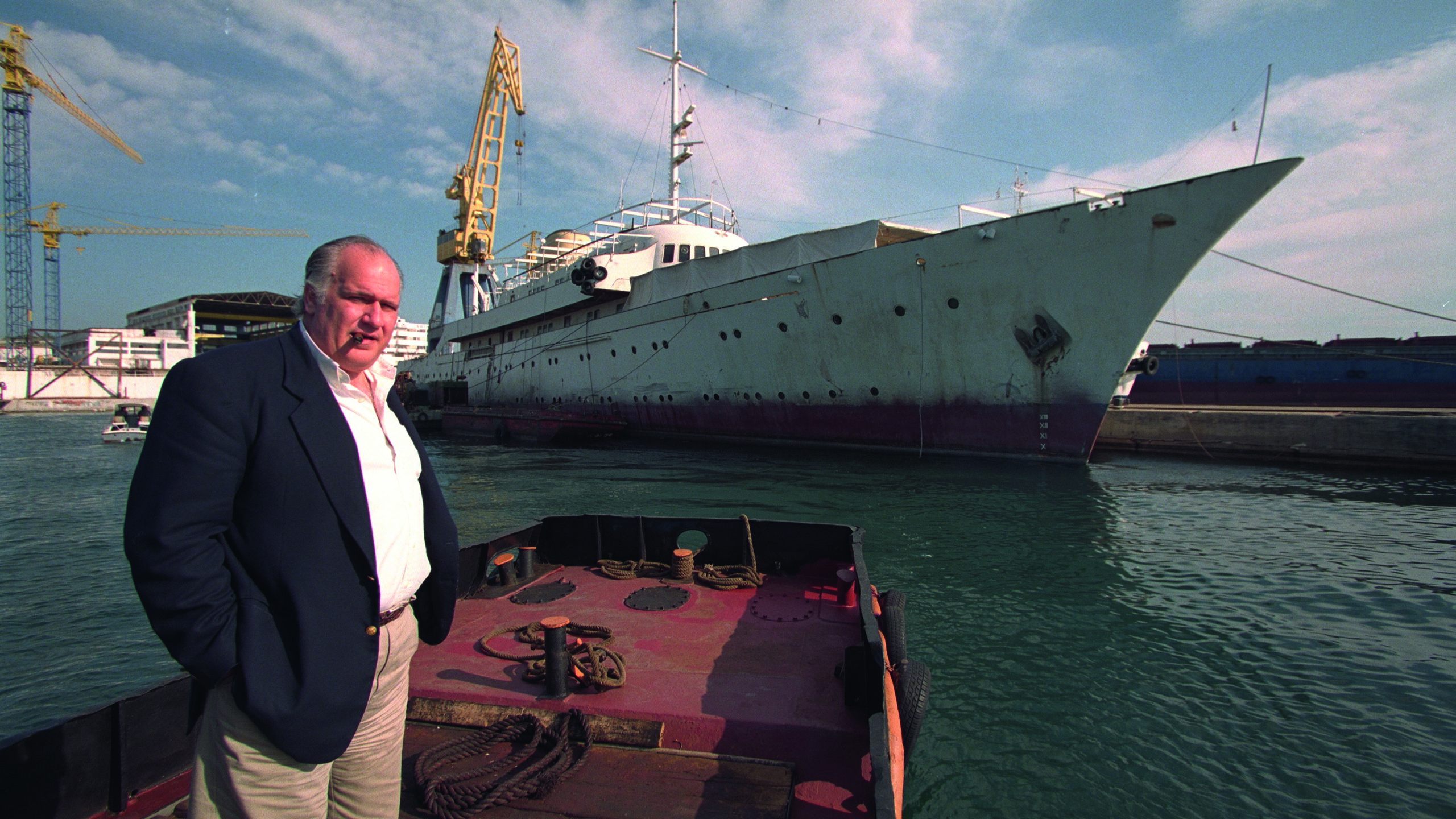
John Paul Papanicolaou.
John Paul Papanicolaou
The vessel was purchased in a government-sponsored auction by Greek shipping magnate John Paul Papanicolaou, an Onassis family friend.
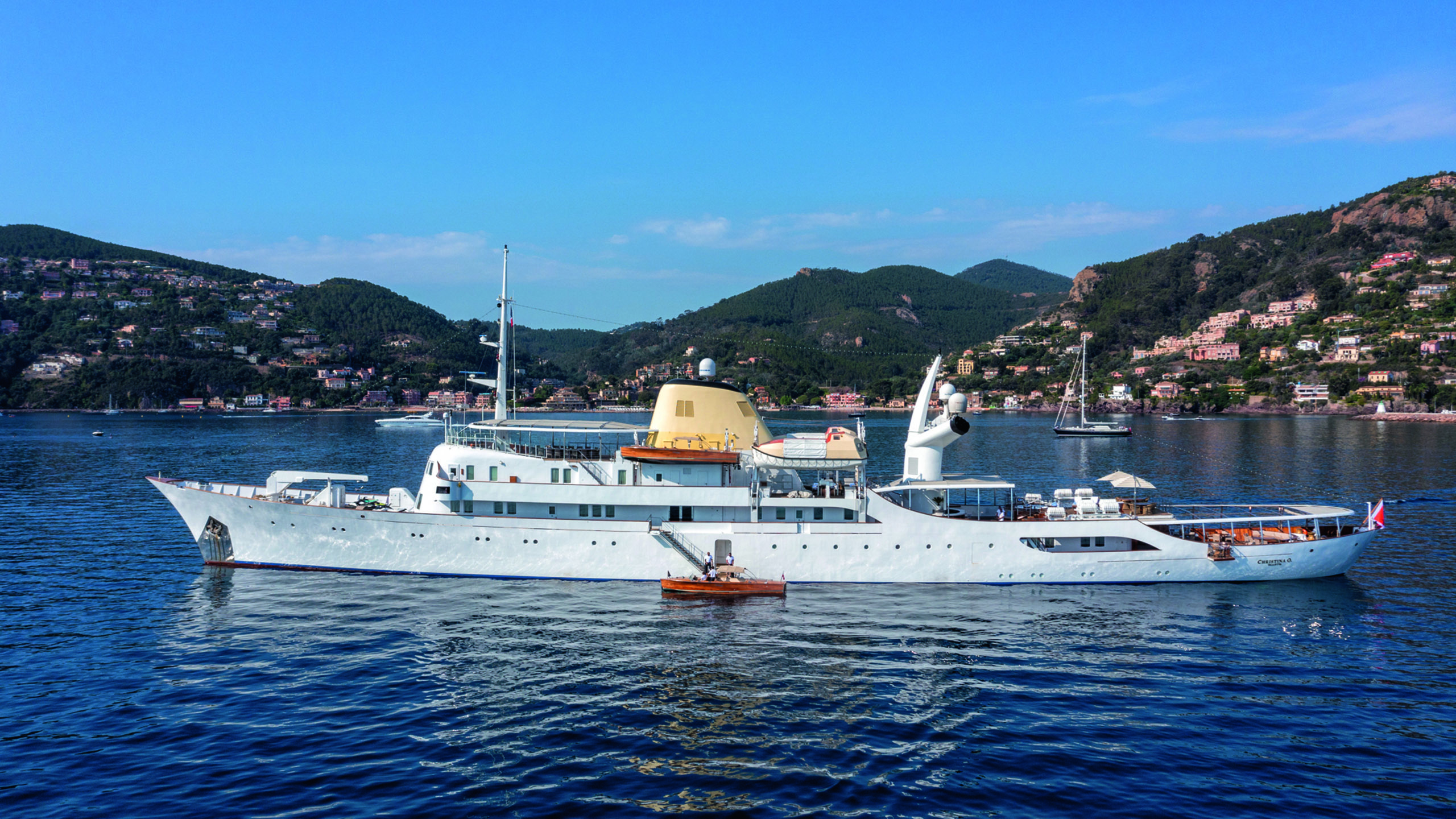
The Christina O’.
Christina O'
The rebuild began at the Viktor Lenac shipyard in Croatia and ‘Argo’ became ‘Christina O’. Papanicolaou added the “O” in tribute to Onassis.
No Greek shipyard was available for 12 consecutive months. Carabelas managed to squeeze the wreck into the Viktor Lenac shipyard in Rijeka, Croatia. “We ended up keeping just two metres of the hull at the fore and aft”, Carabelas says. “Even there, the sunk rivets of the wartime frigate needed special protection and treatment, meaning that many times the amount of work and replacement cost were spent saving those fragments [versus starting anew with them].” All pipework, cables, electrical systems and plumbing needed replacing. An estimated 90 kilometres of new wiring and 14 tonnes of pipework went in.
It soon evoked the ship of Theseus and the paradox of identity: if all the parts of a vessel are replaced, one by one, when is it new again and not original? Was the historic ‘Christina’ destined to slip away, after all, in this fashion? Big John thought he had an answer both to this paradox and the gathering sense of crisis. Carabelas recalls being sat down by Big John, who laid out old photos of the interiors, dating to the golden years of the boat, stipulating: “I want the interiors reinstated to be the same. Exactly the same”, he emphasised, thumping a black-and-white photo with his stout forefinger.
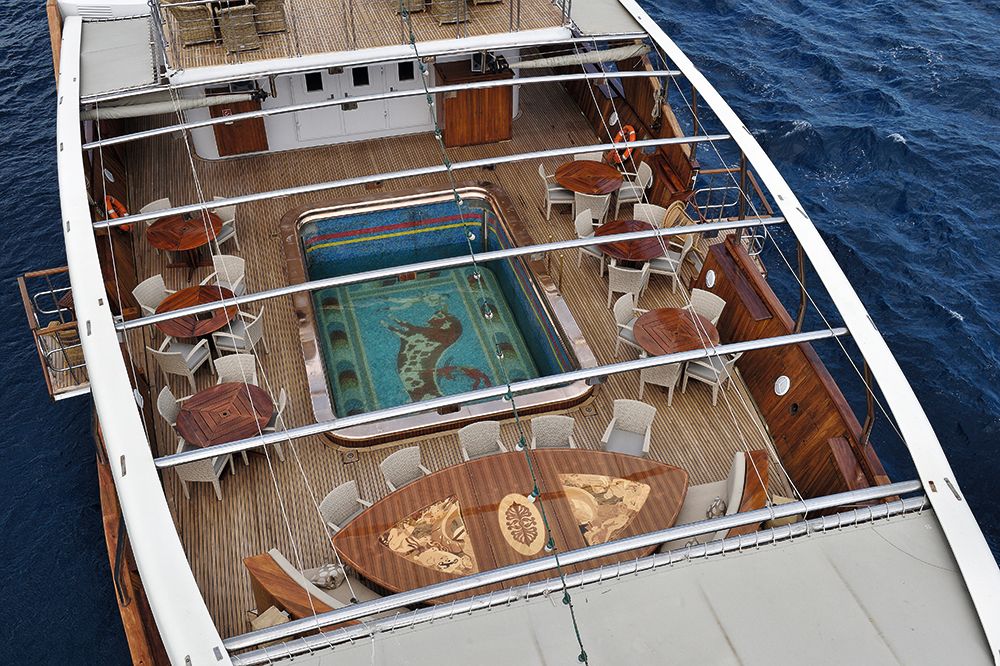
The Christina O’.
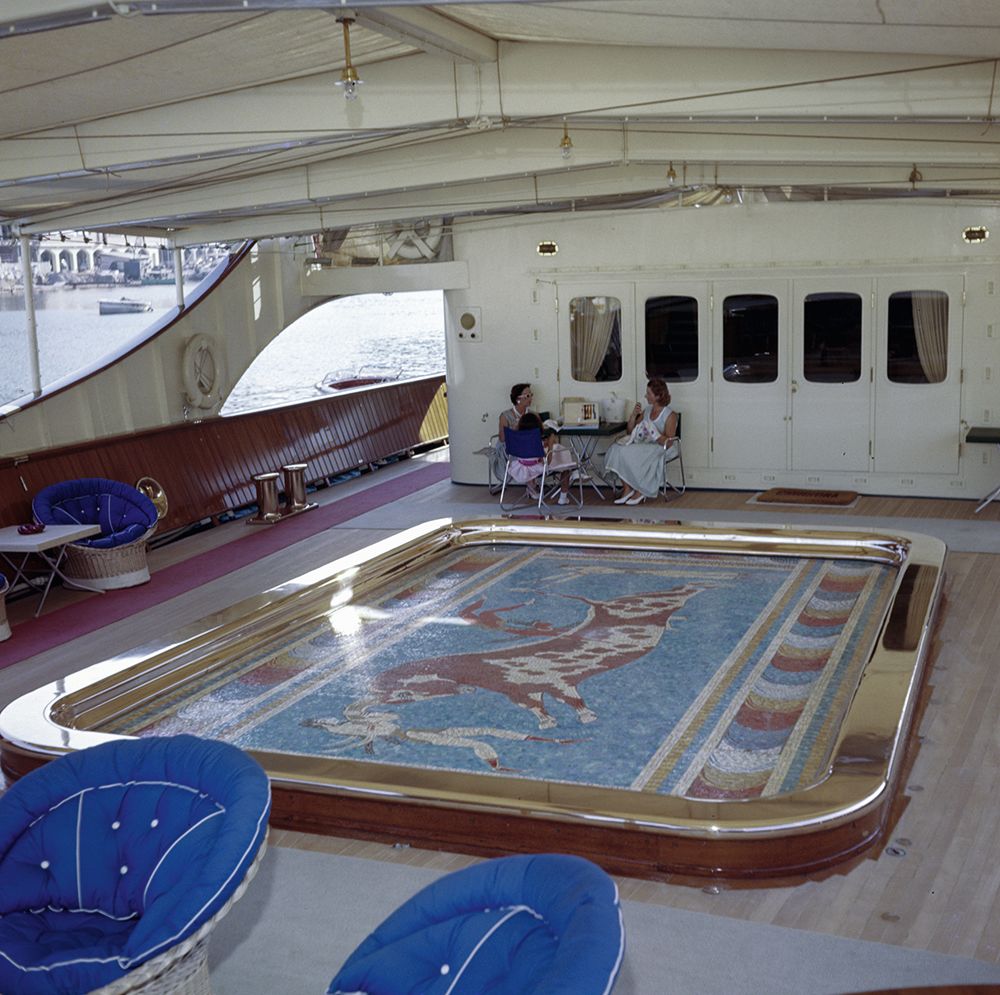
The Christina O’.
Apostolos Molindris, the renowned Greek architect, was appointed to devise a general arrangement or master plan that could reconcile the dizzying array of requirements, both aesthetic and functional. Big John, Carabelas and Molindris became the three -pronged trident pushing the project on. But Molindris was surprised by what he found. “In reality, John didn’t have that many photos, so we started doing picture research on the Onassis years using back copies of Life and the like”, Molindris explains. “What we were finding didn’t entirely marry up with the legend of the yacht.”
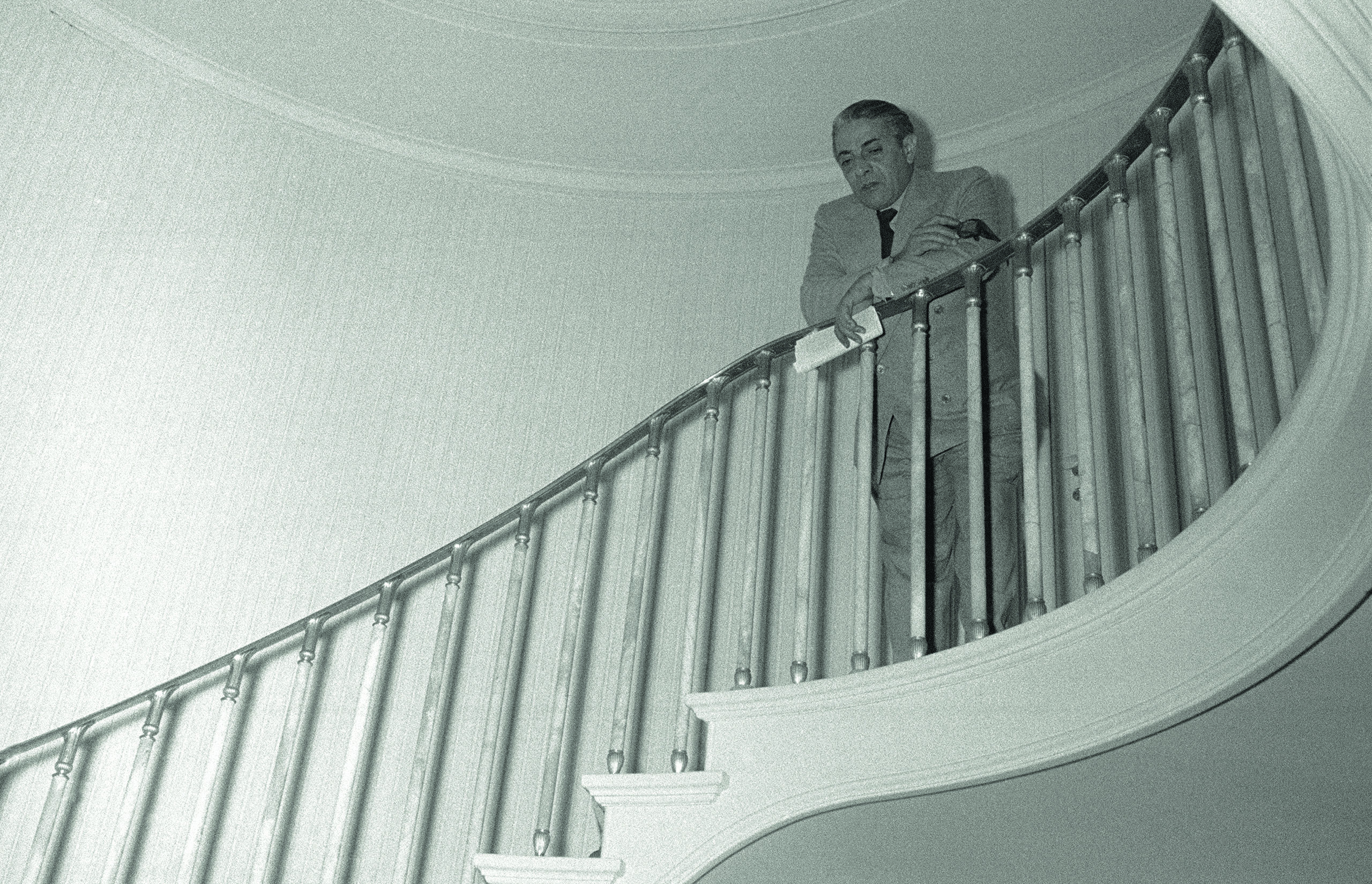
Aristotle Onassis at the top of the internal stairs of his yacht Christina.
Everyone knew the lore of ‘Christina’, or thought they did. At the centre of it was the mythic extravagance of the Onassis years and the intensely proprietorial approach of the owner himself. “You could smash a $20,000 speedboat to pieces and not a word would be said”, a crew member recalled, “but spit on the Christina’s deck and you were out of a job.”
Christina O’. Buyer sought for Onassis' yacht. By Sören Gehlhaus on 18 March 2025.
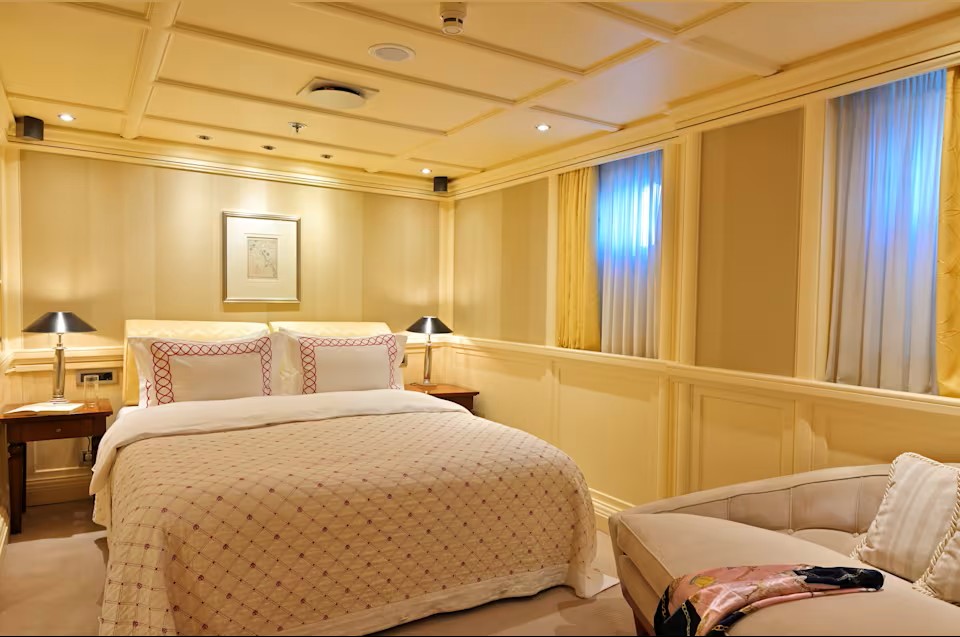
The interior of one of the bedroomes of the 'Christina'. Photo by Getty Images.
Probably no other motor yacht has experienced more than Christina O’. Aristotle Onassis celebrated the opulence of the whale skin leather interior and invited Churchill, JFK and Callas on board. In its second life as a charter vehicle, the 99 metres experienced Heid Klum's wedding and major film shoots. Now the icon is up for sale.
Even today, she is a symbol of yachting on a grand scale, of opulence and the eccentricity of her owner. Christina - she only became Christina O’ after a general overhaul almost 30 years ago - was Aristotle Onassis' 99-metre-long calling card and signalled wealth, power and social recognition to the world. Actually, the value of Christina O’ cannot be translated into monetary terms. During the 21 years in which the Greek owner ran her, history was written on the teak deck and amidst the classic wood-panelled walls and the yachting lifestyle was indulged in - with everything that goes with it. Even after his marriage to Jackie Kennedy, ‘Ari’ continued to invite his lover Maria Callas on board.
‘Ari’ got them all on board
Sir Winston Churchill holidayed on ‘Christina’ nine times and met John F. Kennedy there in 1959, with whom he discussed his presidential ambitions.
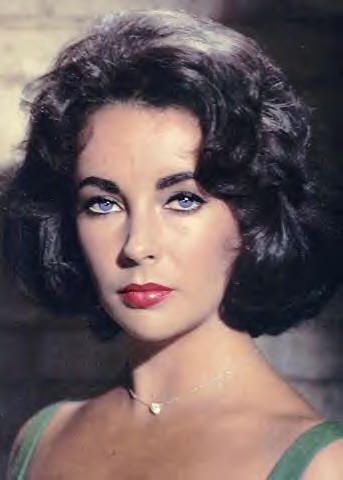
Elizabeth Taylor.
Five years after the assassination of JFK, Jackie Kennedy married Onassis and Hollywood's A-list arrived: Greta Garbo, Marilyn Monroe, John Wayne, Frank Sinatra, Elizabeth Taylor - they were all there and enjoyed life on board, which included the legendary pool.
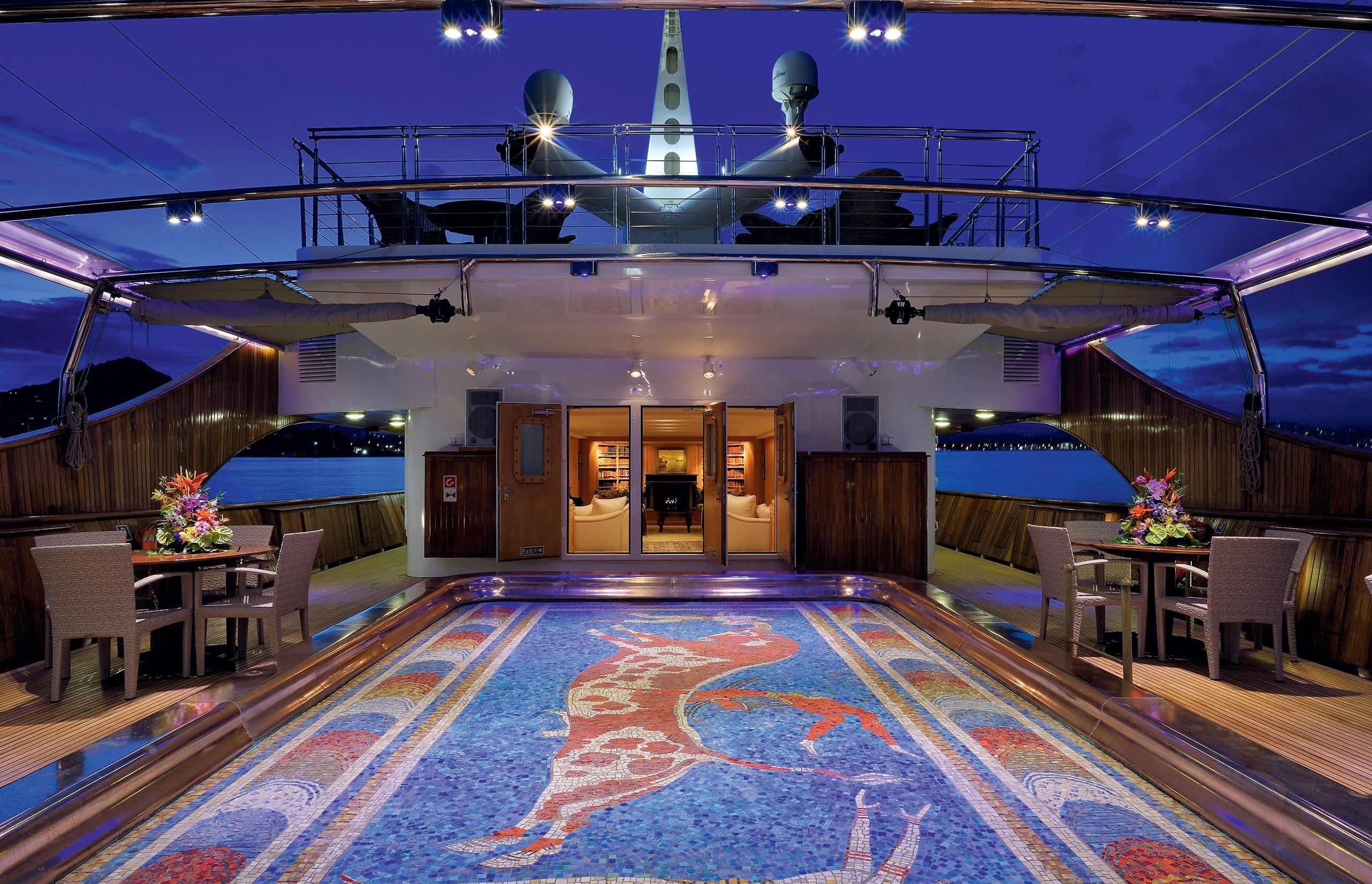
The pool with a movable floor and a Minoan-style mosaic.
The pool, which was huge by the standards of the time with a movable floor and a Minoan-style mosaic, is largely in its original condition. The luffing crane, which for a long time moved Onassis' Fiat 500 with an open roof and his seaplane (Piaggio P136), had to make way. A sailing yacht was also parked amidships on the upper deck, where a Jacuzzi and outdoor bar now punctuate the teak deck.
Heidi and Woody on Christina O’
During the shipyard stay at the end of the 1990s, the hull was rebuilt, with hardly a single sheet of steel left next to the other. On the other hand, the exterior designed by Hamburg architect Caesar Pinnau, including the classic chimney and the curved bridge docks, was handled with care. However, the switch from triple-expansion steam engines to diesel engines resulted in an additional mast with splayed arms for the tailpipes. Behind it, Heidi Klum gave Tom Kaulitz her word of honour in front of Capri in August 2019.
The couple had chartered Christina O’, which currently costs 700,000 to 740,000 euros per week. For events on the coast, 157 people can populate the decks. The Onassis suite and 16 cabins, named after Greek islands and decorated in the pastel colours originally chosen by Jackie O, are available for up to 34 guests. After Heidi Klum's wedding, the icon with the distinctive canoe tail attracted attention in the film ‘Triangle of sadness’ with Woody Harrelson as the captain. The Monegasque brokerage house Morley Yachts, which lists Christina O’ in its sales portfolio at 90 million euros, is taking enquiries. A justifiably proud price for an over 80-year-old grand dame of yachting.
Marianne Nissen, founder, editor-in-chief and now publisher of Boote Exclusiv, has accompanied Christina’ since the magazine's keel was laid in 1988. In her comprehensive and amusing article on the history of superyachts wrote Nissen: “she made the start: 99 metres long, immaculate and elegant. Christina’ was christened in 1954 in the still dreary post-war Kiel. The tanker king Aristotle Onassis had converted a decommissioned Canadian frigate, which he bought for scrap, into the first superyacht of the post-war era. Regardless of the cost, Howaldtswerke got the job - just five years after the reconstruction of the shipyard, which had been destroyed by bombs, began.”
Named after her godmother, his three-year-old daughter, Christina was to be the ultimate yacht for decades, unrivalled in size and furnishings, present in the headlines, the epitome of extravagance, glamour and the elite lifestyle of the international jet set. Paparazzi shots of prominent guests on board went through the yellow press: Winston Churchill, Greta Garbo, Elizabeth Taylor with Richard Burton, Grace Kelly and Rainier and, of course, Ari's mistress Maria Callas and his wife Jackie Kennedy. They all emphasised the status of the shipping giant.
Onassis proved his taste, the harmonious exterior in the New Look of the 1950s and the interior were the responsibility of the stylish Hamburg villa architect Caesar Pinnau. The mosaic in the pool, which was raised to form a dance floor, was spectacular. Onassis had a more decadent romp below deck: he had handrails and coat hooks carved from the teeth of orcas and at the famous bar made from the wood of a sunken Spanish galleon, people sat on stools covered in whale skin - something the owner of the house was said to have been keen to point out.
We have Christina to thank for all the banal clichés that yachting still lives with today. Onassis wrote the script. His shipowner rival Stavros Niarchos could not stand this unique position and built the 116 metre long ‘Atlantis’ at his Hellenic shipyard in 1973, also hiring Caesar Pinnau.
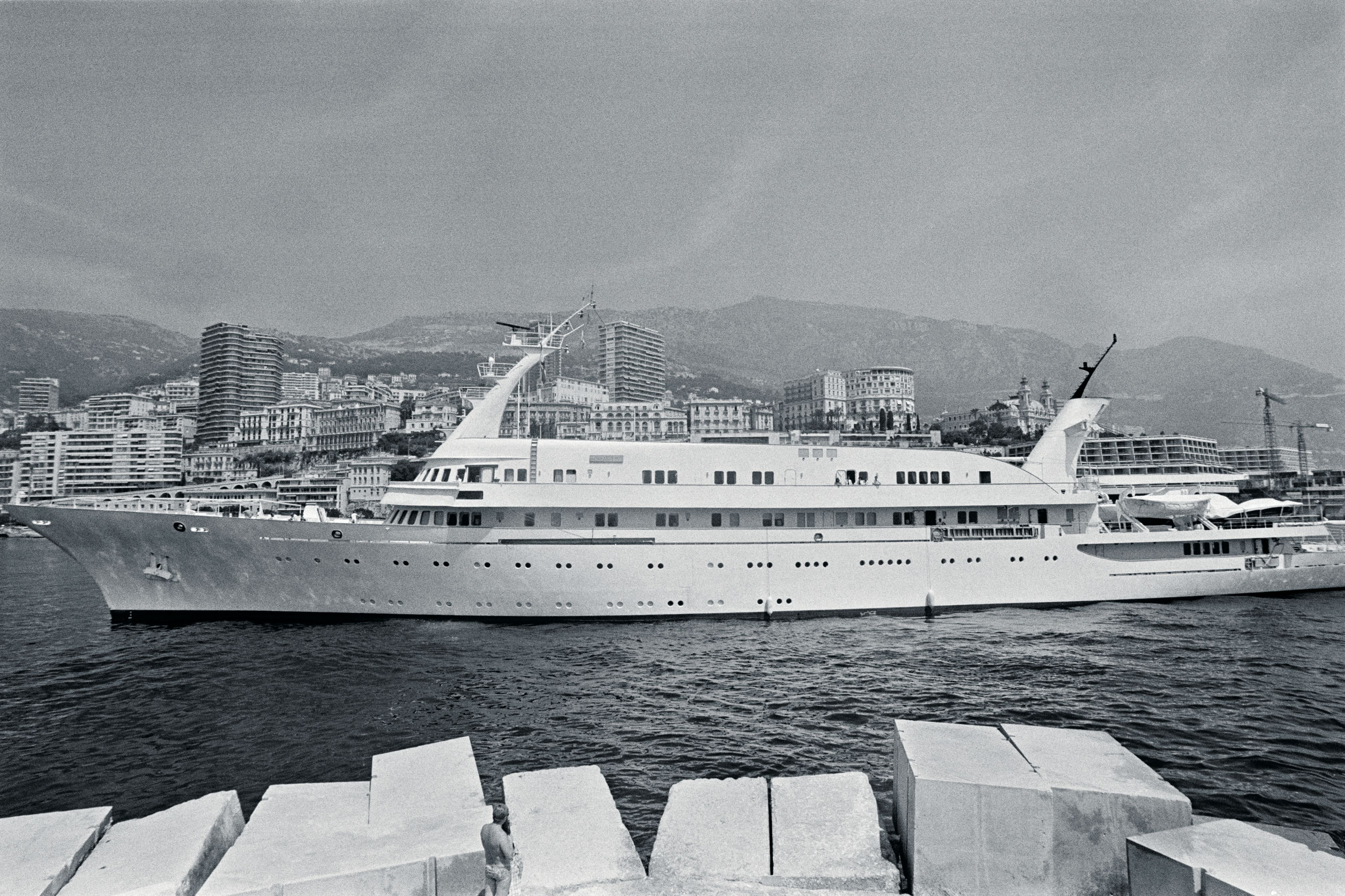
Stavros Niarchos's yacht ‘Atlantis’ mooring in the port of Monaco on July 04, 1977. Photo by James Andanson / Sygma via Getty Images.
But Niarchos never mastered the performance of ‘Ari’ and for years his yacht, like her successor ‘Atlantis II’, lay immobile in Monaco's Port Hercule.
Moving story of Christina O’
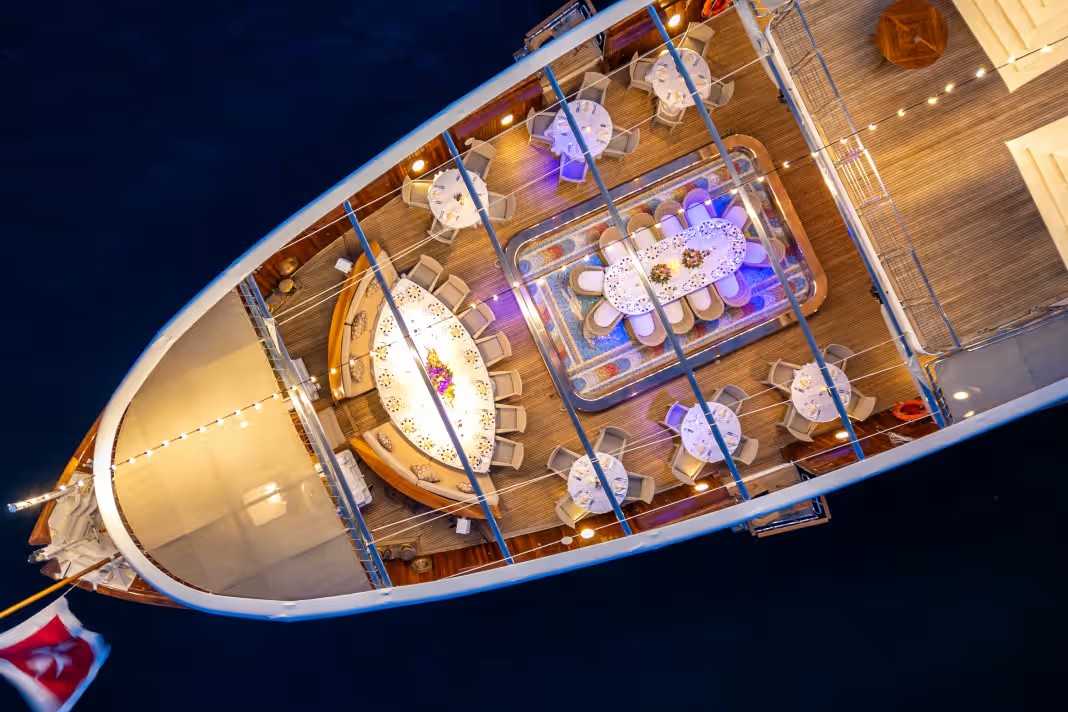
The stern of the Christina O' seen from above.
Tim Morley, broker and custodian of Christina O’, is gradually working through the history of the yacht and has created this timeline:
1943
HMCS Stormont
Launching of the Canadian anti-submarine frigate HMCS Stormont. The ship served in the Second World War, including as a convoy escort during the Battle of the Atlantic.
1953
Aristotle Onassis
The Greek shipowner bought the ship after the end of the Second World War as a naval surplus ship at a scrap value of 34,000 US dollars. The ship was redesigned by the architect Caesar Pinnau and christened ‘Christina’.
1975
Christina and Jackie Onassis
Onassis died and left the yacht to his daughter Christina and his second wife Jackie Kennedy Onassis. If neither of them were interested, the yacht would be handed over to the Greek government and serve as a presidential yacht.
Argo: both women turned down the inheritance. The Greek government changed the name of the ship to Argo, but left it to rot. In the early 1990s, it was put up for sale for 16 million dollars, but it was not sold.
1988
John Paul Papanicolaou
The ship was purchased by the Greek shipping magnate John Paul Papanicolaou, a friend of the Onassis family, at a government-sponsored auction.
1999
Christina O’
The conversion began at the Viktor Lenac shipyard in Croatia and the ‘Argo’ became the Christina O’. Papanicolaou added the ‘O’ as a tribute to Onassis.
06 April 1957: Onassis buys Olympic Airways and the ‘Golden Era’ begins. By Stella Mazonakis on 06 April 2025.
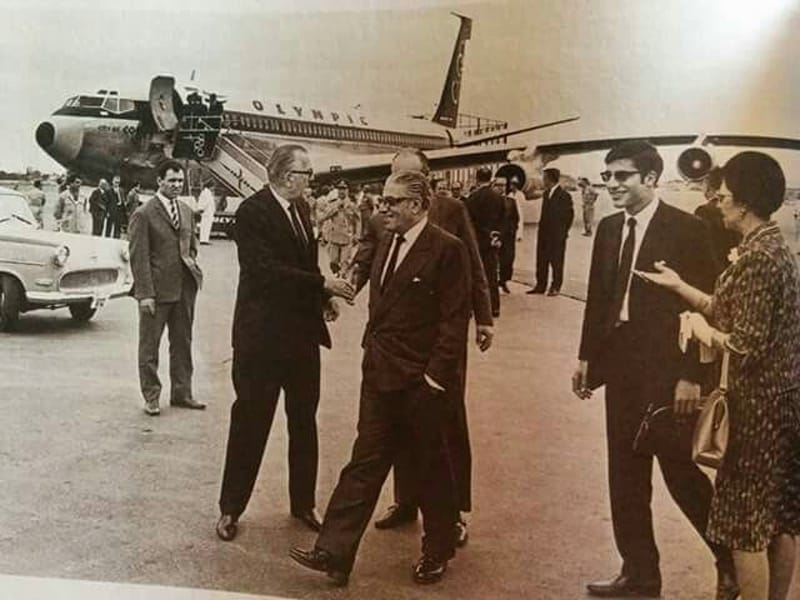
On April 06, 1957 Onassis buys Olympic Airways.
The glory days of aviation in Greece began on April 06, 1957, when Aristotle Onassis purchased Olympic Airways from the Greek state. The company originally began with domestic flights and gradually grew to become one of the largest airline companies connecting Greece with the world.
In July 1956, the Greek State signed an agreement with Onassis, for the exclusive use of air transport in Greece. On April 06, 1957, the company was renamed Olympic Airways, with the first domestic flight starting the same year.
In 1971 a subsidiary airline Olympic Aviation was created to serve the Greek islands on a budget and flights also expanded globally.
In 1972 Olympic also launched new flights in the Greece-Australia market, beginning with Boeing 707–320 operations between Athens and Sydney twice a week via Bangkok and Singapore.
Olympic Airways was always renowned for being a stylish, sleek and luxurious service and its aircrew was without a doubt the best-dressed flight attendants in the world. The cabin service was also second to none, with Onassis ordering his staff to use gold-plated serving ware in both Business and Economy Class. Picture fine porcelain, crystal glassware, along with designer uniforms. This was never before seen and definitely left a mark in aviation history.
Leading fashion designers lined up to dress flight attendants and some of the most modern and vogue cabin crew uniforms of all time were made exclusively for Olympic Airways staff.
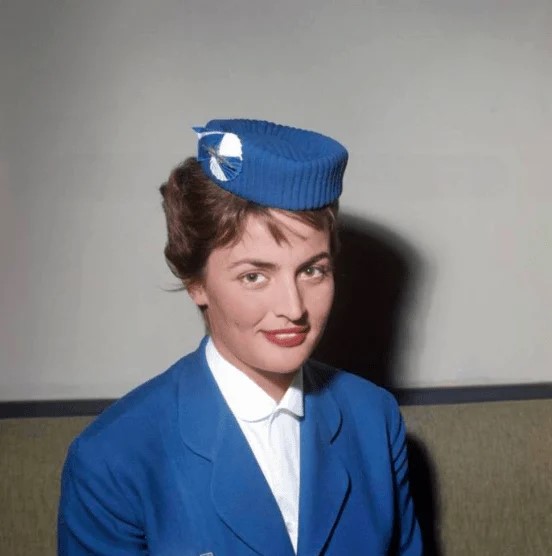
Jean Desses design.
World-leading fashion designer of the ’40s, ’50s and ’60s, Jean Desses, was the first to create a designer outfit for Olympic Airways and this took place between 1957 and 1966.
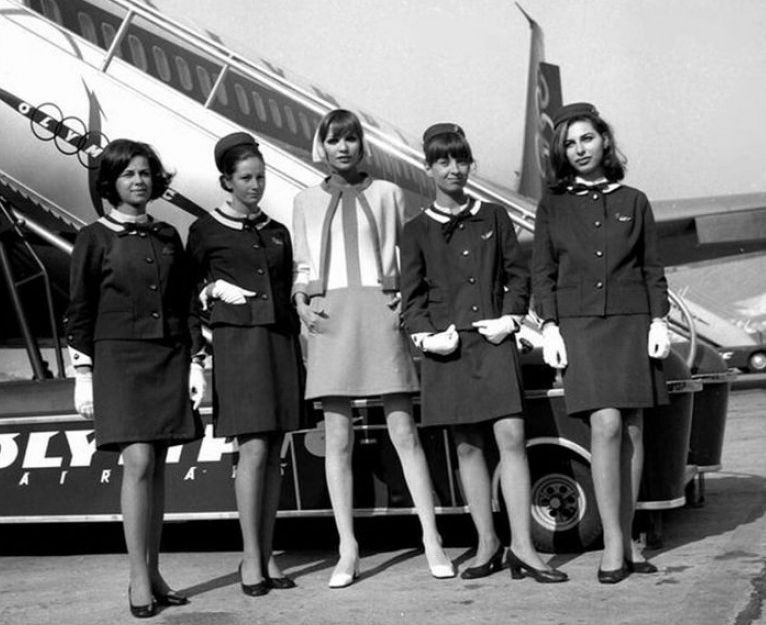
Coco Chanel's designs for Olympic Airways.
Fashion icon herself Coco Chanel created a super stylish uniform for the ladies of Olympic Airways between 1966 and 1968.
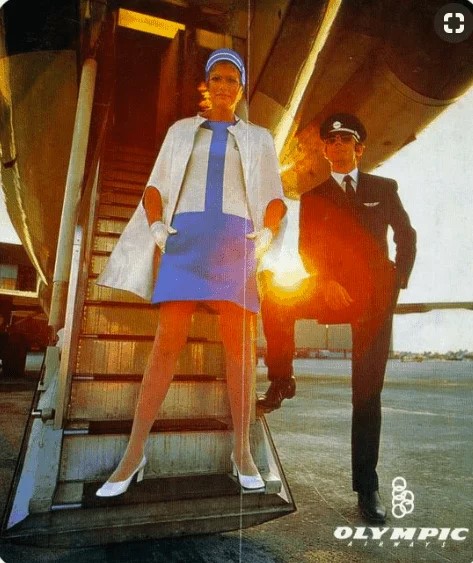
Pierre Cardin then set the scene with a unique looking uniform that was inspired by aviation and became one of the most popular in history. His designs were worn between 1969 and 1971.
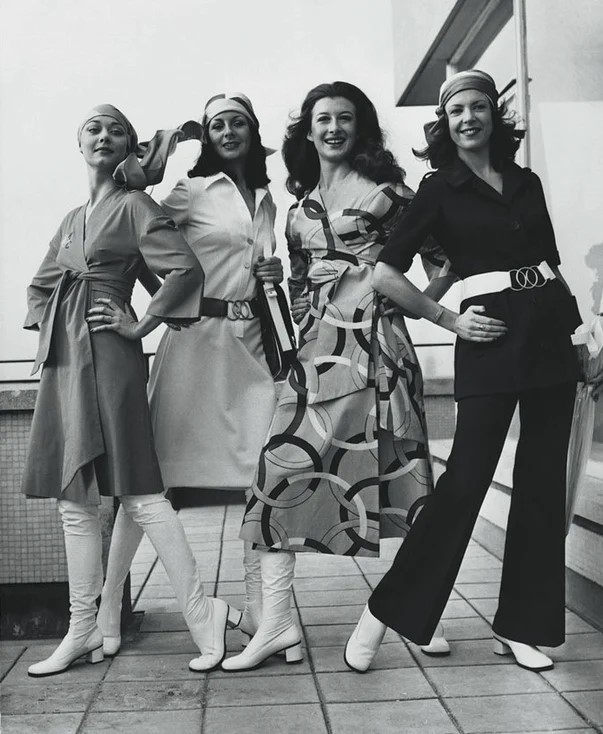
Yannis Tseklenis creations.
Greece’s own leading designer Yannis Tseklenis launched an exclusive line, which featured maxi dresses, flare pants and white boots between the years of 1972 and 1976.
However, the death of Aristotle in 1975, eventually saw the Greek State gain Olympic Airways again and that was, of course, the end of the Golden Era, which will never be forgotten.
Photo gallery
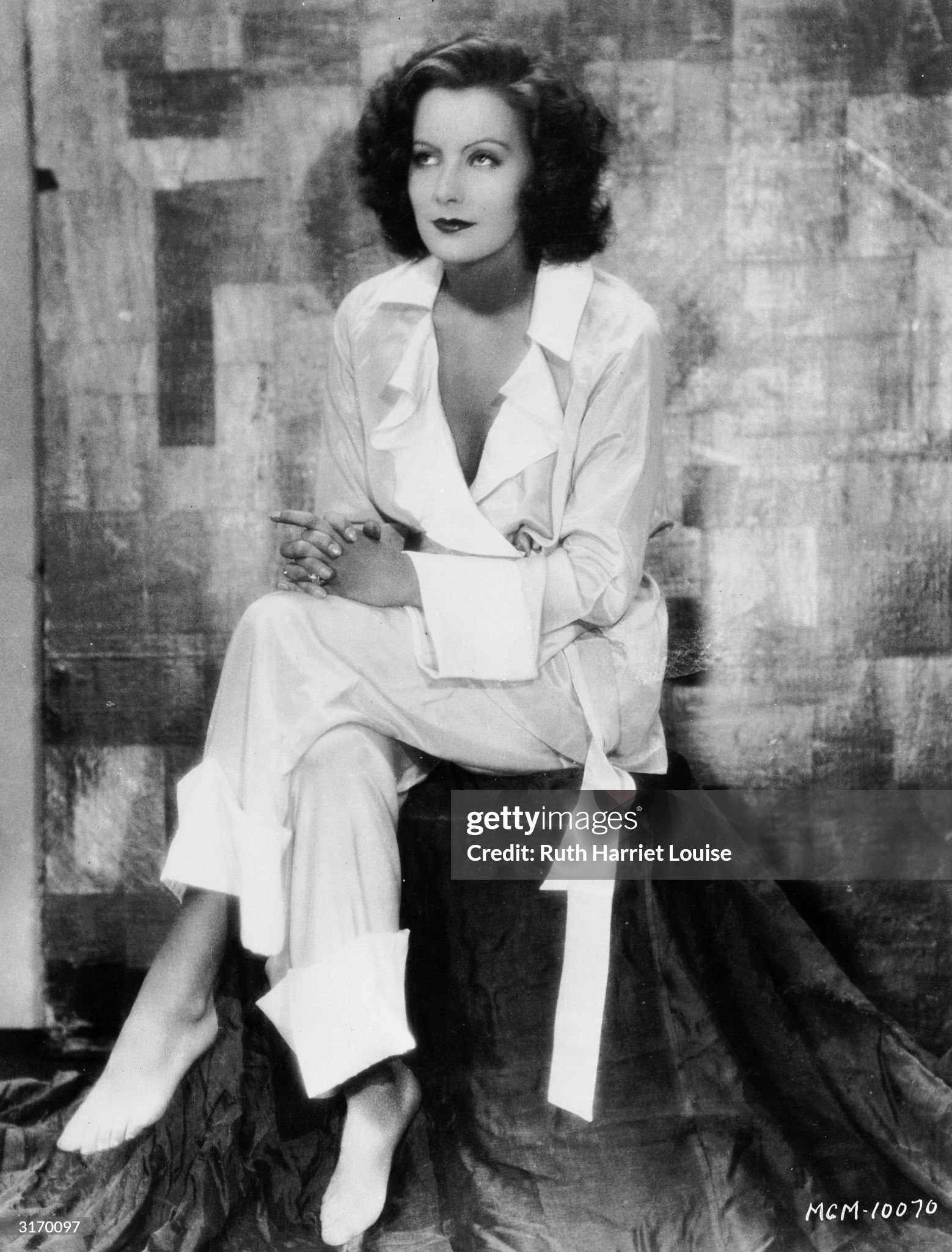
Circa 1926: Swedish born American actress Greta Garbo (1905 - 1990), whose early retirement and solitary nature only added to the mystique which surrounded her for the rest of her life. Photo by Ruth Harriet Louise / John Kobal Foundation / Getty Images.
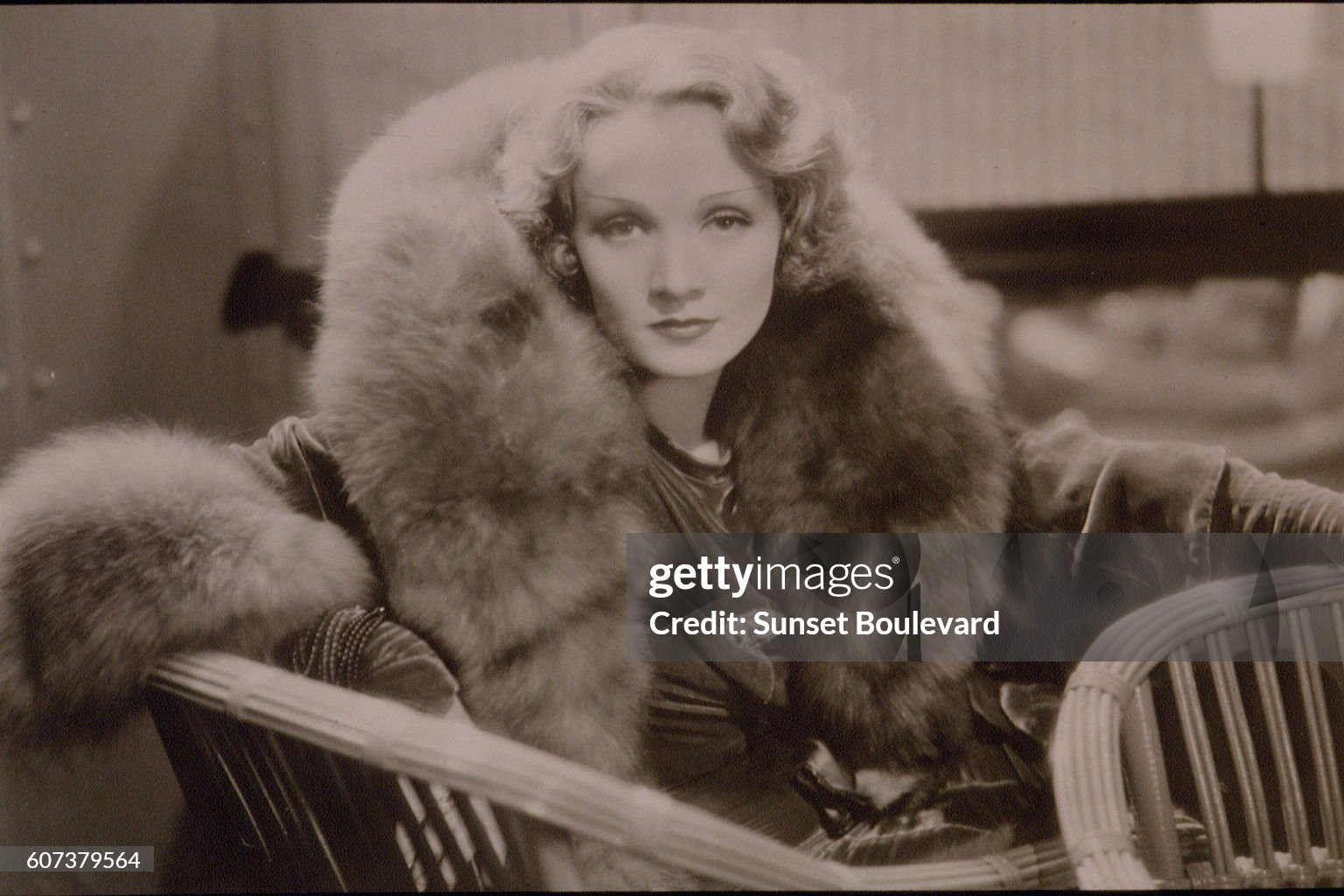
German actress and singer Marlene Dietrich. Photo by Sunset Boulevard / Corbis via Getty Images.
Marlene Dietrich.
Marlene Dietrich. Photo by Impress Own / United Archives via Getty Images.
A top-hatted Marlene Dietrich (1901 - 1992) performs in a nightclub scene from the film 'Der blaue engel' ('The blue angel'), directed by Josef Von Sternberg for UFA, in 1930. Photo by Michael Ochs Archives / Getty Images.
Actress Marlene Dietrich in a scene from the movie Morocco in 1930. Photo by Donaldson Collection / Getty Images.
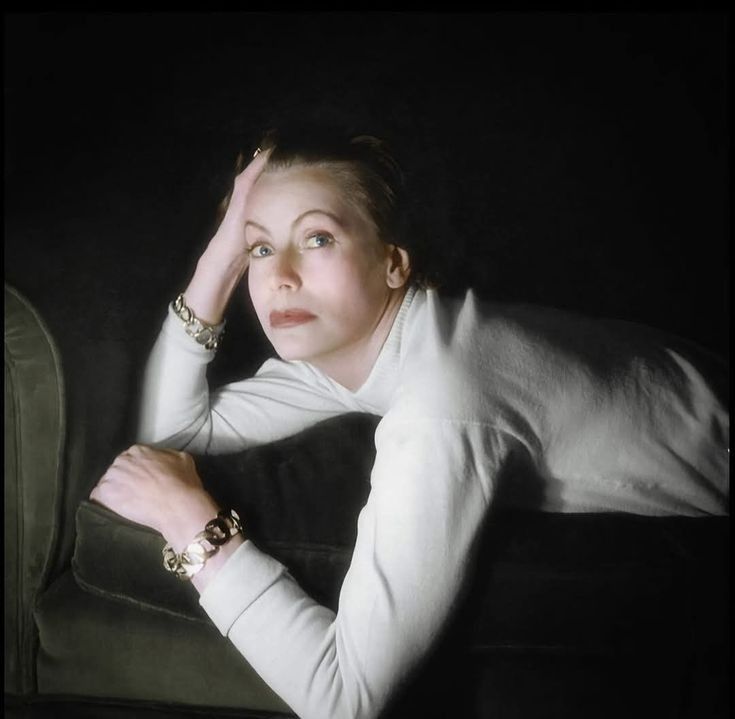
Greta Lovisa Gustafsson (Greta Garbo), 18 September 1905 Stockholm – 15 April 1990 New York.
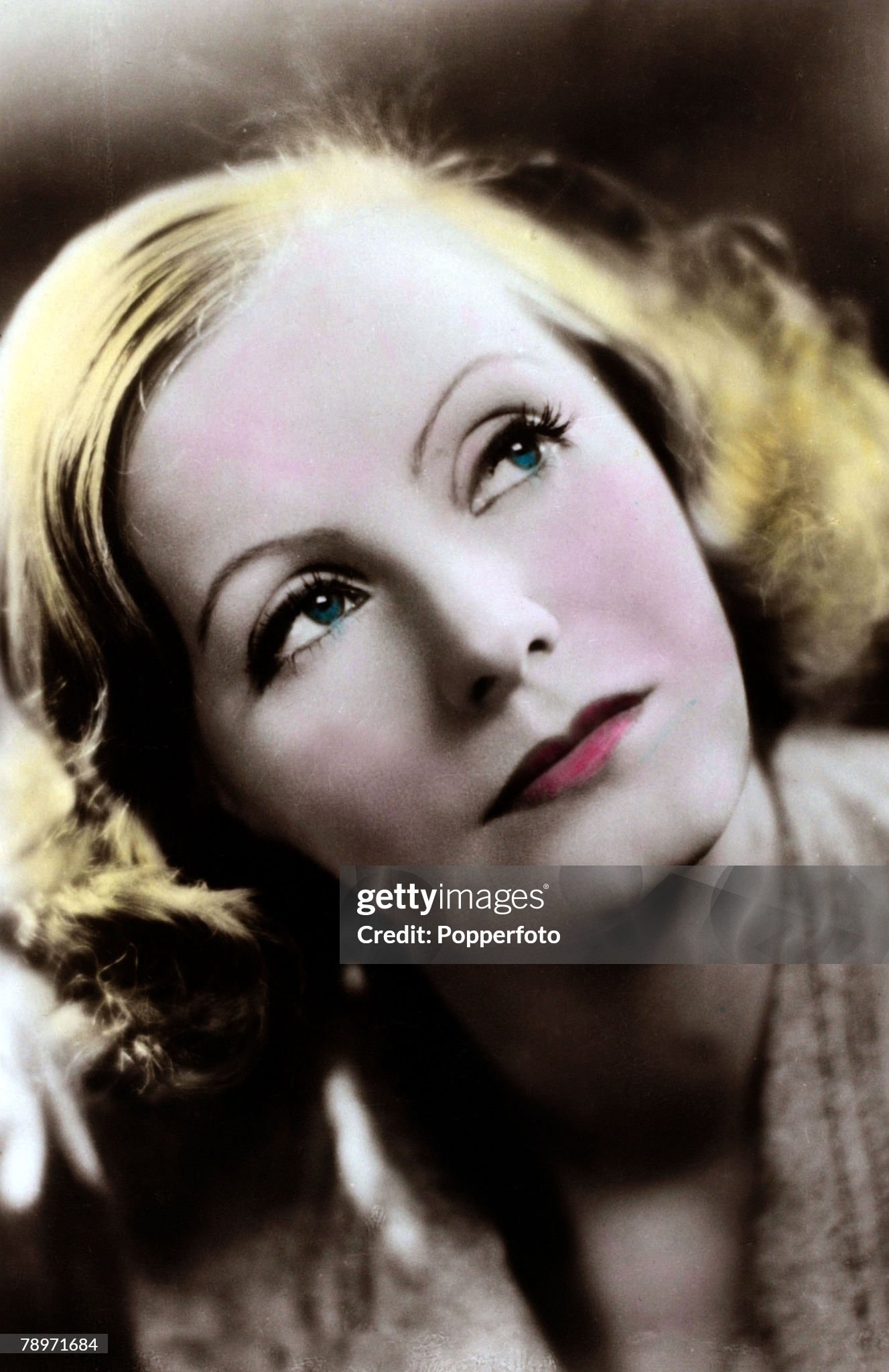
Circa 1930, Swedish born film actress Greta Garbo. Photo by Popperfoto via Getty Images.

Greta Garbo.

A naked Greta Garbo.
A naked Greta Garbo on the cover of Life magazine.

A naked Greta Garbo.
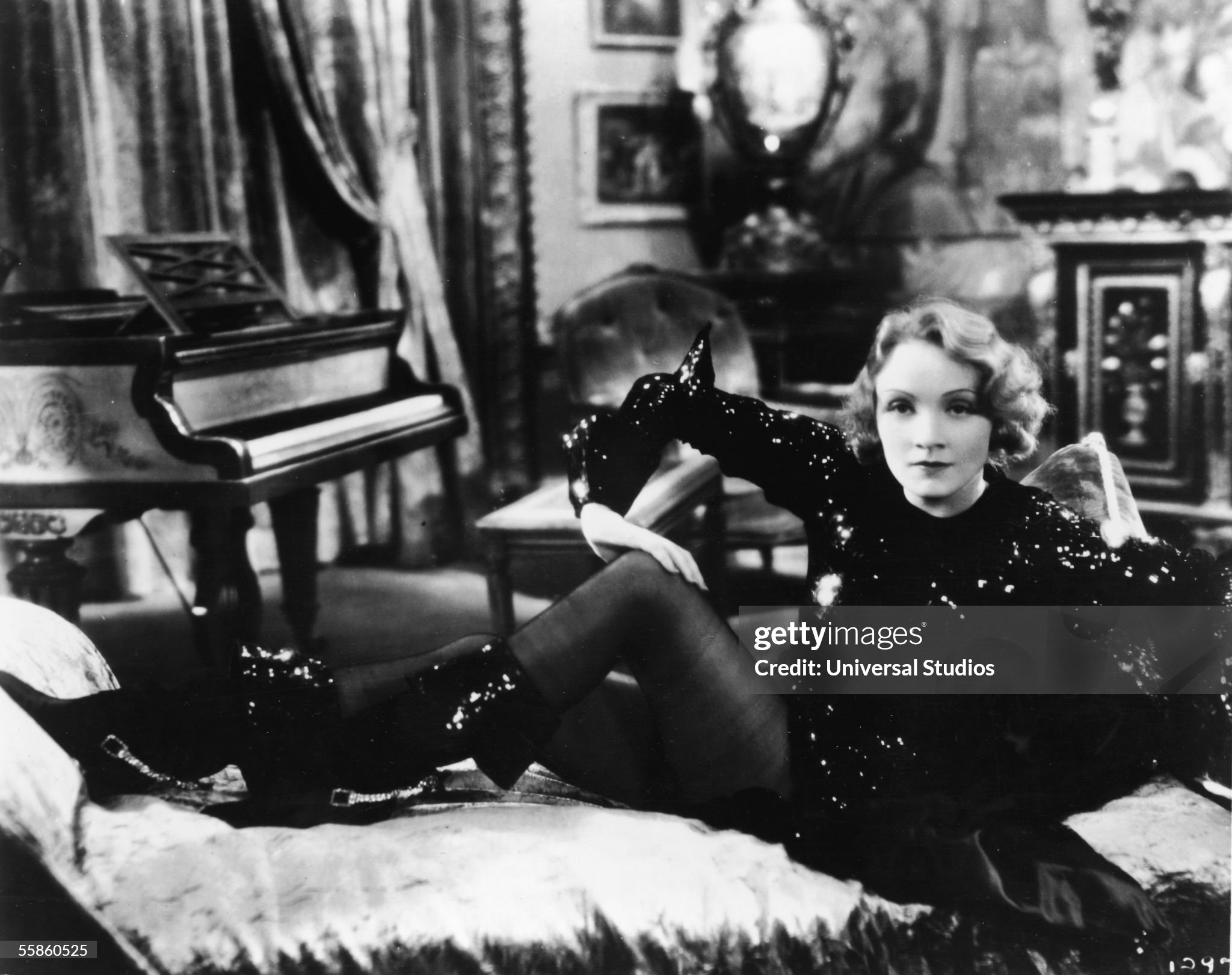
German actress Marlene Dietrich (1901 - 1992) lounges on a daybed in a scene from the film 'Dishonored', directed by Josef von Sternberg, Los Angeles, California, 1931. Photo by Universal Studios / Courtesy of Getty Images.
Greta Garbo in the role of Anna Karenina in 1935. Photo by Bridgeman Images.
Marlene Dietrich in 1937. Photo by Ullstein bild via Getty Images.
Marlene Dietrich dressed for one of her movies, ‘Destry rides again’, wearing a large hat in 1939. Photo by Getty Images.
German-American actress Marlene Dietrich (in costume as Frenchy) bathes her feet in a pail on the set of 'Destry rides again' (directed by George Marshall), California, 1939. Photo by Silver Screen Collection via Getty Images.
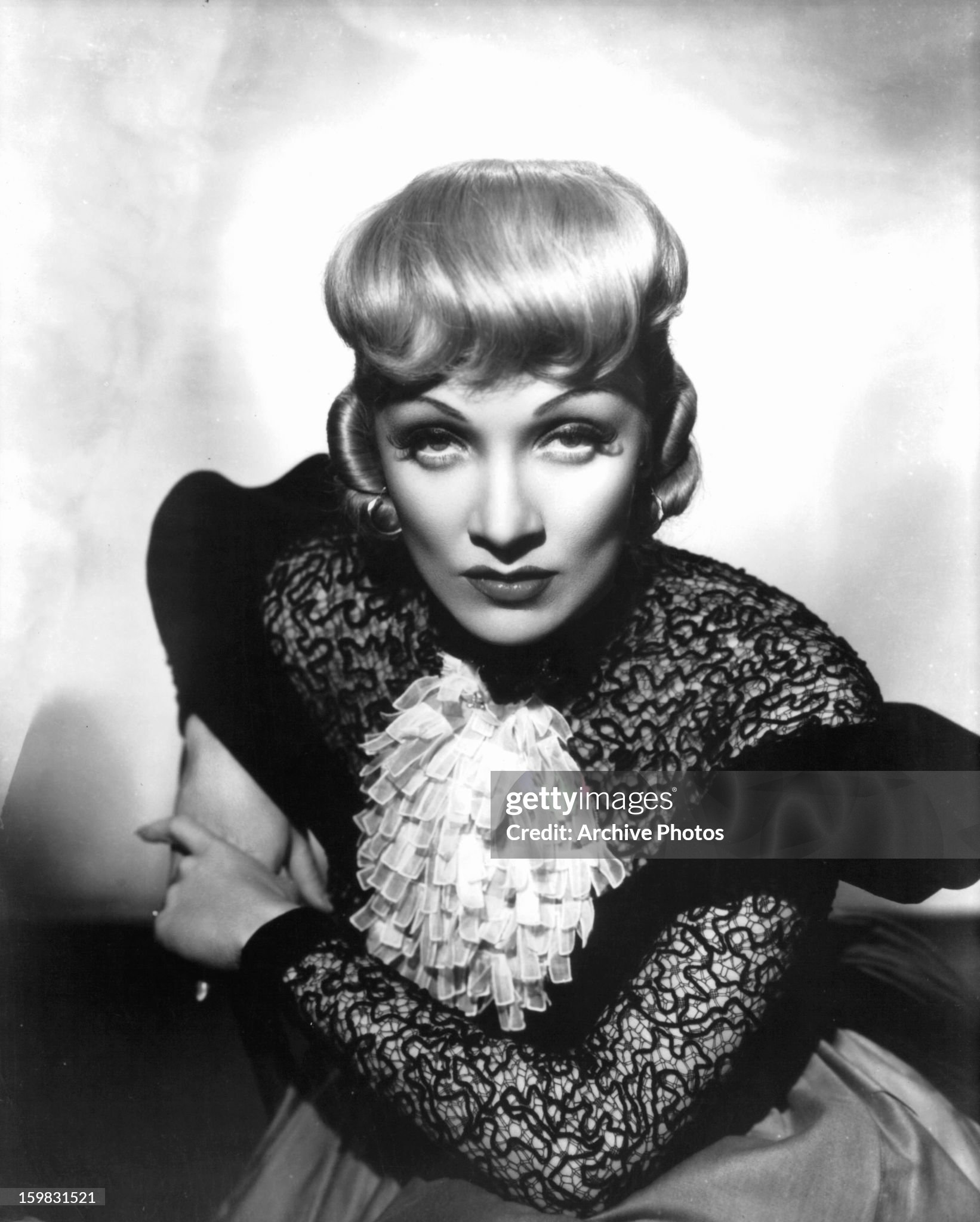
Marlene Dietrich in publicity portrait for the film 'The flame of New Orleans' in 1941. Photo by Universal / Getty Images.
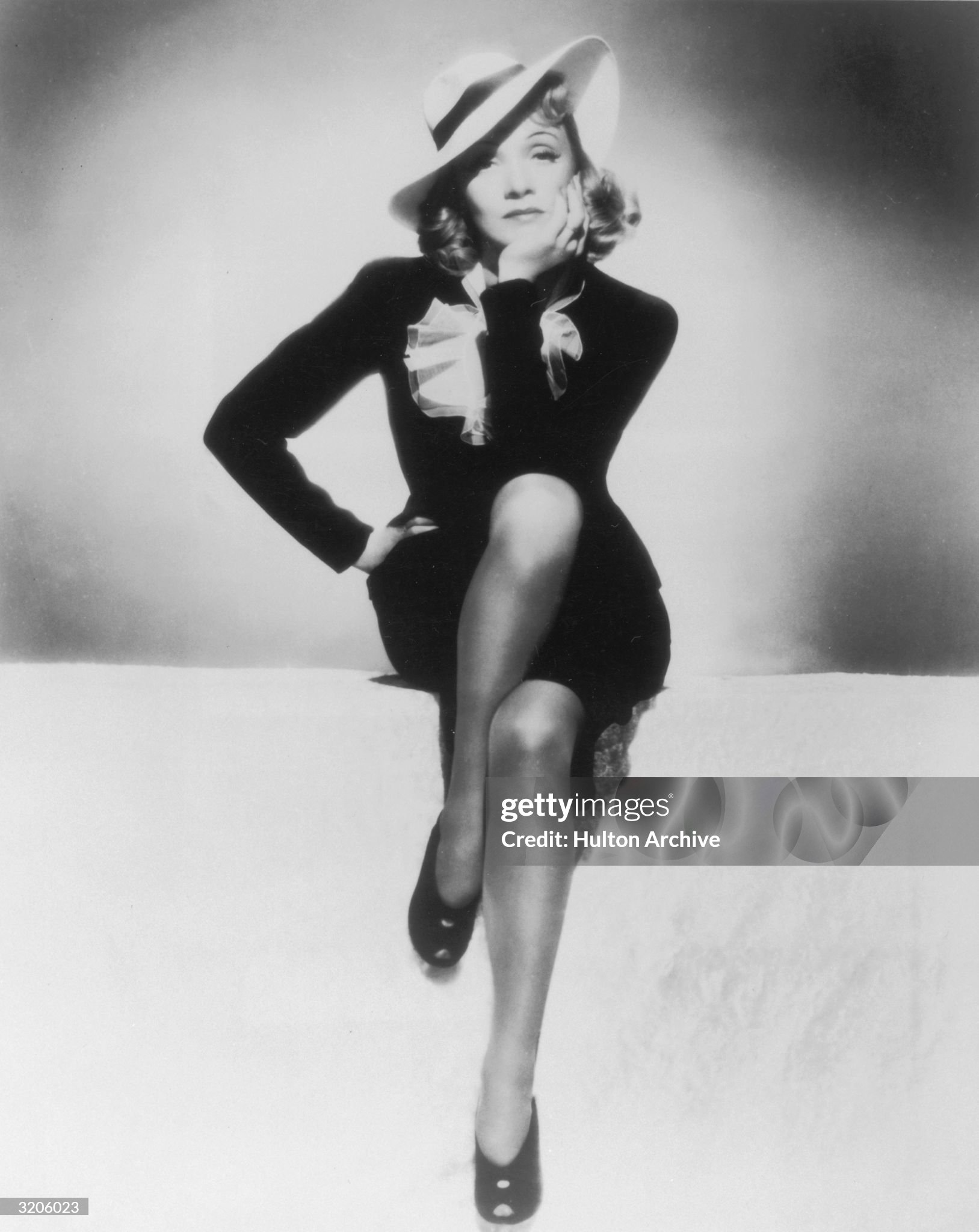
Circa 1945. German-born actress Marlene Dietrich (1901 - 1992). Photo by Hulton Archive / Getty Images.
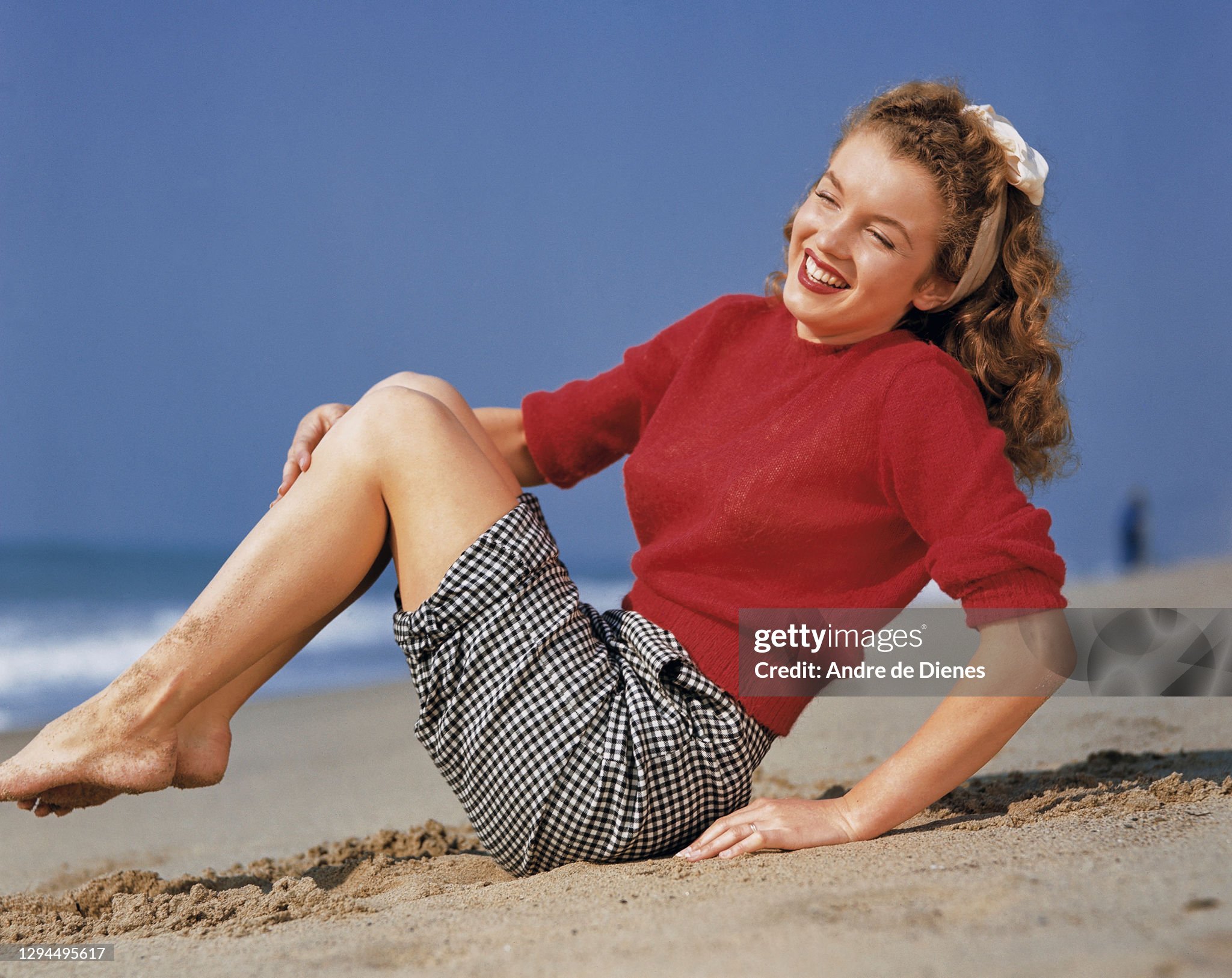
Marilyn Monroe (born Norma Jeane Mortenson, 1926 - 1962) in a red sweater and checkered trousers, as she poses at Zuma Beach's Paradise Cove, California, in 1945. Photo by Andre de Dienes / Muus Collection via Getty Images.
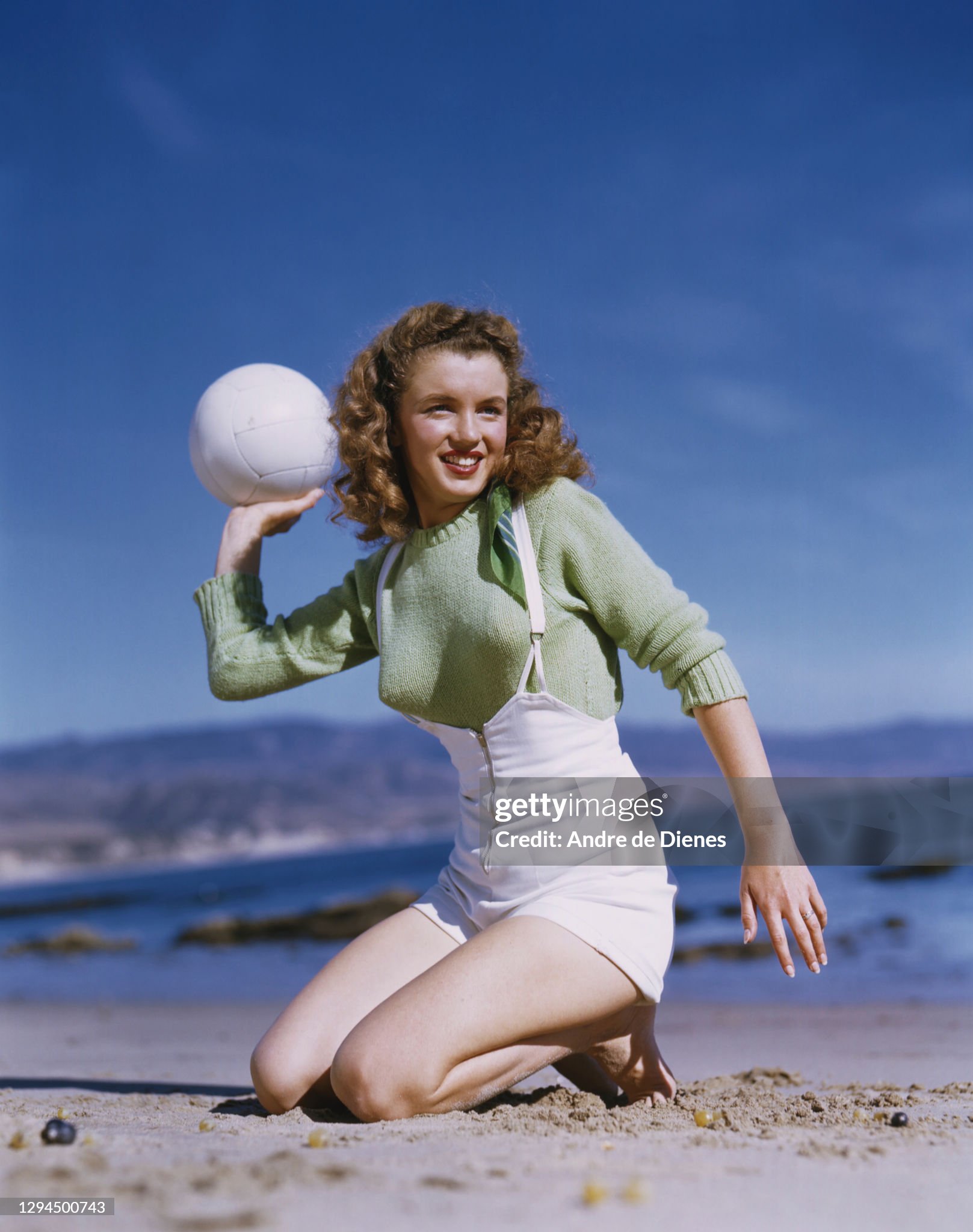
Marilyn Monroe (born Norma Jeane Mortenson, 1926 - 1962) in a red sweater and checkered trousers, as she poses with volleyball at Zuma Beach's Paradise Cove, California, in 1945. Photo by Andre de Dienes / Muus Collection via Getty Images.
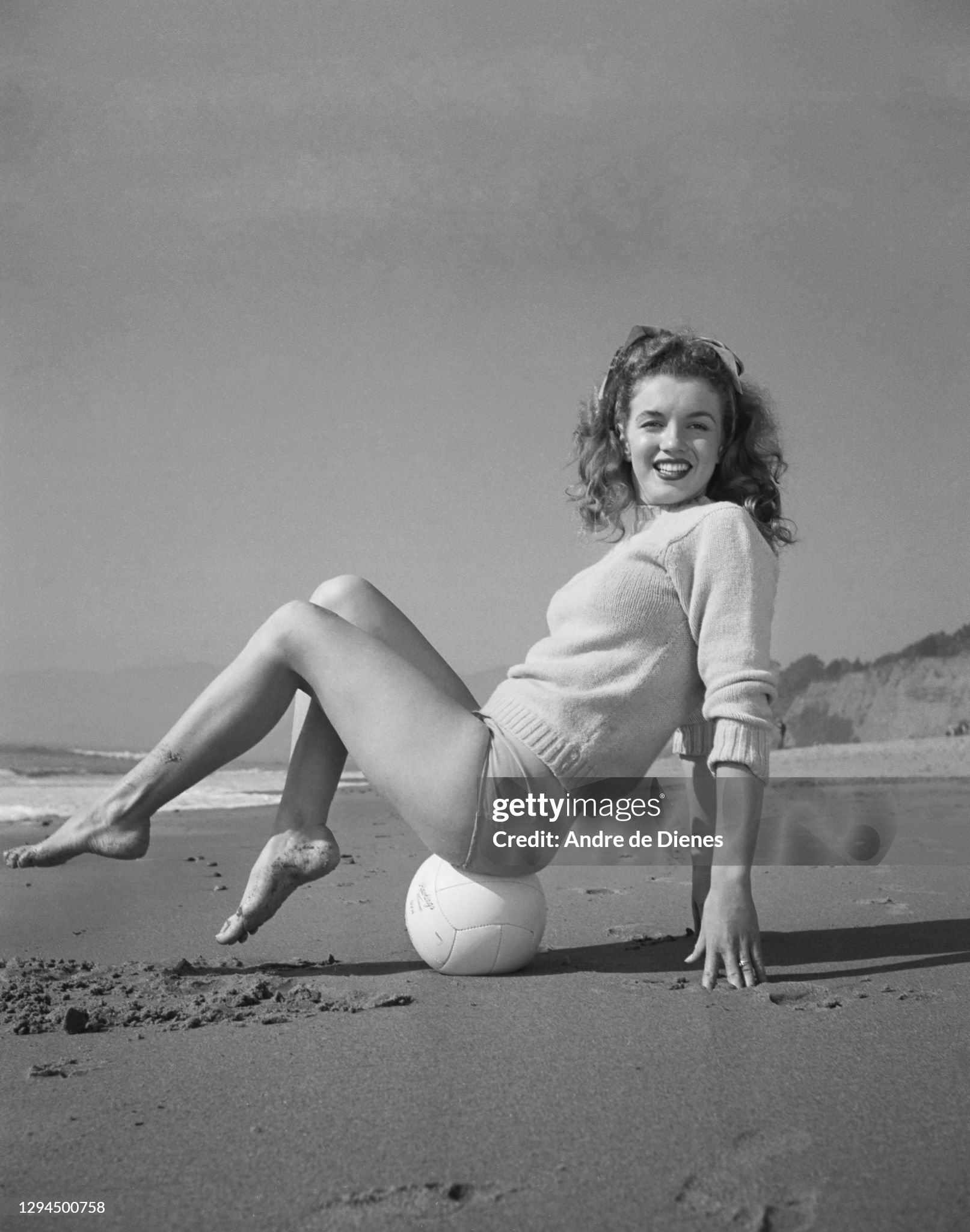
Marilyn Monroe (born Norma Jeane Mortenson, 1926 - 1962) in a red sweater and checkered trousers, as she poses balancing on a volleyball at Zuma Beach's Paradise Cove, California, in 1945. Photo by Andre de Dienes / Muus Collection via Getty Images.
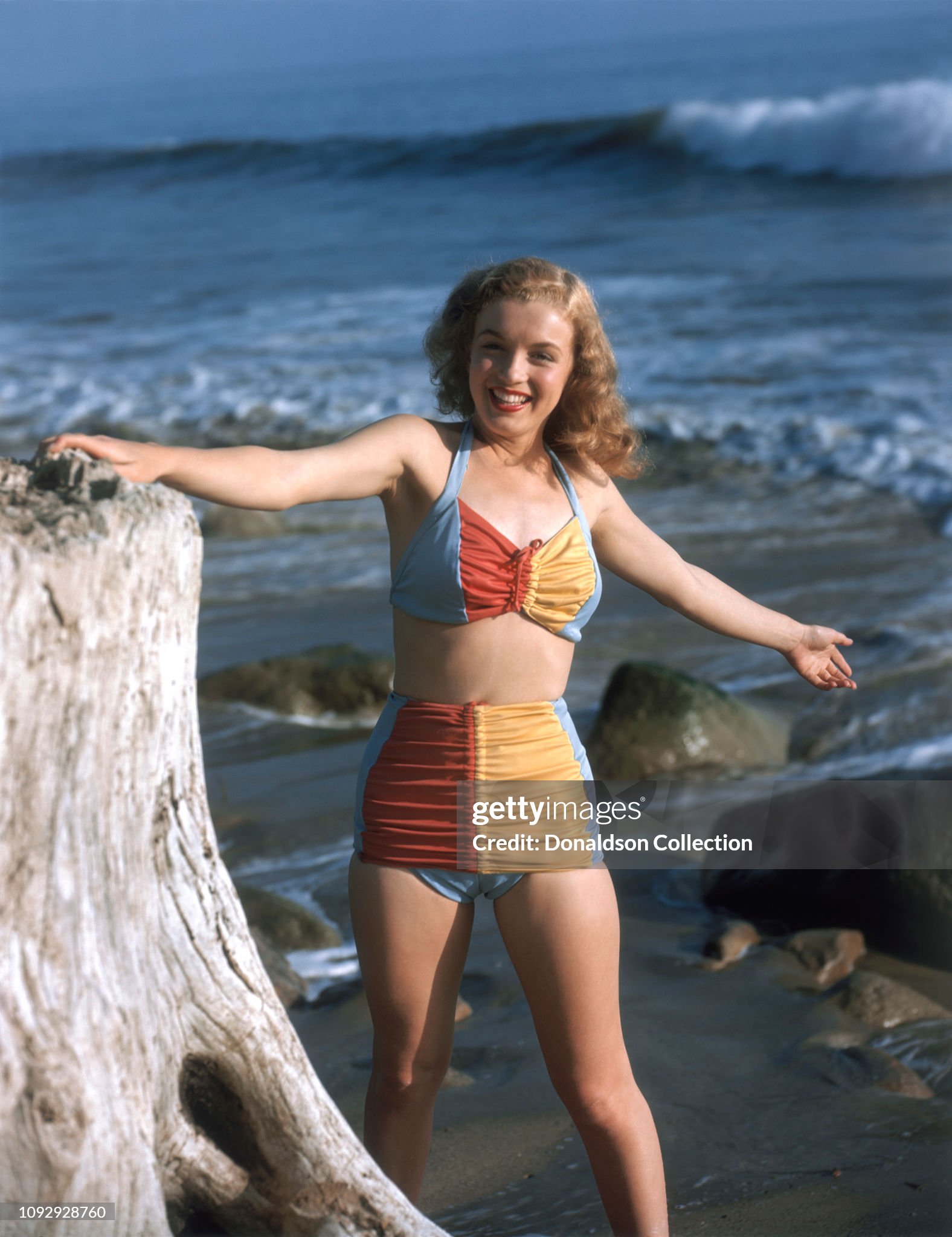
Actress Marilyn Monroe, then known as Norma Jeane Mortenson, poses for a portrait in 1946 in Los Angeles, California. Photo by Richard C. Miller / Donaldson Collection / Getty Images.
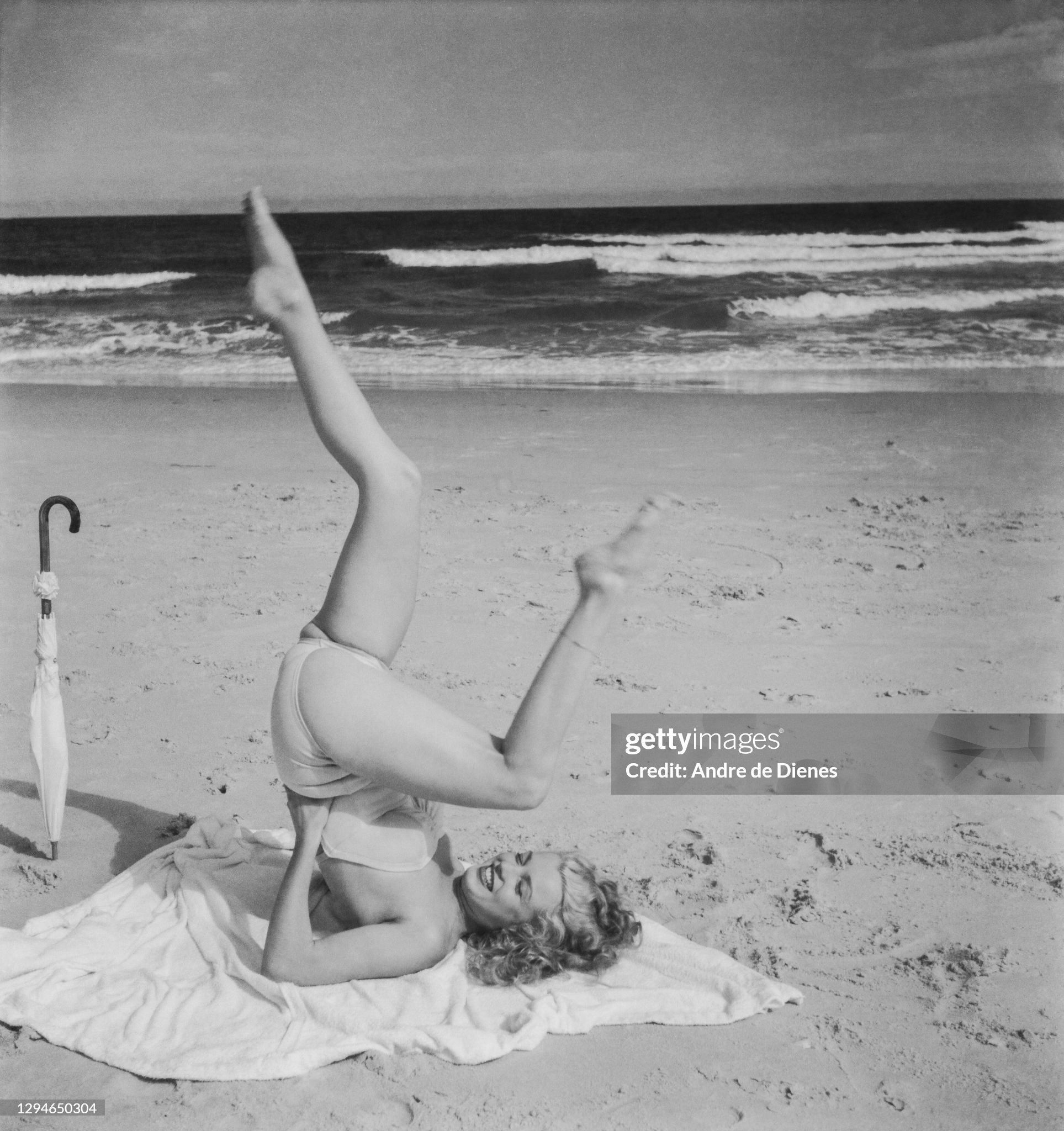
Marilyn Monroe in a swimsuit, as she poses, lying on a blanket, on Long Island's Tobay Beach, Oyster Bay, New York, in 1949. Photo by Andre de Dienes / Muus Collection via Getty Images.
Greta Garbo smiling portrait wearing a fur coat circa 1950. Photo by Screen Archives / Getty Images.
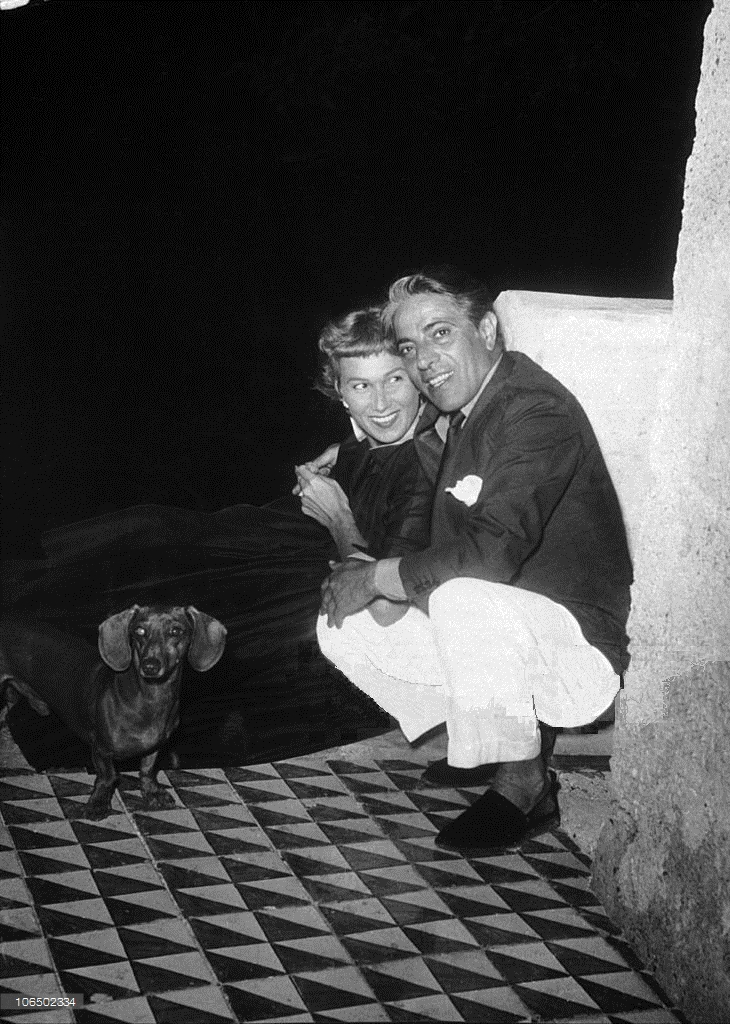
Two young Aristotle and Tina Onassis with their dog.
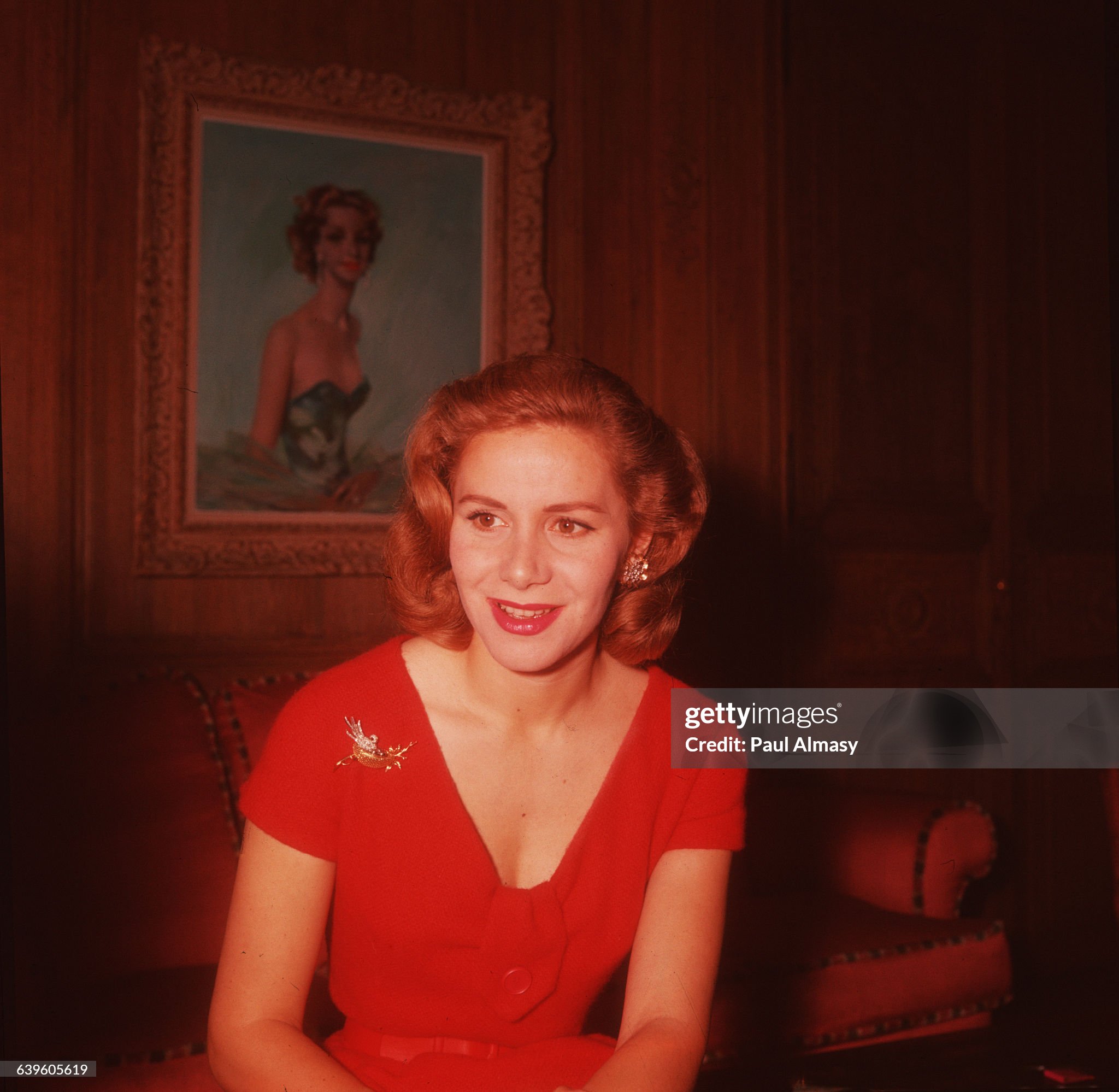
Tina Onassis, once married to the famous Greek shipowner Aristotle Socrates Onassis, in 1950. Photo by Paul Almasy / Corbis / VCG via Getty Images.
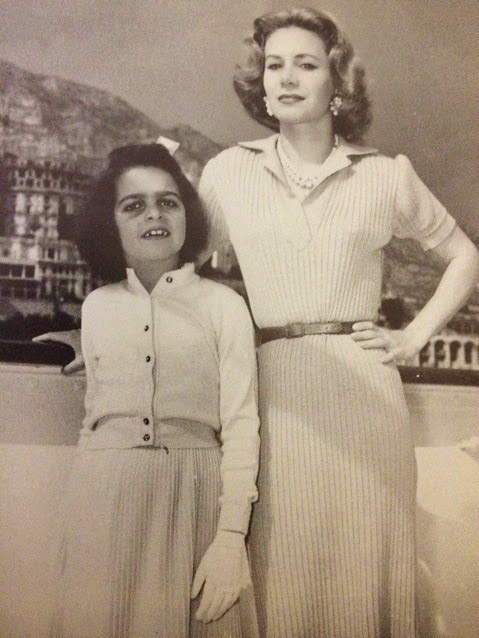
Christina and her mum Tina Onassis in 1950s.
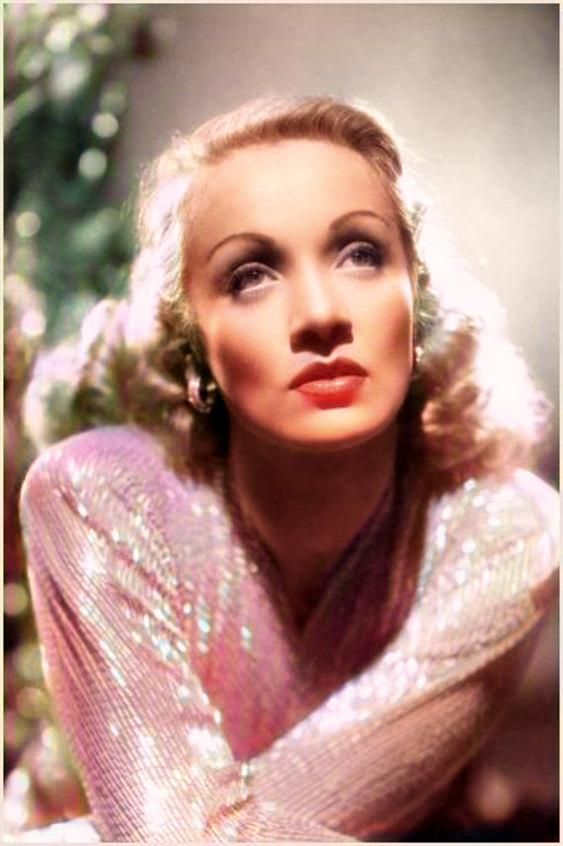
Marlene Dietrich.
Marlene Dietrich.
Marlene Dietrich in 1952. Photo by Milton H. Greene.
Marilyn Monroe in 1952. Photo by Ullstein bild via Getty Images.
Marilyn Monroe performs stretching exercises outdoors at the Hotel Bel-Air, Los Angeles, California, in 1953. Photo by Andre de Dienes / Muus Collection via Getty Images.
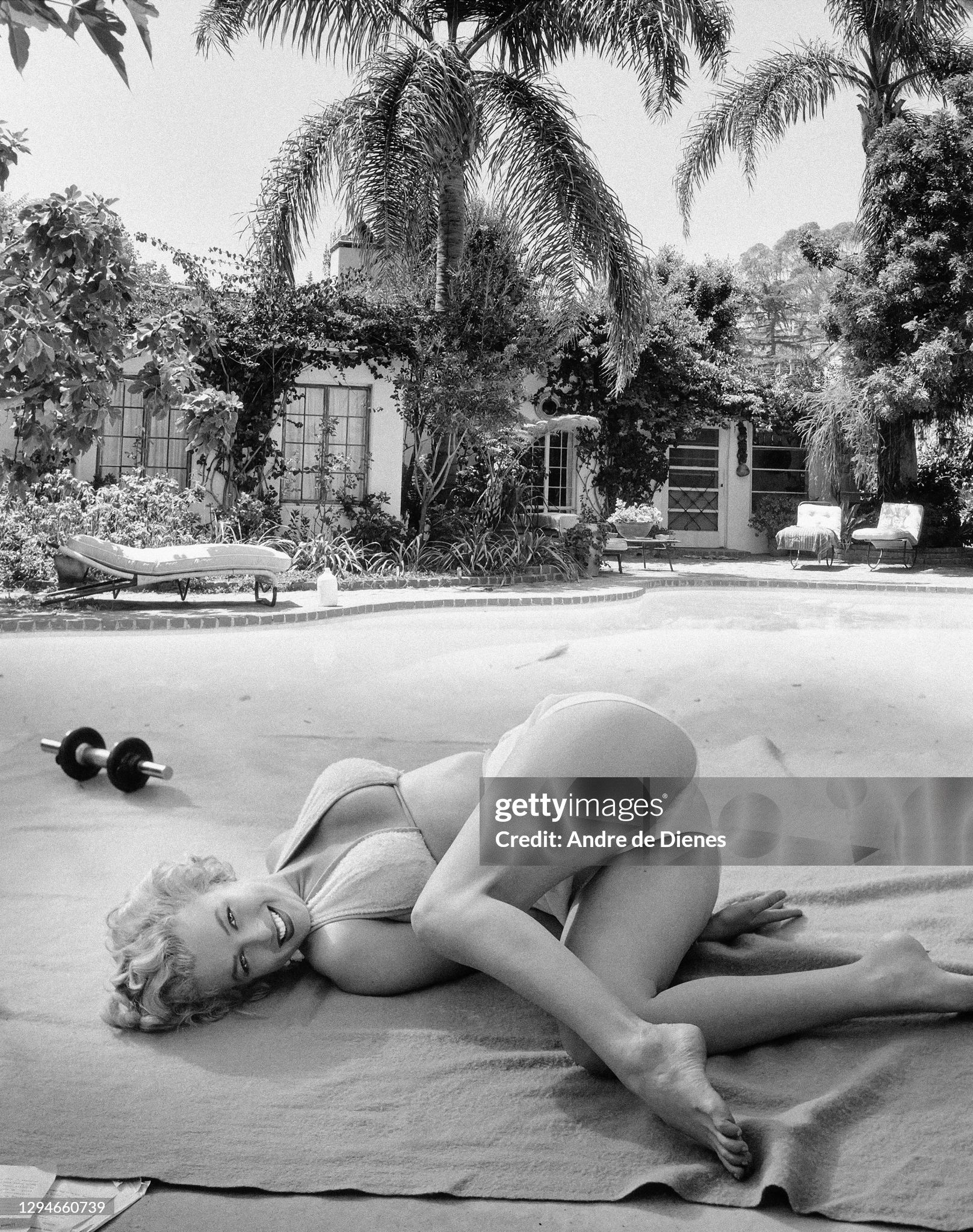
Marilyn Monroe performs stretching exercises outdoors at the Hotel Bel-Air, Los Angeles, California, in 1953. Photo by Andre de Dienes / Muus Collection via Getty Images.
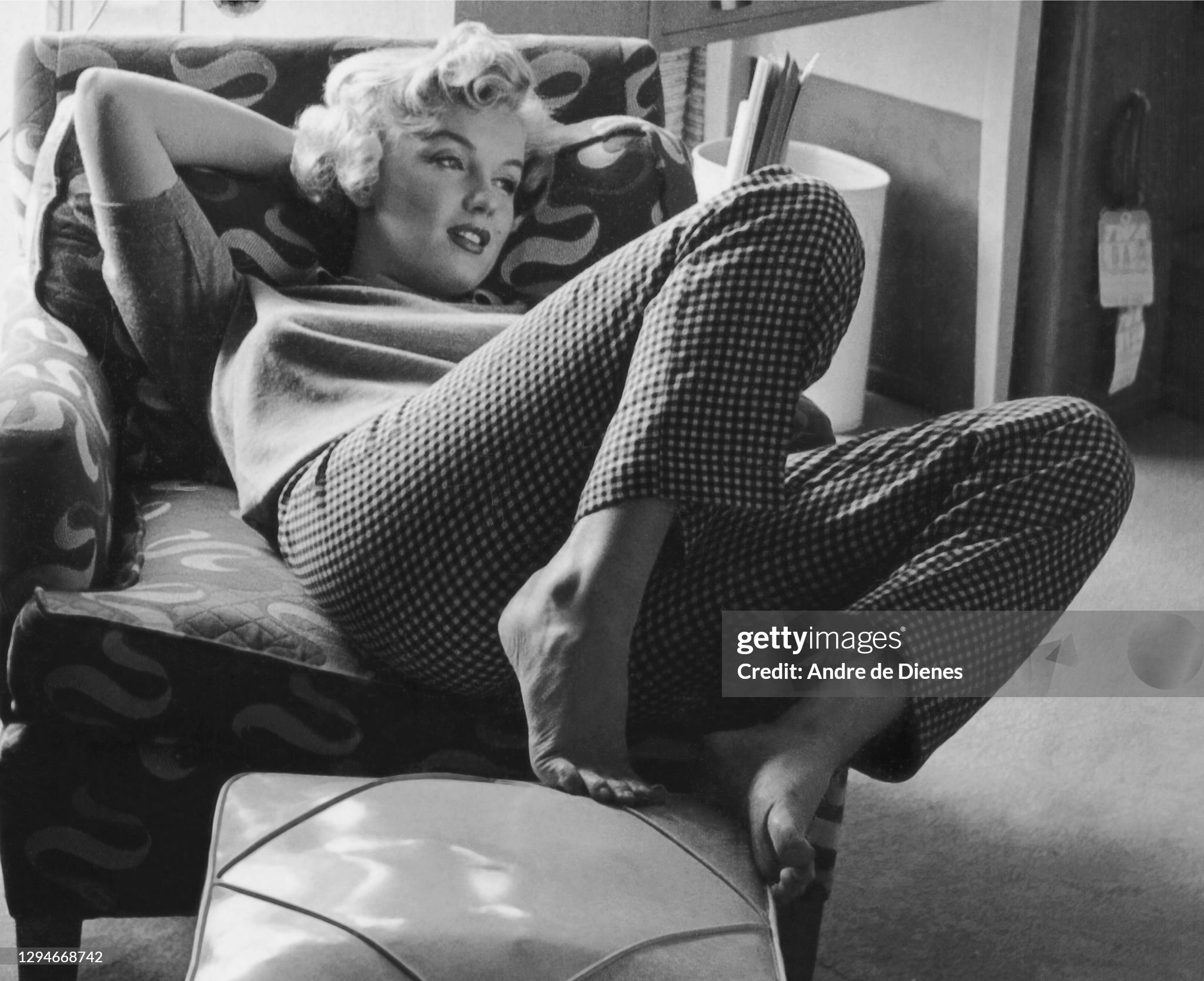
Marilyn Monroe reads a script as she sits in an armchair at the Hotel Bel-Air, Los Angeles, California, in 1953. Photo by Andre de Dienes / Muus Collection via Getty Images.
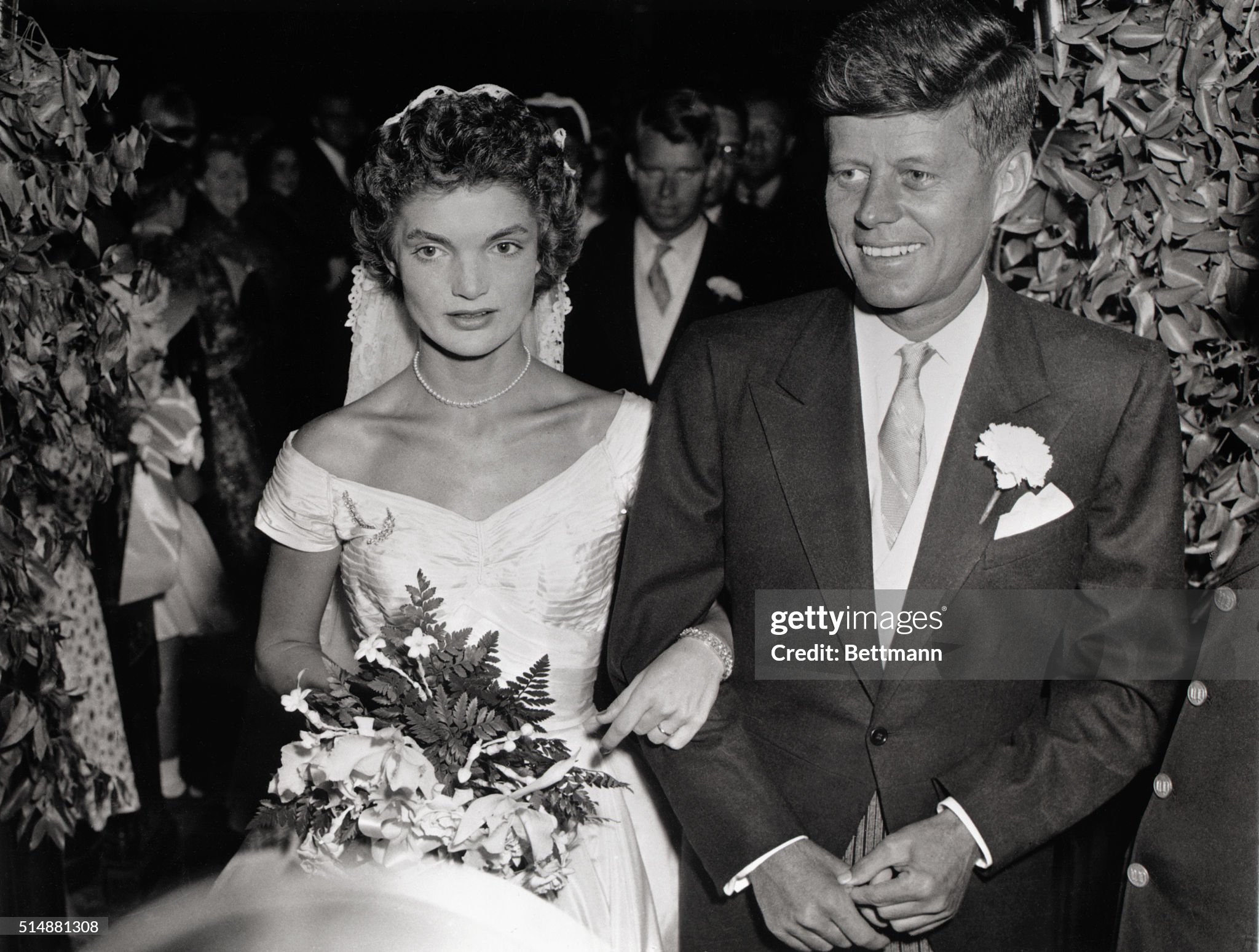
John F. Kennedy and Jacqueline Bouvier wed on September 12, 1953 in St. Mary's Church in Newport, Rhode Island, USA. Photo by Getty Images.
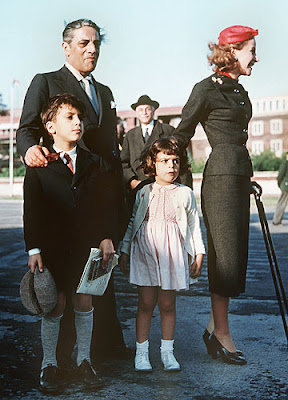
Aristotle Onassis with Tina, Alexander and Christina.
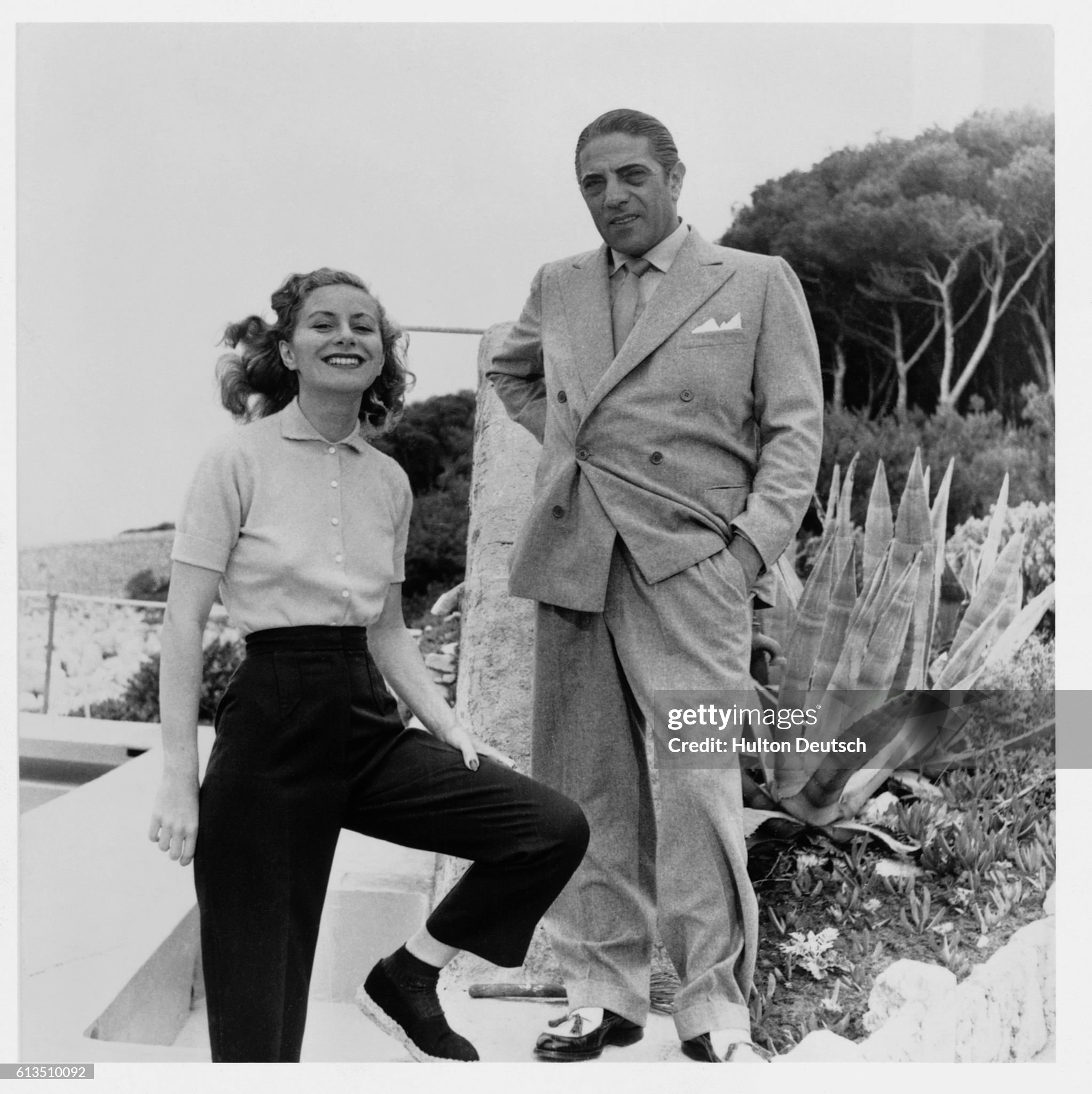
Aristotle Onassis with his first wife Athina, ca. 1954. They were divorced in 1960. Photo by Hulton - Deutsch Collection / Corbis via Getty Images.
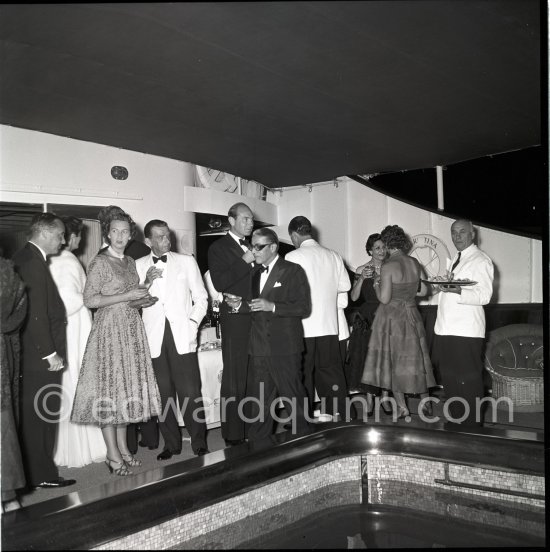
Aristotle Onassis at a cocktail party on his yacht Christina in the Monaco harbor in 1954. Photo by Edward Quinn.
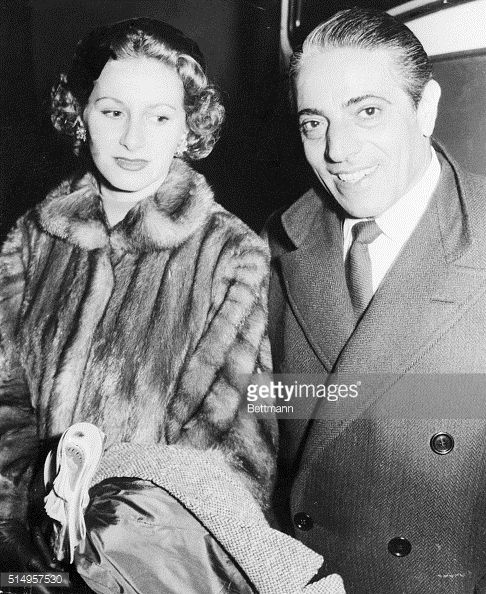
Aristotle Onassis and his wife Athina at Heathrow Airport in London before boarding their plane on 12 January 1954. Photo by Getty Images.
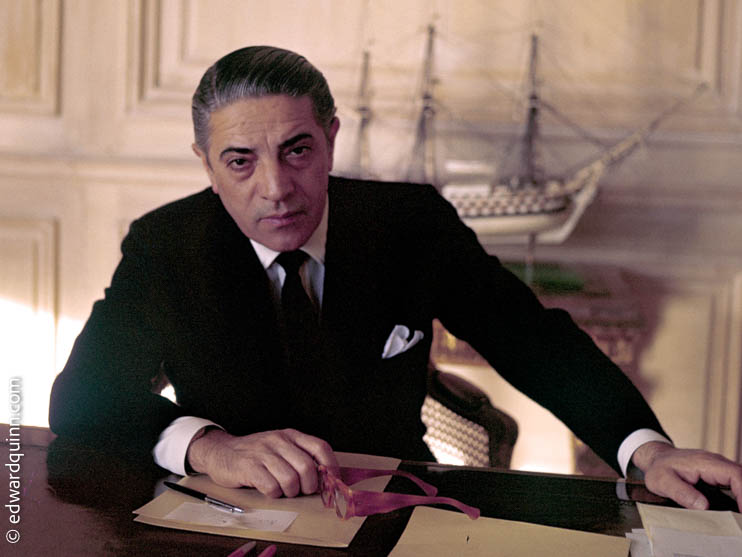
Aristotle Onassis at his office at Olympic Maritime in Monte Carlo in 1955. Onassis became the most important shareholder of the Casino. He declared: “I am ready, I am going to save the Principality.”
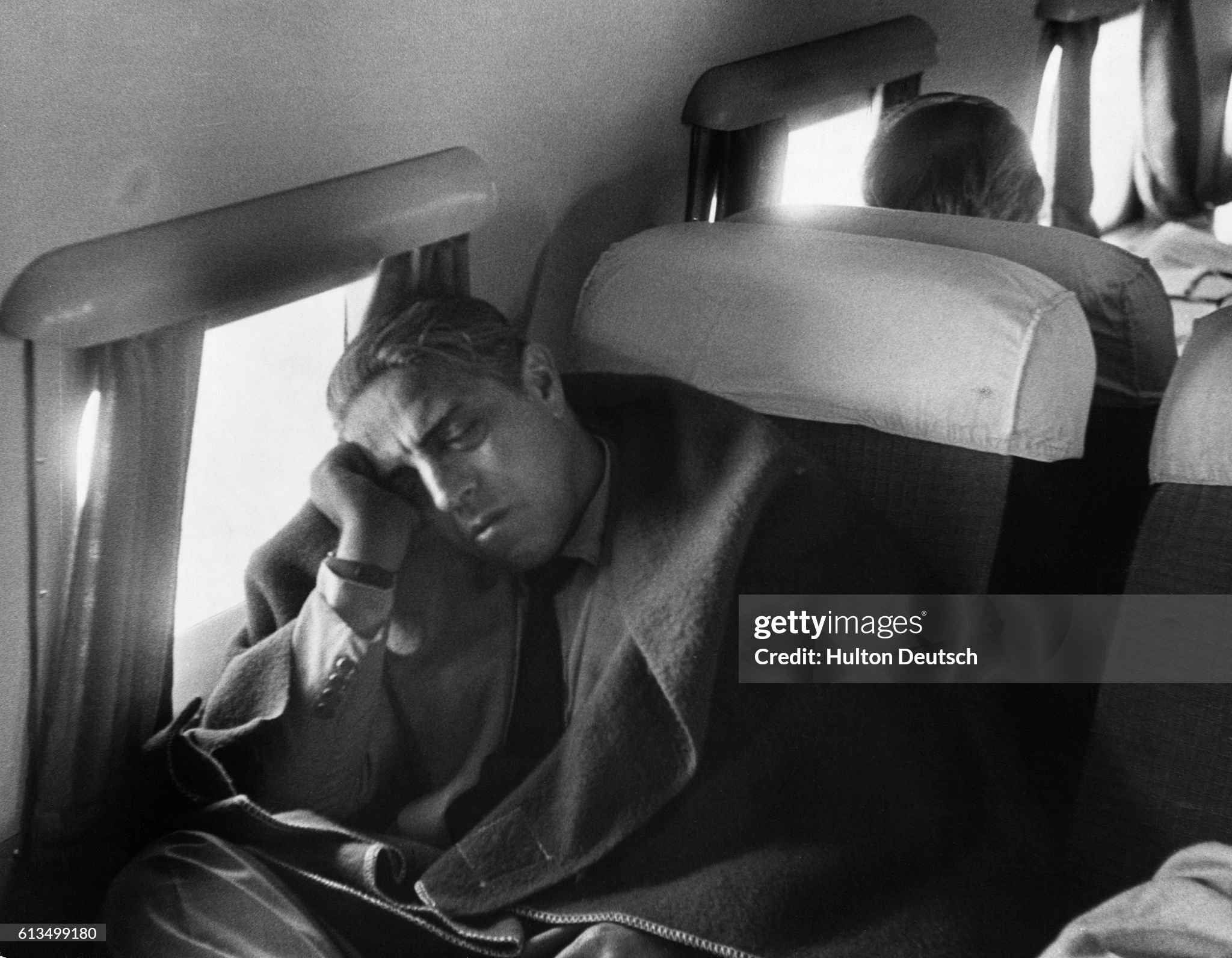
Aristotle Socrates Onassis sleeps whilst travelling in 1955. Photo by Hulton-Deutsch Collection / Corbis via Getty Images.
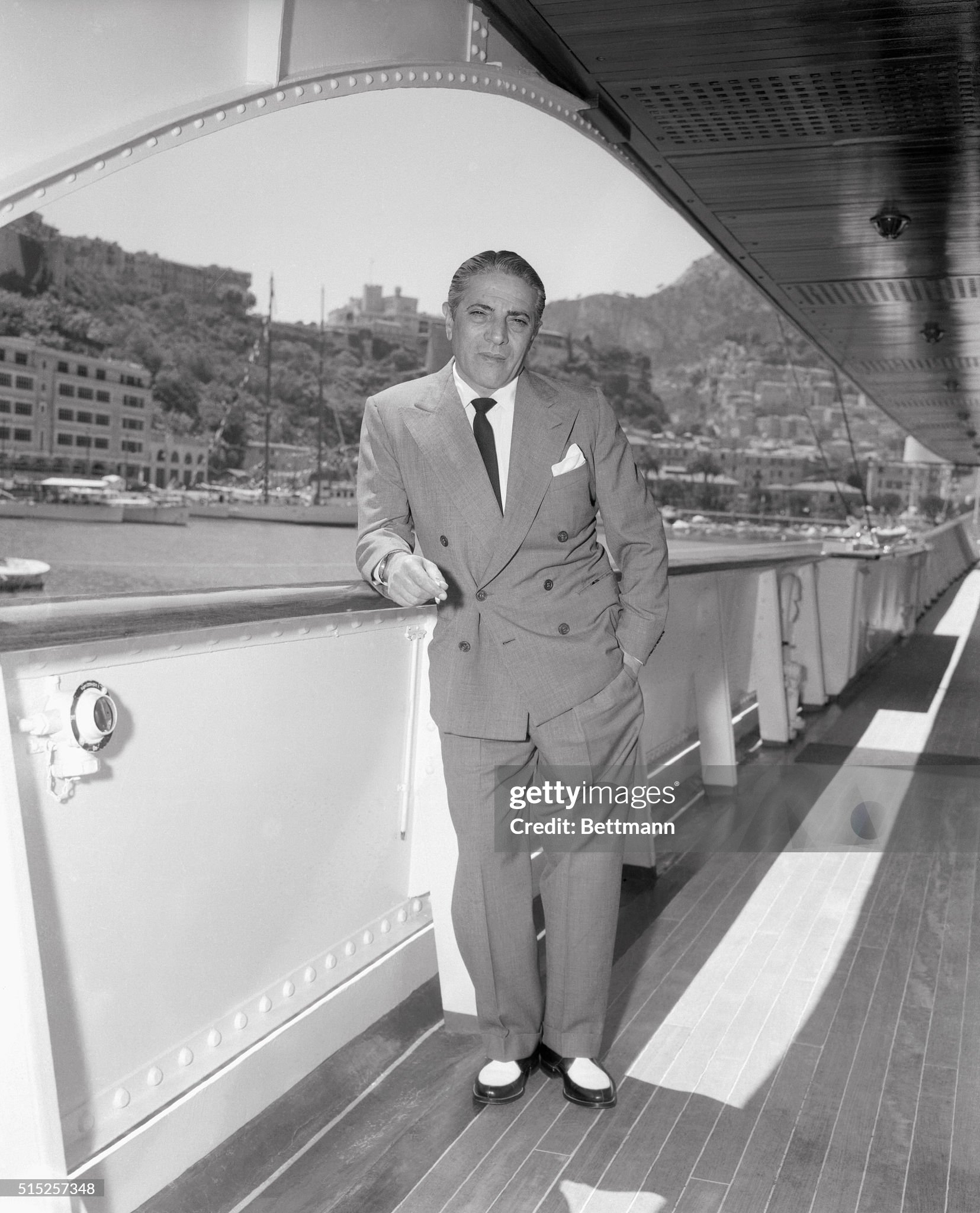
Aristotle Onassis leaning on railing of his yacht Christina on May 22, 1955.
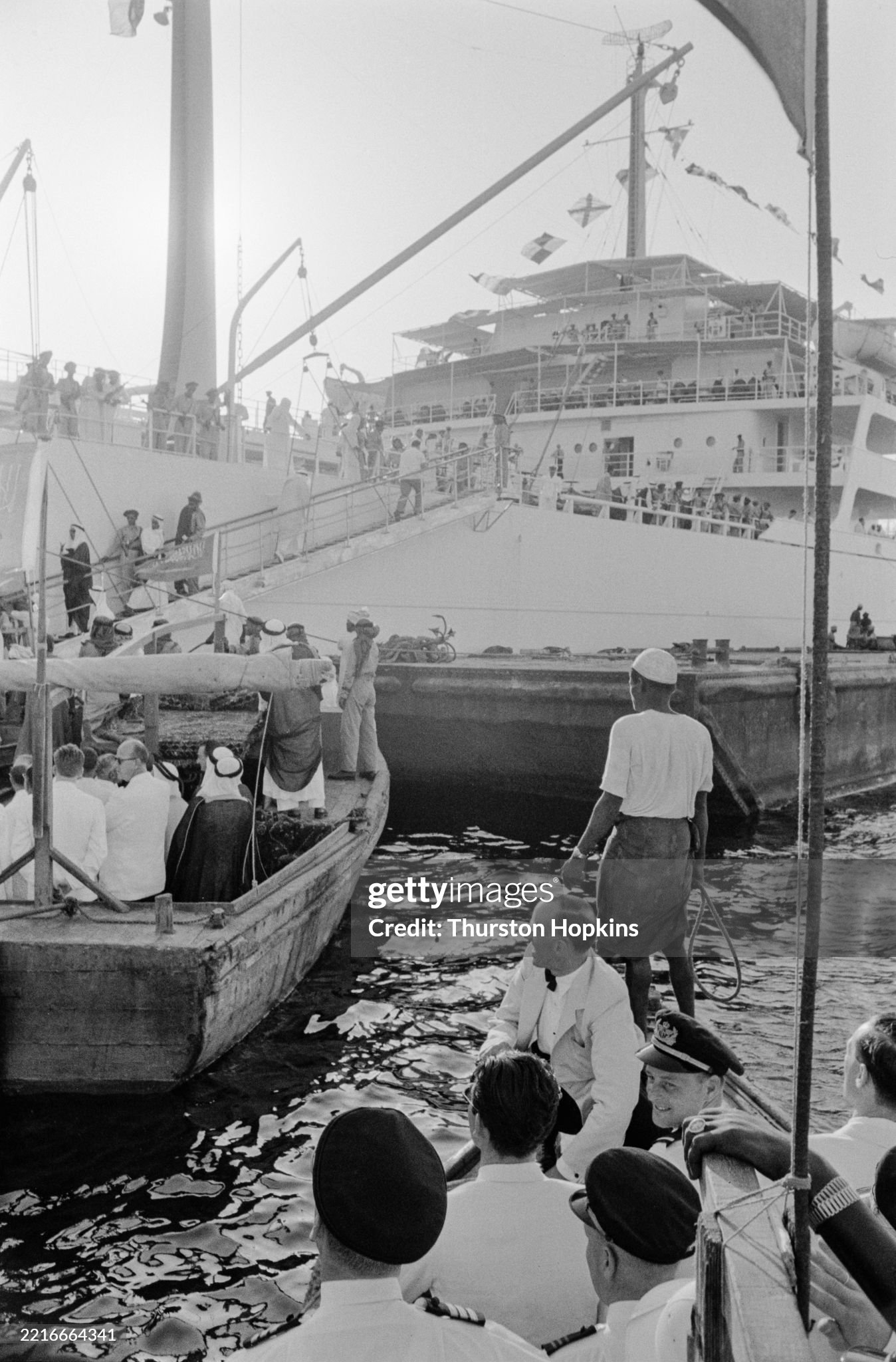
Guests arriving in small boats to board the Al-Malik Saud Al-Awal oil tanker for a party hosted by Aristotle Onassis off the coast of Saudi Arabia in July 1955. Photo by Thurston Hopkins / Picture Post / Hulton Archive / Getty Images.
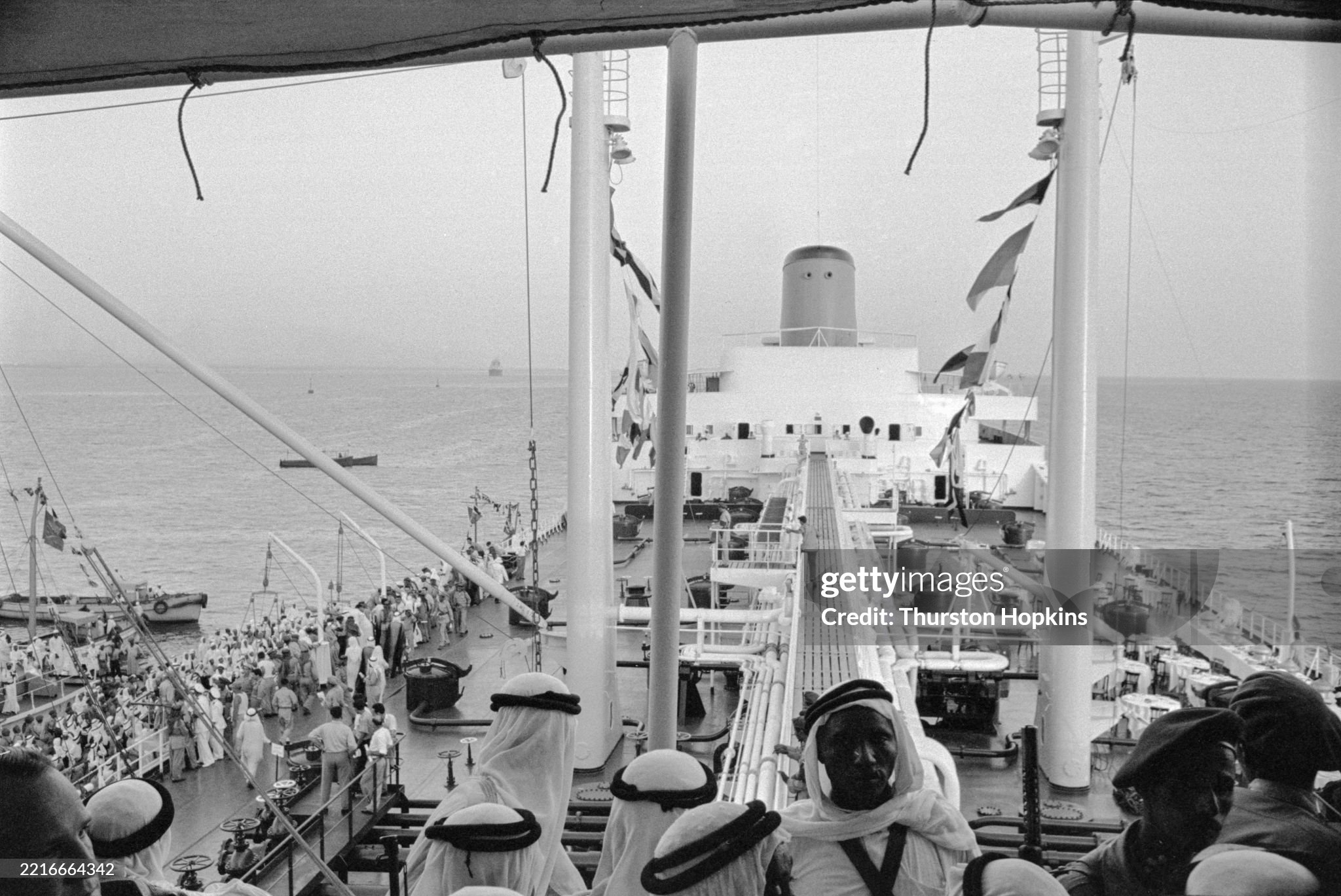
View across the deck of the oil tanker Al-Malik Saud Al-Awal where Greek shipping magnate Aristotle Onassis was hosting a party in the bay off Jeddah, Saudi Arabia, in July 1955. Guests are shown boarding the tanker at left. Onassis was celebrating his tanker being the first to fly the flag of Saudi Arabia. The 48,000-ton Al-Malik Saud Al-Awal was then the largest oil tanker in the world. Photo by Thurston Hopkins / Picture Post / Hulton Archive / Getty Images.
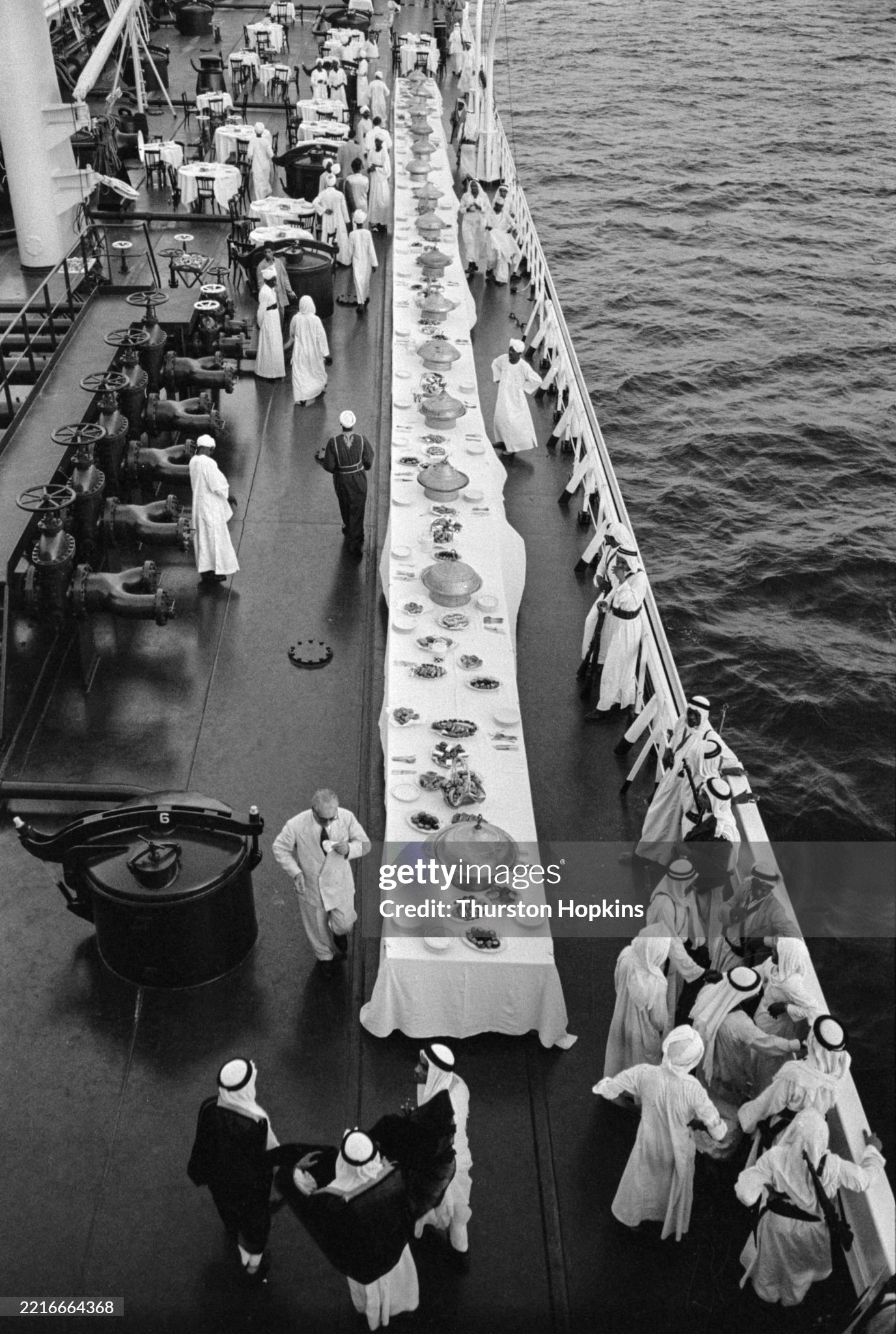
Aerial view of guests standing near an extended dining table on the deck of the Al-Malik Saud Al-Awal, an oil tanker belonging to shipping magnate Aristotle Onassis and anchored off Jeddah, Saudi Arabia, in July 1955. Photo by Thurston Hopkins / Picture Post / Hulton Archive / Getty Images.
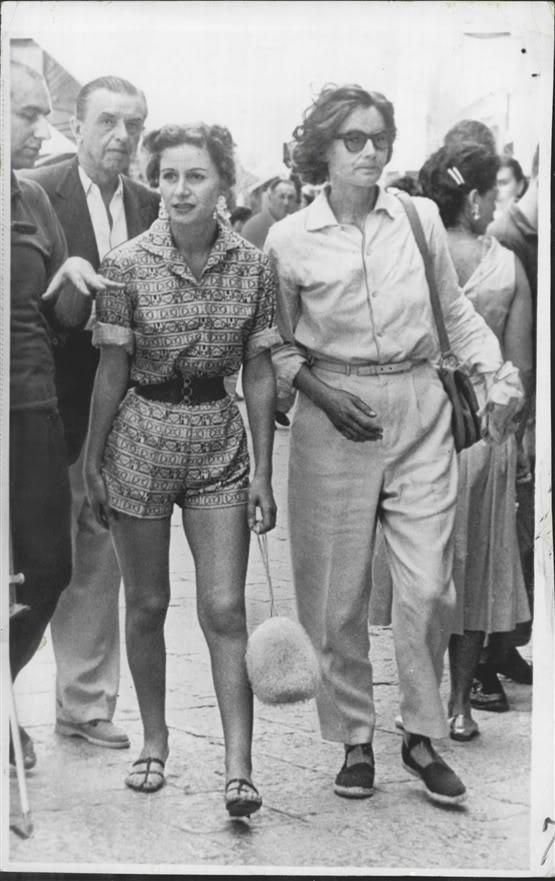
Greta Garbo with a female friend on the isle of Capri in 1955.
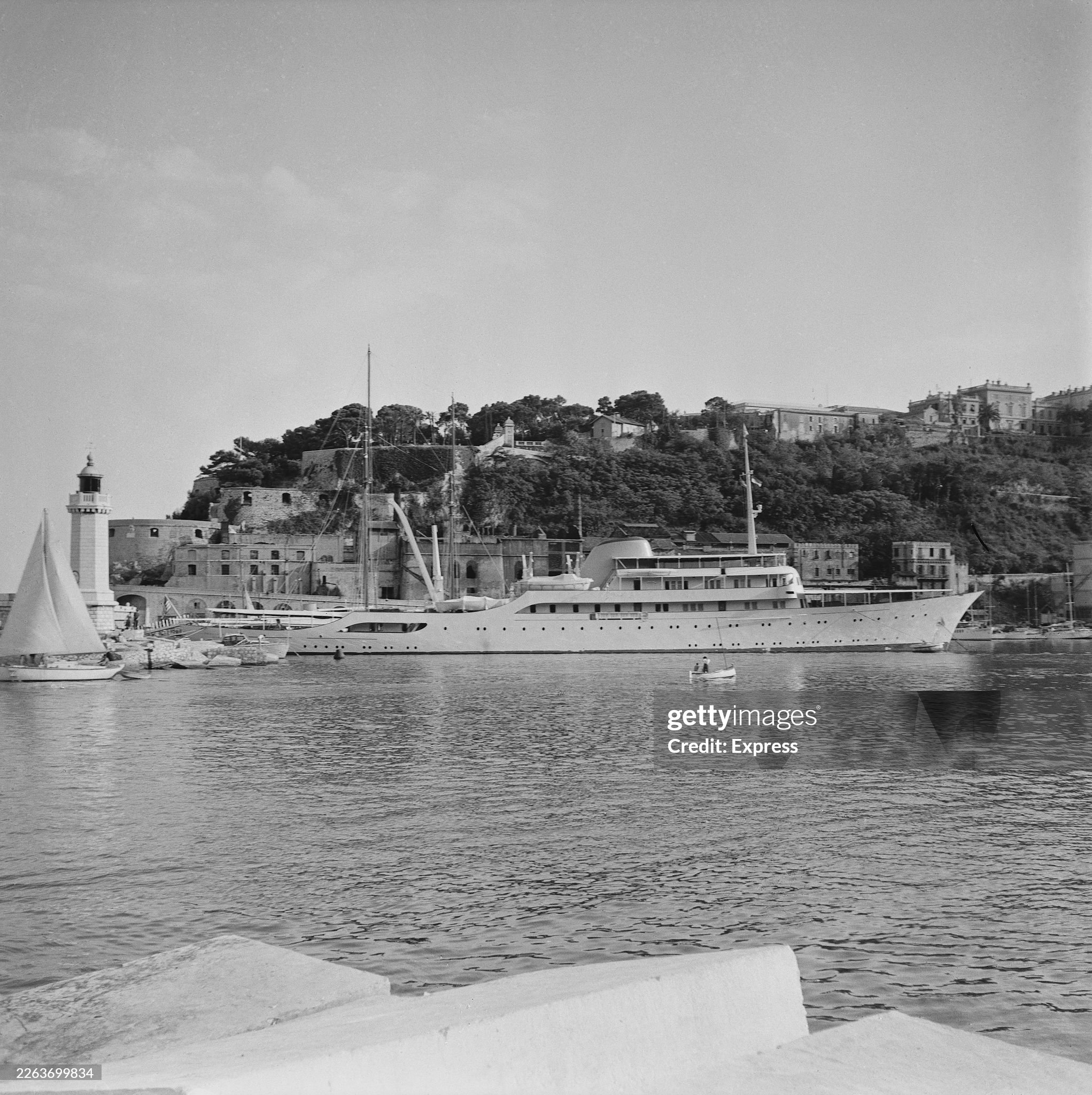
The 'Christina’ moored in Monte Carlo, Monaco, on 23rd August 1955. The yacht belonged to Greek businessman Aristotle Onassis. Photo by Stroud / Express / Hulton Archive / Getty Images.
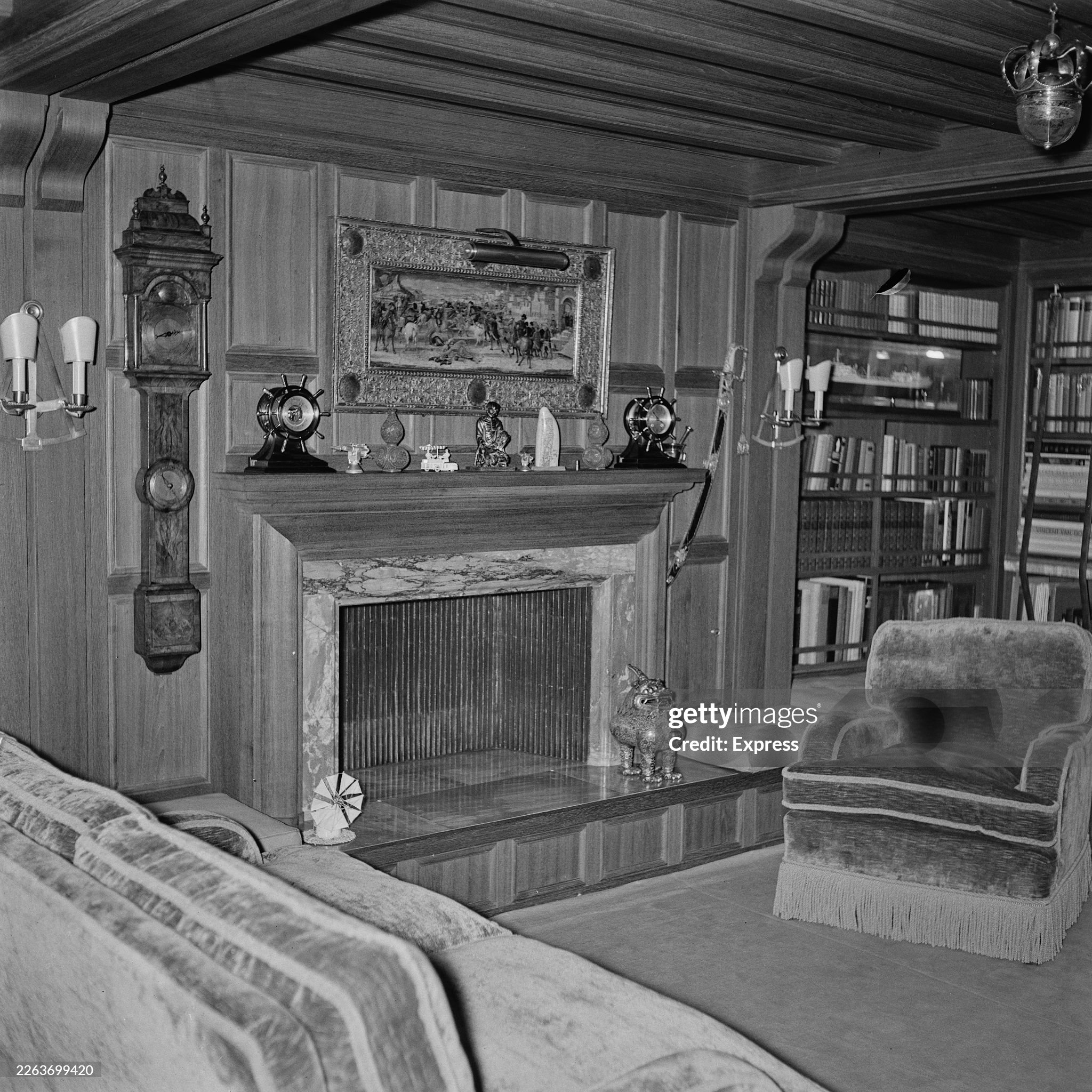
Furnishings in a reception room in the 'Christina' private motor yacht moored in Monte Carlo on 23rd August 1955. Photo by Stroud / Express / Hulton Archive / Getty Images.
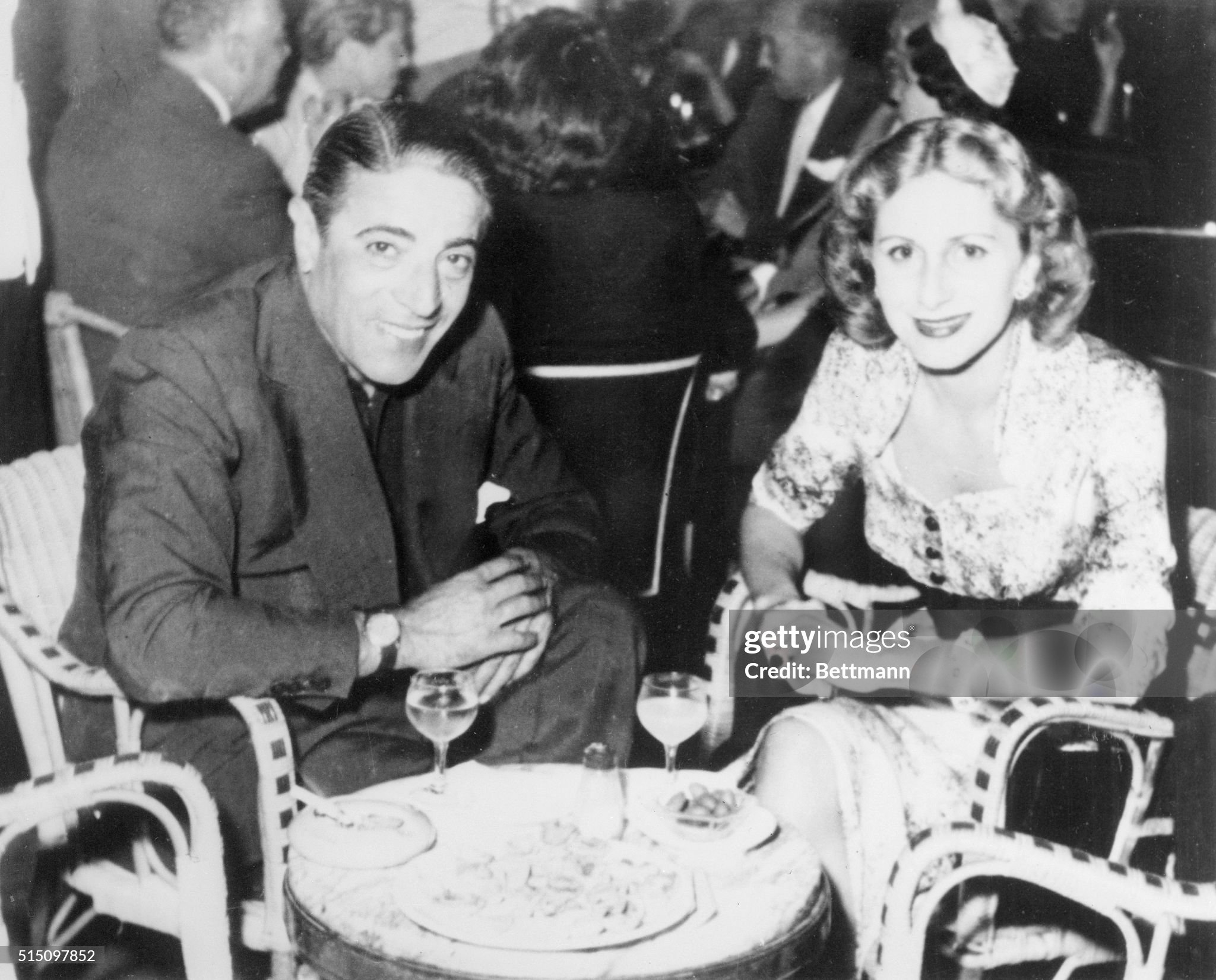
Aristotle Onassis sits with his first wife Athina at an Athens café on September 01, 1955. Photo by Getty Images.
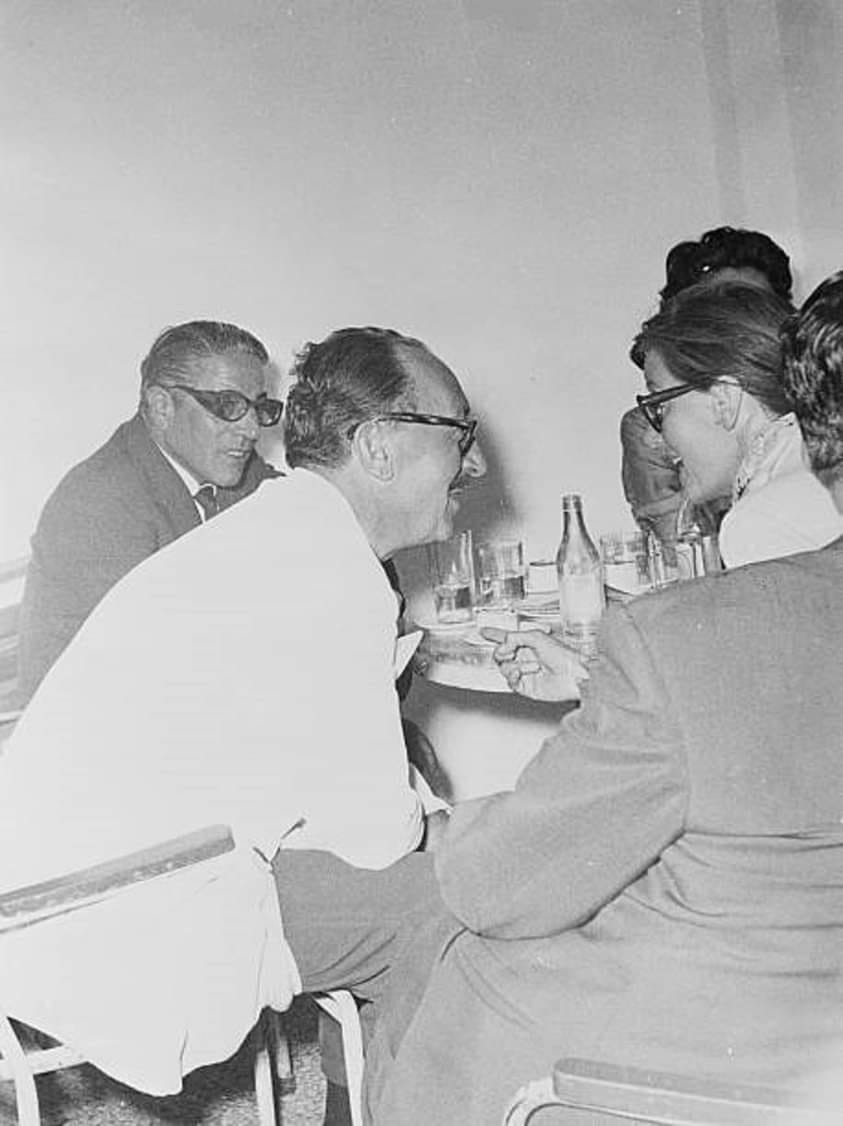
Greta Garbo and some friends in an Athens cafe are seen chatting animatedly on 01 September 1955. At left is Greek multimillionaire ship owner Aristotle Onassis. The others are unidentified.
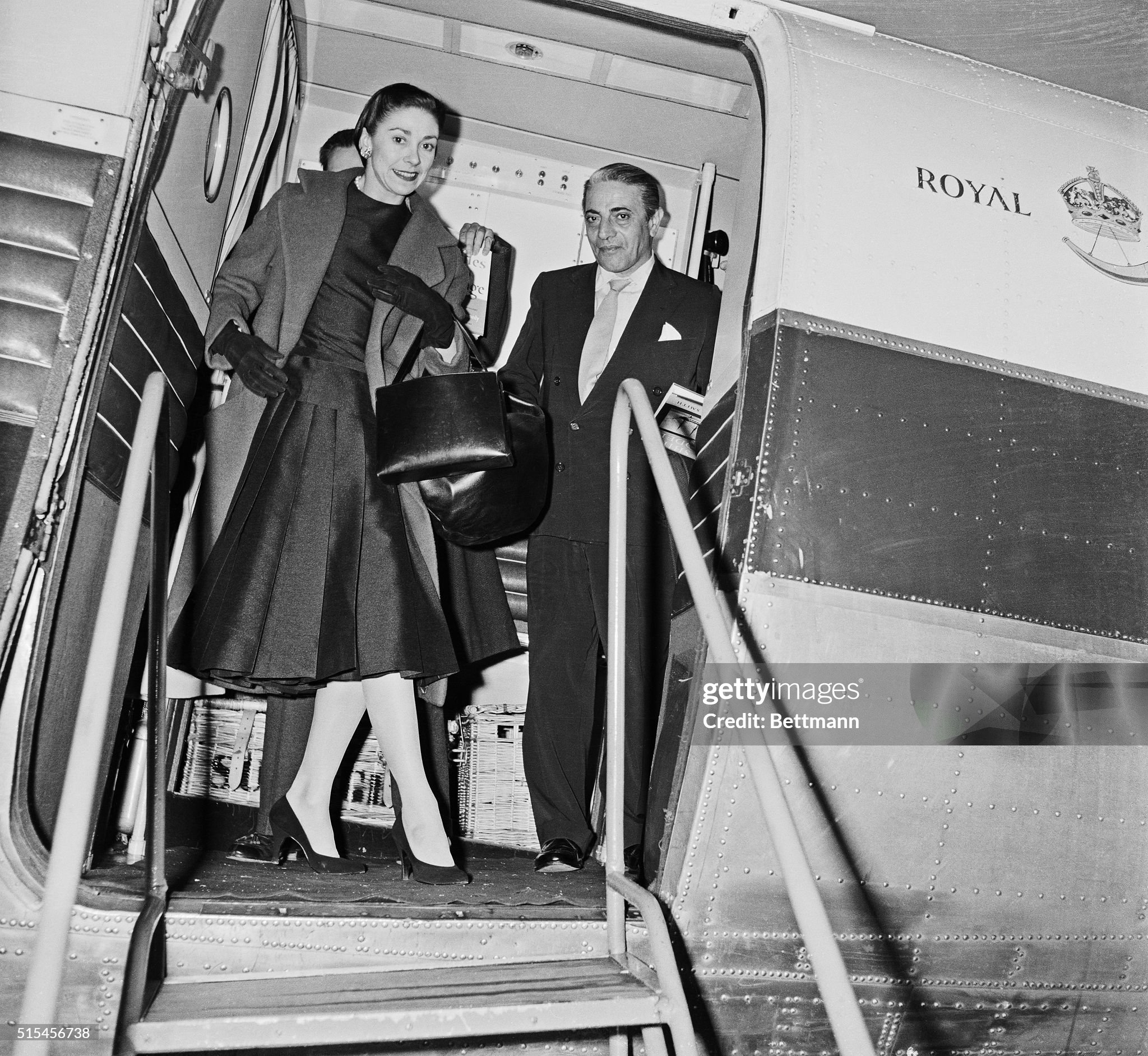
World famous ballerina Margot Fonteyn is accompanied by Greek ship owner Aristotle Socrates Onassis, as she steps from a chartered plane upon arriving in Nice from London on 25 January 1956. They were on the way to Monte Carlo. Photo by Getty Images.
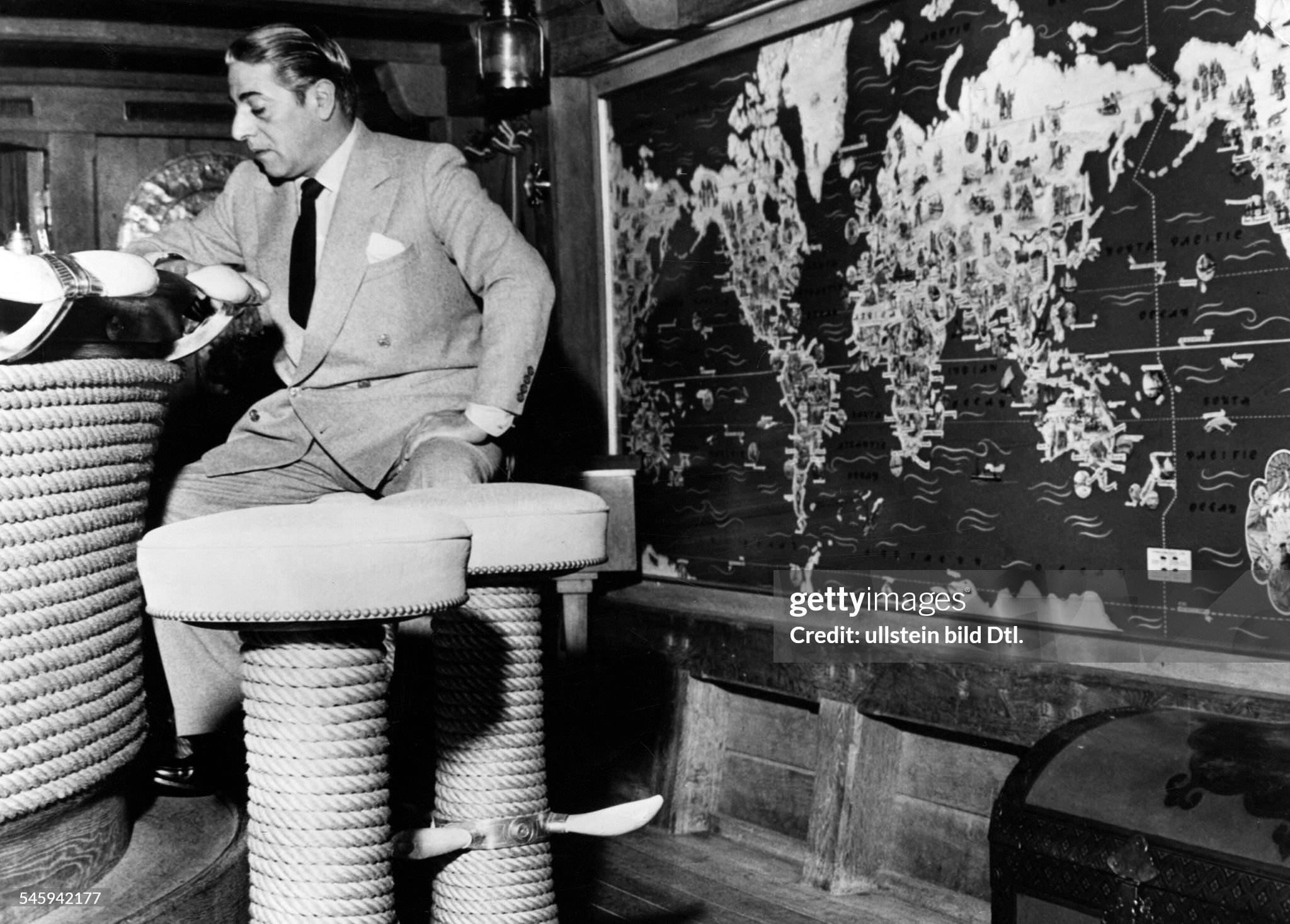
Aristotle Onassis in the bar of his luxury yacht ‘Christina’ on 01 March 1956. Photo by Ullstein bild via Getty Images.
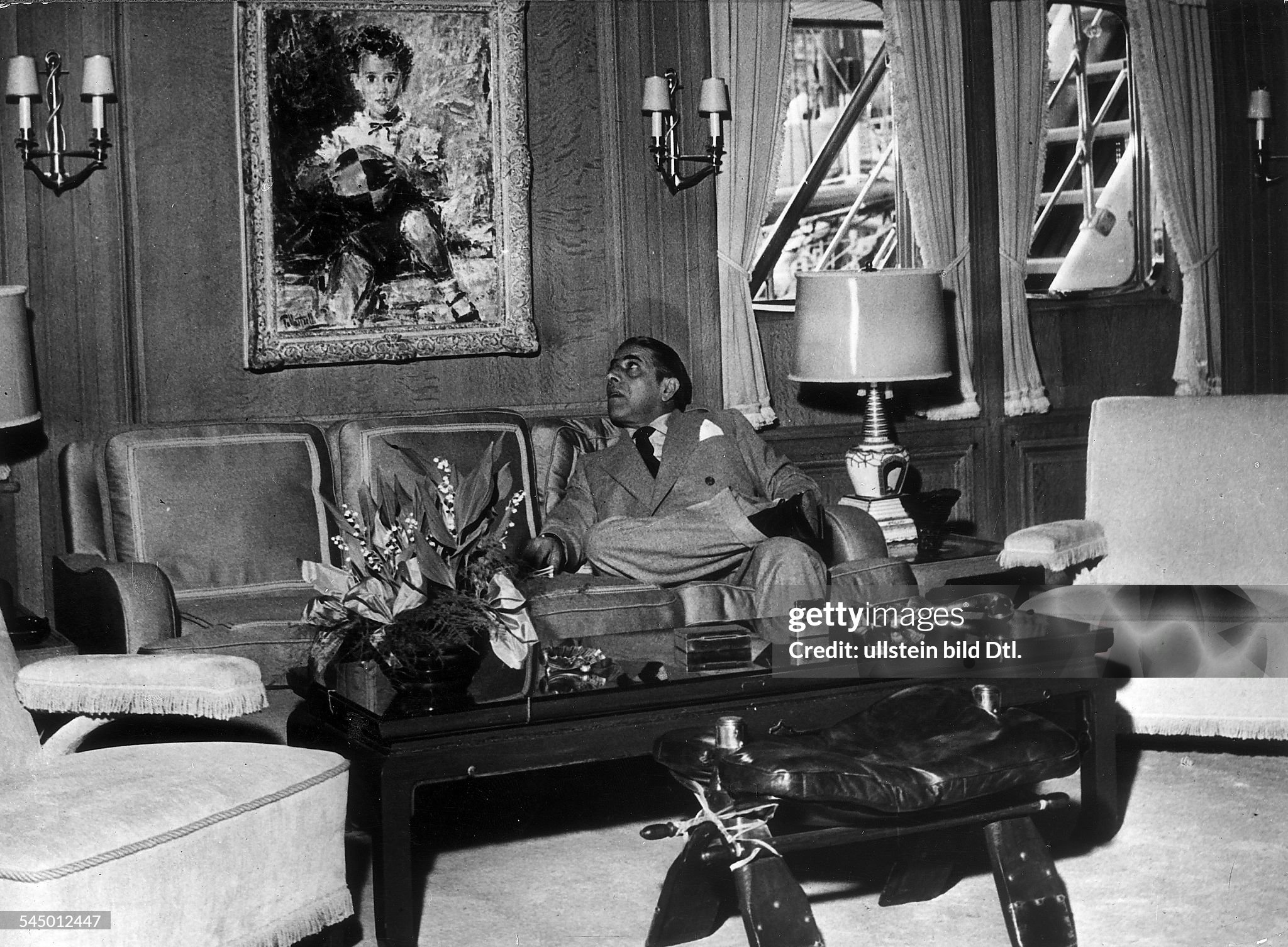
Aristotle Onassis on his luxury yacht ‘Christina’. Photo by Ullstein bild via Getty Images.
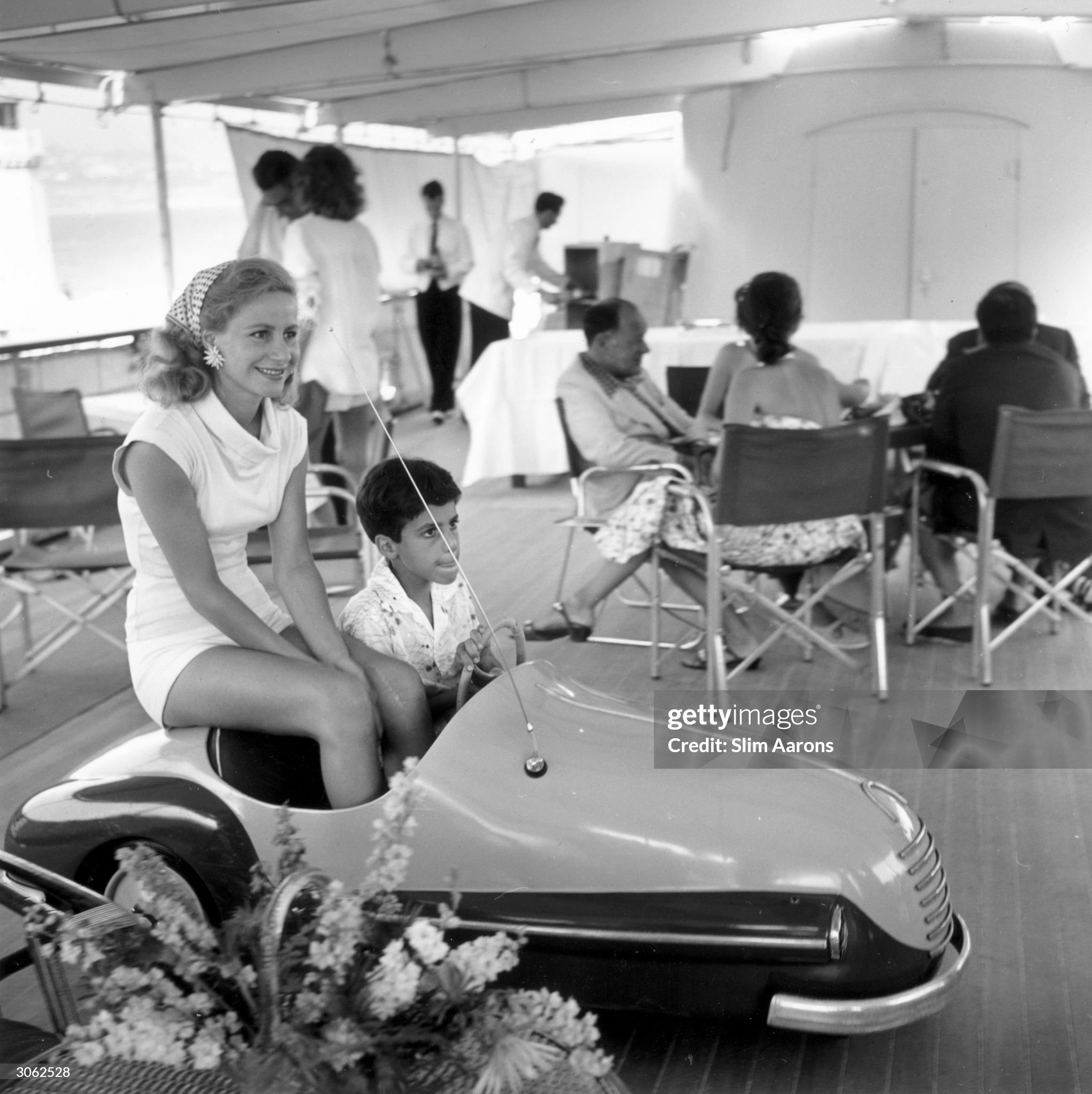
Athina (Tina) Livanos, first wife of shipping magnate Aristotle Socrates Onassis, on board Aristotle's yacht 'Christina' with her son Alexander (1948 - 1973) in Monte Carlo in 1956. Photo by Slim Aarons / Getty Images.
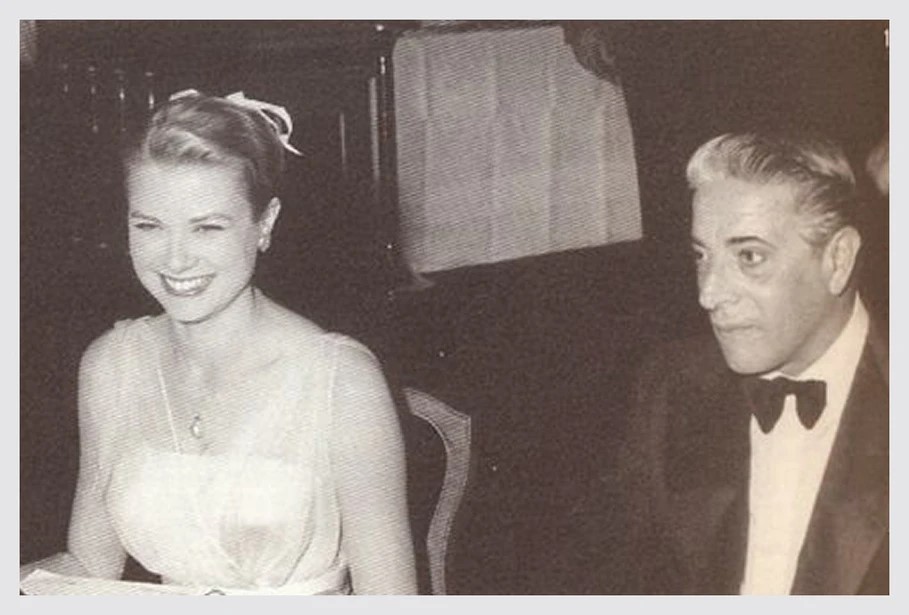
Grace of Monaco and Aristotle Onassis on ‘Christina’ in 1956.
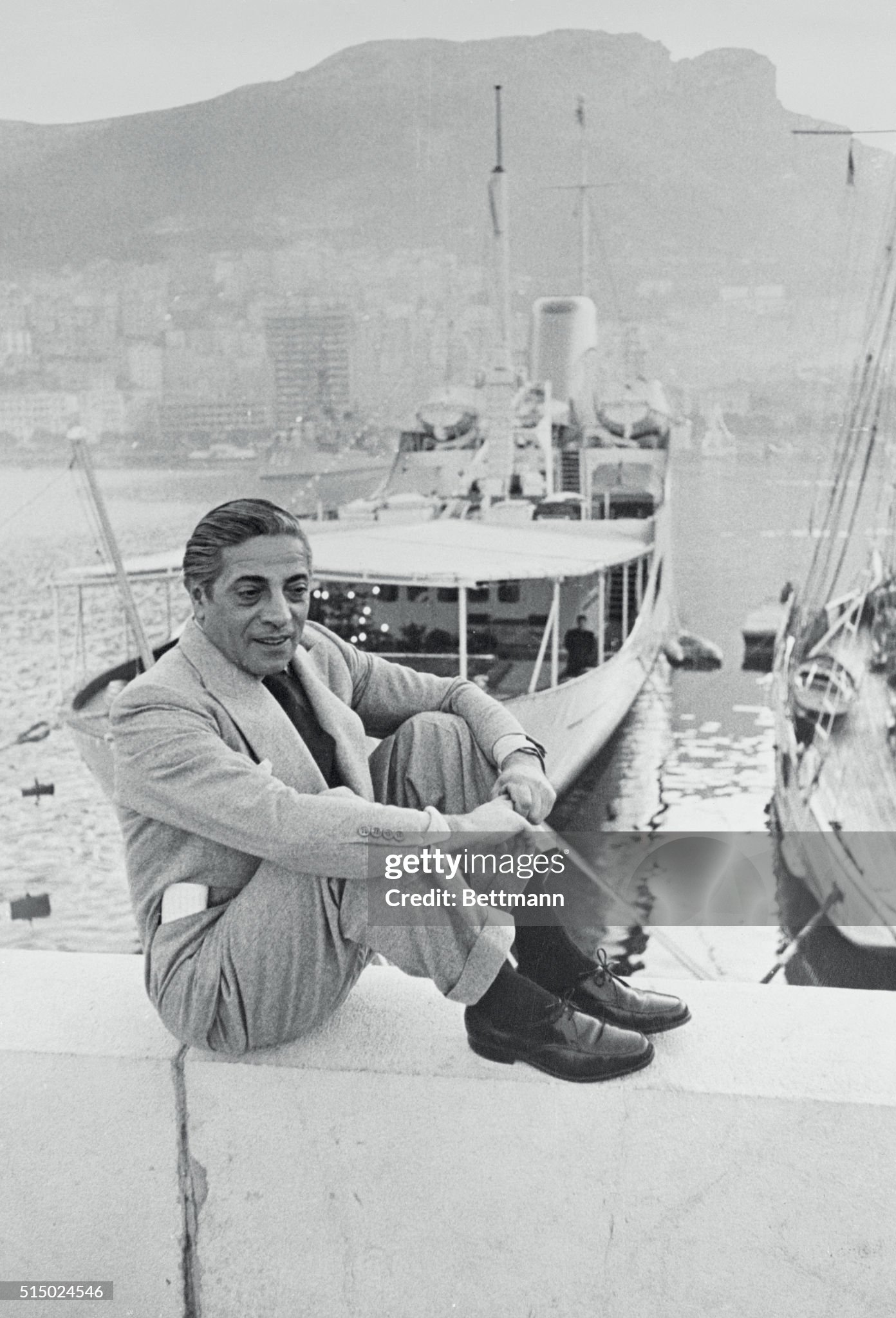
Sitting on the quay wall in front of his converted $2,5000,000 destroyer yacht ‘Christina’ is Greek shipping magnate Aristotle Onassis on 16 April 1956. Photo by Getty Images.
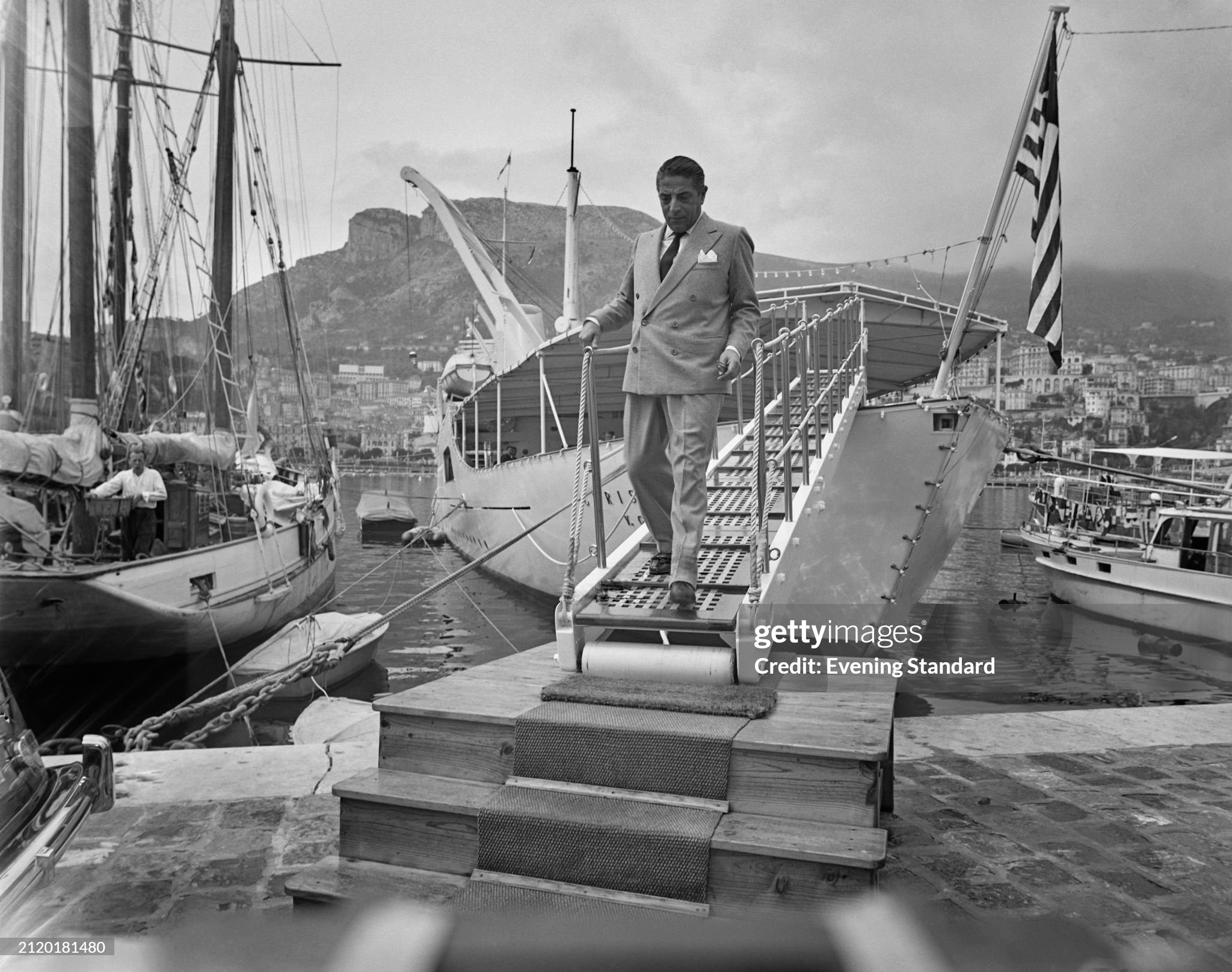
Aristotle Onassis in Monaco on 20 April 1956 to attend the wedding of Grace Kelly and Prince Rainier. Photo by Evening Standard / Hulton Archive / Getty Images.
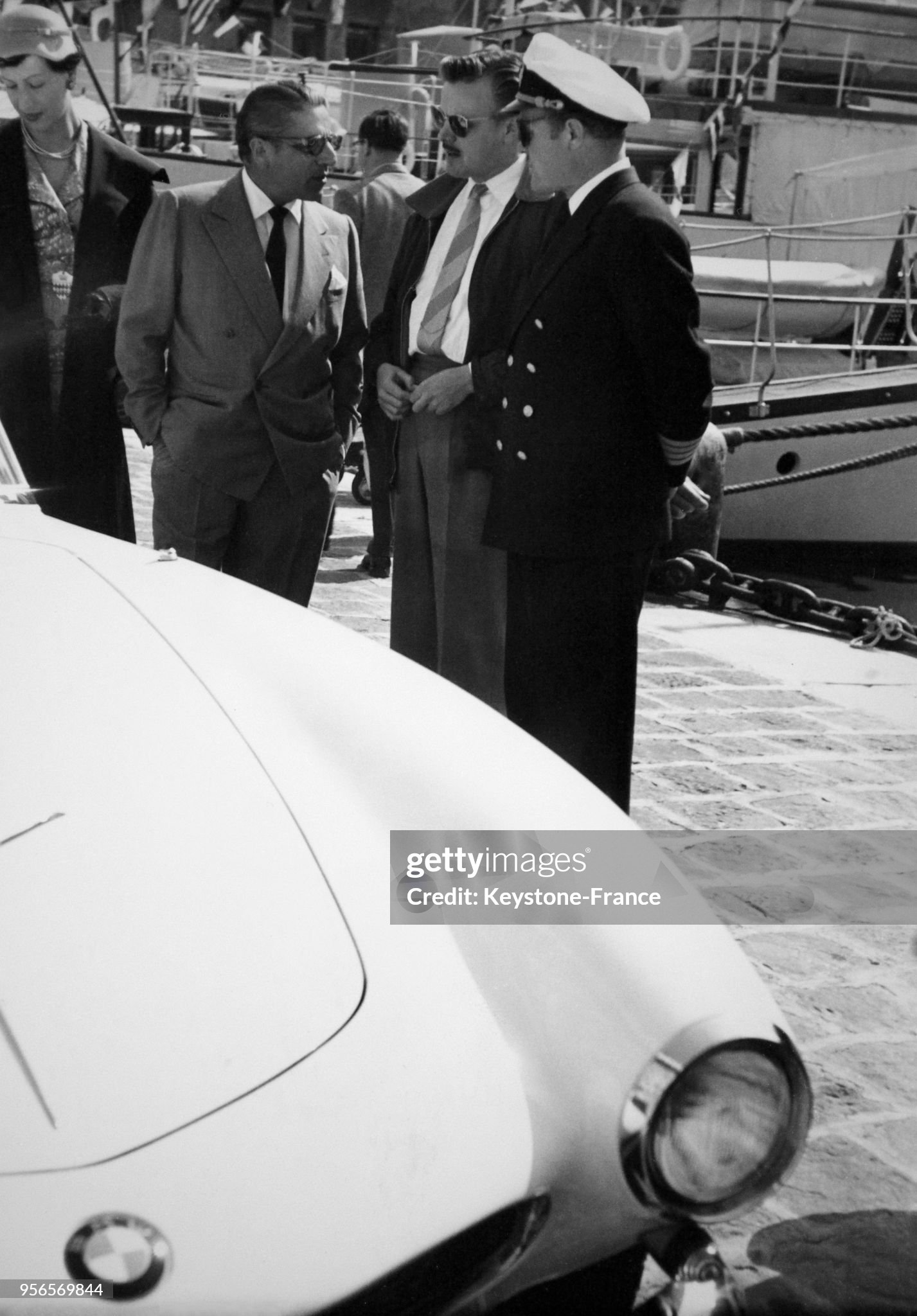
Aristotle Onassis and the captain of his ship look at the new BMW 507 parked in the port of Monaco on April 21, 1956. Photo by Keystone - France / Gamma-Rapho via Getty Images.
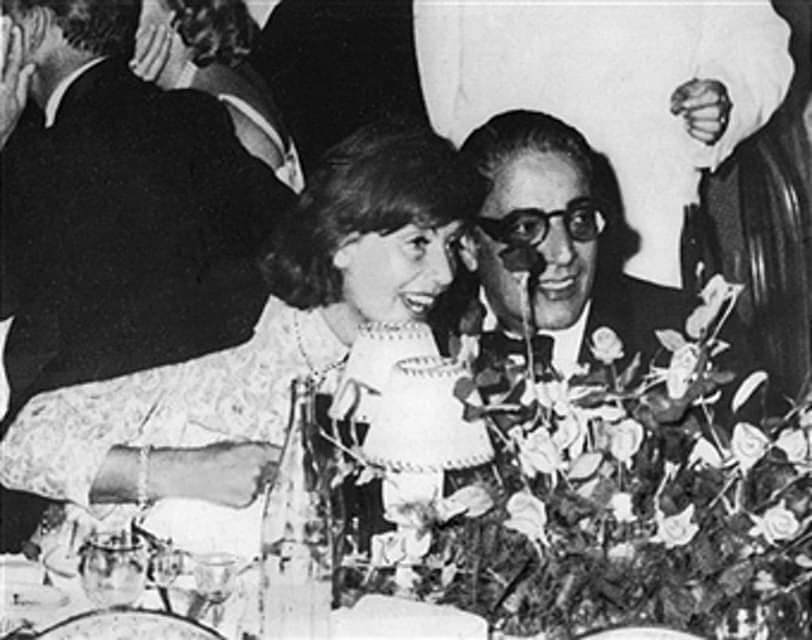
Greta Garbo, long noted as a dodge of cameras, is unaware of the photographic eye as she smiles across the table at a gala party on in Monte Carlo's Sporting Club. Her companion is Aristotle Onassis, millionaire Greek ship owner. The elegant affair drew many international society figures enjoying French Riviera vacations in 1956. Photo by Ullstein bild via Getty Images.
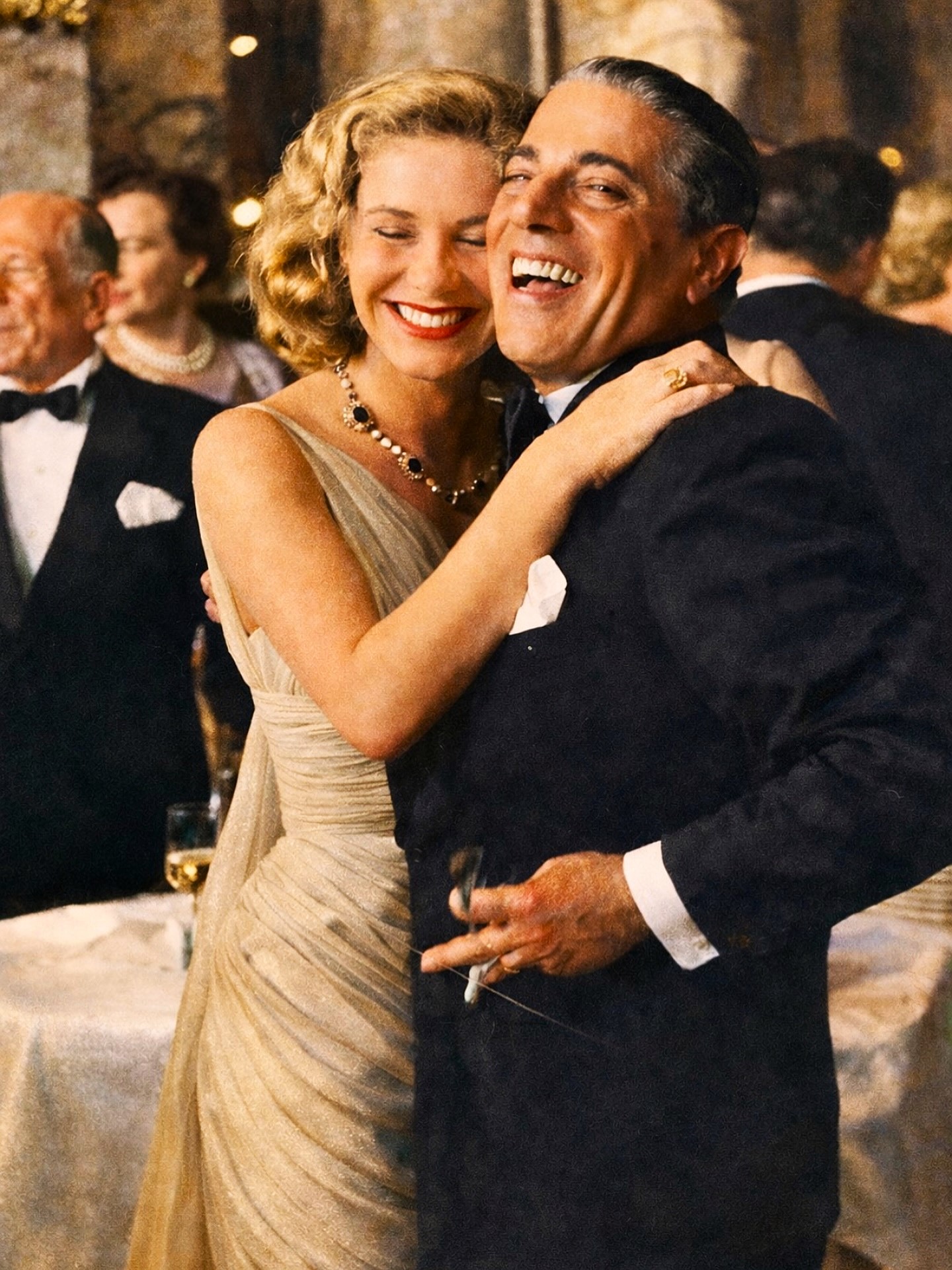
Tina and Aristotle Onassis at the New Year’s Eve gala in Monte Carlo in 1956. Photo by Edward Quinn.

The Olympic Airways building.
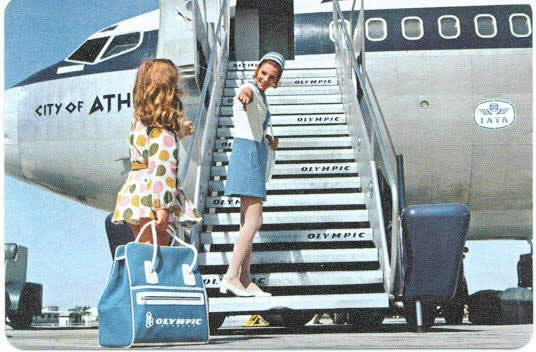
The iconic cabin crew uniforms of Olympic Airways. On 06 April 1957 Aristotle Onassis officially launched Olympic Airways. He was heading the airline and provided luxury and lavish flights.
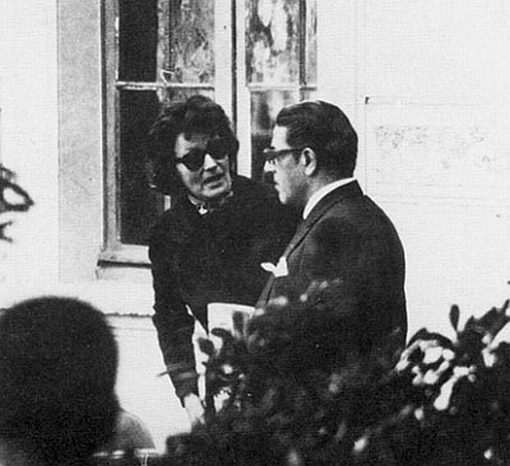
Greta Garbo talking to Aristotle Onassis in Monaco in June 1957.
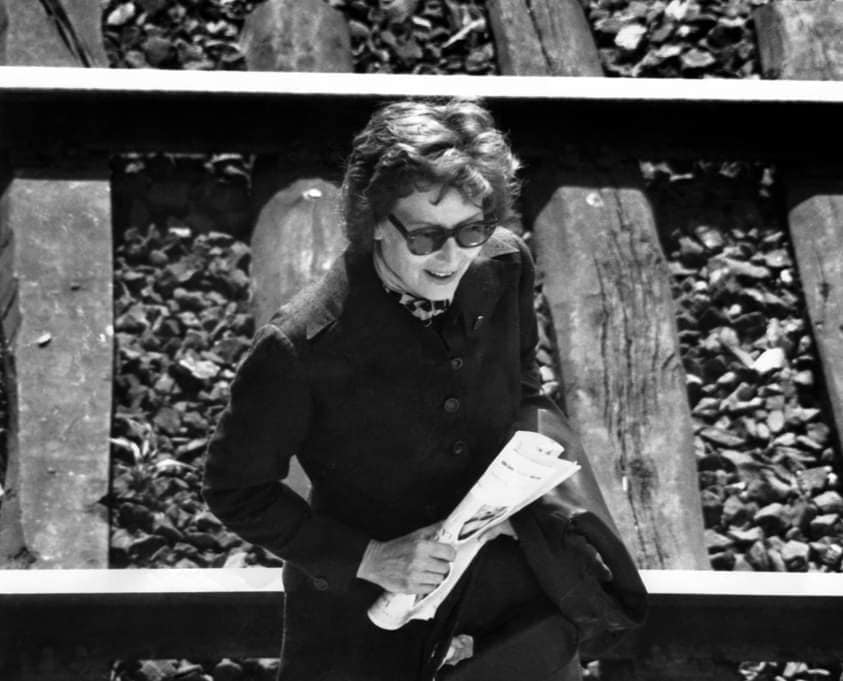
Greta Garbo in Monaco in June 1957.
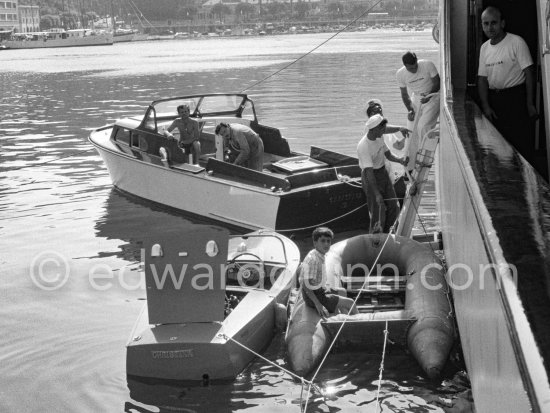
In the Monaco harbor in 1957 a young Alexander Onassis in a striped shirt sits on the pontoon of an inflatable dinghy, one of the tenders for the yacht ‘Christina’. He looks up as crew members descend a ladder from the main vessel's high hull. Moored alongside are other support boats, including a sleek motor launch with the name ‘CHRISTINA O.A.’ visible on its side. Photo by Edward Quinn.
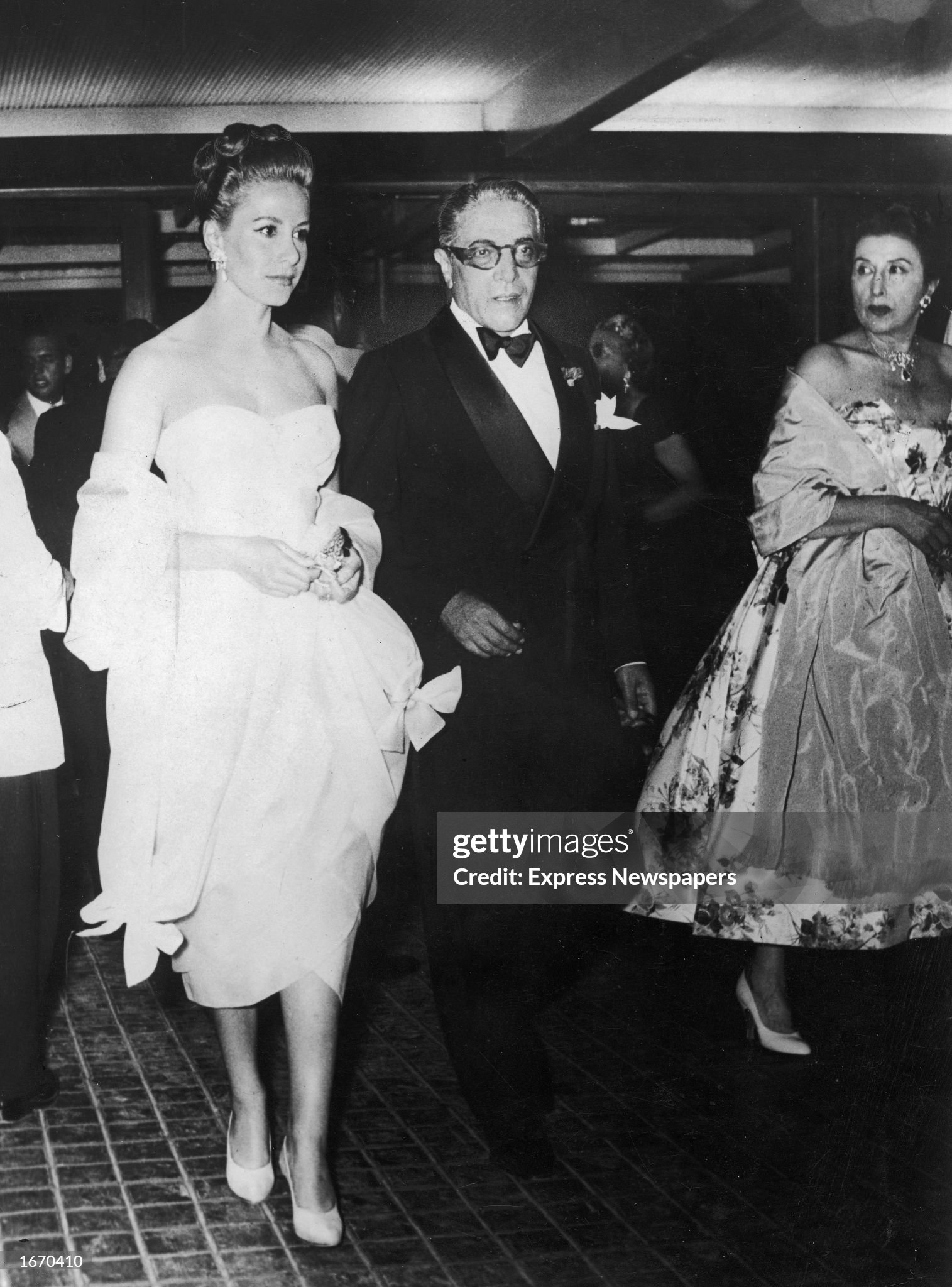
Aristotle Onassis and his first wife Athina arrive at a party, as Greek actor Katina Paxinou (right) (1900 - 1973) looks on, near Athens, Greece, in July 1957. Photo by Express Newspapers / Getty Images.
Aristotle Onassis and his first wife Athina arrive at a party near Athens, Greece, in July 1957.
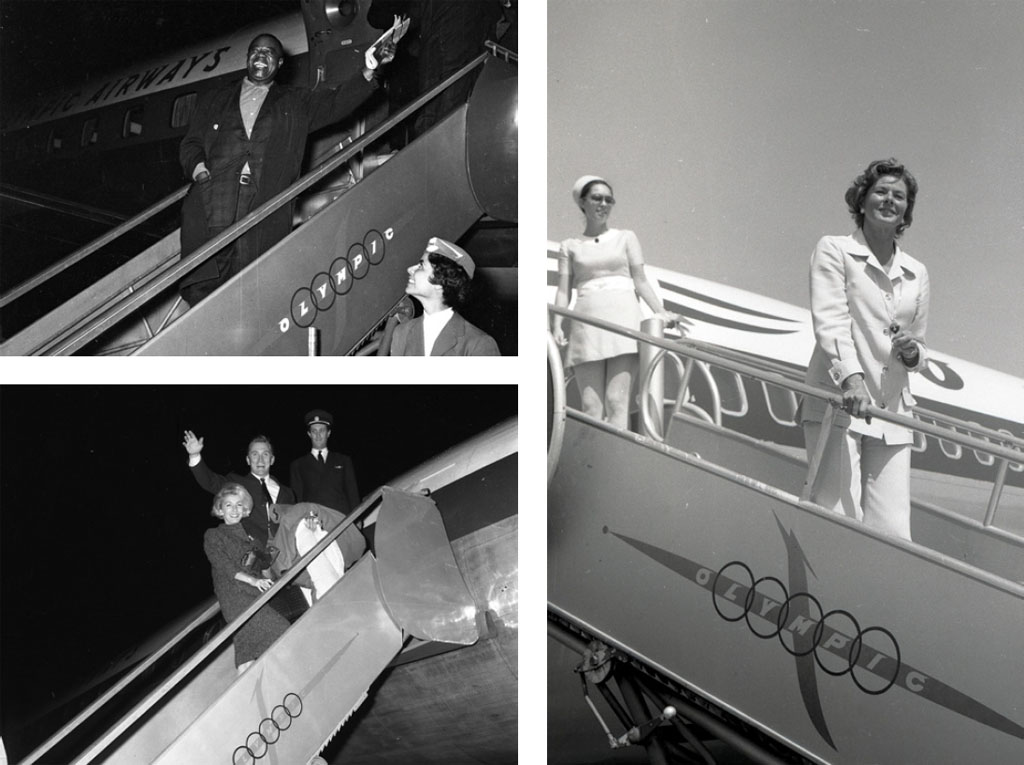
On 30 July 1956 birth of Onassis' Olympic Airways.
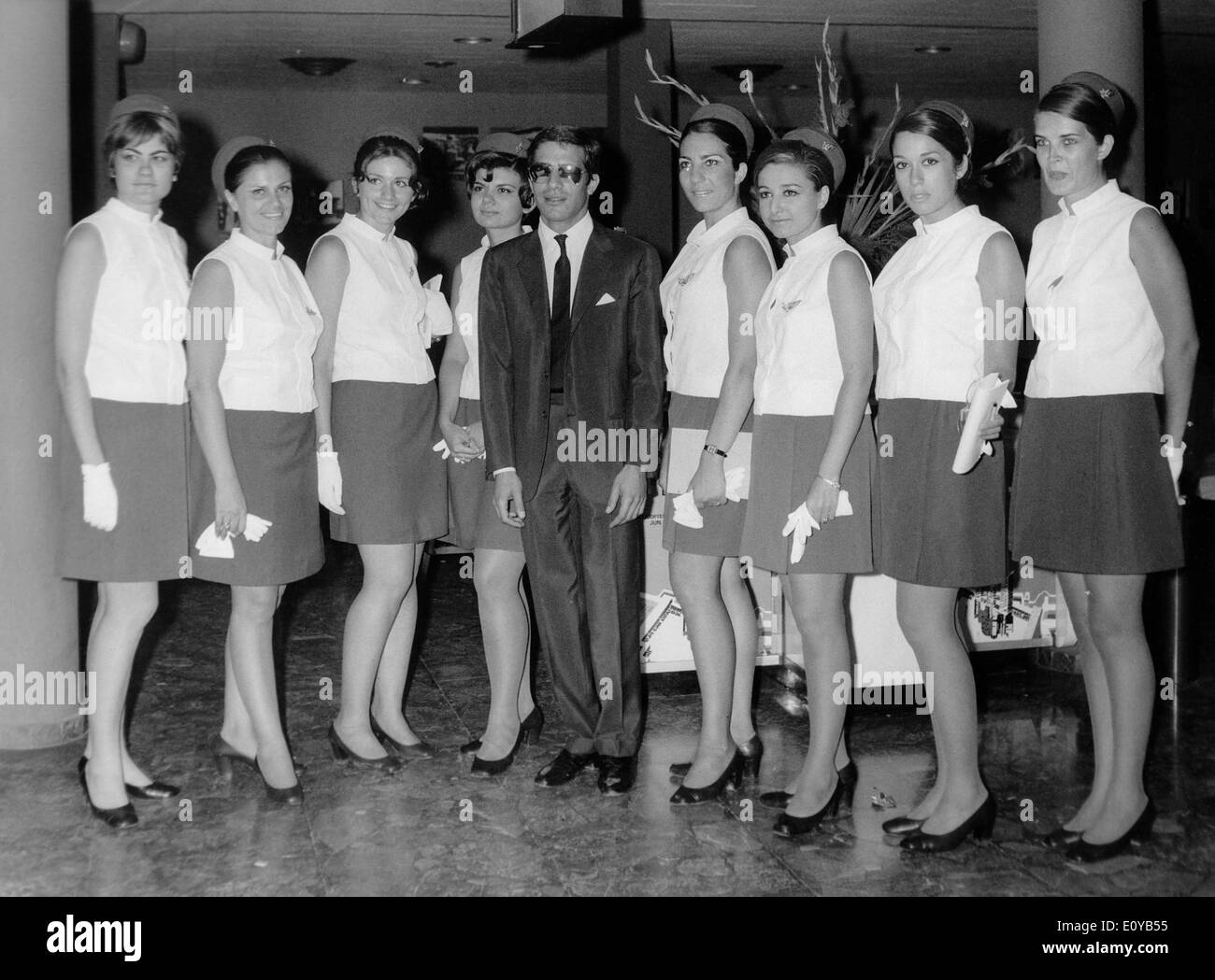
Alexander Onassis with Olympic Airways flight attendants.
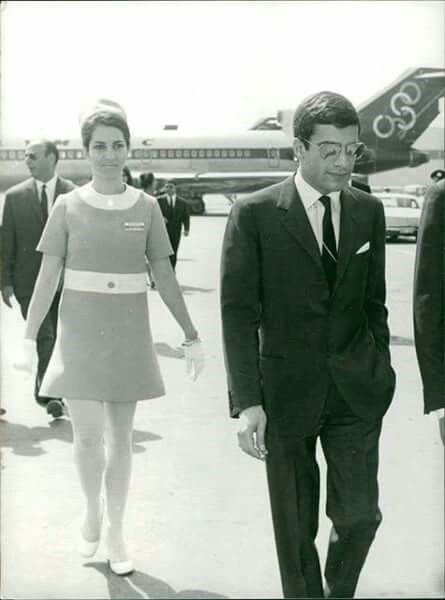
Alexander Onassis with an Olympic Airways flight attendant.
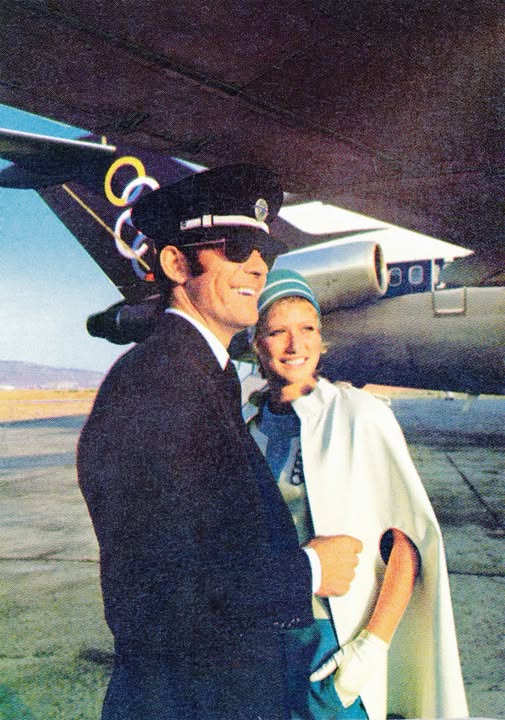
The beautiful Olympic Airways uniforms.
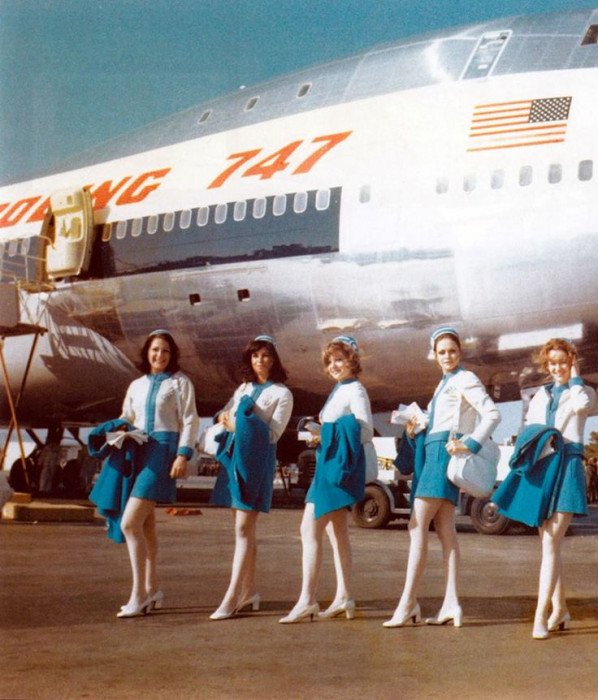
Greece’s Olympic Airways uniforms by Pierre Cardin. In 1969 realtor tycoon Aristotle Onassis, owner of Olympic Airlines, chooses Pierre Cardin to dress his stewardesses. Photo by Olympic Airways archives.
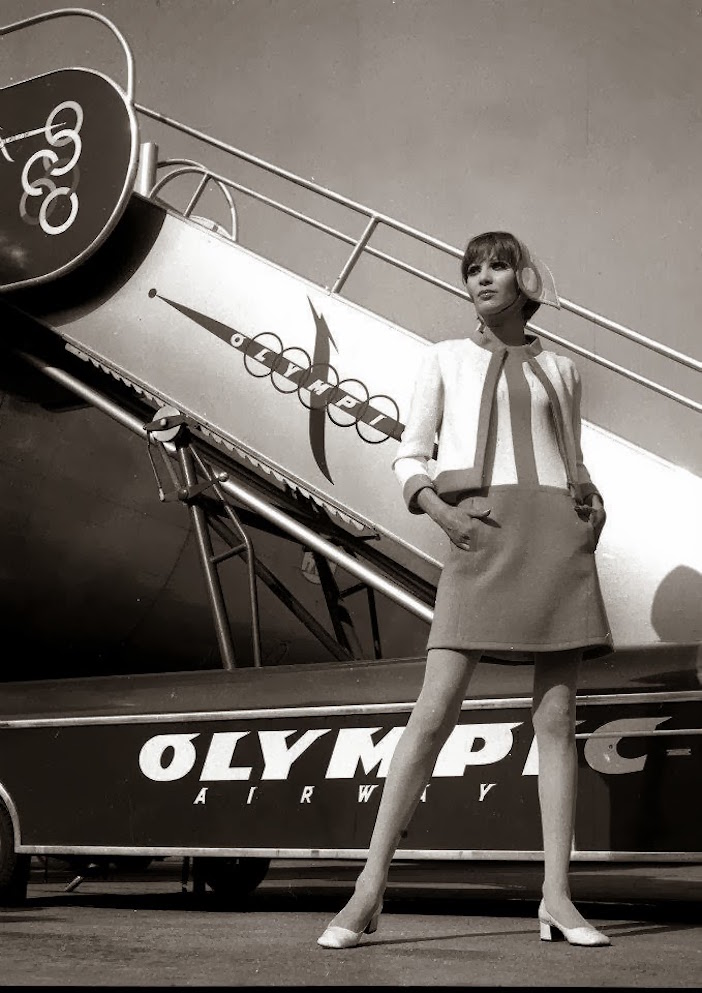
Pierre Cardin Greece's iconic cabin crew uniforms.
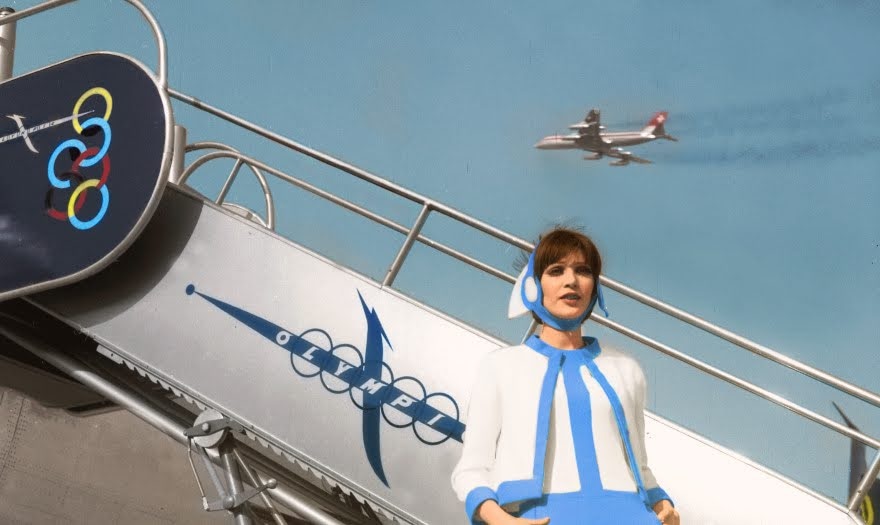
Pierre Cardin Greece's iconic cabin crew uniforms.
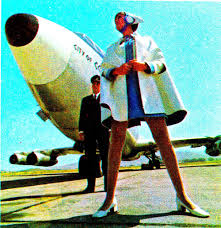
Pierre Cardin Greece's iconic cabin crew uniforms.
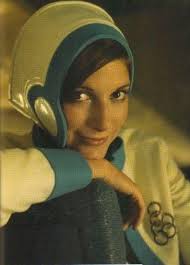
Pierre Cardin Greece's iconic cabin crew uniforms.
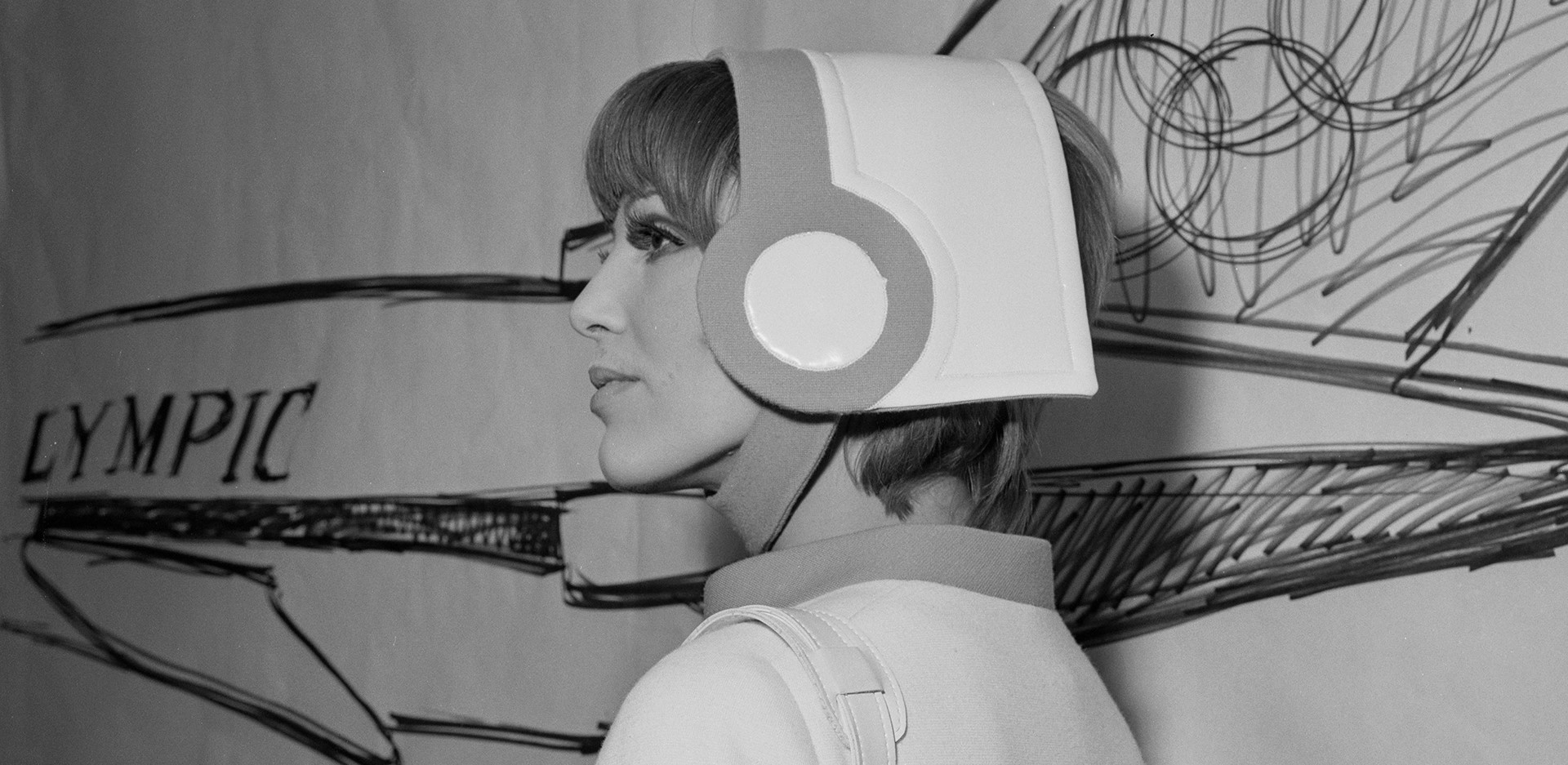
Pierre Cardin Greece's iconic cabin crew uniforms.

The beautiful Olympic Airways uniforms.
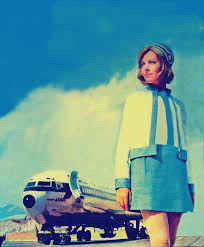
The beautiful Olympic Airways uniforms.
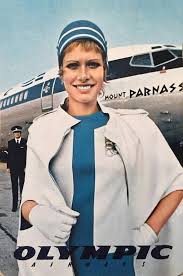
The beautiful Olympic Airways uniforms.
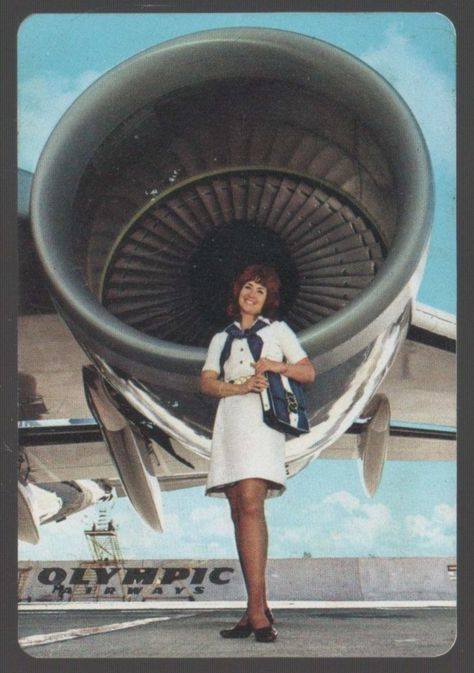
The beautiful Olympic Airways uniforms.
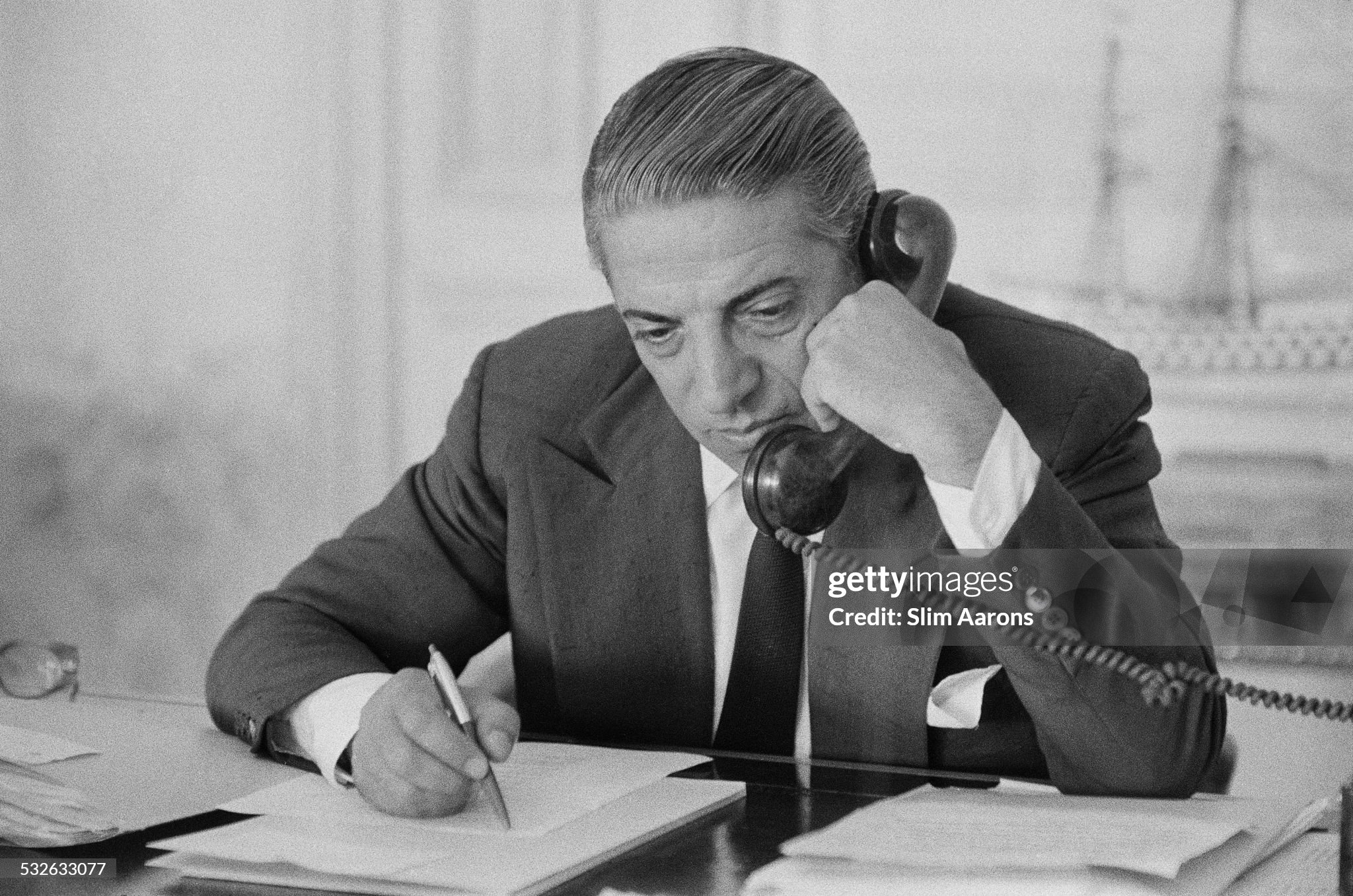
Greek shipping tycoon Aristotle Socrates Onassis in his Monte Carlo office in 1958. Photo by Slim Aarons / Getty Images.
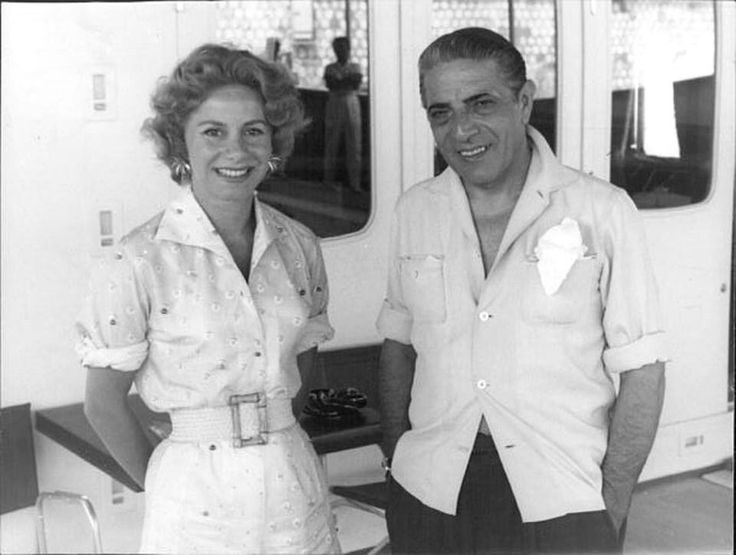
Aristotle Onassis and his wife Tina on board the yacht ‘Christina’ in the Monaco harbor in 1958. Photo by Edward Quinn.
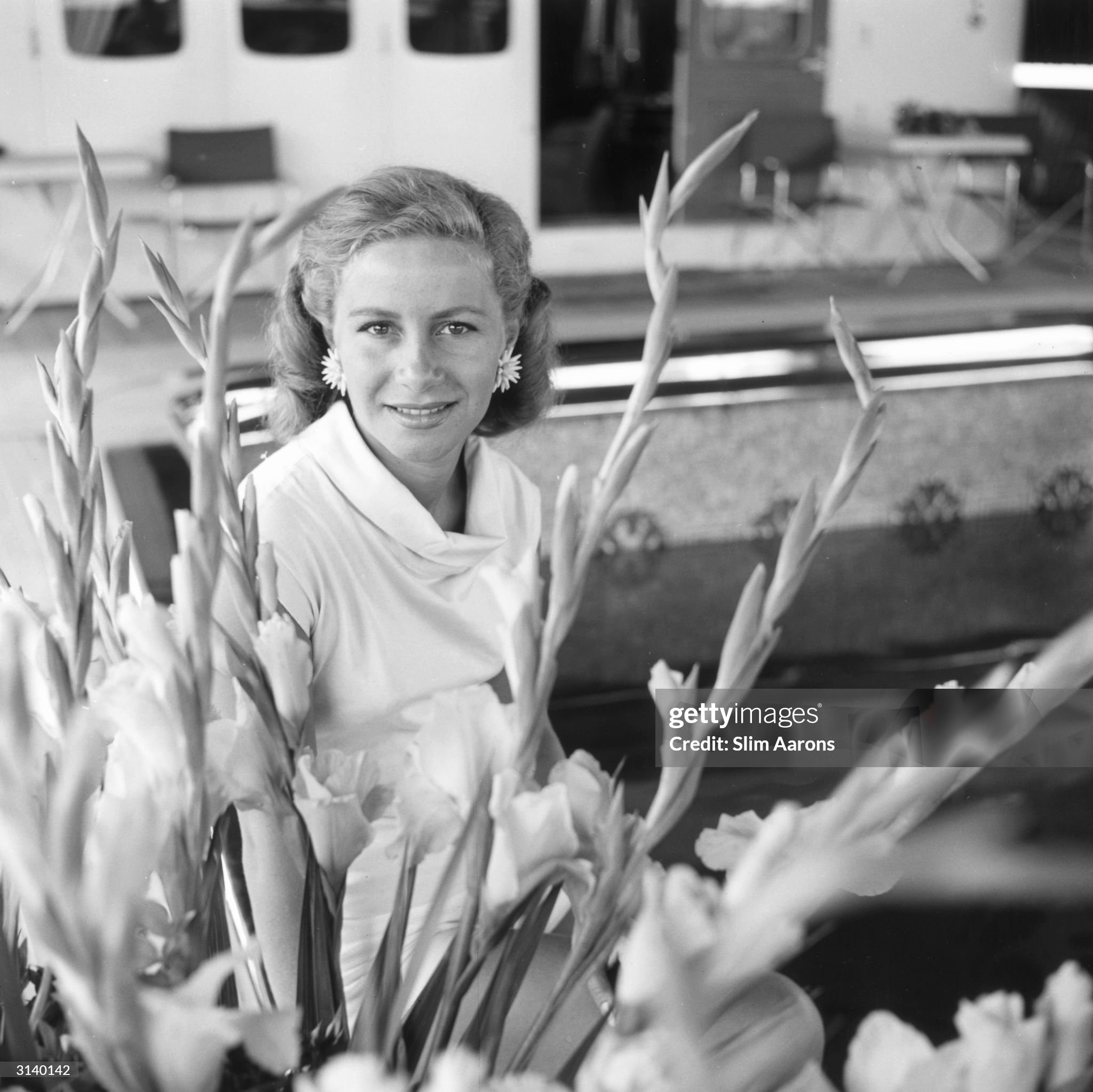
First wife of Greek ship owner Aristotle Onassis, Athina Livanos Onassis (Tina), aboard their luxury yacht 'Christina' in 1958. Photo by Slim Aarons / Getty Images.
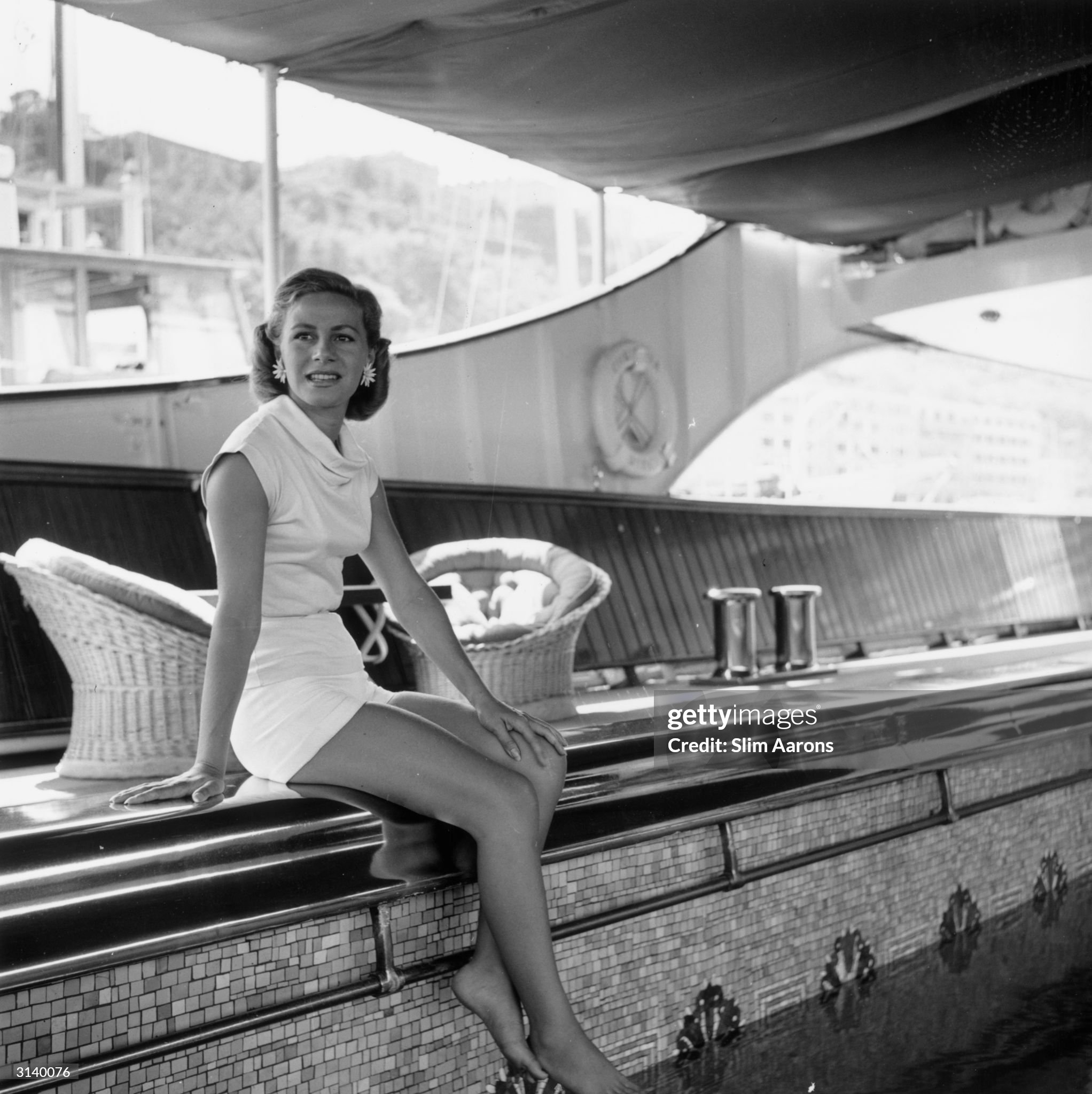
Athina Livanos Onassis relaxing by the swimming pool aboard the 'Christina' in Monte Carlo in 1958. Photo by Slim Aarons / Getty Images.
Greta Garbo, in a group that includes Onassis and George Schlee, greeting Gracie Fields during a journey in Capri on the yacht ‘Christina’.
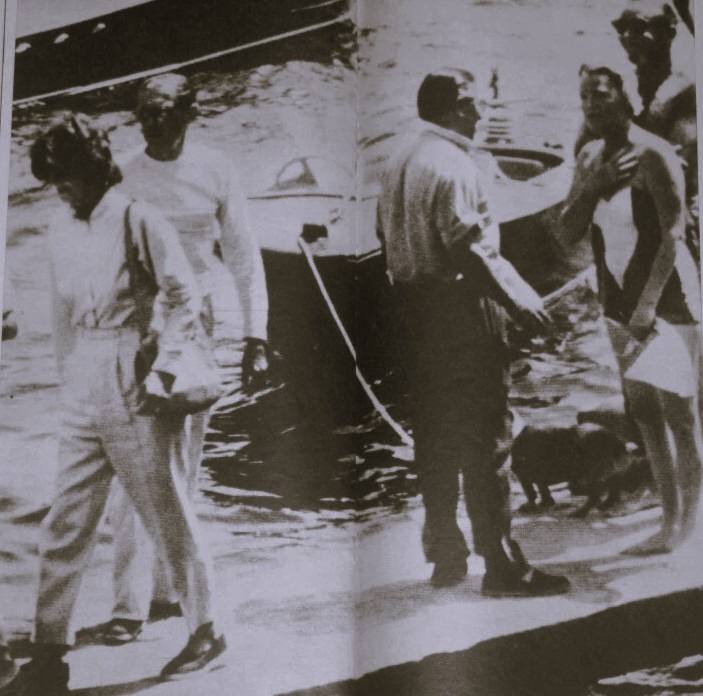
Greta Garbo, in a group that includes Onassis and George Schlee, during a journey in Capri on the yacht ‘Christina’.
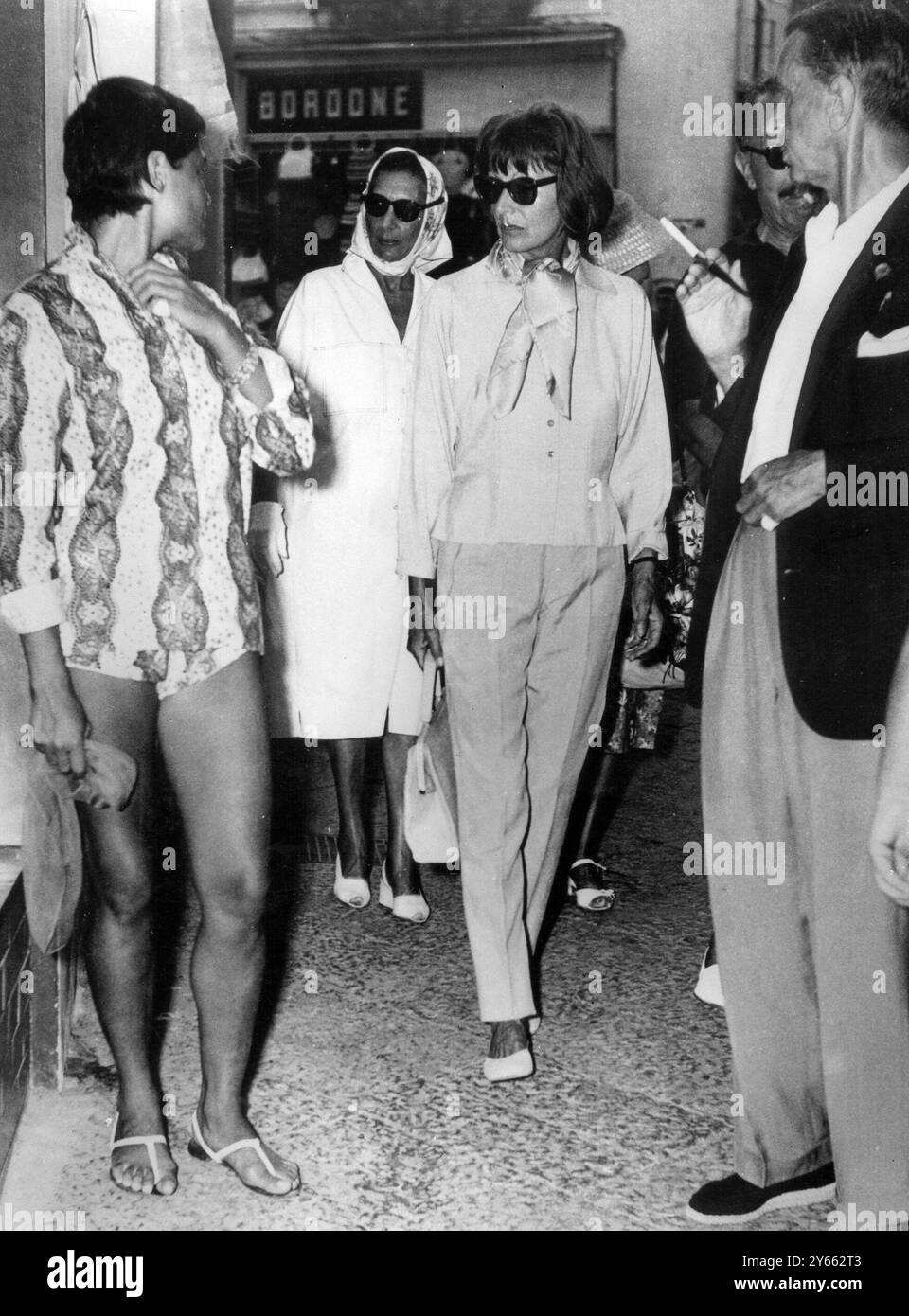
Greta Garbo, who arrived with Aristotle Onassis, walks in the streets of the isle of Capri on 31 August 1958.
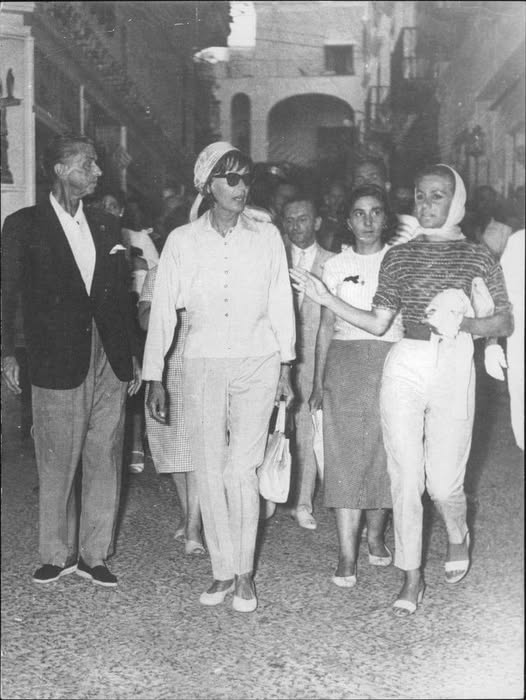
Greta Garbo, with George Schlee, walks in the streets of the isle of Capri on 31 August 1958.
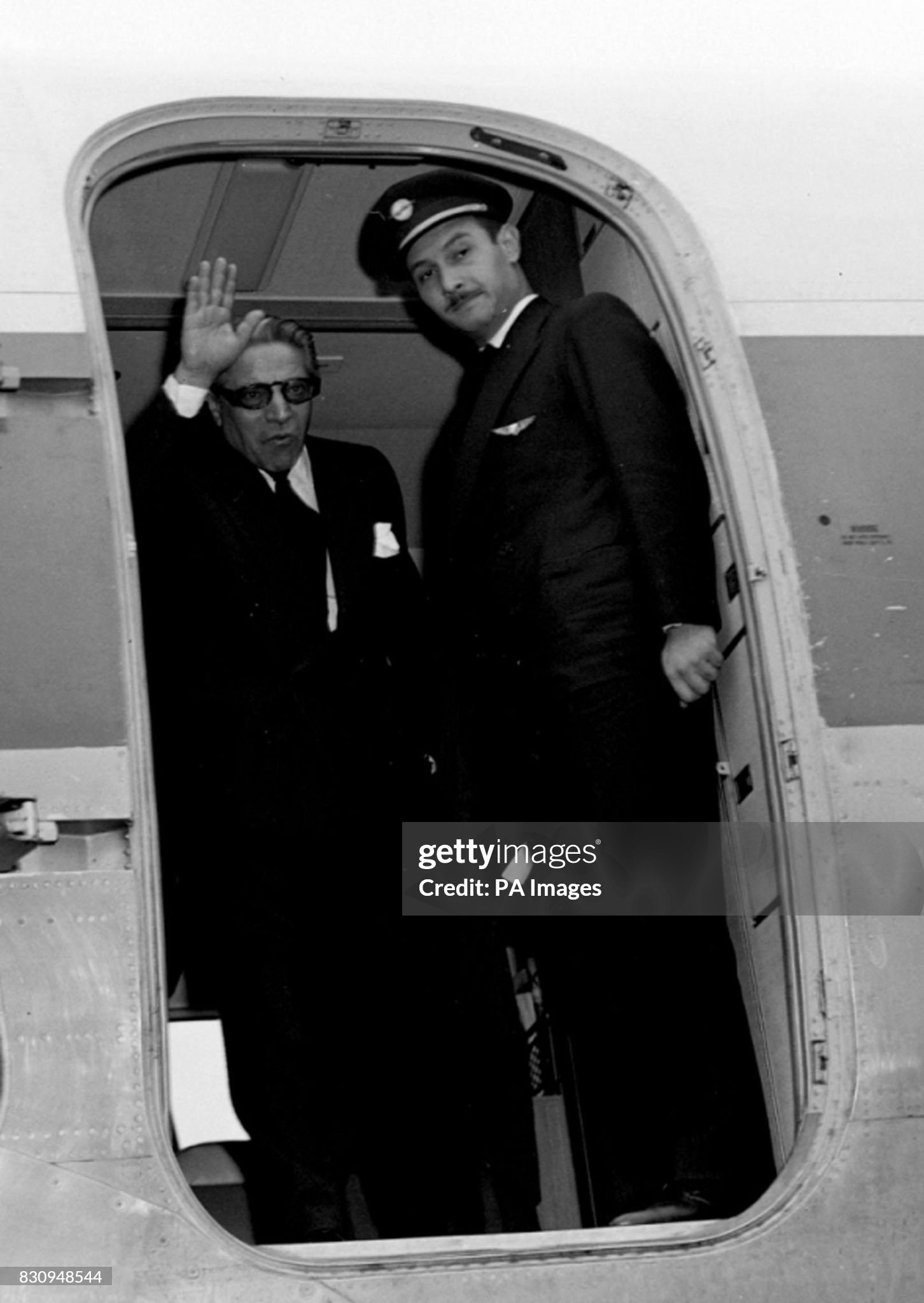
Aristotle Onassis waves from a DC 6B plane of his Olympic Airline before leaving London with Sir Winston and Lady Churchill for Marrakesh, Morocco, on 12 January 1959. Photo by PA Images via Getty Images.
Marilyn Monroe at the opening of Walt Disney Studios held at Disneyland in Paris. Photo by Dave Benett / Getty Images.
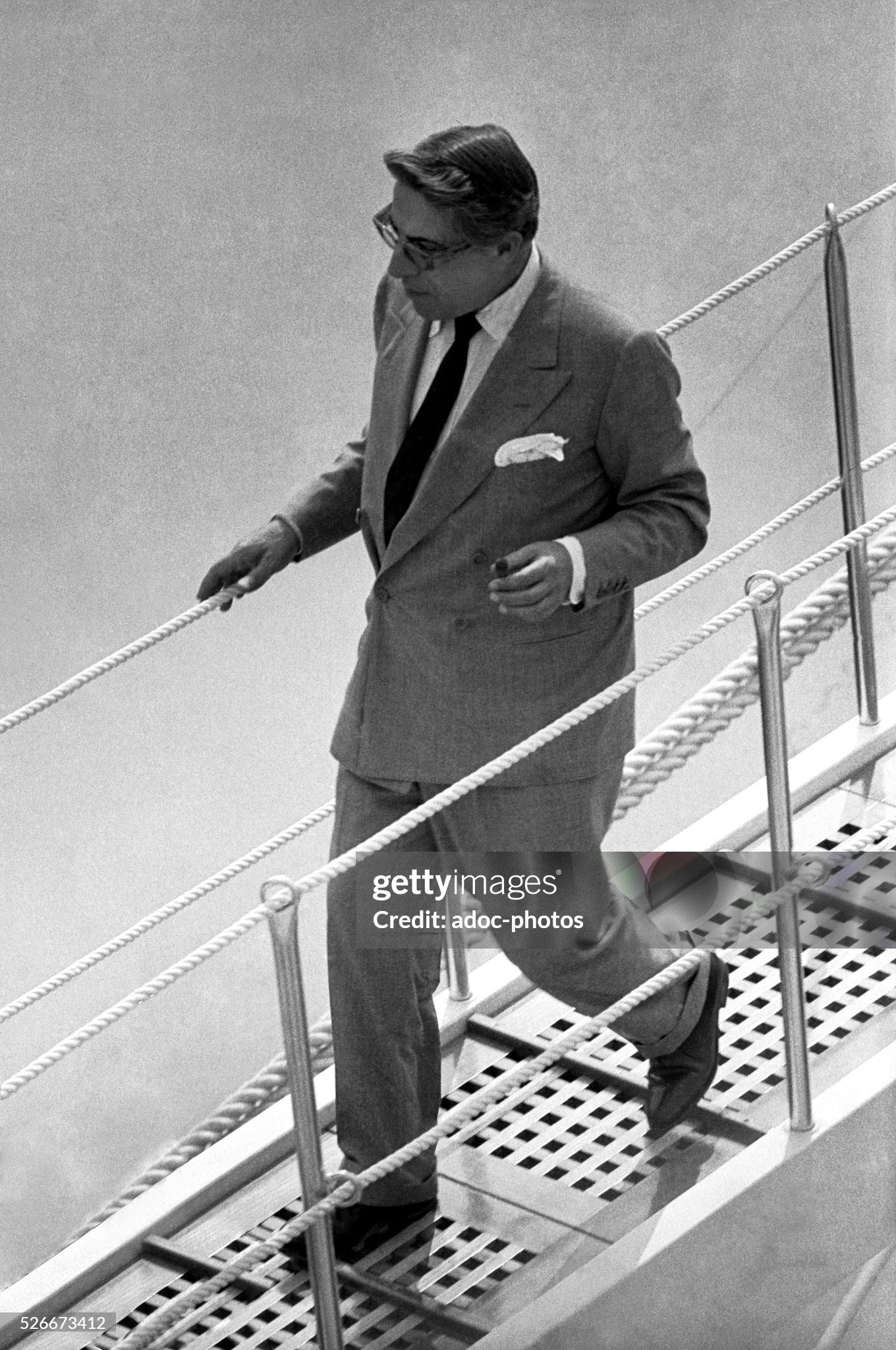
Aristotle Onassis on the of his yacht ‘Christina’ in Monaco in 1959. Photo by Adoc - photos / Corbis via Getty Images.
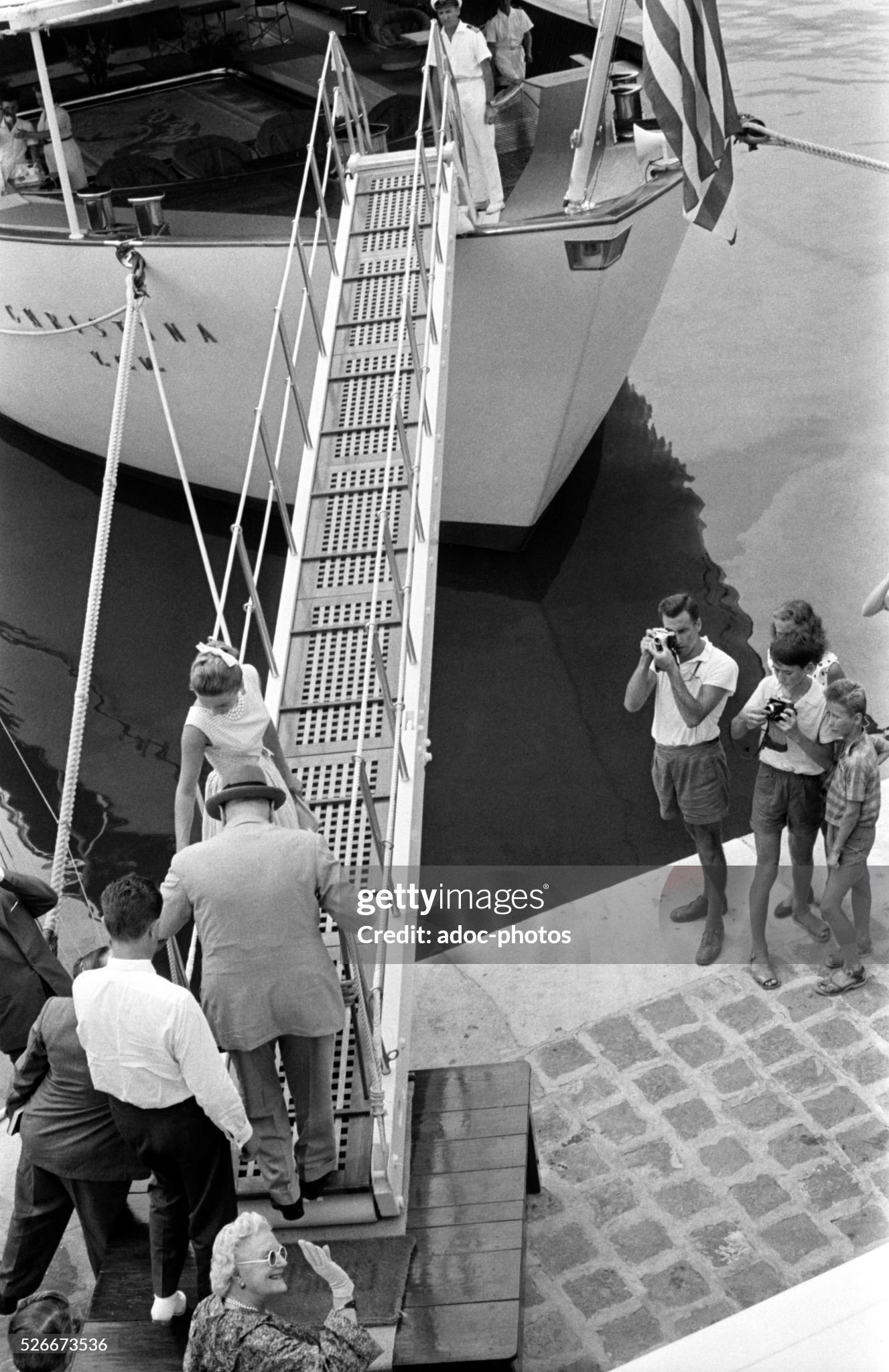
Christina Onassis welcomes Winston Churchill aboard Christina, yacht of the Greek shipping magnate Aristotle Onassis, in the port of Monaco in 1959. Photo by Adoc-photos / Corbis via Getty Images.
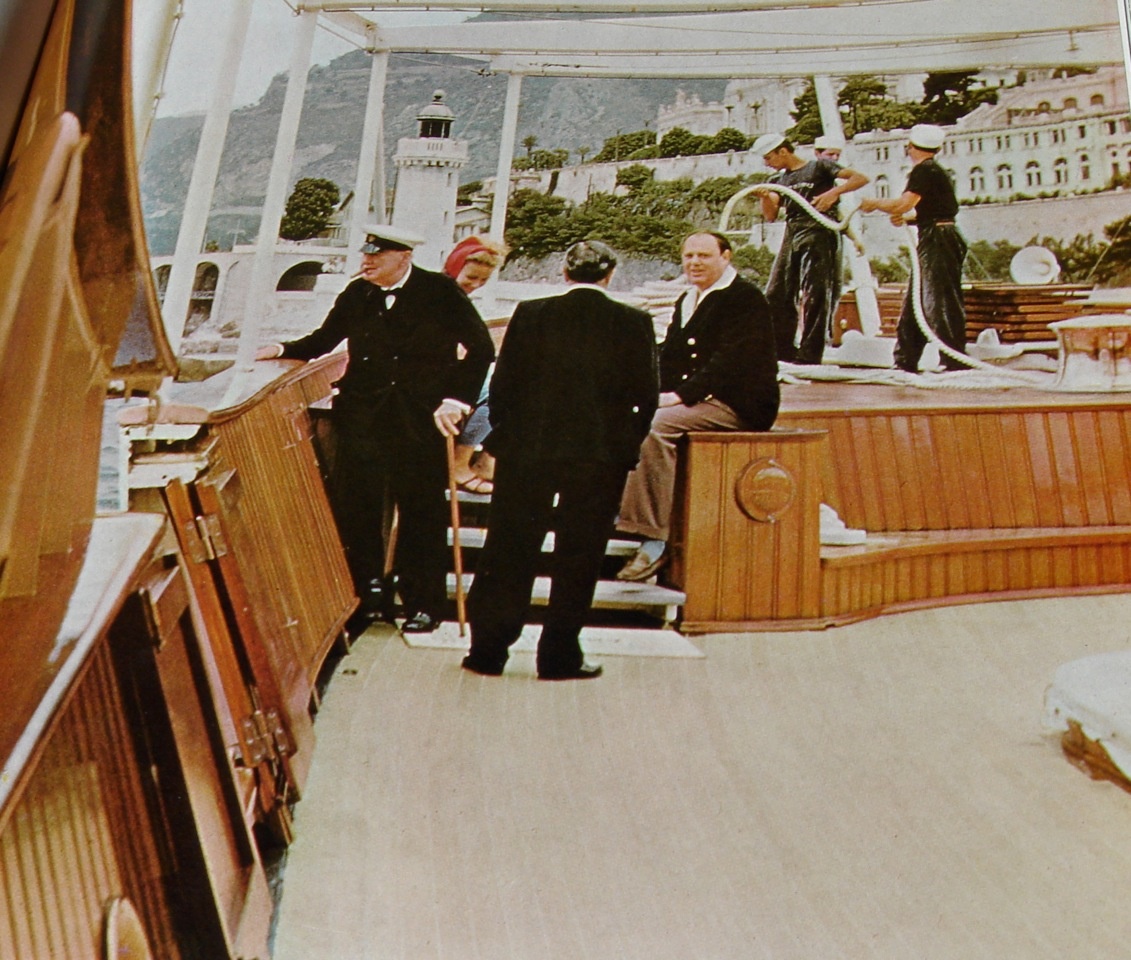
Winston Churchill was a guest of Aristotle Onassis on his yacht ‘Christina’.
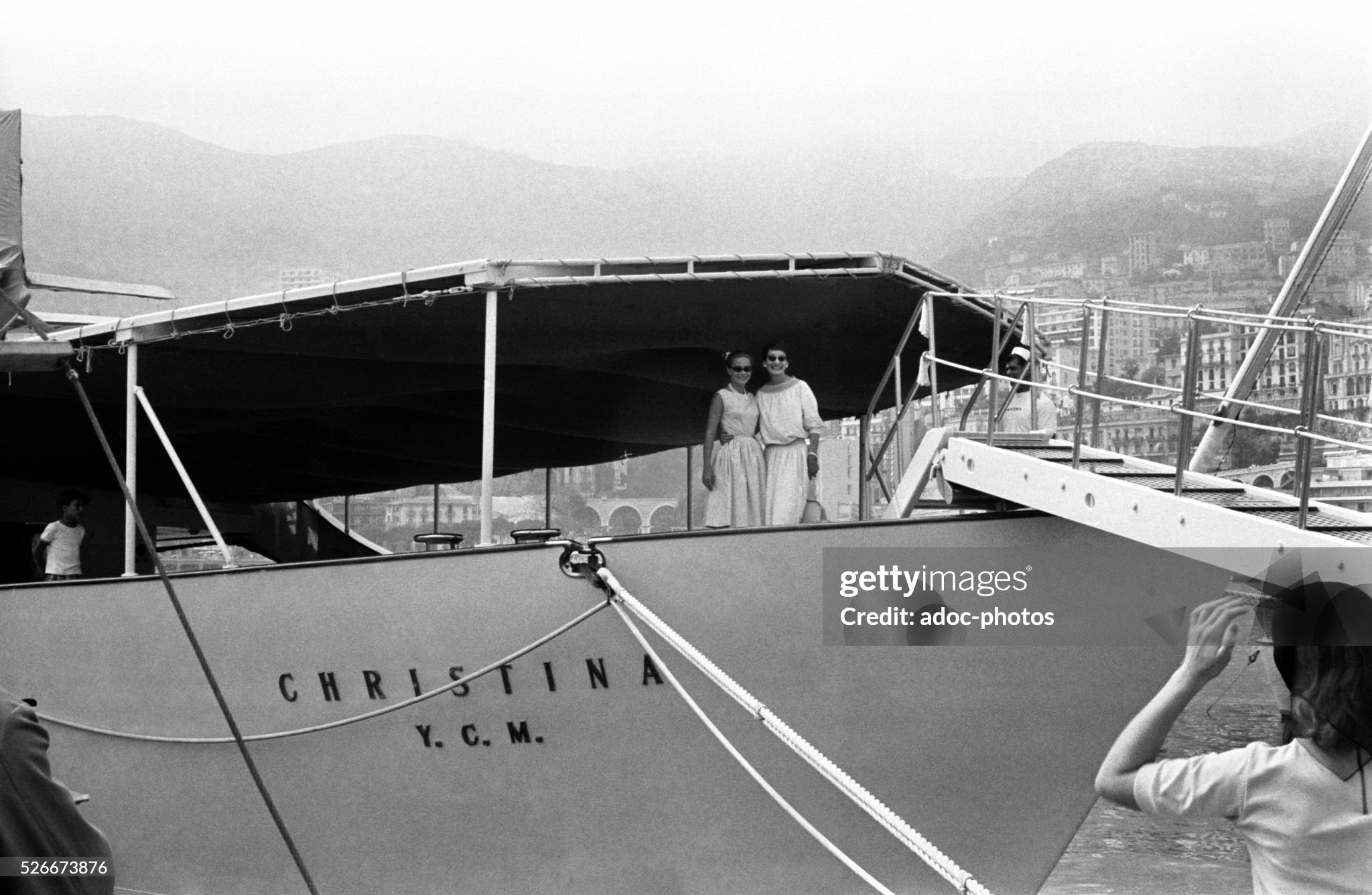
Christina Onassis and Maria Callas on board ‘Christina’, yacht of the Greek shipping magnate Aristotle Onassis, in the port of Monaco in 1959. Photo by Adoc – photos / Corbis via Getty Images.
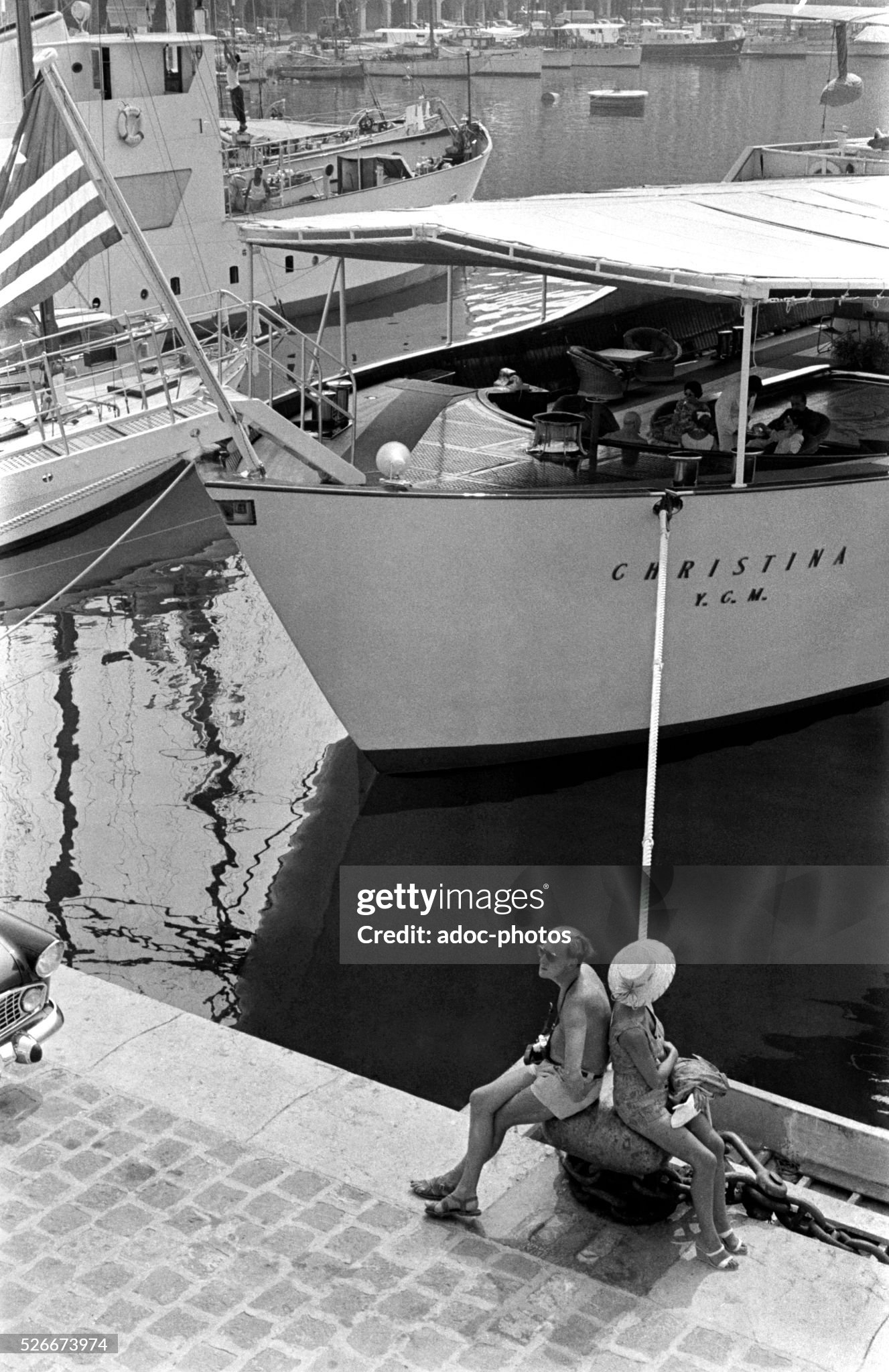
The ‘Christina’ in Monaco in 1959. On board there are Winston Churchill and Maria Callas. Photo by Adoc - photos / Corbis via Getty Images.
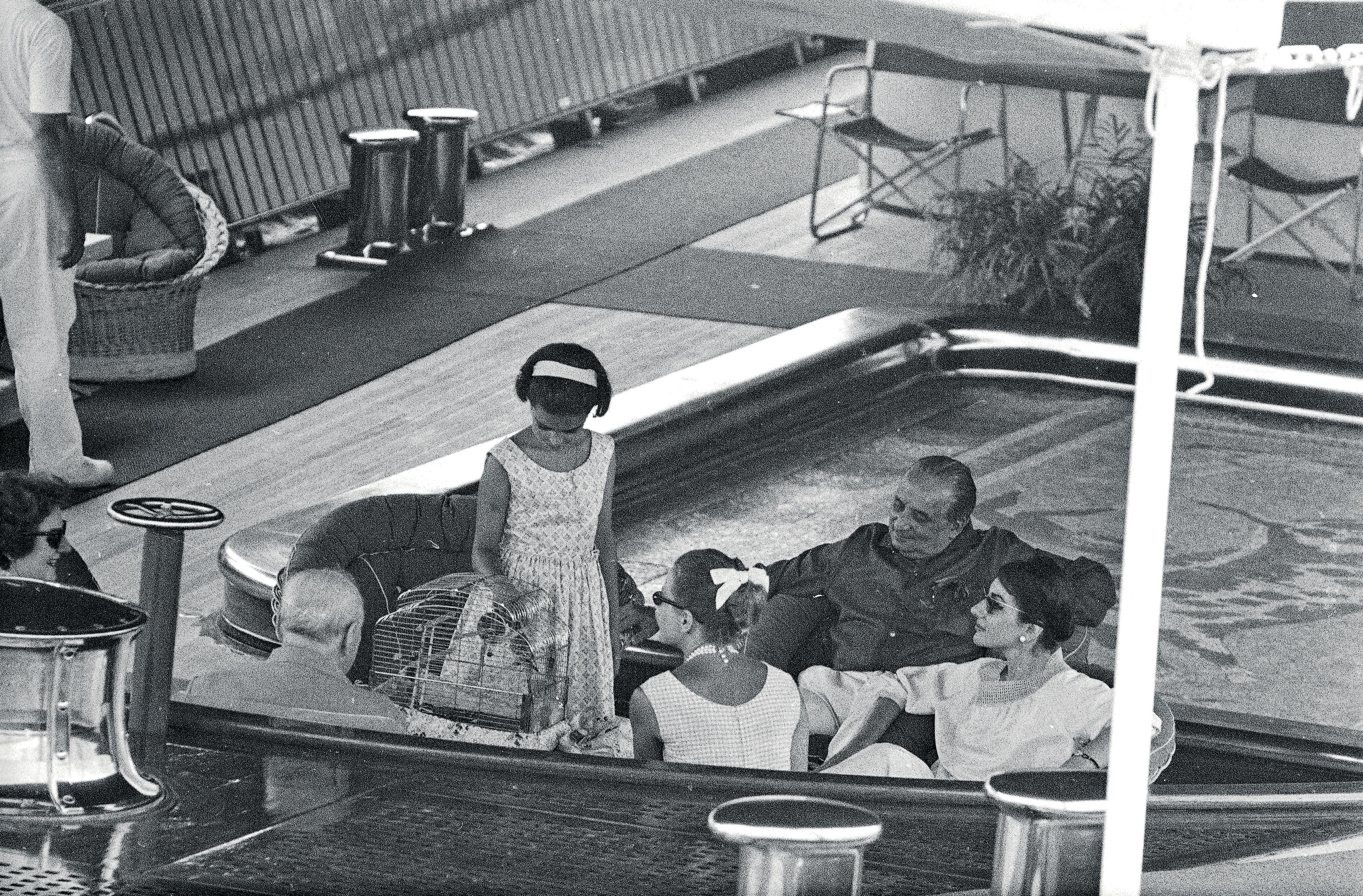
Maria Callas and Aristotle Onassis aboard yacht ‘Christina’ in Monaco in July 1959. Photo by Roger Viollet via Getty Images.
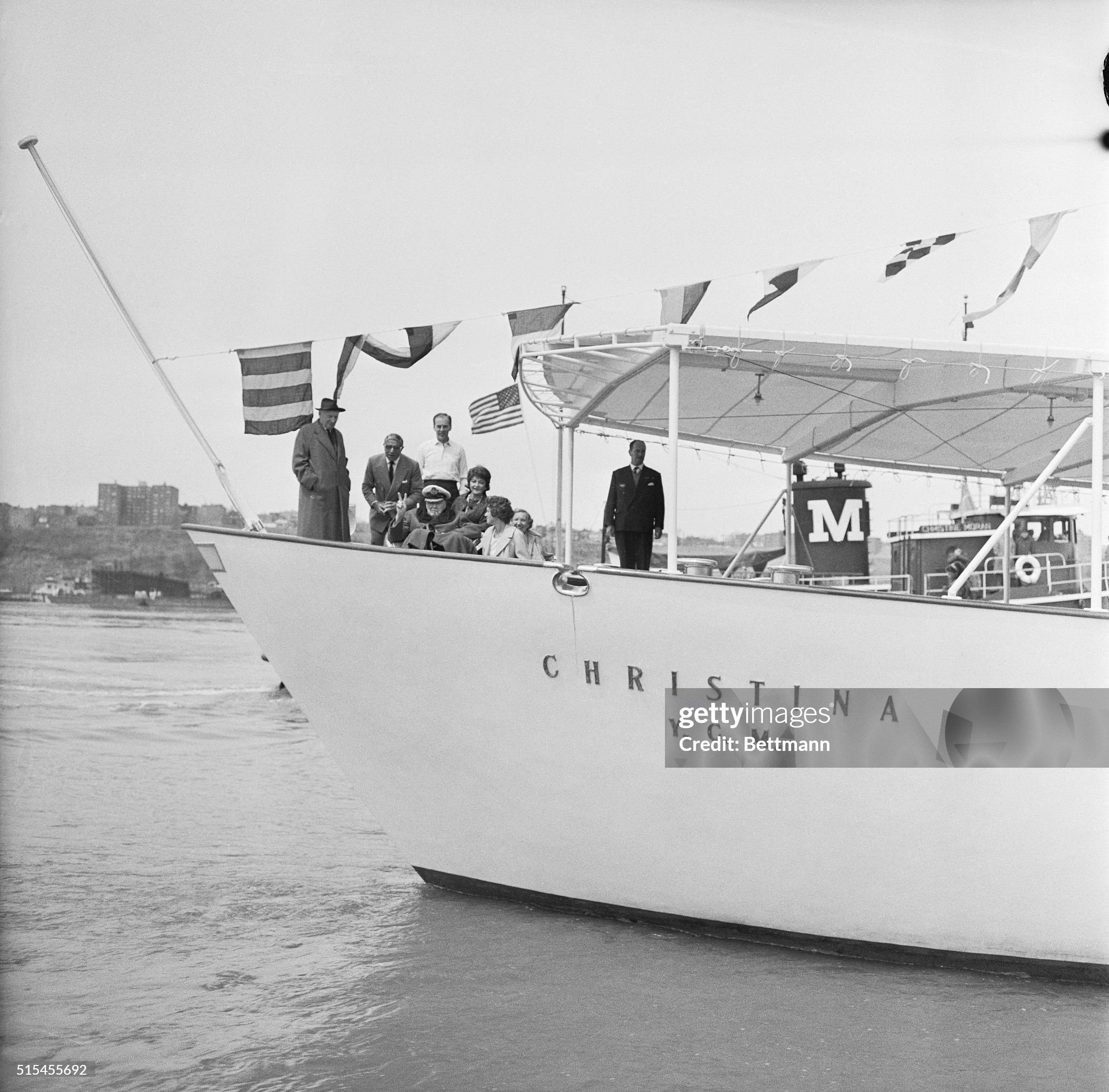
Winston Churchill and Aristotle Onassis arriving on Christina. Photo by Getty Images.
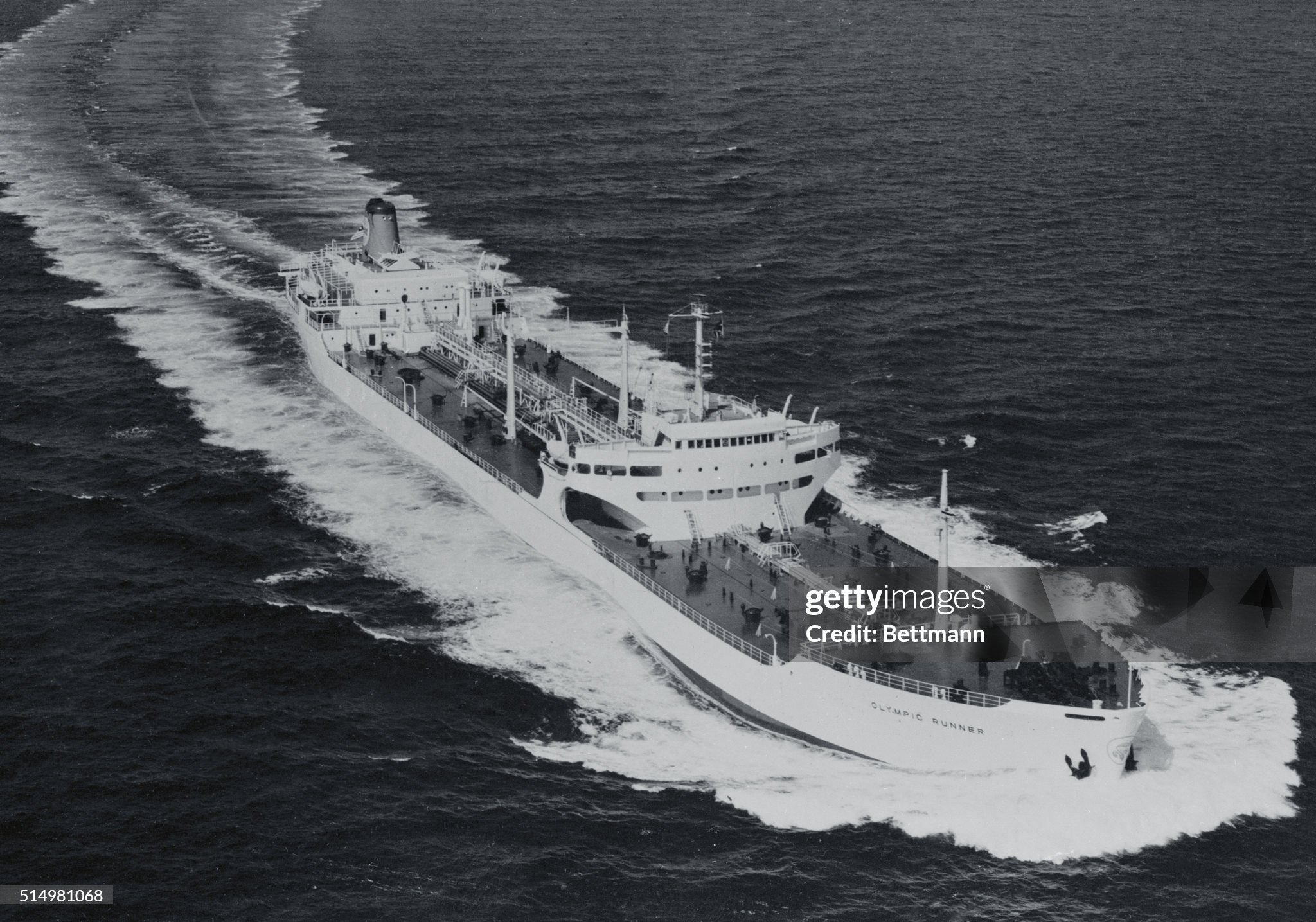
The 23,280 ton tanker, Olympic Runner, leaves a long wake as she is shown cruising here. The ship was constructed at the Yokohama Yards of the Mitsubishi Nippon Heavy Industries, Ltd. She was handed over to her owner, the Luxor Shipping Company, a subsidiary of the Aristotle Socrates Onassis Company, on November 16th 1959. The tanker has a maximum speed of 17.92 knots. Photo by Getty Images.
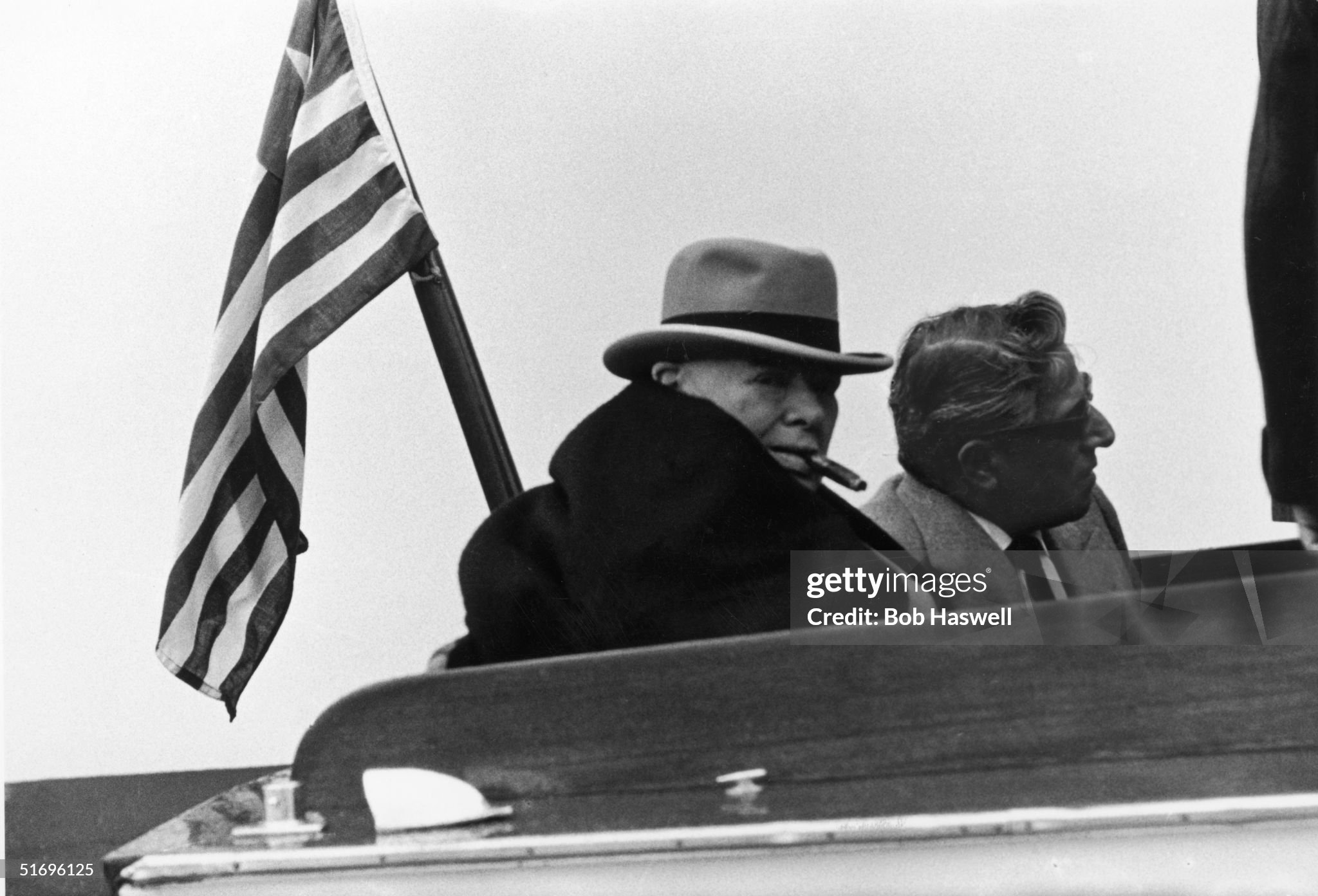
Aristotle Onassis on board his yacht ‘Christina’ with former British Prime Minister Winston Churchill on 09 March 1960. Photo by Bob Haswell / Daily Express / Hulton Archive / Getty Images.
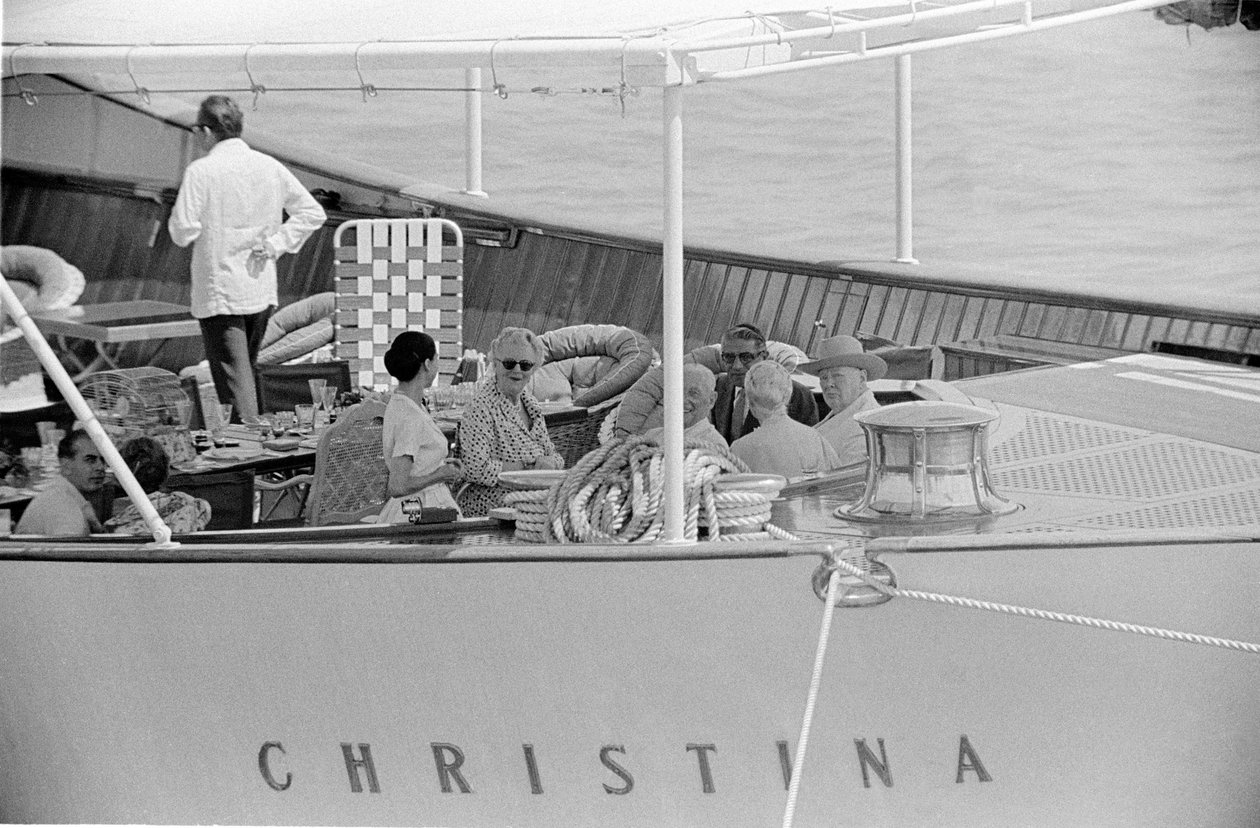
Aristotle Onassis and Winston Churchill with his wife on the yacht 'Christina' in Venice in 1960.
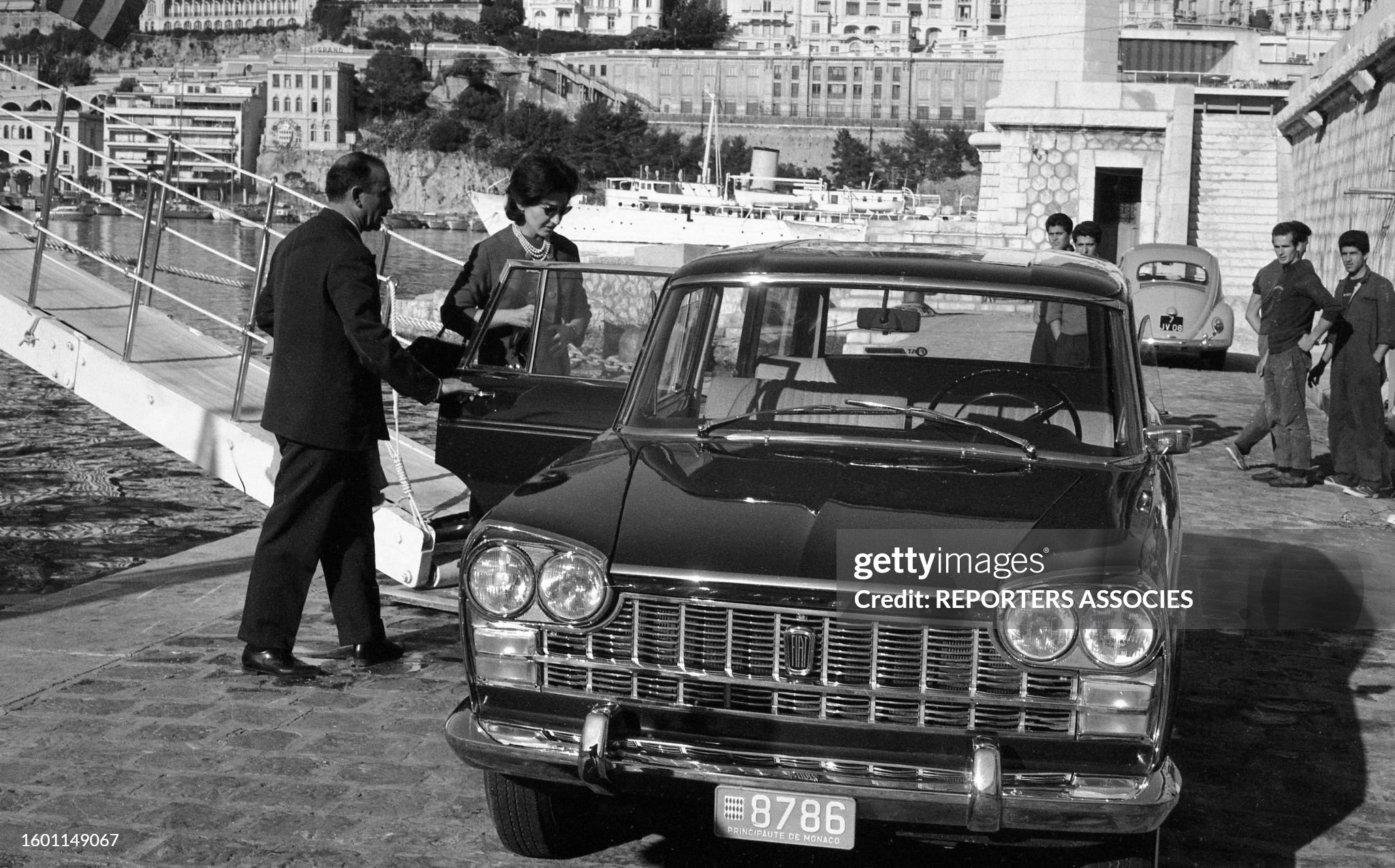
Aristotle Onassis and Maria Callas in the port of Monaco in the 1960s. Photo by Reporters Associes / Gamma - Rapho via Getty Images.
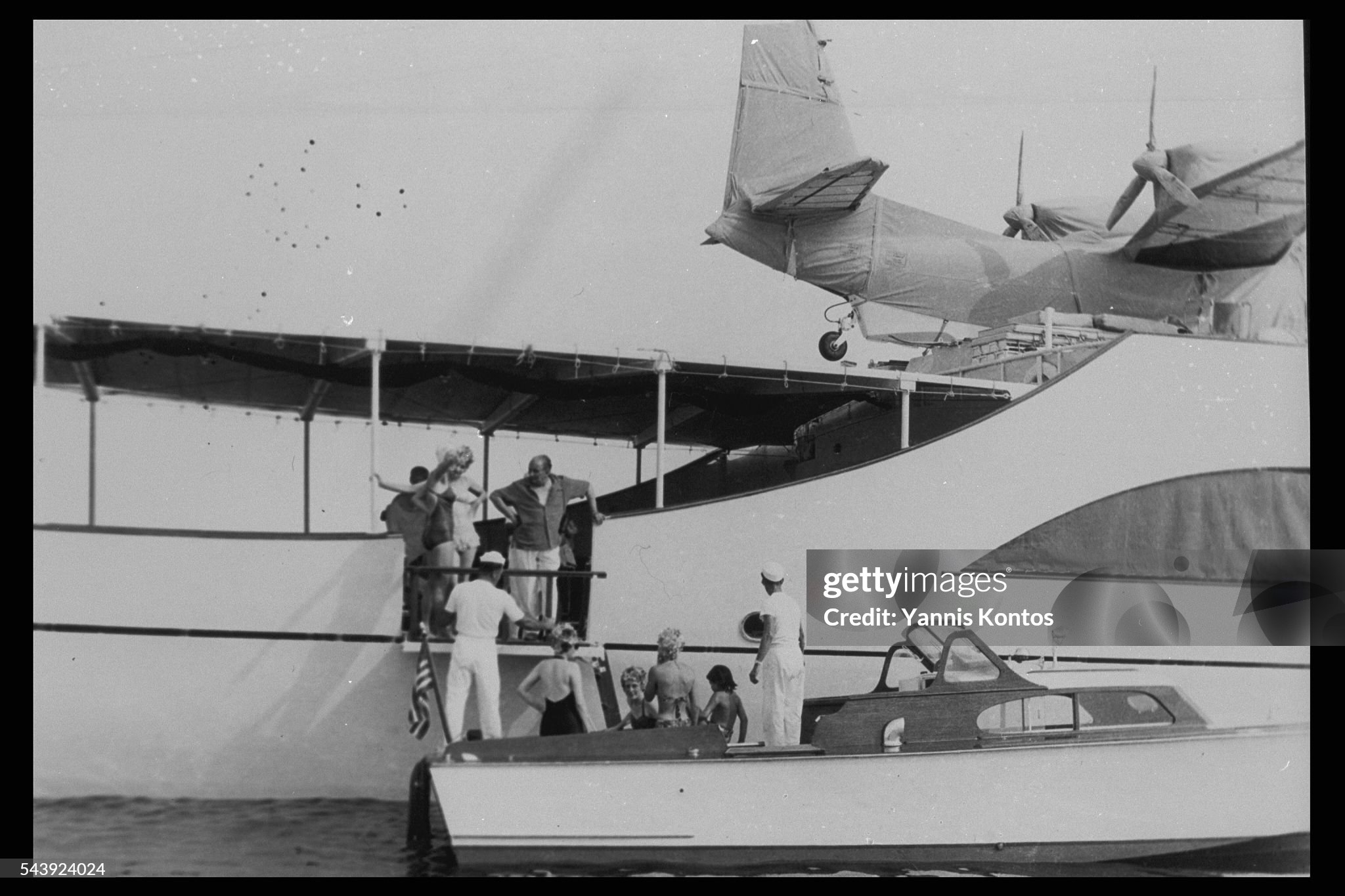
Unidentified VIPs boarding the ‘Christina in 1960’. Photo by Yannis Kontos / Sygma via Getty Images.
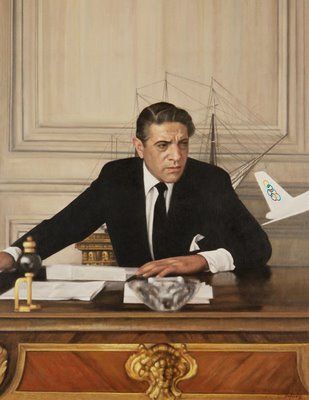
Aristotle Onassis in his office in Athens, Greece, in 1960s.
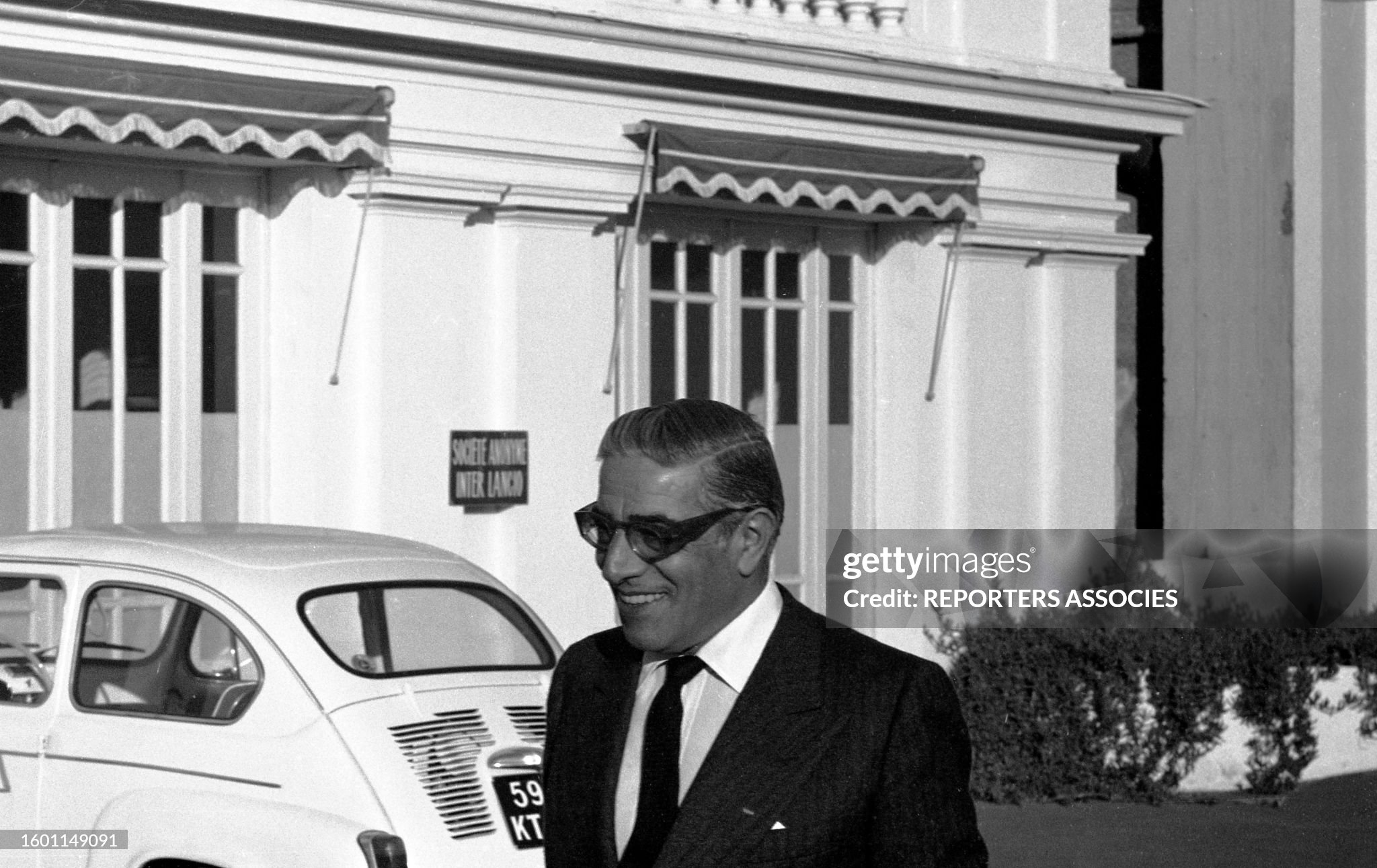
Aristotle Onassis in Monaco, in 1960s. Photo by Reporters Associes / Gamma - Rapho via Getty Images.
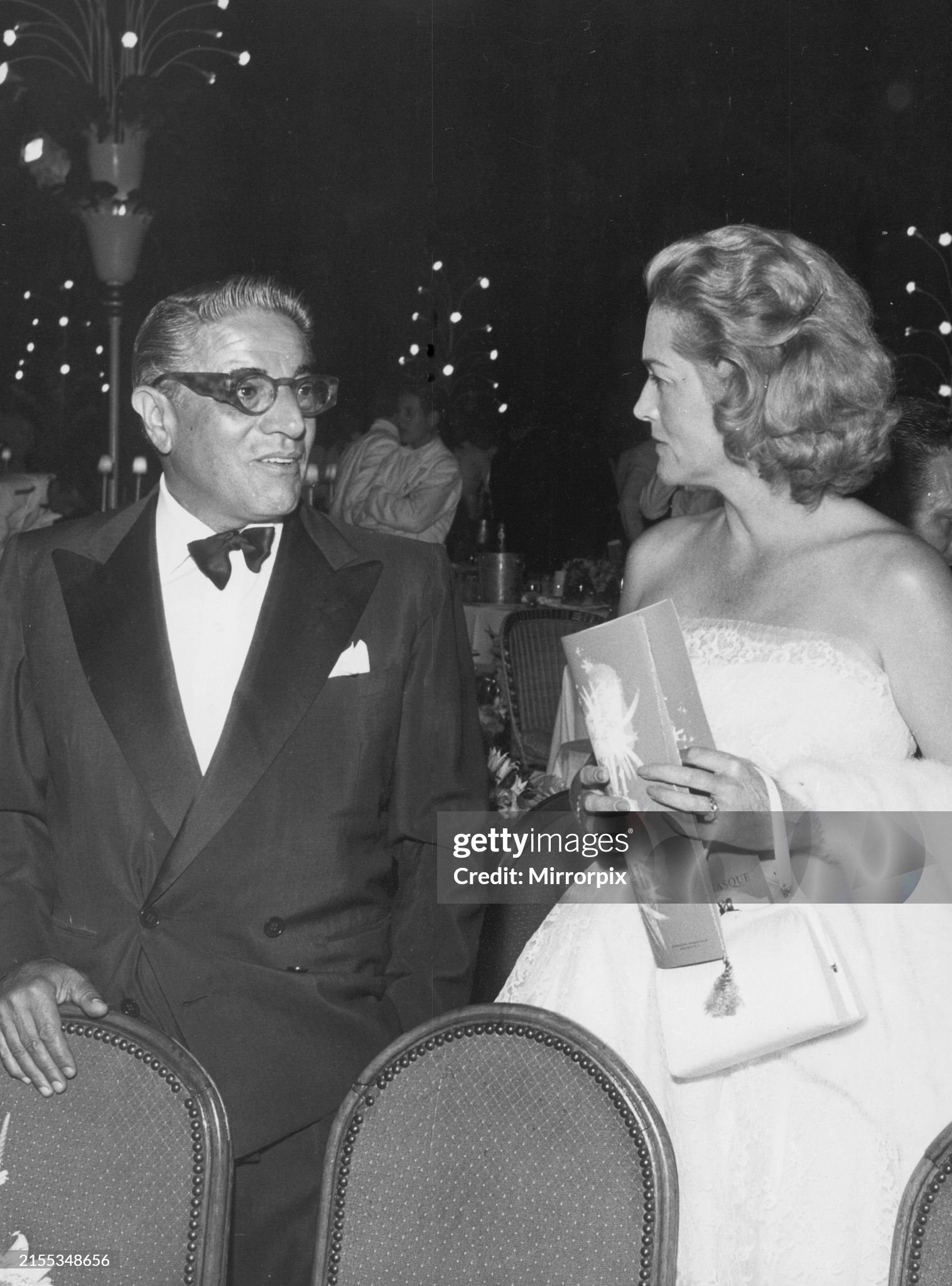
Aristotle Onassis attends the Red Cross Gala ball at Monte Carlo's Sporting Club in Monaco on 07 August 1960. Photo by D. O' Neill / Mirrorpix via Getty Images.
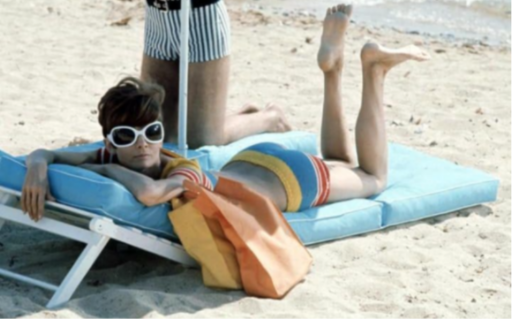
Jackie Bouvier on the beach.
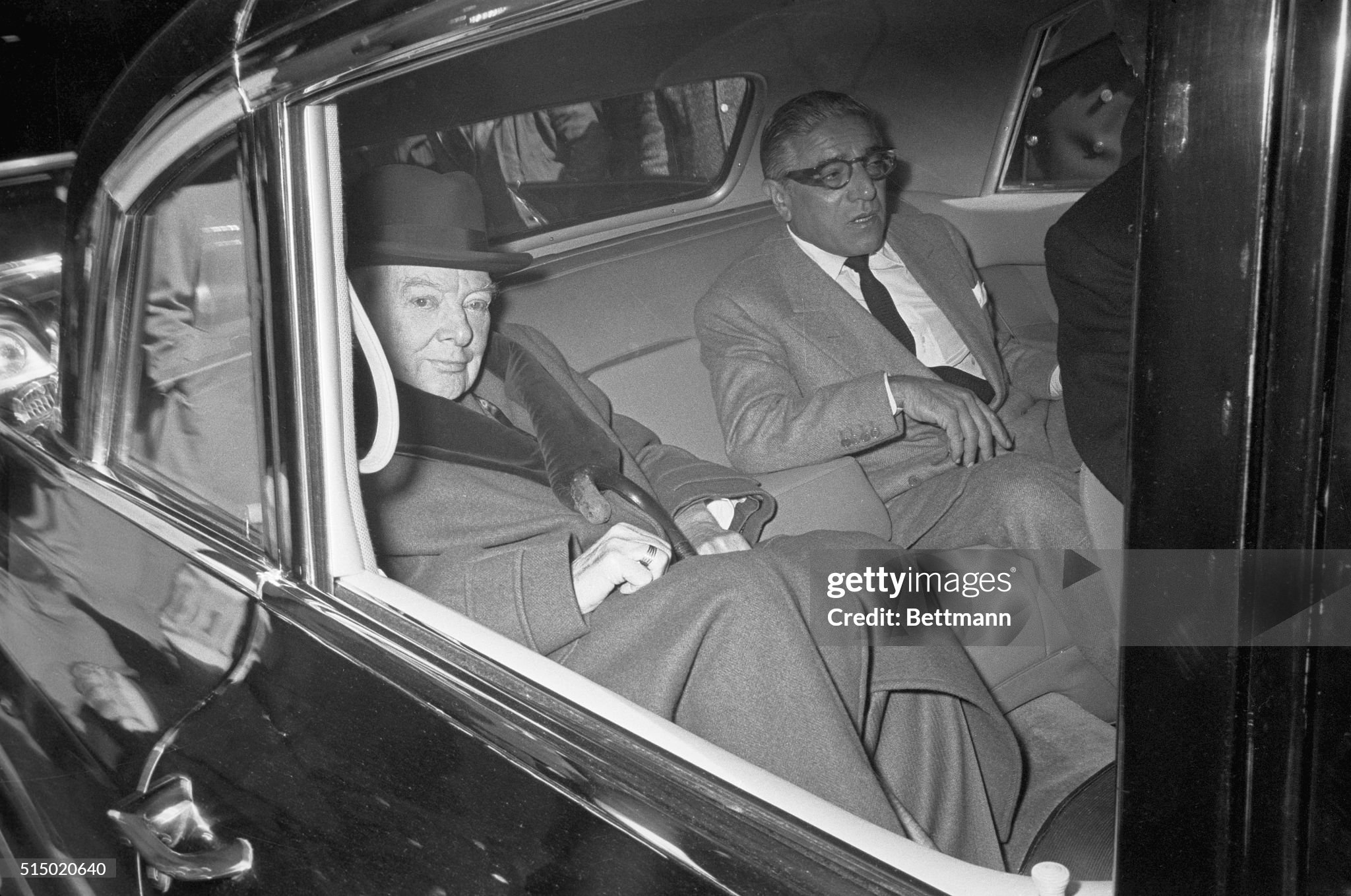
Greek shipping magnate Aristotle Socrates Onassis chats with his guest, Sir Winston Churchill, on 14 April 1961, as he accompanies Sir Winston to the airport in New York, where he was to fly back to England. Churchill was cruising with Onassis aboard his yacht ‘Christina’, which was currently docked in New York. Photo by Getty Images.
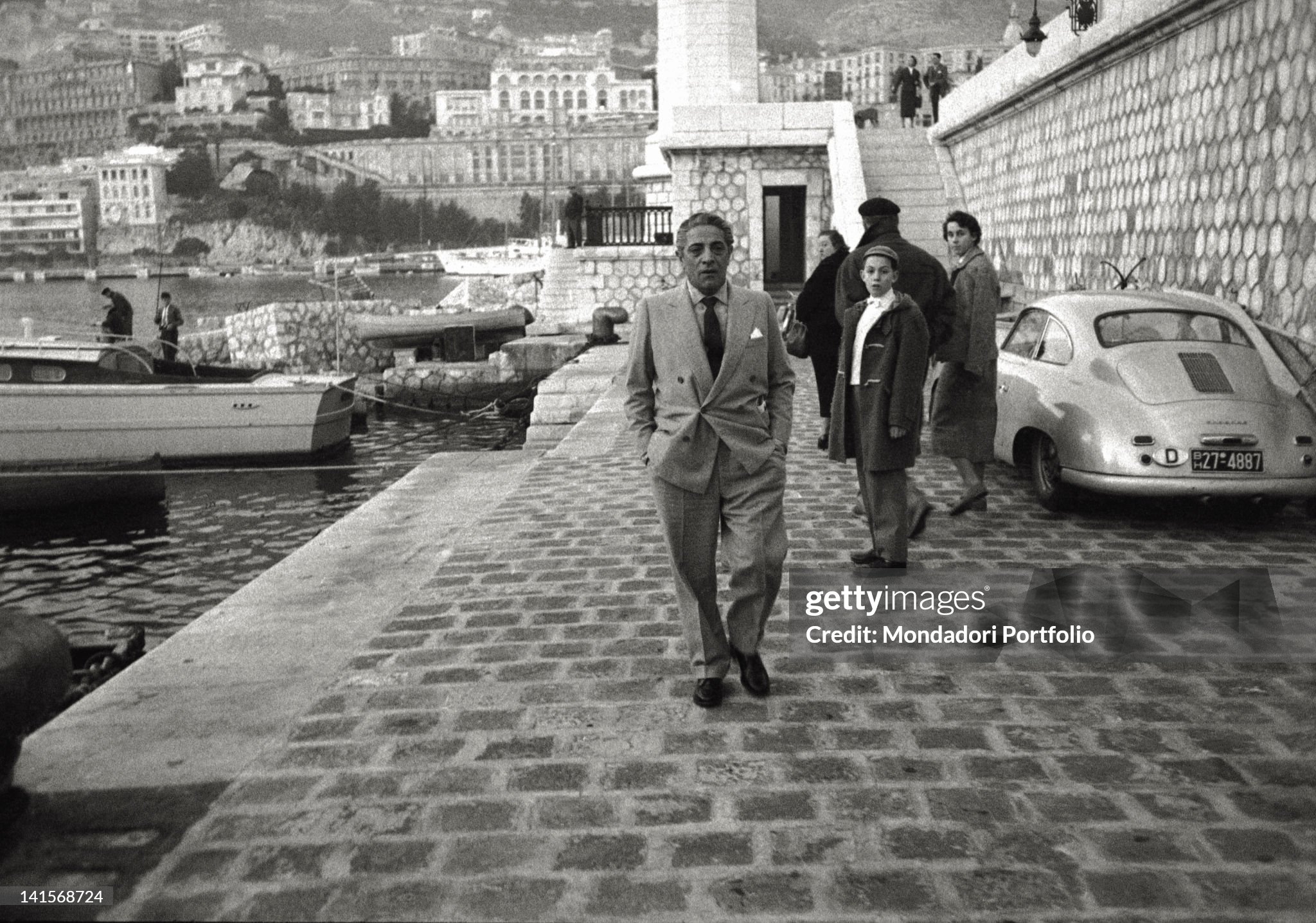
Aristotle Onassis, known by a family of tourists, photographed on the mole of Montecarlo's port, near the lighthouse, in June 1961; the Principality becomes his official residence for years. Photo by Getty Images.
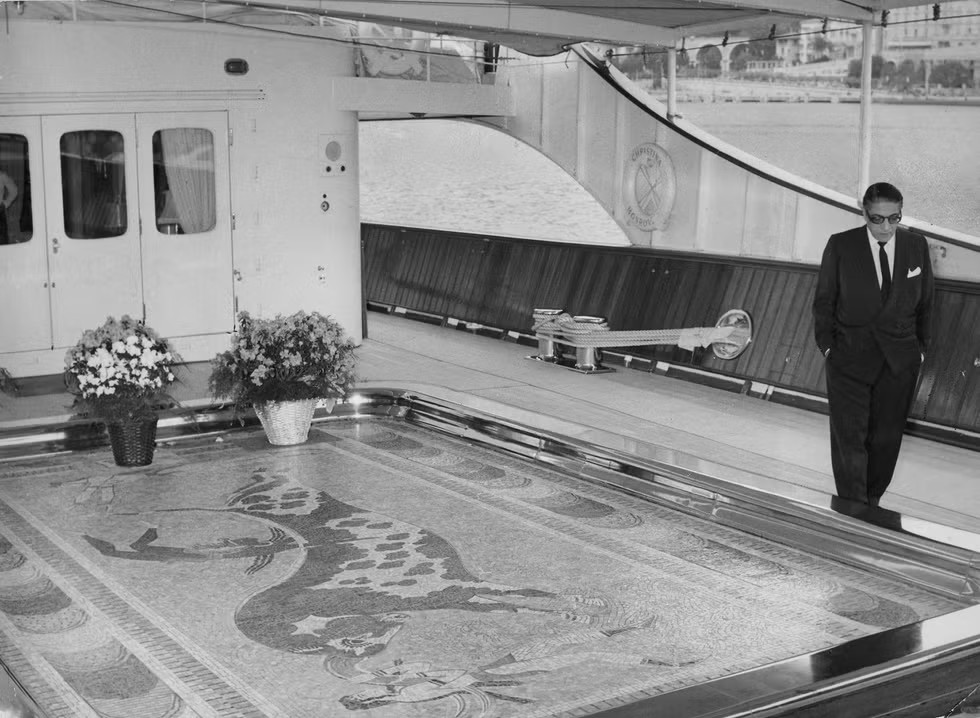
Aristotle Onassis on his ‘Christina’.
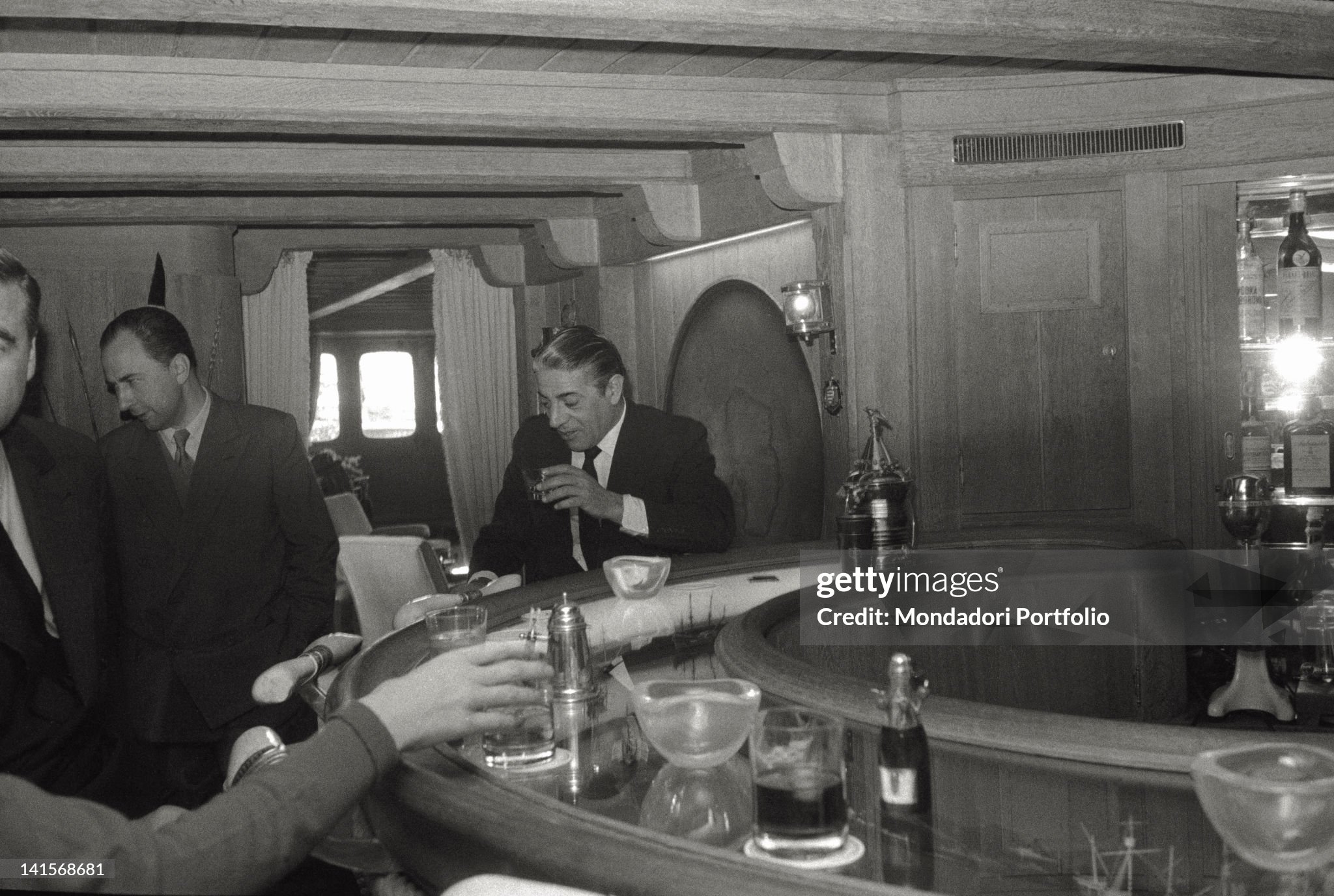
Aristotle Onassis photographed to the circular counter of his yacht 'Christina’ in June 1961. Photo by Carlo Bavagnoli / Mondadori via Getty Images.
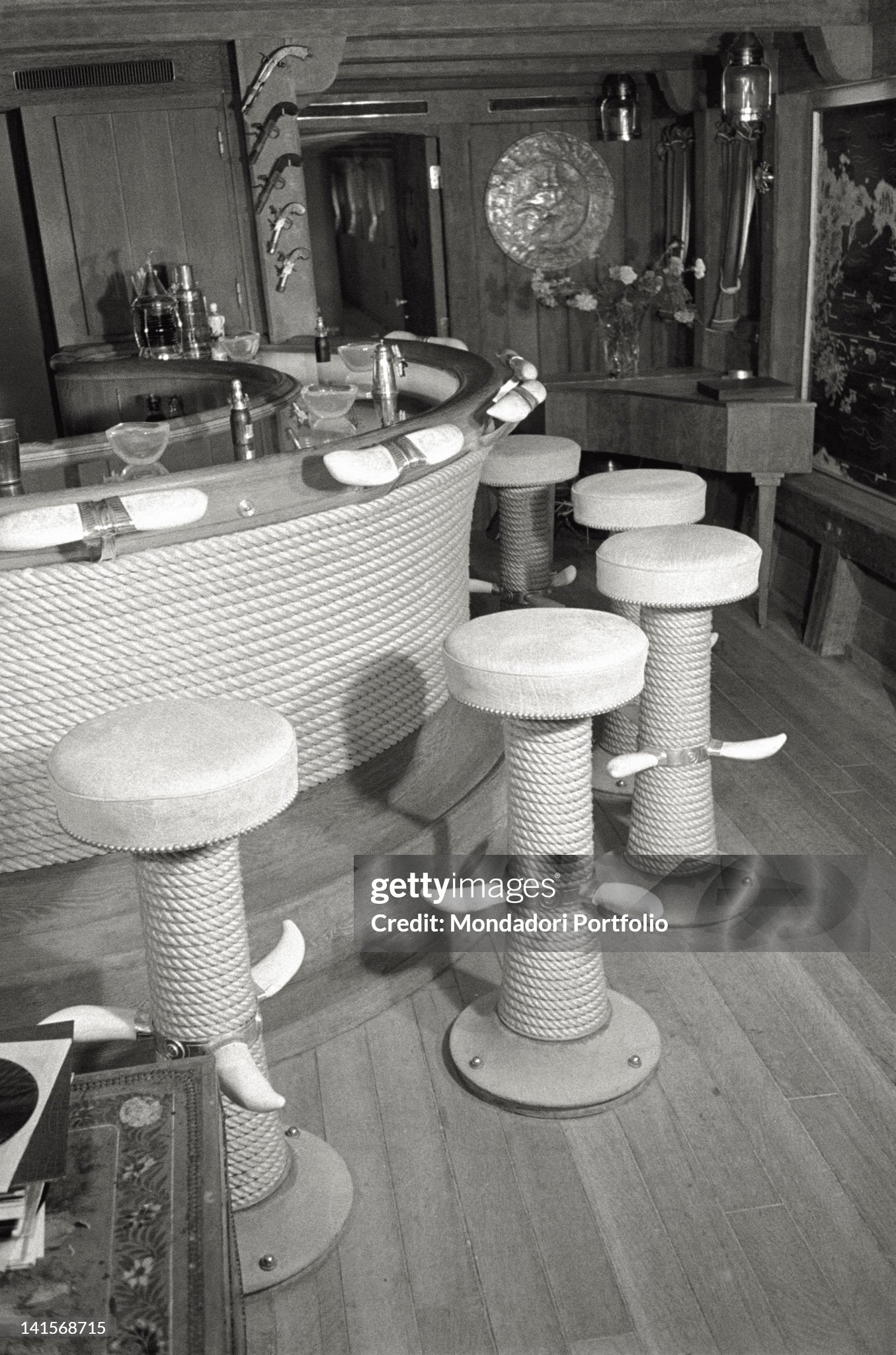
Ari's circular bar on board of the 'Christina’. At this counter it is said it took place the first meeting between John F. Kennedy and Winston Churchill. Montecarlo, June 1961. Photo by Carlo Bavagnoli / Mondadori via Getty Images.
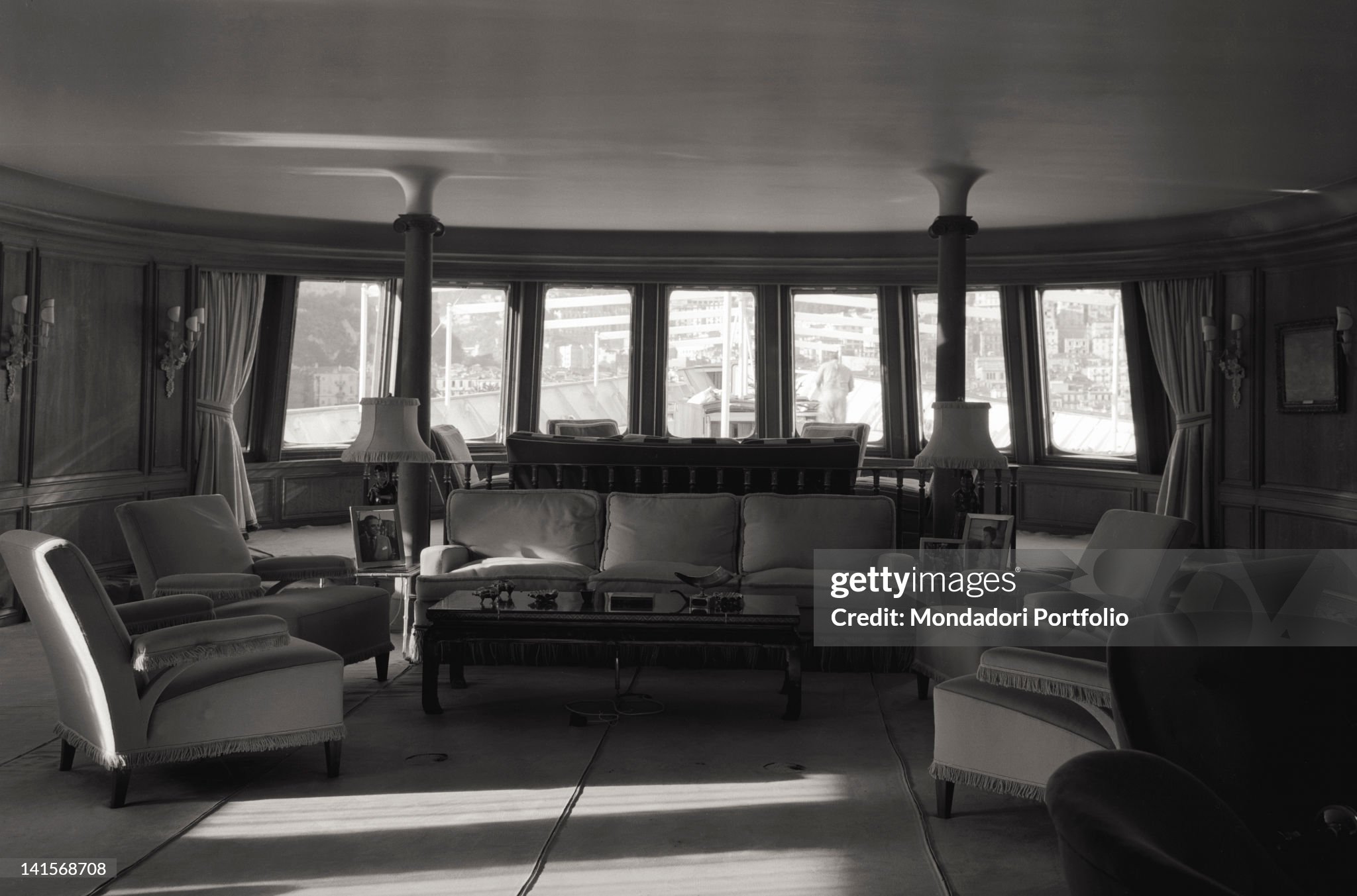
View of the drawing-room that leans on the bridge of the bow on board of the yacht 'Christina' of Aristotle Onassis in Monaco in June 1961. On the bedside table on the side of the sofa a photo of the Greek shipowner. Photo by Carlo Bavagnoli / Mondadori via Getty Images.
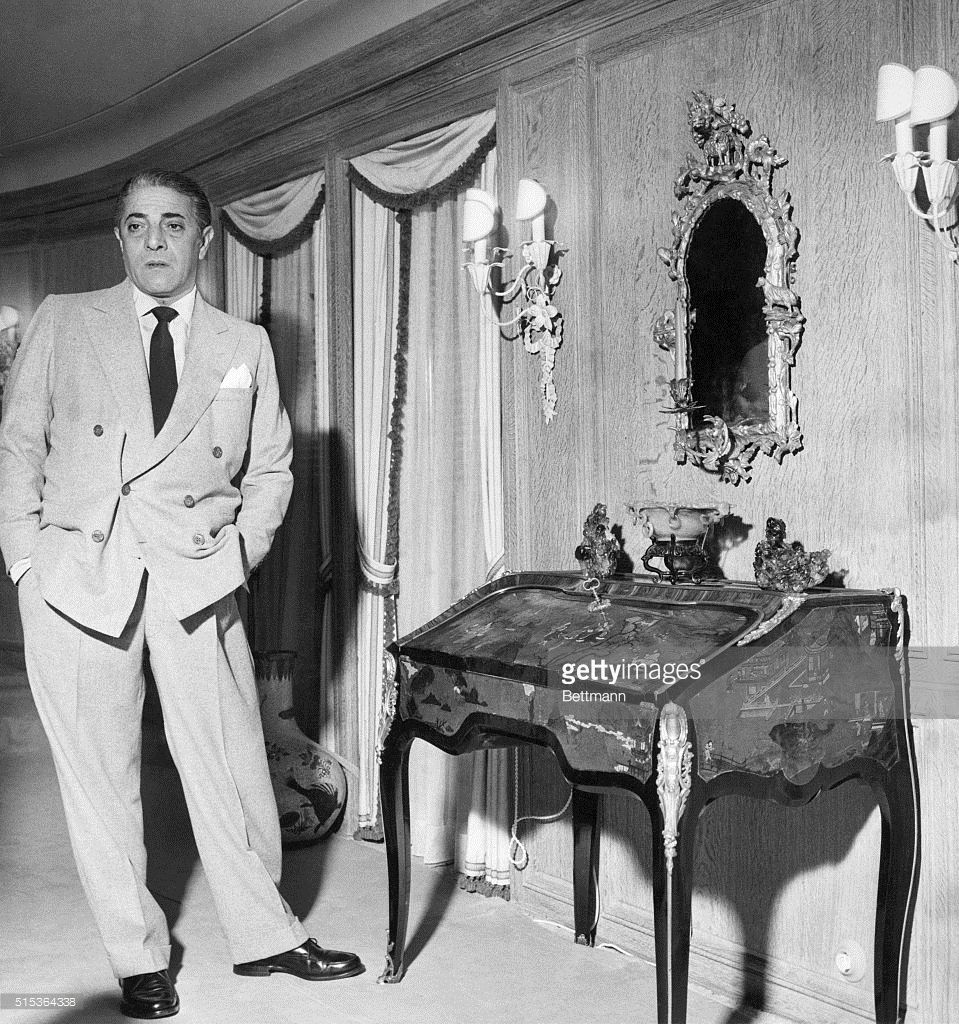
Aristotle Onassis on his ‘Christina’. Photo by Getty Images.
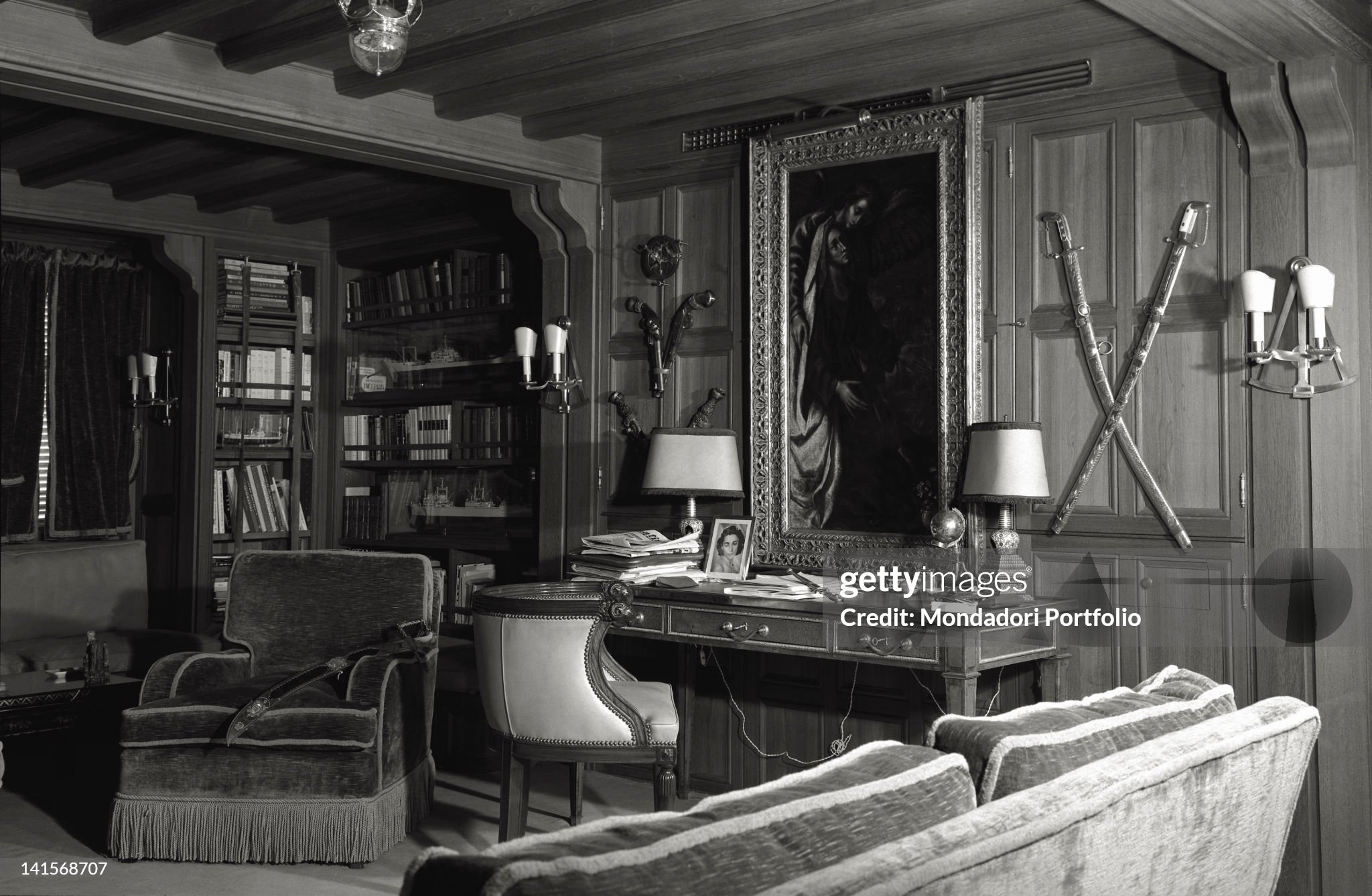
View of one of the most beautiful rooms on board of the yacht 'Christina', where there is a collection of scimitars and pistols, around a console in which dominated a painting by El Greco. Montecarlo, June 1961. Photo by Carlo Bavagnoli / Mondadori via Getty Images.
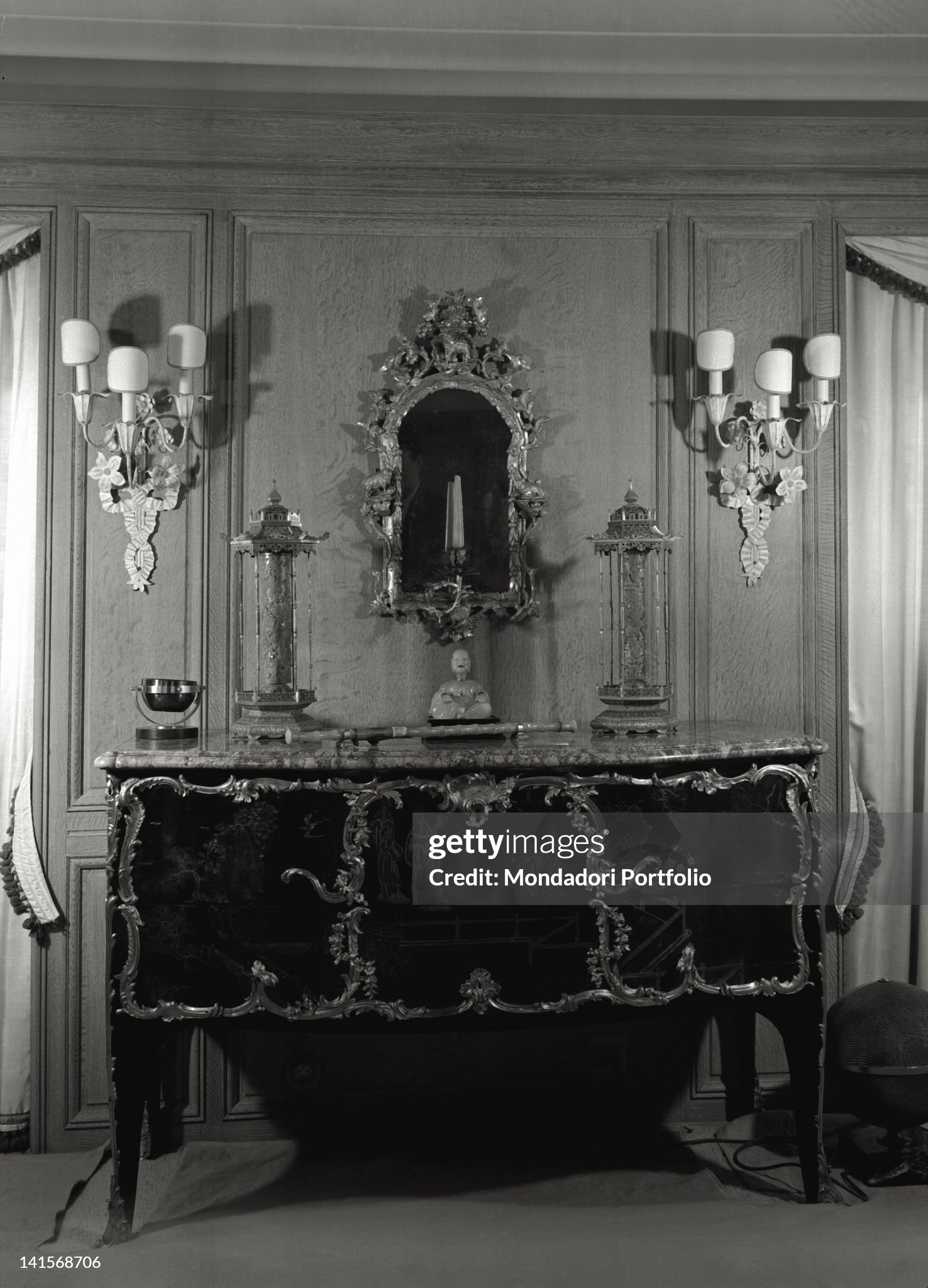
One of the eighteen cabins presents on board of the yacht of the Greek shipowner Aristotle Onassis 'Christina', with a chest of drawer in Luis XV style in which are a porcelain Buddha, a jade object and some 'chinoiserie' under a rococo mirror. Monte Carlo, Principality of Monaco, June 1961. Photo by Carlo Bavagnoli / Mondadori via Getty Images.
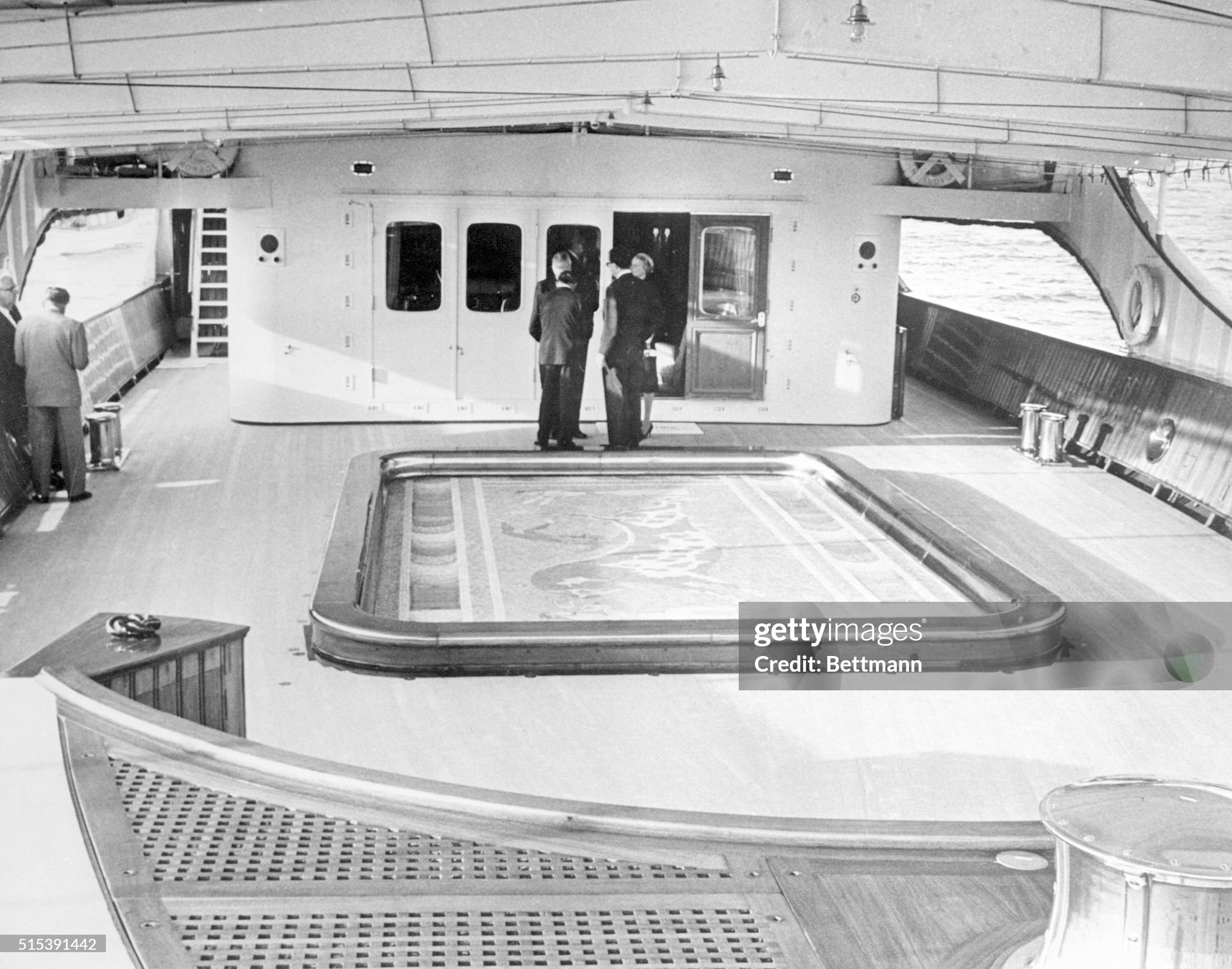
As shown here, the mosaic floor of the swimming pool aboard Aristotle Onassis' yacht ‘Christina’ may be raised to deck level when not in use. Photo by Getty Images.
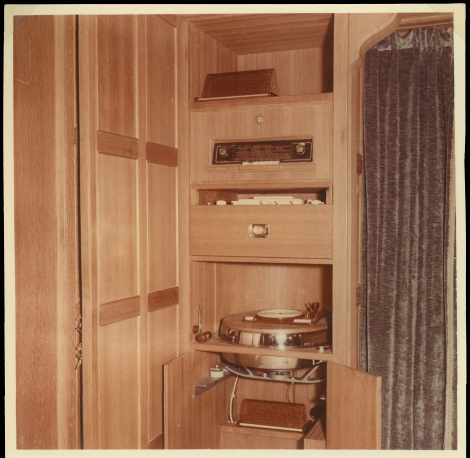
Another of the rooms on the yacht ‘Christina’.
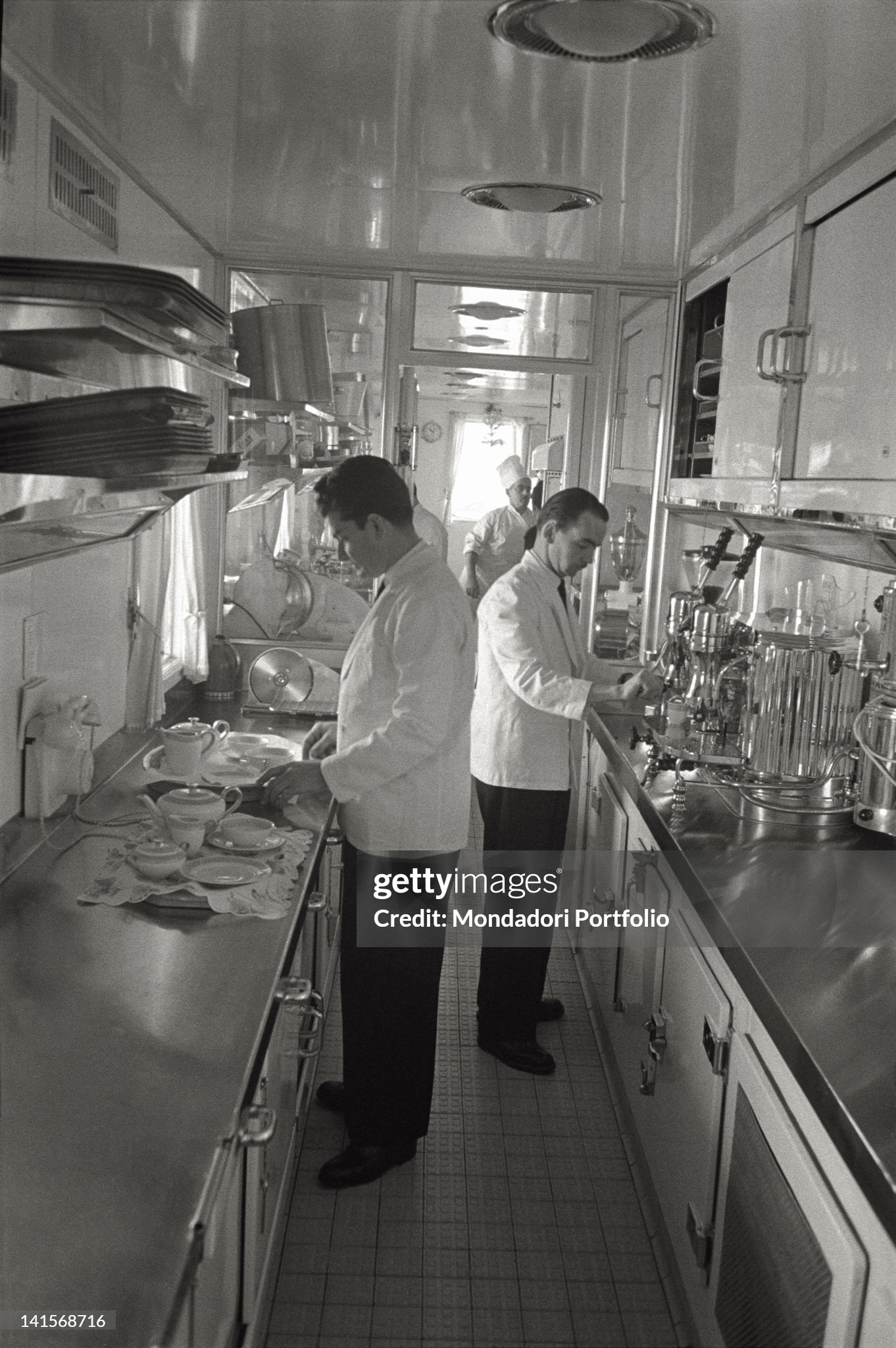
View of the kitchen on board on the yacht 'Christina', where waiters and chefs are very active for the guests of the shipowner. Montecarlo, June 1961. Photo by Carlo Bavagnoli / Mondadori via Getty Images.
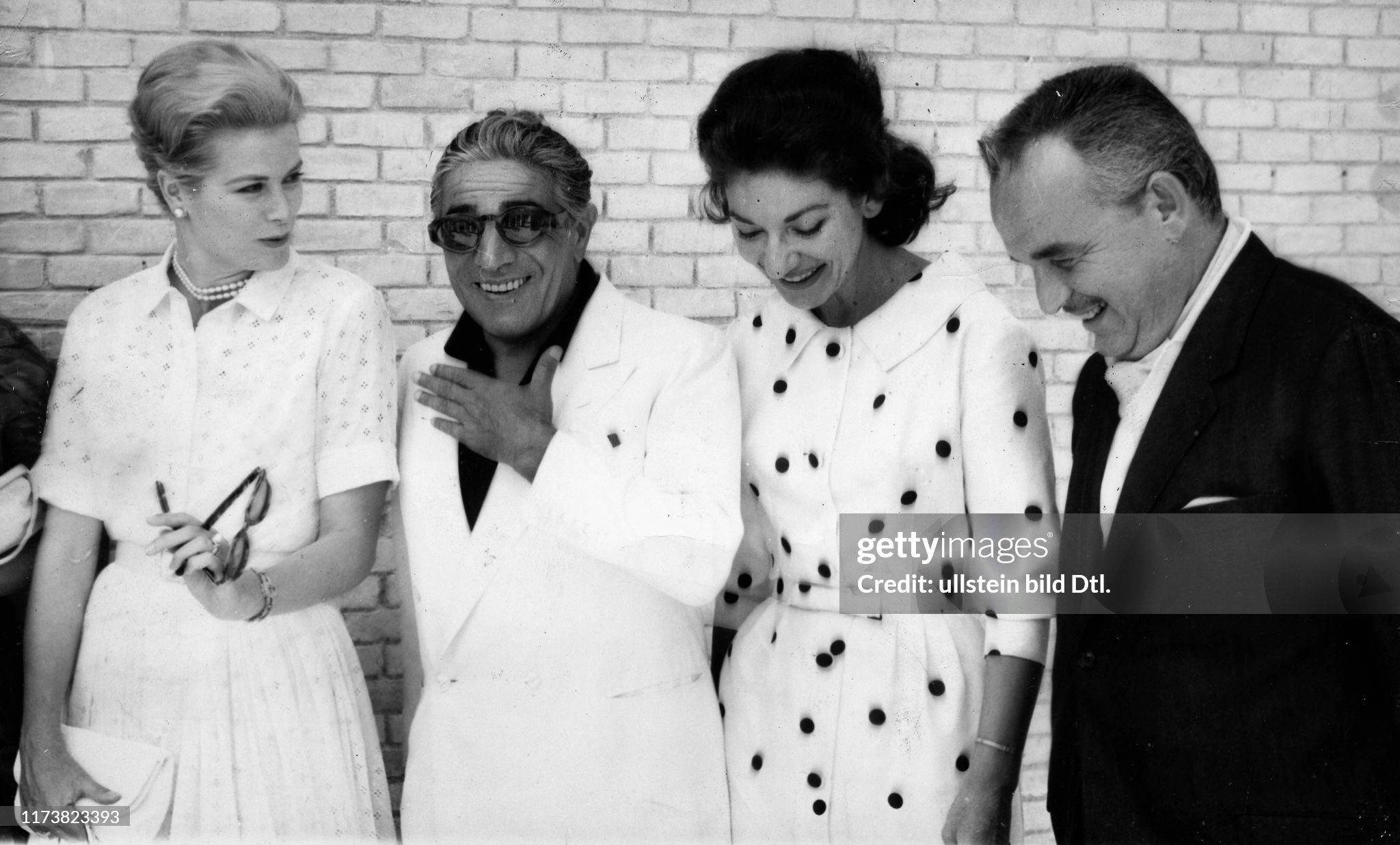
Princess Grace and Prince Rainier with Aristotle Onassis and Maria Callas in Mallorca on 01 July 1961. Photo by RDB / Ullstein bild via Getty Images.
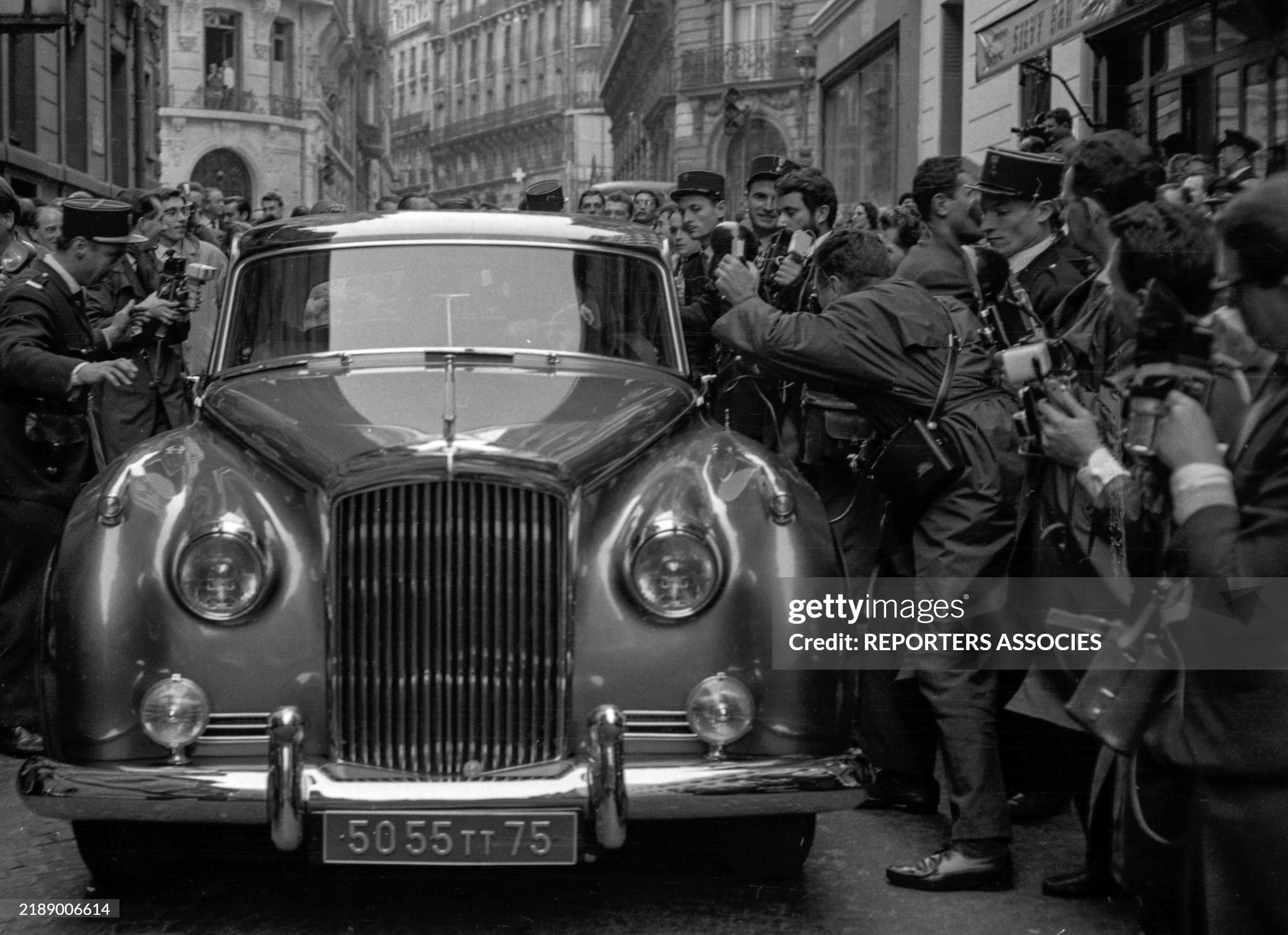
Athina Onassis and John Spencer-Churchill's car surrounded by photographers during their wedding in Paris on October 23, 1961. Photo by Reporters Associes / Gamma - Rapho via Getty Images.
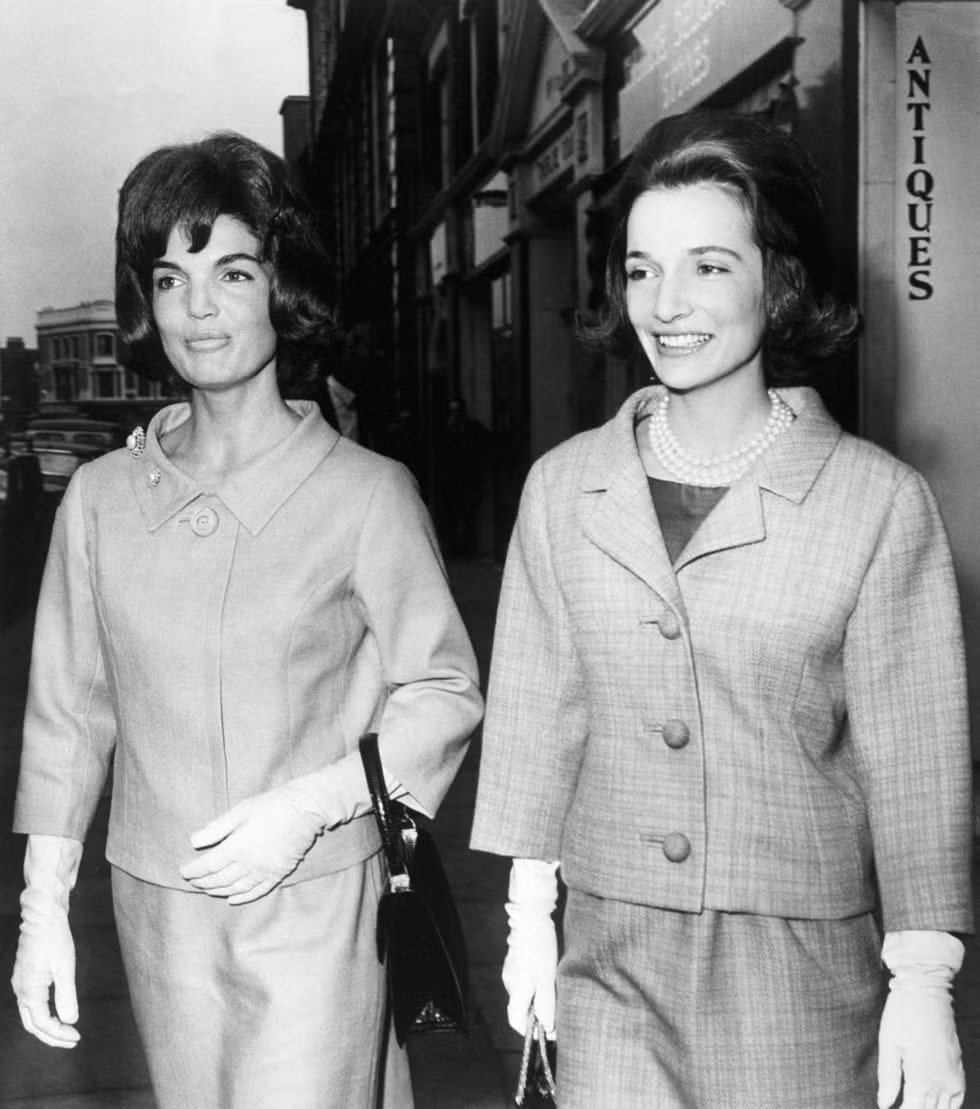
The sisters Jackie Kennedy and Lee Radziwill in 1961. Photo by Bettmann.
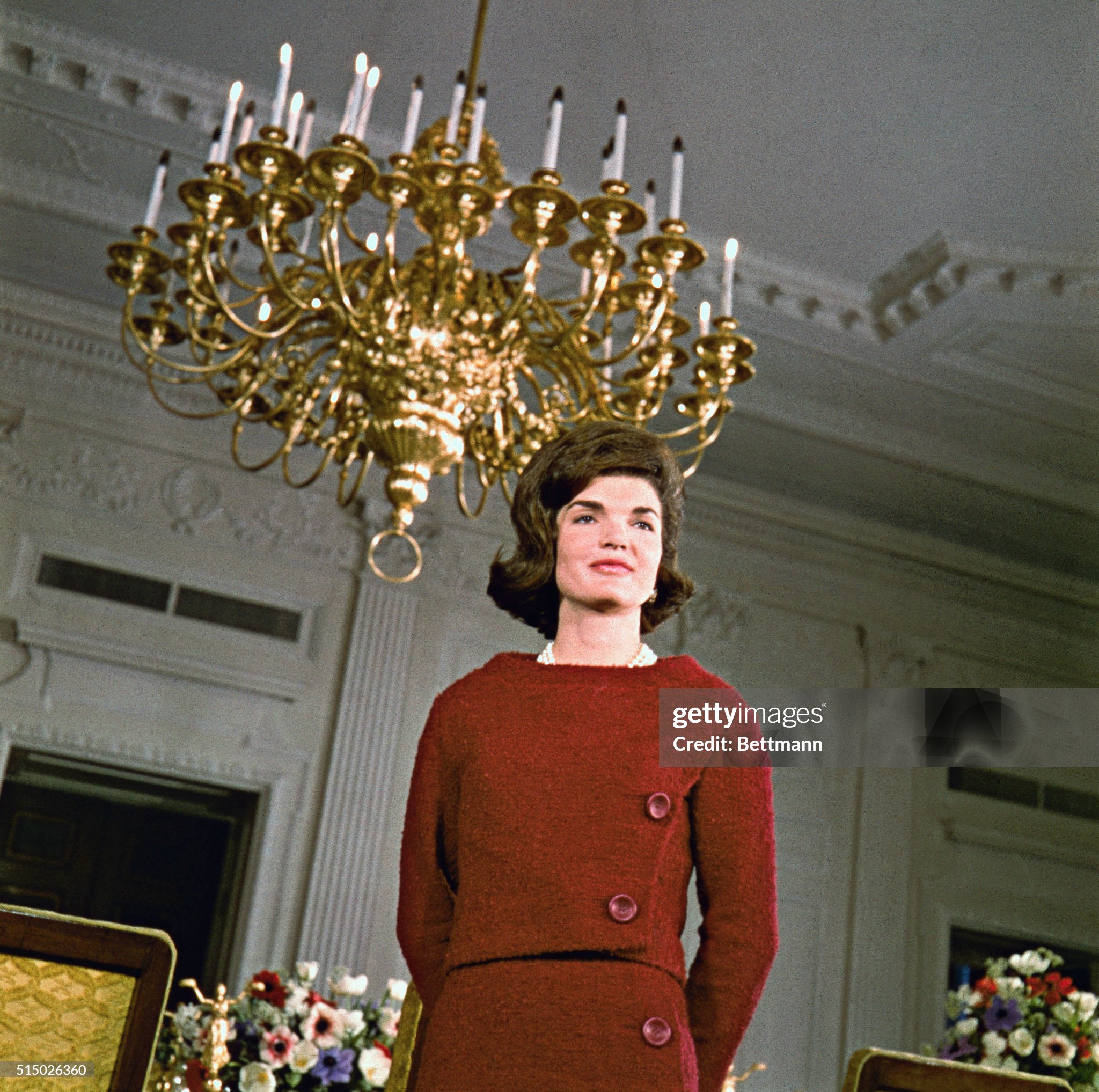
Jackie Kennedy on white House tour on CBS-TV on 14 February 1962. Photo by Getty Images.
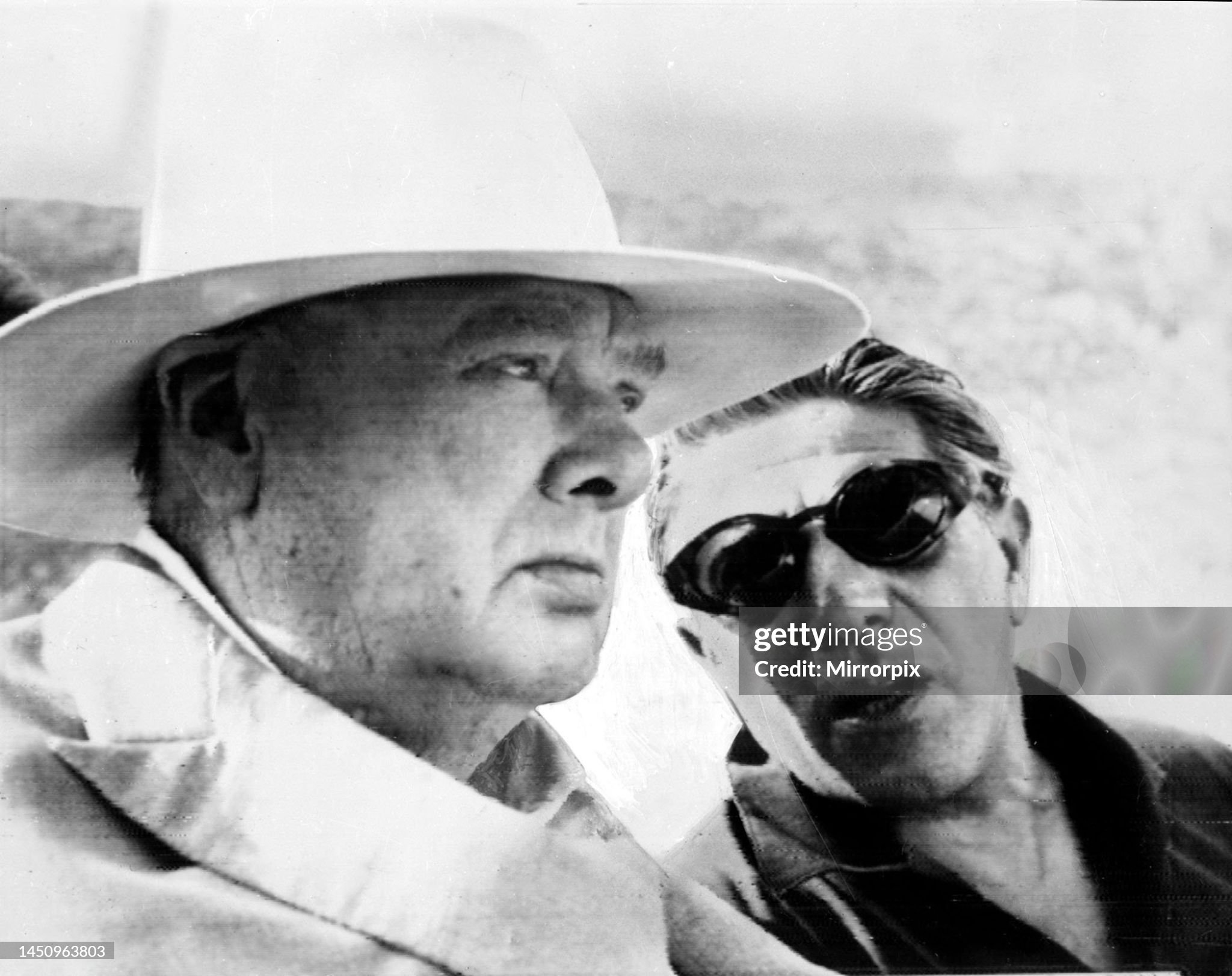
Winston Churchill leaving Nice airport with Aristotle Socrates Onassis in April 1962. Photo by Mirrorpix via Getty Images.
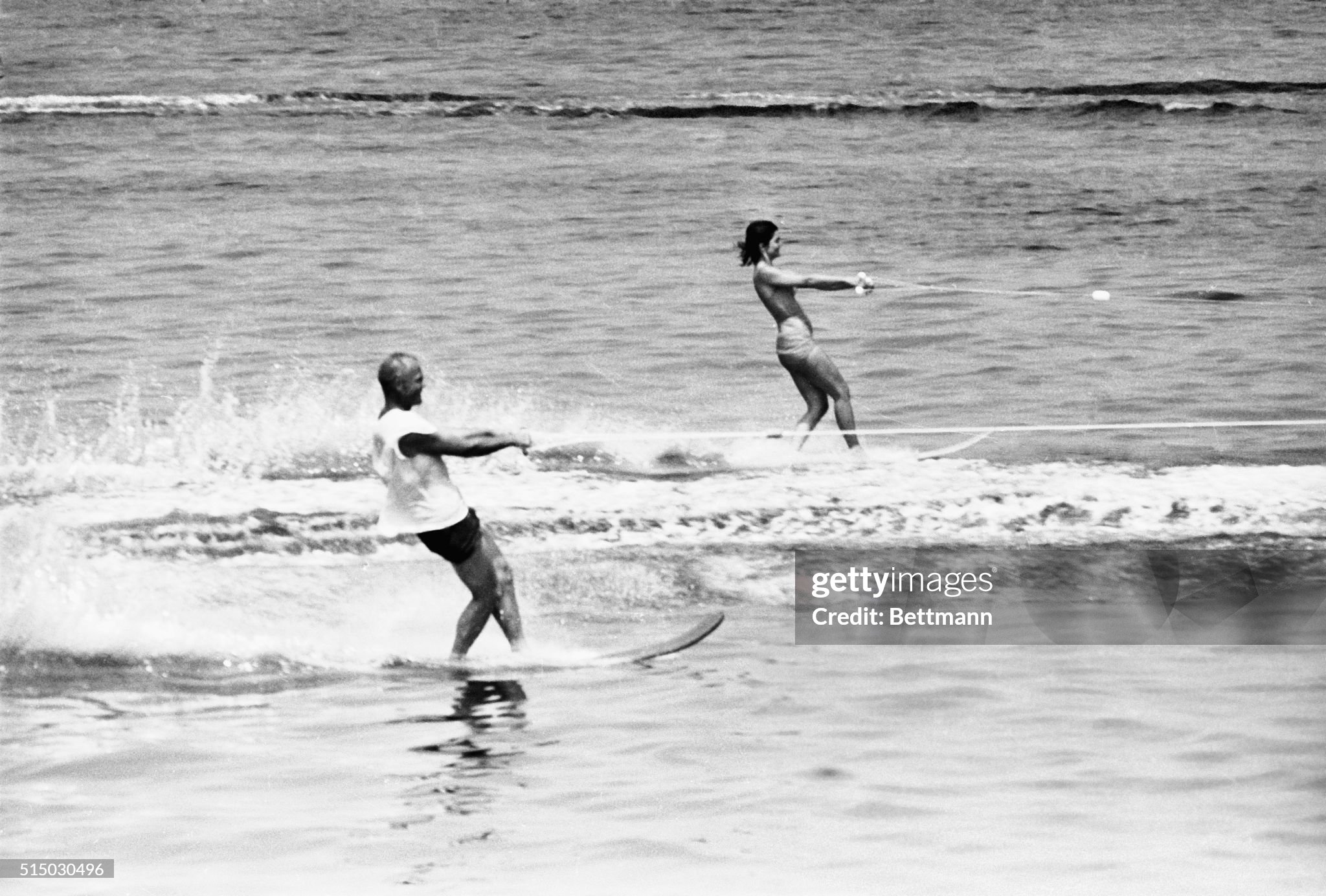
Astronaut John Glenn and Jacqueline Kennedy make a breezy duo, water-skiing over the warm waters of Nantucket Sound, Colorado, on 23 July 1962. Photo by Getty Images.
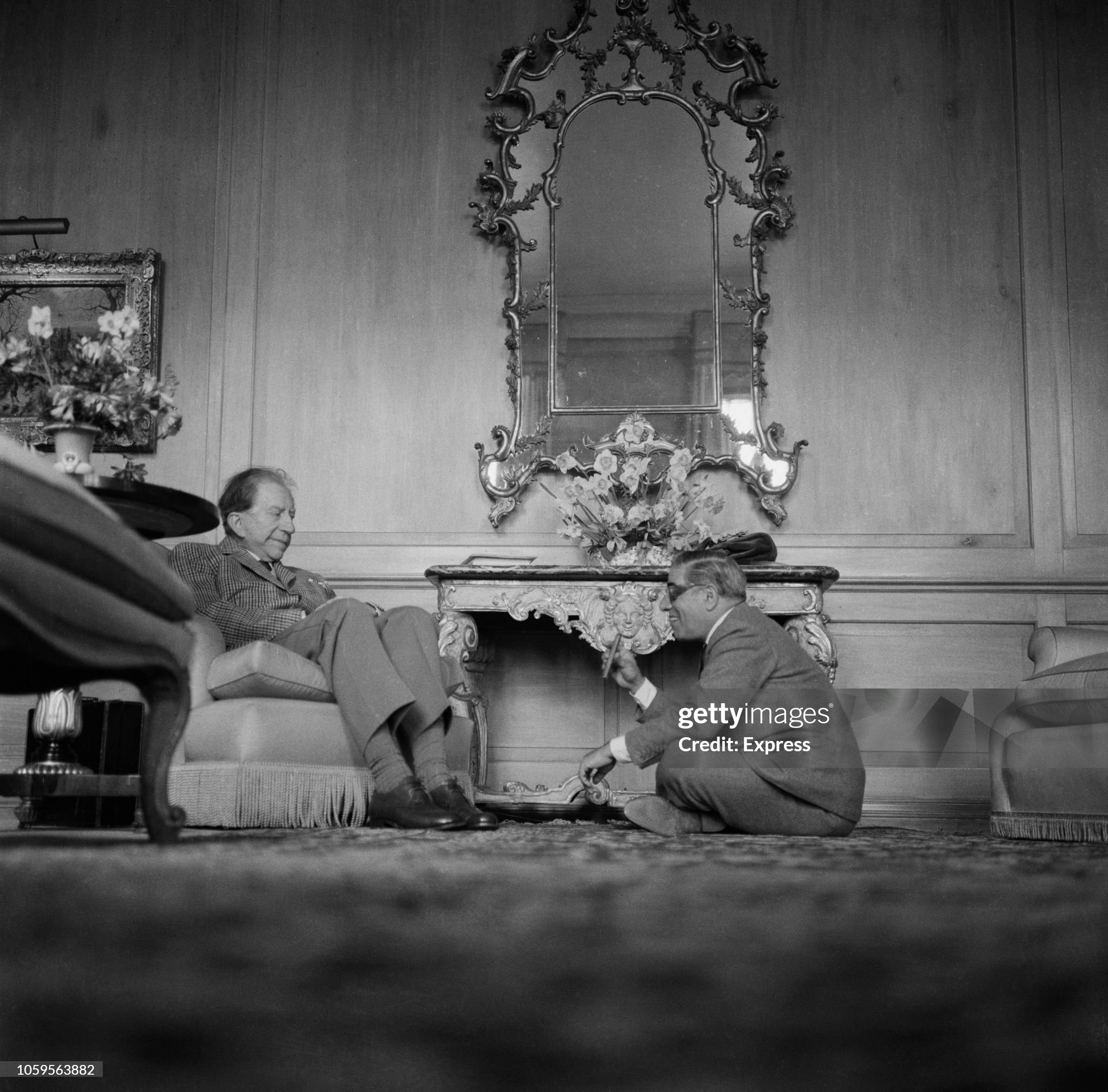
American industrialist and founder of Getty Oil, Jean Paul Getty (1892-1976), pictured with Aristotle Onassis at Sutton Place manor house in Surrey, England, in March 1963. Photo by Daily Express / Hulton Archive / Getty Images.
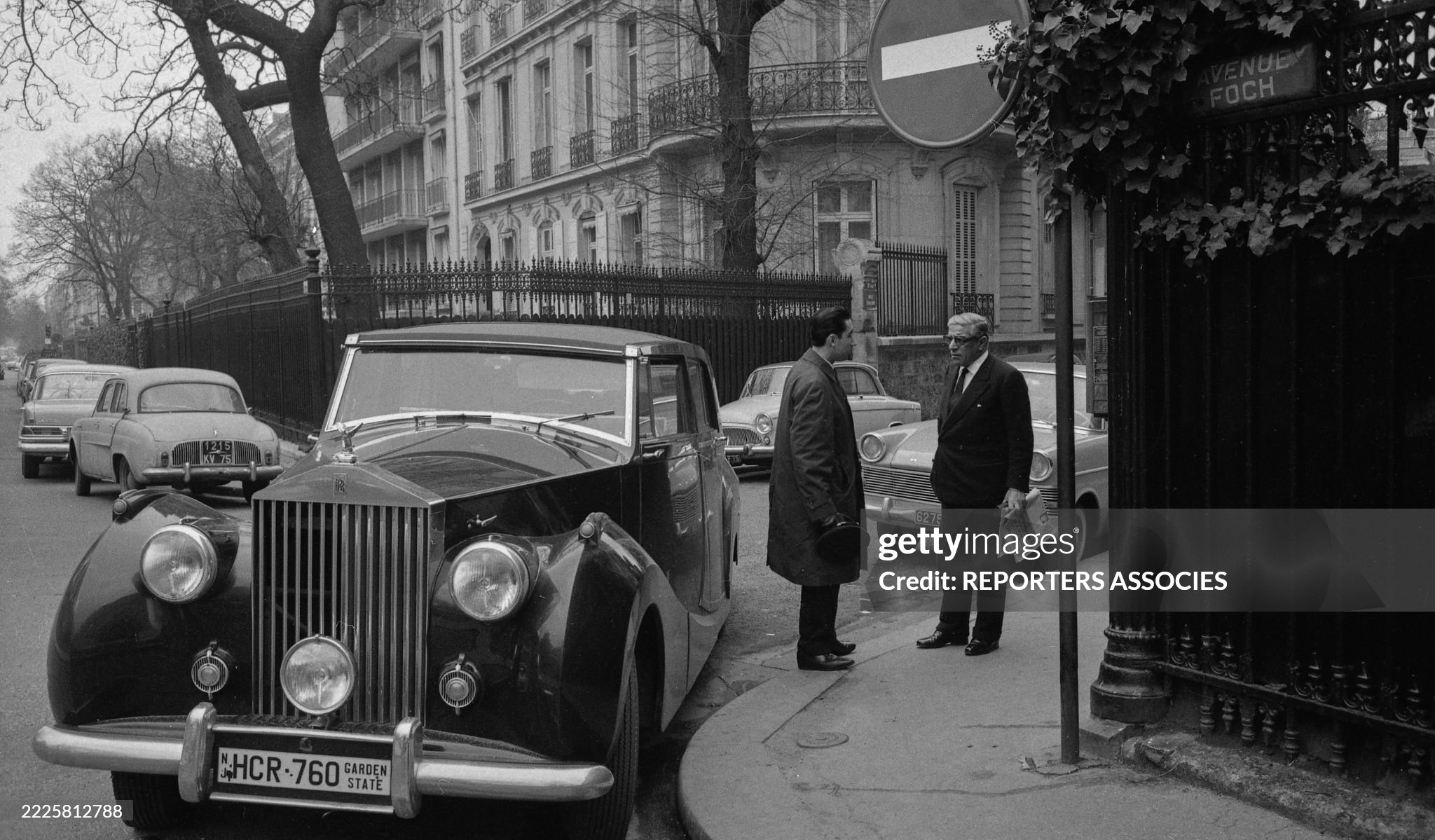
Aristotle Onassis next to his Rolls-Royce Silver Dawn on the street in Paris in 1964. Photo by Reporters Associes / Gamma - Rapho via Getty Images.
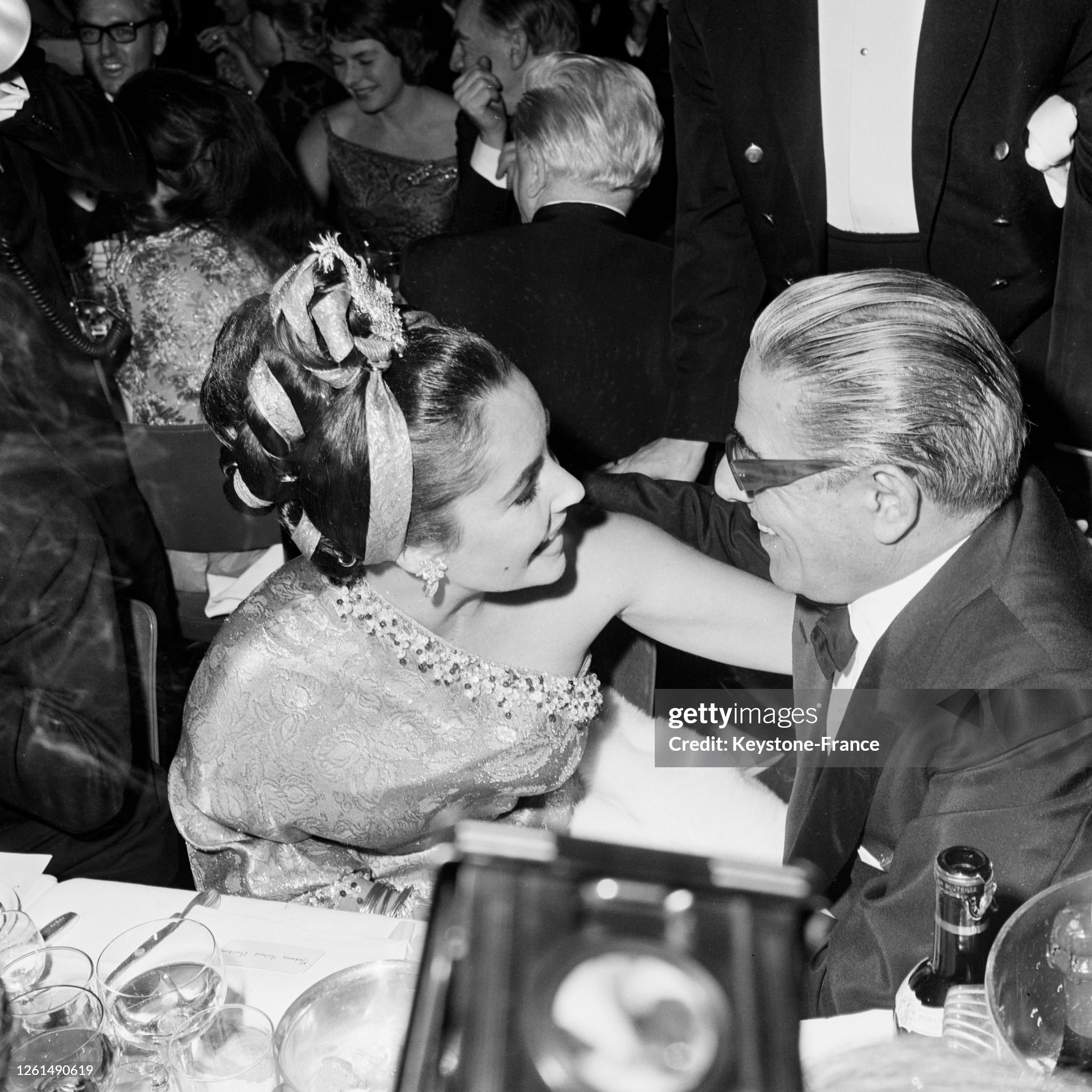
Liz Taylor and Aristotle Onassis chatting at the 'Lido' in Paris, France, on 02 December 1964. Photo by Keystone – France / Gamma - Rapho via Getty Images.
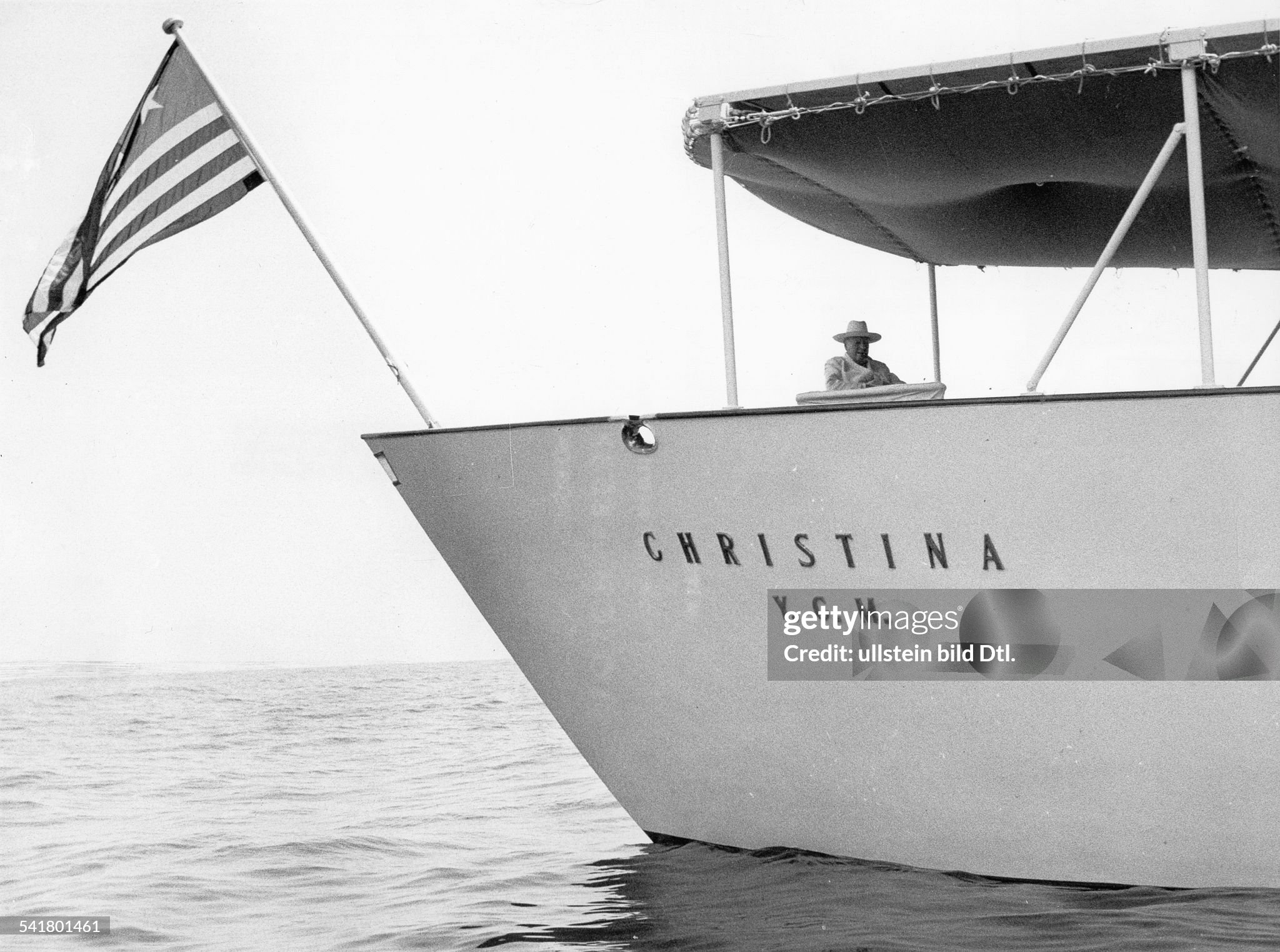
Winston Churchill on board the yacht ‘Christina’ of the Greek shipping magnate Aristotle Onassis off Capri on 24 January 1965. Photo by Ullstein bild via Getty Images.
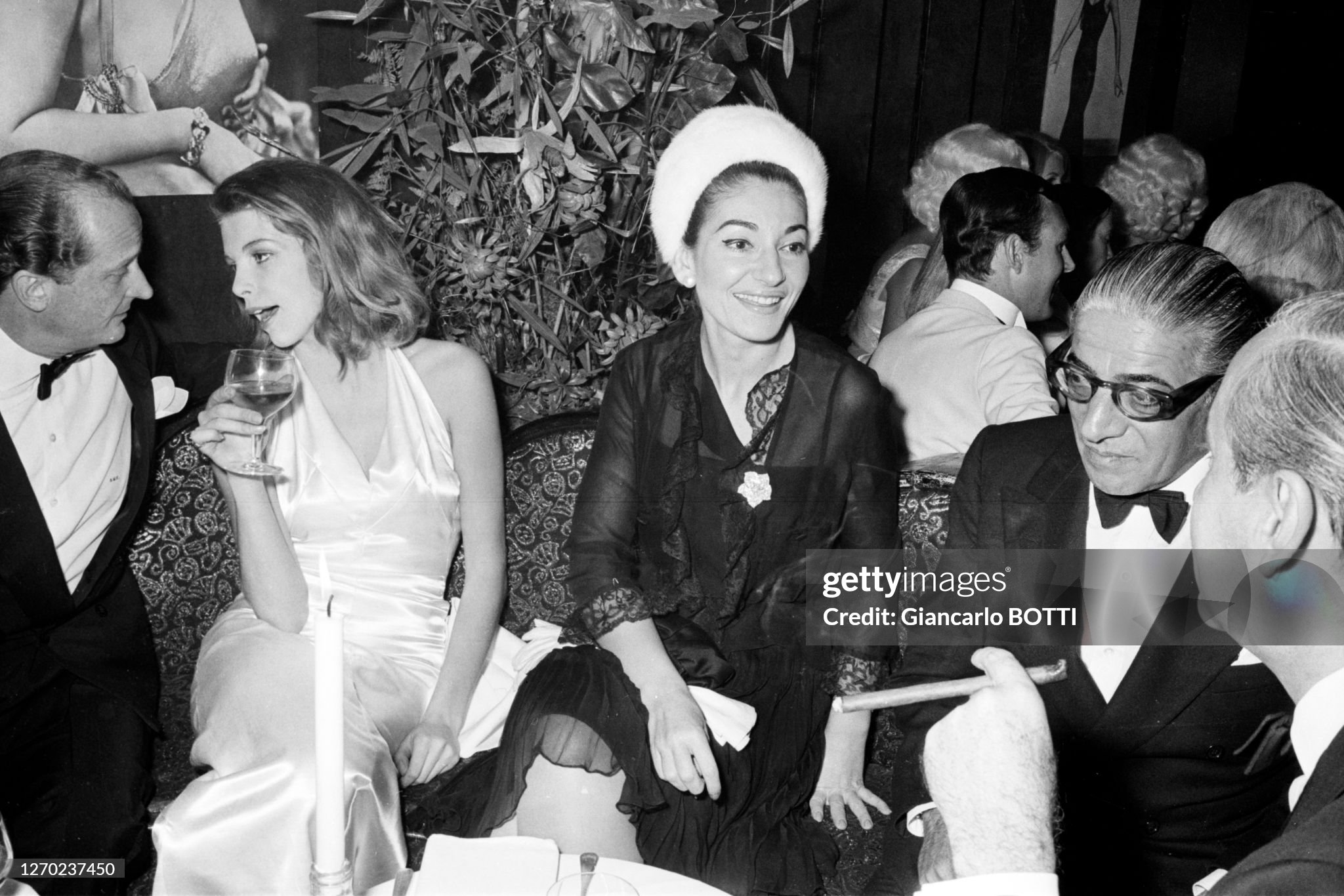
Maria Callas and Aristotle Onassis at a party in tribute to Jean Harlow at New Jimmy's in Paris, France, on 29 March 1965. Photo by Giancarlo Botti / Gamma - Rapho via Getty Images.
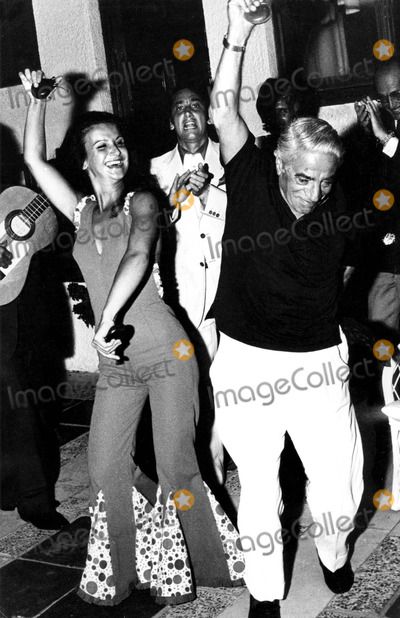
Aristotle Onassis dancing with a woman.
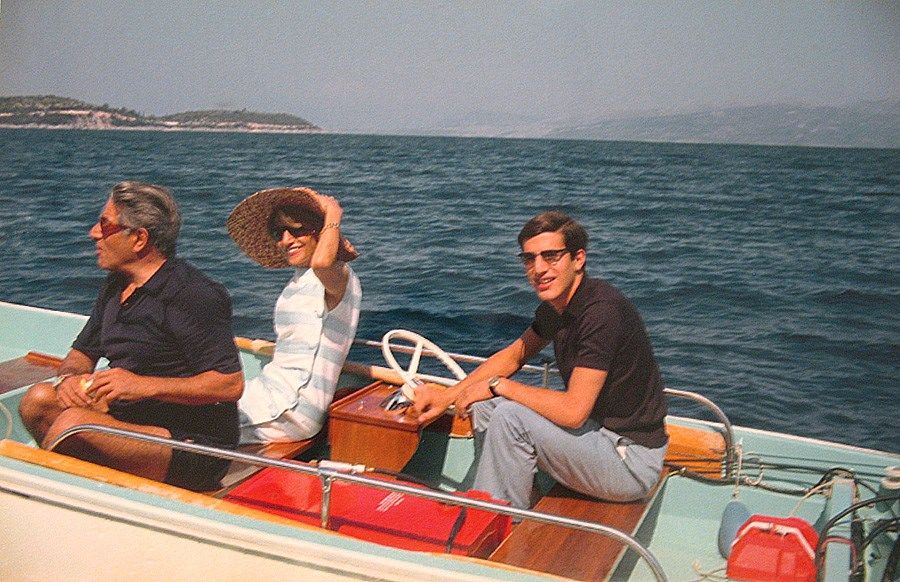
Aristotle Onassis, his sister and his son Alexander cruising along the Ionian sea in September 1966.
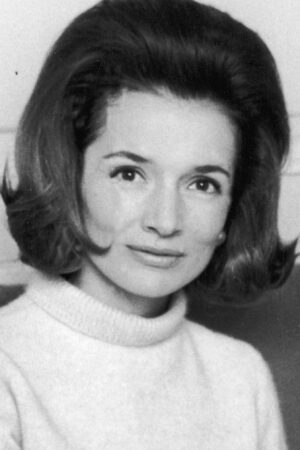
Lee Radziwill, here on 13 June 1967, was an American socialite, public relations executive and interior decorator. She was the younger sister of former First Lady Jacqueline Kennedy Onassis.
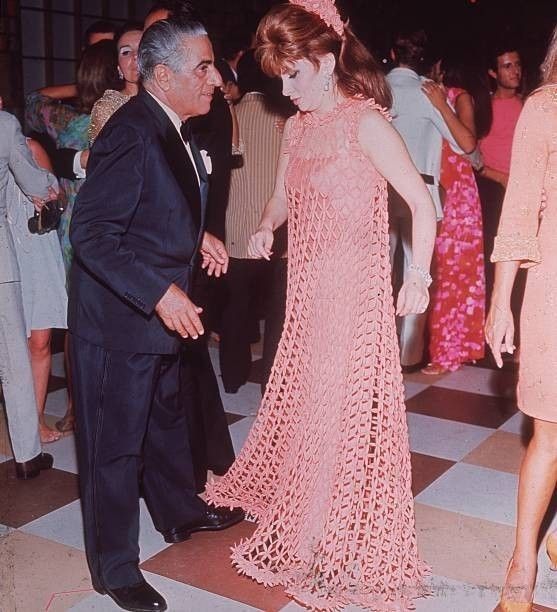
Greek shipping tycoon Aristotle Onassis dancing with Italian film star Gina Lollobrigida at a ball in Venice on 01 September 1967. Photo by Hulton Archive / Getty Images.
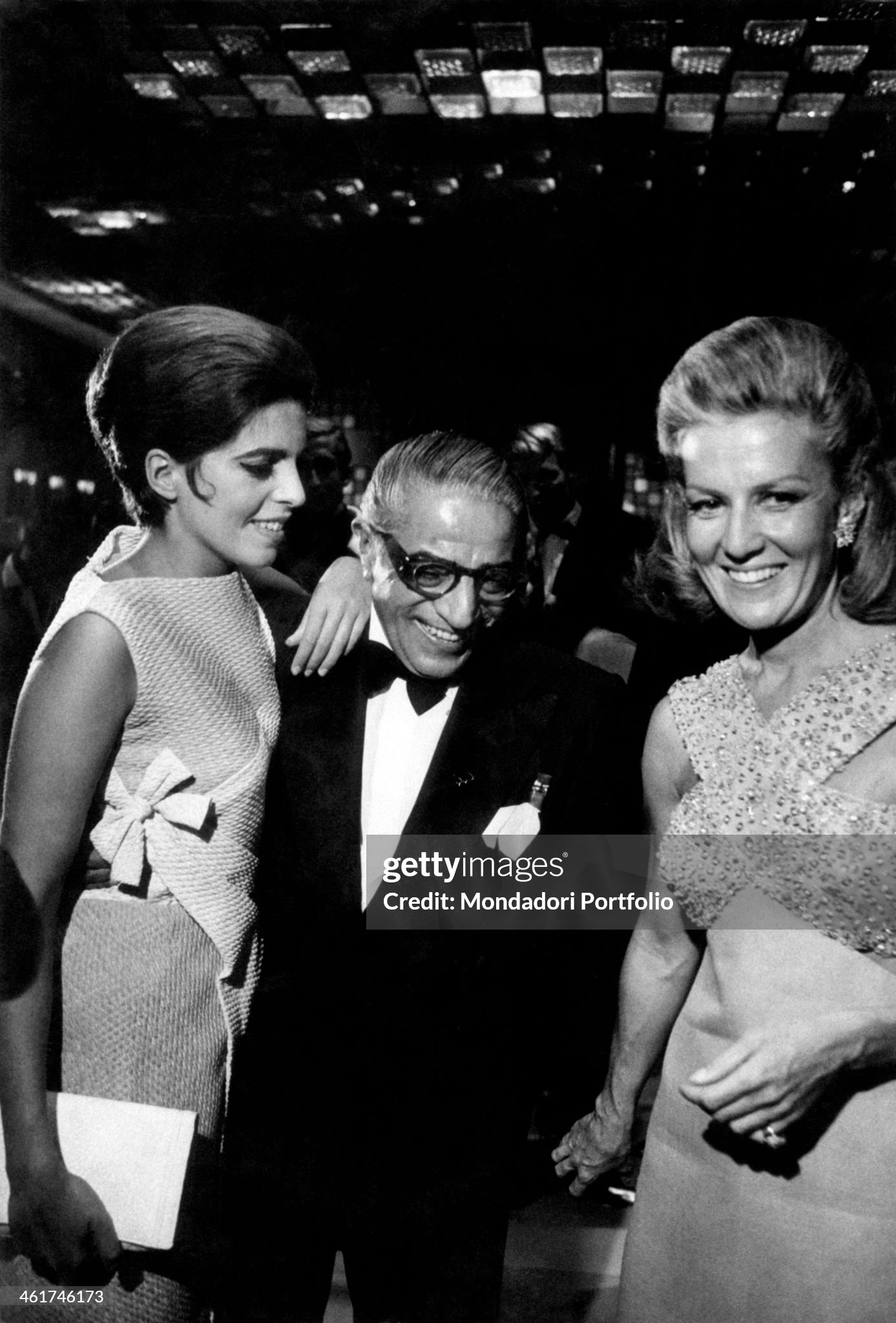
Aristotle Onassis smiling in dinner jacket beside his Greek daughter Christina Onassis and Italian countess and film producer Marina Cicogna. They're attending a party at Ca' Rezzonico in Venice in September 1967. Photo by Giorgio Lotti / Mondadori via Getty Images.
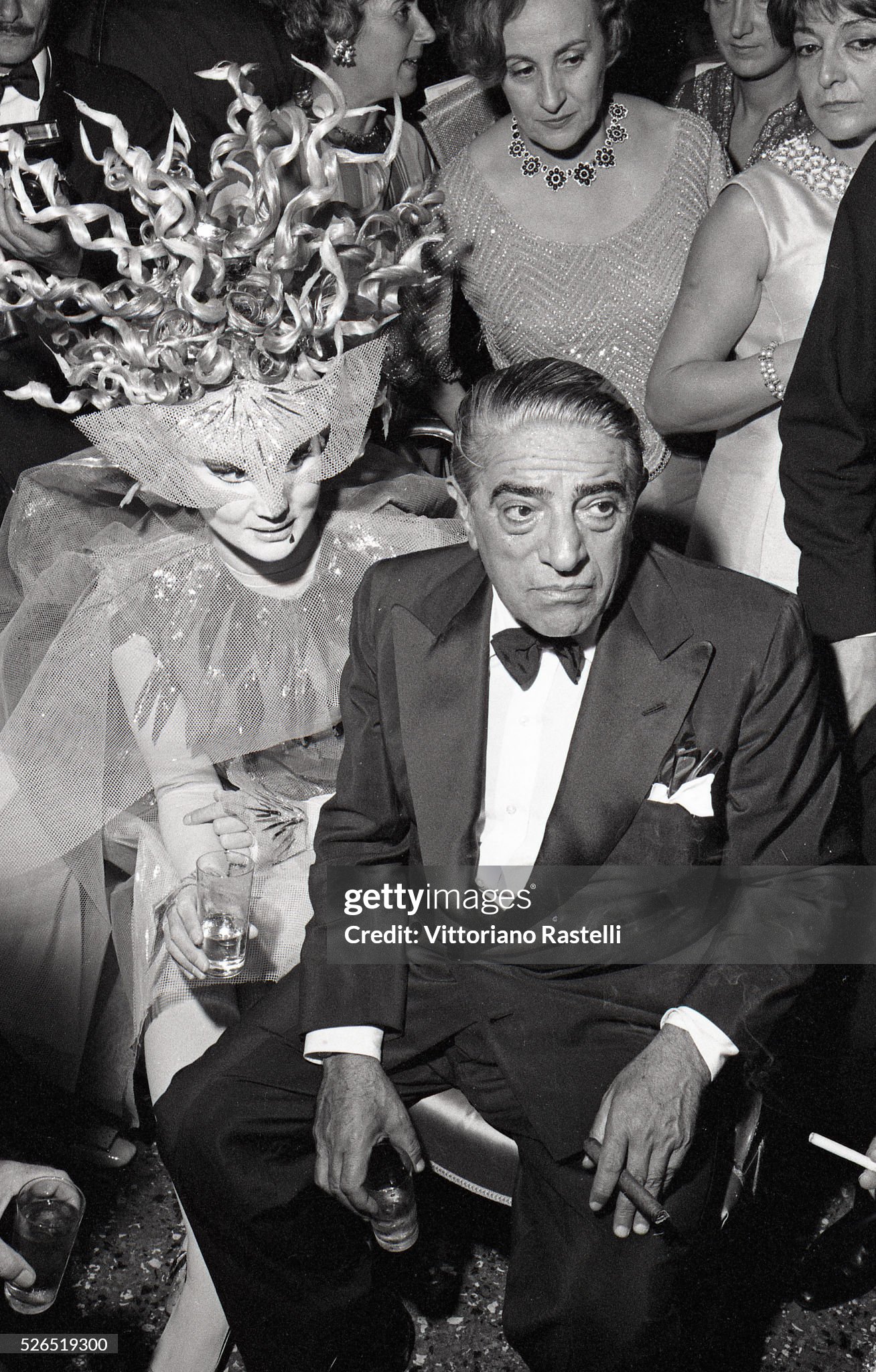
Aristotle Onassis attends a masquerade party at Ca' Rezzonico Palace in Venice on September 1967. Photo by Vittoriano Rastelli / Corbis via Getty Images.
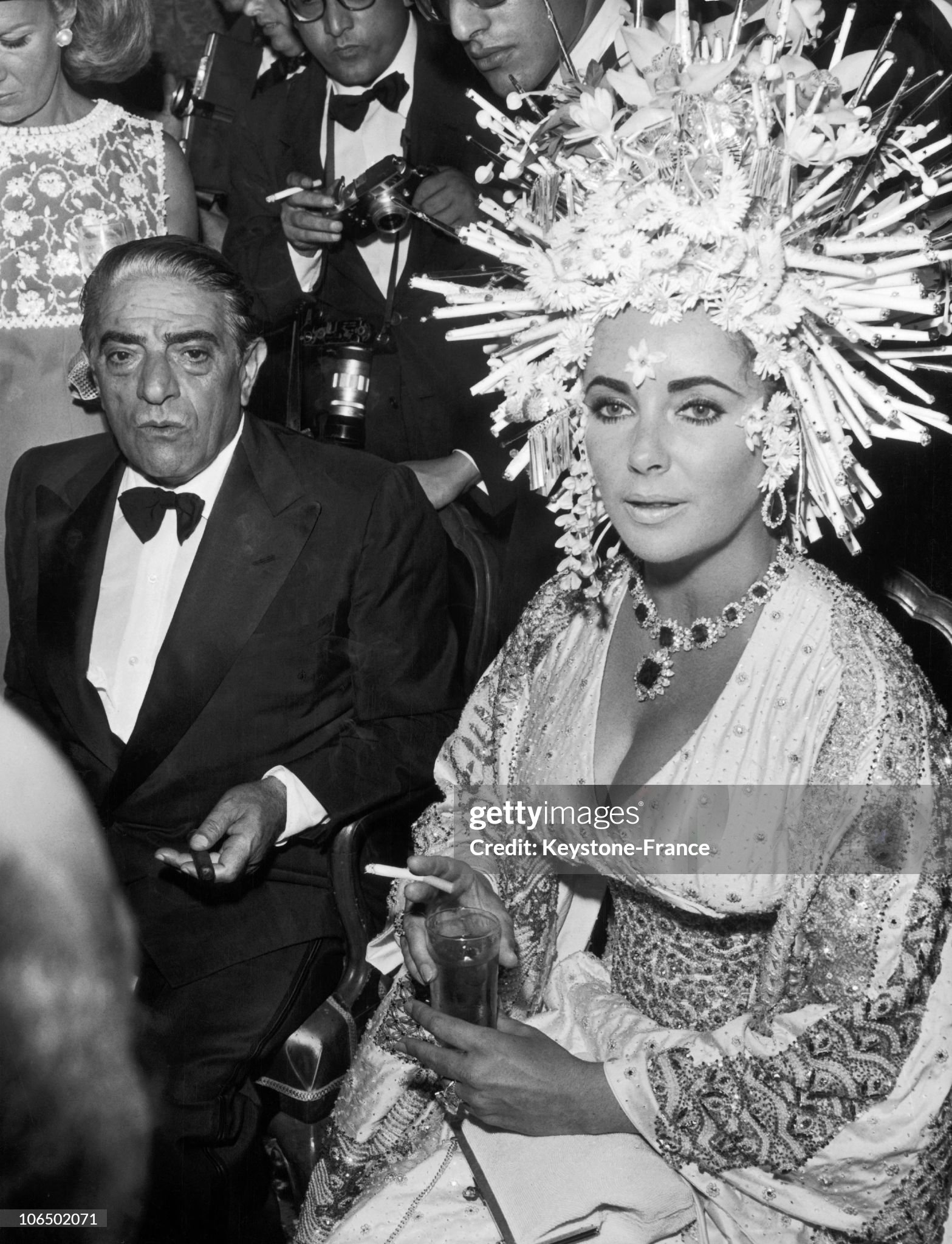
The English actress Elizabeth Taylor and Aristotle Onassis at a ball in Venice in September 1967. Photo by Keystone-France / Gamma-Keystone via Getty Images.
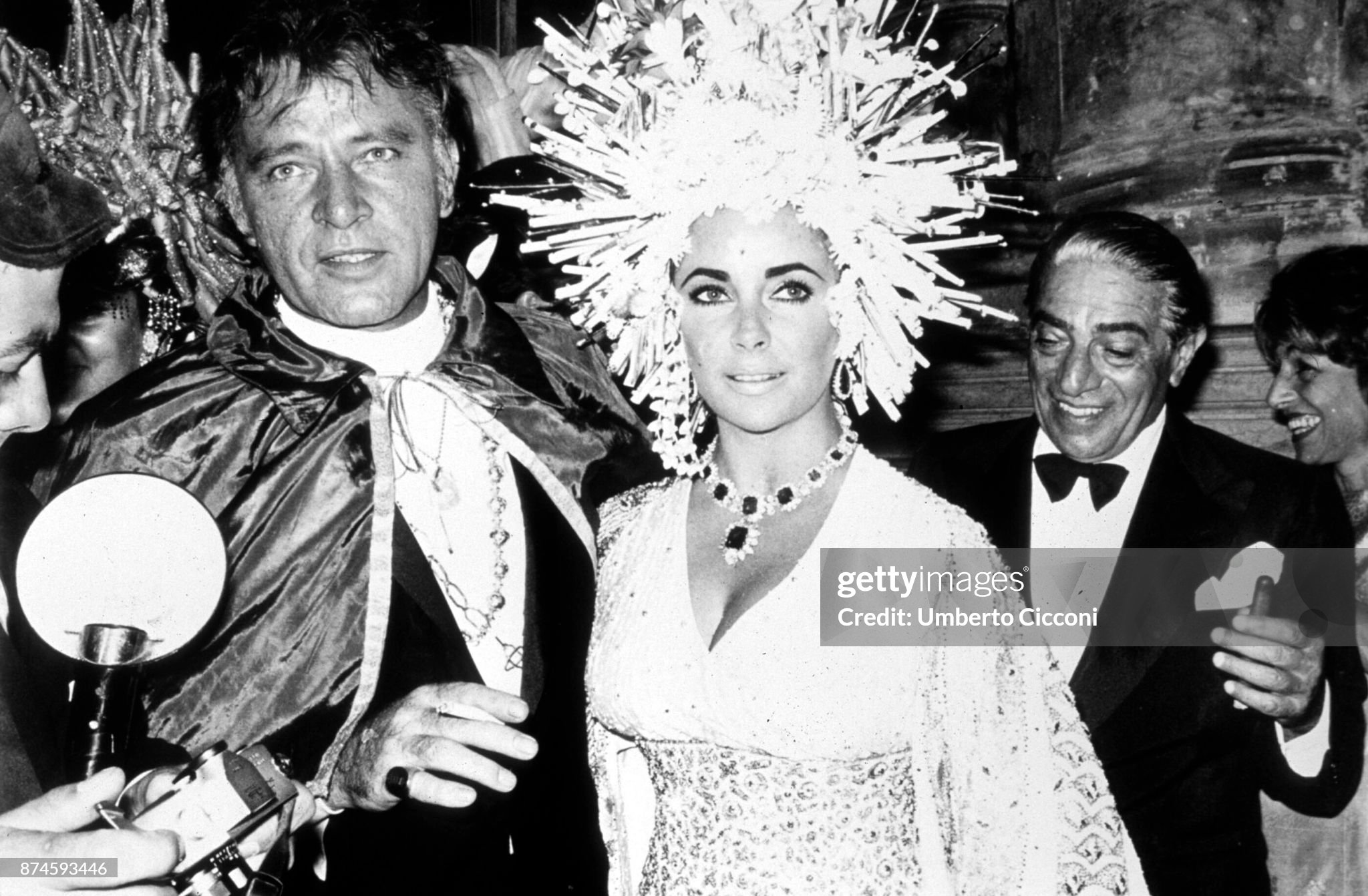
British-American actress Elizabeth Taylor (1932 - 2011), British actor Richard Burton (1925 - 1984) at 'Palazzo Rezzonico' for a masquerade party in Venice, Italy, in 1967. Behind them, Aristotle Onassis. Photo by Archivio Cicconi / Getty Images.
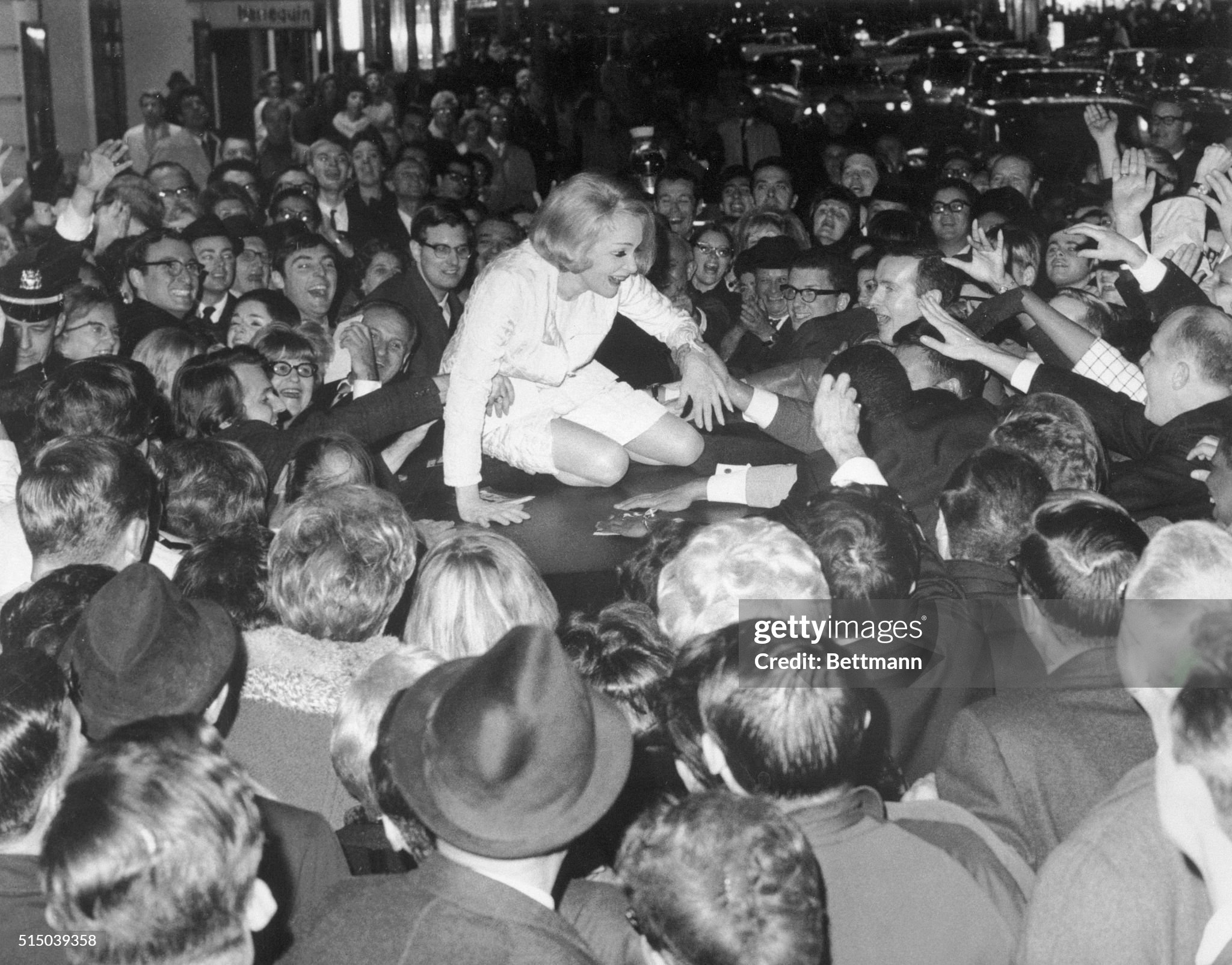
New York, 06 November 1967: Marlene Dietrich happily climbs atop her waiting limousine as protection from wildly enthusiastic fans outside the Lunt-Fontanne Theater where she is starring in a one woman show. Miss Dietrich rose to the occasion - so to speak - by casting out pictures of herself to her sea of admirers. The scene is already a familiar one, it occurs nightly. But, then again, the lovely 63 year old Marlene could always stop traffic. Photo by Getty Images.
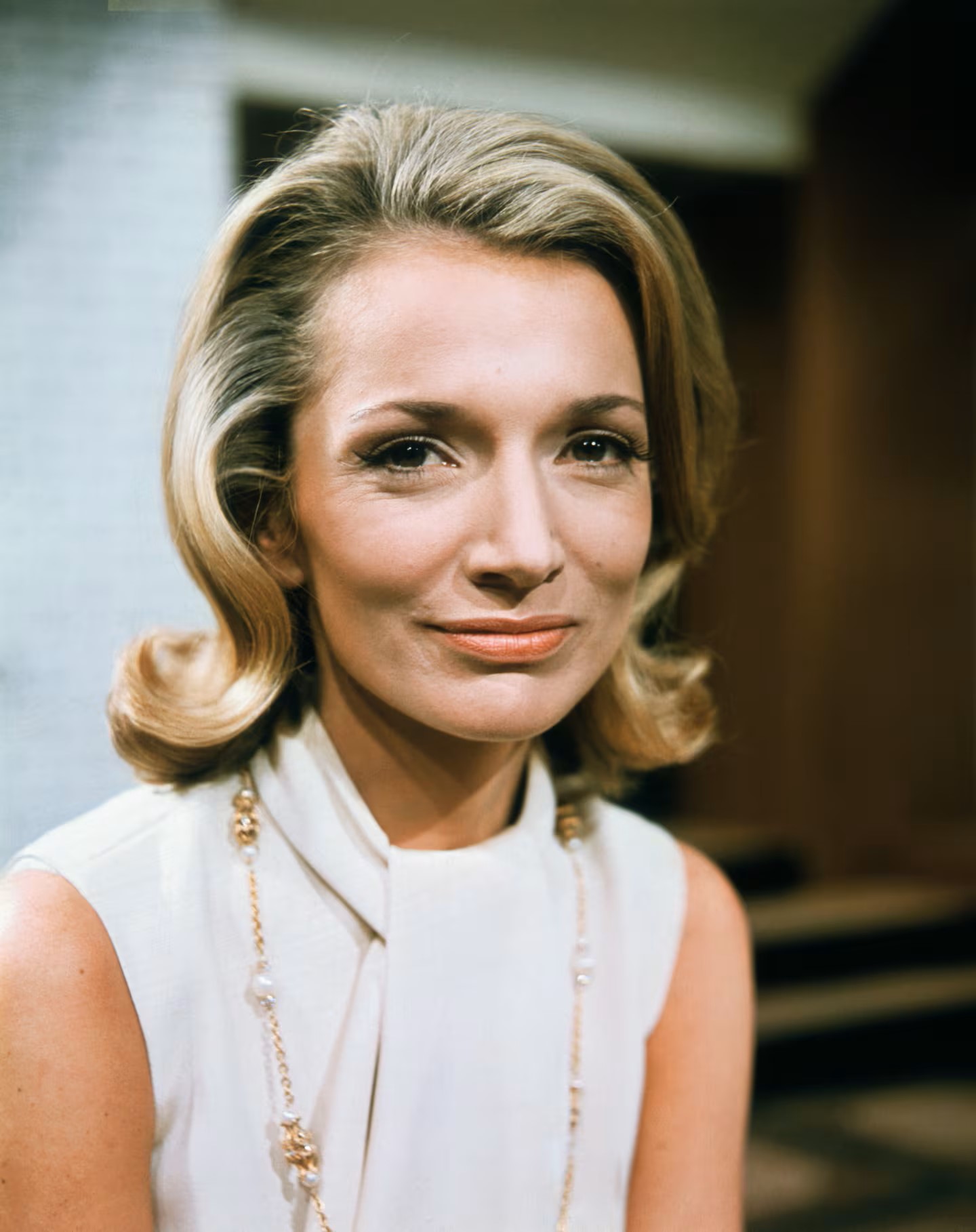
Lee Radziwill in 1968. Photo by Bettmann for Getty Images.
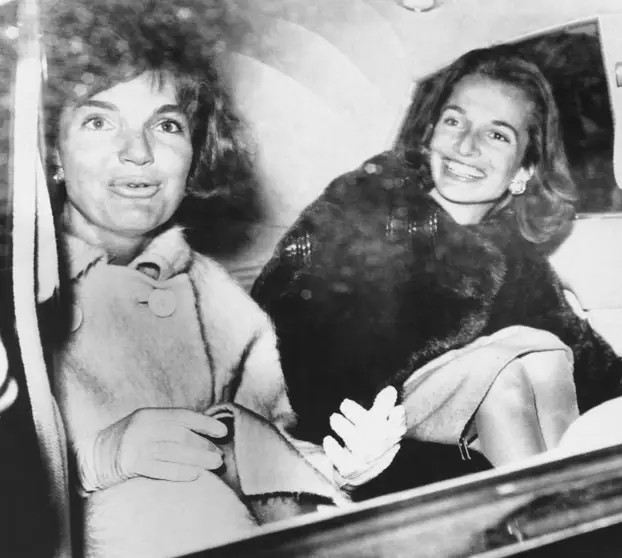
Jackie and Lee Bouvier circa October 1968. Photo by Profimedia - JFK Library.
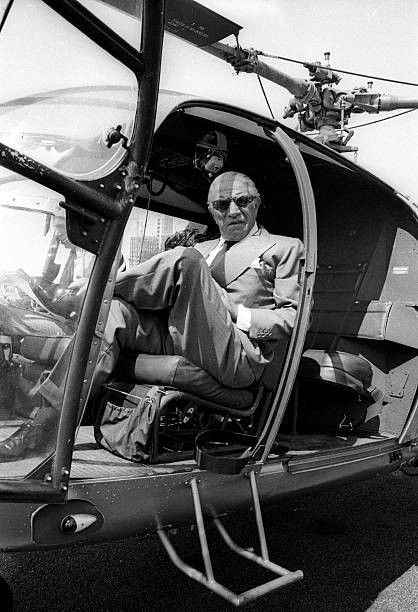
Once a captain, always a captain. Onassis inside an Olympic Aviation helicopter ALOUETTE III SX-HAC.
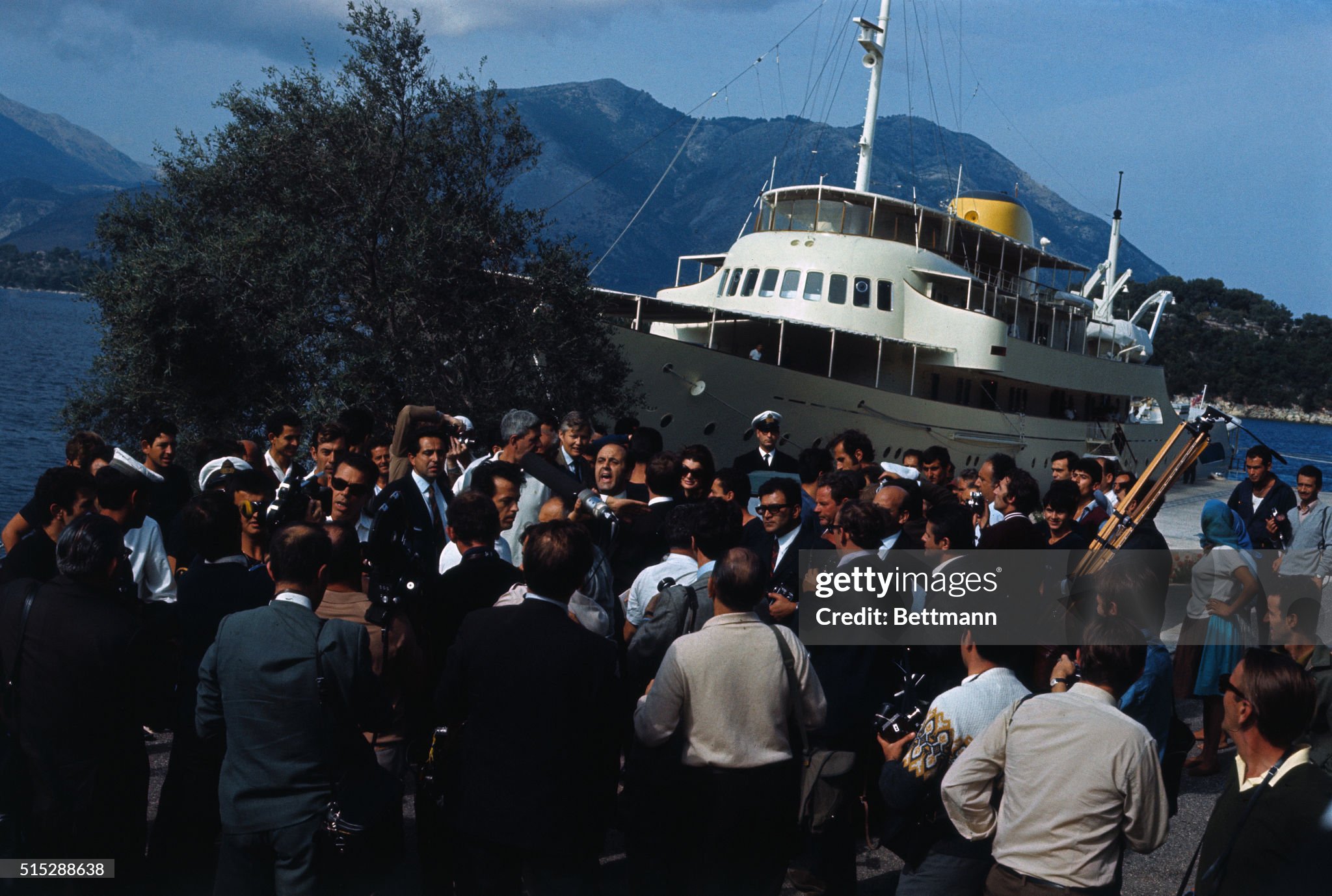
A crowd of reporters surrounds Jackie Kennedy after she arrived on the Greek island of Skorpios by her yacht ‘Christina’ on 19 October 1968. She recently announced she would marry financier Aristotle Onassis. Photo by Getty Images.
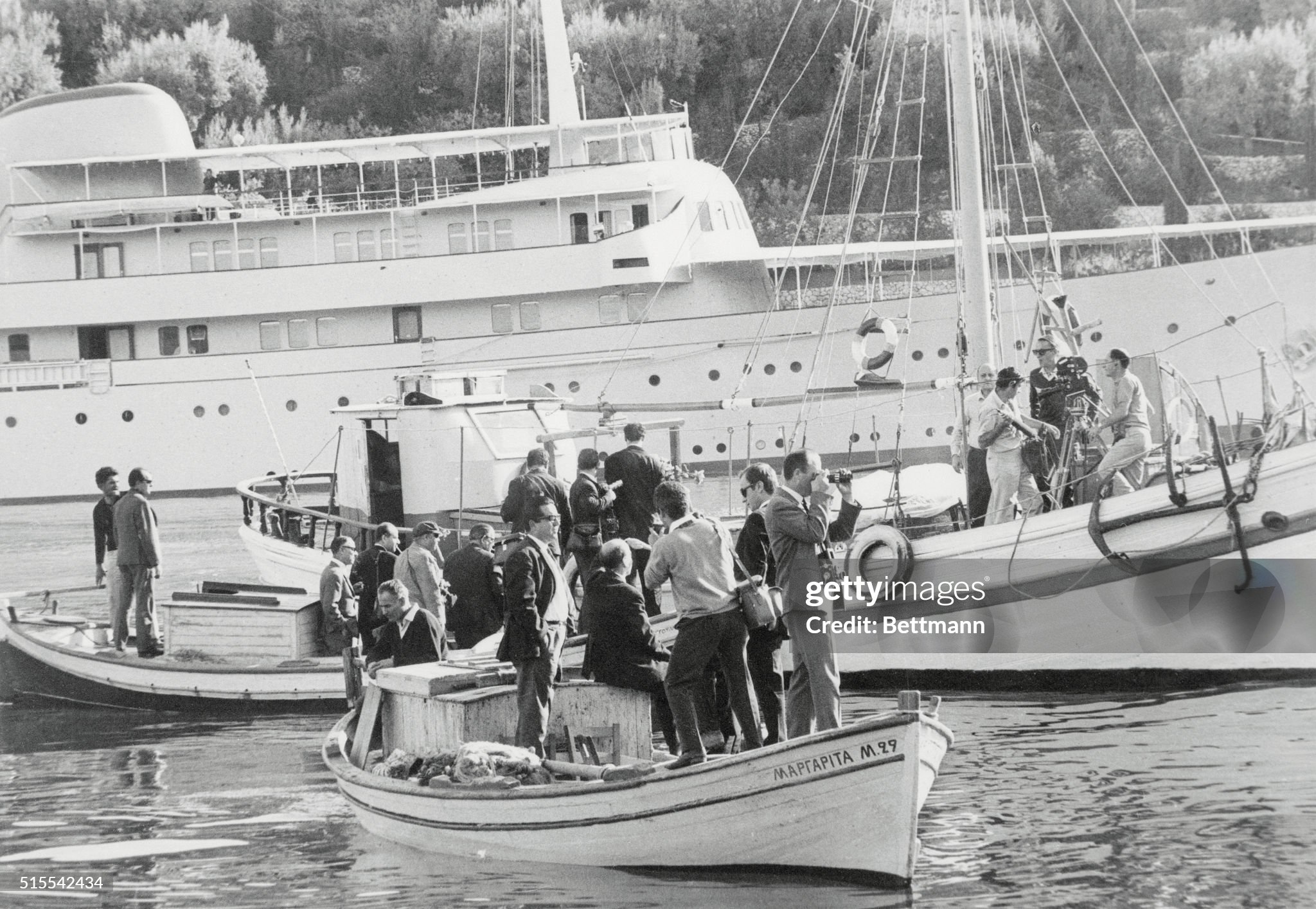
Newsmen sit in small boats off the shore of Skorpios, Aristotle Onassis' Ionian island, waiting for permission to land on the island for pictures and stories about the impending marriage of Onassis to Jacqueline Kennedy on 19 October 1968. Photo by Getty Images.
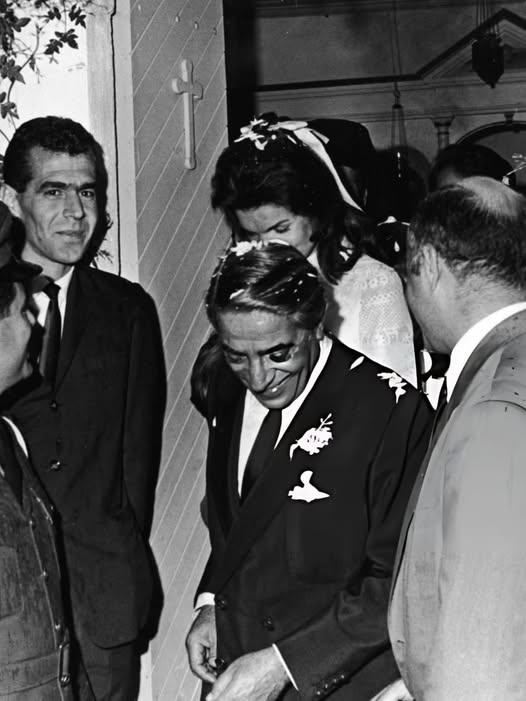
The wedding in Skorpios by Aristotle Onassis and Jackie Bouvier Kennedy on 20 October 1968.
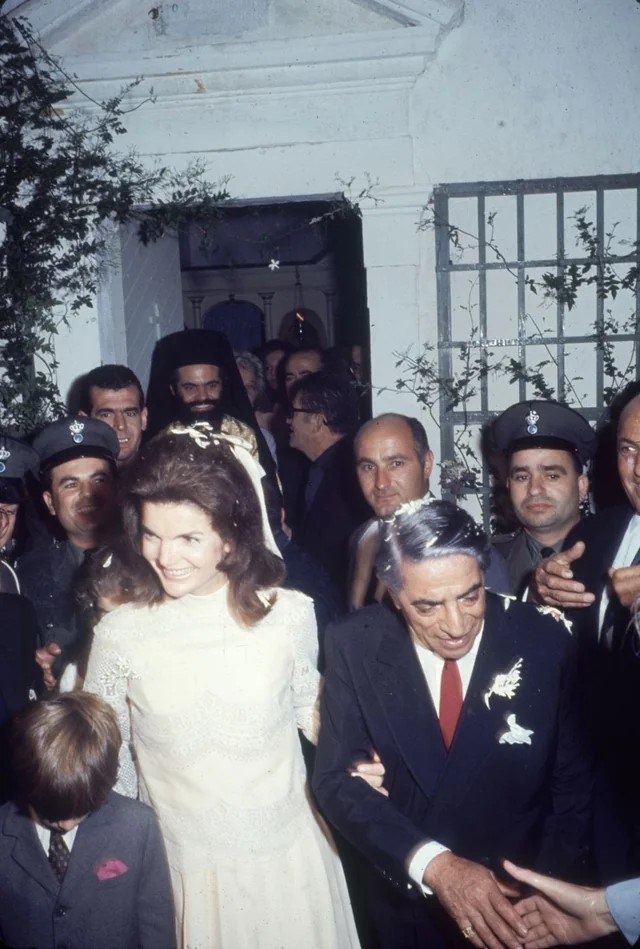
Bearing traces of confetti Mr. and Mrs. Onassis are shown at their wedding here on Onassis' private island on 20 October 1968.
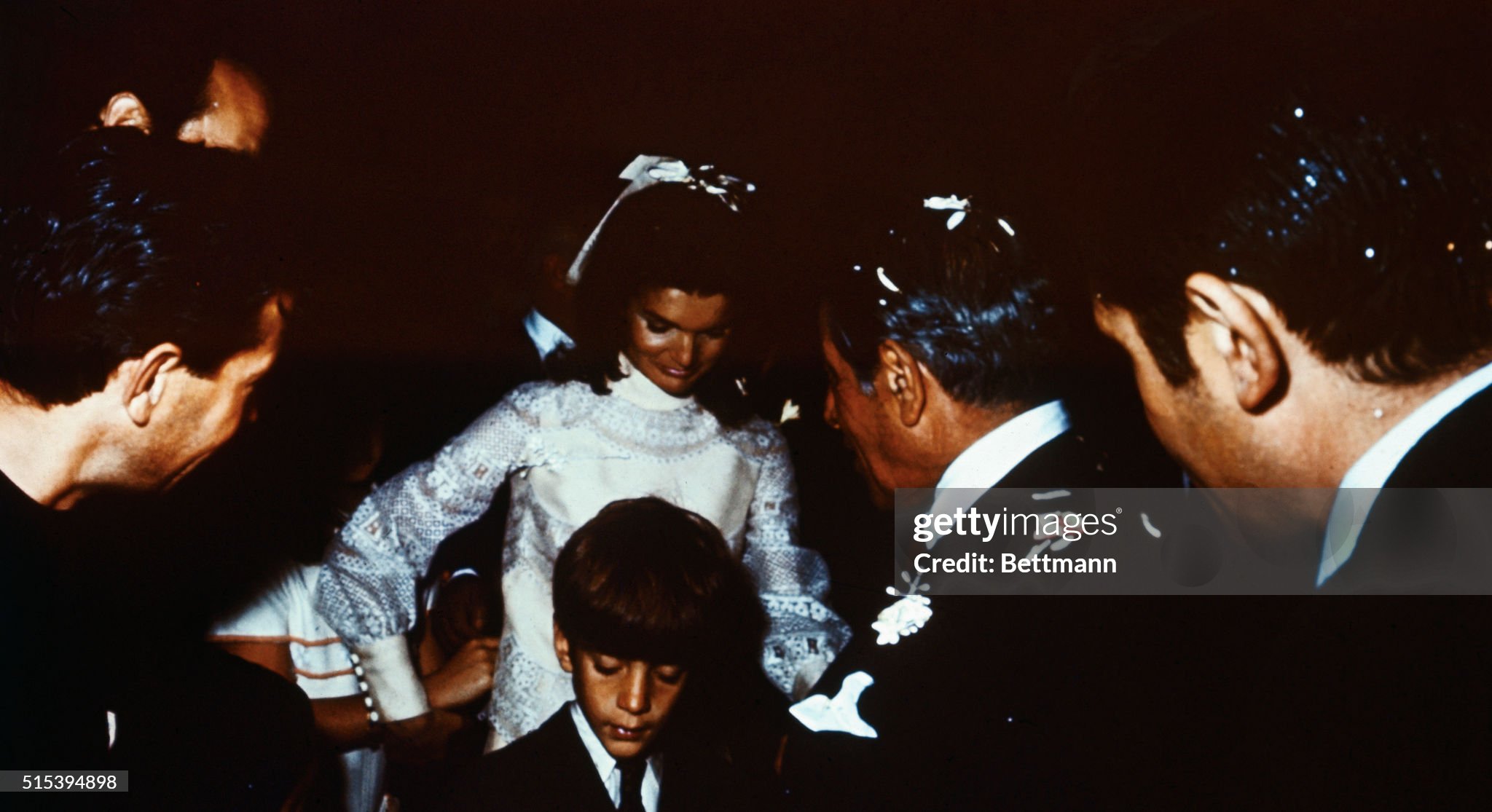
The wedding in Skorpios by Aristotle Onassis and Jackie Bouvier Kennedy on 20 October 1968.
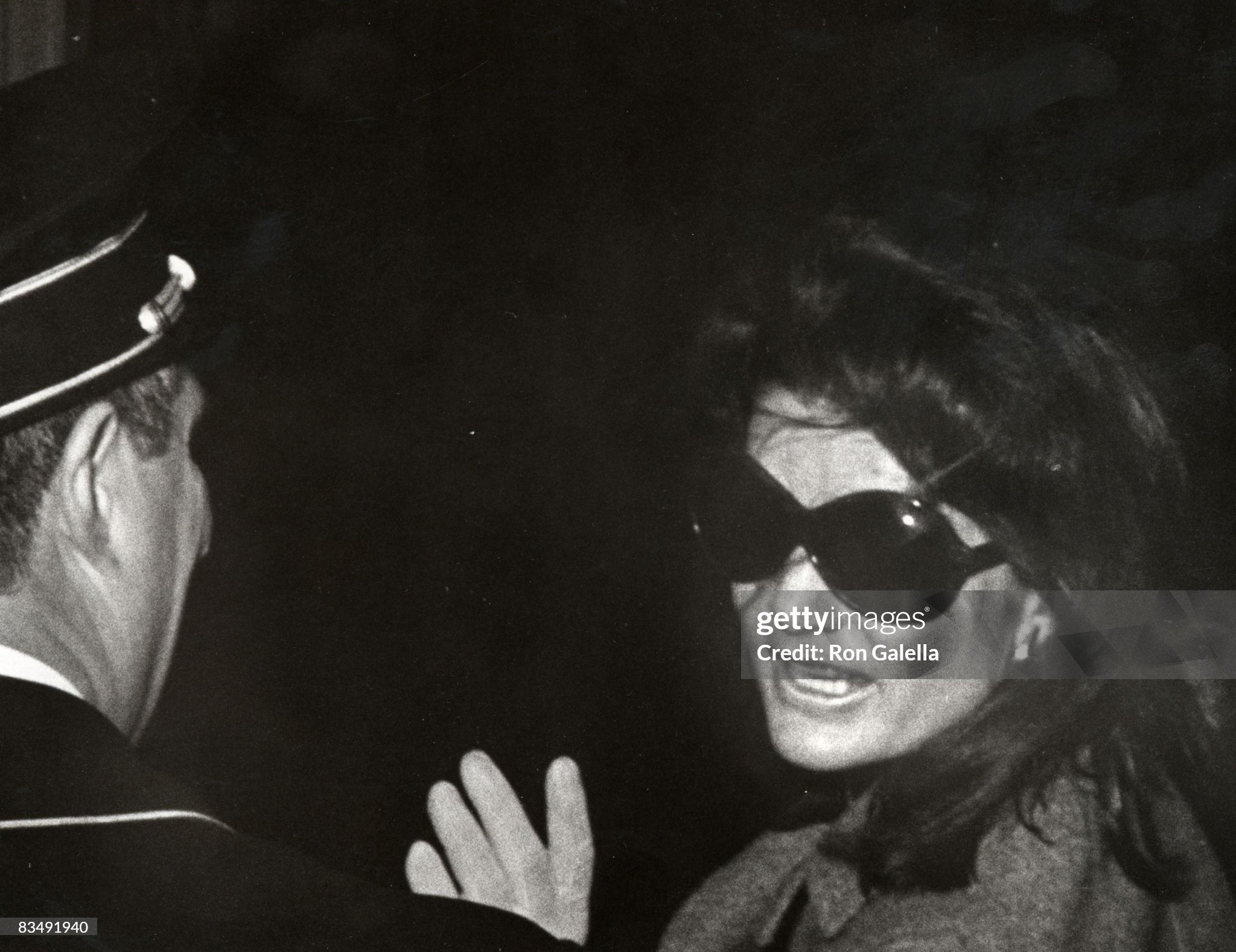
Jackie Kennedy Onassis returning home after wedding to Aristotle Onassis. Photo by Ron Galella / Ron Galella Collection via Getty Images.
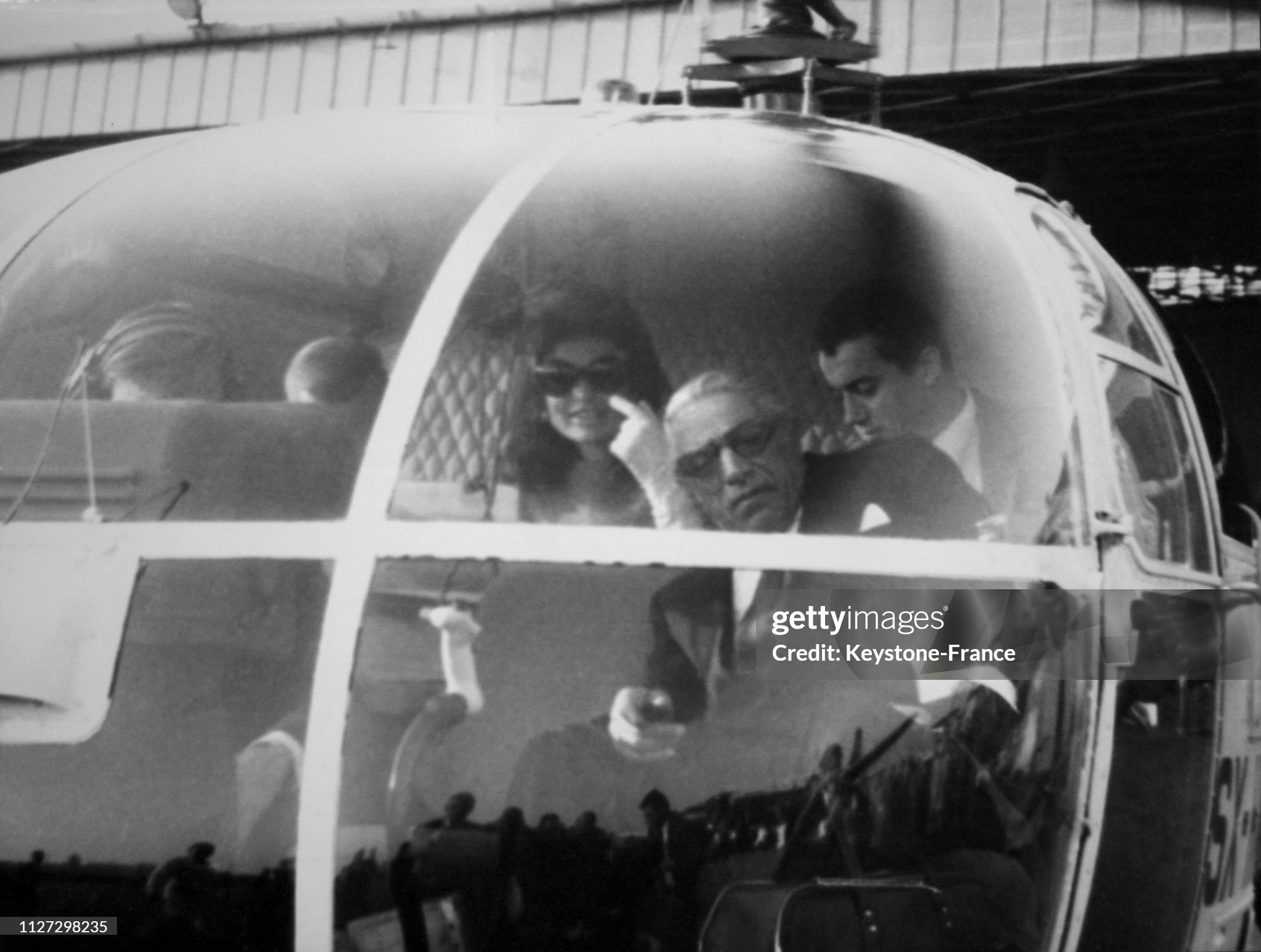
Aristotle Onassis and Jackie Kennedy photographed in a helicopter taking them on their honeymoon, departing from Athens Airport, Greece, on 01 November 1968. Photo by Keystone – France / Gamma - Rapho via Getty Images.
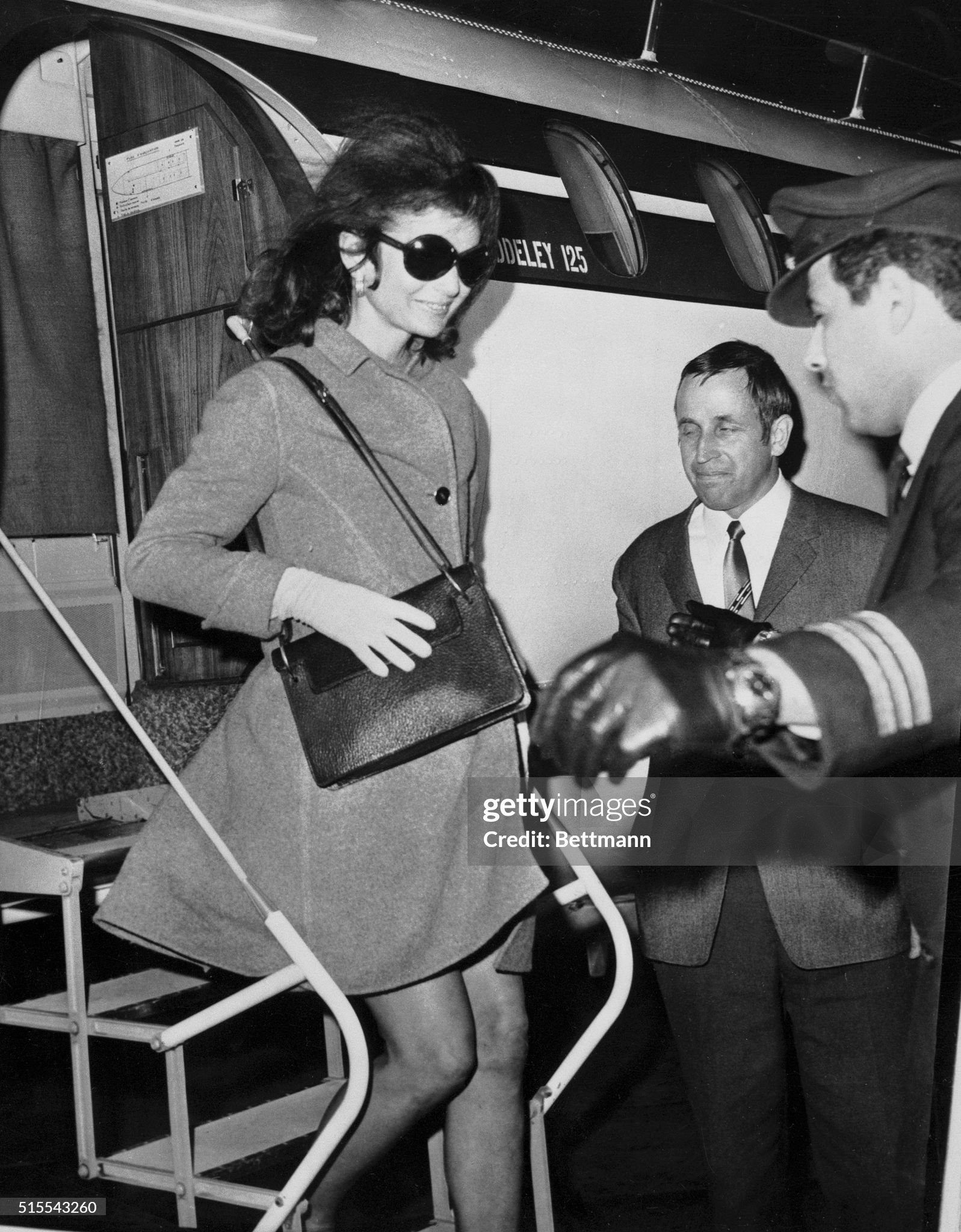
Jacqueline Onassis steps briskly as she leaves a chartered jet here on 14 November on her first visit outside Greece since her wedding. Jackie and her husband, Greek shipping tycoon Aristotle Onassis, are reported to be enroute to the U.S. Photo by Getty Images.
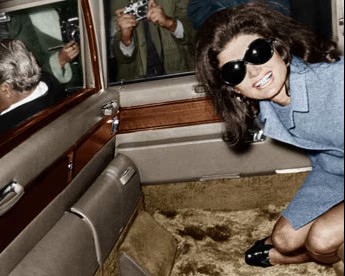
Jackie Kennedy Onassis leaves Heathrow with Aristotle Onassis on 15 November 1968. Photo by RDA / Hulton / Getty Images.
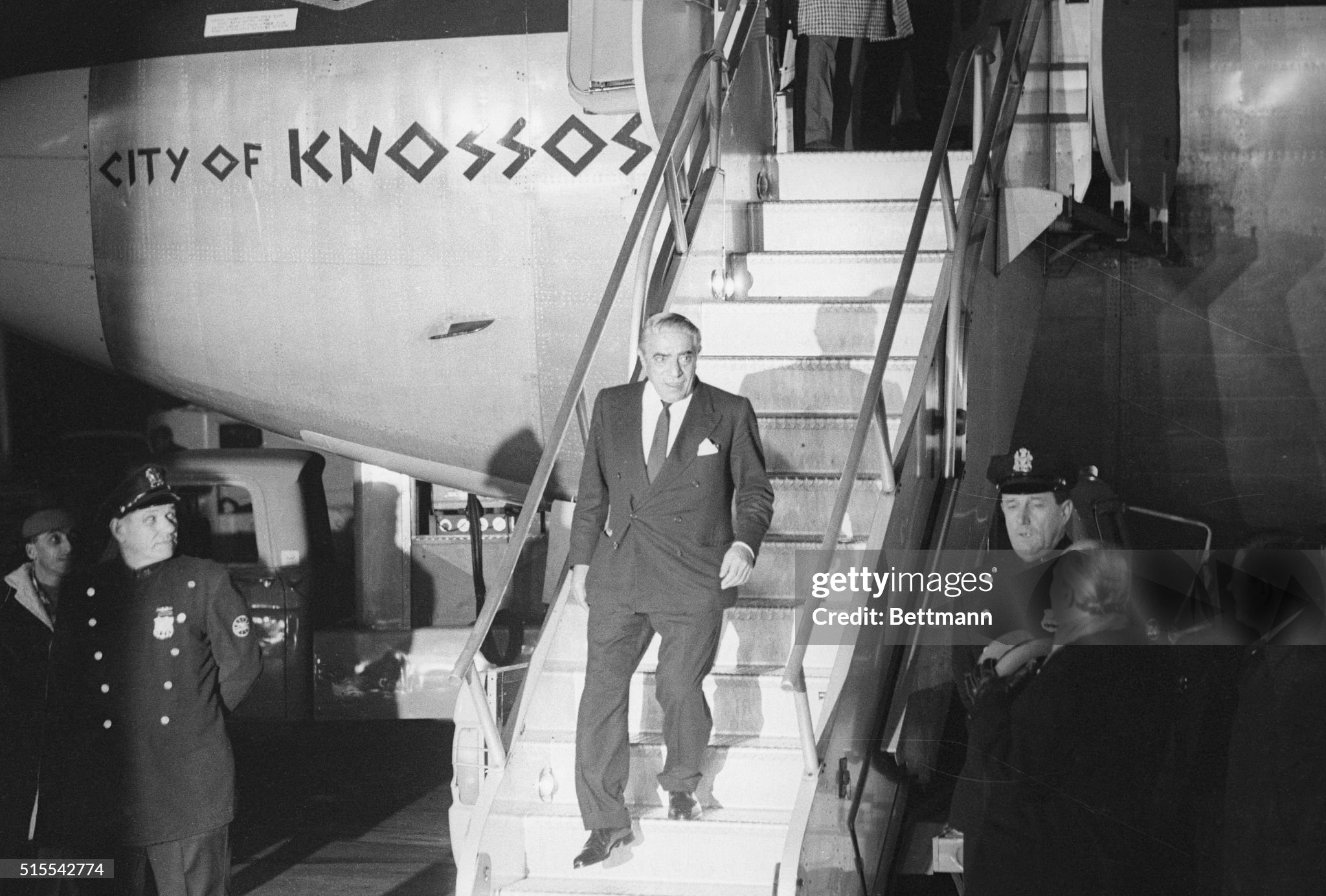
A New York City policeman looks on as Aristotle Onassis debarks from an Olympic Airways jetliner on arrival for a reunion with his bride of a month, the former Jacqueline Kennedy, on 22 November 1968. Mrs. Onassis returned earlier in the week and was reported in seclusion marking the fifth anniversary of the death of her first husband, president John F. Kennedy. The Greek shipping magnate had remained in London to attend to business affairs. Photo by Getty Images.
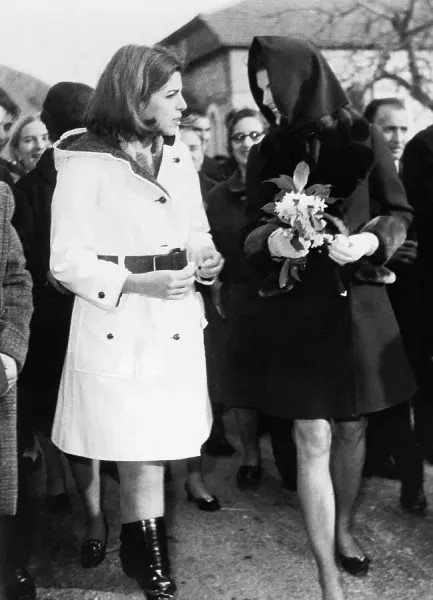
Christina Onassis with Jackie Onassis on 25 December 1968 in Lefkas isle.
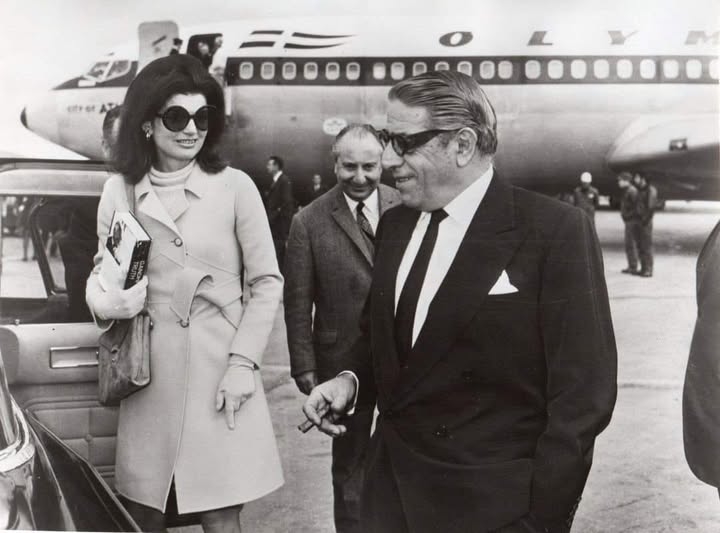
Jackie O' holding the book ‘Gandhi's truth’ by Erik H. Erikson, casually chatting with Onassis after her arrival in Athens from JFK, onboard the aircraft City of Athens B707-384C in 1969.
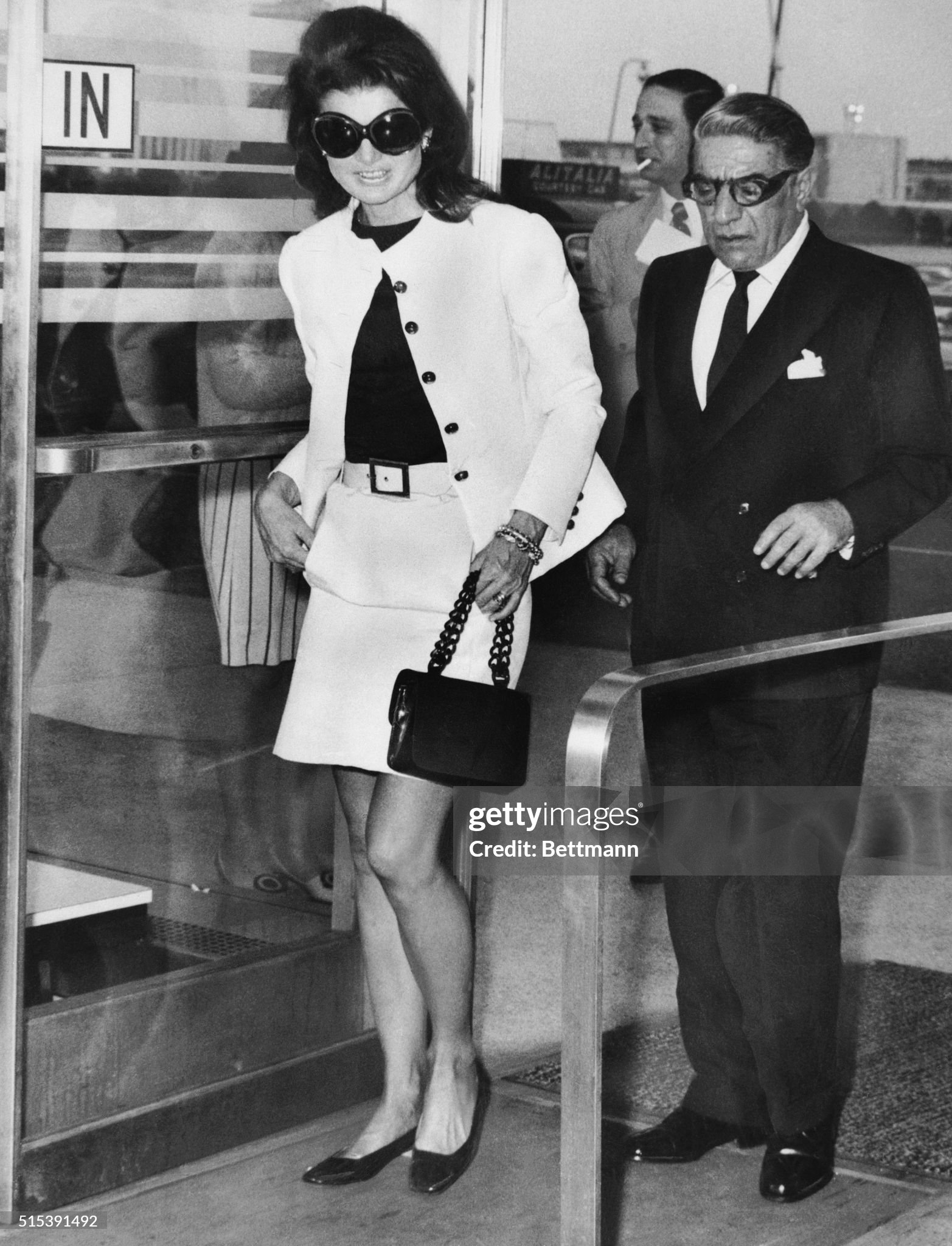
Wearing mod sunglasses and a miniskirt, Jacqueline Kennedy Onassis accompanies her husband, Aristotle, to a plane at Kennedy Airport on today, before the Greek shipping magnate took off for Athens. Ari was flying his own Olympic Airways to Europe and Jackie came along to the airport to say goodbye on 05 June 1969. Photo by Getty Images.
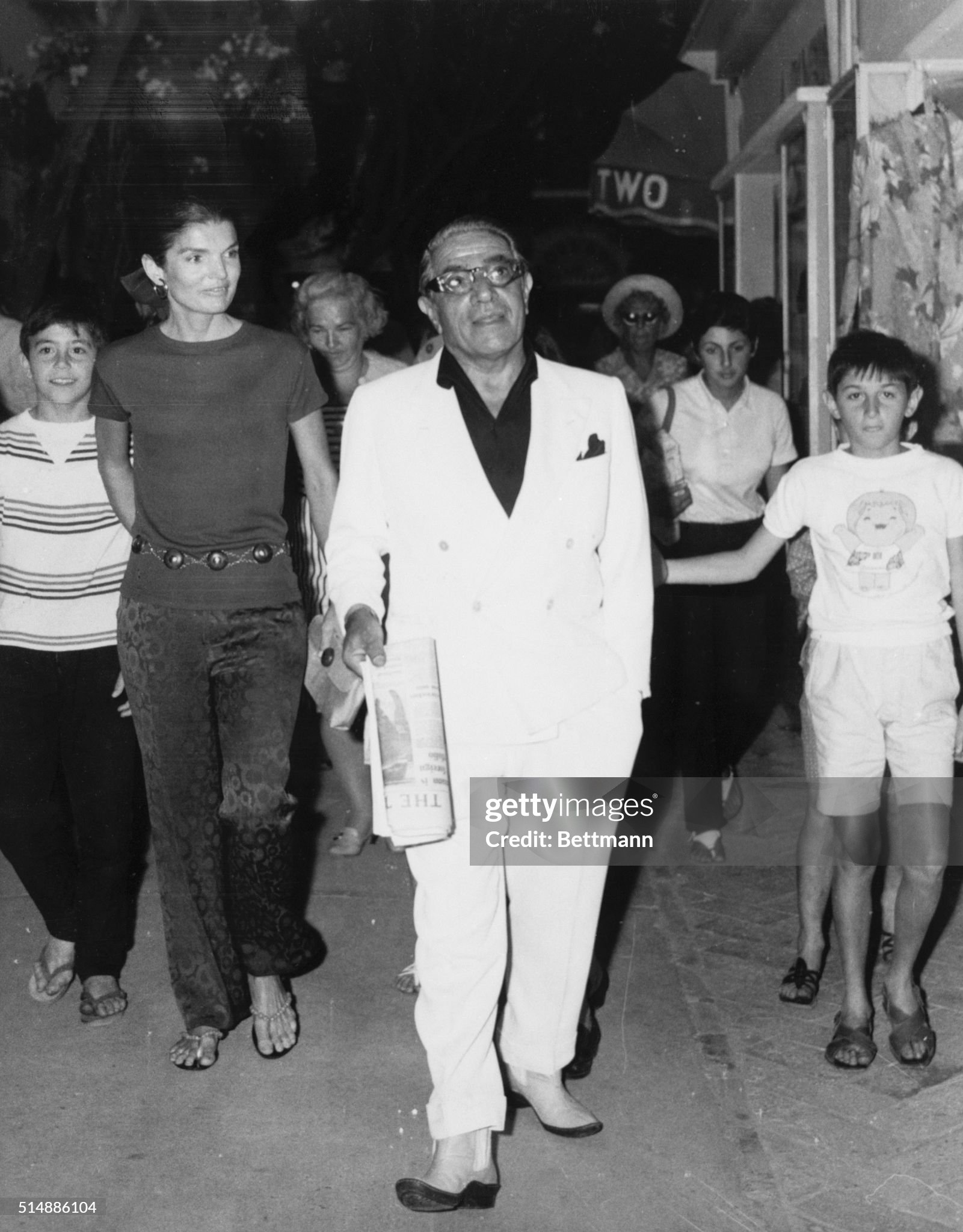
Jackie and Aristotle Onassis walk through the streets of a town on Capri, followed by local residents on 23 June 1969. Photo by Getty Images.
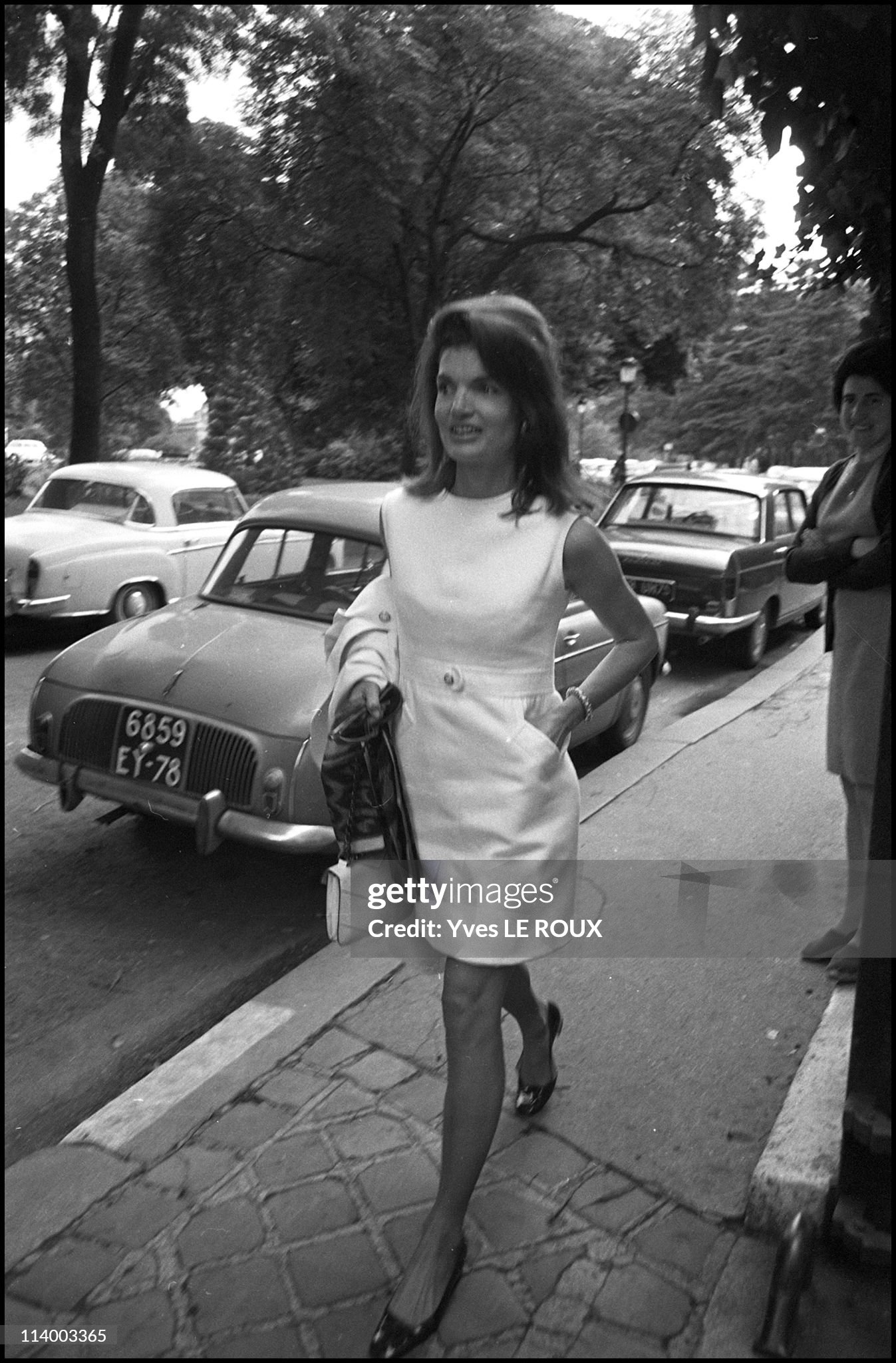
Jackie and Aristotle Onassis in Paris, France, in June 1969. Photo by Yves Le Roux / Gamma - Rapho via Getty Images.
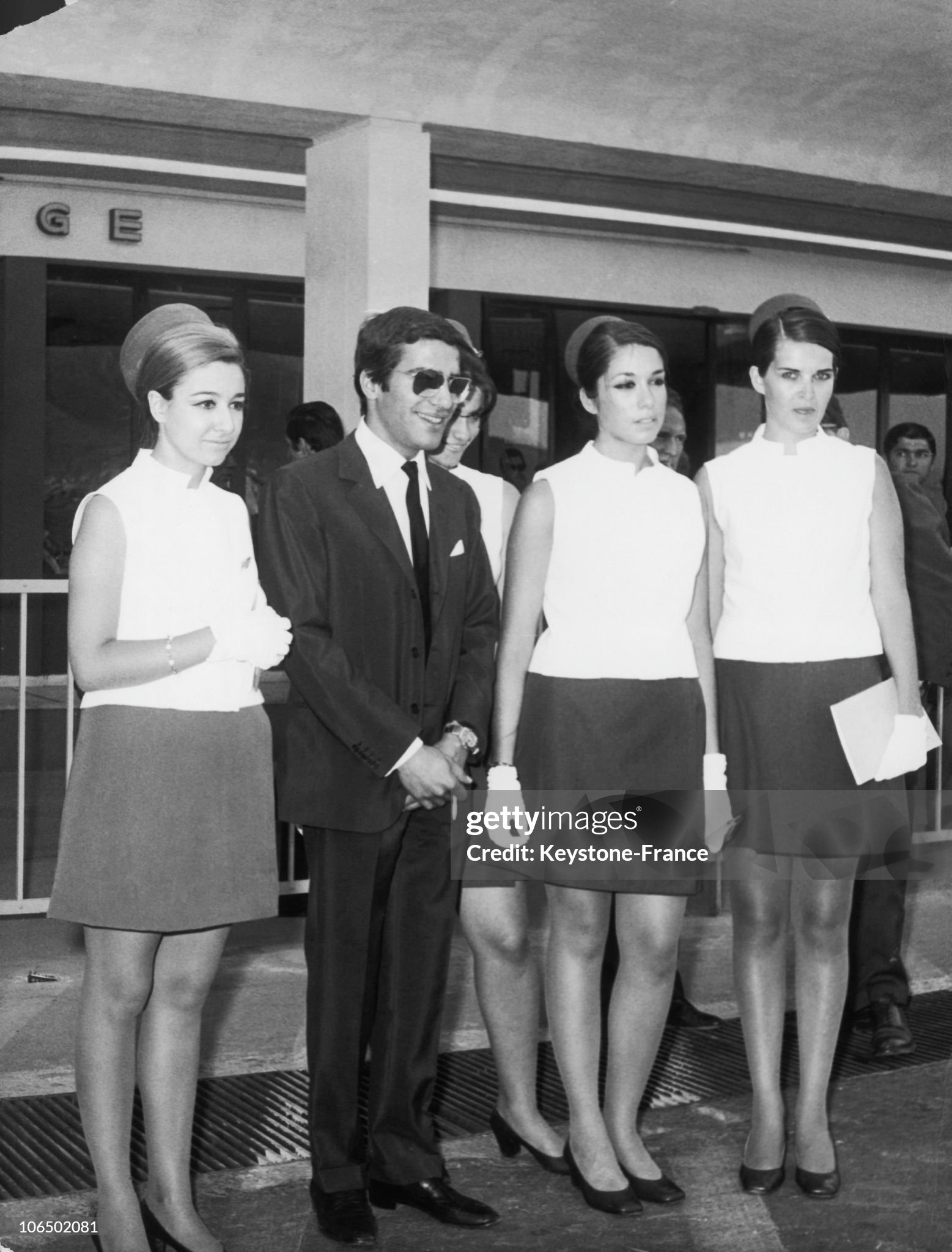
Alexander Onassis posing with some stewardesses from the air company Olympic Airways on a press conference which he gave at the Athens Airport on 16 July 1969. Photo by Keystone - France / Gamma - Keystone via Getty Images.
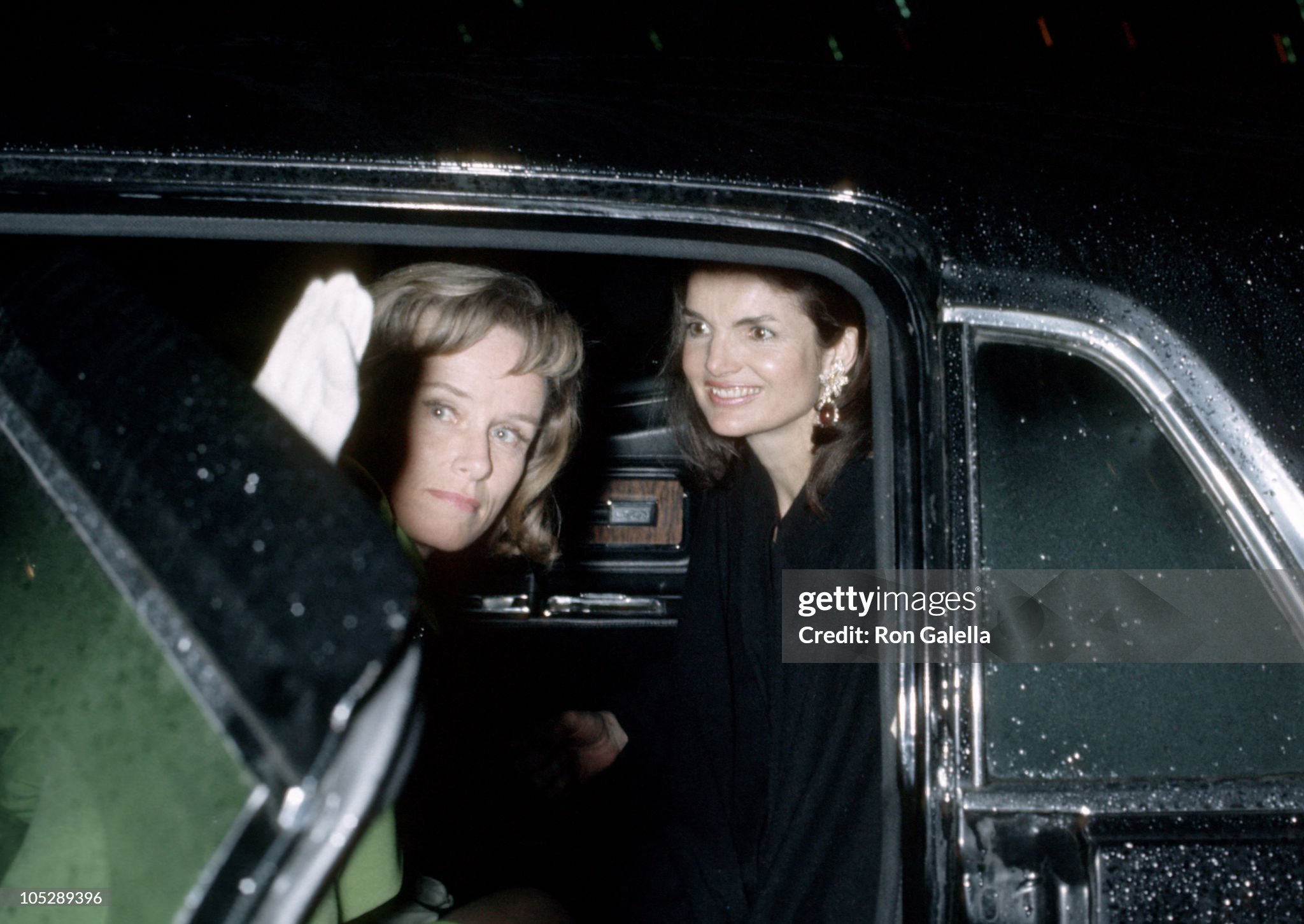
Jackie Onassis during Jackie Onassis and Ari Onassis sighting at La Cote Basque restaurant in New York, United States, on 06 October 1969. Photo by Ron Galella / Ron Galella Collection via Getty Images.
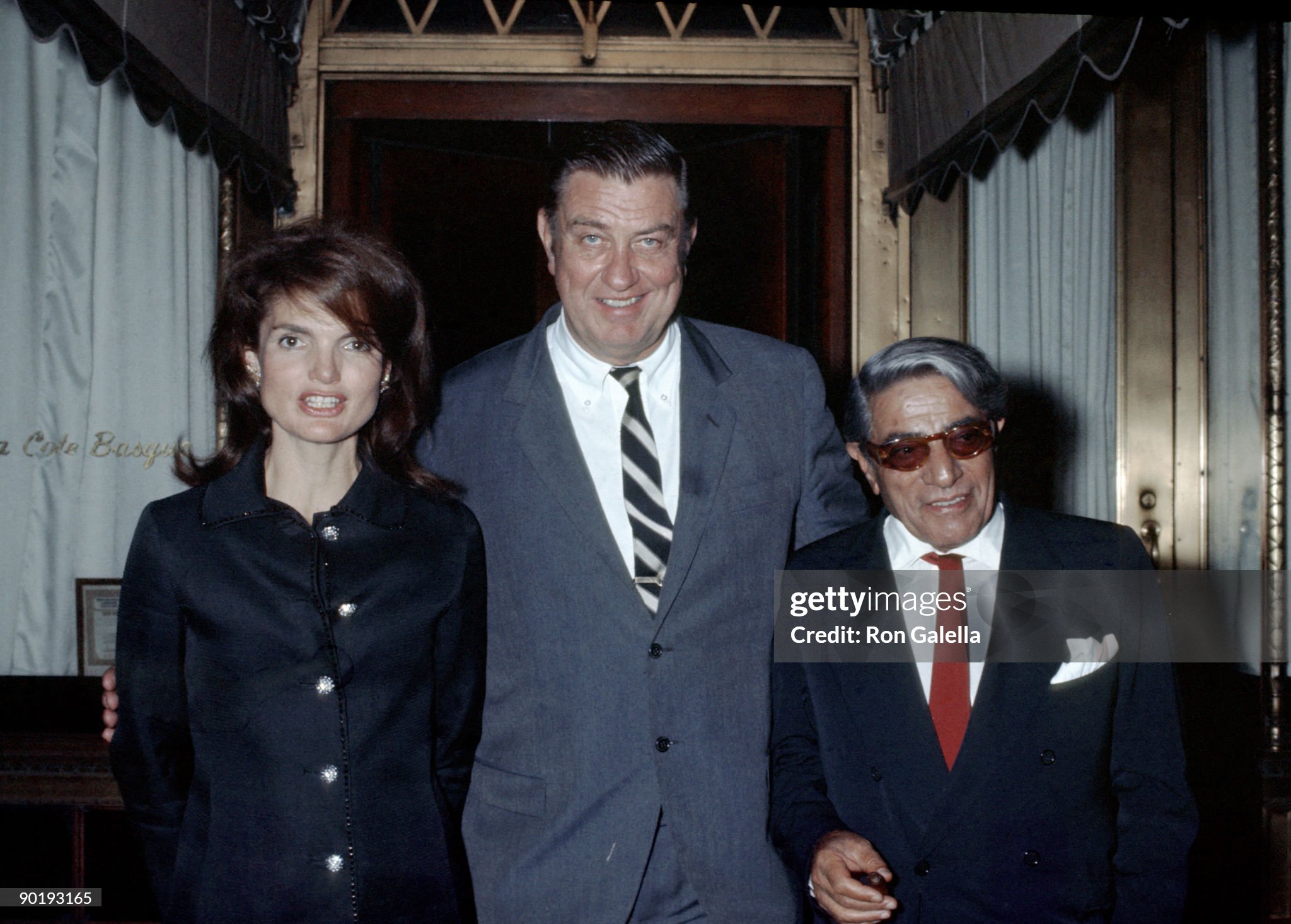
Jackie Onassis, Ari Onassis and Franklin Delano Roosevelt Jr. on 06 October 1969. Photo by Ron Galella / Ron Galella Collection via Getty Images.
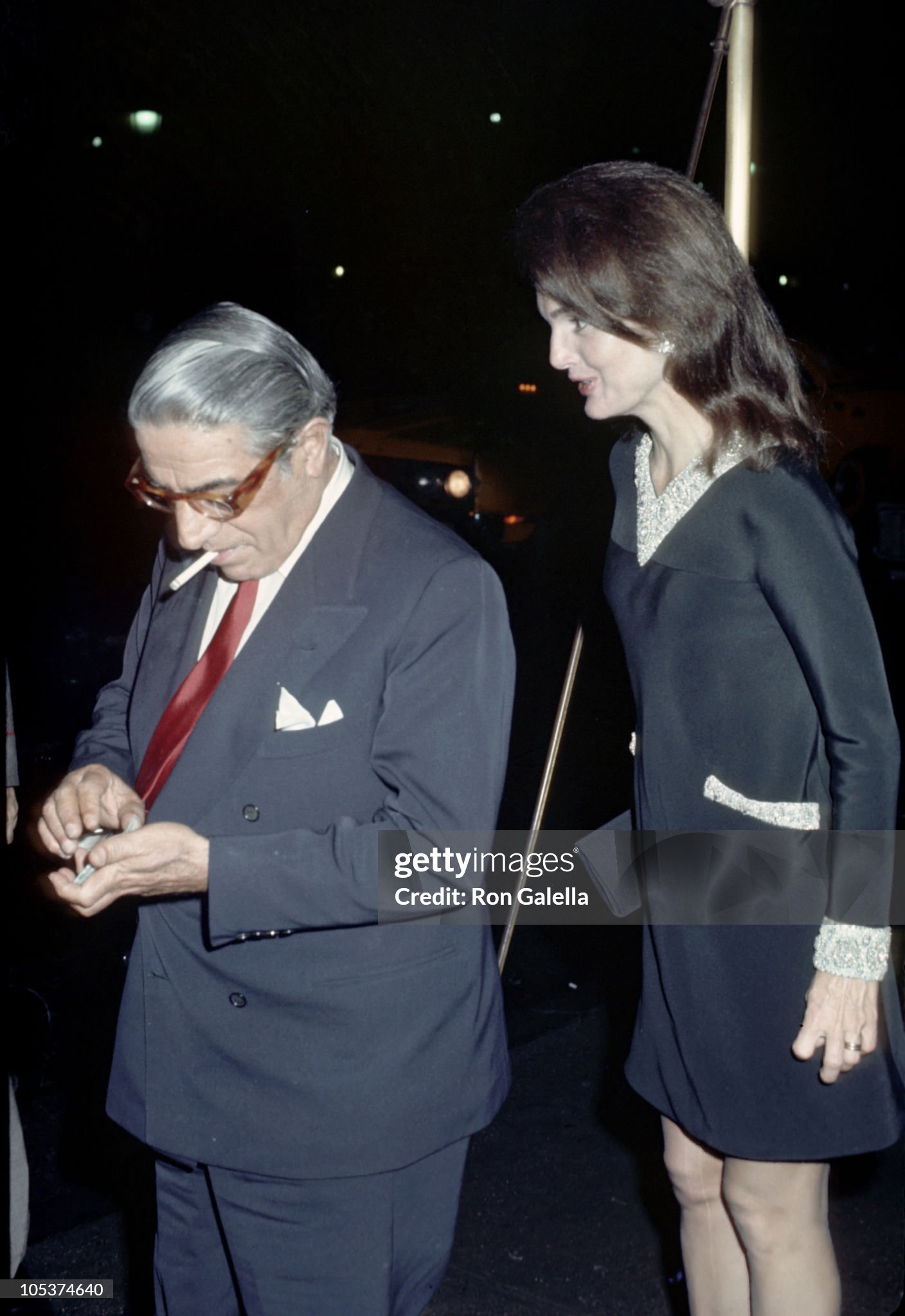
Jackie Onassis and Ari Onassis at La Cote Basque restaurant in New York, United States, on 15 October 1969. Photo by Ron Galella / Ron Galella Collection via Getty Images.
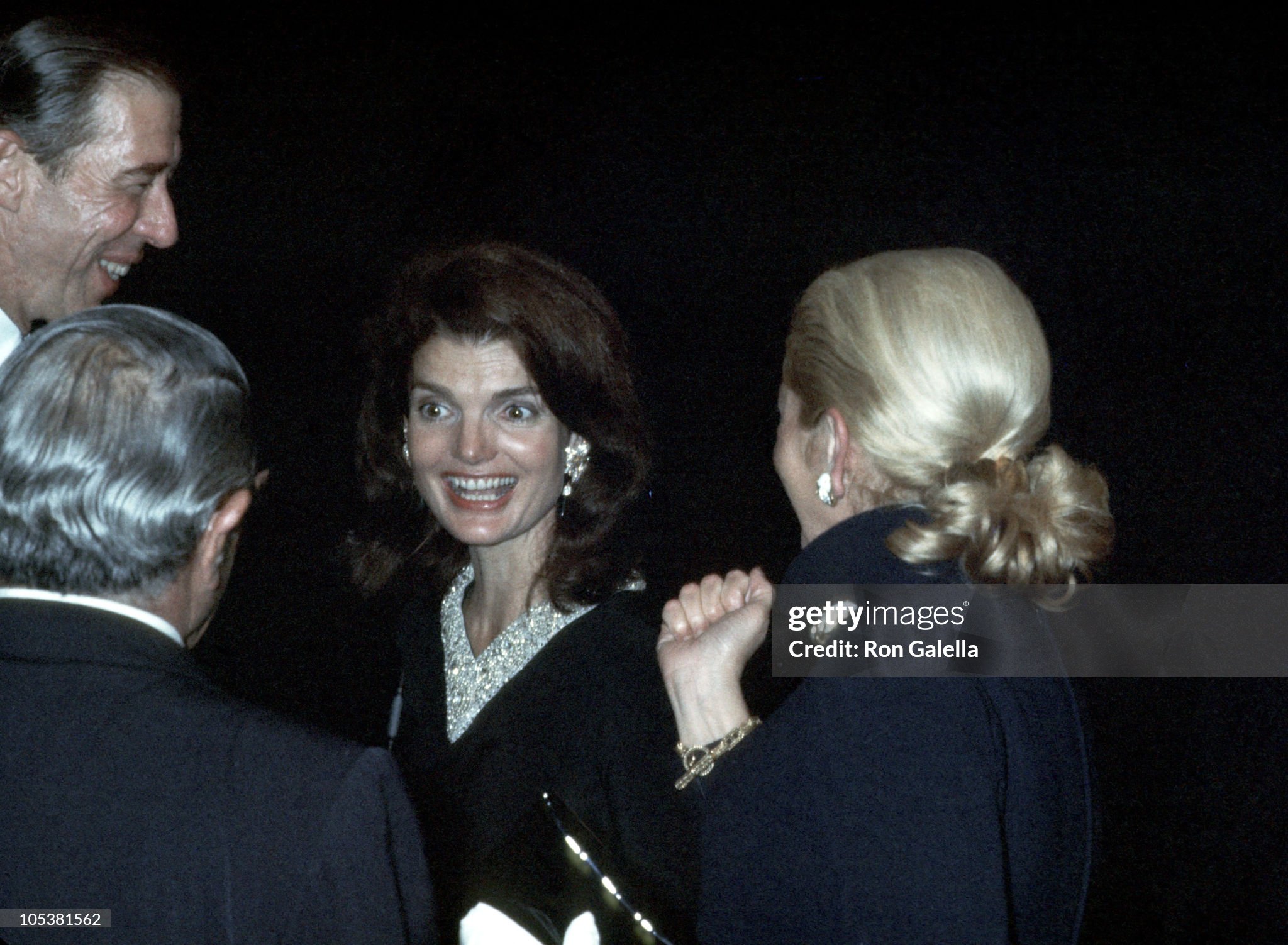
Jackie Onassis, Ari Onassis, Charles Spalding and wife at La Cote Basque restaurant in New York, United States, on 15 October 1969. Photo by Ron Galella / Ron Galella Collection via Getty Images.
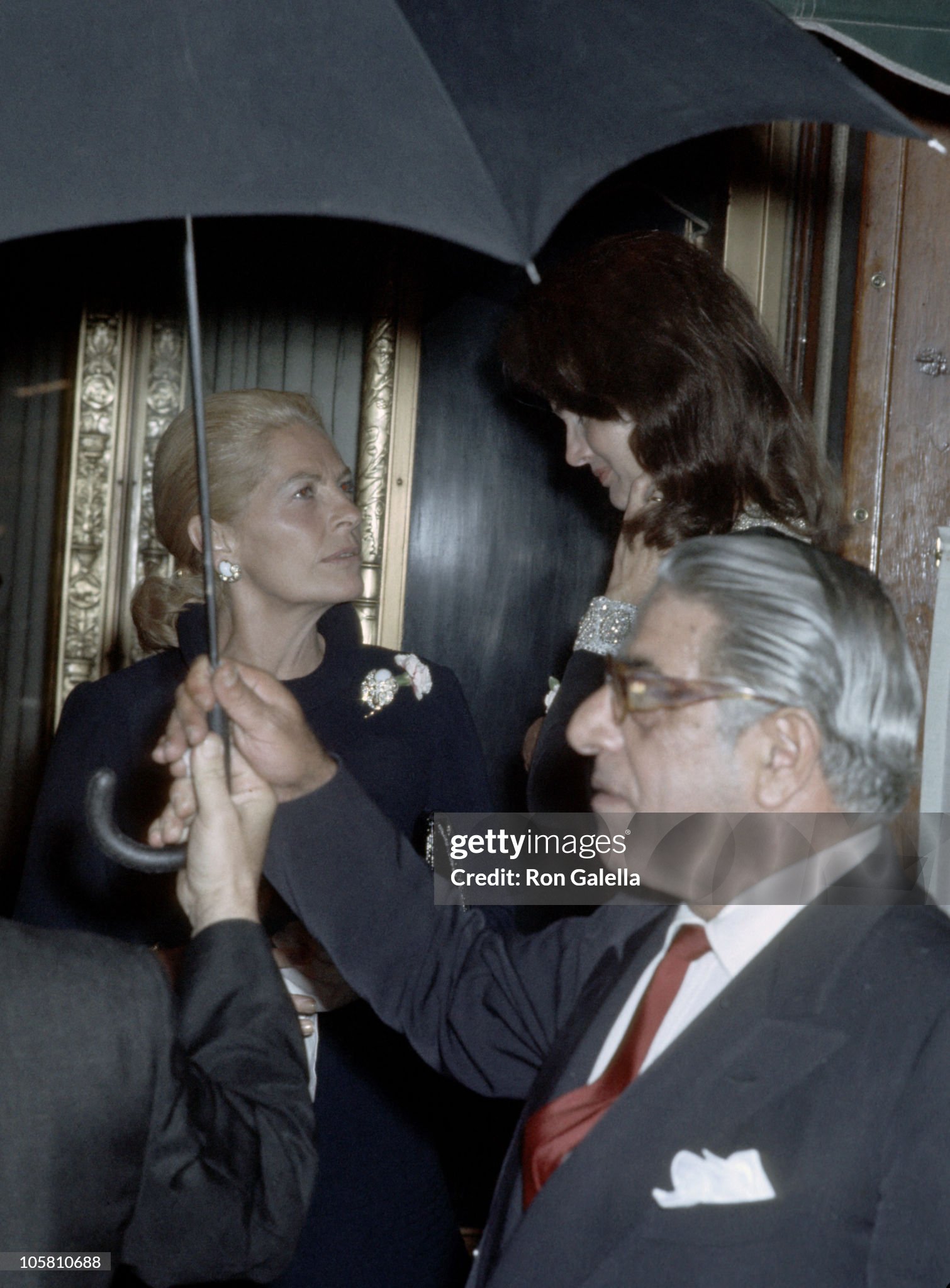
Jackie Onassis, Ari Onassis and Charles Spalding’s wife at La Cote Basque restaurant in New York, United States, on 15 October 1969. Photo by Ron Galella / Ron Galella Collection via Getty Images.
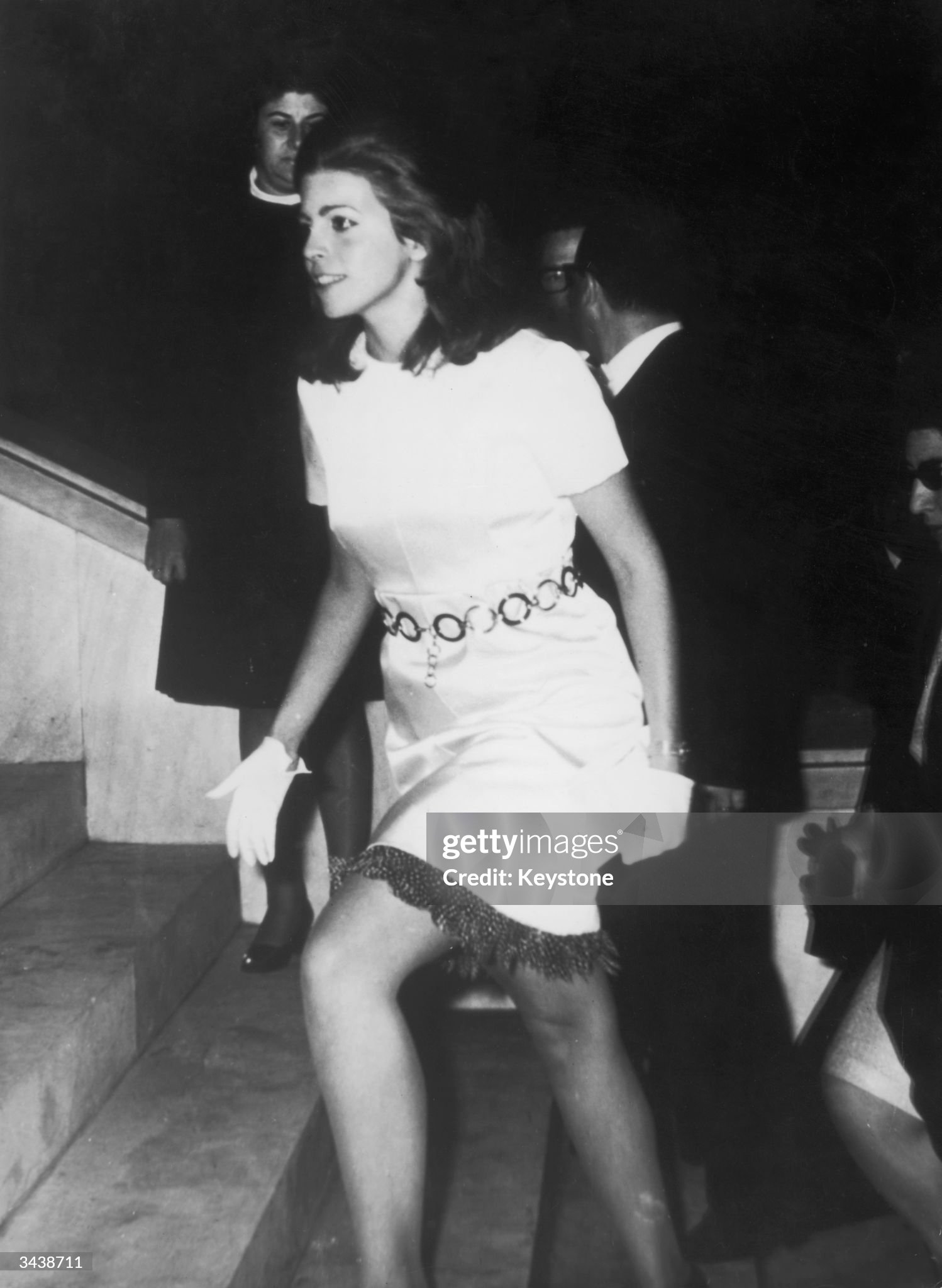
Christina Onassis (1950 - 1988), daughter of Greek shipping tycoon Aristotle Onassis, at the wedding of a friend in Athens on 24 November 1969. Photo by Keystone / Getty Images.
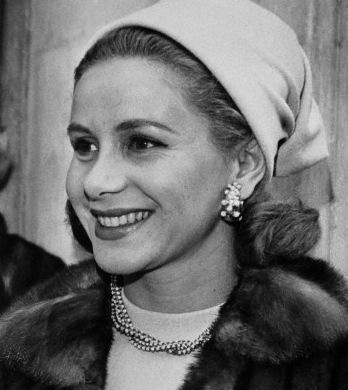
Athina Mary Livanos.
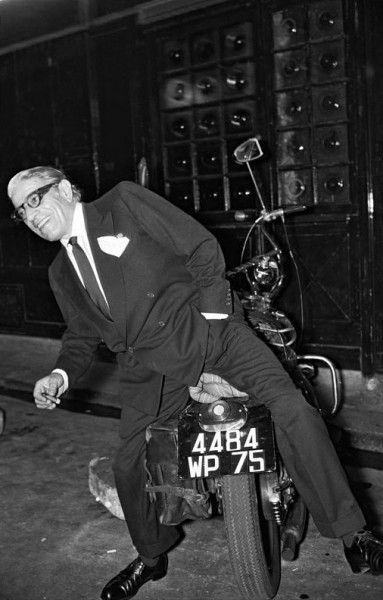
Aristotle Onassis on a bike in Paris in 1970.
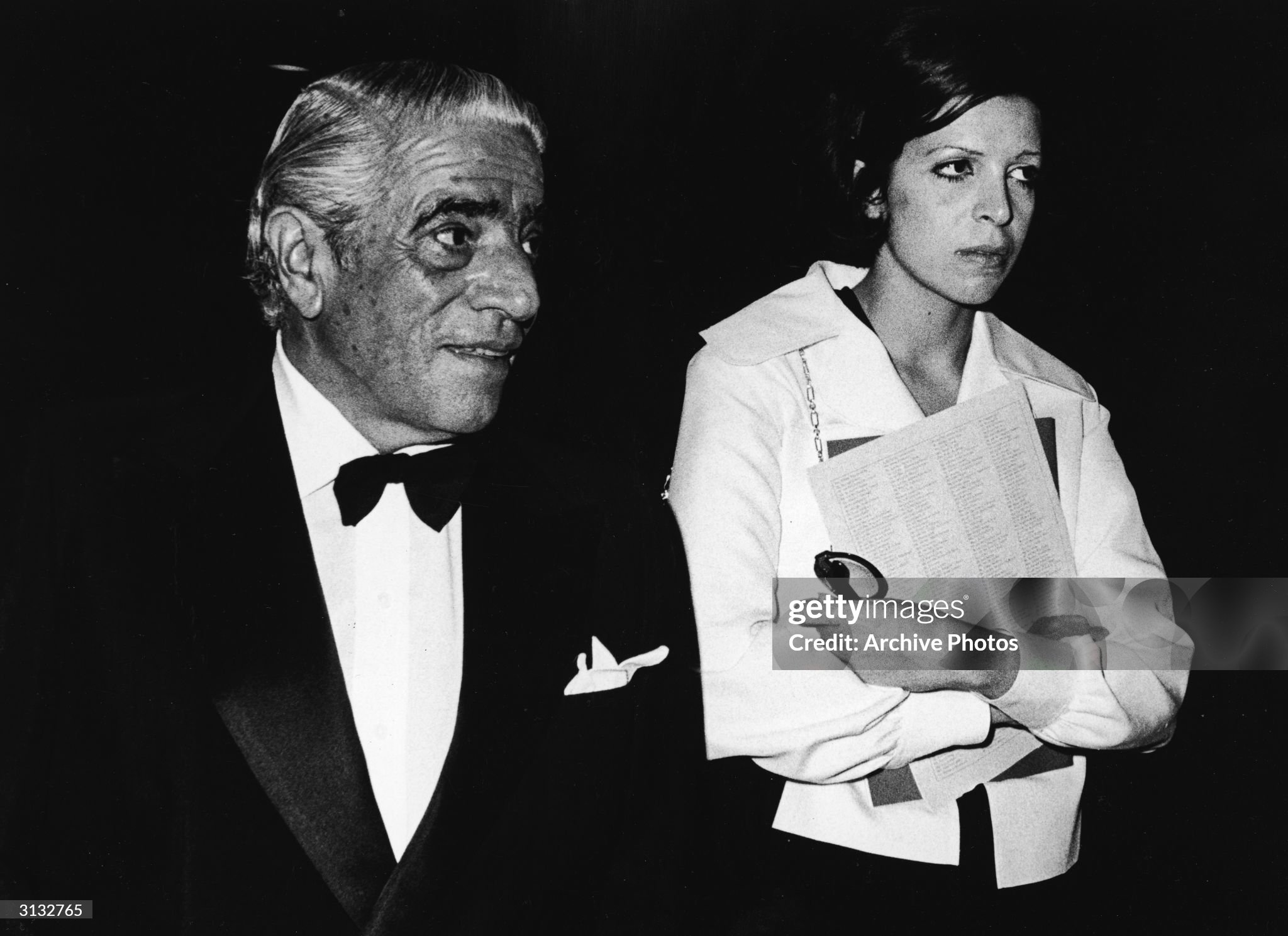
Aristotle Onassis and his daughter, American-born shipping heiress Christina Onassis, walk together as they attend an unidentified formal event in 1970s. Photo by Archive Photops / Getty Images.
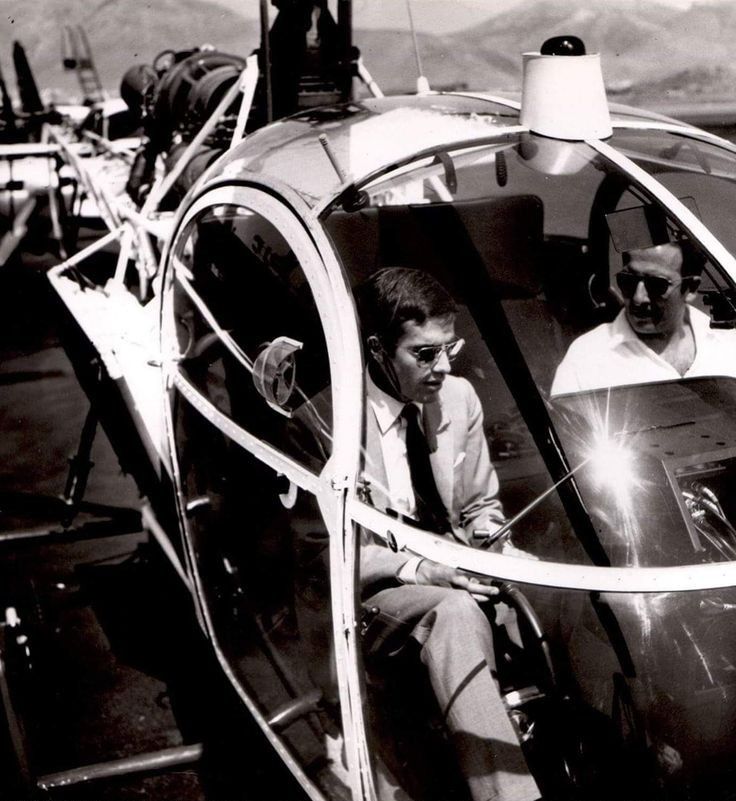
Alexander Onassis.
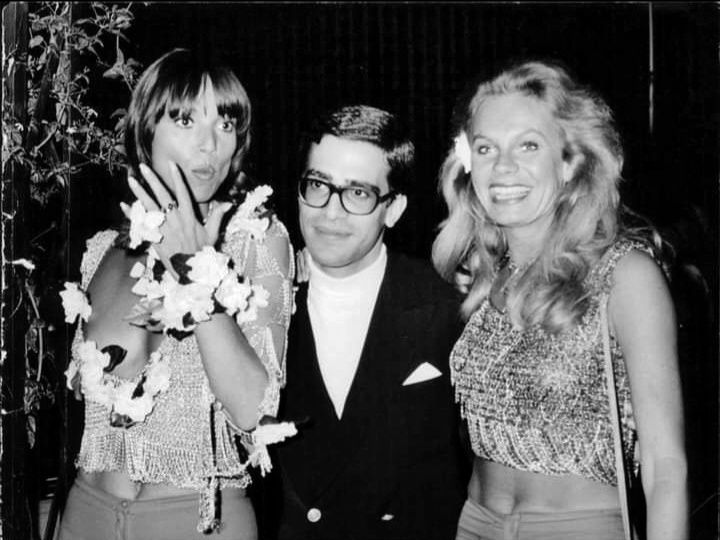
Alexander Onassis with the Italian actress Elsa Martinelli and Odile Rodin, around 1970. Photo by Keystone - France / Gamma - Keystone via Getty Images.
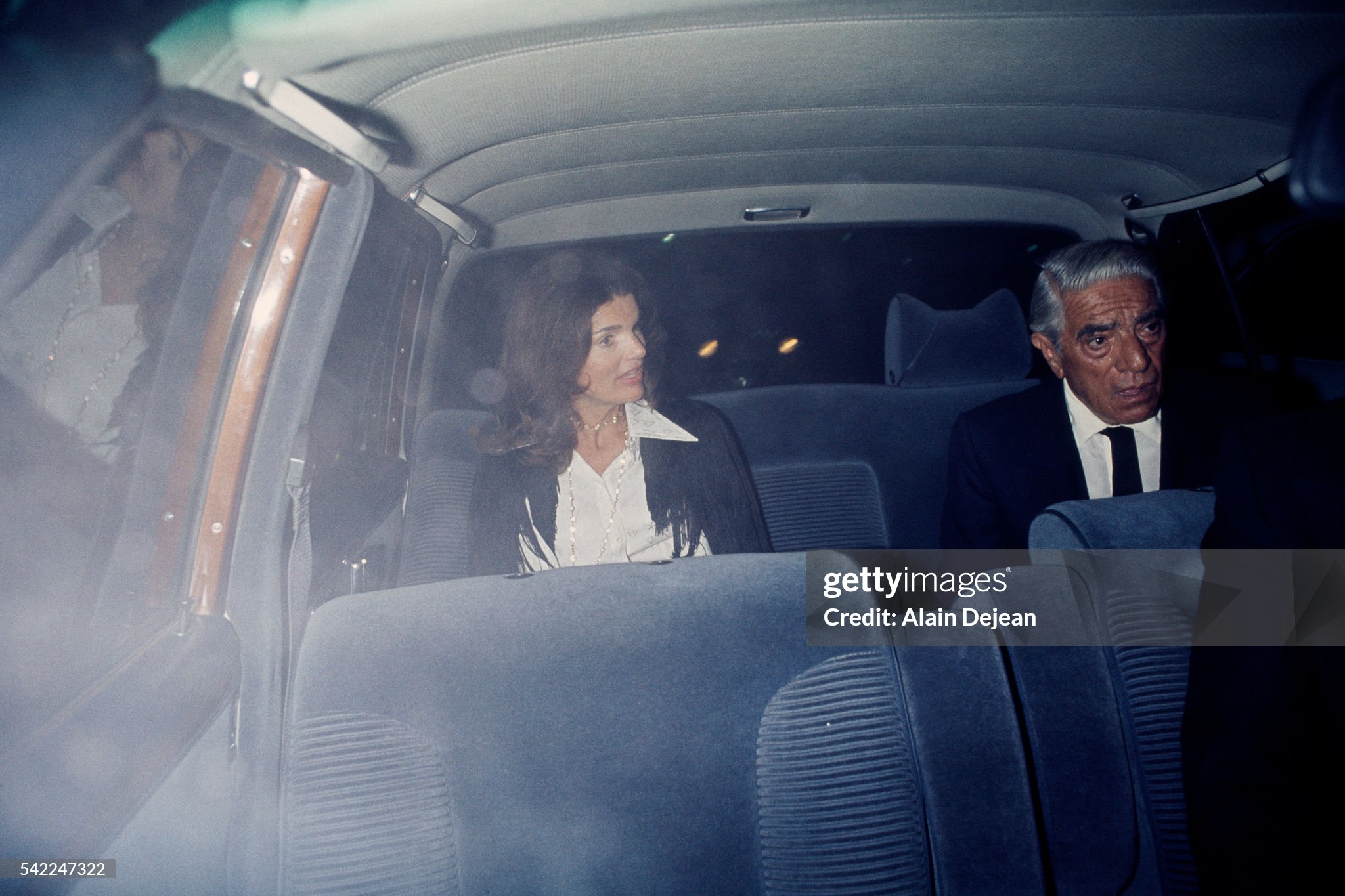
Former American First Lady Jacqueline Bouvier Kennedy with her second husband Greek shipping magnate Aristotle Socrates Onassis, circa 1970. Photo by Alain Dejean / Sygma via Getty Images.
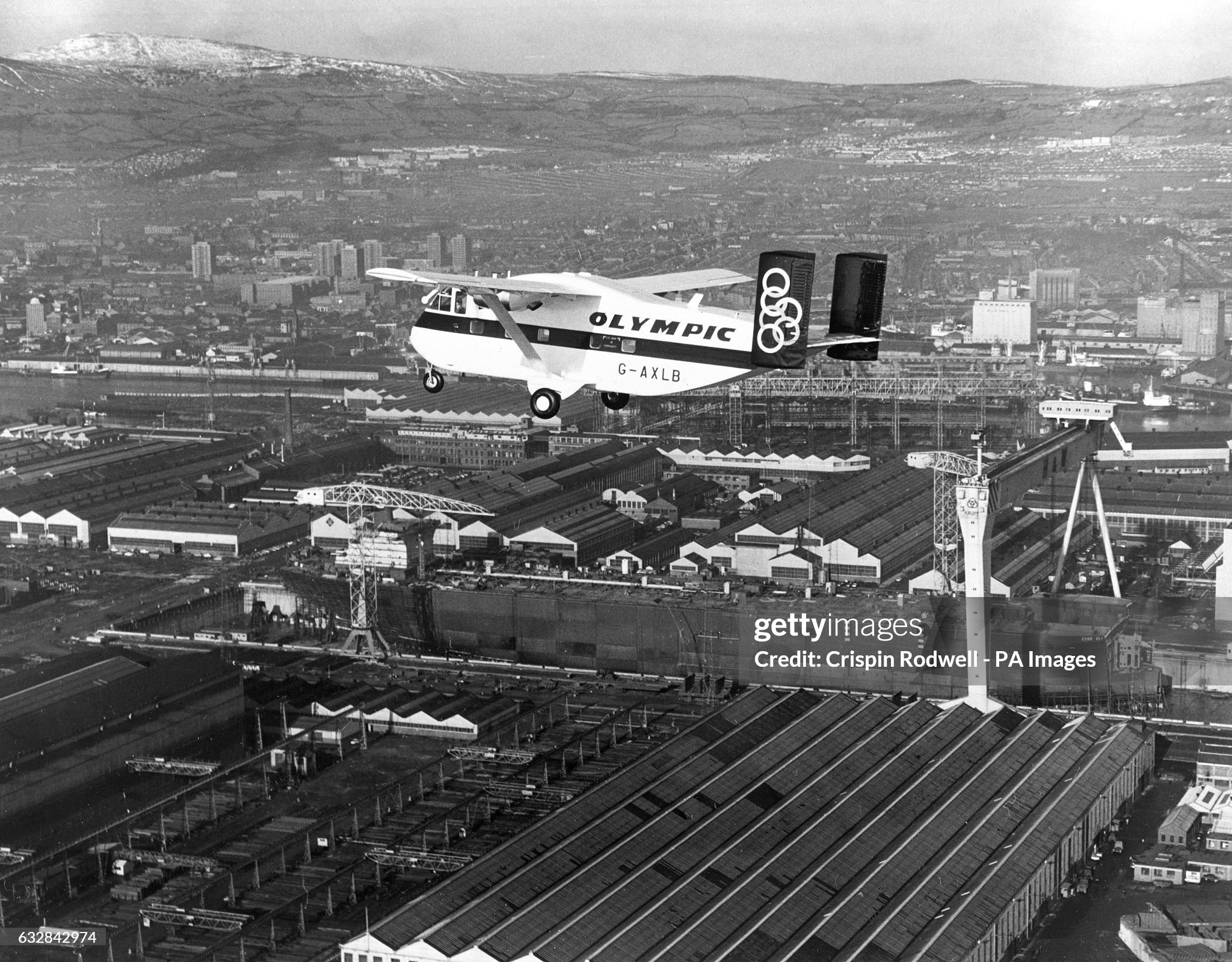
The first of two Short Skyvan light transports for the Greek national airline Olympic Airways flies over the new £7million building dock and £1.25million gantry crane at Harland and Wolff's shipyard in Belfast on 23 March 1970. Greek shipping tycoon Aristotle Onassis is the biggest shareholder in Harland and Wolff and sole owner of Olympic Airways. His ship and Skyvan purchases are worth over £18million to Belfast's economy. Photo by / PA Images via Getty Images.
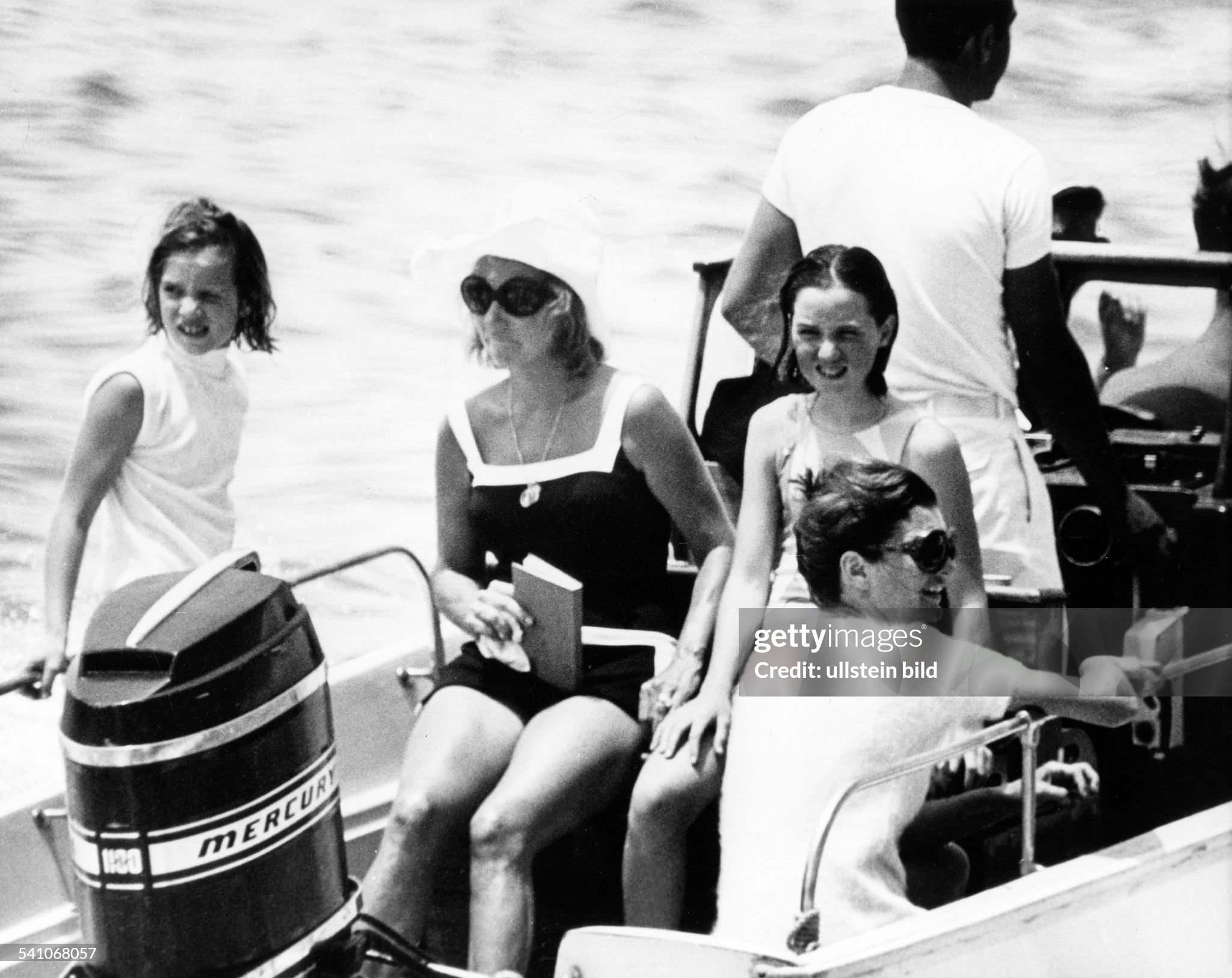
Jacqueline Kennedy Onassis boating in the Bahamas in 1970. In the middle Ethel Kennedy with her daughters. Photo by Schuppe / Ullstein bild via Getty Images.
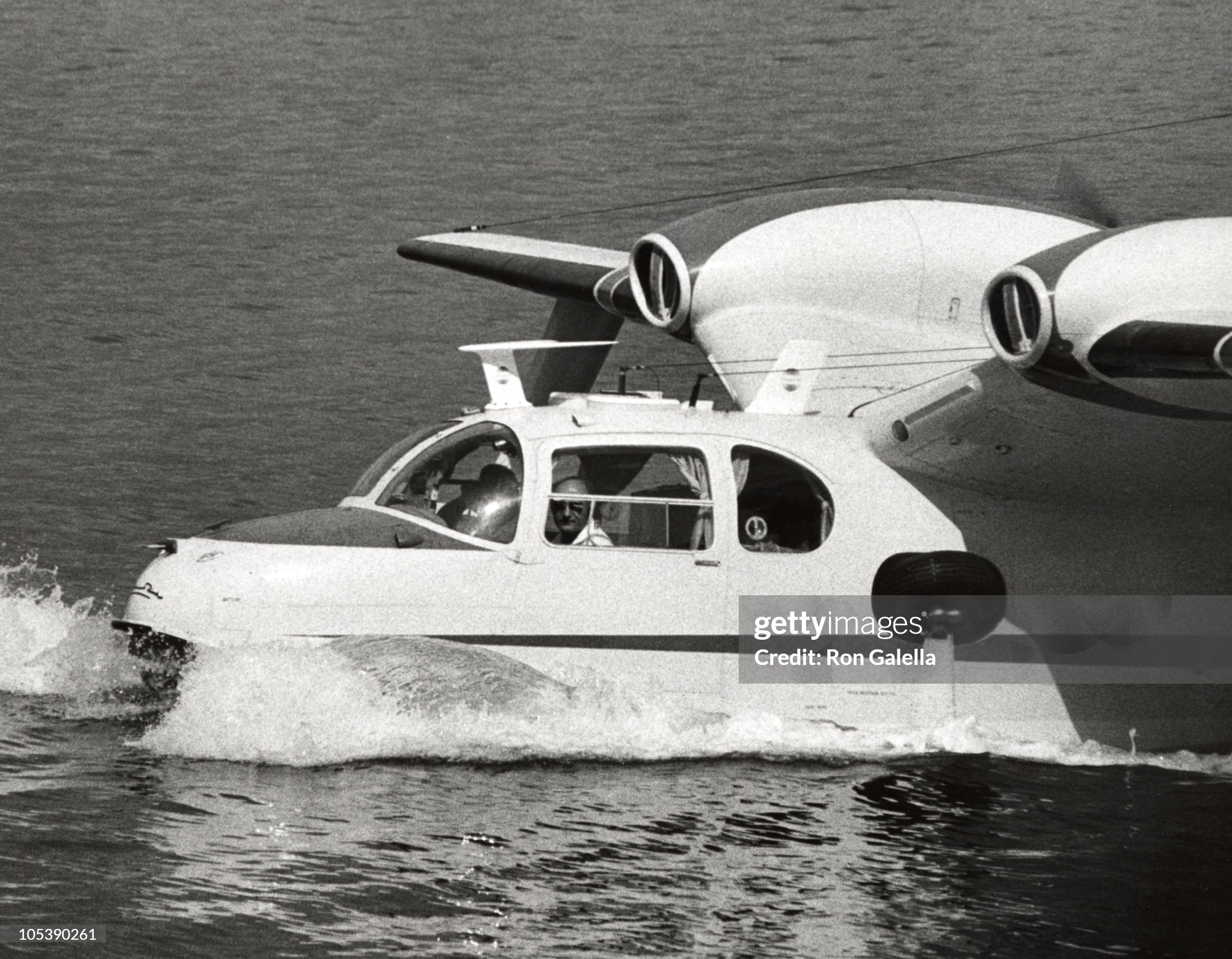
Aristotle Onassis aboard his seaplane on 01 August 1970. Photo by Ron Galella / Ron Galella Collection via Getty Images.
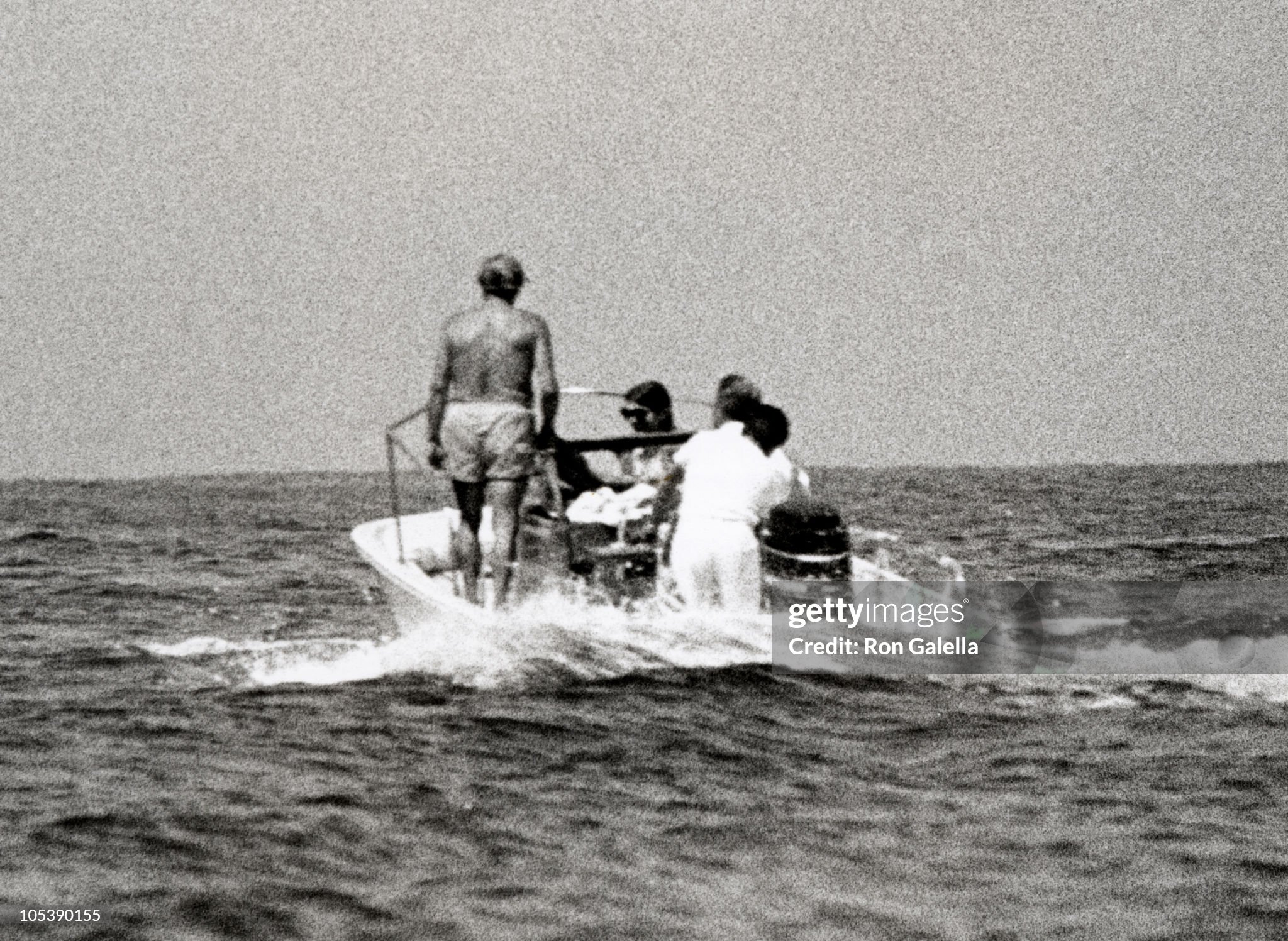
Jackie Kennedy and Aristotle Onassis on their boat off the isle of Skorpios on 25 August 1970. Photo by Ron Galella / Ron Galella Collection via Getty Images.
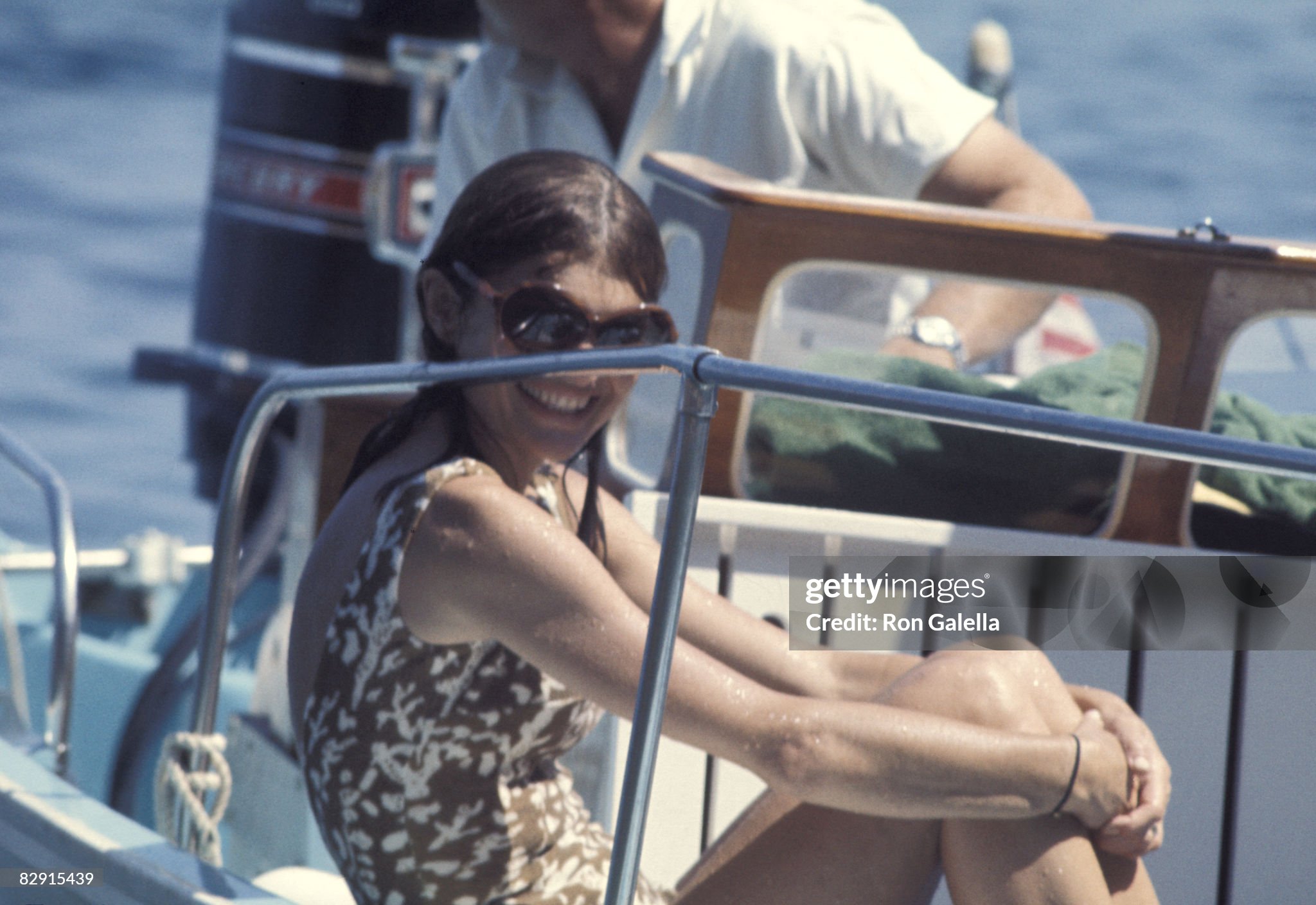
Jackie Onassis in a bathing suit on a boat off the isle of Skorpios on 25 August 1970. Photo by Ron Galella / Ron Galella Collection via Getty Images.
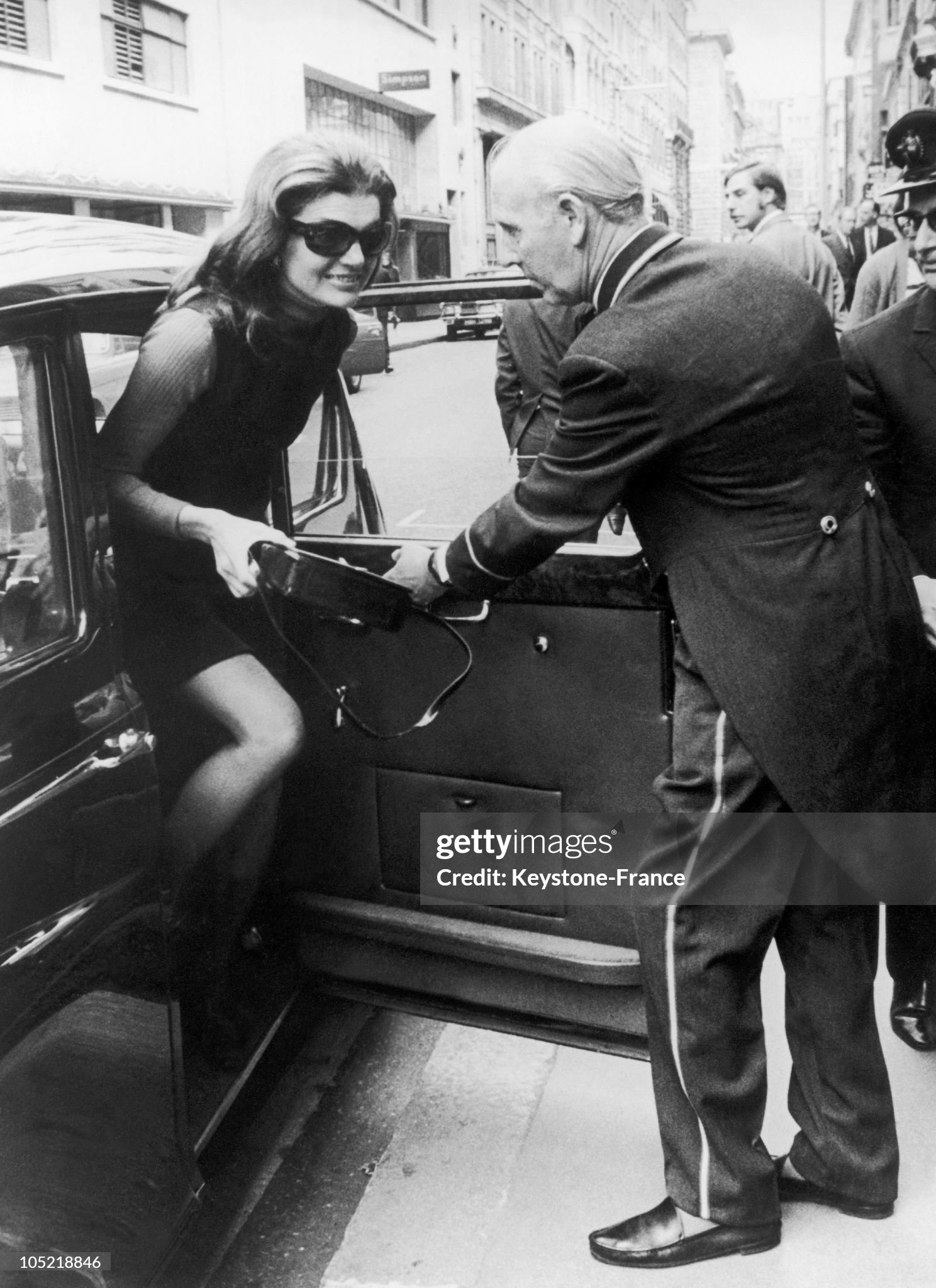
Jackie Onassis stepping out of a car in a street of Soho in London while on her way to a restaurant on Jermyn street on 05 September 1970. Photo by Keystone – France / Gamma via Getty Images.
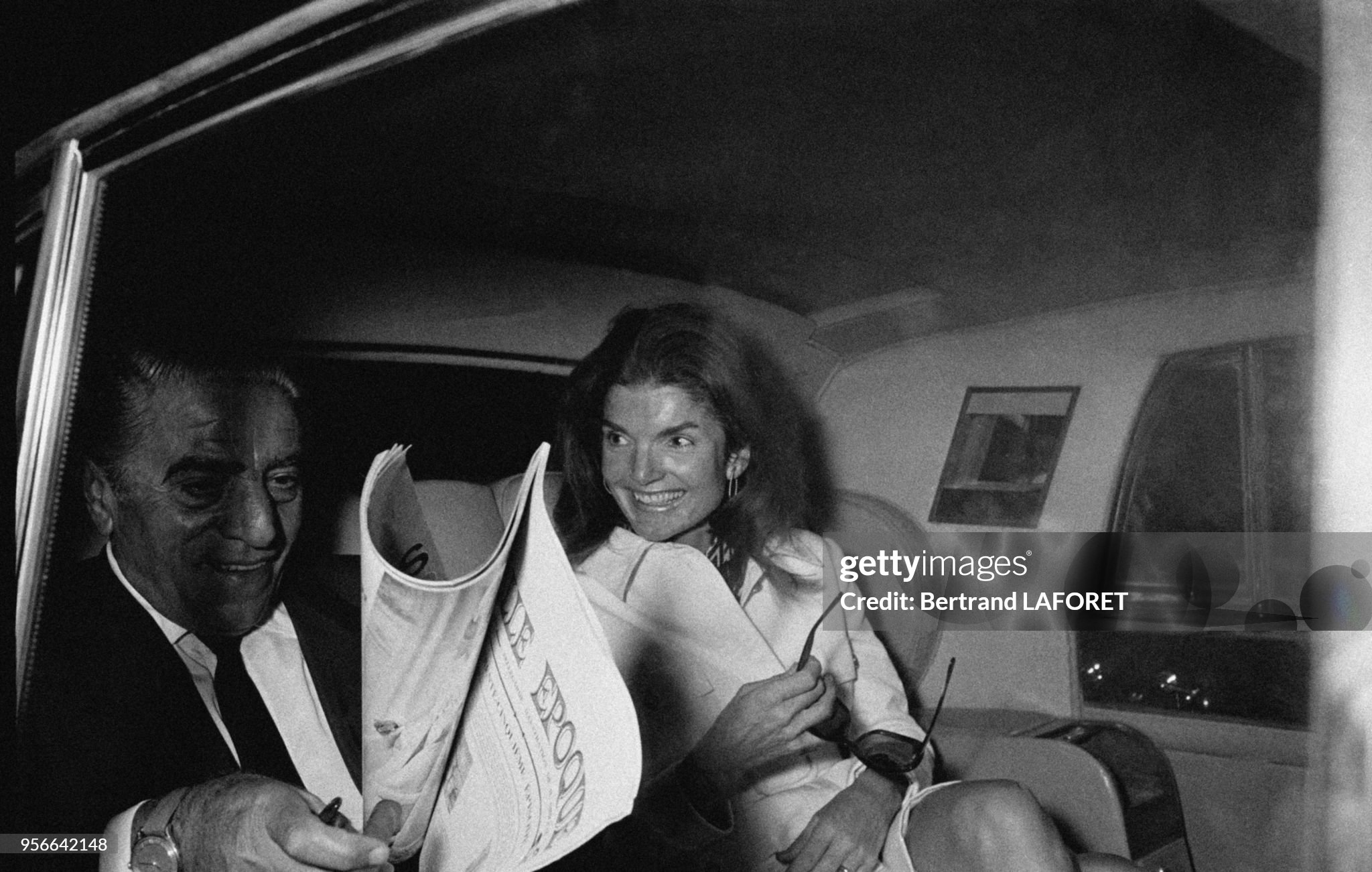
Aristotle Onassis and Jackie Kennedy in the back of a car in September 1970 in Paris, France. Photo by Bertrand Laforet / Gamma - Rapho via Getty Images.
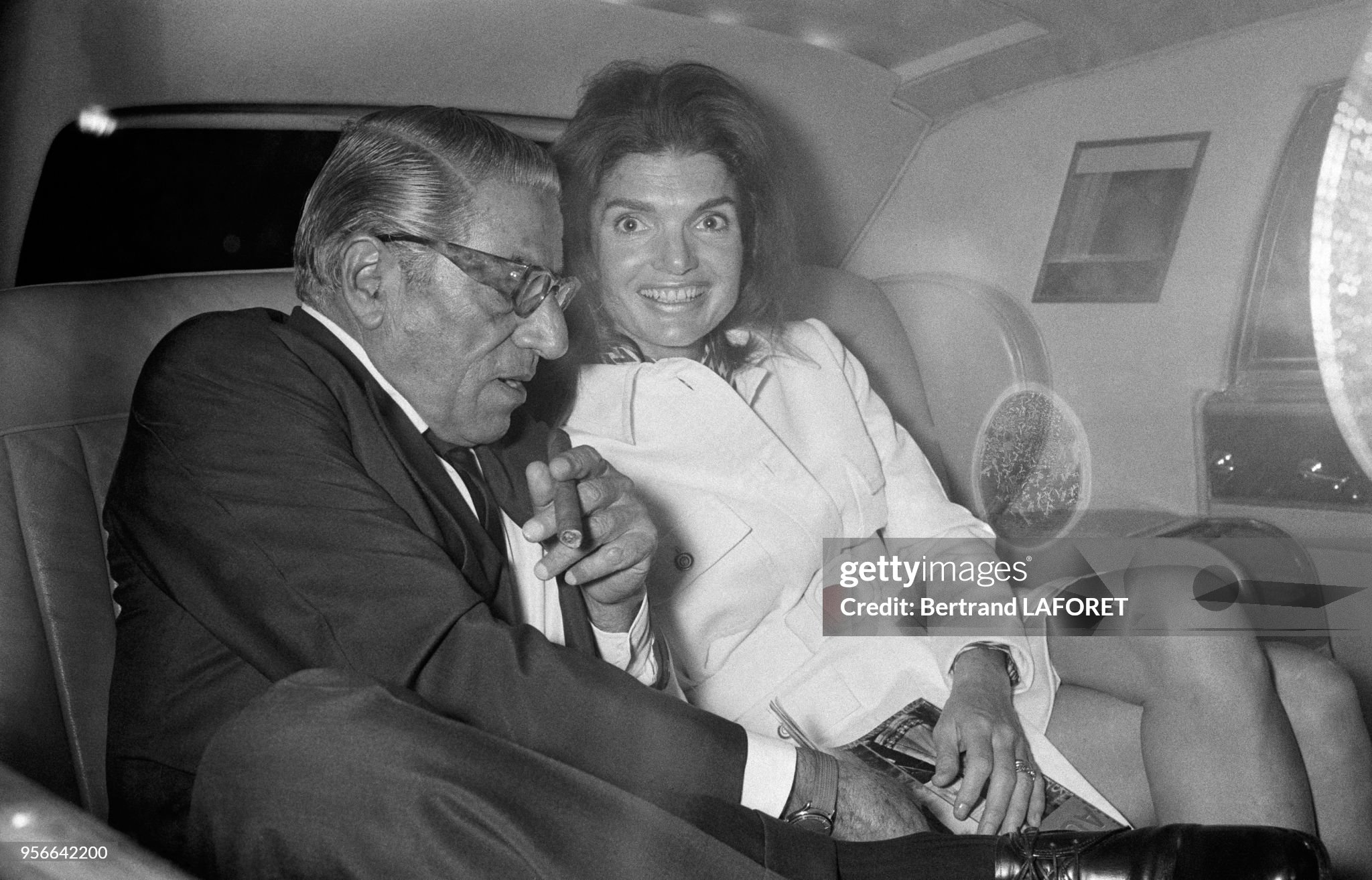
Aristotle Onassis and Jackie Kennedy in the back of a car in September 1970 in Paris, France. Photo by Bertrand Laforet / Gamma - Rapho via Getty Images.
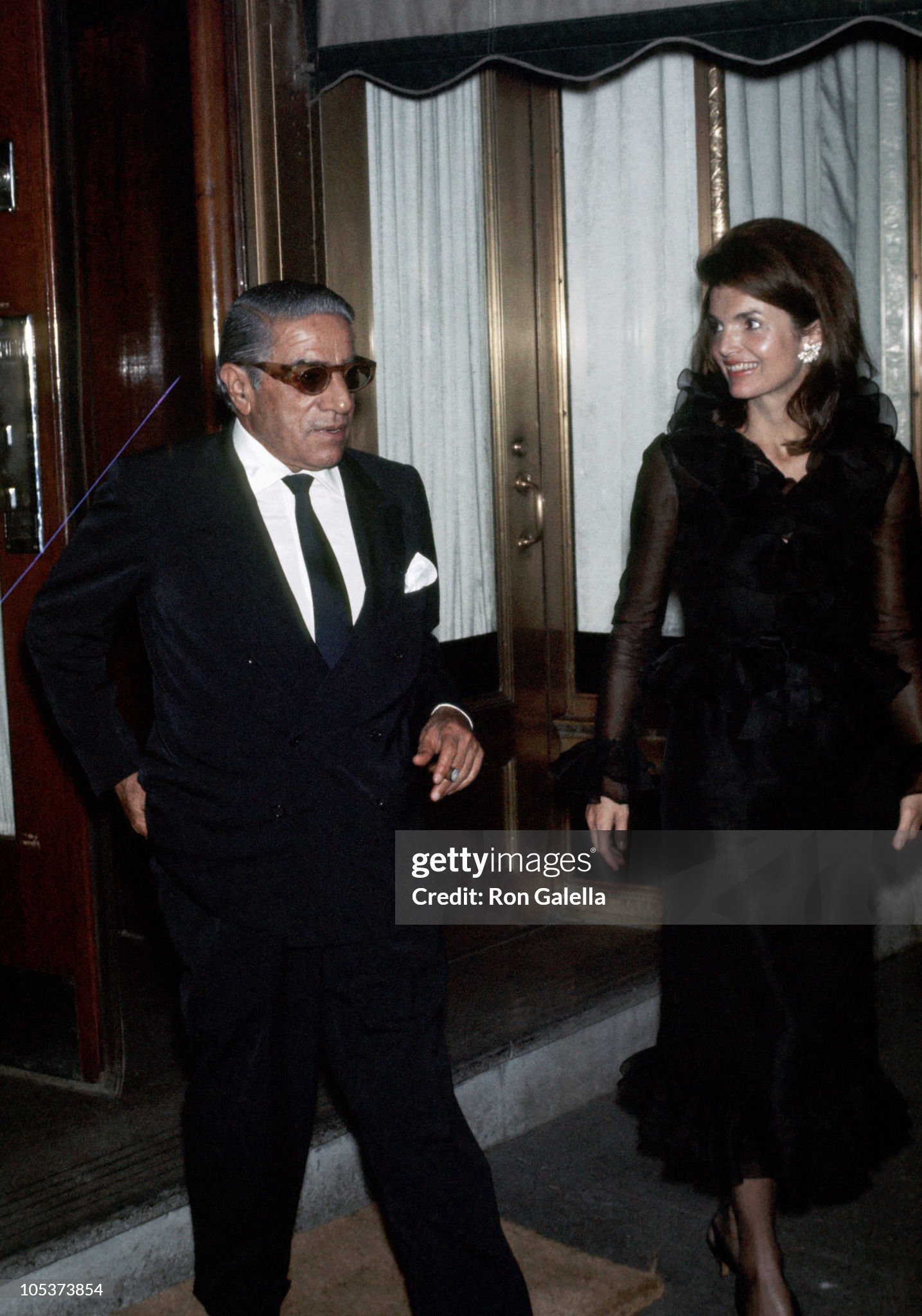
Jackie and Aristotle Onassis at La Cote Basque in New York, United States, on 28 September 1970. Photo by Ron Galella / Ron Galella Collection via Getty Images.
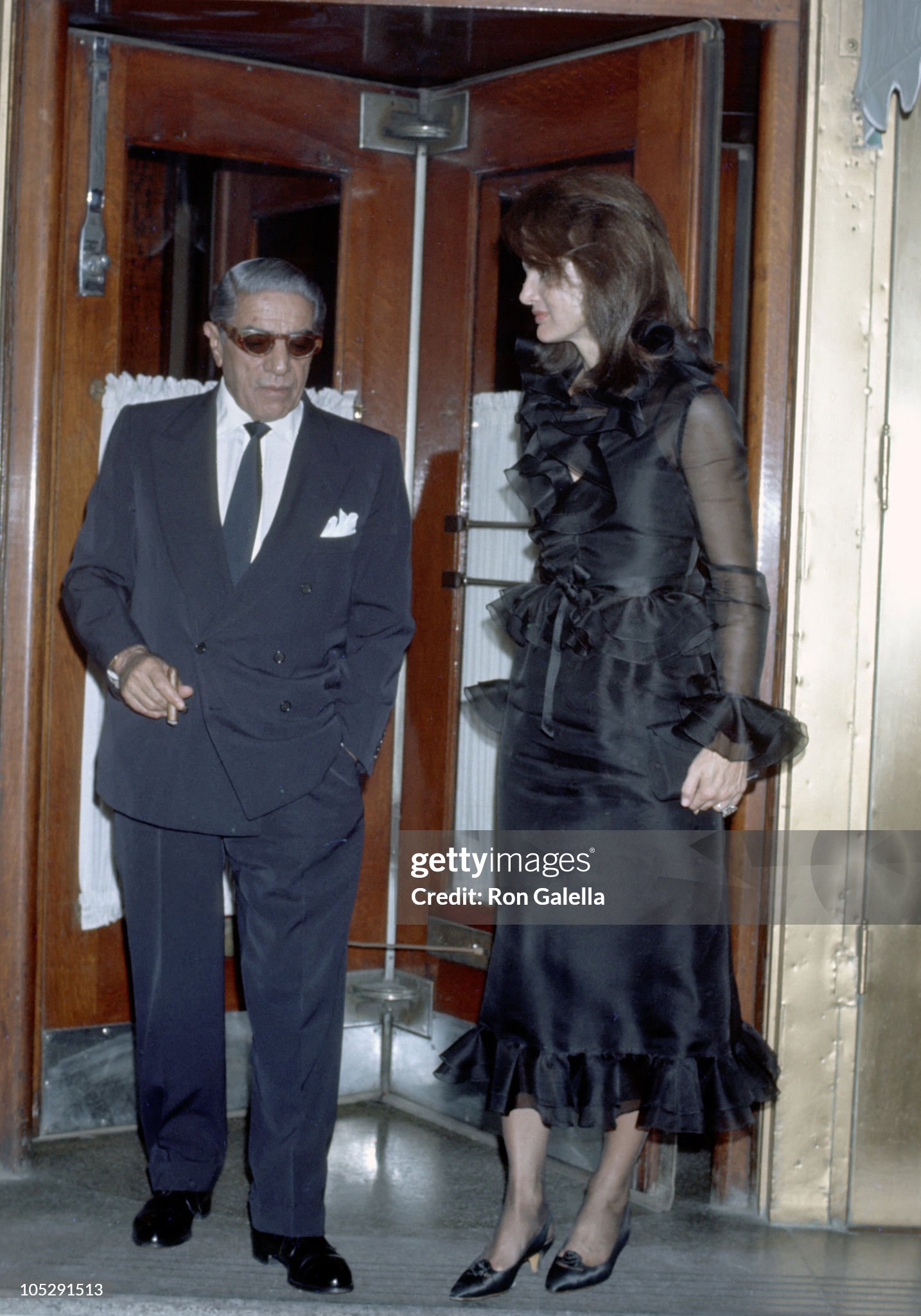
Jackie and Aristotle Onassis at La Cote Basque in New York, United States, on 28 September 1970. Photo by Ron Galella / Ron Galella Collection via Getty Images.
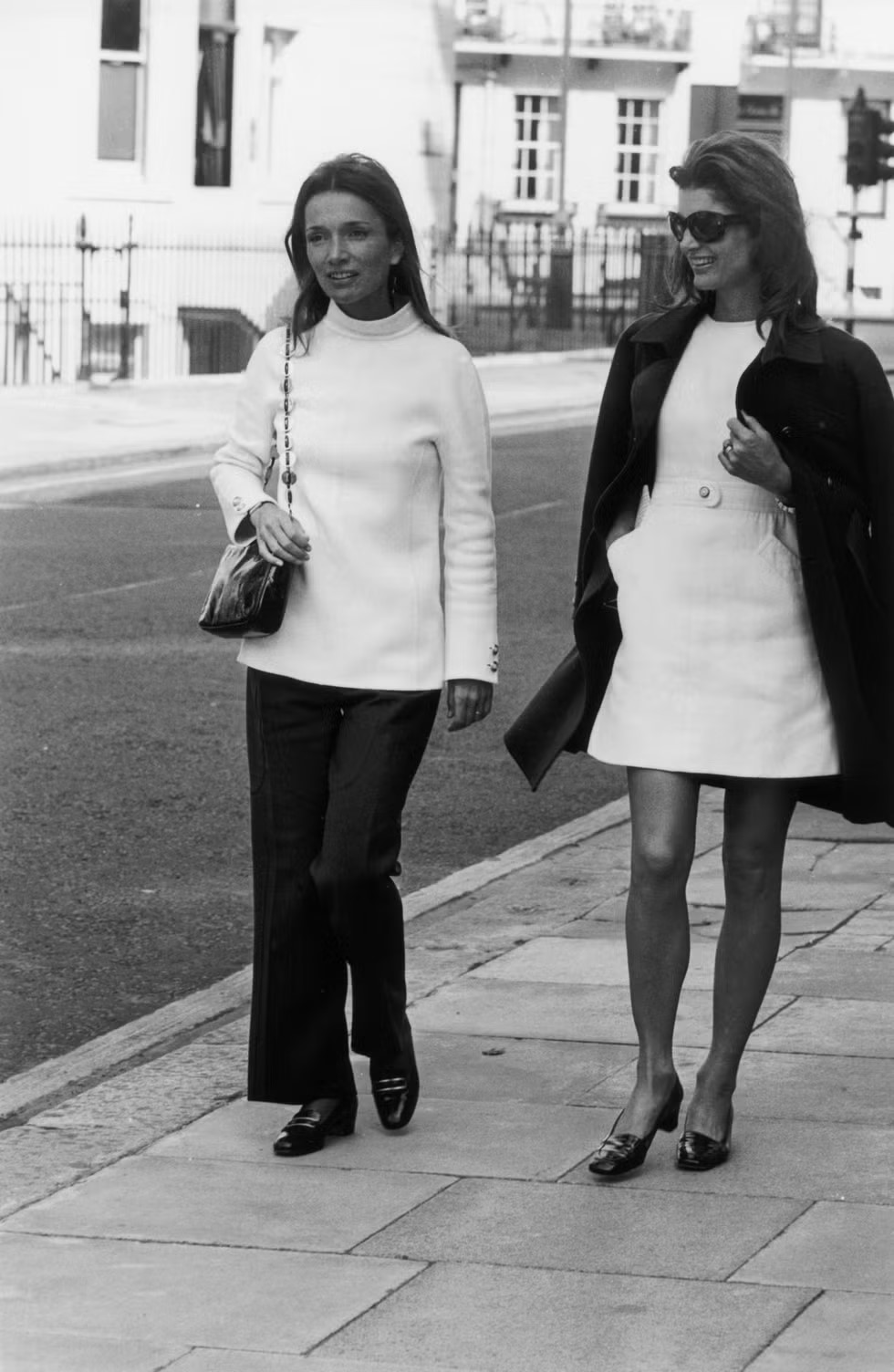
Princess Lee Radziwill in London with her sister Jacqueline Kennedy - Onassis on 01 October 1970. Photo by William Lovelace / Express / Getty Images.
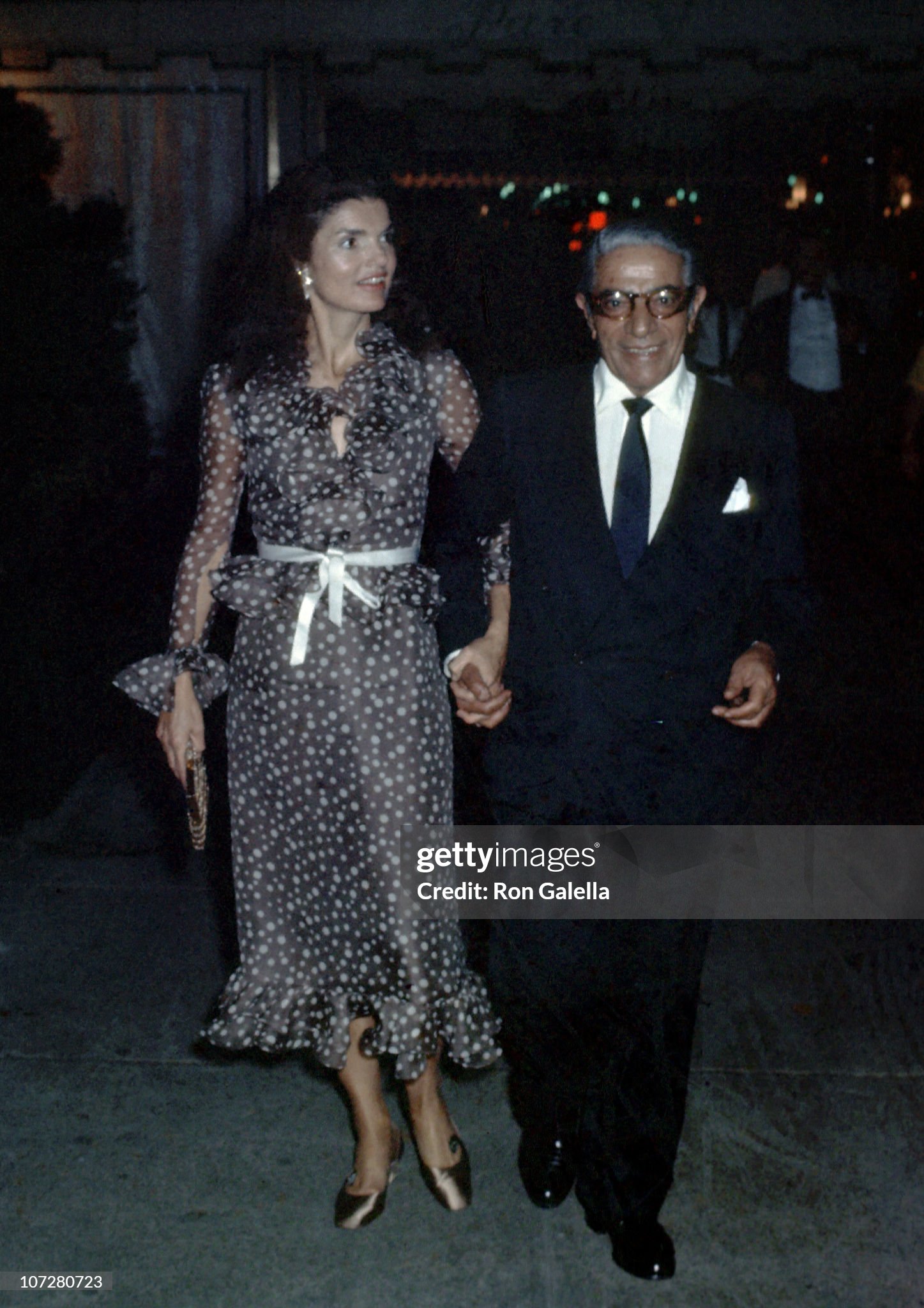
Jackie and Ari Onassis after dining at La Cote Basque in New York on 07 October 1970. Photo by Ron Galella / Ron Galella Collection via Getty Images.
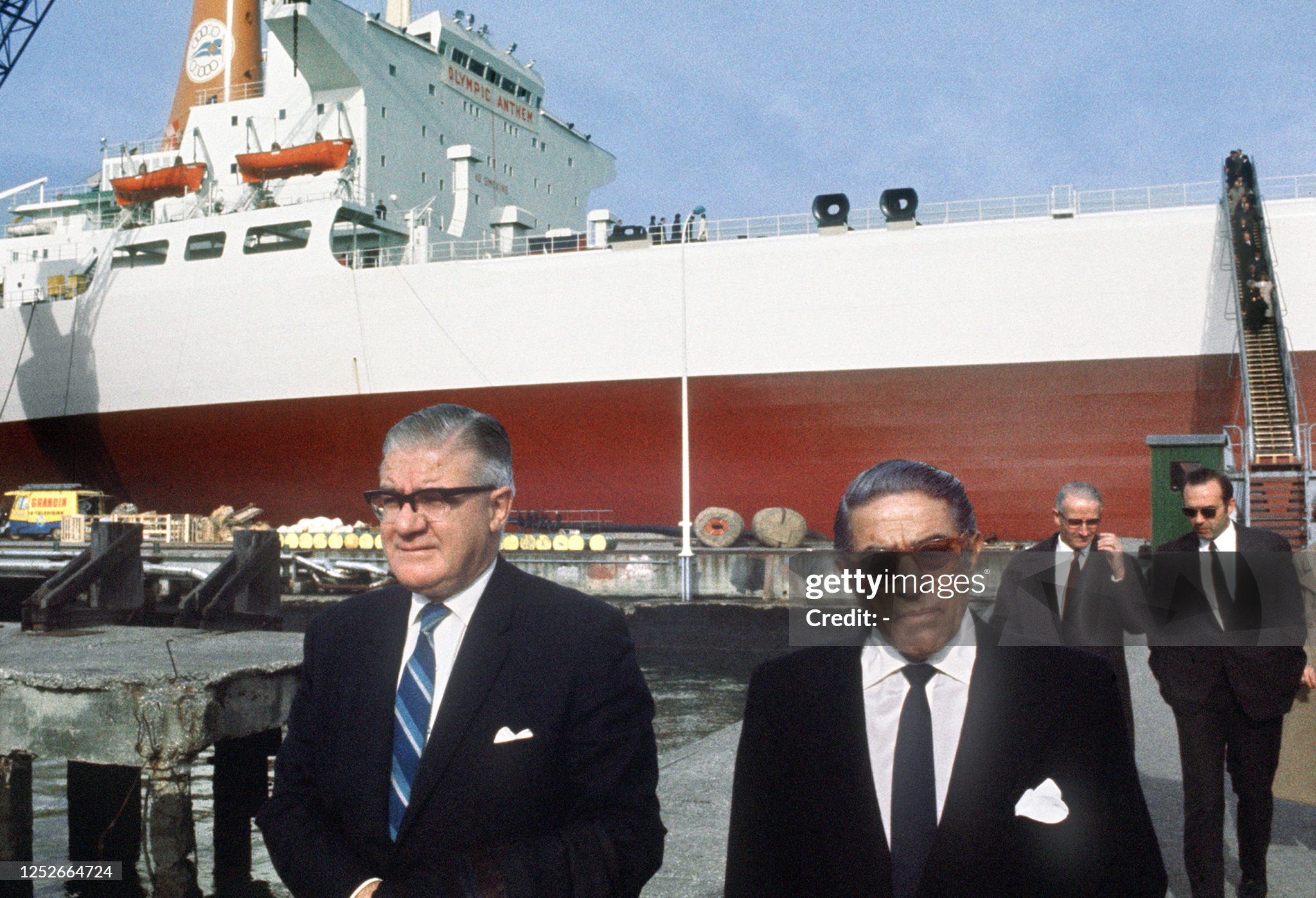
Aristotle Onassis talks with an unidentified French official on 30 October 1970 in Saint Nazaire dockyards prior to the launching of his new 220,000 ton-tanker Olympic Anthem (background). Photo by AFP via Getty Images.
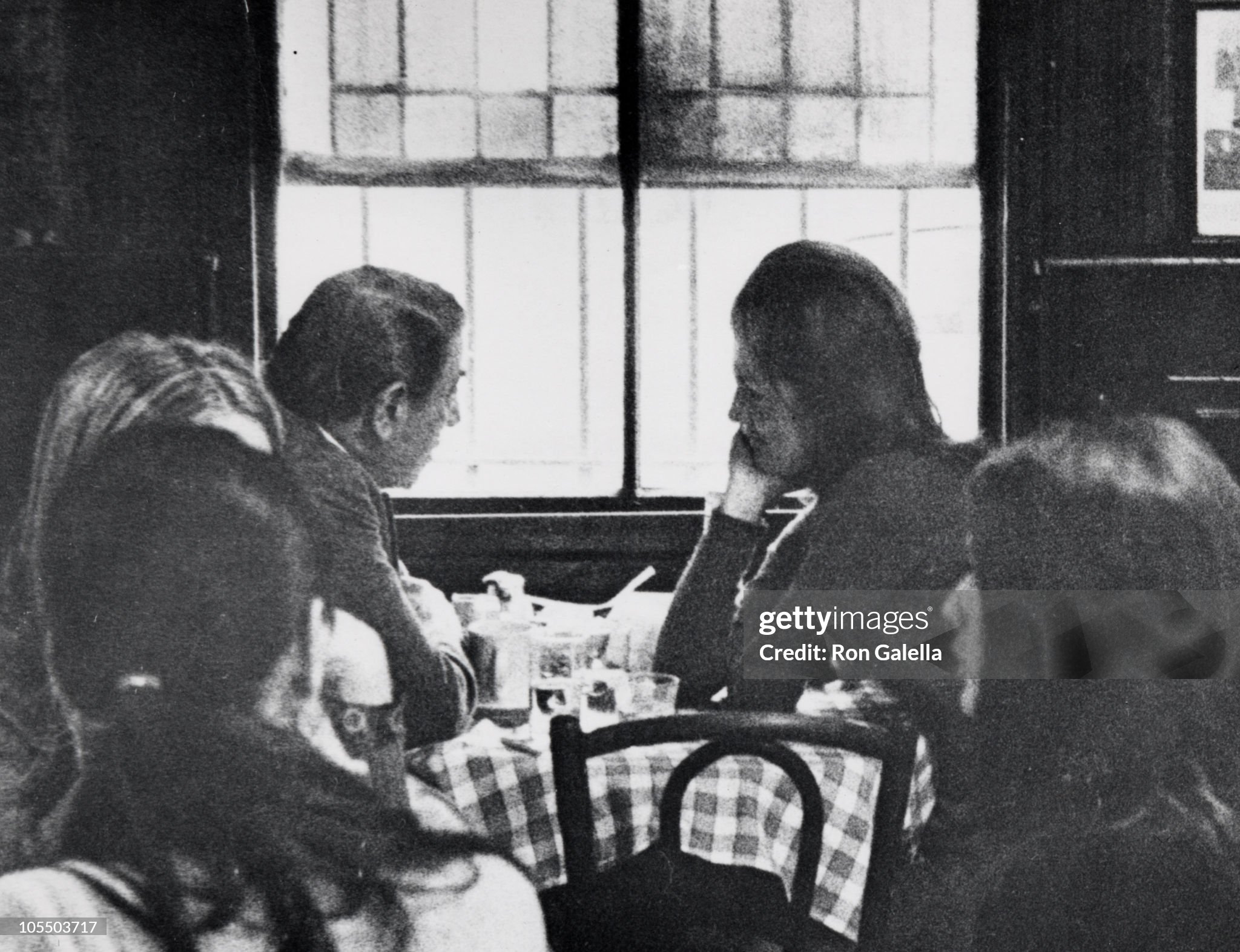
Jackie and Aristotle Onassis having lunch at P. J. Clarke's in New York, United States, on 17 January 1971. Photo by Ron Galella / Ron Galella Collection via Getty Images.
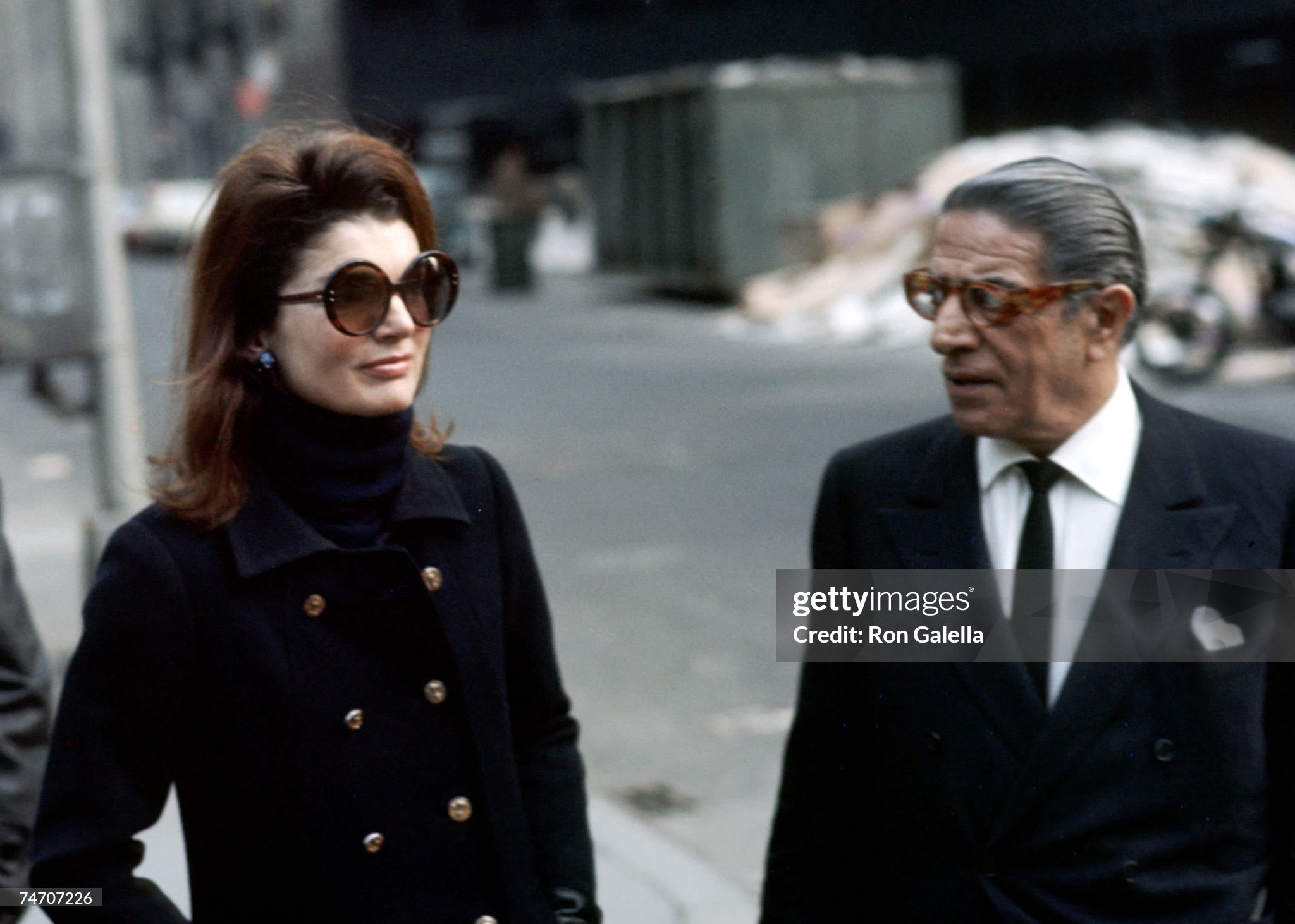
Jackie and Aristotle Onassis walking after having lunch at P. J. Clarke's in New York, United States, on 17 January 1971. Photo by Ron Galella / Ron Galella Collection via Getty Images.
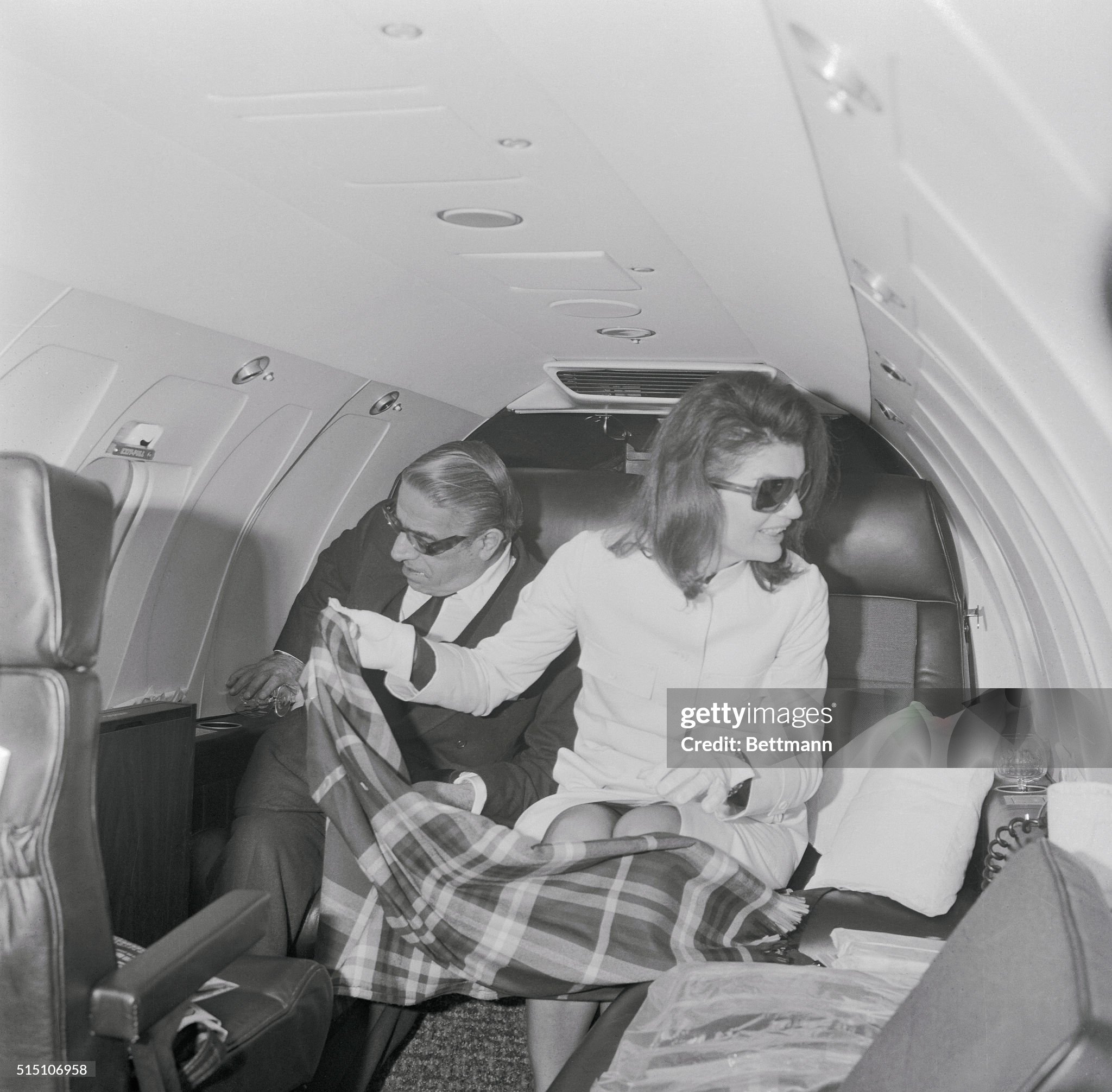
Jacqueline Onassis protects her husband Aristotle Onassis and herself from the cold with a lap rug, as they sit in their private jet in March 1971. Photo by Getty Images.
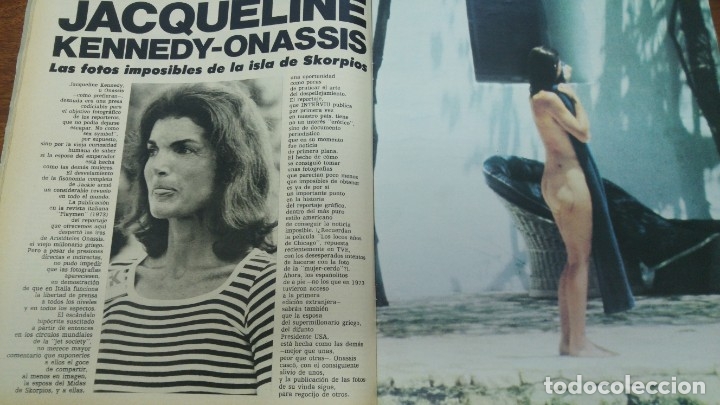
A magazine article and photos of Jackie Onassis caught naked by paparazzi cameras on the island of Skorpios in the summer of 1971.
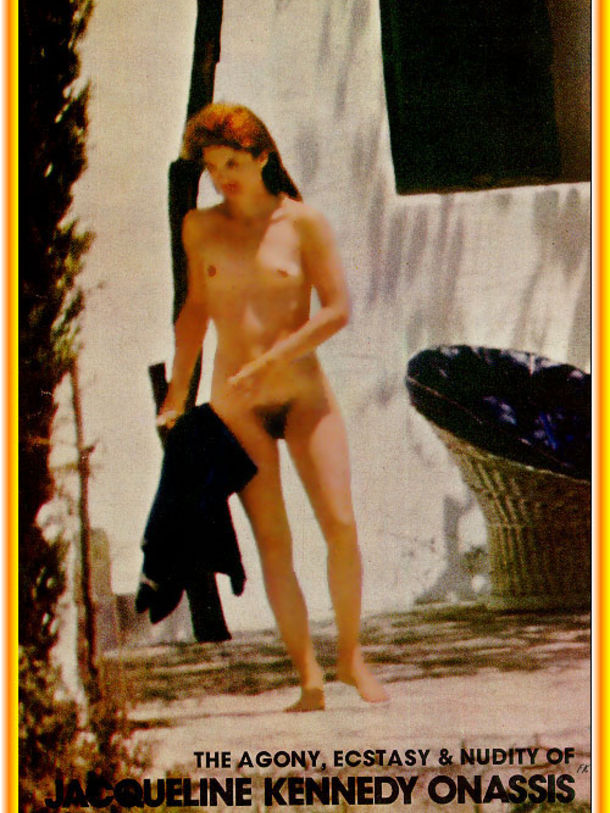
A magazine cover featuring a photo of Jackie Onassis caught naked by paparazzi cameras on the island of Skorpios in the summer of 1971.
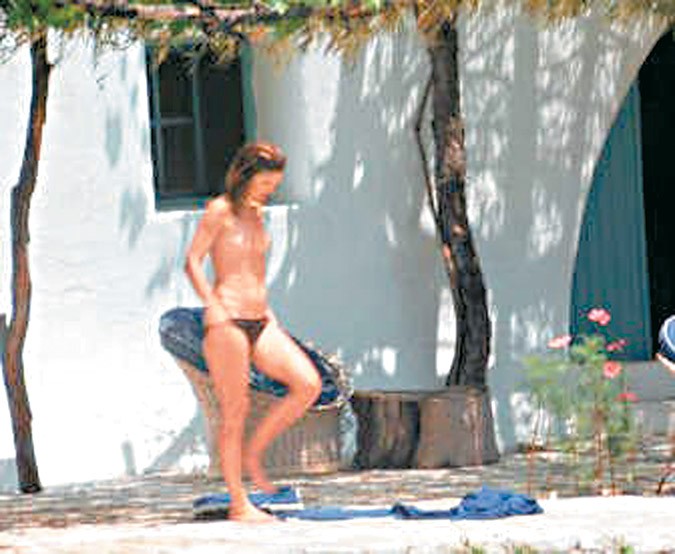
Jackie Onassis caught topless by paparazzi cameras on the island of Skorpios in the summer of 1971.
Jackie Onassis caught naked by paparazzi cameras on the island of Skorpios in the summer of 1971.
Jackie Onassis caught naked by paparazzi cameras on the island of Skorpios in the summer of 1971.
Jackie Onassis caught naked by paparazzi cameras on the island of Skorpios in the summer of 1971.
Jackie Onassis caught naked by paparazzi cameras on the island of Skorpios in the summer of 1971.
Jackie Onassis caught naked by paparazzi cameras on the island of Skorpios in the summer of 1971.
Jackie Onassis caught naked by paparazzi cameras on the island of Skorpios in the summer of 1971.
Jackie Onassis caught naked by paparazzi cameras on the island of Skorpios in the summer of 1971.
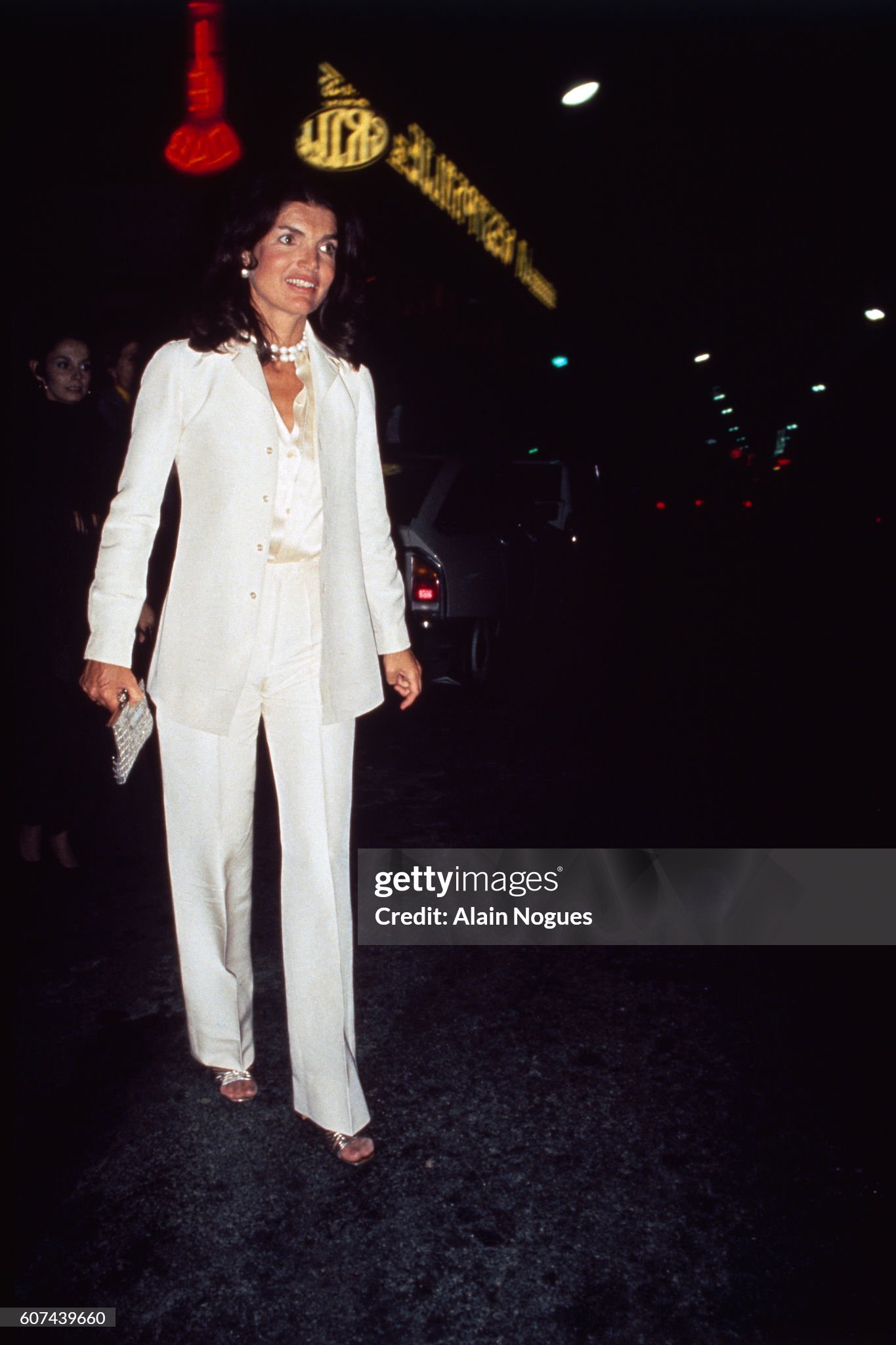
Jacqueline Kennedy Onassis on 01 June 1972. Photo by Alain Nogues / Sygma via Getty Images.
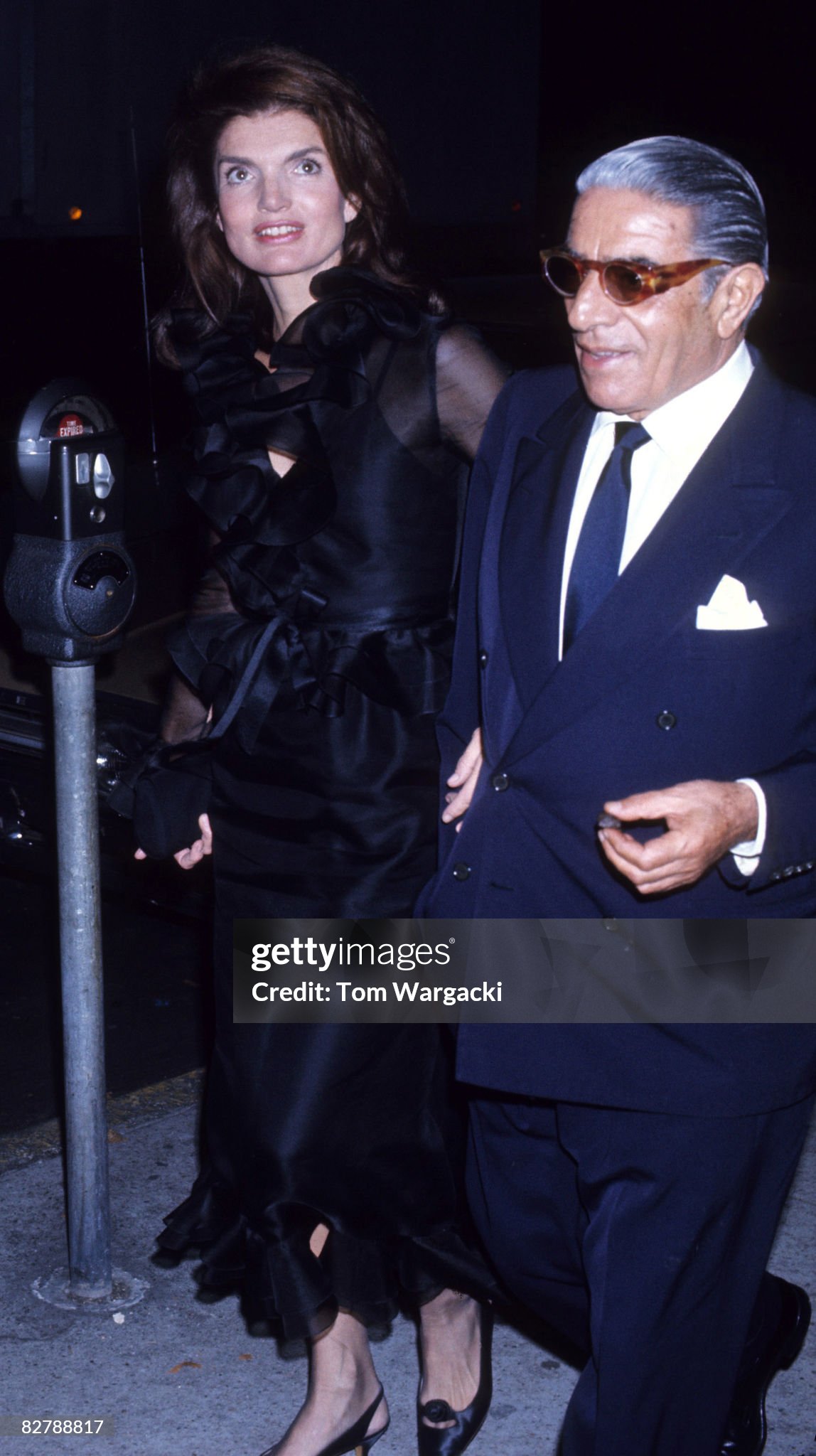
Jackie and Aristotle Onassis on 17 December 1972. Photo by Tom Wargacki / Wire Image.
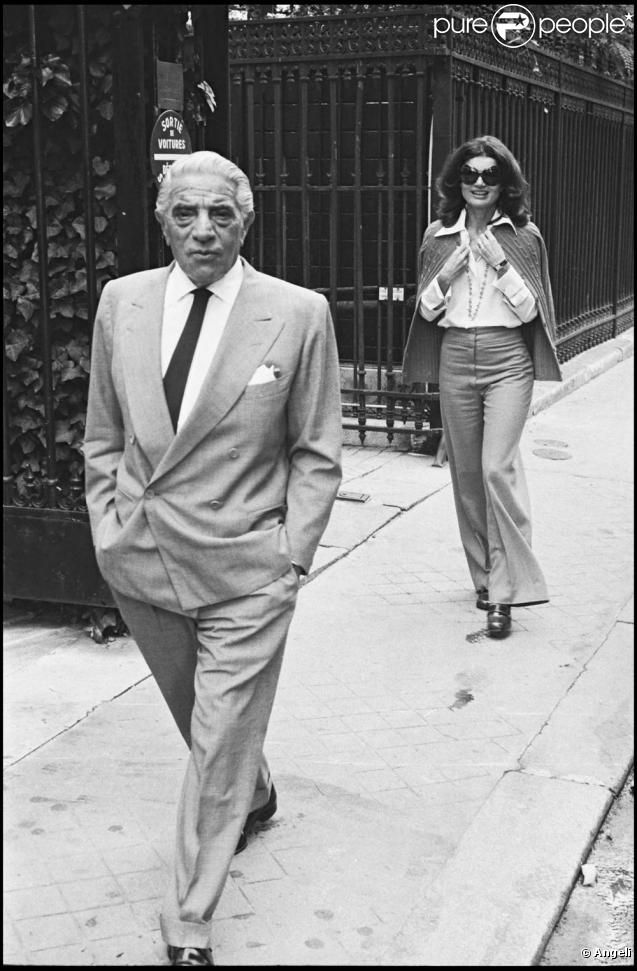
Jackie and Aristotle Onassis. Photo by Best Image.
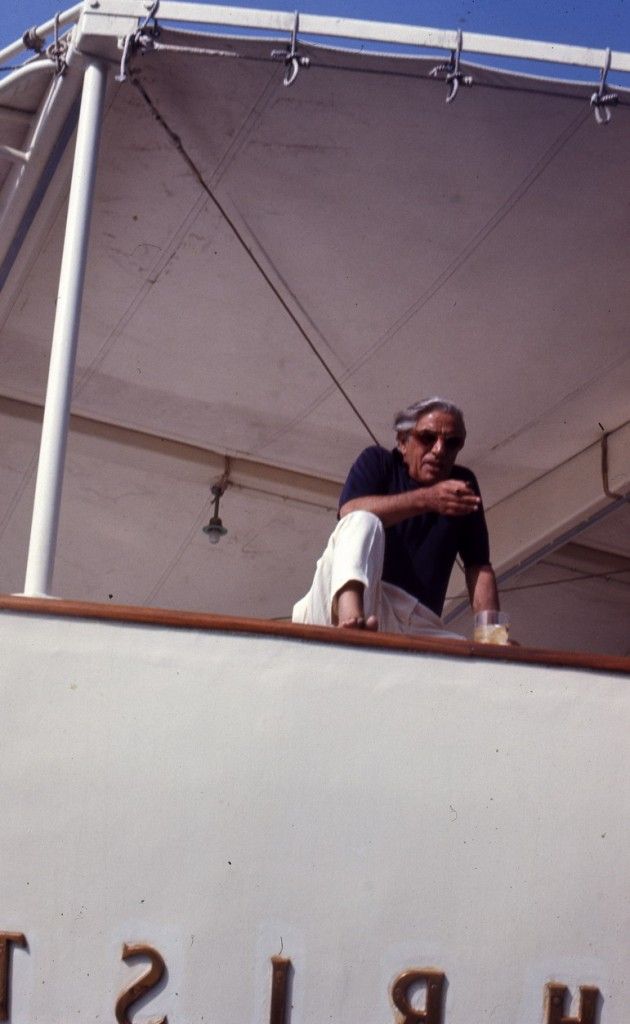
Aristotle Onassis aboard his ‘Christina’.
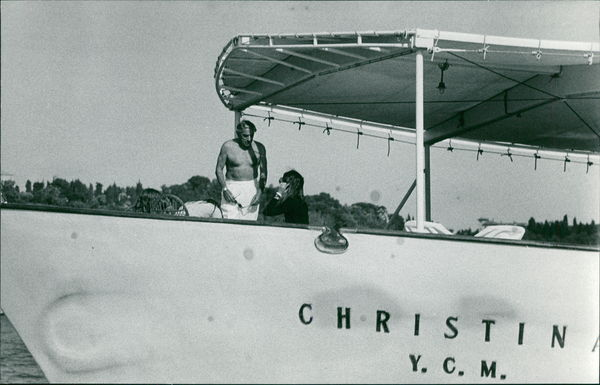
Aristotle and Jackie Onassis aboard the ‘Christina’.
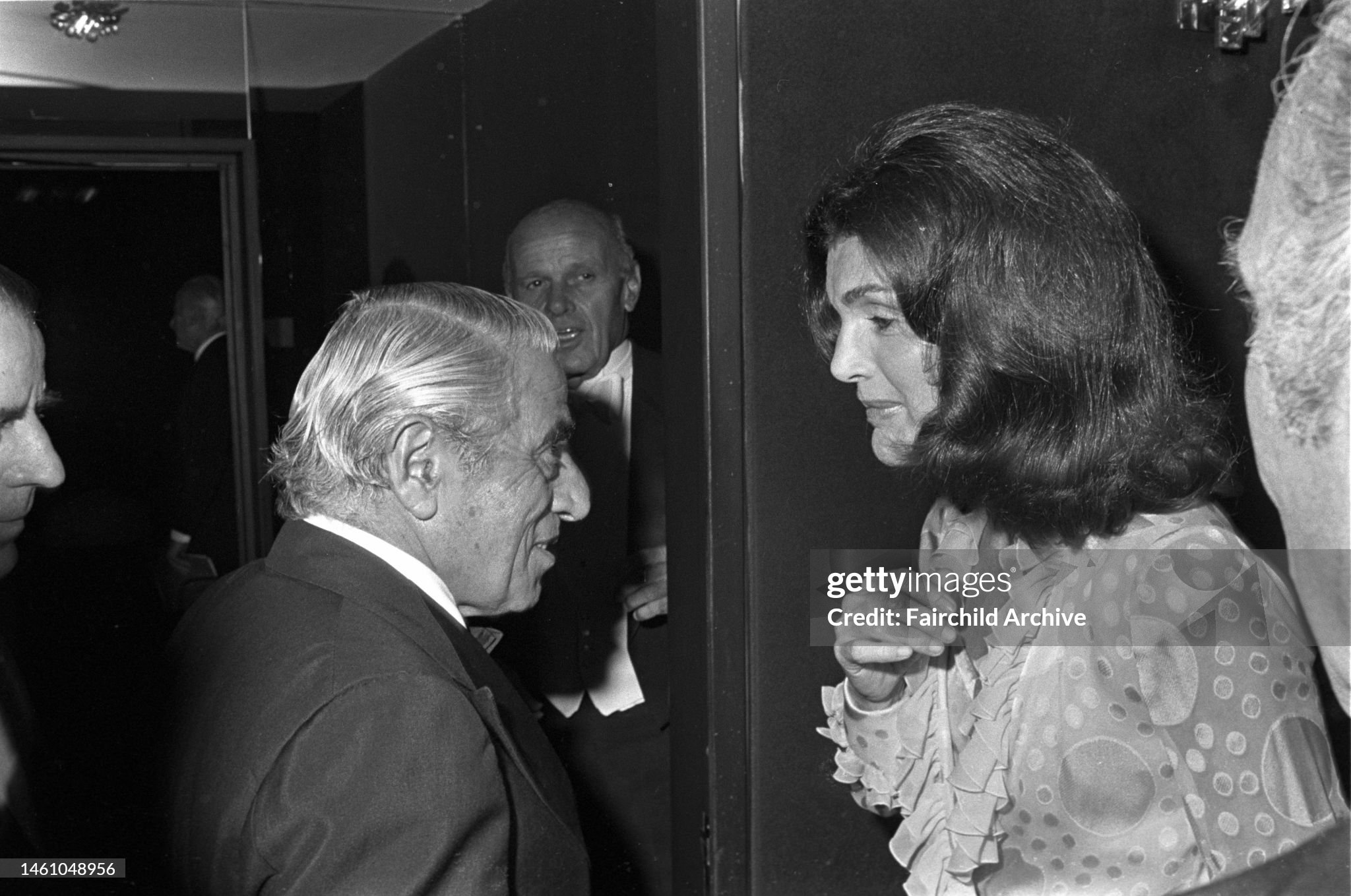
Aristotle and Jackie Onassis attending a tribute to impresario Sol Hurok at the Metropolitan Opera House on 04 June 1973. Photo by Fairchild Archive / Penske Media via Getty Images.
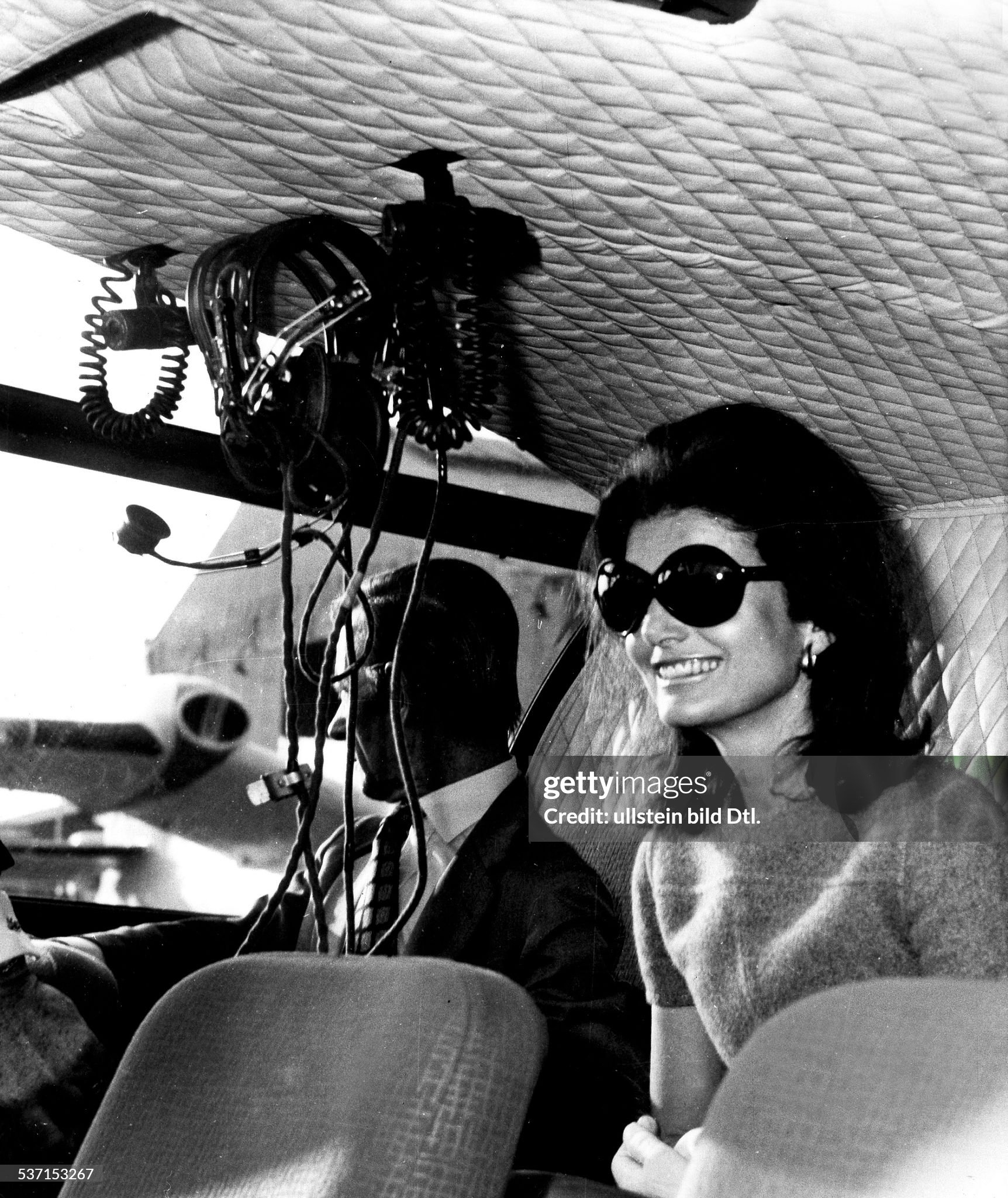
Jacqueline Onassis in an helicopter on 01 December 1973. Photo by Ullstein bild via Getty Images.
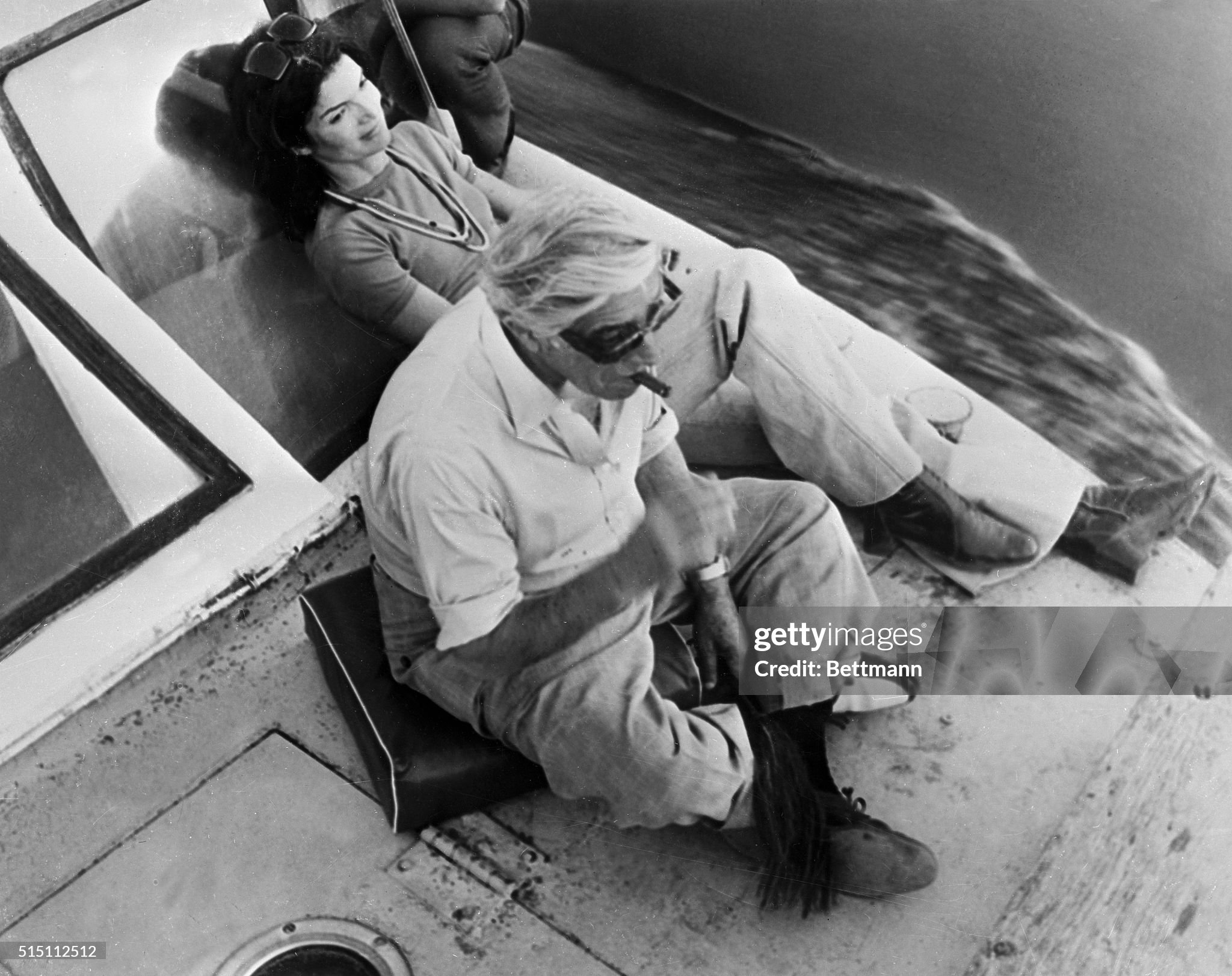
On a river trip down the Nile, Jacqueline Onassis relaxes and stretches out, while her husband, Aristotle, sits on a cushion and enjoys a cigar on 28 March 1974. Photo by Getty Images.
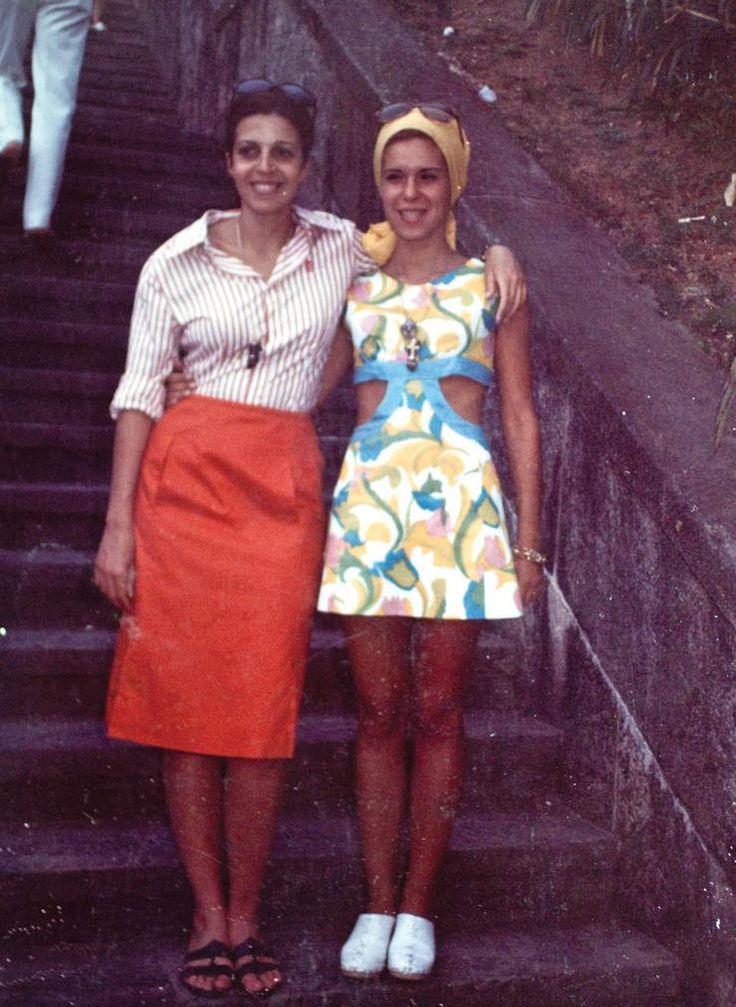
Christina Onassis, 25 years old, in Rio de Janeiro with her close friend Marina Dodero.
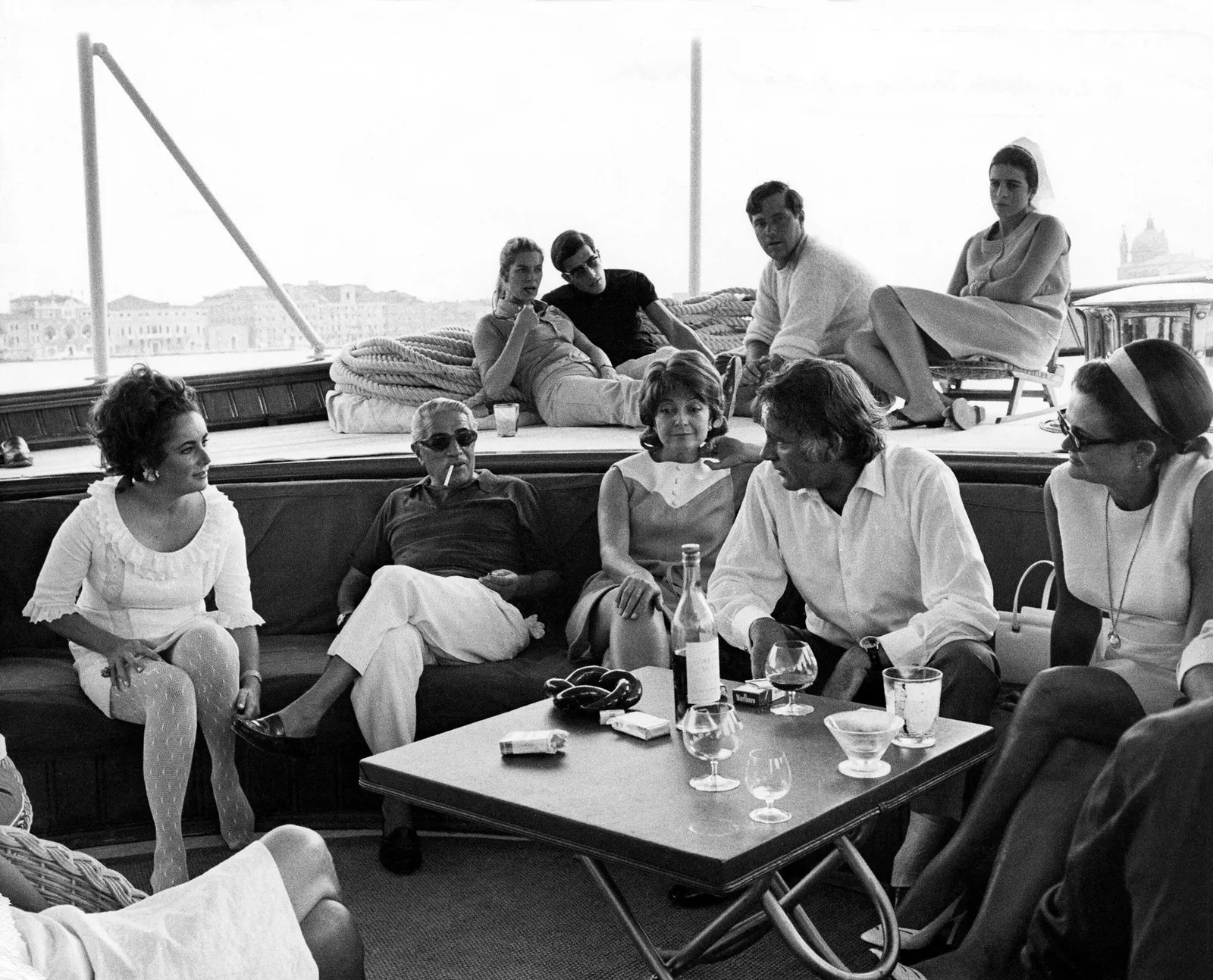
Elizabeth Taylor and Richard Burton visit Aristotle Onassis and his son Alexander (in the background) on board the ‘Christina’ in 1975. Photo by Shutterstock.
Jacqueline Kennedy Onassis leaves the American Hospital of Paris in Neuilly-sur-Seine after the death of her husband Aristotle Onassis on March 16, 1975. Photo by Alain Mingam / Gamma - Rapho via Getty Images.
Jackie Kennedy returns to her Parisian home on Avenue Foch after the funeral of her husband Aristotle Onassis in Paris on 18 March 1975. Photo by Pool Simonuzan / Gamma - Rapho via Getty Images.
Jackie Kennedy returns to her Parisian home on Avenue Foch after the funeral of her husband Aristotle Onassis in Paris on 18 March 1975. Photo by Pool Simonuzan / Gamma - Rapho via Getty Images.
Jacqueline Kennedy Onassis, wearing dark glasses and black leather coat over a black outfit, leaves her chartered Olympic Airlines plane after accompanying the body of her late husband, Aristotle Onassis, on a flight from Paris. With her on the flight were Onassis' daughter, Christina and his sister. Onassis was to be buried on his private island, Skorpios, later in the day. Photo by Getty Images.
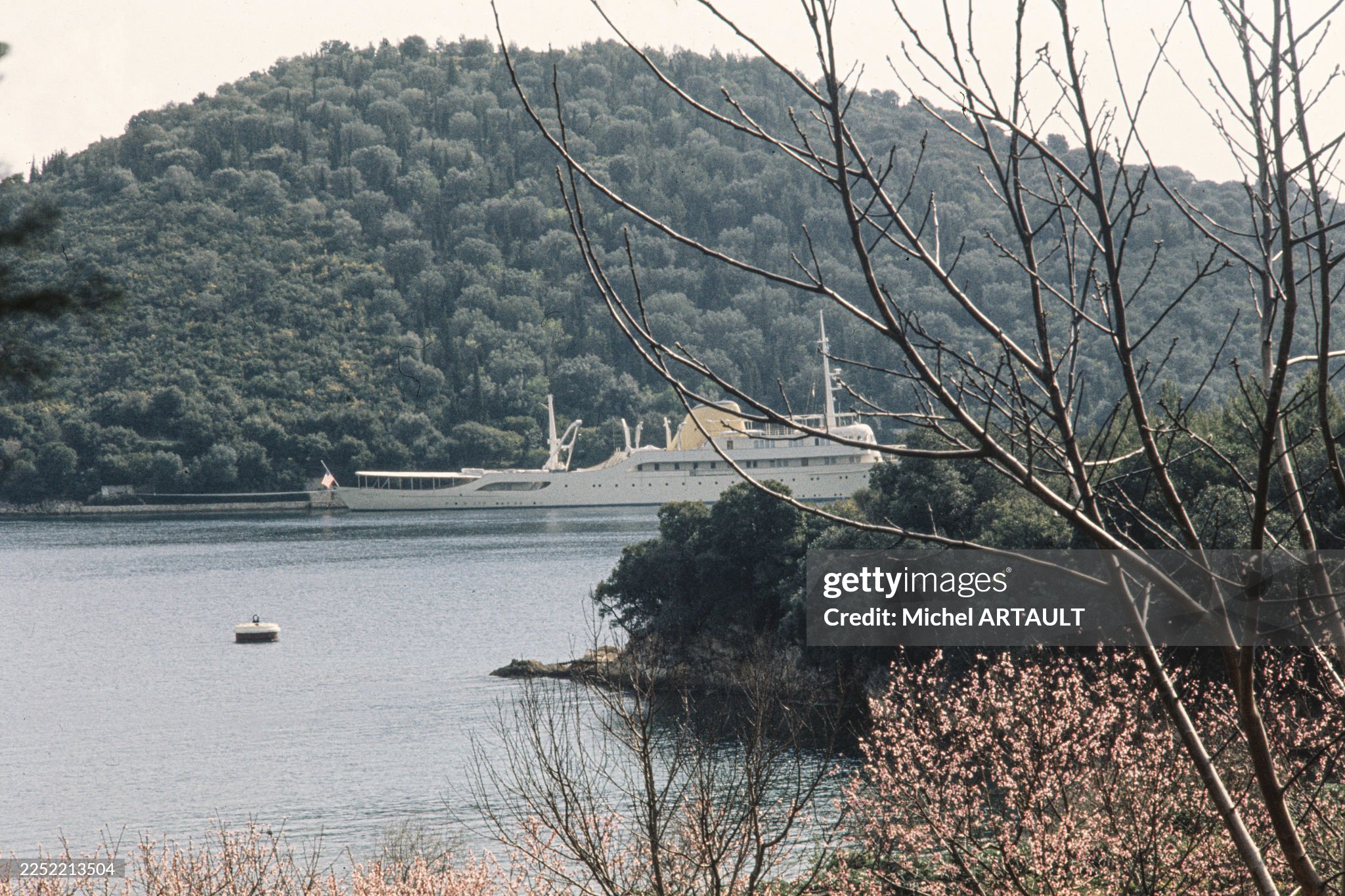
The yacht of Aristotle Onassis 'Christina' also sailed to the island of Skorpios on 18 March 1975. Photo by Michel Artault / Gamma - Rapho via Getty Images.
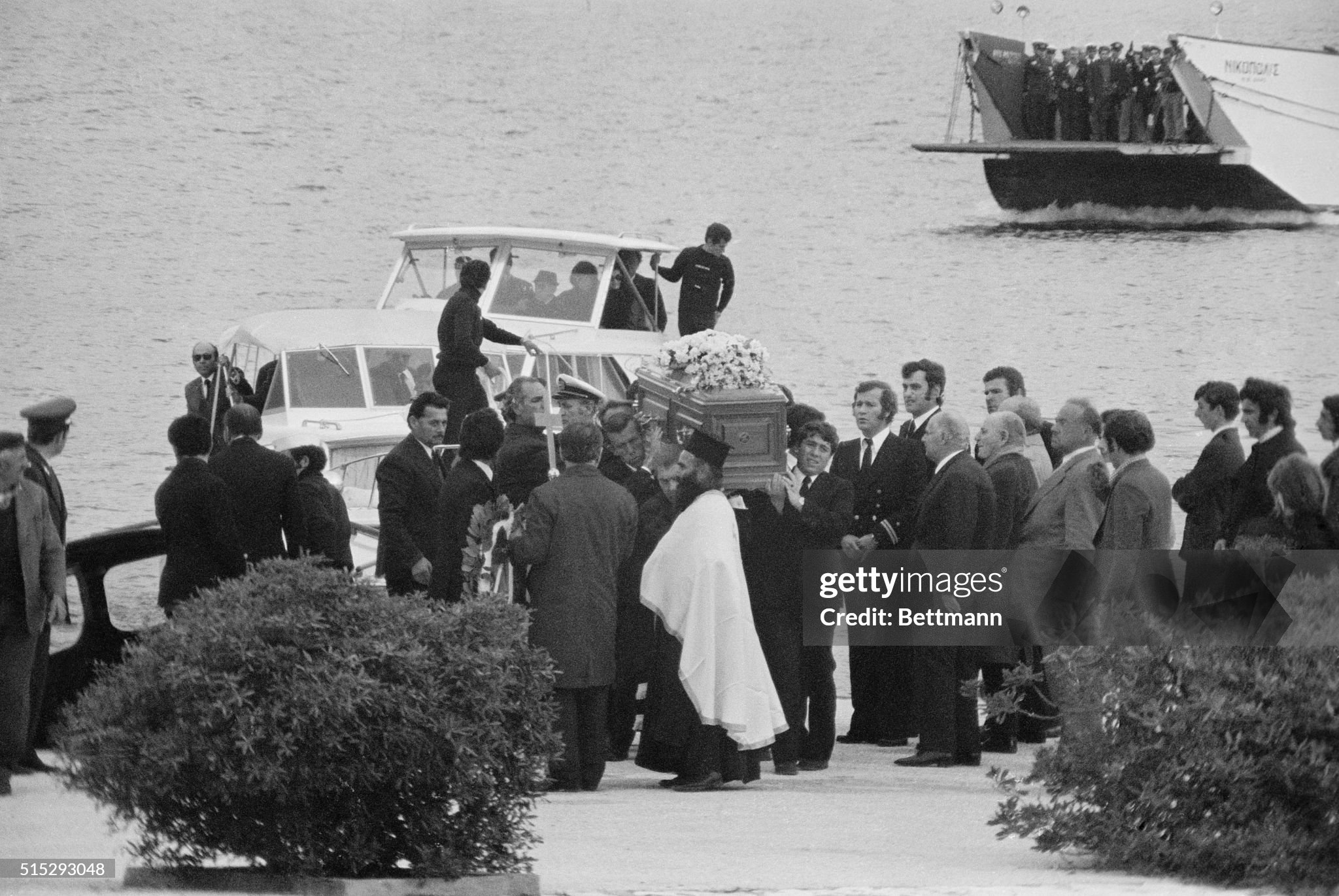
Pallbearers lift the coffin containing the body of Aristotle Onassis from a launch as a ferry with the family members arrives on the Greek millionaire's private island for funeral services and interment. Onassis died on 15 March 1975 in a Paris hospital. Photo by Getty Images.
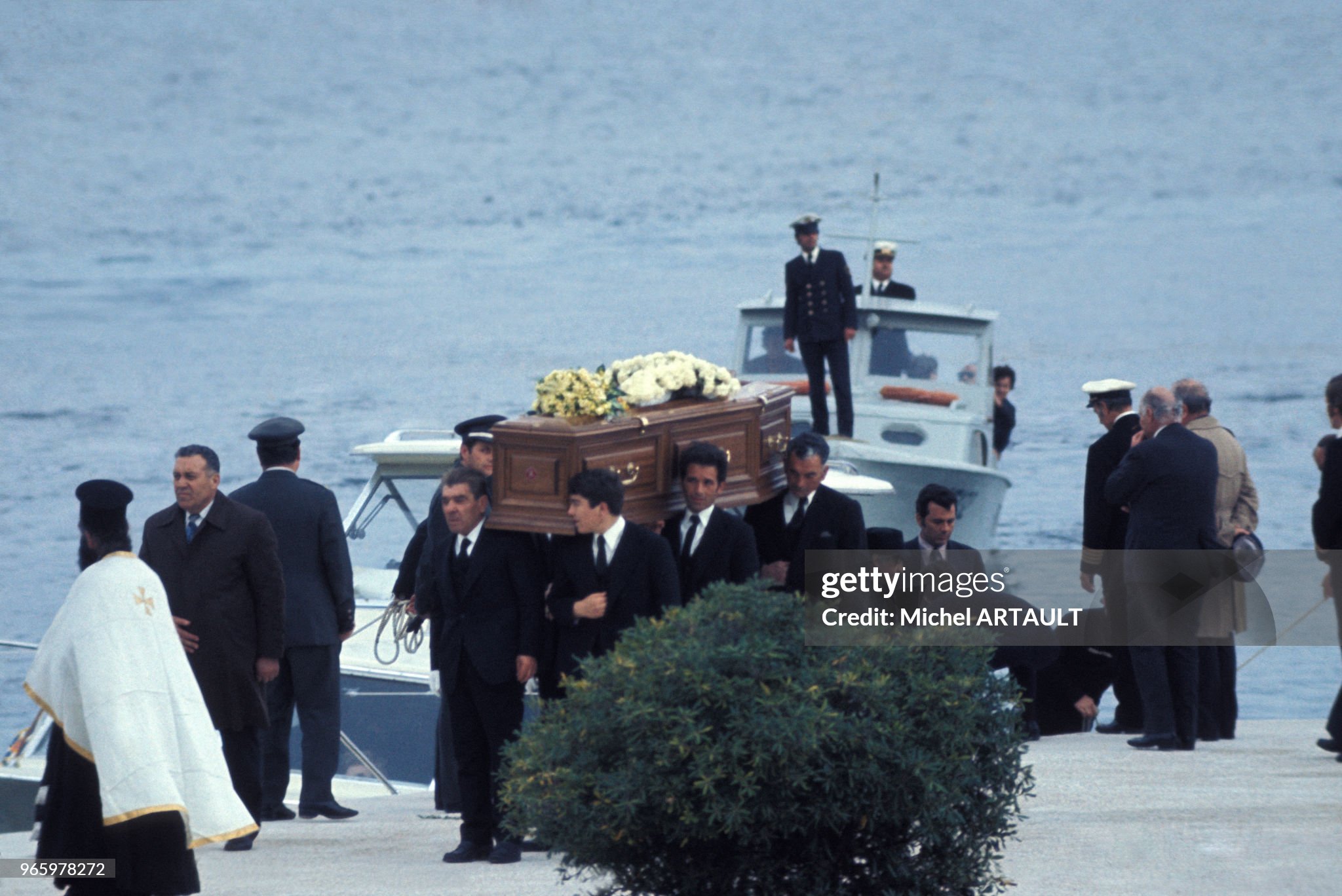
Funerals of Aristotle Onassis on the island of Skorpios on March 18, 1975 in Greece. Photo by Michel Artault / Gamma - Rapho via Getty Images.
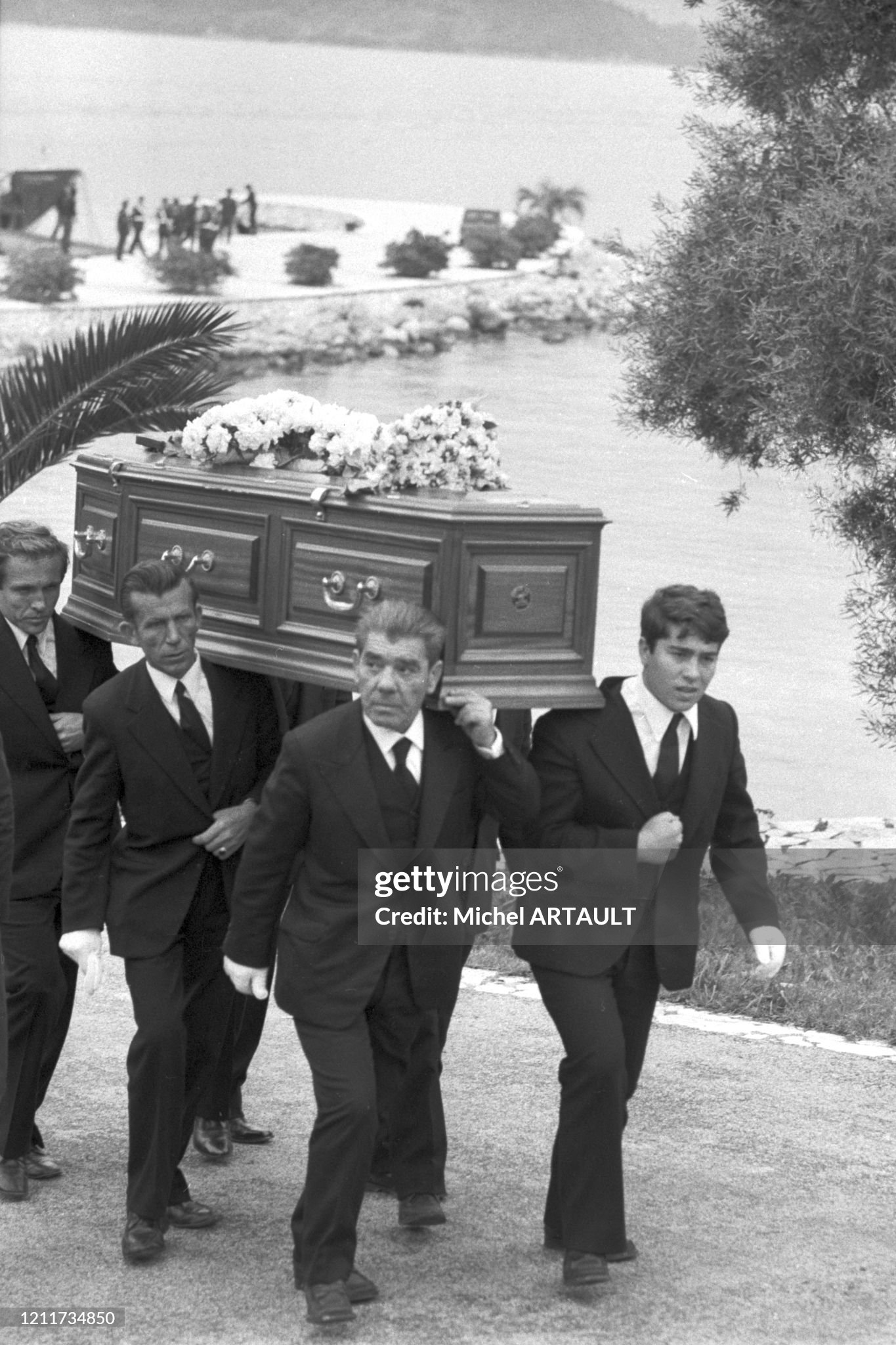
Men carry the coffin of Greek shipping magnate Aristotle Onassis during his funeral on the island of Skorpios on 18 March 1975, in Greece. Photo by Michel Artault / Gamma - Rapho via Getty Images.
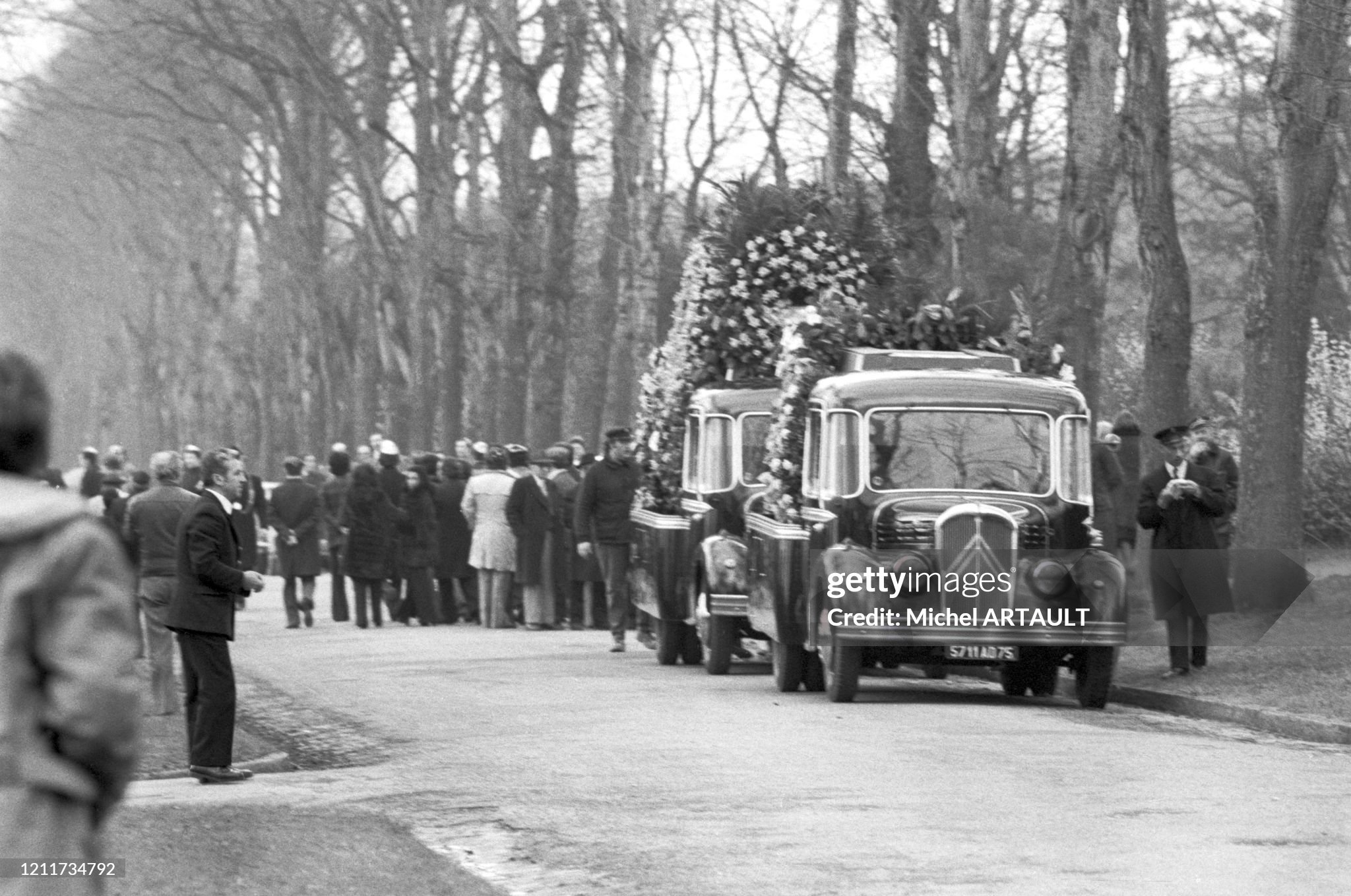
Men carry the coffin of Greek shipping magnate Aristotle Onassis during his funeral on the island of Skorpios on 18 March 1975, in Greece. Photo by Michel Artault / Gamma - Rapho via Getty Images.
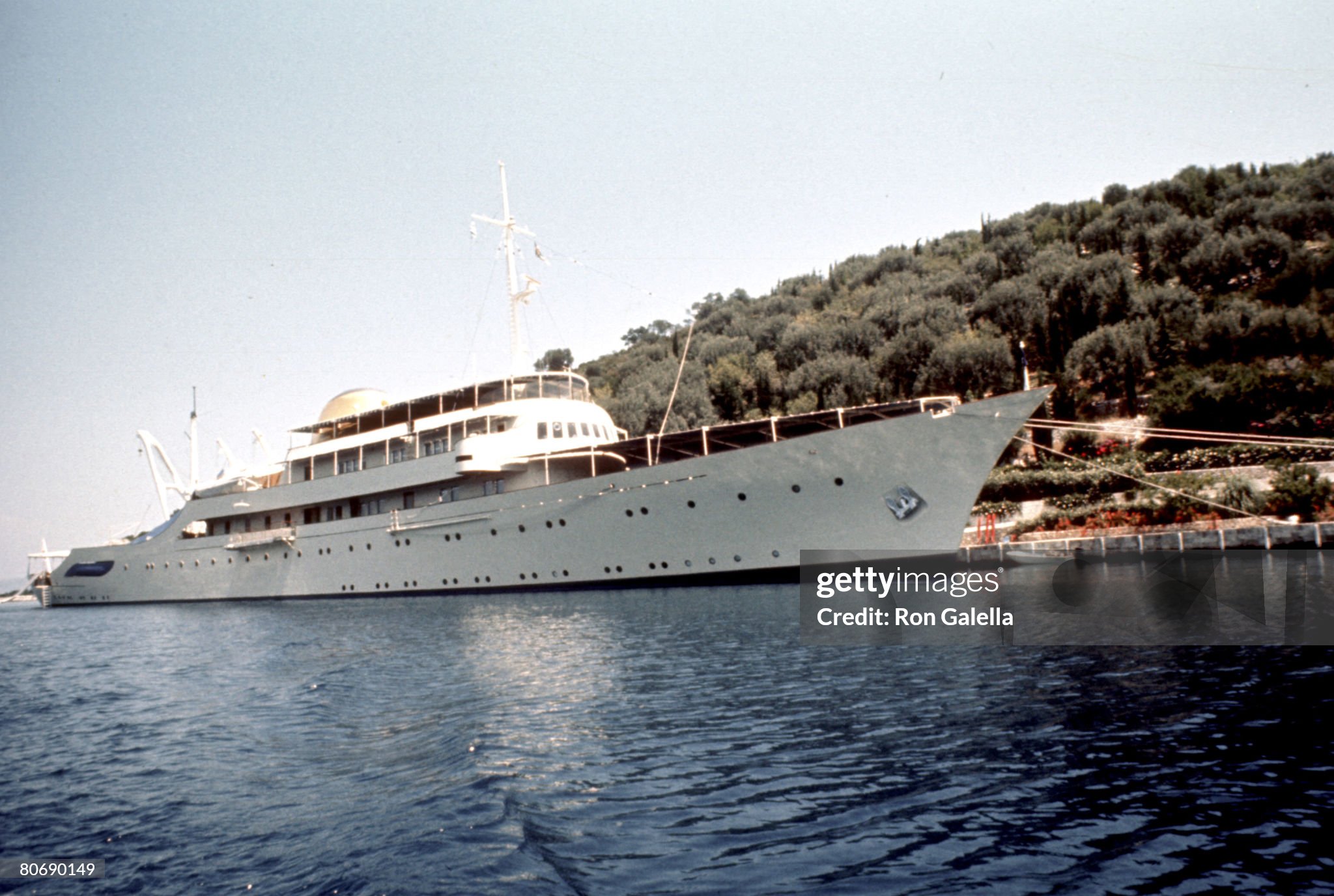
Onassis' yacht ‘Christina’ on 01 March 1977. Photo by Ron Galella / Ron Galella Collection via Getty Images.
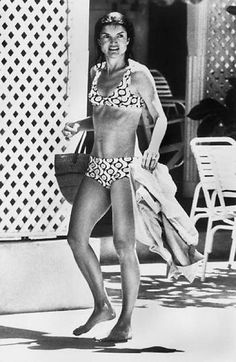
Jackie Onassis in a bikini in 1977.
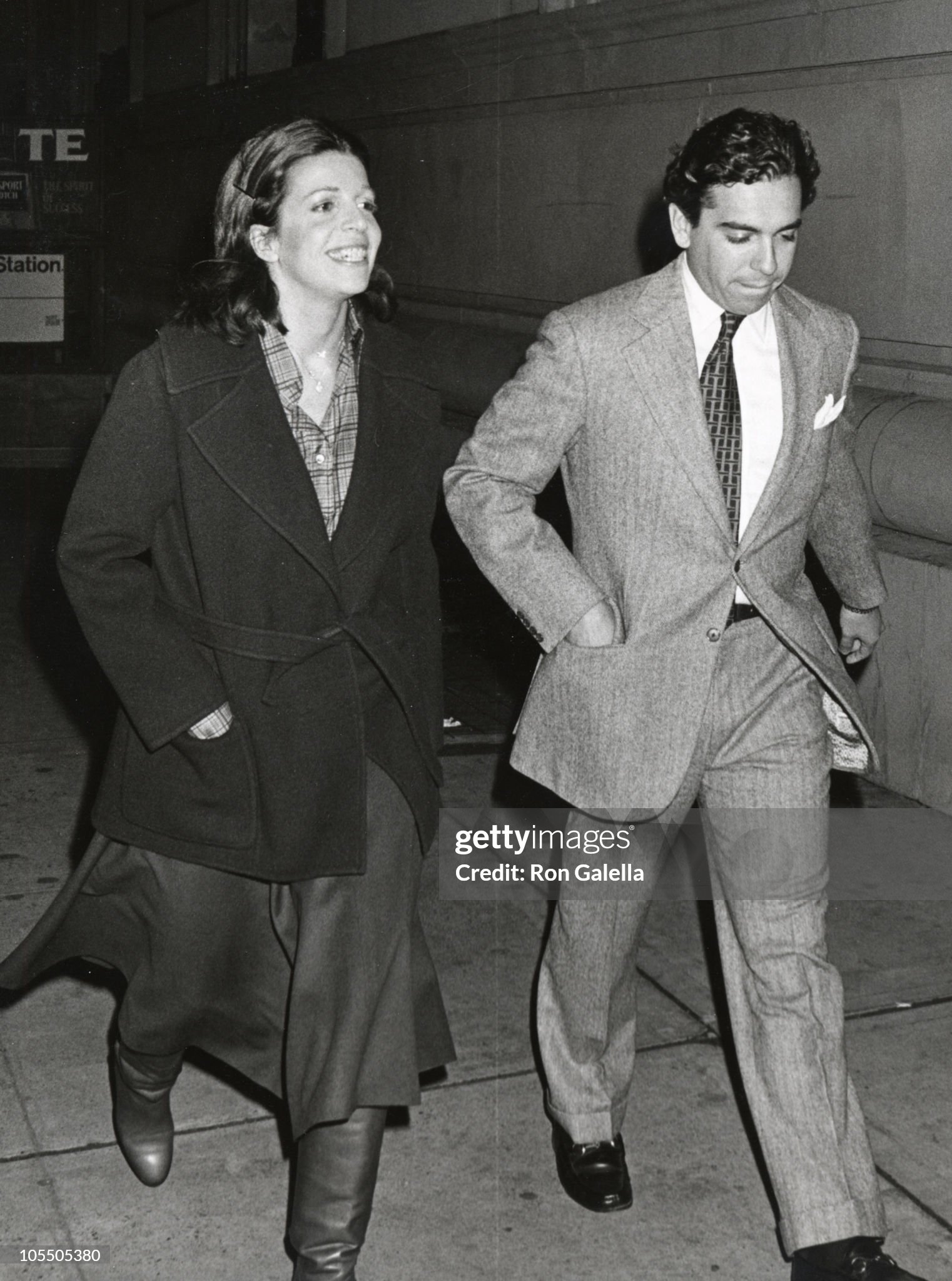
Christina Onassis with Niki Bookis in front of the Pierre Hotel in New York, United States, on 02 November 1977. Photo by Ron Galella / Ron Galella Collection via Getty Images.
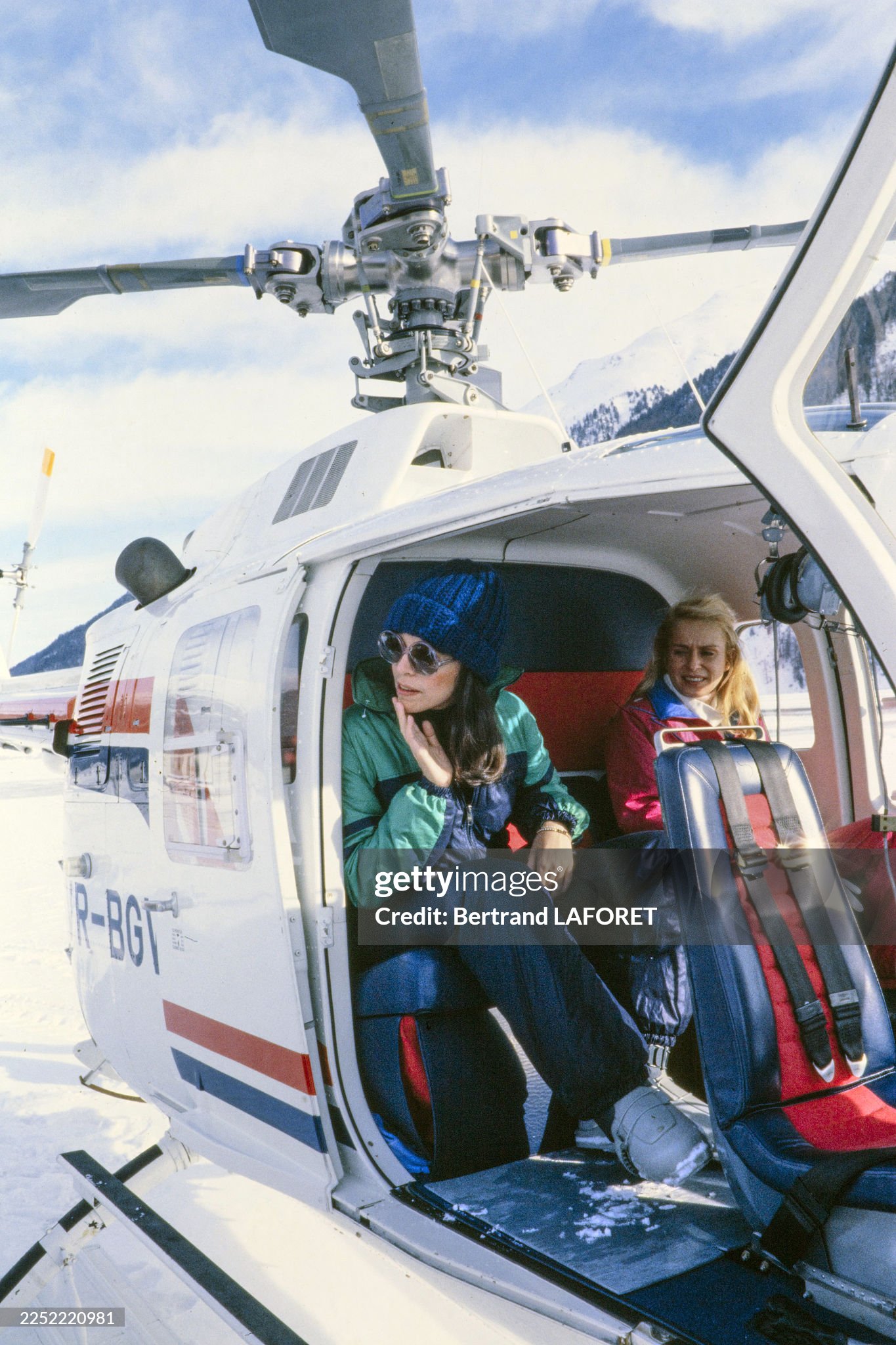
Christina Onassis aboard a helicopter during her ski vacation in St. Moritz in January 1978. Photo by Bertrand Laforet / Gamma - Rapho via Getty Images.
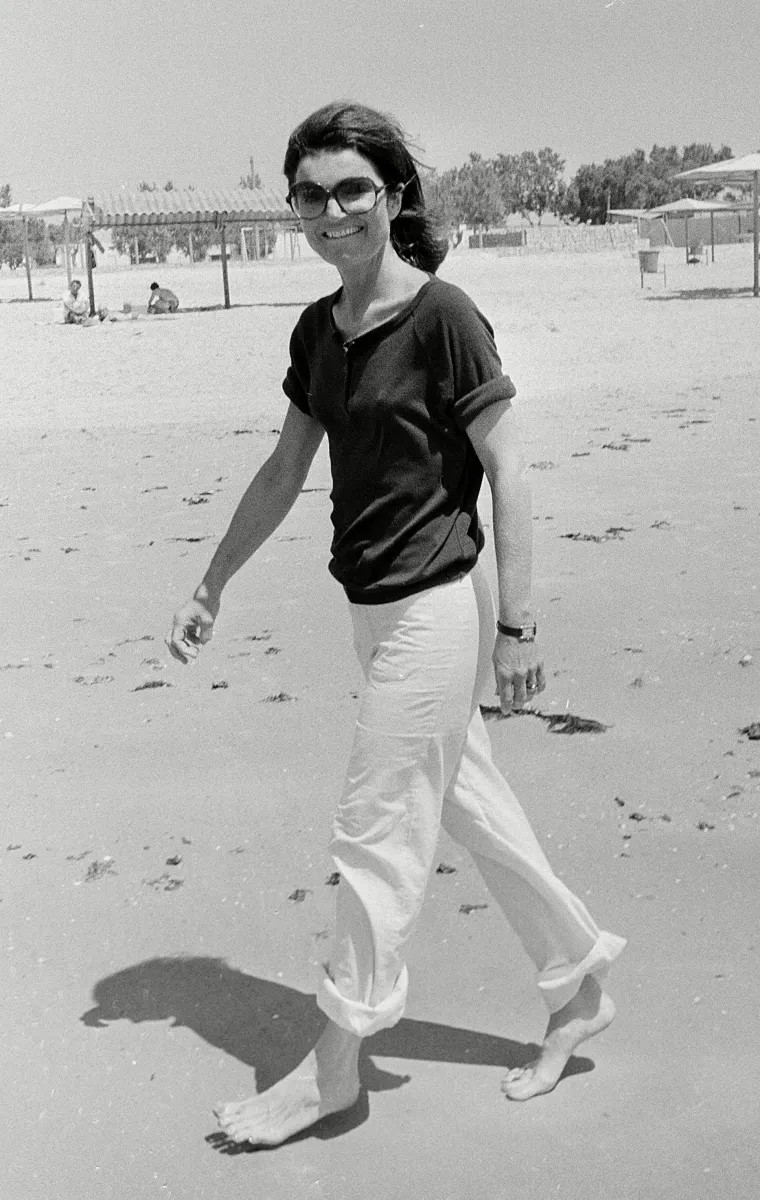
Jacqueline Kennedy Onassis walks barefoot on the beach of Hof Dor, 50 miles north of Tel Aviv, during her first day in Israel on 15 May 1978. Photo by AP Photographer Max Nash.
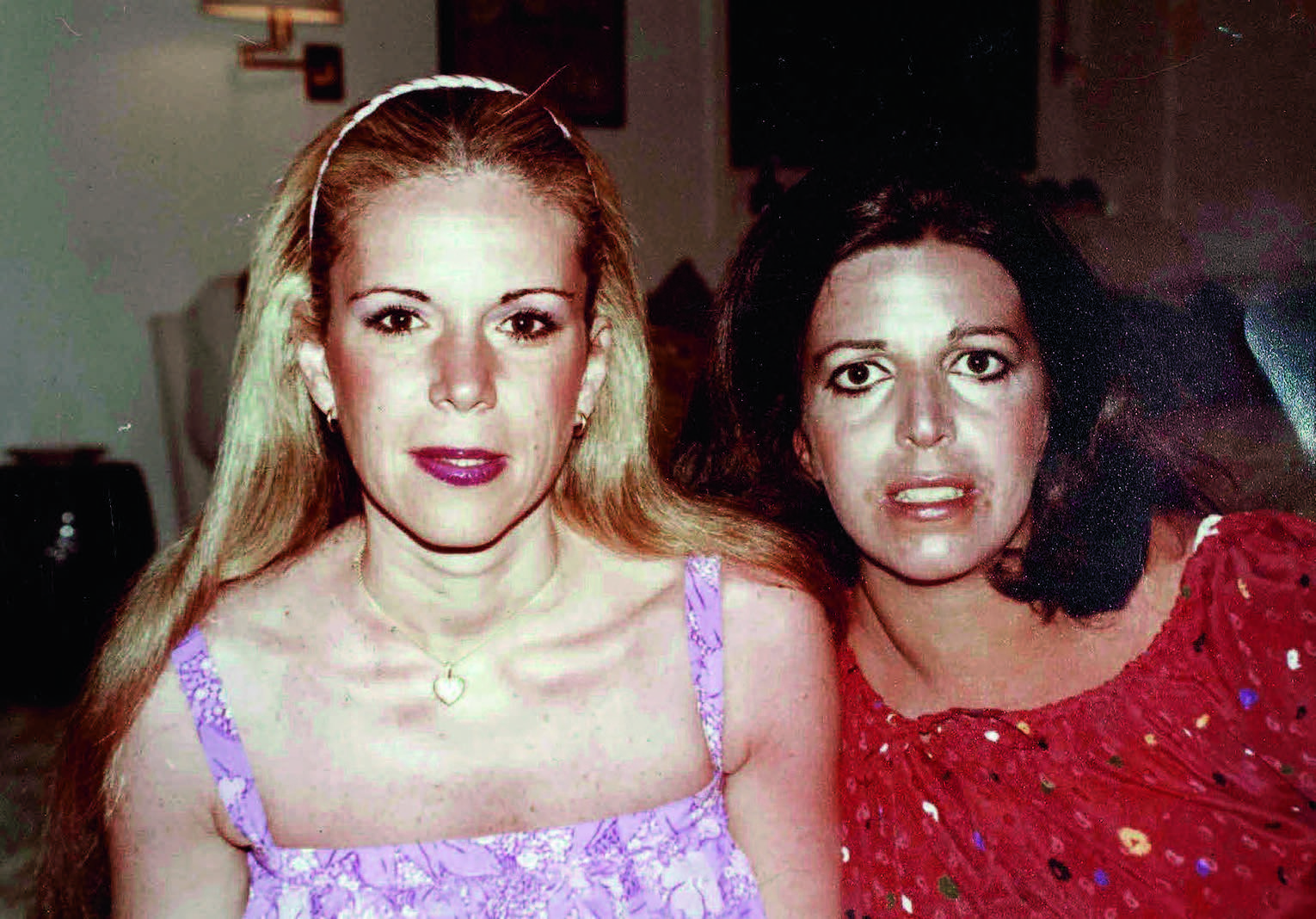
Christina Onassis and Marina Dodero in Skorpios in the early 1980s. Photo by Paul Roger.
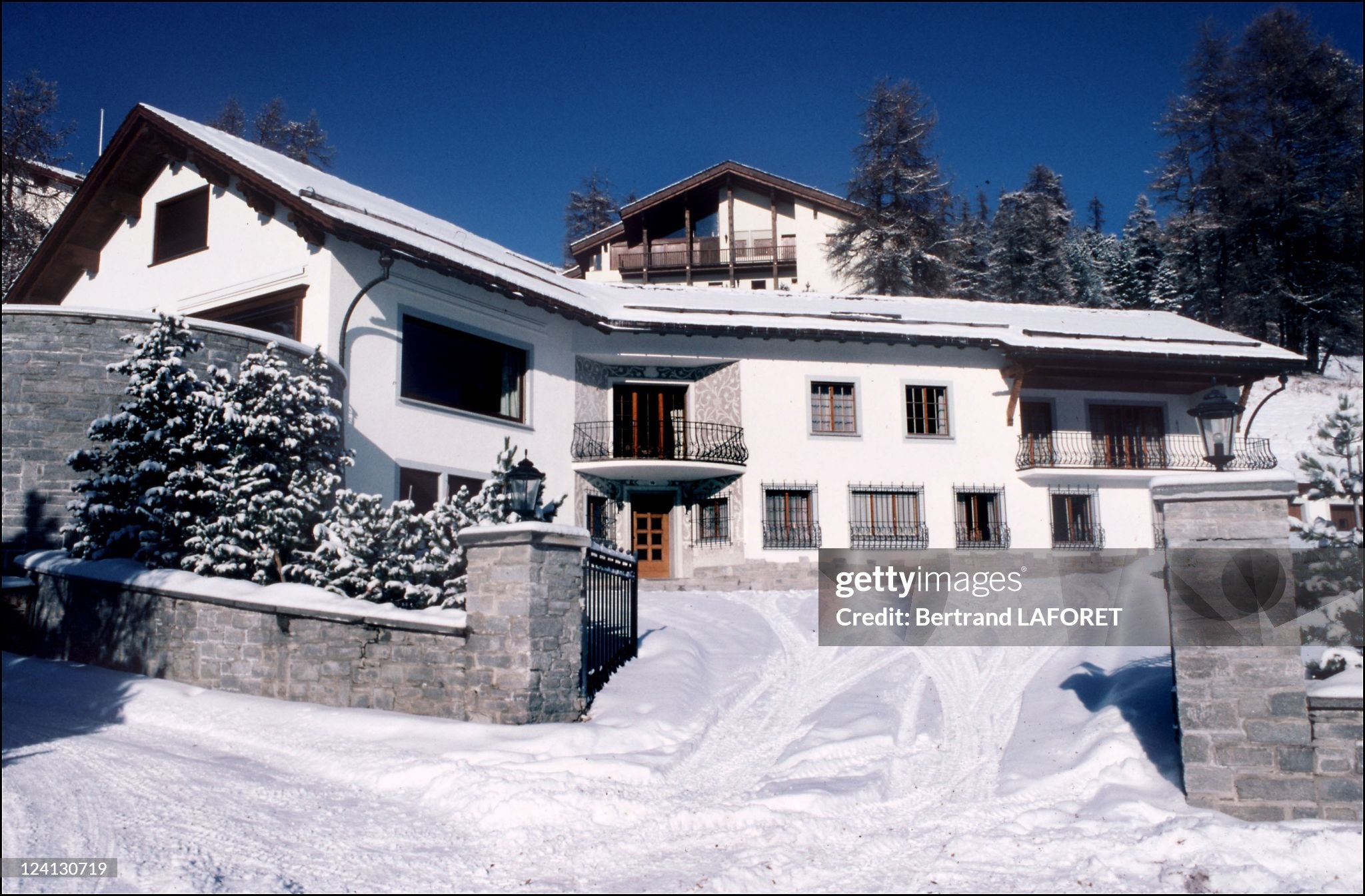
Christina Onassis's chalet in Gstaad, Switzerland, in December 1980. Photo by Bertrand Laforet / Gamma - Rapho via Getty Images.
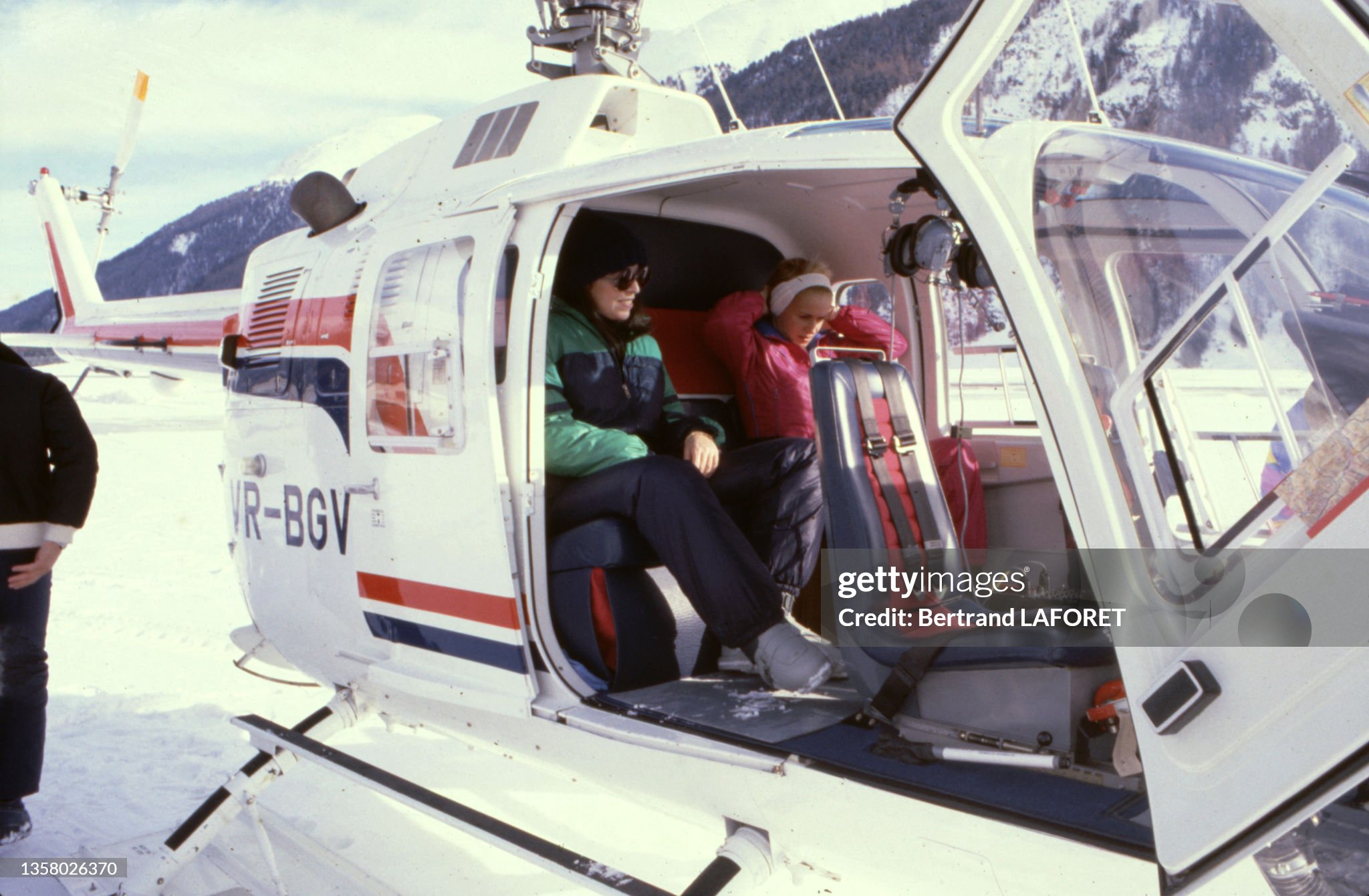
Christina Onassis in her helicopter in Gstaad, Switzerland, in January 1981. Photo by Bertrand Laforet / Gamma - Rapho via Getty Images.
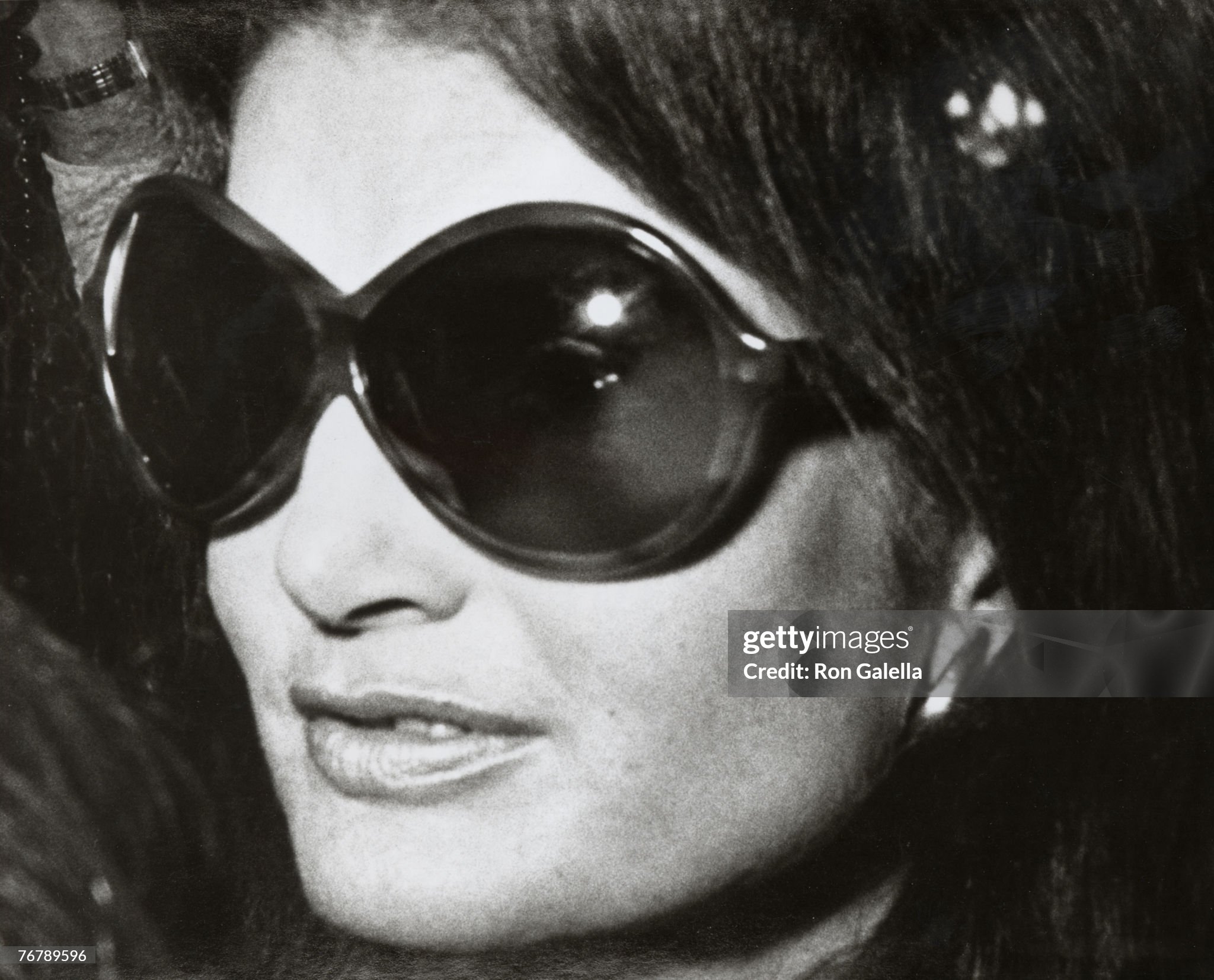
Jackie Kennedy Onassis on 08 November 1986. Photo by Ron Galella / Ron Galella Collection via Getty Images.
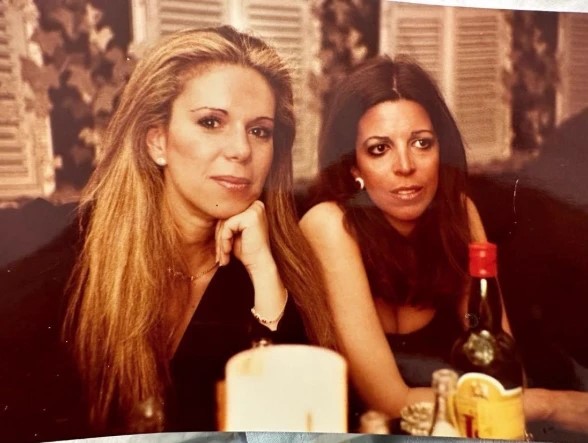
Marina Dodero and Christina Onassis, close and dear friends.
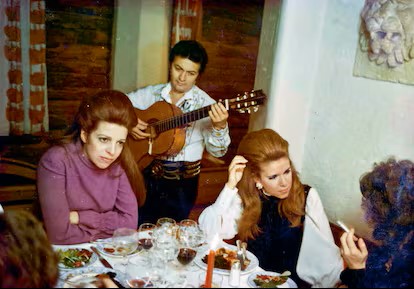
Christina Onassis, here with Marina Dodero, the impoverished life of one of the world's richest women: "she paid people so she wouldn't be alone."
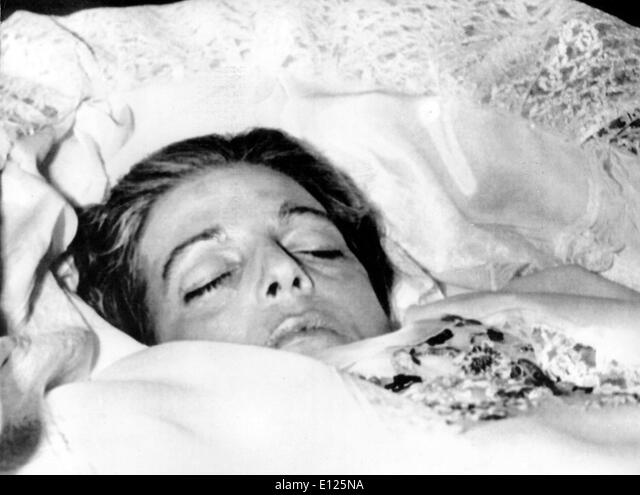
Christina Onassis dead.
Christina Onassis buried on Skorpios island next to her father.
The cover of the book 'My life with Christina Onassis' by Marina Tchomlekdjoglou - Dodero. November 19, 1988, was the last night the author of this book saw her close friend, Christina Onassis. They had dinner at her home in the Tortugas Country Club and Christina was radiant. The following morning, she found her lifeless body in the bathroom. Marina never wanted to recount the hundreds of stories they shared, but twenty-six years after her death, she decided to pay tribute to her. My life with Christina Onassis reveals the best-kept secrets of one of the most important heiresses of the 20th century, the daughter of the magnate Aristotle Onassis. When Christina died in Buenos Aires at the age of 37, the news spread around the world, but Marina remained silent until now. In this book, she recounts all of Christina's loves: Peter John Goulandris (Marina's cousin), Joseph Bolker (the man she married at just 20 years old in Las Vegas to escape her father's control), Sergei Kauzov (the Soviet official with whom she moved to Moscow at the height of the Cold War), Thierry Roussel (the father of her daughter Athina) and her last love, Jorge (Marina's brother). From 1966, when their friendship began, to Christina's final years marked by emotional fragility, this book constructs a unique and loving biography of one of the wealthiest women in history.
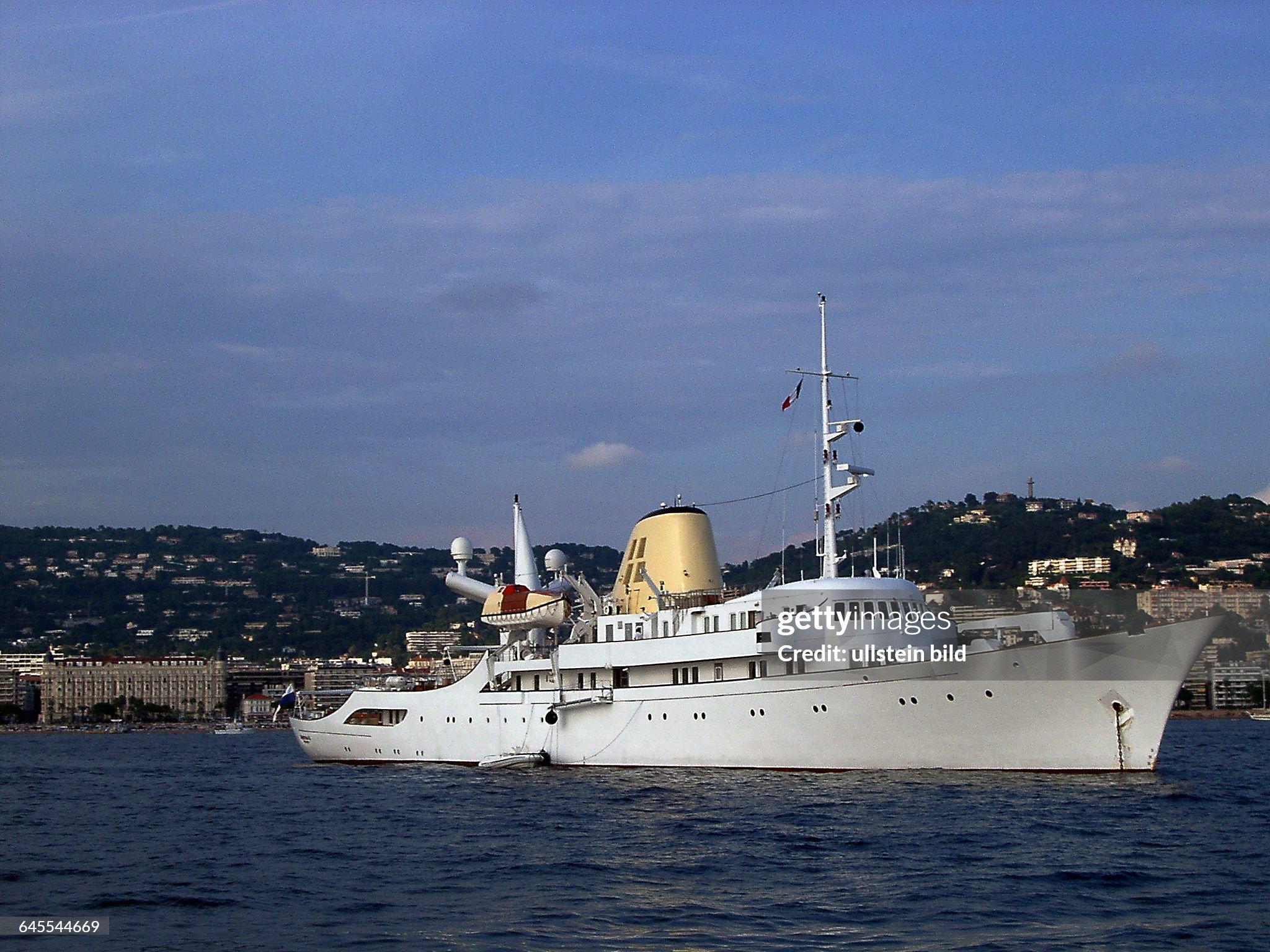
Aristotle Onassis' legendary private yacht seen here at anchor in the port of Nice, on the French Riviera, in 2003. Its name is now ‘Christina O.’. Photo by Thierlein / Ullstein bild via Getty Images.
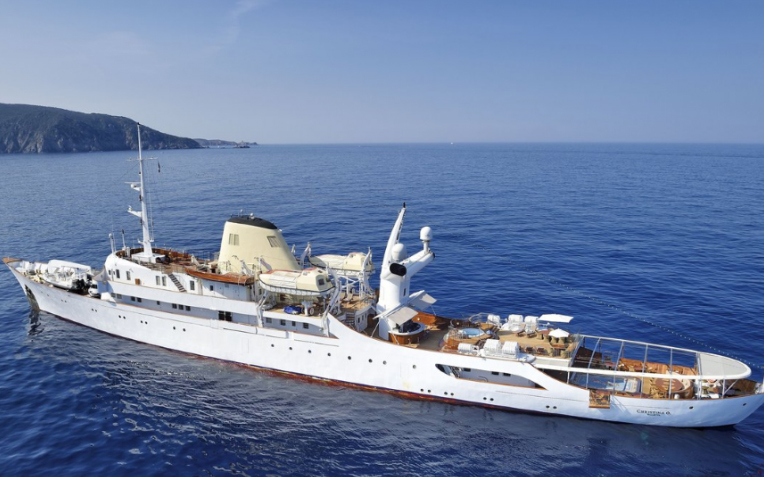
The ‘Christina O.’
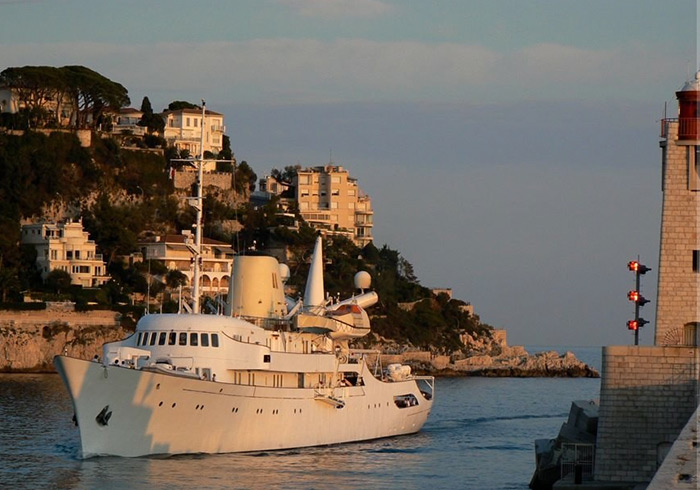
The ‘Christina O.’
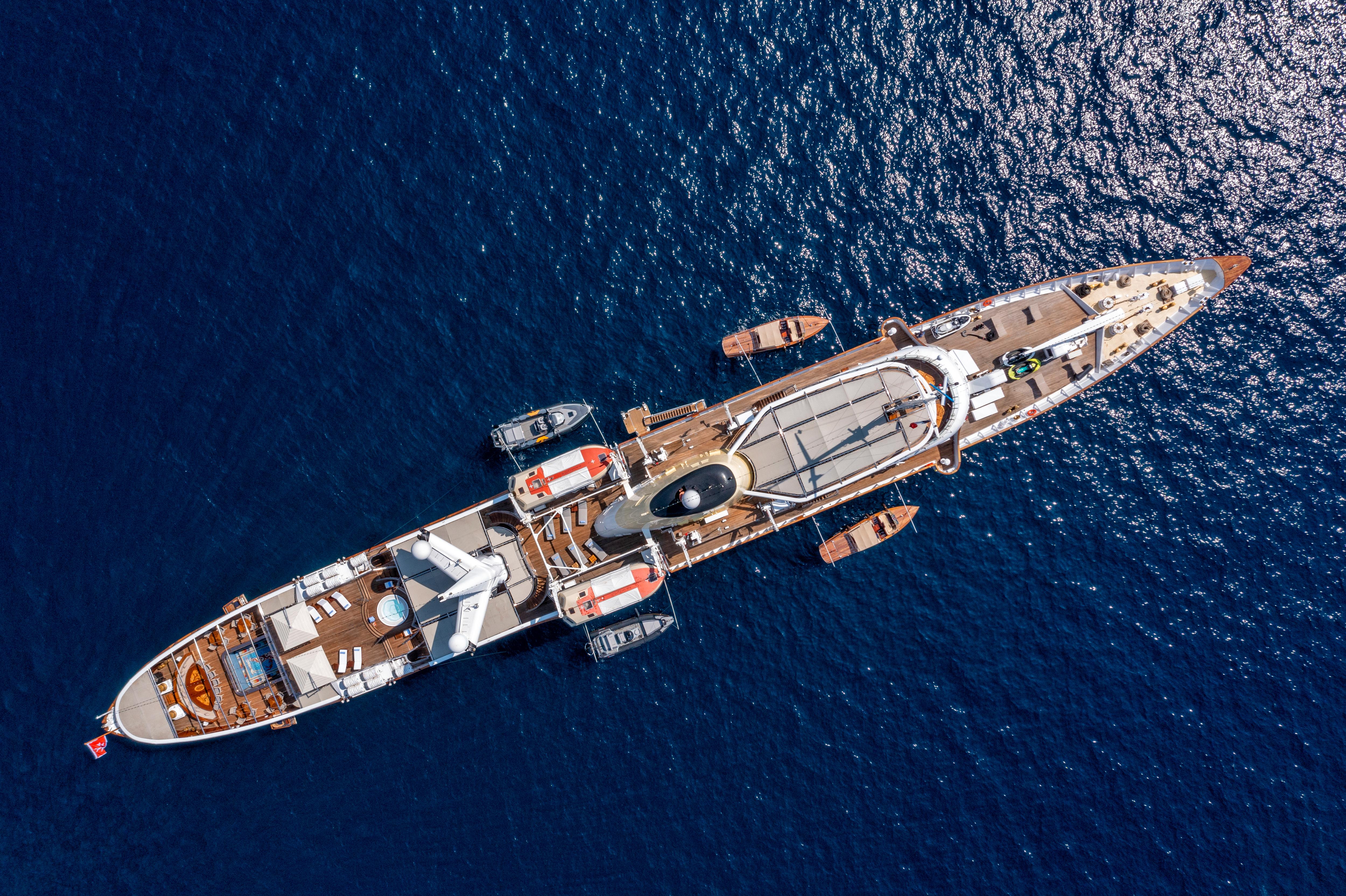
The ‘Christina O.’
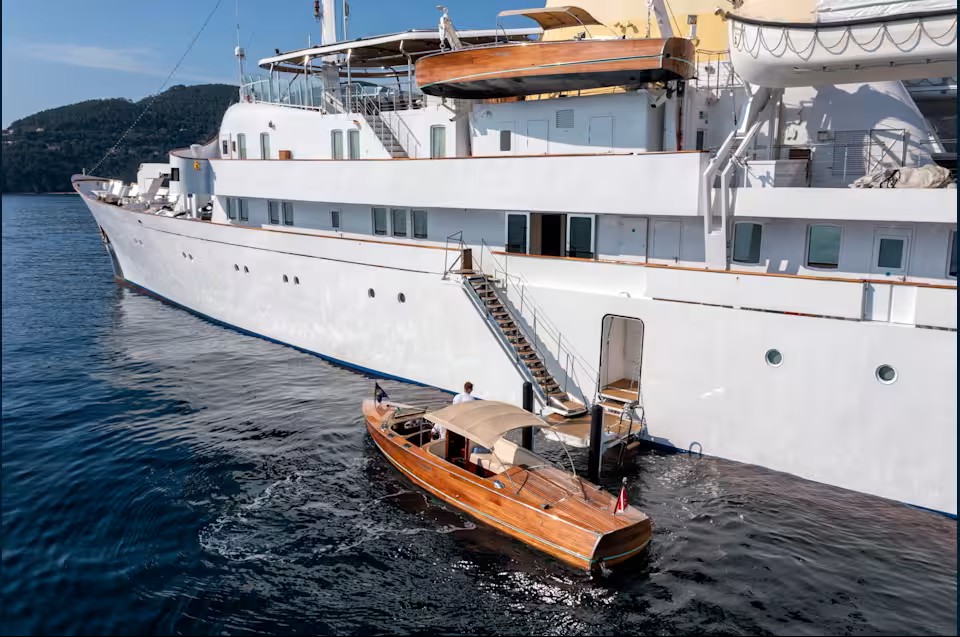
The ‘Christina O.’
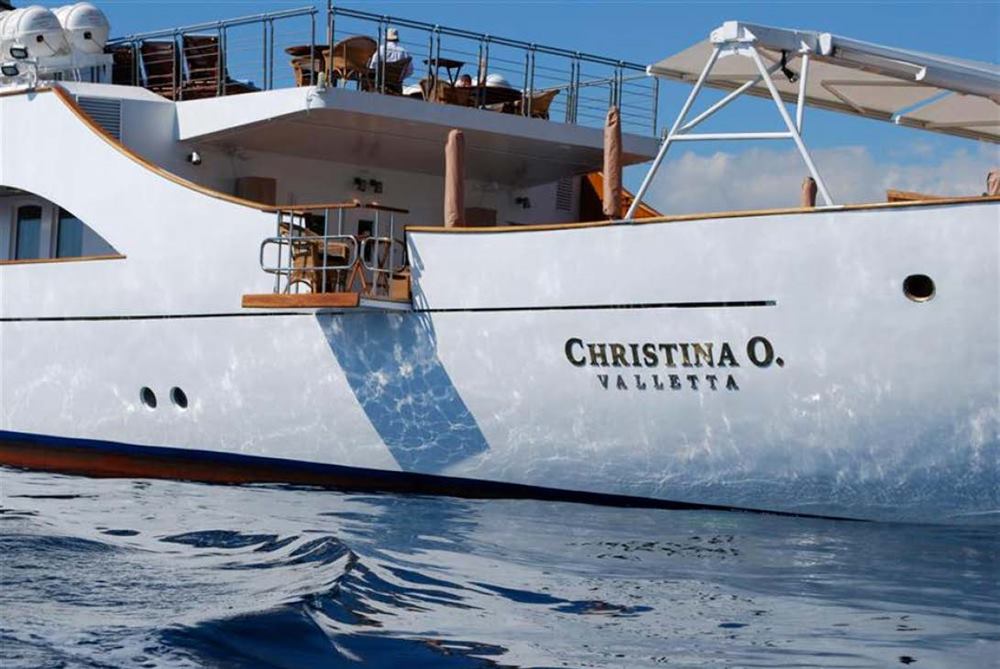
The ‘Christina O.’
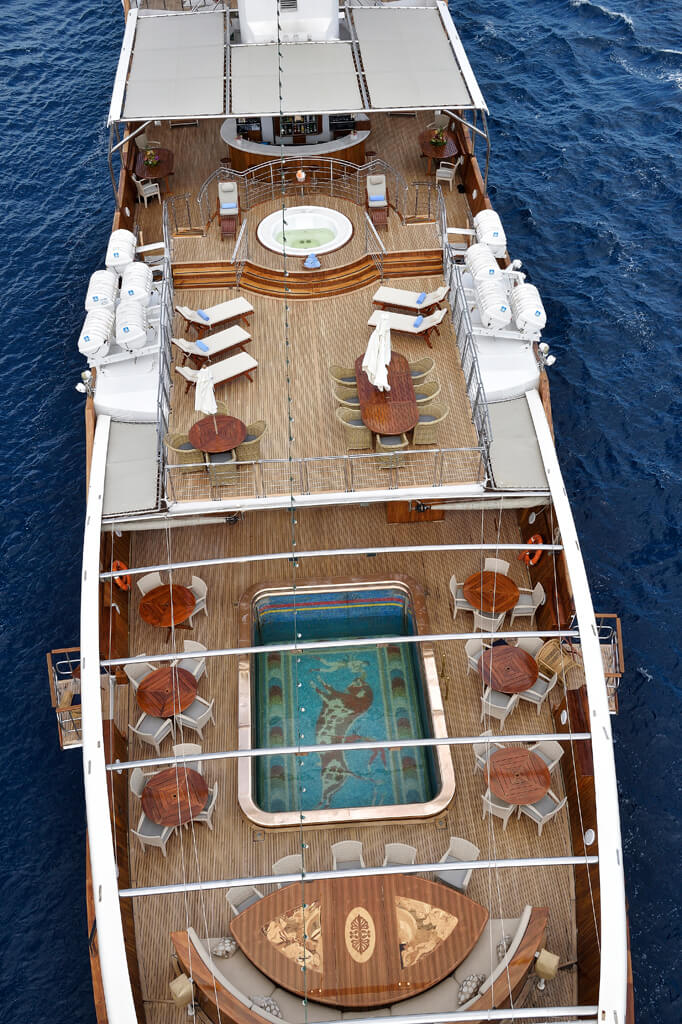
The ‘Christina O.’
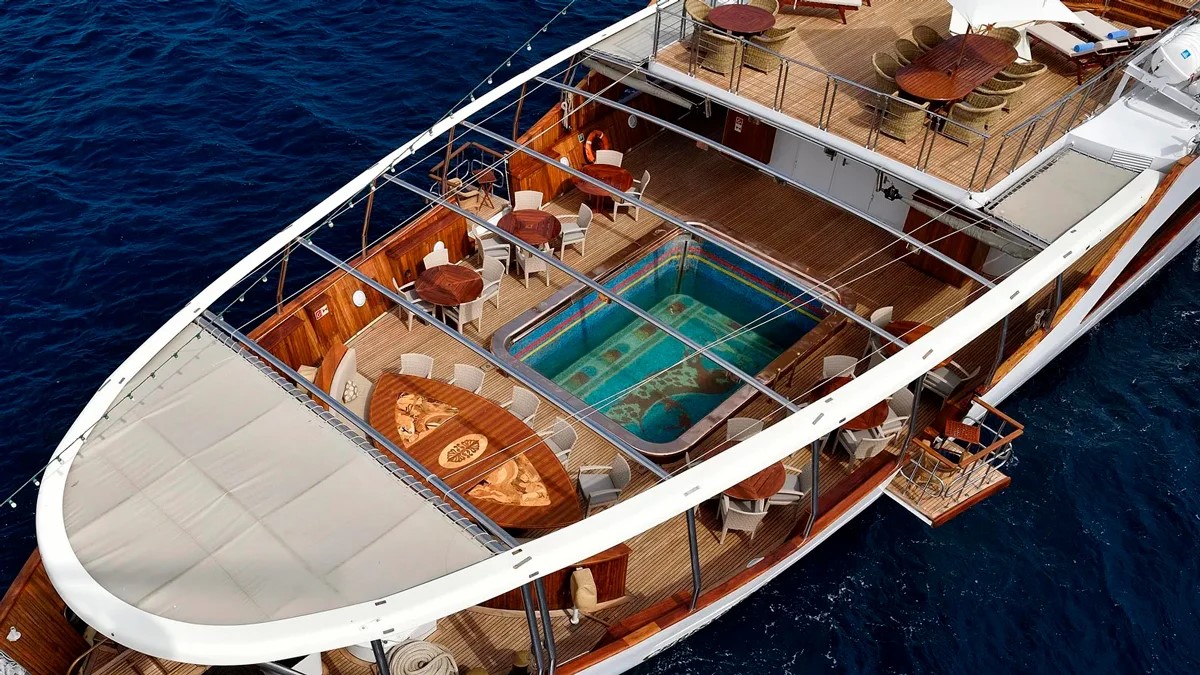
The ‘Christina O.’
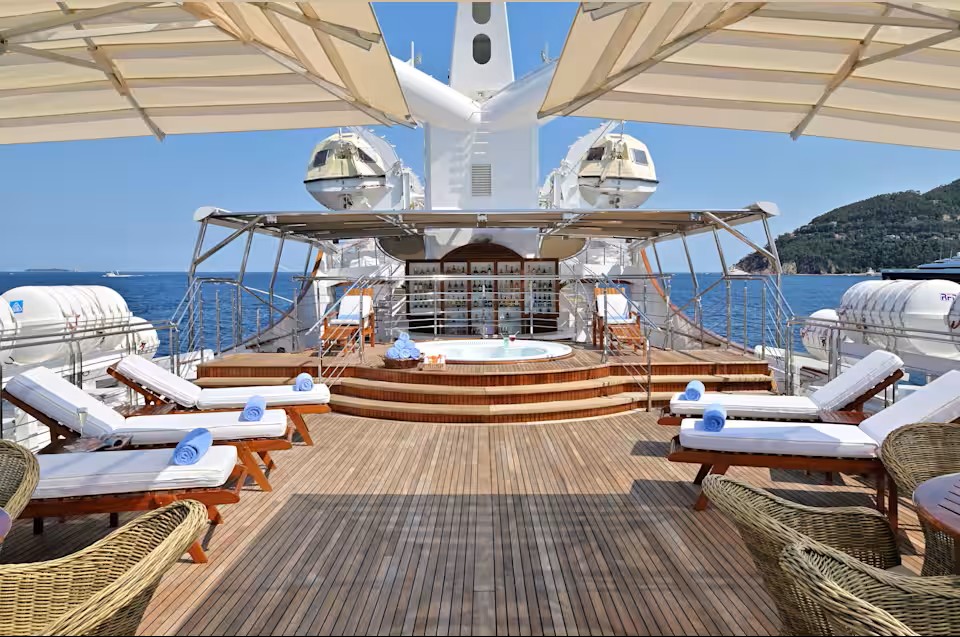
The upper deck of the ‘Christina O.’
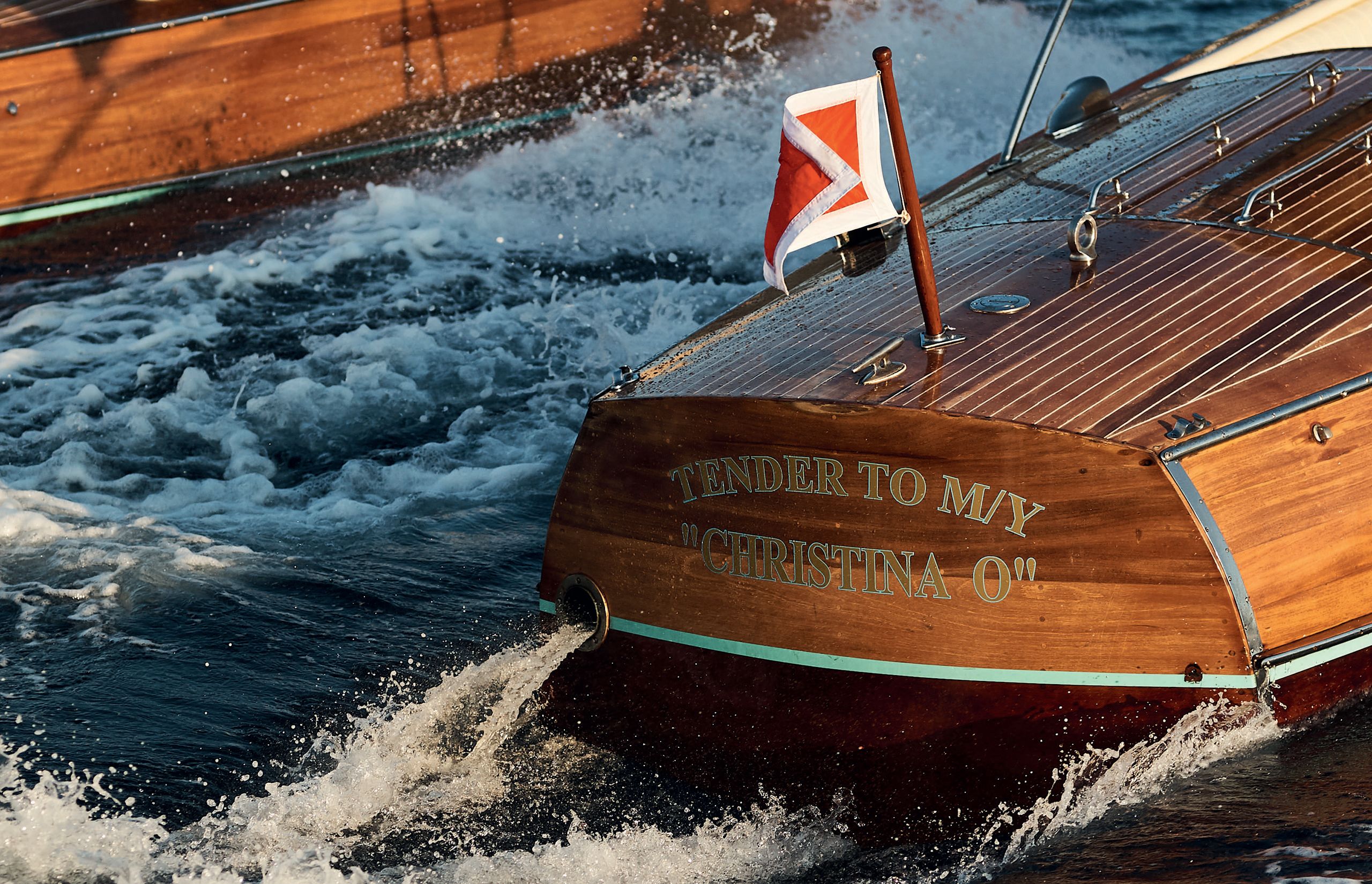
A tender of ‘Christina O.’.
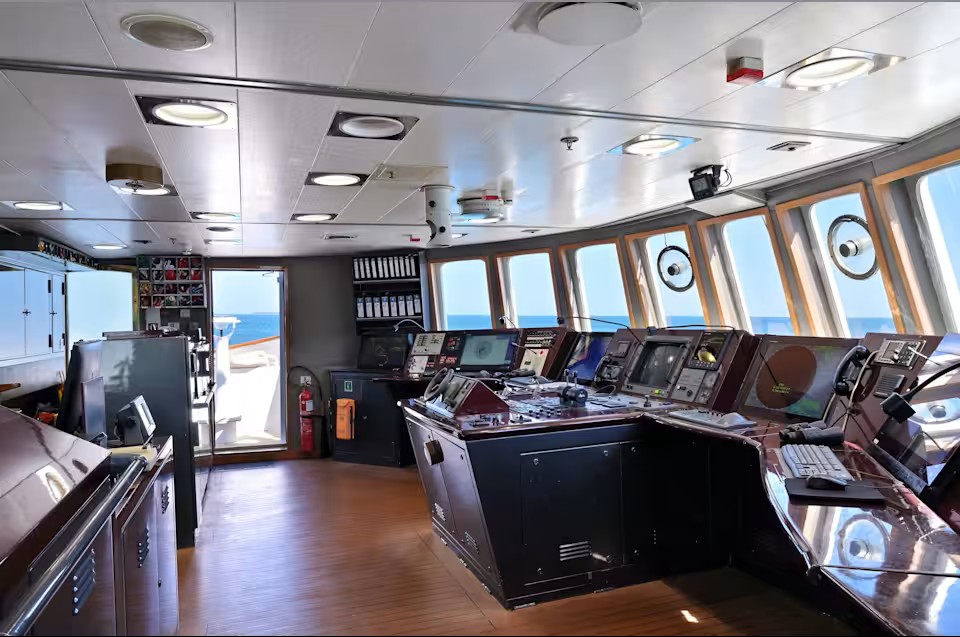
One of the internal rooms of the ‘Christina O.’.
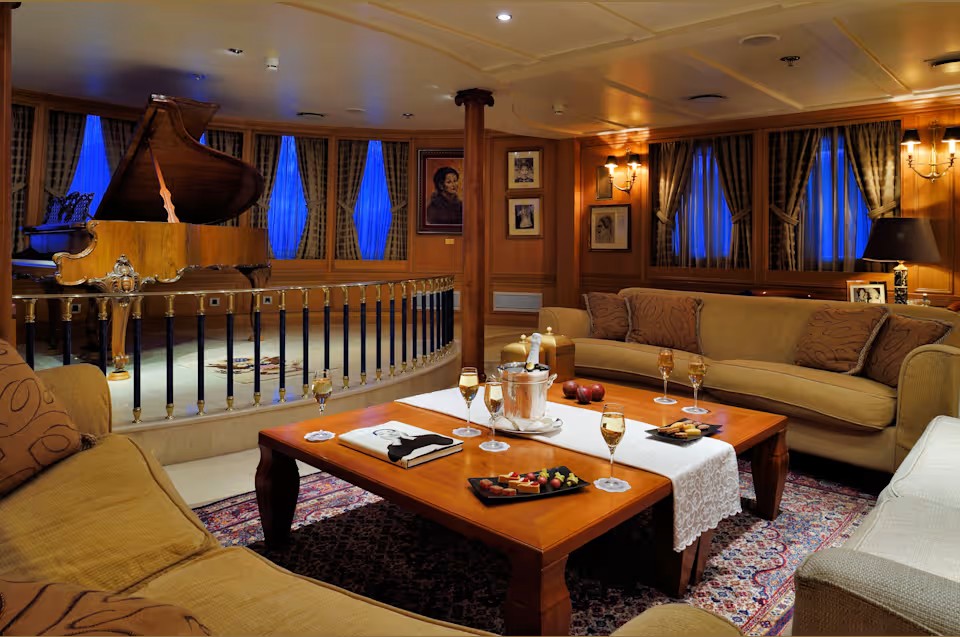
One of the internal rooms of the ‘Christina O.’.
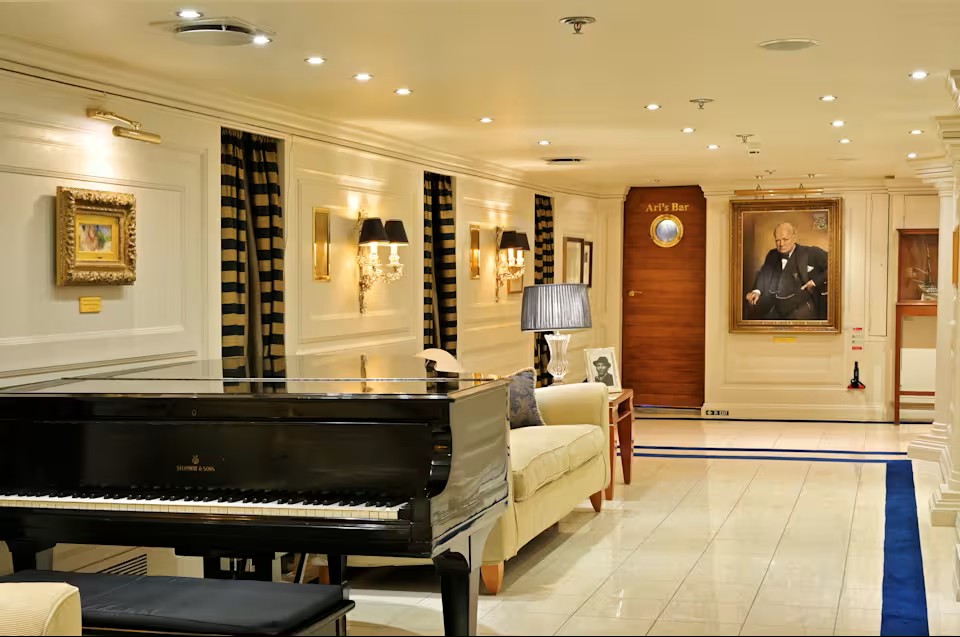
One of the internal rooms of the ‘Christina O.’.
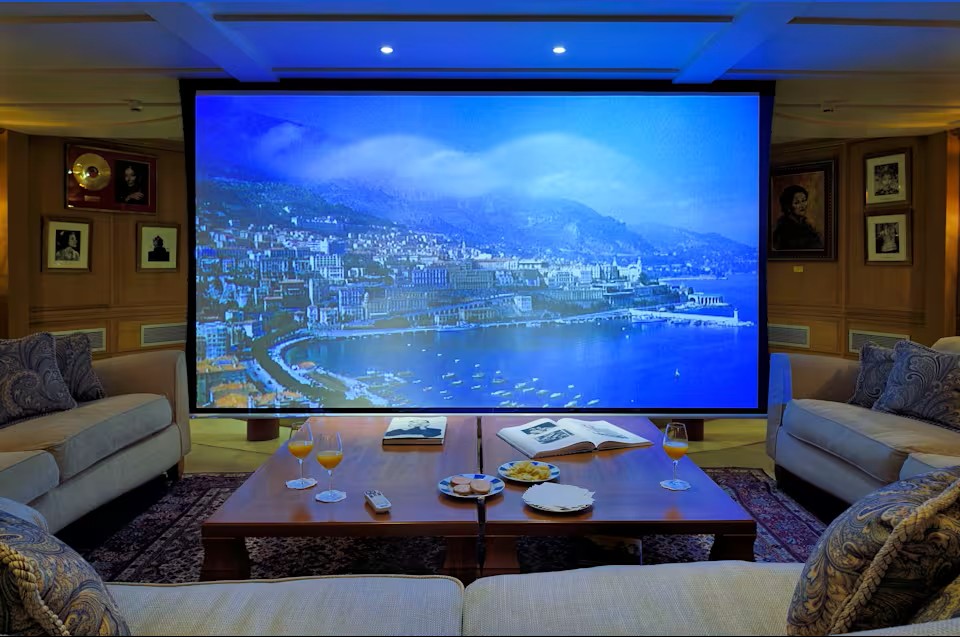
The cinema in the ‘Christina O.’ is set up in the Jackie O’ lounge.
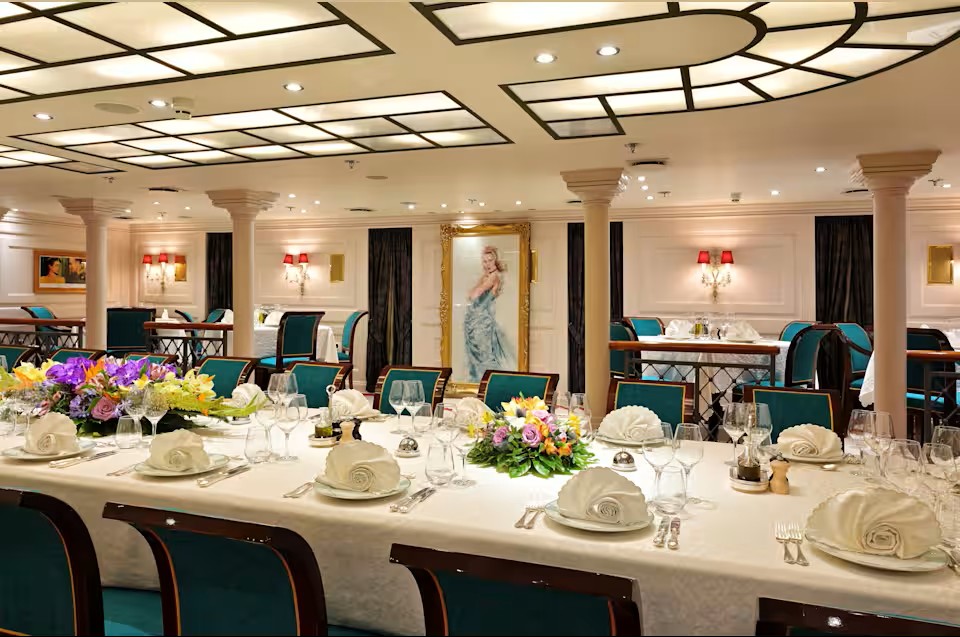
The dining room of the ‘Christina O.’ today.
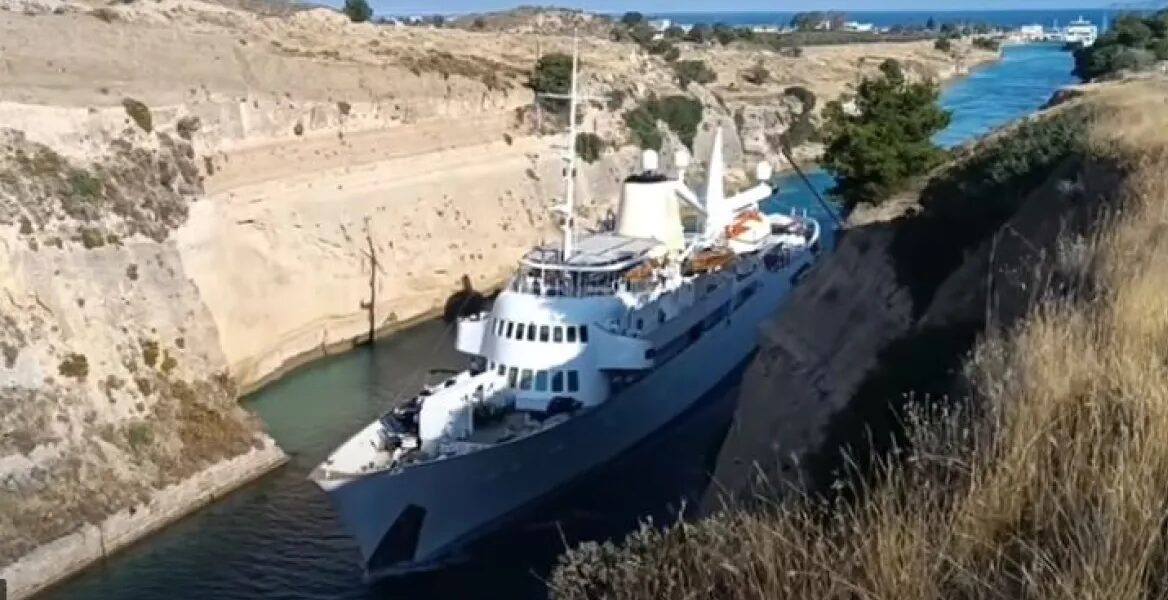
Onassis' legendary yacht ‘Christina O’ in the Corinth Canal in Greece.
Athina Onassis Roussel, born in Nanterre, France, on 28 January 1985, is the heiress to the fortune of Aristotle Onassis, which has an estimated value of more than $3 billion. She is an equestrian and she competed at the 2013 European Show Jumping Championships as well as the 2014 World Championships. She lost her mother Christina Onassis at a young age. She was supposed to take control of her grandfather's Aristotle Foundation at the age of 21, but the board would not allow it. She married the Olympic horse showjumper Alvaro Alfonso de Miranda Neto in 2005. She is the granddaughter of Aristotle Onassis.
Videos


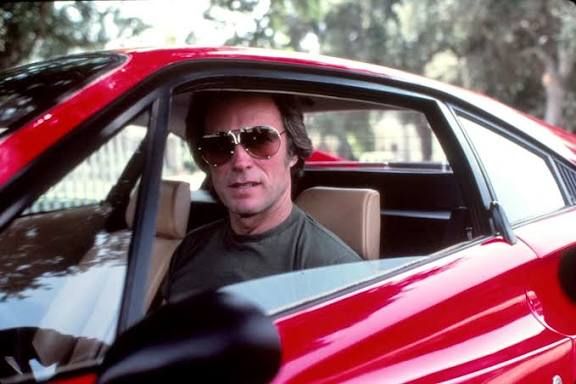
Comments
Authorize to comment