
Computers are the main protagonists of racing today. Photo by Lisa Luscombe / Getty Images.
Many years ago, Formula 1 was a sport where exceptional drivers stood out from the merely good. Talent and courage made the difference when it came to taking risks on corners. They explored the limits of the car with technique, boldness, courage and a touch of recklessness. The last one to brake would overtake... or end up off the track. In that uncertain balance, the driver was either a hero or a villain.
For some time now, however, drivers have no longer sought those limits. They perform another function: managing the race. Previously, they managed tires and fuel; this year, they also manage energy. In short, they are forced to slow down in areas where they used to fly, to save a few megajoules in the battery for the next straight. Depending on the circuit, this slowdown can be almost grotesque.
A clear example is the Waites chicane at Albert Park (turns 9 and 10). Last year, the drivers arrived there almost 60 kilometers per hour faster than they are this Sunday. It was a critical, demanding point, a regular scene of accidents. This year, they drove through it without braking: several hundred meters earlier, the energy maps designed by the engineers had already deactivated the electric motors so that the internal combustion engines could operate independently and also recharge the batteries.
For many years now, those who take risks, improvise and decide who wins or loses are not the drivers, but the engineers. The more sophisticated Formula 1 becomes, the more the army of technicians each team deploys grows. Championships are decided, beyond talent behind the wheel, by aerodynamic work, suspension design, engine efficiency, fuel and lubricant development and, starting this year, by energy strategies.
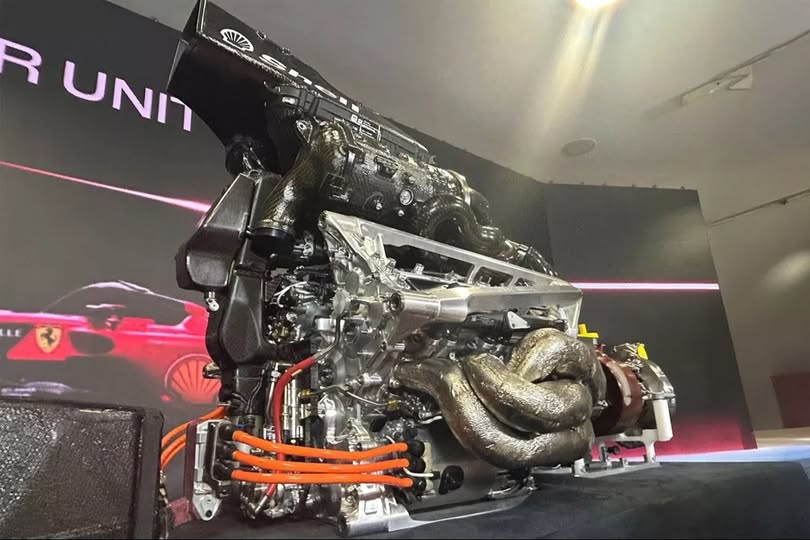
Mercedes' 2026 power unit. “The efficiency of the electrical system is crucial. The more efficient you are in this field, the more you will be able to keep it active and the longer you can do it, the faster you will go.”
When George Russell and Charles Leclerc overtook each other yesterday for several consecutive laps, it was difficult to distinguish whether the maneuver depended on talent, skill and courage... or on the level of charge available in each battery. They weren't pure overtaking, but conditioned actions. To reach a certain point with energy, they had to reduce speed at another. As several drivers have emphasized, it's something "against nature": a way of driving that's the opposite of what they've learned over years of experience, something foreign to their DNA, which doesn't inspire, motivate, or stimulate them.
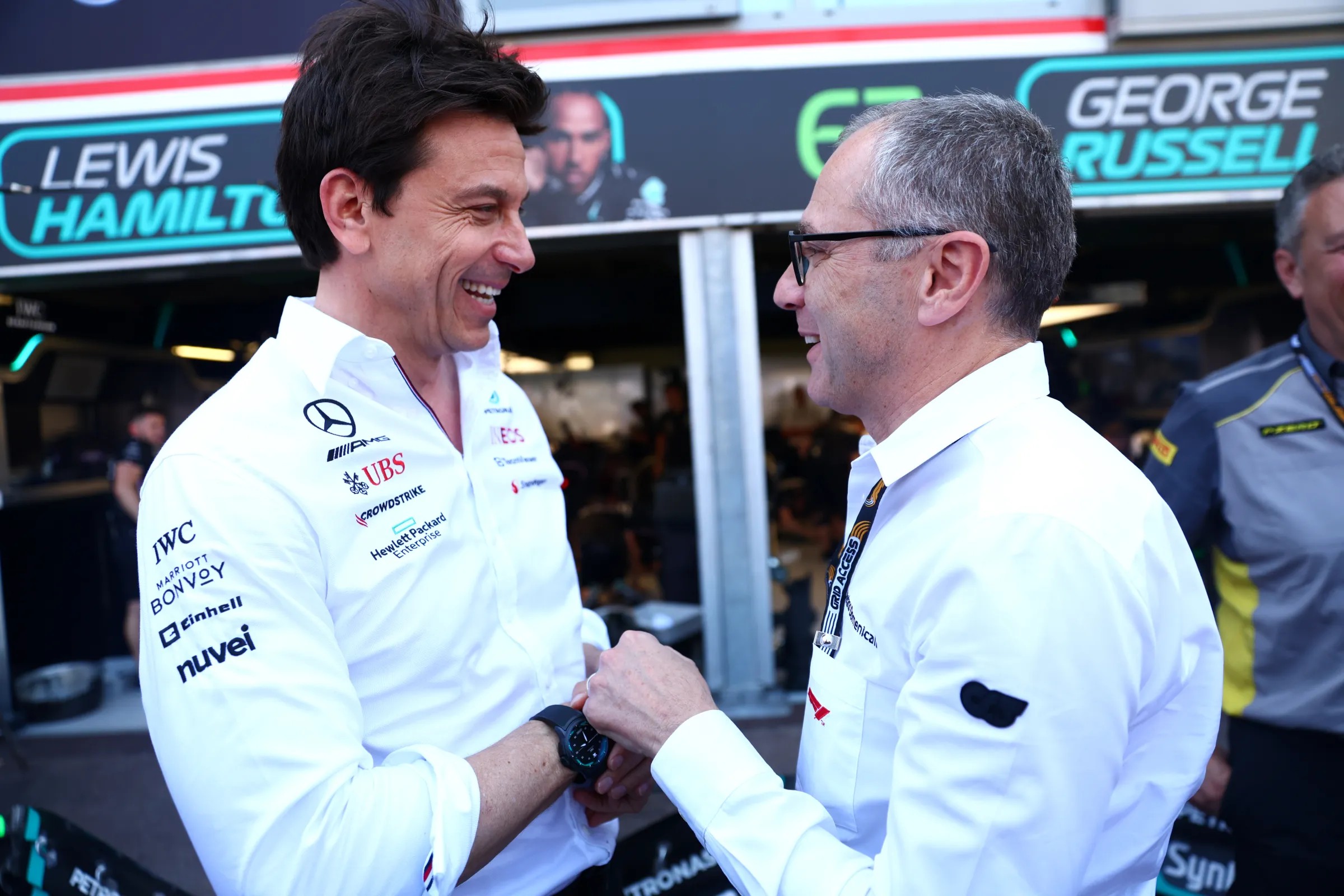
Toto Wolff with Stefano Domenicali at Monaco on May 27, 2023. Photo by Dan Istitene - Formula 1 via Getty Images.
"The drivers' opinions on new cars are important, but Domenicali would say that the only thing that really matters to him is whether the fans like it or not." Toto Wolff
It would be interesting to ask the fans their opinion on Stefano Domenicali.
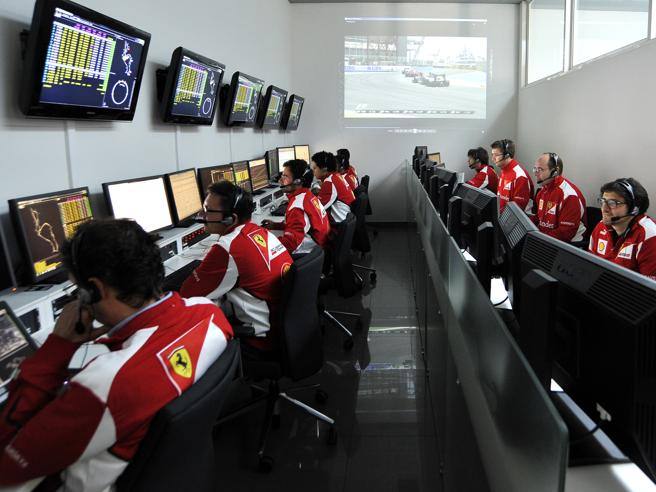
Ferrari engineers at work.
“Times change and so does sport, especially when technology is heavily influencing it. Electronics and computers have revolutionized motorsport; to understand this, just look at the lineup of technicians and engineers (not to mention the remote facilities). Once upon a time, it was the driver who stopped in the pits and reported and "translated" his sensations to agree on the necessary changes to fine-tune his car; now it's the engineers who "explain" how the driver is driving, telling him what and how to modify his driving to optimize performance. The same interference occurs during Grand Prix races when, thanks to radio communications, strategies are modified and race tactics are no longer tied to the driver's skill but to the strategists who, on the pit wall, don't even watch the race but simply read numbers and data updated in real time on their monitors; and not just their own, but also those—not all, but many—of their opponents. During its most successful years, Formula 1 sought balance, never absolute performance, to "show off" in the eyes of the public. I've already mentioned the brilliant but brief era of Can-Am racing as the era of the mostly American manufacturers and of the IndyCar Formula; the former series is dead and buried, the latter surviving with a single chassis supplier and a group of "constructors" who are nothing more than engine manufacturers, as specialized as they can be, but who draw fewer and fewer spectators—with the sole exception of Indianapolis—to the grandstands of US circuits. They made bad decisions, sometimes so blatantly and obviously as to raise considerable concern at every level, from the insiders (designers, technicians, drivers, as well as journalists in their various forms) to the public. The (shabby) spectacle of this year's Super Bowl is emblematic: a bad spectacle between two halves of a football game. The evidence of the direction taken by those who direct and organize sports is clear: numerous events, short durations and a tangle of commercials, media-driven entertainment, special features (even when there's nothing special) and little respect for history. Tennis with best-of-two sets matches, points for every ball played in volleyball (who remembers the "ball change-over"?), like the "three-point shots" in basketball, as well as "modern" rallies. And I could go on. Unfortunately, there's a basic attitude that makes me think two things: the first is that, on the one hand, traditions are being confused with folklore: eating tortellini at Christmas is tradition, while organizing the Tortellino Festival is, in fact, folklore. The second is that times are changing and I, unfortunately or fortunately, am getting old. Maybe not wise, but perhaps it's no longer my time for these new and bloody revolutions." Alberto Galassi, motorsport enthusiast
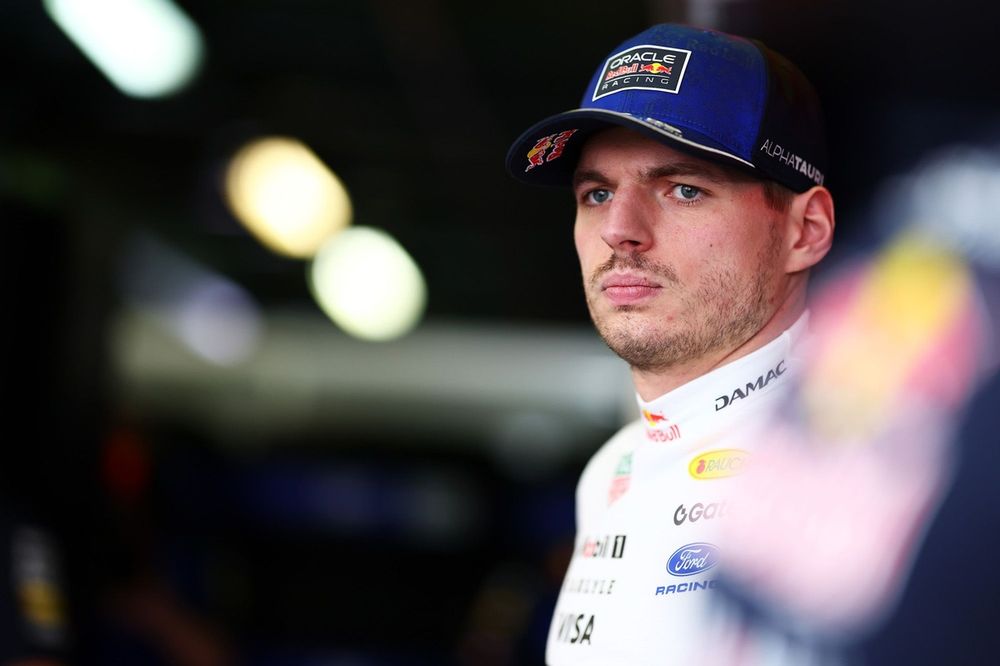
Max Verstappen. Photo by Mark Thompson / Getty Images.
Max Verstappen made it clear he did not enjoy the opening race of the 2026 F1 season: "if you enjoy that, then okay, but that’s what I do at home when I play Mario Kart. For me, I didn’t enjoy the way we raced. It is not really proper."

Comments
Authorize to comment